Showing 121–132 of 363 results
-
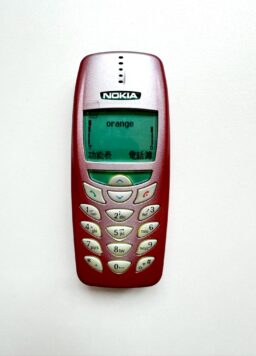
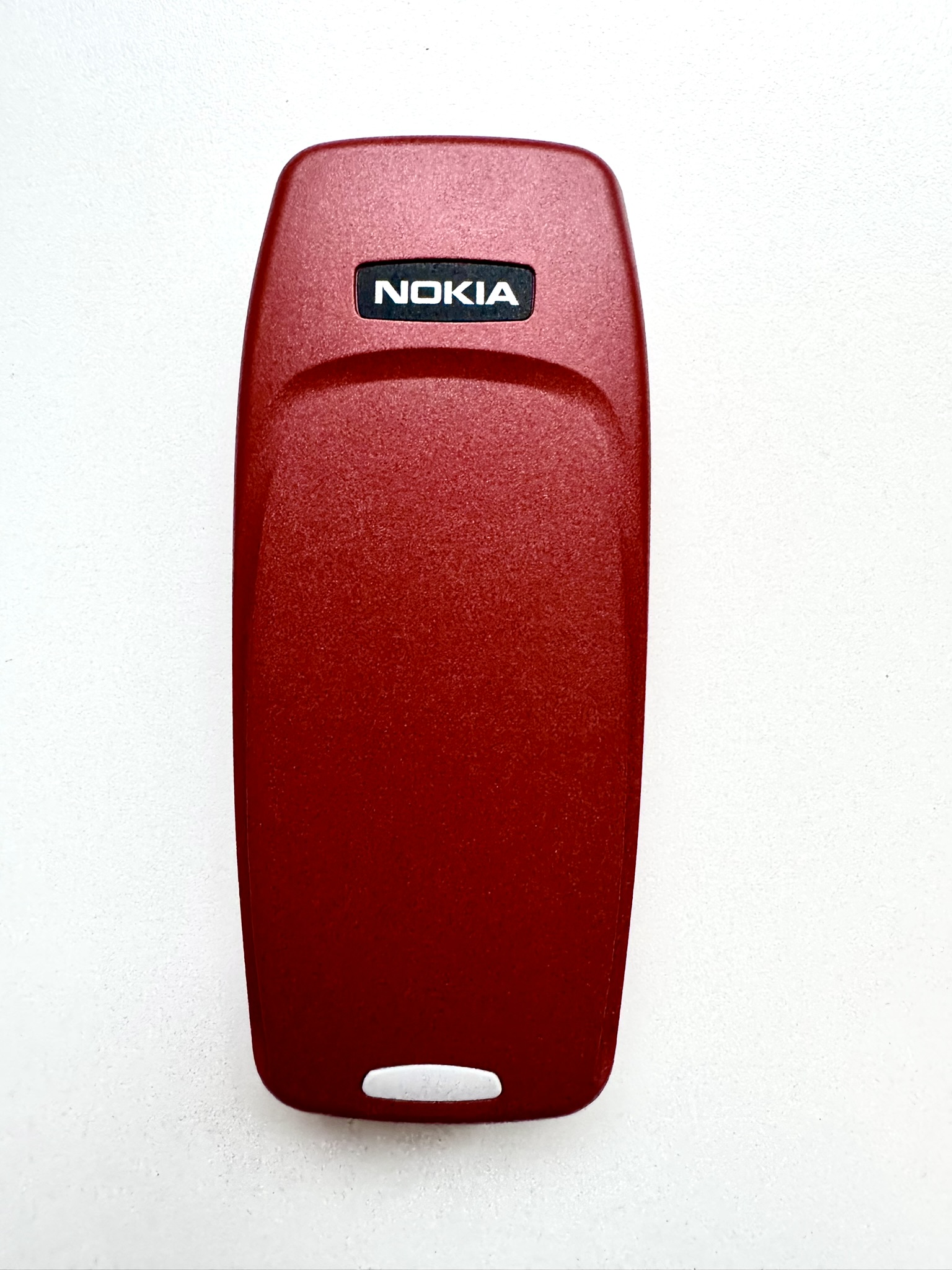
Nokia 3350 Prototype P2.3 : “Ladybird” Early Engineering
Quick View💎 Rarity Index: S (Ultra Rare)
👁 Evaluation in my collection: New – 10/10
🕵 Nokia Codename: LadyBird
⏱ Life timer: 0 | 📦 Boxed: NO
📅 Release Year: 2002 | 💰 Release Price: N/A
📊 Units Sold: ~8M (final units)
📰 Why this phone matters: An exceptionally rare Nokia 3350 NHM-9NX prototype, built during the P2.3 engineering phase of Nokia’s internal development cycle. Carrying the codename “Ladybird”, this unit predates the commercial Nokia 3350 and represents one of the earliest hardware validation builds of the series.Prototypes in the P-series (especially below P3.0) were never intended for public exposure and were used strictly within Nokia’s labs for early software integration, RF calibration, UI tuning and keypad response testing. This P2.3 unit retains all the classic prototype signatures:
PROTO – P2.3 designation
Pre-release internal model name “Ladybird”
No commercial model number printed
Simplified regulatory labeling
Early keypad and housing materials
The front shell features a colour tone and paint texture not identical to the final retail 3350, confirming it as an early body variant used before mass-production plastics and colouring were locked. The keypad shape and iconography also resemble transitional test designs typical of P-series engineering handsets.
As part of Nokia’s early-2000s mid-range development line, the 3350 was known for its rugged build, SMS chat features, WAP support, customizable profiles and rock-solid battery life. This prototype offers a direct look into the internal pre-production evolution of one of Nokia’s most widely used platforms in Asia and eur;ope.
📝 Reviews when released: N/A 💔
-
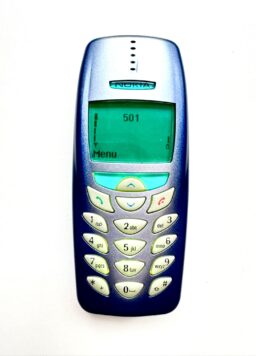
Nokia 3350 Prototype B2.1 : “Ladybird” Early Engineering
Quick View💎 Rarity Index: S (Ultra Rare)
👁 Evaluation in my collection: New – 10/10
🕵 Nokia Codename: LadyBird
⏱ Life timer: 0 | 📦 Boxed: NO
📅 Release Year: 2002 | 💰 Release Price: N/A
📊 Units Sold: ~8M (final units)
📰 Why this phone matters: A highly rare Nokia 3350 NHM-9NX prototype from the B-series engineering phase, carrying the internal codename “Ladybird”.
This B2.1 prototype predates the commercial Nokia 3350 by a significant margin and belongs to one of Nokia’s earliest functional validation waves – far earlier and far scarcer than the P-series engineering units.The B-series prototypes were used exclusively within Nokia’s R&D labs during the earliest stages of hardware and firmware development. These devices formed the foundation of the 3350 platform, serving for keypad matrix testing, UI logic integration, RF tuning, electrical stability checks, and early material experimentation. Units at this stage were never intended to leave Nokia’s possession.
This particular sample is exceptional thanks to:
PROTO – B2.1 designation (rare early engineering phase)
Internal model name “Ladybird”
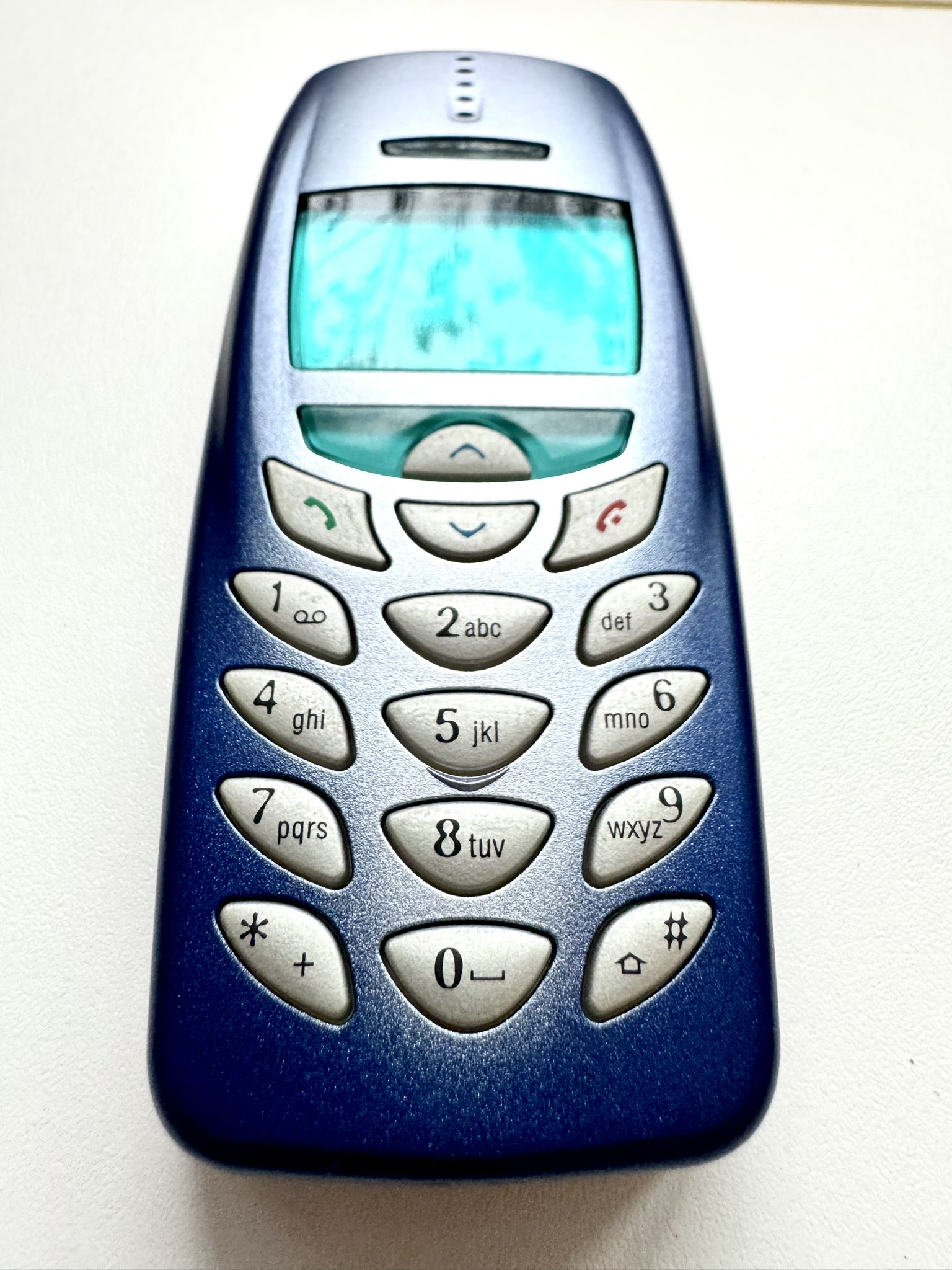
Experimental blue housing with pre-production paint texture
Unreleased keypad variant, featuring a unique key-shape geometry and distinct iconography
Early-mould plastics not matching final production tolerances
Simplified internal regulatory labeling
?? Important rarity note:
The internal chassis dimensions of this B2.1 prototype differ from all later builds. No commercial Nokia 3350 back cover – and not even P-series prototype back covers – will fit this handset. This confirms that the device comes from an early hardware revision before Nokia finalized the external shell specifications. Such incompatibility is typical only for B-series engineering samples and dramatically increases its historical uniqueness.The blue front shell also features a colour tone not used in mass production, showing Nokia’s exploration of material finishes before final design locking.
As an early DCT-3 era engineering artefact, this B2.1 “Ladybird” prototype is exceptionally rare. With its unique housing geometry, non-final keypad, and unmatched chassis dimensions, it stands as a museum-grade piece that represents a developmental phase almost never seen outside Nokia’s own engineering teams.
A highly valuable and distinctive addition to any advanced Nokia prototype collection.
📝 Reviews when released: N/A 💔
-


Nokia 3410
Quick View💎 Rarity Index: D (Very Common)
👁 Evaluation in my collection: Good – 8.5/10
🕵 Nokia Codename: Dragonfly
⏱ Life timer: 6m | 📦 Boxed: YES
📅 Release Year: 2002 | 💰 Release Price: ~150 €
📊 Units Sold: ~7M
📰 Why this phone matters: The Nokia 3410 is a mobile phone made by Nokia being the successor of the popular Nokia 3310. It was announced at CEBIT on 12 March 2002.The 3410 was the first Java phone by Nokia, as well as being one of the earliest mobile phones outside Japan to feature 3D graphics and an image editor.The Nokia 3410 was never being released in Asia-Pacific due to the release of their variant of the 3310,called the Nokia 3315, which featured almost same design cues as from Nokia 3410.📝 Reviews when released: N/A 💔
-


Nokia 3510 Red Gaming
Quick View💎 Rarity Index: B (Uncommon)
⭐ WOW Factor: The first Nokia phone to bring GPRS internet services to mass market
👁 Evaluation in my collection: Great – 9/10
🕵 Nokia Codename: Pippi
⏱ Life timer: 53h | 📦 Boxed: NO
📅 Release Year: 2002 | 💰 Release Price: ~175$
📊 Units Sold: ~15M
📰 Why this phone matters: The Nokia 3510 is a mobile phone for the GSM network, introduced by Nokia on 12 March 2002.The phone was the first Nokia phone to bring GPRS internet services to the mass market.
The phone has a Nokia Series 30 96 x 65 user interface. The 3510 has the multi-button user interface of the classic Nokia 2110. Along with Nokia 7210, it was the first Nokia device on the mass market with polyphonic ringtones (they were already on the Nokia 7650).
GPRS is used for data transmission and mobile Internet WAP service. There was also a gaming-enhanced Xpress-on cover released as an official accessory for the 3510.📝 Reviews when released: N/A 💔
-


Nokia 3510 Pink
Quick View💎 Rarity Index: C (Common)
⭐ WOW Factor: The first Nokia phone to bring GPRS internet services to mass market
👁 Evaluation in my collection: Great – 9/10
🕵 Nokia Codename: Pippi
⏱ Life timer: 13h | 📦 Boxed: NO
📅 Release Year: 2002 | 💰 Release Price: ~175$
📊 Units Sold: ~15M
📰 Why this phone matters: The Nokia 3510 is a mobile phone for the GSM network, introduced by Nokia on 12 March 2002.The phone was the first Nokia phone to bring GPRS internet services to the mass market.
The phone has a Nokia Series 30 96 x 65 user interface. The 3510 has the multi-button user interface of the classic Nokia 2110. Along with Nokia 7210, it was the first Nokia device on the mass market with polyphonic ringtones (they were already on the Nokia 7650).
GPRS is used for data transmission and mobile Internet WAP service. There was also a gaming-enhanced Xpress-on cover released as an official accessory for the 3510.📝 Reviews when released: N/A 💔
-


Nokia 3510i Start Wars
Quick View💎 Rarity Index: A (Rare)
⭐ WOW Factor: The first Nokia phone with a color display
👁 Evaluation in my collection: BNIB – 10/10
🕵 Nokia Codename: Popeye
⏱ Life timer: 0m | 📦 Boxed: YES
📅 Release Year: 2002 | 💰 Release Price: ~200 $
📊 Units Sold: ~17M
📰 Why this phone matters: It was one of the first phones with a color display. The phone has a Nokia Series 30 96 x 65 user interface. The 3510 has the multi-button user interface of the classic Nokia 2110. Along with Nokia 7210, it was the first Nokia device on the mass market with polyphonic ringtones (they were already on the Nokia 7650).📝 Reviews when released: Mobile Review 🔗
-


Nokia 3589i Verizon
Quick View💎 Rarity Index: C (Common)
⭐ WOW Factor: The first Nokia phone with BREW Technology
👁 Evaluation in my collection: Good – 8.5/10
🕵 Nokia Codename: Popeye
⏱ Life timer: NA | 📦 Boxed: NO
📅 Release Year: 2003 | 💰 Release Price: N/A
📊 Units Sold: ~5M
📰 Why this phone matters: The first Nokia to have BREW technology enabled together with Verizon📝 Reviews when released: N/A 💔
-
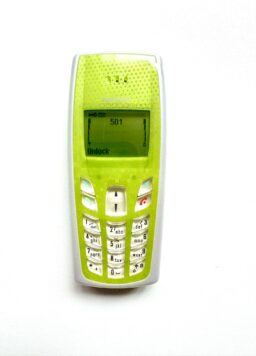
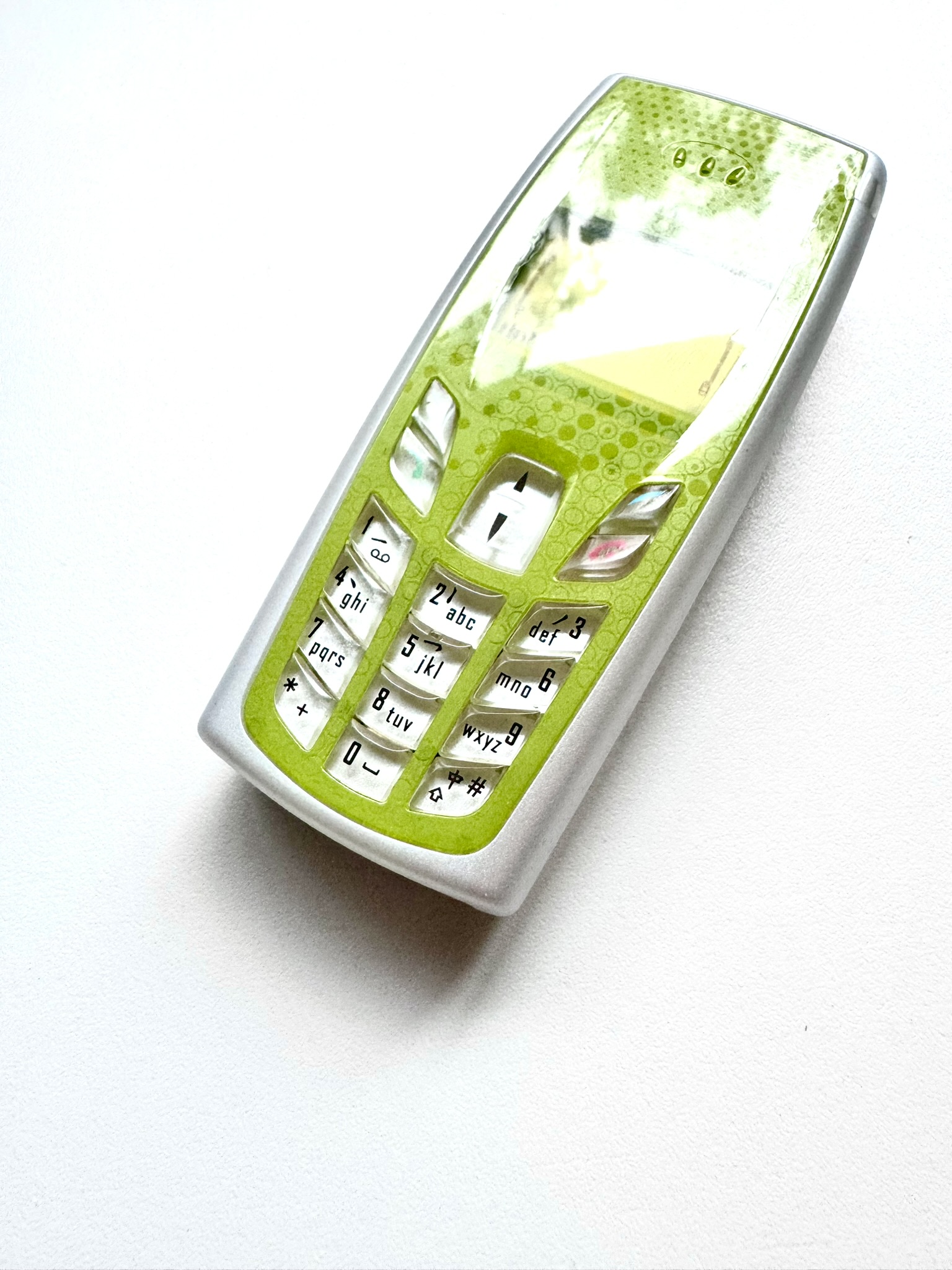
Nokia 3610 Prototype B5.0 : Rare Lime Green Variant
Quick View💎 Rarity Index: S (Ultra Rare)
👁 Evaluation in my collection: Great – 9.5/10
🕵 Nokia Codename: LadyBird
⏱ Life timer: 12h | 📦 Boxed: NO
📅 Release Year: 2002 | 💰 Release Price: 150 €
📊 Units Sold: ~1M (final units)
📰 Why this phone matters: A genuine Nokia 3610 Prototype B5.0 (Type NAM-1), originating from Nokia’s internal late engineering phase. The PROTO B5.0 marking, the blank Model field, and the early-format Nokia R&D label identify it as a true pre-production unit used for hardware validation, firmware testing, and RF checks before the model entered final approval.Although this prototype uses a housing and keypad identical to later retail versions, the internal label and hardware revision confirm its role as an authentic Nokia lab device – produced in small quantities and never intended for commercial distribution.
A compact but historically significant DCT4-era engineering sample, and a solid rarity for any serious Nokia prototype collection.
📝 Reviews when released: N/A 💔
-
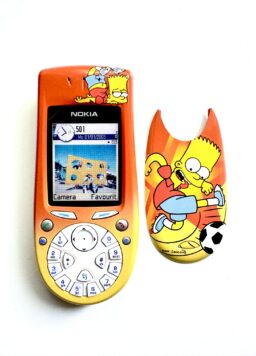
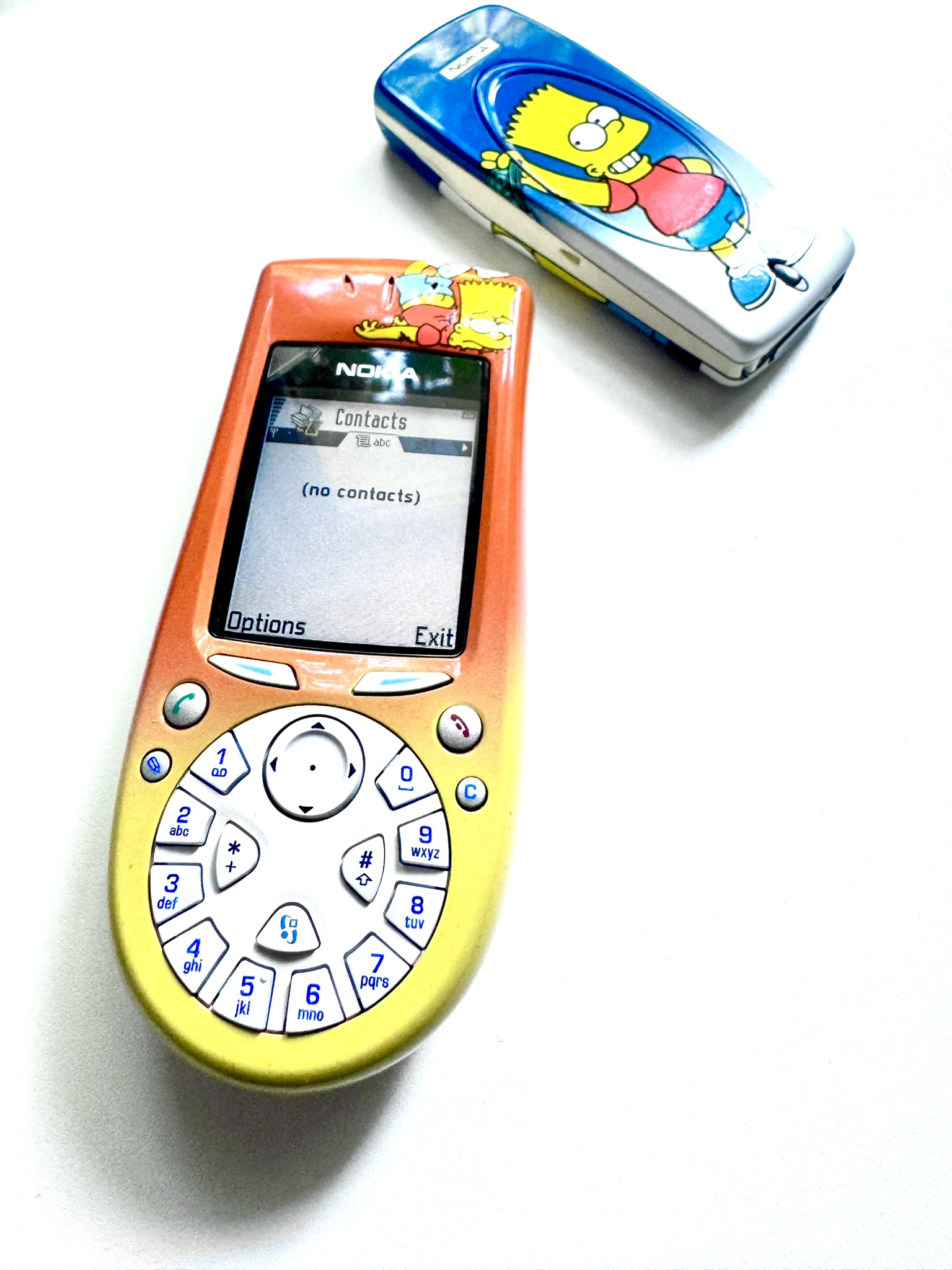
Nokia 3650: The Early S60 Icon in Simpson’s Style
Quick View💎 Rarity Index: C (Common)
⭐ WOW Factor: Back Cover with Camera zoom
👁 Evaluation in my collection: Great – 9.5/10
🕵 Nokia Codename: Cameron
⏱ Life timer: N/A | 📦 Boxed: NO
📅 Release Year: 2003 | 💰 Release Price: 450 €
📊 Units Sold: ~6M
📰 Why this phone matters: The Nokia 3650 is one of the most distinctive early Symbian smartphones ever produced, combining an expressive design with advanced multimedia features and a unique circular keypad that immediately set it apart from every other phone of its time. Released in 2002 as the successor to the Nokia 7650, it expanded the Symbian Series 60 platform with MMC memory card support, Bluetooth, video recording, and tri-band GSM capability.This unit comes in a bright yellow Xpress-On cover, one of the more uncommon color variants, and features an extremely rare camera back cover with a rotating zoom-lens mechanism. This accessory physically extends the camera assembly, allowing manual zooming and enhancing the phone’s multimedia personality. These zoom-lens covers were produced in very small numbers, making them a highly desirable collectible today.
The 3650’s circular keypad design became one of Nokia’s most iconic experiments, bridging retro inspiration with modern smartphone functionality. Its sister model, the Nokia 3600, was the first Symbian OS phone to launch in the United States, marking a major expansion of Nokias smartphone presence in North America.
With its early camera capabilities, expandable storage, Bluetooth connectivity, and unmistakable styling, the Nokia 3650 represents a key moment in the evolution of mobile phones. This yellow unit with a rare zoom-lens back cover stands out as a unique and collectible piece of Symbian history, showcasing Nokia’s bold engineering and design experimentation at the dawn of the smartphone era.
📝 Reviews when released: Mobile Review 🔗
-


Nokia 3660: The Rare 3650 Upgrade
Quick View💎 Rarity Index: A (Rare)
👁 Evaluation in my collection: Great – 9.3/10
🕵 Nokia Codename: Sylvester
⏱ Life timer: N/A | 📦 Boxed: NO
📅 Release Year: 2003 | 💰 Release Price: 450 €
📊 Units Sold: ~2M
📰 Why this phone matters: The Nokia 3660 is a refined and expressive successor to the iconic Nokia 3650, combining the power of the early Symbian Series 60 platform with a redesigned keypad and a striking color-focused design. Released in late 2003, it addressed user feedback by replacing the circular keypad of the 3650 with a more familiar rectangular grid layout, improving typing comfort without losing the distinctive charm of Nokia’s bold early smartphone era.This mint-condition red unit is an exceptional example of the 3660. The red housing is one of the more eye-catching and vibrant variants, reflecting Nokia’s early 2000s focus on personalization and expressive design. These colorful versions were popular at launch but are difficult to find today in clean, near-new condition.
Powered by Symbian OS 6.1 with Series 60 UI, the 3660 offered video recording, Bluetooth connectivity, multimedia messaging, RealPlayer support, and expandable MMC memory at a time when most mobile phones were still limited to basic features. Its VGA camera made it a capable early cameraphone, continuing the evolution that began with the Nokia 7650 and 3650.
With its combination of color, capability, and unique early smartphone personality, the Nokia 3660 stands as a memorable and collectible piece of Nokia’s Symbian history. A mint red unit like this is a rare and valuable addition to any serious mobile phone collection.
📝 Reviews when released: Mobile Review 🔗
-


Nokia 3720 C
Quick View💎 Rarity Index: B (Uncommon)
⭐ WOW Factor: Nokia first IP certified device
👁 Evaluation in my collection: Great – 9.5/10
⏱ Life timer: 25 m | 📦 Boxed: NO
📅 Release Year: 2009 | 💰 Release Price: N/A
📊 Units Sold: ~2M
📰 Why this phone matters: The Nokia 3720 classic is a mobile phone by Nokia announced in July 2009 and manufactured in Hungary. The phone runs the Series 40 6th edition platform.
This phone is IP54 rated against water, dust and is also shock proof. This makes the phone Nokia’s first IP certified device. Nokia has released videos showing how rugged this device is such as being placed under water, kicked by a rugby boot and hit by a golf club.📝 Reviews when released: cNET 🔗
-


Nokia 3810: The Lost Asian Shadow of the 3110
Quick View💎 Rarity Index: S (Ultra Rare)
⭐ WOW Factor: A true APAC-market ghost model, the Nokia 3810 exists as a secret evolution of the 3110, built on a unique NHE-8A hardware branch, sold only through selected Asian operators, and so rare today that even many hardcore collectors have never seen a real one outside archival photos.
👁 Evaluation in my collection: Good – 8.5/10
⏱ Life timer: NA | 📦 Boxed: NO
📅 Release Year: 1998 | 💰 Release Price: ~11000 PHP
📊 Units Sold: ~1M
📰 Why this phone matters: Nokia 3810 is one of the most obscure and region-locked handsets Nokia ever released, a model that at first sight looks like a Nokia 3110 from the late 90s, but in reality is a completely different device built specifically for the Southeast Asian market. Created around late 1998 to early 1999 for operators like Globe Telecom in the Philippines and Singtel in Singapore, it was never part of Nokia’s global roadmap and never appeared in eur;opean or American catalogs.Internally, the 3810 belongs to the extended NHE-8A platform, a rare fork of the 3110 architecture that Nokia used only for operator-specific customizations. Unlike typical localized firmware builds, this model has a modified PCB layout, different RF filters, region-specific power amplifiers, and firmware adjusted for hot and congested GSM-900 networks in Asia. The firmware also contains unique operator menus, a different startup behavior, and a SIM Toolkit implementation that the original 3110 did not have.
Visually, the 3810 shares the silhouette of the 3110, but key differences immediately confirm it as its own device. It has a redesigned navigation cluster, different soft keys, a unique lower mask, and a housing made from a thicker, more rubberized plastic type. These material changes were intentional, allowing the phone to survive the high humidity and heat typical of Southeast Asia. The keypad layout is also subtly different, confirming that this is not a housing replacement but a dedicated mold used only for this variant.
The 3810 was priced below the 5110 and slightly below the original 3110 in the APAC region, typically selling around PHP 7000 to 9000, often bundled with prepaid or SIM activation packages. Because Nokia kept production extremely limited and distributed the model only through operator channels, most units were used heavily and eventually scrapped. Almost none were exported, and very few examples have survived in clean or working condition. Today it stands as one of the rarest late 90s Nokias, more elusive than many prototypes, and almost never seen in Western collections.
The unit presented here is a remarkable surviving example, displaying Globe firmware on boot and all the unique hardware traits of the genuine 3810 platform. More than just a variant, it represents a hidden branch of Nokia history, a fully official model that Nokia itself barely acknowledged and one that existed only because regional operators demanded a slightly more modern, network-optimized alternative to the aging 3110. Devices like this highlight how complex Nokia’s APAC strategy truly was and why some of the rarest Nokias were never sold outside their home markets.
📝 Reviews when released: Mobile Review 🔗