

">

Showing 1–12 of 38 results
-
BenQ P31 Unreleased Prototype: Nokia 6708’s Hidden Twin
Quick View💎 Rarity Index: X (Mystical Prototype)
⭐ WOW Factor: The BenQ P31 is the original device behind the Nokia 6708
It is one of the only non-Nokia smartphones ever sold with Nokia branding.
👁 Evaluation in my collection: Great – 9.5/10
⏱ Life timer: N/A | 📦 Boxed: NO
📅 Release Year: 2004 | 💰 Release Price: N/A
📊 Units Sold: 0
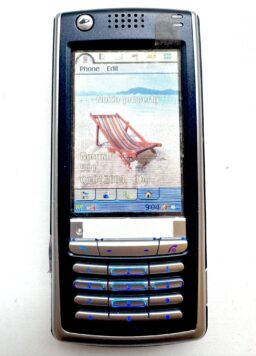
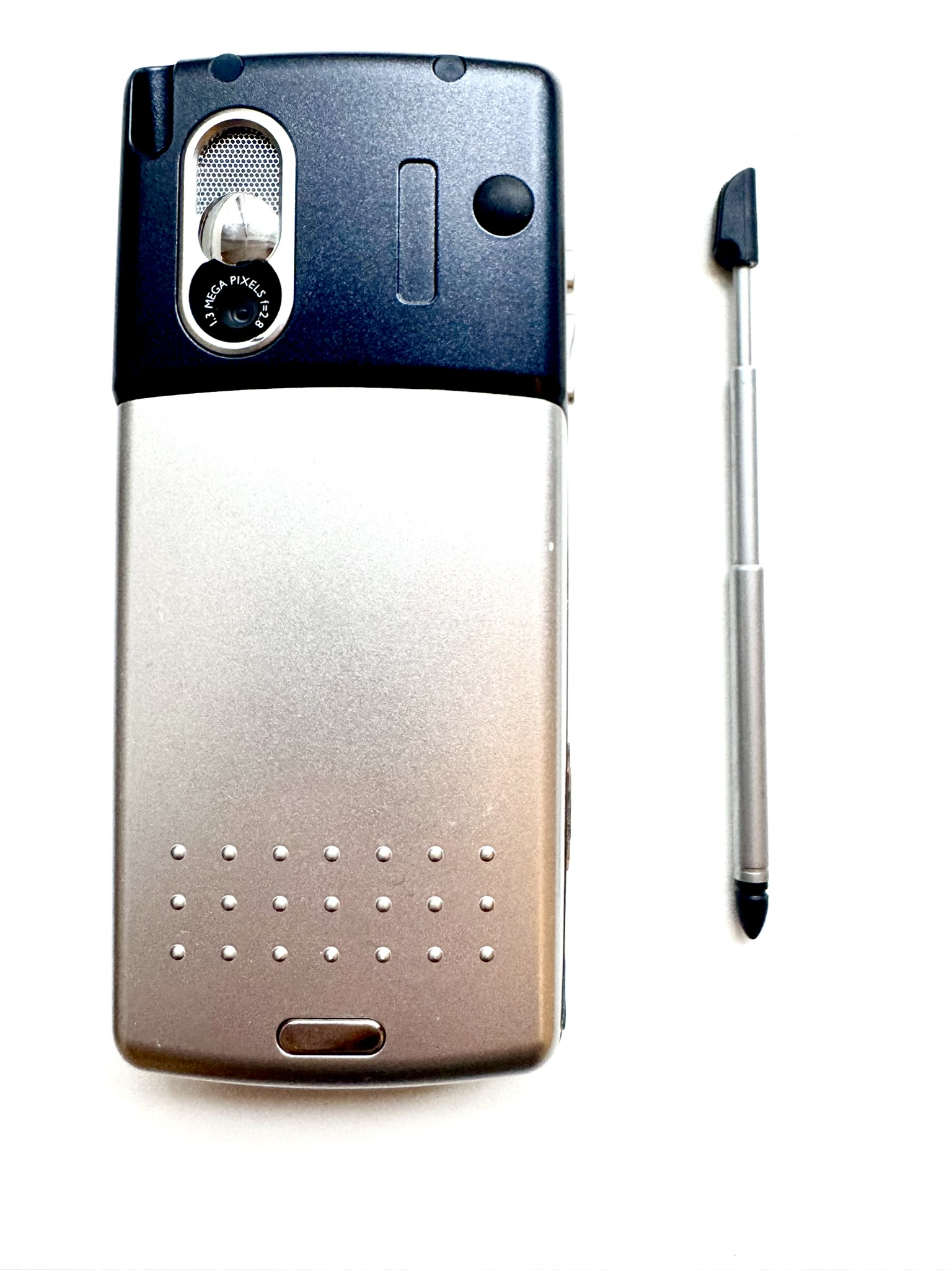
📰 Why this phone matters: This unit is an ultra-rare BenQ P31 engineering prototype, representing one of the most historically significant missing links in Symbian UIQ development. Originally conceived around 2003-2004 as BenQ’s entry into the high-end touchscreen smartphone market, the P31 was built on Symbian OS 7 with UIQ 2.1 and designed as a compact, stylus-driven business device. It never reached commercial release, and only a very small number of early engineering samples were ever produced.This unit stands out immediately. It carries no BenQ branding, no label, no IMEI sticker, and no certification markings whatsoever, confirming it as a direct engineering lab device belonging to the EVT or very early DVT phase. Even more extraordinary, it boots with Nokia startup logos, revealing its role in one of the most unusual collaborations in Symbian history: the transformation of the BenQ P31 hardware platform into the commercial Nokia 6708.
During development, Nokia needed a UIQ device for Asian markets but did not want to engineer new UIQ hardware from scratch. Instead, Nokia evaluated the P31 as a potential base. This unit belongs to the narrow transitional window where Nokia UIQ firmware branches were loaded onto BenQ hardware to test compatibility, performance, and UIQ adaptation. Evidence of this includes Nokia boot screens, Nokia font structures, early Nokia overlays for PIM apps, and firmware variant directories corresponding to internal Nokia identifiers such as E582 or UIQ test builds. This type of cross-firmware contamination is almost never seen outside internal Symbian development environments.
Hardware examination indicates the original P31 layout: touchscreen with stylus input, UIQ key structure, OMAP-based platform, VGA camera module, and early UIQ 2.1 software stack. The matte prototype plastics, generic shielding, unbranded flex cables, and absence of final molding marks clearly separate it from the later Nokia 6708 retail hardware. Meanwhile, the Nokia firmware elements confirm the device was active during the validation period before Nokia redesigned the shell, finalized the PCB revisions, and prepared the 6708 for market release.
Historically, the BenQ P31 is known from documents, press mentions, and UIQ SDK references but extremely few physical units survive. Most were destroyed when BenQ cancelled its Symbian efforts and shifted to Windows Mobile and Siemens acquisition projects. Estimates based on engineering validation patterns suggest fewer than 40 to 80 EVT devices were made, with only a fraction entering Nokia testing flows. Units that display Nokia boot elements but retain full P31 prototype hardware are believed to number in the low single digits, making this unit one of the rarest Symbian UIQ artifacts in private hands.
Beyond rarity, this unit captures an entire unspoken chapter of smartphone evolution. It demonstrates how early OEM partnerships shaped device portfolios, how Symbian UIQ was adapted beyond Sony Ericsson hardware, and how Nokia explored touchscreen ecosystems prior to its Series 90 and later platforms. The P31 shows that Nokia was more deeply involved in UIQ experimentation than publicly acknowledged, using BenQ hardware as a bridge to enter UIQ markets quickly. It also highlights the technical flexibility of Symbian OS 7 and UIQ 2.1, which could be made to run on foreign hardware architectures with relatively limited porting.
For collectors, this unit sits at the highest echelon of prototype rarity. It is a never-released engineering platform, positioned between two manufacturers, with firmware that exposes internal development layers normally hidden inside corporate labs. It is a device that not only predates the Nokia 6708, but directly influenced its existence. As a result, this BenQ P31 prototype is not just a smartphone; it is a critical historical artifact documenting the intersection of BenQ’s abandoned Symbian ambitions and Nokia’s strategic adaptation of UIQ technology.
This unit, with its untouched prototype housing, label-free chassis, stylus support, UIQ interface, and Nokia boot sequences, stands as one of the finest surviving examples of transitional Symbian engineering hardware. It is a cornerstone piece for any top-tier collection focused on prototypes, UIQ development, or cross-manufacturer Symbian evolution.
📝 Reviews when released: N/A 💔
-
Ericsson Futaba | Unreleased Prototype
Quick View💎 Rarity Index: X (Mystical Prototype)
👁 Evaluation in my collection: BNIB – 10/10
⏱ Life timer: 0m | 📦 Boxed: NO
📅 Release Year: 2000 | 💰 Release Price: N/A
📊 Units Sold: 0
📰 Why this phone matters: Ericsson A2618 offers WAP and SMS technology, it becomes the fourth Ericsson mobile phone with WAP function (the other belongs to MC218, R320 and R380).Based on a new platform ‘Michelle’, it features a sensuous “S-curve” design and contains the latest developments in software and functionality.
The address book could store up to 100 telephone numbers and associated names in the phone’s memory with voice activated dialling and short cut keypad dialling for the first 9 entries. The call lists recorded the last 20 dialled, answered or missed calls.
The A2618s included time and date functions, an alarm clock, a stop watch, call timers and basic function calculator. It could also send and receive SMS text messages and allowed levels of personalisation by selecting from a range of pre-loaded ring tone melodies, by composing your own ring tone and by changing the external covers.
Three games were also provided on the phone, Tetris, Erix and E-Maze. Finally, limited Internet access was provided to mobile services using the Wireless Application Protocol (WAP) over an SMS bearer.
📝 Reviews when released: Ericssoners 🔗
-
Ericsson Futaba | Unreleased Prototype
Quick View📦 Collector-to-Collector Transaction
This item is from a private collection and sold as-is for collectors only. All devices have been verified for authenticity and condition as described, but no warranty or guarantee is provided. This is a private sale between individuals and not a commercial business transaction.
💎 Rarity Index: X (Mystical Prototype)
👁 Evaluation: BNIB – 10/10
⏱ Life timer: 0m 📦 Boxed: NO
📰 About this collectible: Ericsson A2618 offers WAP and SMS technology, it becomes the fourth Ericsson mobile phone with WAP function (the other belongs to MC218, R320 and R380).Based on a new platform ‘Michelle’, it features a sensuous “S-curve” design and contains the latest developments in software and functionality.
The address book could store up to 100 telephone numbers and associated names in the phone’s memory with voice activated dialling and short cut keypad dialling for the first 9 entries. The call lists recorded the last 20 dialled, answered or missed calls.
The A2618s included time and date functions, an alarm clock, a stop watch, call timers and basic function calculator. It could also send and receive SMS text messages and allowed levels of personalisation by selecting from a range of pre-loaded ring tone melodies, by composing your own ring tone and by changing the external covers.
Three games were also provided on the phone, Tetris, Erix and E-Maze. Finally, limited Internet access was provided to mobile services using the Wireless Application Protocol (WAP) over an SMS bearer.
✓ Verification Checklist
Authenticity & Condition:
– Originality verification (exterior, labels)
– Matching IMEI (box, label, motherboard)
– Physical condition assessment (scratches, cracks, screws)Functional Testing:
– Powers on
– Display functionality
– Camera (when applicable)
– Vibration mechanism (when applicable)
– Security code
– Charging
– Network connectivity
– Call functionality including speaker (non-BNIB units on European networks)Additional specific tests available upon request.
-
Ericsson Futaba | Unreleased Prototype
Quick View📦 Collector-to-Collector Transaction
This item is from a private collection and sold as-is for collectors only. All devices have been verified for authenticity and condition as described, but no warranty or guarantee is provided. This is a private sale between individuals and not a commercial business transaction.
💎 Rarity Index: X (Mystical Prototype)
👁 Evaluation: BNIB – 10/10
⏱ Life timer: 0m 📦 Boxed: NO
📰 About this collectible: Ericsson A2618 offers WAP and SMS technology, it becomes the fourth Ericsson mobile phone with WAP function (the other belongs to MC218, R320 and R380).Based on a new platform ‘Michelle’, it features a sensuous “S-curve” design and contains the latest developments in software and functionality.
The address book could store up to 100 telephone numbers and associated names in the phone’s memory with voice activated dialling and short cut keypad dialling for the first 9 entries. The call lists recorded the last 20 dialled, answered or missed calls.
The A2618s included time and date functions, an alarm clock, a stop watch, call timers and basic function calculator. It could also send and receive SMS text messages and allowed levels of personalisation by selecting from a range of pre-loaded ring tone melodies, by composing your own ring tone and by changing the external covers.
Three games were also provided on the phone, Tetris, Erix and E-Maze. Finally, limited Internet access was provided to mobile services using the Wireless Application Protocol (WAP) over an SMS bearer.
✓ Verification Checklist
Authenticity & Condition:
– Originality verification (exterior, labels)
– Matching IMEI (box, label, motherboard)
– Physical condition assessment (scratches, cracks, screws)Functional Testing:
– Powers on
– Display functionality
– Camera (when applicable)
– Vibration mechanism (when applicable)
– Security code
– Charging
– Network connectivity
– Call functionality including speaker (non-BNIB units on European networks)Additional specific tests available upon request.
-
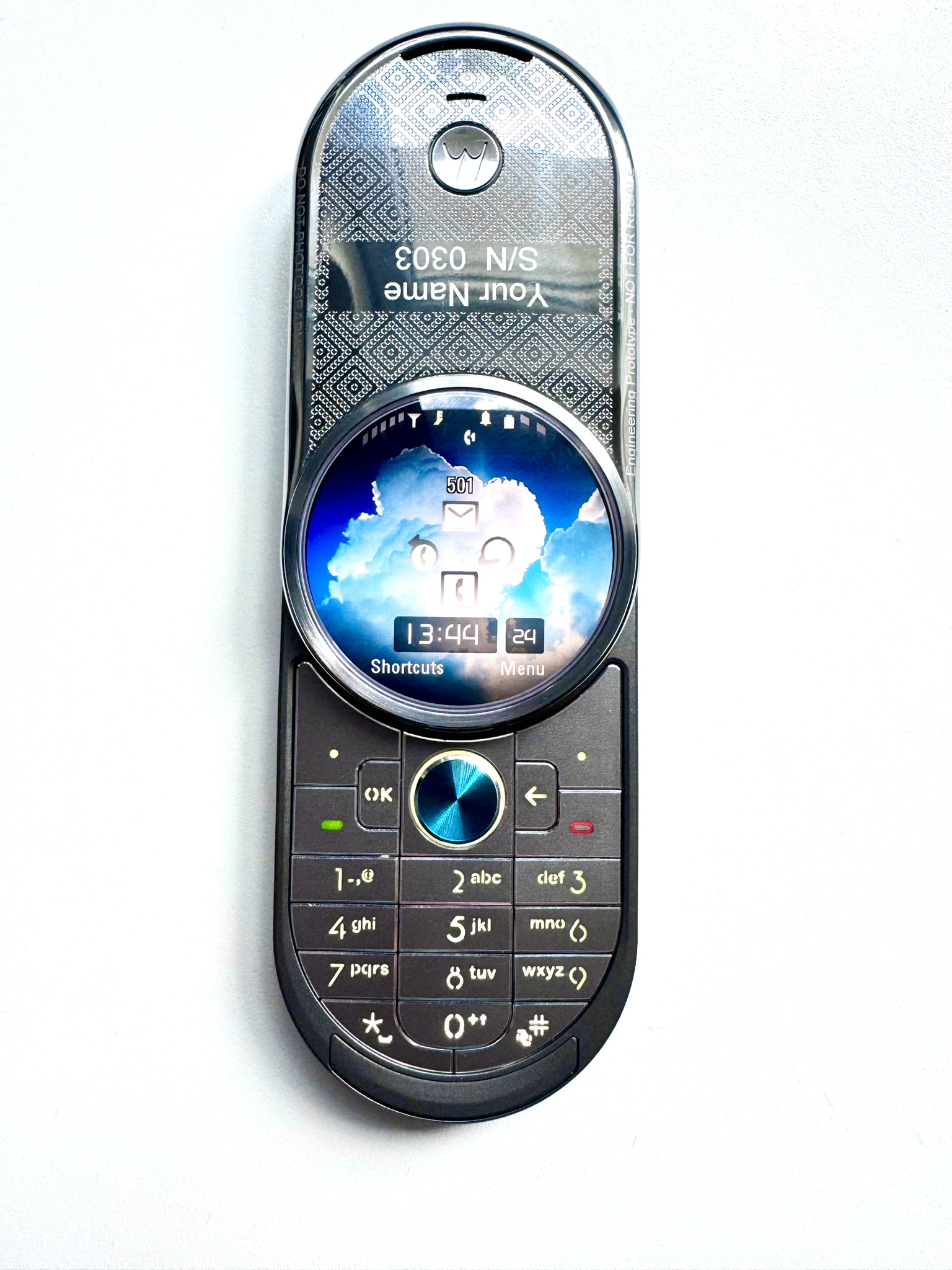
Motorola Aura R1 Unreleased Prototype : Engineering Design S/N 0303
Quick View💎 Rarity Index: X (Mystical Prototype)
⭐ WOW Factor: Saphire glass, stainless steel, swivel like opening mechanism, Swis Made gears for the mechanism.
👁 Evaluation in my collection: Great – 9.5/10
⏱ Life timer: N/A | 📦 Boxed: NO
📅 Release Year: 2008 | 💰 Release Price: ~2000$
📊 Units Sold: 0
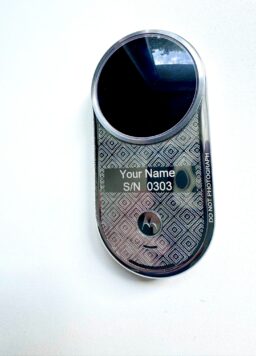
📰 Why this phone matters: A masterpiece from Motorola’s most ambitious luxury project, this is an extremely early pre-production Aura prototype, created before the final 2008 model and never meant to leave the design labs. It carries full engineering markings – “Prototype – Not For Resale”, “Do Not Photograph”, and a personalized engineer-assigned S/N (0303) – making it a true artifact of Motorola’s internal design history.Unlike the retail Aura, this prototype features a unique diamond-etched metal housing, a larger mechanical gear window, unreleased keypad styling, and early internal board architecture. It represents the original mechanical vision for the Aura’s iconic rotating display mechanism – built more like a Swiss watch movement than a phone.
Surviving prototypes of the Aura are almost mythical.
One with unreleased design, internal engraving, and full confidentiality markings is beyond rare – a museum-level piece and a highlight for any high-end mobile collection.📝 Reviews when released: Cnet.Com 🔗
-
Motorola E18 Ivory Unreleased Prototype: The Lost Luxury
Quick View💎 Rarity Index: X (Mystical Prototype)
Ultra expensive luxury phone after Aura
👁 Evaluation in my collection: 9/10 – 10/10
⏱ Life timer: N/A | 📦 Boxed: NO
📅 Release Year: 2008 | 💰 Release Price: ~2000
📊 Units Sold: 0 unreleased
📰 Why this phone matters: The Motorola E18 Ivory is one of the rarest and most intriguing unreleased devices ever created by Motorola. Designed as a luxury slider phone with high-end materials and a unique dual-stop sliding mechanism, the E18 represented a bold and experimental direction that Motorola never brought to market. This prototype was intended to compete in the ultra-premium segment, with the stainless steel production version carrying a projected retail price of around 2000 eur;, placing it far above standard Motorola models of the era.This unit is an Ivory prototype in mint, as new, fully working condition, making it an exceptionally rare survivor. Very few E18 units were ever completed, and prototypes were typically scrapped, destroyed, or left non-functional. Having a working device in such preserved condition is considered unicorn-level rarity among Motorola collectors.
The defining feature of the E18 is its dual-stop slider mechanism. The first sliding step reveals a set of function keys, while the second sliding step exposes the complete T9 keypad. This layered mechanical design is unlike any mass-produced Motorola phone and reflects a level of engineering experimentation seen only in internal development devices. The combination of compact size, premium detailing, and complex mechanical motion makes the E18 one of the most innovative unreleased designs Motorola ever attempted.
Equipped with a 3 MP camera, premium external materials, and a sleek luxury aesthetic, the E18 Ivory was planned as a flagship device aimed at high-end buyers. Its design blends minimalist clean lines, luxury cues, and an advanced sliding system that offers a distinct tactile experience. The overall look and feel suggest that Motorola intended the E18 to stand alongside boutique luxury brands rather than mainstream consumer models.
Because the E18 project was cancelled before launch, surviving prototypes are extremely scarce. Most did not reach a stable operational state or were never finished to production quality. A mint, fully operational Ivory prototype is almost impossible to find, and it represents one of the most important pre-production artifacts in Motorola’s history. This device stands as a rare window into a luxury direction the company never pursued, making it a true collector trophy and a highlight in any high-end mobile phone collection.
📝 Reviews when released: PhoneArena.com 🔗
-
Nokia 3128 Prototype “ID SAMPLE”: BenQ Hybrid | Unreleases Colour Light Blue
Quick View💎 Rarity Index: X (Mystical Prototype)
⭐ WOW Factor: Represents a short-lived moment when BenQ attempted to showcase its ability to deliver a complete UI solution, hoping to convince Nokia that full software outsourcing for low-cost devices was feasible.
The existence of this device is proof of a BenQ-driven initiative, briefly evaluated and ultimately rejected by Nokia.
Only a handful of such BenQ UI?on?Nokia hardware identity samples were ever created, making surviving units exceptionally rare.👁 Evaluation in my collection: New – 10/10
🕵 Nokia Codename: Kirin
⏱ Life timer: 0 | 📦 Boxed: NO
📅 Release Year: 2003 | 💰 Release Price: ~300 $
📊 Units Sold: ~15M (final units)
📰 Why this phone matters: This device is one of the strangest, most intriguing Nokia 3128 variants ever uncovered. Externally it follows the familiar engineering path of the 3128 platform, but once powered on, everything breaks the pattern. There is no Nokia branding in the software, no Nokia splash screen, no Series 40 heritage, instead it boots into a BenQ-style interface, complete with custom icons, Chinese menu structures, and UI elements never found on any released Nokia product.The label inside reads “ID SAMPLE”, marking it as a pre-production identity unit used for internal validation during Nokia’s ODM sourcing phase. These ID Samples were not mass-produced, not distributed to carriers, and not meant to survive outside the labs. The combination of Nokia hardware and a BenQ firmware stack indicates that this device comes from the period when Nokia briefly explored outsourcing complete handset UI development to third-party Asian manufacturers before ultimately abandoning the idea.
The handwriting is a timestamp from the engineering team: “August 16, 2004.”
It marks when this specific prototype was logged, flashed, or validated.The software screens match early prototypes from unreleased BenQ flip designs, particularly those associated with the never-released BenQ A-Series Asian clamshells, hinting that this firmware was being evaluated on Nokia shells for cost and speed benchmarking. The UI animations, iconography, and color palettes align far more with BenQ’s internal 2004-2005 development than with anything Nokia ever shipped.
A detail that further confirms how early this unit is, the SIM card lock mechanism is completely missing, leaving the slot open and unfinished exactly as seen on raw factory evaluation samples. Even more telling, the device reports an IMEI of 0000000, a clear sign of a pre-IMEI-burning engineering stage where the radio stack and identity fields had not yet been finalized.
The mysterious “cmg” sticker seen on the display is consistent with internal testing labels used during configuration management, marking the unit for firmware staging or UI evaluation. These stickers usually identify a branch, a module, or a build handler inside the engineering workflow and marks it as a monitored experimental build – exactly the kind of anomaly this prototype represents.
All the elements together, the missing SIM lock, the IMEI 0000000, the absent Nokia splash, the BenQ interface, the “ID SAMPLE” marking, the prototype hardware architecture, and the inconsistencies between software and chassis, place this device among the rarest 3128 developmental anomalies, far more unusual than standard prototypes or early F-series units. It is a tangible piece of the abandoned Nokia-BenQ convergence experiments, where Nokia evaluated whether foreign UI stacks could run on their hardware to accelerate low-cost market entry.
A true one-off laboratory hybrid, and one of the most unusual pre-production Nokia 3128 derivatives ever documented.
📝 Reviews when released: N/A 💔
-
Nokia 3128 Prototype F5.0 : Codename Kirin| Unreleased Colour (Orange)
Quick View💎 Rarity Index: S (Ultra Rare)
⭐ WOW Factor: Represents a short-lived moment when BenQ attempted to showcase its ability to deliver a complete UI solution, hoping to convince Nokia that full software outsourcing for low-cost devices was feasible.
The existence of this device is proof of a BenQ-driven initiative, briefly evaluated and ultimately rejected by Nokia.
Only a handful of such BenQ UI?on?Nokia hardware identity samples were ever created, making surviving units exceptionally rare.👁 Evaluation in my collection: New – 10/10
🕵 Nokia Codename: Kirin
⏱ Life timer: 0 | 📦 Boxed: NO
📅 Release Year: 2003 | 💰 Release Price: ~300 $
📊 Units Sold: ~15M (final units)
📰 Why this phone matters: A remarkably rare piece of Nokia’s China-market CDMA history, the Nokia 3128 (Type RH-72) stands apart from the brand’s mainstream lineup.
Developed during Nokia’s short-lived collaboration with BenQ/Qisda for ODM CDMA devices, the 3128 blends Nokia’s software customisation with a hardware platform originating from BenQ’s Kirin F5.0 design family – a handset architecture that BenQ itself never released commercially.This prototype unit, finished in an unreleased Orange colourway, represents a pre-production stage never intended for the public market. The colour scheme follows BenQ’s design language rather than Nokia’s, making it instantly identifiable among collectors familiar with early-2000s ODM manufacturing. Hardware elements – including the casing geometry, battery interface and Qualcomm-based CDMA internals – further underline its BenQ lineage while still carrying official Nokia branding, labels and firmware.
The device offered compact CDMA 1X connectivity, a lightweight clamshell form factor and the simplified user interface typical of Nokia’s China-exclusive CDMA portfolio of the era.
This example is preserved brand new, never used in the collection – a highly desirable state for a model whose production numbers were already extremely small.
A rare convergence of two major manufacturers’ design philosophies, the Nokia 3128 prototype in Orange stands as one of the most distinctive and least-known ODM Nokia variants ever created.
📝 Reviews when released: N/A 💔
-
Nokia 3250 Prototype F5.0: Black & Pink
Quick View💎 Rarity Index: S (Ultra Rare)
👁 Evaluation in my collection: Great – 9.8/10
🕵 Nokia Codename: Thunder
⏱ Life timer: 0 | 📦 Boxed: NO
📅 Release Year: 2006 | 💰 Release Price: ~300 €
📊 Units Sold: ~1.5M (final units)
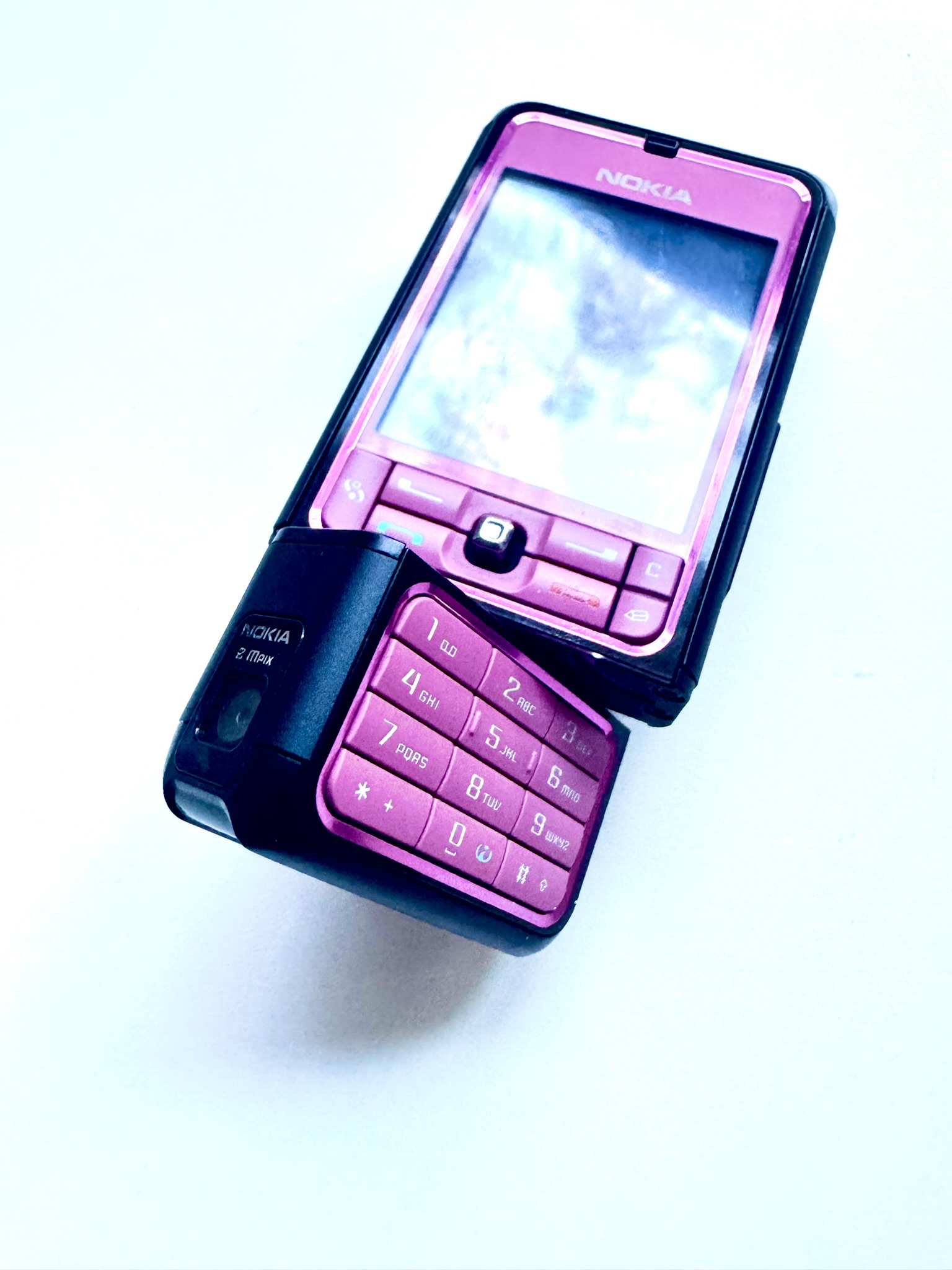
📰 Why this phone matters: Rare Nokia 3250 RM-38 engineering prototype featuring Nokia’s F5/NCT/BDA validation markings. Labeled Prototype – Not for Sale – Property of Nokia and built with pre-production hardware, prototype IMEI, and internal test circuitry. Although the Black & Pink shell reached retail, this device is a true R&D unit used for field testing (F5), Nokia Compatibility Testing (NCT – accessory, firmware, Bluetooth, and sync compatibility validation), and Board Design Assessment (BDA – PCB layout, electrical stability, and radio integrity evaluation). A prototype with NCT + BDA validation tags is exceptionally rare, as these were normally destroyed after evaluation, making this one of the few surviving engineering-stage 3250 units-a remarkable piece of Nokia’s swivel-phone development history.📝 Reviews when released: cNET 🔗
-
Nokia 3350 Prototype P2.3 : “Ladybird” Early Engineering
Quick View💎 Rarity Index: S (Ultra Rare)
👁 Evaluation in my collection: New – 10/10
🕵 Nokia Codename: LadyBird
⏱ Life timer: 0 | 📦 Boxed: NO
📅 Release Year: 2002 | 💰 Release Price: N/A
📊 Units Sold: ~8M (final units)
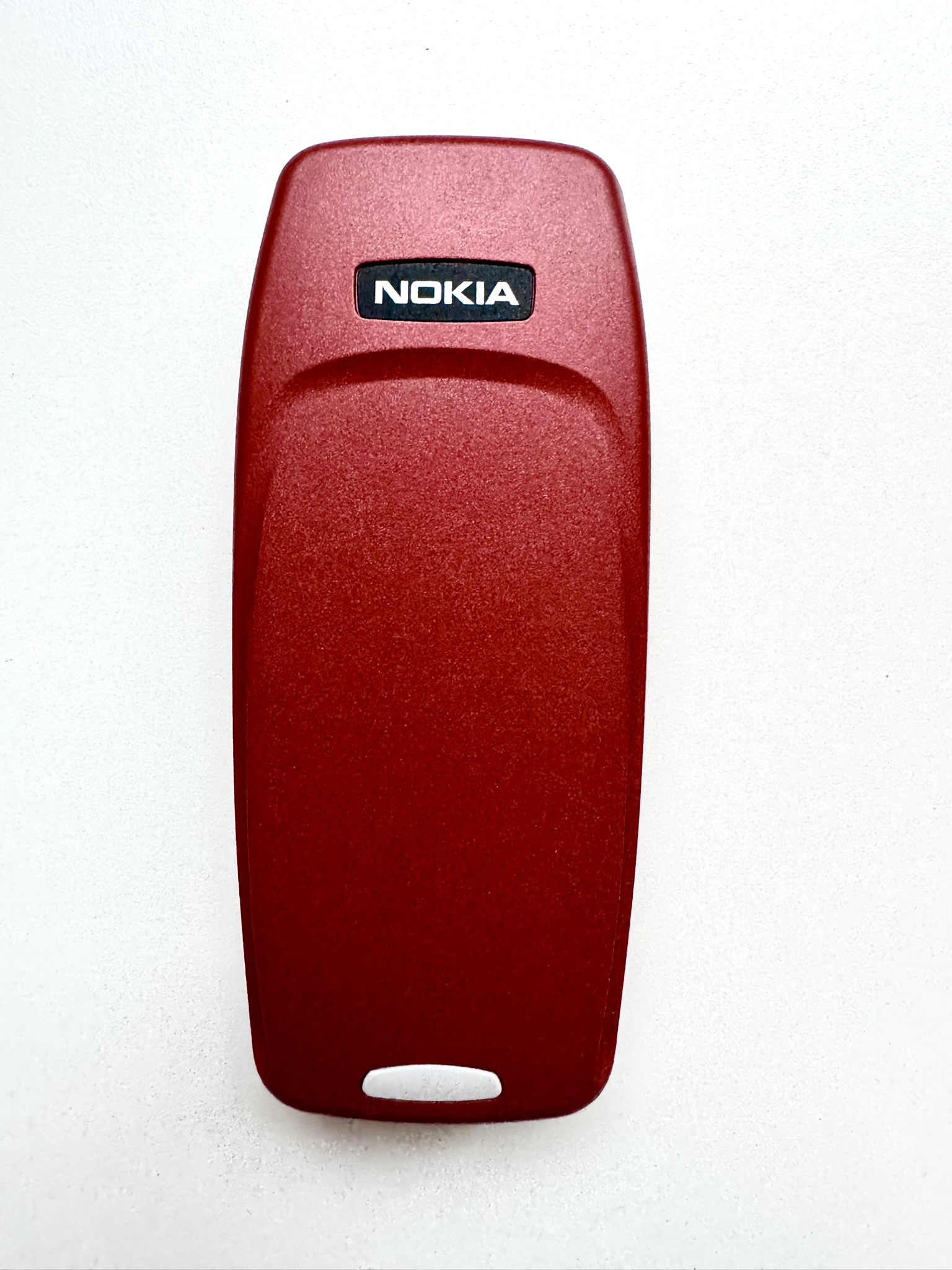
📰 Why this phone matters: An exceptionally rare Nokia 3350 NHM-9NX prototype, built during the P2.3 engineering phase of Nokia’s internal development cycle. Carrying the codename “Ladybird”, this unit predates the commercial Nokia 3350 and represents one of the earliest hardware validation builds of the series.Prototypes in the P-series (especially below P3.0) were never intended for public exposure and were used strictly within Nokia’s labs for early software integration, RF calibration, UI tuning and keypad response testing. This P2.3 unit retains all the classic prototype signatures:
PROTO – P2.3 designation
Pre-release internal model name “Ladybird”
No commercial model number printed
Simplified regulatory labeling
Early keypad and housing materials
The front shell features a colour tone and paint texture not identical to the final retail 3350, confirming it as an early body variant used before mass-production plastics and colouring were locked. The keypad shape and iconography also resemble transitional test designs typical of P-series engineering handsets.
As part of Nokia’s early-2000s mid-range development line, the 3350 was known for its rugged build, SMS chat features, WAP support, customizable profiles and rock-solid battery life. This prototype offers a direct look into the internal pre-production evolution of one of Nokia’s most widely used platforms in Asia and eur;ope.
📝 Reviews when released: N/A 💔
-
Nokia 3350 Prototype B2.1 : “Ladybird” Early Engineering
Quick View💎 Rarity Index: S (Ultra Rare)
👁 Evaluation in my collection: New – 10/10
🕵 Nokia Codename: LadyBird
⏱ Life timer: 0 | 📦 Boxed: NO
📅 Release Year: 2002 | 💰 Release Price: N/A
📊 Units Sold: ~8M (final units)
📰 Why this phone matters: A highly rare Nokia 3350 NHM-9NX prototype from the B-series engineering phase, carrying the internal codename “Ladybird”.
This B2.1 prototype predates the commercial Nokia 3350 by a significant margin and belongs to one of Nokia’s earliest functional validation waves – far earlier and far scarcer than the P-series engineering units.The B-series prototypes were used exclusively within Nokia’s R&D labs during the earliest stages of hardware and firmware development. These devices formed the foundation of the 3350 platform, serving for keypad matrix testing, UI logic integration, RF tuning, electrical stability checks, and early material experimentation. Units at this stage were never intended to leave Nokia’s possession.
This particular sample is exceptional thanks to:
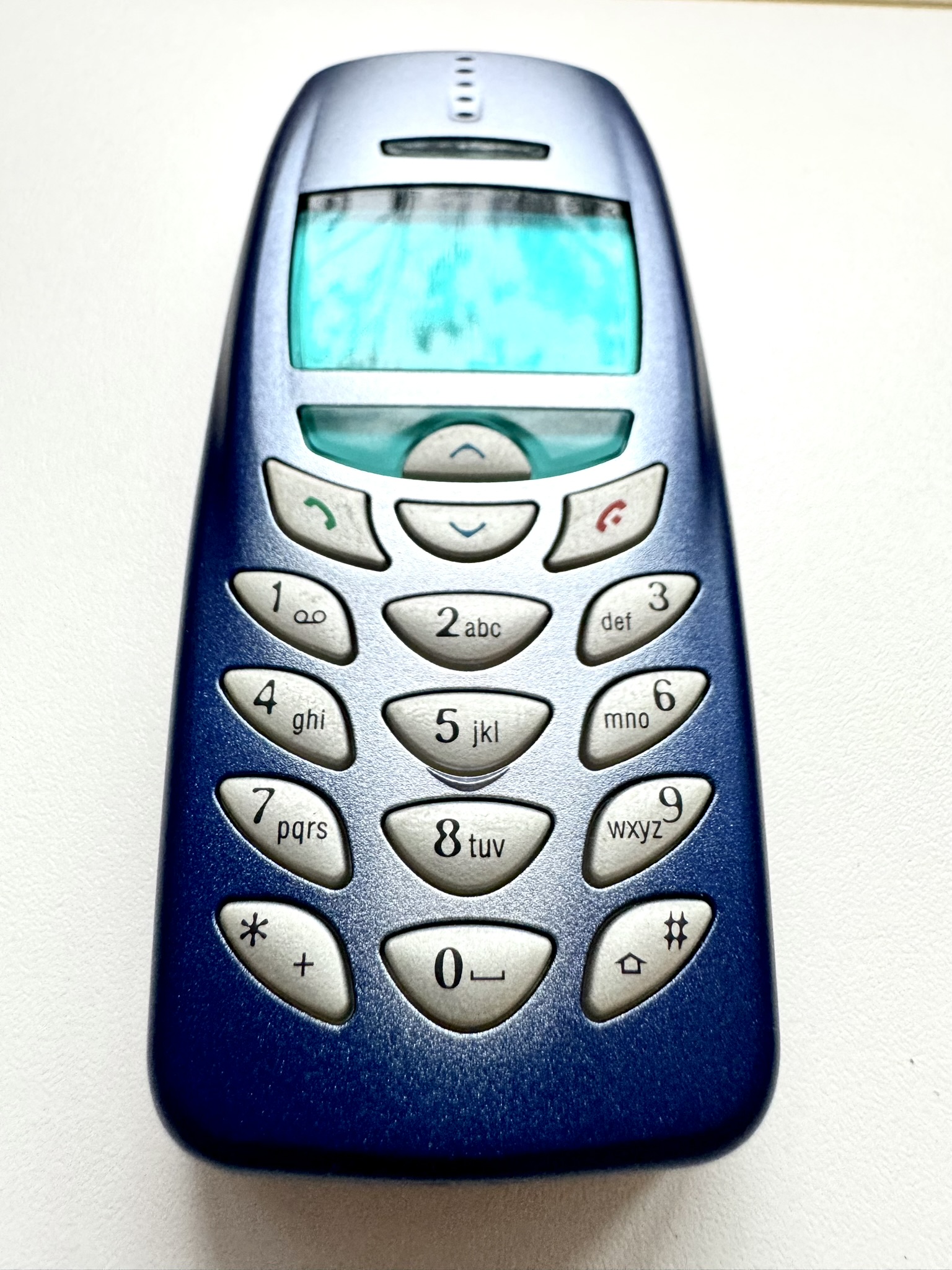
PROTO – B2.1 designation (rare early engineering phase)
Internal model name “Ladybird”
Experimental blue housing with pre-production paint texture
Unreleased keypad variant, featuring a unique key-shape geometry and distinct iconography
Early-mould plastics not matching final production tolerances
Simplified internal regulatory labeling
?? Important rarity note:
The internal chassis dimensions of this B2.1 prototype differ from all later builds. No commercial Nokia 3350 back cover – and not even P-series prototype back covers – will fit this handset. This confirms that the device comes from an early hardware revision before Nokia finalized the external shell specifications. Such incompatibility is typical only for B-series engineering samples and dramatically increases its historical uniqueness.The blue front shell also features a colour tone not used in mass production, showing Nokia’s exploration of material finishes before final design locking.
As an early DCT-3 era engineering artefact, this B2.1 “Ladybird” prototype is exceptionally rare. With its unique housing geometry, non-final keypad, and unmatched chassis dimensions, it stands as a museum-grade piece that represents a developmental phase almost never seen outside Nokia’s own engineering teams.
A highly valuable and distinctive addition to any advanced Nokia prototype collection.
📝 Reviews when released: N/A 💔
-
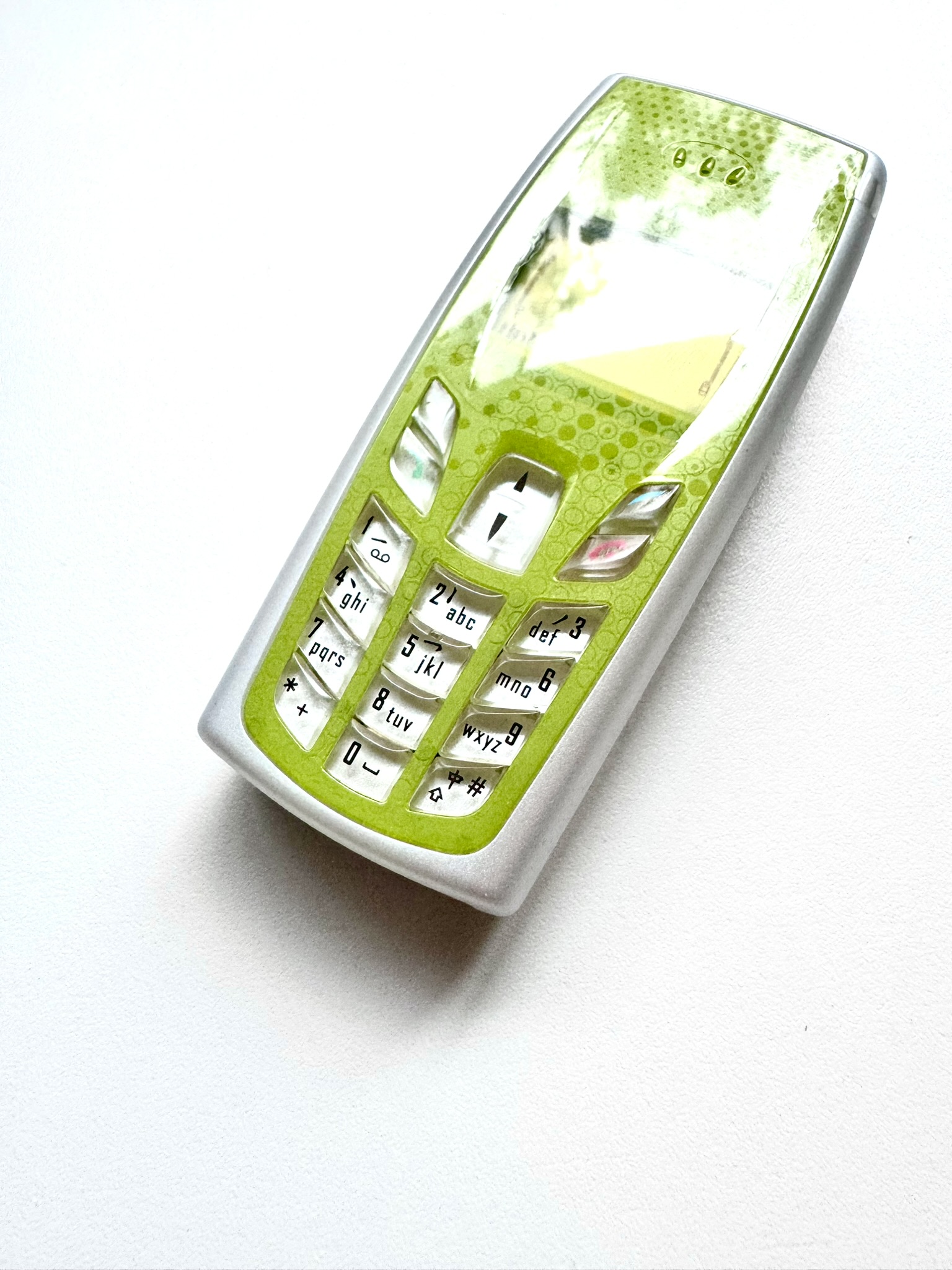
Nokia 3610 Prototype B5.0 : Rare Lime Green Variant
Quick View💎 Rarity Index: S (Ultra Rare)
👁 Evaluation in my collection: Great – 9.5/10
🕵 Nokia Codename: LadyBird
⏱ Life timer: 12h | 📦 Boxed: NO
📅 Release Year: 2002 | 💰 Release Price: 150 €
📊 Units Sold: ~1M (final units)
📰 Why this phone matters: A genuine Nokia 3610 Prototype B5.0 (Type NAM-1), originating from Nokia’s internal late engineering phase. The PROTO B5.0 marking, the blank Model field, and the early-format Nokia R&D label identify it as a true pre-production unit used for hardware validation, firmware testing, and RF checks before the model entered final approval.Although this prototype uses a housing and keypad identical to later retail versions, the internal label and hardware revision confirm its role as an authentic Nokia lab device – produced in small quantities and never intended for commercial distribution.
A compact but historically significant DCT4-era engineering sample, and a solid rarity for any serious Nokia prototype collection.
📝 Reviews when released: N/A 💔