

">

Showing all 3 results
-


Nokia 1011: The mass GSM Genesis
Quick View💎 Rarity Index: B (Uncommon)
⭐ WOW Factor: The first mass produced GSM phone
👁 Evaluation in my collection: Great – 9/10
⏱ Life timer: N/A | 📦 Boxed: YES
📅 Release Year: 1992 | 💰 Release Price: ~2500 DM
📊 Units Sold: ~100k
📰 Why this phone matters: The Nokia 1011 is one of the most historically significant mobile phones ever produced, recognized as the first mass produced GSM handset in the world. Released on 10 November 1992, the model number itself reflects the launch date. This device marks the beginning of the digital mobile age and the starting point of Nokia’s rise as the dominant global mobile manufacturer. It was also sold as the Mobira Cityman 2000 during the transitional phase between Mobira and Nokia Mobile Phones branding.This unit is BNIB and comes in an extremely rare green housing, a color variant produced in very small numbers compared to the standard black version. Finding any Nokia 1011 in unused condition is exceptionally difficult. Finding one in green, boxed, complete, and fully functional places this device among the rarest known surviving examples of the 1011 family.
The Nokia 1011 features the earliest generation of GSM 900 MHz hardware, a monochrome LCD, an extendable antenna, and memory for 99 contacts. It predates the introduction of the Nokia ringtone by two years and represents the fundamental transition from analog communication to digital network reliability. In 1992 it retailed for about 2500 DM, the equivalent of roughly 1797 eur; today, reflecting its status as a premium business handset for early adopters.
Physically, the device follows the industrial design of the early 1990s with a tall form factor, robust plastics, and Nokia’s first steps into what would become its signature user interface. The green finish adds a unique visual identity rarely seen on this model and makes this specific unit highly desirable for collectors.
Because the 1011 was heavily used by professionals and early GSM adopters, most surviving units are worn, incomplete, or non functional. A BNIB example with manual, box, and rare color housing is almost impossible to find. This rare green Nokia 1011 stands as a genuine museum grade piece, directly connected to the origins of digital mobile communication and the earliest days of the GSM era.
📝 Reviews when released: N/A 💔
-
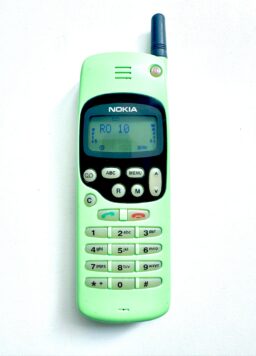

Nokia 1610
Quick View💎 Rarity Index: C (Common)
👁 Evaluation in my collection: Great – 9/10
⏱ Life timer: N/A | 📦 Boxed: YES
📅 Release Year: 1996 | 💰 Release Price: N/A
📊 Units Sold: ~10M
📰 Why this phone matters: Nokia 1610 is a mobile phone model manufactured by Nokia. It complemented the Nokia 2110 business model, but had significantly fewer features. It was introduced in April 1996 and released in May and became highly popular at the time.
The phone had a monochromatic display which could show two rows of text at a time. The operating manual did not mention a possibility to send text messages, but at least units sold from 1996 and onwards included the function. The SMS capable version was called 1610 Plus. The phone used an external rigid antenna, but had a groove on the inside of the battery to accommodate a pull-out type antenna. The 1610 used a credit card size SIM-card, and was powered by a NiMH type battery with a capacity of 600 mAh.📝 Reviews when released: N/A 💔
-


Nokia Ringo 3
Quick View💎 Rarity Index: A (Rare)
👁 Evaluation in my collection: BNIB SEALED – 10/10
⏱ Life timer: 0 | 📦 Boxed: YES
📅 Release Year: 1998 | 💰 Release Price: N/A
📊 Units Sold: ~1M
📰 Why this phone matters: The Nokia rinGo was designed to be easy to use straight out of the box and was cheap to buy, due to special mobile carrier tariffs.[An ETACS version of the rinGo with minor design changes was launched in 1997 in the United Kingdom and Austria. It was the UK’s first pay as you go Nokia handset through Vodafone’s pay as you talk package. It was also sold in Thailand under the name Wave900.
In press releases it was also called a ‘concept’, a way of easily buying and using a mobile phone without operator registration. Nokia unusually created a unique “rinGo” brand and logo for it. ater in October 1998 a third (NHX-7) model was released for ETACS in Italy and Spain (the latter via operator Moviline). It featured the “Navi-key” like on the GSM Nokia 3110 and Nokia 5110 and had its top antenna positioned in the middle.
Nokia rinGo 3
The phones have the capacity to store about 60 contacts. Calculator, Watch and Calendar were pre installed on the handset.Nokia marketed original rinGo targeting women and children. However it gained a negative reputation and in Sweden earned the nickname “bimbo phone”, leading to low sales.Interest and popularity of the rinGo quickly faded and it has been largely forgotten since.
📝 Reviews when released: N/A 💔