

">

Showing 1–12 of 45 results
-


Nokia 6100
Quick View💎 Rarity Index: C (Common)
⭐ WOW Factor: The lightest Nokia phone with color display and a full 12-key keypad at the time
👁 Evaluation in my collection: New – 10/10
🕵 Nokia Codename: Maxwell
⏱ Life timer: 0m | 📦 Boxed: YES
📅 Release Year: 2002 | 💰 Release Price: ~350 $
📊 Units Sold: ~15M
📰 Why this phone matters: The Nokia 6100 was Nokia’s lightest phone with a full 12-key keypad at the time. Combined with its battery, it weighs only 76 grams (2.68 ounces) and measures 102 x 44 x 13.5 mm. Its smaller size compared with other contemporary phones might make it difficult for the elderly, or people with large fingers, to use its keypad. The phone supports Xpress-On covers, and is packaged along with any of 4 colours. Its feature set is very similar to the Nokia 7210, although with a more conservative design.📝 Reviews when released: Mobile Review 🔗
-


Nokia 6101
Quick View💎 Rarity Index: C (Common)
👁 Evaluation in my collection: As New – 9.9/10
🕵 Nokia Codename: Ediphix
⏱ Life timer: 1m | 📦 Boxed: NO
📅 Release Year: 2006 | 💰 Release Price: ~280 $
📊 Units Sold: ~10M
📰 Why this phone matters: The Nokia 6101, 6102, and 6102i are a line of popular Nokia mid-level clamshell cellphones that operate on GSM-850/1800/1900 MHz (some markets are GSM-900/1800/1900 MHz) frequencies released between middle 2005 and early 2006. The line was given the nickname Ediphix by Nokia employees.The differences between the 6101 and 6102 are very small and the only visible differences are the style of the keypads and front bezel plate. The 6102i is an updated version of the 6102 featuring Bluetooth capabilities and increased memory space. Another updated version of the 6101/6102 is the Nokia 6103.
Announced in 2005, the Nokia 6101 was also one of the last Nokia phones that still had an external antenna.
Its direct successor is the Nokia 6131, which includes microSD card slot and native USB connectivity.
📝 Reviews when released: Mobile Review 🔗
-
Nokia 6108: The First Handwriting Classic
Quick View💎 Rarity Index: A (Rare)
⭐ WOW Factor: Handwriting Recognition
👁 Evaluation in my collection: As New – 9.9/10
🕵 Nokia Codename: Libai
⏱ Life timer: 0 | 📦 Boxed: YES
📅 Release Year: 2003 | 💰 Release Price: 200 €
📊 Units Sold: ~300k
📰 Why this phone matters: The Nokia 6108 is one of the most unusual and innovative mass-released Nokia phones, designed specifically for the Chinese market and built around a unique flip-down handwriting input system. Released in the early 2000s, it combined a traditional candybar keypad with a dedicated handwriting pad hidden beneath the keys. The included stylus, neatly stored on the back of the device, enabled users to write Chinese or English characters directly onto the phone, making the 6108 a remarkably advanced hybrid device for its era.This full box example is extremely rare. Most 6108 units were heavily used in China and Southeast Asia, where handwriting input was a daily necessity. As a result, surviving phones usually show significant wear and often lack the stylus, manuals, or original packaging. A complete, intact full box with all accessories is very hard to find today and greatly increases the collectible value of this model.
With GPRS, MMS, email, Java applications, SyncML support, a two-way English/Chinese dictionary and speakerphone, the 6108 offered a feature set far beyond standard Series 40 devices of its time. Its IR port enabled early PC synchronization long before modern wireless standards became common.
Internally known as LiBai, the 6108 reflects Nokias experimental phase, merging conventional keypad use with stylus-driven handwriting input long before capacitive touchscreens became mainstream. Its distribution was limited to Asia-Pacific markets, and because it was heavily used for educational, business and translation purposes, complete boxed units like this one are exceptionally hard to source.
With its flip-down handwriting pad, integrated stylus, region-specific firmware and fully intact accessory set, this Nokia 6108 stands as a distinctive and rare piece of Nokia innovation, showcasing the company’s creative engineering during the early 2000s.
📝 Reviews when released: N/A 💔
-


Nokia 6110: The Chameleon Business Icon
Quick View💎 Rarity Index: C (Common)
⭐ WOW Factor: The first GSM phone to use an ARM processor, The first Nokia phone with the Snake game pre-installed
👁 Evaluation in my collection: Great – 9.5/10
⏱ Life timer: N/A | 📦 Boxed: NO
📅 Release Year: 1997 | 💰 Release Price: N/A
📊 Units Sold: ~7M
📰 Why this phone matters: The Nokia 6110 is one of the most important business phones Nokia ever created, introducing technologies and design elements that shaped the brand for years to come. Released in 1998, it delivered a series of major milestones that defined the next decade of Nokia devices. It was the first chameleon color phone in the world, the first Nokia with IR, the first Nokia with Series 20 icon UI, the first Nokia with Snake, and the first Nokia with an ARM processor. No other Nokia model combined this many industry firsts at once.This chameleon color unit is especially significant. Its color-shifting shell, changing tone depending on lighting and angle, was a world first and made the 6110 stand out immediately in the late 1990s market. These iridescent shells were produced in much smaller quantities than standard colors, and finding a brand new example today is extremely rare. This unit shows the 6110 exactly as Nokia intended, with unmistakable visual character and a premium finish unique to this early business classic.
Built on the same hardware platform as the consumer-focused Nokia 5110 but enhanced for business users, the 6110 introduced a new icon-driven Series 20 interface that became the foundation for future Nokia UI design. Its ARM processor improved performance, while the infrared port enabled early wireless data transfer long before Bluetooth became standard. Snake, preinstalled for the first time on this model, would go on to become one of the most iconic mobile games ever created.
The 6110 offered reduced size, better talk time, strong GSM reception, and a professional design that aligned with the growing business mobile market. It also represented the beginning of the 6xxx series, which would become one of Nokia’s most respected and longest-running product families.
With its world first chameleon housing and an unmatched combination of technological milestones, this brand new Nokia 6110 stands as an exceptional collector-grade example and a key piece of mobile phone history. It represents the moment Nokia transitioned from early GSM devices into the modern mobile era and set the standards for design, interface, and connectivity for years to come.
📝 Reviews when released: N/A 💔
-


Nokia 6110: The D2 Platinum Business Classic
Quick View💎 Rarity Index: A (Rare)
⭐ WOW Factor: The first GSM phone to use an ARM processor, The first Nokia phone with the Snake game pre-installed
👁 Evaluation in my collection: Good – 9/10
⏱ Life timer: N/A | 📦 Boxed: NO
📅 Release Year: 1997 | 💰 Release Price: N/A
📊 Units Sold: ~7M
📰 Why this phone matters: The Nokia 6110 D2 Platinum Edition is a rare and visually distinctive version of one of Nokias most influential business phones. Released in 1998 for the German D2 network, this variant features a premium grey metallic shell and regional branding, giving it a refined and professional appearance that stands out from the standard colors.The 6110 platform itself represents a major turning point in Nokia history. It introduced an exceptional list of industry firsts: the first chameleon color phone in the world, the first Nokia with IR, the first Nokia with Series 20 icon UI, the first Nokia with Snake, and the first Nokia with an ARM processor. No earlier Nokia model combined this many breakthroughs at once. Although the Platinum Edition uses a metallic grey shell rather than the chameleon finish, it fully inherits the technological importance of the 6110 platform.
As a business-targeted model, the 6110 delivered improved talk time, reduced size, stronger performance and a more advanced interface compared to earlier generations like the 2110. Its infrared port enabled early wireless data transfers years before Bluetooth became standard, and the Series 20 icon-driven UI laid the groundwork for future Nokia user interfaces for many years to come.
The D2 Platinum Edition is significantly rarer than regular 6110 units. It was produced in smaller quantities, distributed mainly within the German business market, and most units were heavily used, making clean surviving examples uncommon today. Its metallic finish, regional branding and connection to the earliest era of Nokia business innovation make it a desirable collectible piece.
The Nokia 6110 D2 Platinum Edition remains a core part of Nokias late-1990s business evolution, offering a unique combination of premium styling, regional exclusivity and historical significance tied to one of the most important mobile platforms ever created.
📝 Reviews when released: N/A 💔
-


Nokia 6111
Quick View💎 Rarity Index: C (Common)
👁 Evaluation in my collection: Great – 9/10
🕵 Nokia Codename: Munich
⏱ Life timer: N/A | 📦 Boxed: NO
📅 Release Year: 2005 | 💰 Release Price: ~350 $
📊 Units Sold: ~2M
📰 Why this phone matters: It was being one of first devices running Nokia Series 40 3rd Edition, along with Nokia 6233, Nokia 6270 and Nokia 6280 which also offers even QVGA display resolution and better multimedia support.📝 Reviews when released: Mobile Review 🔗
-
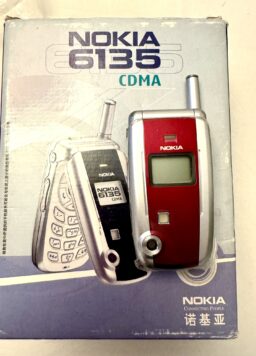
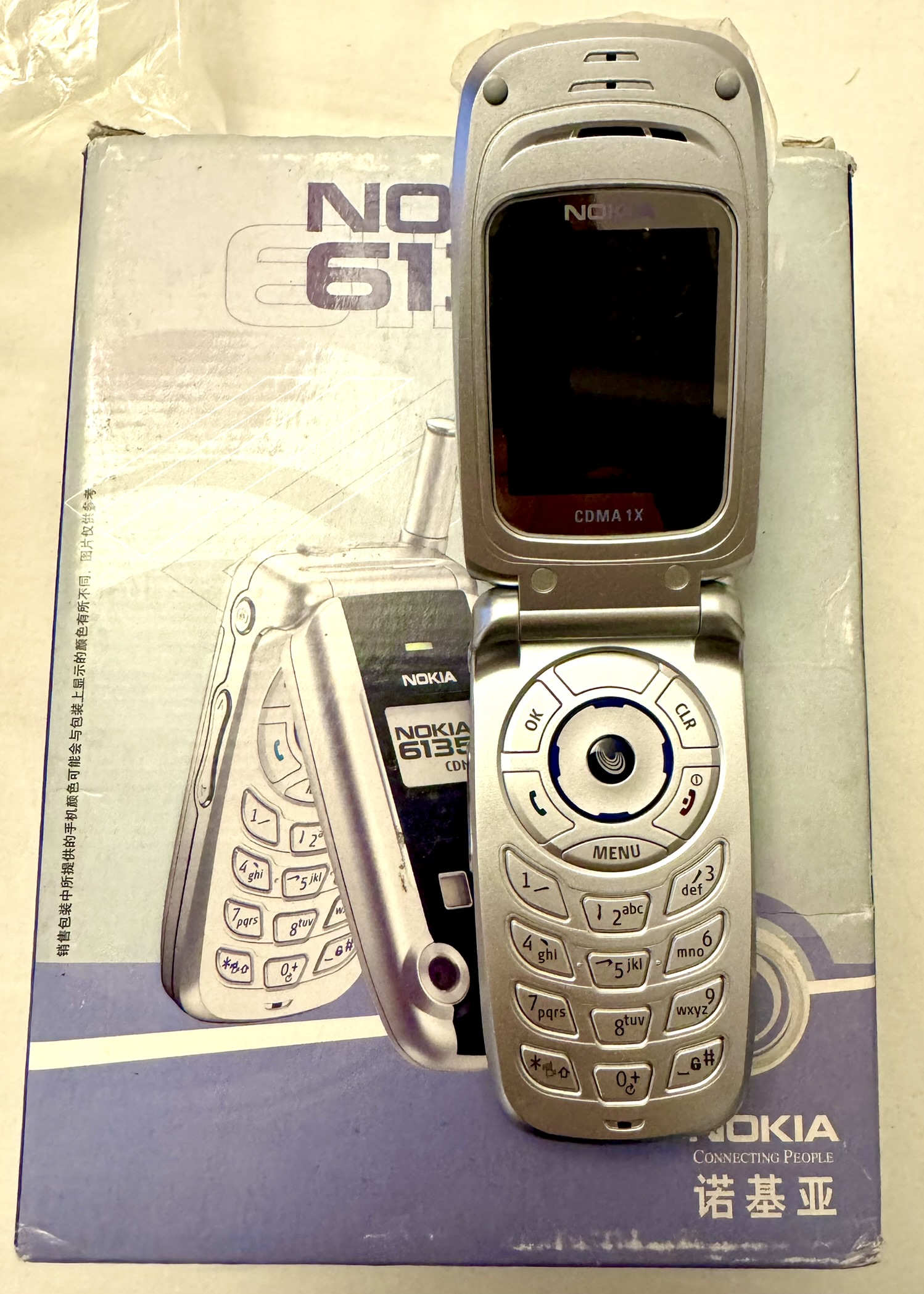
Nokia 6135: China-Market CDMA Edition
Quick View💎 Rarity Index: A (Rare)
👁 Evaluation in my collection: BNIB – 10/10
⏱ Life timer: 0 | 📦 Boxed: YES
📅 Release Year: 2004 | 💰 Release Price: ~350 $
📊 Units Sold: ~500k
📰 Why this phone matters: A rare Nokia CDMA clamshell created exclusively for the Chinese market and engineered around Qualcomm’s CDMA2000 1x platform. Unlike Nokia’s global GSM lineup, the 6135 uses a Nokia-custom CDMA OS with BREW support, the “CDMA by Qualcomm” branding, and the distinctive hardware configuration unique to early China Telecom devices.Certified under CMII in 2004 and produced in limited volume, the 6135 remains one of the least-known Nokia models ever released. Running on the classic BL-5C battery and carrying RM-98 internal architecture, it represents a rarely seen branch of Nokia’s portfolio – a hybrid of Nokia design and Qualcomm radio technology.
📝 Reviews when released: N/A 💔
-


Nokia 6150
Quick View💎 Rarity Index: C (Common)
👁 Evaluation in my collection: As New – 9.8/10
🕵 Nokia Codename: Dora
⏱ Life timer: 0m | 📦 Boxed: NO
📅 Release Year: 1998 | 💰 Release Price: N/A
📊 Units Sold: ~5M
📰 Why this phone matters: The phone was used in the Mercedes-Benz S-Class (W220)(1998-2006 type), where it was held in a cradle and connected to the car’s integrated car phone and media system called COMAND.📝 Reviews when released: N/A 💔
-


Nokia 6161i Cellular One
Quick View💎 Rarity Index: B (Uncommon)
👁 Evaluation in my collection: Great – 9.8/10
⏱ Life timer: 47h | 📦 Boxed: YES
📅 Release Year: 1998 | 💰 Release Price: N/A
📊 Units Sold: ~1M
📰 Why this phone matters:📝 Reviews when released: N/A 💔
-
Nokia 6208c
Quick View💎 Rarity Index: B (Uncommon)
⭐ WOW Factor: Website-Ready Description
👁 Evaluation in my collection: Good – 8.5/10
⏱ Life timer: N/A | 📦 Boxed: YES
📅 Release Year: 2009 | 💰 Release Price: 200 $
📊 Units Sold: ~200k
📰 Why this phone matters: Nokia 6208c (RM-458) – China-Exclusive Handwriting EditionThe Nokia 6208c is a rare China-market exclusive released in 2009, designed around Nokia’s handwriting-recognition platform. Built for users who preferred writing Chinese characters by hand, it combines a resistive touchscreen with a stylus elegantly integrated into the back cover – a design found on almost no other Nokia model worldwide.
Its construction features metal structural elements, a solid chassis, and a clean, premium industrial look. Running Series 40 (Touch & Type variant), the 6208c delivers a unique blend of traditional keypad control and touchscreen handwriting input, offering a very specific user experience tailored to the Chinese market.
With its limited regional release, short production window, and distinctive hardware concept, the 6208c stands out today as one of the most uncommon and collectible touchscreen feature phones from Nokia’s late-2000s era.
📝 Reviews when released: N/A 💔
-


Nokia 6210
Quick View💎 Rarity Index: C (Common)
👁 Evaluation in my collection: Great – 9/10
⏱ Life timer: N/A | 📦 Boxed: YES
📅 Release Year: 2000 | 💰 Release Price: ~350 €
📊 Units Sold: ~10M
📰 Why this phone matters: The Nokia 6210 is a mobile phone made by Nokia. It was introduced at the CeBIT fair in Hanover in February 2000 succeeding Nokia 6110. In addition to calling and SMS messaging, the phone has many other features, such as an alarm clock, a HSCSD modem, a WAP web client, 3 games (Snake 2, Pairs II and Opposite), a calculator, a ‘to-do’ list application, a calendar, infrared connectivity, a voice recorder and a stopwatch. In keeping with Nokia’s practice of selling phones that the user can customize the physical appearance of, the 6210 is minimally customizable. The plastic detail below the keypad, which Nokia called the ‘Personal Badge’ is removable. For a time, Nokia would send replacements, screen-printed with text of the customer’s choosing. These were free for a promotional period.
The 6210 could have bluetooth functionality added to it, with the use of the Nokia Connectivity Pack, which included a replacement battery which incorporated a Bluetooth adaptor and antenna (interfacing with the phone via normally unused electrical contacts in the battery compartment), and a connectivity card with a PCMCIA adaptor to bring bluetooth to a portable computer (at the time, December 2000, bluetooth was not widespread). The connectivity batteries were available separately. A software upgrade was needed for existing 6210 owners. For this reason, an upgraded 6210 was the earliest cellular phone with bluetooth connectivity. The upgrade pack was ready several months before the launch of the first cellphone with bluetooth built-in, however, it was not released to market until sometime after the first integrated-bluetooth phone had been launched. It can certainly be considered to be the first phone with a bluetooth option.📝 Reviews when released: N/A 💔
-


Nokia 6220
Quick View💎 Rarity Index: C (Common)
👁 Evaluation in my collection: Good – 8.5/10
🕵 Nokia Codename: Jesse
⏱ Life timer: 18h | 📦 Boxed: NO
📅 Release Year: 2003 | 💰 Release Price: N/A
📊 Units Sold: ~5M
📰 Why this phone matters: The Nokia 6220 is the eur;opean cousin of the 6200. While lacking GSM 850, the 6220 adds world roaming, an integrated camera, video playback, and presence-enabled contacts. Key features in common with the 6200 include EDGE high-speed data, MMS, Java, stereo FM radio, voice dialing, and an XHTML (WAP 2.0) browser.📝 Reviews when released: N/A 💔