Showing 277–288 of 363 results
-


Nokia N8
Quick View💎 Rarity Index: C (Common)
⭐ WOW Factor: The first Nokia phone to run on Symbian^3
👁 Evaluation in my collection: As New – 9.9/10
⏱ Life timer: N/A | 📦 Boxed: NO
📅 Release Year: 2010 | 💰 Release Price: ~400 €
📊 Units Sold: ~5M
📰 Why this phone matters: The Nokia N8 is a touchscreen-based smartphone developed by Nokia. Announced on 27 April 2010, the Nokia N8 was the first device to run on the Symbian^3 mobile operating system and it was the company’s flagship device for the year.It was released on 30 September 2010 at the Nokia Online Store before being released in markets around the world on 1 October 2010.📝 Reviews when released: Mobile Review 🔗
-


Nokia N80
Quick View💎 Rarity Index: S (Ultra Rare)
⭐ WOW Factor: The world first UPnP-compatible phone,
👁 Evaluation in my collection: Great – 9.5/10
🕵 Nokia Codename: Miro
⏱ Life timer: 0 | 📦 Boxed: NO
📅 Release Year: 2006 | 💰 Release Price: 500 €
📊 Units Sold: ~2M
📰 Why this phone matters: The N80 was the world’s first UPnP-compatible phone, allowing the transfer of media files to compatible devices over Wi-Fi.The N80 was officially described as a multimedia computer by Nokia, like its successor Nokia N95.📝 Reviews when released: CNET 🔗
-
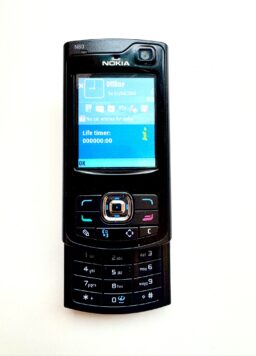
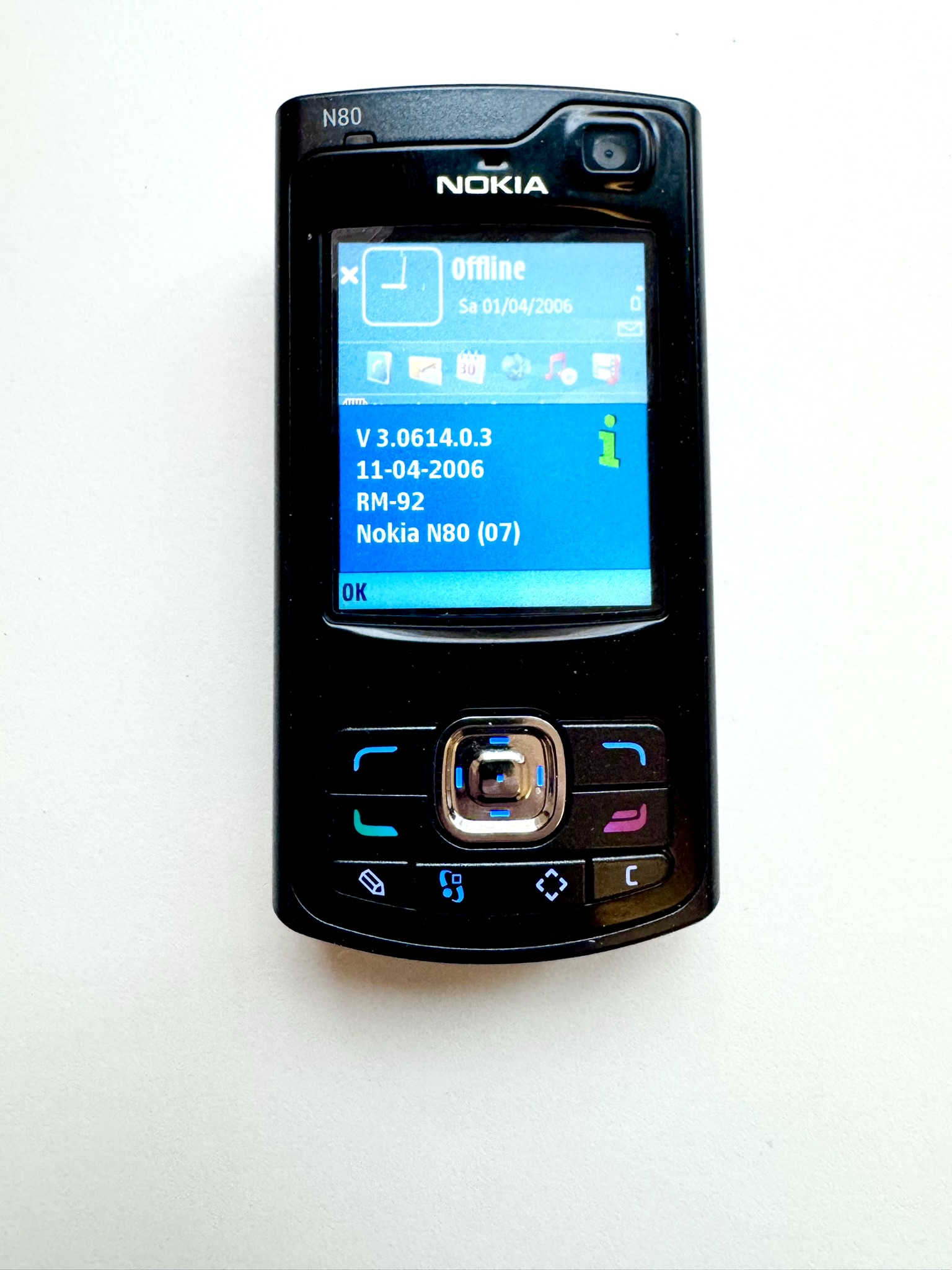
Nokia N80 Prototype S5.1: The birth of the World’s First UPnP Phone
Quick View💎 Rarity Index: S (Ultra Rare)
⭐ WOW Factor: The world first UPnP-compatible phone,
👁 Evaluation in my collection: Great – 9.5/10
🕵 Nokia Codename: Miro
⏱ Life timer: 0 | 📦 Boxed: NO
📅 Release Year: 2006 | 💰 Release Price: 500 €
📊 Units Sold: ~2M (final units)
📰 Why this phone matters: This unit represents the earliest surviving form of the world’s first
UPnP-compatible phone, the Nokia N80, shown here in its S5.1 prototype
stage long before the technology reached consumers. Built in Finland and
marked with the legendary 004400 Nokia internal IMEI range, this device
was part of Nokia’s secret push to bring home-network integration to
mobile phones for the first time in history.The internal label reveals everything expected from a genuine engineering
sample: a masked FCC and IC set, the placeholder Xyy-n model code, and an
unreleased product code known only to Nokia’s R&D teams. The bold PROTO
S5.1 stamp indicates an early hardware validation cycle, a phase where
engineers were still shaping the mechanics, RF behavior, and multimedia
stack that would define the N80. A matching S5.1 barcode sticker on the
side confirms that this device circulated between test teams, yet survived
in untouched, mint condition – almost impossible for units used at this
development depth.UPnP was the N80’s signature innovation, a world-first feature allowing a
mobile phone to discover and communicate with home media servers, TVs, and
computers. But before the world ever saw this capability demonstrated on a
stage, units like this one acted as the true testbeds. Early debug builds
of Symbian OS 9.1 ran experimental networking stacks, Wi-Fi drivers, and
service discovery modules. Engineers used devices like this to validate
seamless connectivity, file sharing, remote playback, and the foundation
of what would later become the connected-smartphone era.The Finnish build origin makes the device even rarer. Only the earliest
pilot-line N80 units came from Finland, assembled for hardware tuning,
firmware experiments, and RF calibration. Most were disassembled, reworked
to exhaustion, or destroyed after testing concluded. This one escaped
untouched – a true anomaly.With its dual proto identifiers preserved, its 004400 IMEI confirming deep
internal lineage, and its role at the dawn of UPnP mobility, this N80
S5.1 prototype is not just a rare device. It is a technological milestone
captured in physical form – the raw, unfiltered origin of the world’s
first UPnP phone.📝 Reviews when released: CNET 🔗
-


Nokia N810
Quick View💎 Rarity Index: B (Uncommon)
👁 Evaluation in my collection: As New – 9.8/10
⏱ Life timer: N/A | 📦 Boxed: YES
📅 Release Year: 2007 | 💰 Release Price: ~480 $
📊 Units Sold: ~500k
📰 Why this phone matters: The Nokia N810 Internet tablet is an Internet appliance from Nokia and despite Nokia’s strong association with cellular products, the N810, like preceding tablets produced by Nokia, was not a phone, but instead allowed the user to browse the Internet and communicate using Wi-Fi networks or with a mobile phone via Bluetooth. It built on the hardware and software of the Nokia N800 with some features added and some removed.📝 Reviews when released: Trusted Reviews 🔗
-
Nokia N82 Prototype S3.2: The Flash Xenon Genesis Device
Quick View💎 Rarity Index: S (Ultra Rare)
👁 Evaluation in my collection: As New – 10/10
🕵 Nokia Codename: Sharaku or Tiger
⏱ Life timer: 0m | 📦 Boxed: NO
📅 Release Year: 2007 | 💰 Release Price: ~450 €
📊 Units Sold: ~2M (final units)
📰 Why this phone matters: This unit is a genuine Nokia N82 PROTO S3.2, originating from a late-stage engineering batch used by Nokia for field validation prior to commercial release. The PROTO S3.2 marking identifies it as a Stage 3.2 engineering device, meaning it had near-final hardware but was still running precommercial firmware intended for network, camera, and stability testing. Only a very small number of these were produced, and most were destroyed after internal validation.The RM-314 internal board combined with the 004401 IMEI prefix, missing IMEI barcode, and CMII placeholder confirms that this unit predates formal regulatory submission and was never intended for retail sale. The presence of a 2D matrix tag rather than a standard retail IMEI label is a Nokia R&D signature seen only on true engineering property.
The chrome mirror housing is a known prototype mechanical shell used before finalizing the production colors. This non-retail reflective finish allowed engineers to detect micro-cracks, alignment issues, and housing fatigue during testing. The keypad includes Chinese character markings, indicating that this unit was part of the APAC field-testing program, where network compatibility, input methods, and Chinese localizations were evaluated.
The Nokia N82 itself was one of the most important camera phones of its era, introducing a xenon flash that outperformed the N95 and set new standards for mobile photography. Built on Symbian OS v9.2 with S60 3rd Edition FP1, the N82 combined GPS, Wi-Fi, HSDPA, and a 5 MP Carl Zeiss camera into what many considered the best camera phone of 2007. As the last high-end candybar Nseries device before the shift to sliders and touchscreens, the N82 marks the end of a major design era at Nokia.
This prototype captures the device at the critical moment before release, with a rare combination of S3.2 prototype labeling, APAC keypad, chrome housing, and internal RM-314 board markings. Few surviving units include all these characteristics, making this one of the most historically significant and collectible N82 prototypes known today.
📝 Reviews when released: Mobile Review 🔗
-


Nokia N86
Quick View💎 Rarity Index: B (Uncommon)
⭐ WOW Factor: The first Nokia phone with a 8MP camera
👁 Evaluation in my collection: BNIB – 10/10
⏱ Life timer: 0m | 📦 Boxed: YES
📅 Release Year: 2009 | 💰 Release Price: ~375 €
📊 Units Sold: ~1M
📰 Why this phone matters: The Nokia N86 8MP is a high-end smartphone announced on 17 February 2009 and released in May 2009. It runs on Symbian OS 9.3 (S60 3rd Edition FP2) and is part of the Nseries. It shares similar design features with the N97.
One of its main selling points is its Carl Zeiss photography features. It was Nokia’s first camera phone to have an 8 megapixel sensor (although late compared to other manufacturers),and features both multiple aperture settings and a mechanical shutter (uncommon features by the standards of camera phones), and a Carl Zeiss lens with a wide angle of view (28 mm equivalent). It also has auto focus and a dual LED flash (3rd generation dual-LEDs), and an AF assist light. Video capture resolution is 640 x 480 pixels (VGA) at 30 frames per second.The N86 continuous the form factor of the Nokia N95 and N85 with its dual-sliding form factor, whilst adding a toughened glass front cover and metal detailing and keypad, making it look and feel premium.It has a 2.6-inch AMOLED display, a fast 434 MHz processor, and an 8 GB internal memory.It also has the same kickback stand as the N85 so it is possible to use as a small standalone screen, and it is possible to configure the opening of the stand to launch applications such as the video player. It also supports the N-Gage gaming platform. The N86 8MP is regarded as the spiritual successor of the N95 8GB due to its feature set in the same sliding form factor, and the commercial failure of the N96. Some regard it a successor of the N82 due to its camera.
📝 Reviews when released: Mobile Review 🔗
-
Nokia N90 Prototype NPI-2 F5.0
Quick View💎 Rarity Index: S (Ultra Rare)
⭐ WOW Factor: The first Nokia phone with unique swivel design
👁 Evaluation in my collection: Great – 9.8/10
🕵 Nokia Codename: Gromit
⏱ Life timer: 0 | 📦 Boxed: NO
📅 Release Year: 2005 | 💰 Release Price: ~250 €
📊 Units Sold: ~500k (final units)
📰 Why this phone matters: Nokia N90 Prototype – RM-42 (Proto NPI-2)
A rare engineering prototype from Nokia’s golden era, this RM-42 NPI-2 unit represents an early pre-production stage of the iconic Nokia N90, the first smartphone in history built around a full Carl Zeiss Tessar autofocus camera module.Hand-assembled in Finland and labeled “Proto NPI-2 – Not For Sale,” this device belongs to an internal batch reserved exclusively for Nokia’s imaging and mechanical engineering teams. It features the trademark twist-and-shoot camcorder design, the Tessar 2.9/5.5 AF lens, and the unmistakable dual-hinge architecture that made the N90 one of the most advanced camera phones of its time.
Carrying a prototype IMEI and early hardware IDs, this device offers a rare glimpse into Nokia’s development process during a period when mobile imaging innovation was at its peak. A true collector’s highlight – a milestone device in its pure, pre-release form.
📝 Reviews when released: Mobile Review 🔗
-


Nokia N91 4GB
Quick View💎 Rarity Index: B (Uncommon)
⭐ WOW Factor: The first ever phone encompassing a 4 GB internal hard drive allowing storage for 3.000 songs (the 8 GB revision came later), Tthe first Nokia phone to run on Symbian 9.1.
👁 Evaluation in my collection: Great – 9.5/10
🕵 Nokia Codename: Thunder
⏱ Life timer: 188h | 📦 Boxed: NO
📅 Release Year: 2007 | 💰 Release Price: ~700 $
📊 Units Sold: ~400k
📰 Why this phone matters: The Nokia N91 is a smartphone produced by Nokia as part of their Nseries line of portable devices. It was announced on April 27, 2005 along with N70 and N90 as the first three Nseries devices. The N91 ran on Symbian-based S60 3rd Edition (the first to run on Symbian 9.1). It was the first ever phone encompassing a 4 GB internal hard drive, allowing storage for 3,000 songs (an 8 GB revision came later). The N91 is highly focused on music, with dedicated music keys on the front which slide down to reveal the keypad. It also featured the industry-standard 3.5 mm headphone jack, and was anticipated as a major challenger to Apple, whose iPod dominated the industry. The design of the N91 is based on stainless steel with a matte finish.
The N91 became one of 2005’s most anticipated phones, however it suffered from a long delay of release. It was expected to begin shipping by the end of 2005; but in September that year the device was delayed till 2006.In February 2006, it was delayed yet again due to software issues, pushing the release to Q2.Finally in April 2006 it was first released to consumers, a full year after announcement.
Nevertheless, N91 won the ‘Most Innovative Product’ and ‘Most Technologically Advanced Product’ award in recognition of its true multimedia music experience, added together with its high-end smartphone capabilities.In advertisements for the phone, Nokia recommended Bose and Sennheiser headphones. Its sound output is considered by many to be of very high quality and very loud.📝 Reviews when released: Mobile Review 🔗
-
Nokia N91 4GB Prototype: B5.2 Asia Variant
Quick View💎 Rarity Index: S (Ultra Rare)
⭐ WOW Factor: The first ever phone encompassing a 4 GB internal hard drive allowing storage for 3.000 songs (the 8 GB revision came later), Tthe first Nokia phone to run on Symbian 9.1.
👁 Evaluation in my collection: Great – 9.5/10
🕵 Nokia Codename: Nemo-W
⏱ Life timer: 0h | 📦 Boxed: NO
📅 Release Year: 2007 | 💰 Release Price: ~700 $
📊 Units Sold: ~800k (final units)
📰 Why this phone matters: Nokia N91 – RM-158 Prototype (4GB, Asia Variant, B5.2 Hardware)This device is a genuine Nokia N91 4GB prototype, built on the RM-158 platform-a development variant created specifically for the Asia/APAC market. Unlike the standard eur;opean N91 4GB (RM-43), this pre-production unit showcases a different internal hardware configuration, unique labeling, and a regional color scheme that never appeared on global retail models.
Marked clearly with “PROTO B5.2 – NOT FOR SALE” and manufactured in Finland, this unit represents an early engineering build used by Nokia during the final testing stages of the Asia-market N91. The RM-158 board differs from RM-43 through its regional firmware branches, radio configuration, and production-specific tuning, making this prototype significantly rarer than any retail device.
Its exterior features the Asia-exclusive color variant, a darker, metallic finish paired with a distinct keypad shade-used only in APAC commercial releases but extremely scarce worldwide. In prototype form, the materials, texture, and finish differ subtly from production units, highlighting the transitional stage between engineering samples and final mass manufacturing.
With full prototype identifiers, pre-market barcodes, engineering hardware codes, and its unusual combination of Asia-market aesthetics with Finnish factory proto build, this RM-158 N91 stands as a prime collectible from Nokia’s golden era.
Perfect for collectors seeking regional hardware variations, early-stage engineering units, and rare prototype-only configurations.
📝 Reviews when released: Mobile Review 🔗
-
Nokia N91 8GB Prototype B4.0: Made in USA | Unreleased white white Camera Cover and silver keypad
Quick View💎 Rarity Index: X (Mystical Prototype)
⭐ WOW Factor: The first ever phone encompassing a 8 GB internal hard drive allowing storage for 3.000 songs (the 8 GB revision came later), Tthe first Nokia phone to run on Symbian 9.1.
👁 Evaluation in my collection: Great – 9.5/10
🕵 Nokia Codename: Thunder
⏱ Life timer: 0h | 📦 Boxed: NO
📅 Release Year: 2007 | 💰 Release Price: ~700 $
📊 Units Sold: ~400k (final units)
📰 Why this phone matters: Nokia N91 8GB – RM-43 – Prototype B4.0 – Made in USA – Unique White Camera CoverThis is a highly significant Nokia N91 8GB engineering prototype, built during Nokia’s internal development cycle and never intended for commercial release. The label identifies it as PROTO B4.0, a late-stage pre-production unit, but the hardware reveals something even more remarkable: a white camera cover, a part that was never used in production N91 or N91 8GB units.
All retail models featured a dark grey/black camera bezel, but this prototype houses a white pre-final CMF component – a rare internal test part used before Nokia approved the final color and material selection. Early tooling marks, alternate finishing, and non-standard coloration make this one of the only known N91 prototypes with this configuration.
Unlike mass-produced units manufactured in Finland or Germany, this device also carries the exceptionally rare “Made in USA” marking, confirming its role as a high-level engineering sample assembled for internal testing and hardware validation. The model field reads “XXXX”, and multiple internal codes differ from final production, reinforcing its early-preproduction status.
As the world’s first smartphone with an integrated 8GB micro-hard-drive, the N91 was born from bold experimentation – and this prototype embodies exactly that phase of innovation. With its unique white camera cover, U.S.-assembled chassis, RM-43 pre-production hardware, and B4.0 revision status, this unit stands as a near-one-of-a-kind artifact from Nokia’s golden age.
📝 Reviews when released: Mobile Review 🔗
-
Nokia N92 Prototype B4.0 | Unreleased 101 RM
Quick View💎 Rarity Index: S (Ultra Rare)
⭐ WOW Factor: The world first mobile phone with an integrated DVB-H tuner
👁 Evaluation in my collection: Great – 9/10
⏱ Life timer: 0h | 📦 Boxed: NO
📅 Release Year: 2005 | 💰 Release Price: ~600 €
📊 Units Sold: ~300k (final units)
📰 Why this phone matters: Nokia N92 RM-101 B4.0 Prototype – The Missing Camera MysteryThis RM-101 Nokia N92 prototype is a remarkable survivor from Nokia’s golden era of experimental engineering – a time when the company was pushing the boundaries of what a mobile device could be. Built in Finland as a B4.0 engineering sample, it predates the commercial N92 and represents a fascinating pre-production hardware configuration that differs from the familiar retail device.
Marked with “Prototype – Property of Nokia” and carrying the internal “Model: XXXX” placeholder, this unit preserves evidence of a development phase in which Nokia was refining the revolutionary technologies that would eventually define the N92, including DVB-H mobile television, its distinctive dual-axis swivel display and an ambitious multimedia platform.
One of the most intriguing differences is the complete absence of the front-facing camera, a feature present on the commercial Nokia N92. Rather than simply being a cosmetic variation, this represents a significant hardware distinction between the RM-101 prototype and the final production design. Interestingly, other documented RM-101 specimens also appear to lack the front-facing camera, suggesting that this may have been a characteristic of this particular development branch rather than an isolated feature of this unit.
The RM-101 designation itself adds another layer of significance. Unlike the commercially released N92 configurations, this prototype belongs to an earlier hardware development path, offering a rare opportunity to observe how Nokia experimented with different component arrangements and hardware capabilities before settling on the final product.
There is something particularly fascinating about the combination of its unfinished model identification, original engineering labels, Made-in-Finland construction and missing front-facing camera. Together, these details make the device much more than a conventional pre-production handset. They preserve visible traces of Nokia’s engineering decisions and the evolutionary steps behind one of its most technically ambitious mobile phones.
For serious Nokia collectors, prototypes displaying fundamental hardware differences are especially compelling. They provide physical evidence of alternative development configurations, features that were added or modified, and engineering decisions that rarely become visible outside the manufacturer’s laboratories.
Before the N92 became a mobile television with a fully developed multimedia identity, there was the RM-101. A rare surviving glimpse into the engineering process behind one of Nokia’s most extraordinary creations.
📝 Reviews when released: ZDNet 🔗
-
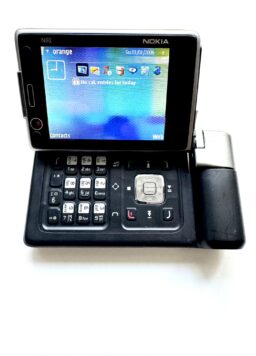
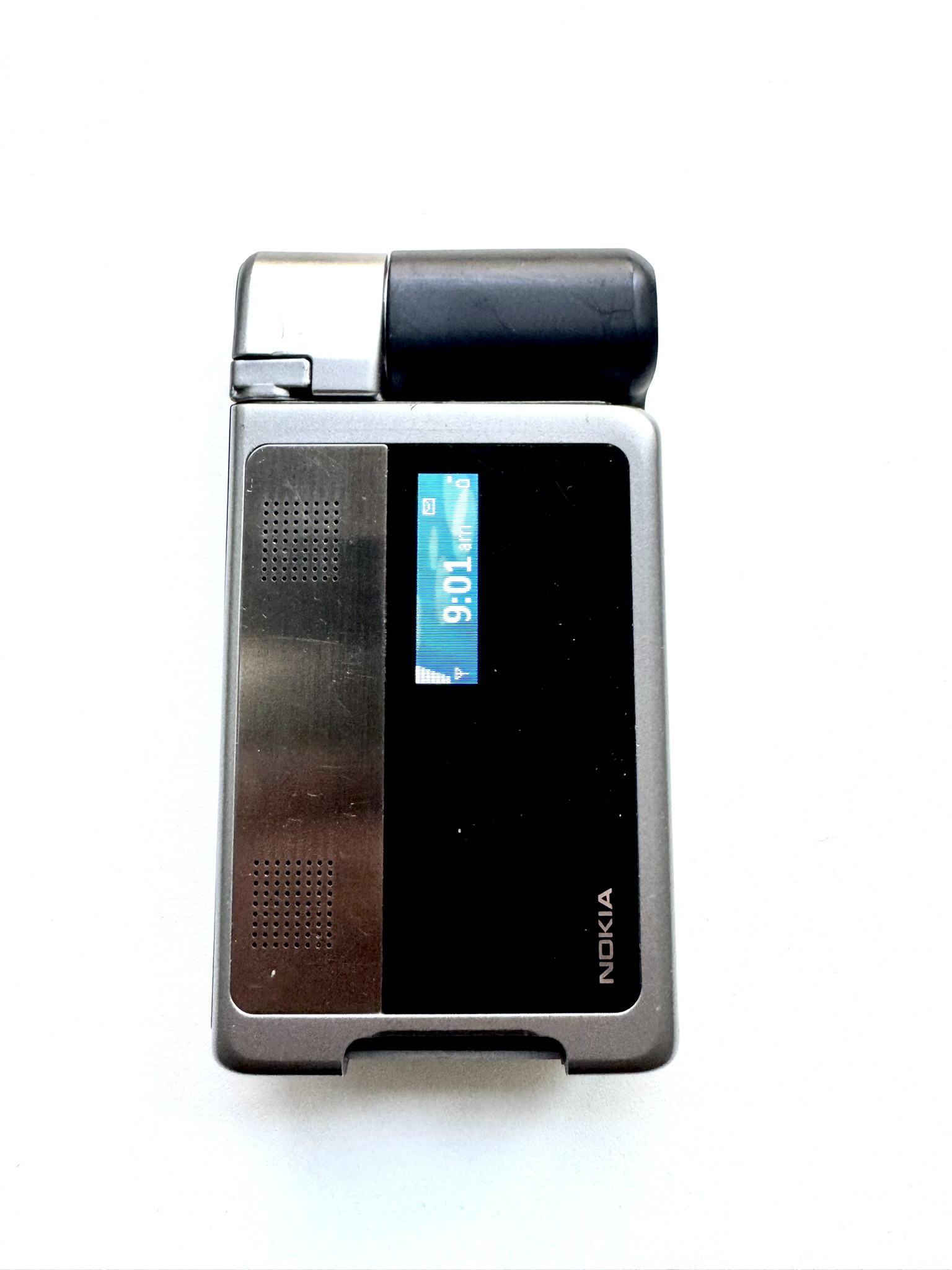
Nokia N92 Prototype S3.4 | An Unreleased Black & Grey Design
Quick View💎 Rarity Index: X (Mystical Prototype)
⭐ WOW Factor: The world first mobile phone with an integrated DVB-H tuner
👁 Evaluation in my collection: Good – 8/10
⏱ Life timer: 0h | 📦 Boxed: NO
📅 Release Year: 2005 | 💰 Release Price: ~600 €
📊 Units Sold: ~300k (final units)
📰 Why this phone matters: Nokia N92 S3.4 Prototype – The Elusive Black & Grey VariantIn 2005, Nokia was pursuing an ambitious vision: transforming the mobile phone into a portable television. The Nokia N92 became one of the most unconventional devices of the Nseries era, introducing integrated DVB-H television reception, a remarkable dual-hinge rotating display and a multimedia experience designed years before mobile video streaming became part of everyday life.
This particular unit is an exceptionally interesting S3.4 pre-production prototype, distinguished by its striking black and grey colour combination. Unlike the familiar commercial N92, this prototype presents an alternative visual identity, offering a fascinating glimpse into Nokia’s experimental design and development process.
But the differences go far beyond its unusual colour scheme. One of the most intriguing details is the noticeably larger memory card cover, a physical design variation that distinguishes this early unit from the final production model. Even more interesting is the clamshell closing mechanism, which differs from the commercial N92 when the device is folded shut. These subtle but significant differences reveal that Nokia was experimenting not only with colours and finishes, but also with the mechanical construction and physical design of the device.
The S3.4 development designation adds another layer of intrigue. This is not simply a standard N92 dressed in an unusual housing, but a pre-production specimen displaying tangible differences from the retail hardware. The combination of its distinctive finish, modified memory card cover and alternative clamshell closing arrangement makes it a particularly compelling example of Nokia’s engineering evolution.
What makes the N92 especially fascinating is the extraordinary ambition behind its design. Its rotating display could transform the device from a conventional mobile phone into a miniature widescreen television, while DVB-H technology represented Nokia’s vision of a future where television could be enjoyed almost anywhere.
For serious Nokia collectors, surviving prototypes with visible structural differences are particularly significant. They preserve evidence of design decisions, mechanical experiments and engineering refinements that may have disappeared entirely before commercial production. This black and grey S3.4 prototype offers precisely that: a rare opportunity to examine an alternative stage in the development of one of Nokia’s most unconventional devices.
More than an unusual colour variation, this is a different interpretation of the Nokia N92 itself – a remarkable survivor from a time when Nokia was still experimenting with how the future of mobile technology should look, feel and function.
📝 Reviews when released: ZDNet 🔗