

">

Showing 49–60 of 110 results
-
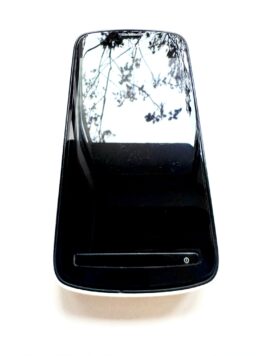

Nokia 808 PureView Prototype PreB2.0 :The Birth of PureView
Quick View💎 Rarity Index: S (Ultra Rare)
⭐ WOW Factor: This phone was the first in mobile history to break the 40 MP barrier.
👁 Evaluation in my collection: As New – 9.8/10
⏱ Life timer: N/A | 📦 Boxed: NO
📅 Release Year: 2012 | 💰 Release Price: ~800$
📊 Units Sold: ~1M (final units)
📰 Why this phone matters: The Nokia 808 PureView is already a landmark device in mobile history, but this unit takes that legacy to an entirely different level. This is not a retail phone. It is a genuine internal Nokia RM-807 prototype, a PreB2 development device marked Model 000 and stamped Property of Nokia Not For Sale. It represents one of the earliest hardware and firmware iterations used inside the company while engineers were finalizing the PureView imaging engine that would shock the industry in 2012.This unit includes everything expected from a true Nokia RnD sample: a 004402 prototype IMEI, an early HWID board, an internal PSN, an unreleased product code, and the proto.nokia.com branding on the front glass. It was never meant for public hands. Very few of these survived destruction protocols once the final hardware entered mass production. The phone is fully working and in new condition, even though it was used originally as a development tool.
The camera module alone makes this device a collector dream. The 41 MP PureView sensor is one of the most celebrated camera innovations ever put in a phone, and on a prototype the imaging stack often behaves differently, using pre release oversampling, early noise tuning, and unique processing steps that never made it into consumer firmware. Notes from Nokia imaging engineers confirm that early builds sometimes produced sharper, noisier, or more experimental photo profiles compared to retail firmware. Nokia jumped directly to 41 megapixels, a number so absurd for the time that most reviewers in 2012 thought it was a typo. This was the moment the industry realized that Nokia’s imaging division was operating on an entirely different level.
Inside, this RM-807 prototype keeps the classic single SIM layout. One slot is used for the micro SIM card and the second slot is a microSD bay for storage expansion, not a second SIM. Together with the white shell, the absence of retail markings, and the Model 000 labeling, this configuration underlines its role as a lab platform rather than a sales unit. Fully working and preserved, it captures a moment in mobile history that can never be replicated, standing as one of the rarest forms of the last true Symbian flagship ever created.
📝 Reviews when released: Engadget 🔗
-


Nokia 8110 Michael Schumacher Limited Edition No.0296 – The Impossible-to-Find Edition
Quick View💎 Rarity Index: S (Ultra Rare)
⭐ WOW Factor: The first Nokia phone with a slider form factor, The first of Nokia high-end 8000 series, The first Nokia phone with monochrome graphic LCD, The first phone with SSMS (Smart SMS), The first phone to support ring tone receiving by SMS, The phone featured in the science fiction action film The Matrix (1999)
👁 Evaluation in my collection: As New – 9.8/10
⏱ Life timer: N/A | 📦 Boxed: YES
📅 Release Year: 1997 | 💰 Release Price: N/A
📊 Units Sold: 1997
📰 Why this phone matters: The Nokia 8110 Michael Schumacher Limited Edition No.0296 is one of the most remarkable collectible mobile phones ever released – and this specific unit stands out even within that ultra-rare group. Produced in a strictly limited run of 1,997 pieces worldwide, this device carries the official individual number 0296, matching the original Talkline-issued authenticity certificate, signed in print by Michael Schumacher himself. Every detail confirms its legitimacy as part of the official Michael Schumacher Collection, licensed by PPM.This particular device remains in full-box condition, a rarity in its own right. The package includes the complete original set: the official certificate with matching number, original box and inserts, accessories, and the pristine handset finished in the iconic Schumacher red. The front fascia features Michael’s portrait subtly integrated into the sliding cover, accompanied by his stylized signature. The back includes the factory-applied Schumacher Collection sticker, with the same official sticker also present on the box and on the label inside the phone, ensuring absolute consistency and authenticity across all components.
As part of the broader Michael Schumacher mobile series, Nokia also released a Schumacher Edition Nokia 2110, a similarly themed model from the same era. It is an important companion piece to the 8110, and while highly sought after, it is not yet present in the collection, making the 8110 even more of a standout centerpiece until its counterpart is added.
Beyond the collectible value, the phone itself is an icon of mobile history: the Nokia 8110 was the first high-end slider of the Nokia 8000 series, the earliest “banana phone,” and a technological status symbol of the late 90s. Its curved silhouette, sliding mechanism that answers calls, and monochrome graphic LCD defined the era. The improved 8110i later introduced Smart Messaging – making this line the origin point for many modern phone features. The 8110 also achieved pop-culture immortality when a modified version appeared in The Matrix.
Combined with the Schumacher branding, this edition transforms the classic 8110 into something far more significant: a celebration of a Formula 1 legend at the height of his career. Owning unit 0296 means holding a true numbered artifact of motorsport history – a device tied directly to the most dominant driver of the era.
This is not just a limited edition phone.
It is a preserved, authenticated piece of racing heritage, paired with one of the most iconic Nokia designs ever created.📝 Reviews when released: N/A 💔
-


Nokia 8110i
Quick View💎 Rarity Index: C (Common)
⭐ WOW Factor: The first Nokia phone with a slider form factor, The first of Nokia’s high-end 8000 series, The first Nokia phone with monochrome graphic LCD, The first phone with SSMS (Smart SMS), The first phone to support ring tone receiving by SMS, The phone featured in the science fiction action film The Matrix (1999)
👁 Evaluation in my collection: As New – 9.8/10
⏱ Life timer: N/A | 📦 Boxed: YES
📅 Release Year: 1997 | 💰 Release Price: N/A
📊 Units Sold: ~1.5M
📰 Why this phone matters: Nokia 8110 is a mobile phone released in 1996. It was announced on September 9, 1996 as the first of Nokia’s high-end 8000 series of phones.Its distinctive styling was the first example of a ‘slider’ form factor. A sliding cover protected the keypad when being carried in the pocket and extended downwards in use, bringing the microphone closer to the mouth.The action of opening the cover also answered an incoming call. The prominent curvature of the case, particularly when open, earned it the nickname “banana phone”. It was also the first Nokia phone with monochrome graphic LCD.
The phone was designed for the business market and was one of the smallest and lightest (152 grams) phones on the market, but still had better battery life than its predecessor Nokia 2110.
The improved 8110i model, announced in March 1997, was the first phone with the SSMS (Smart SMS) engine.The handsets could be updated OTA (Over The Air) with an intelligent menu structure, which allowed simple information input, input which was sent through a simple structured text message to an MT receiver. This station could interpret information and a structured text message back to the handset. Ring tone receiving by SMS was also part of the smart messaging protocol, so 8110i was also the first mobile phone to support it. Nokia later stopped marketing Smart messaging and concentrated on the upcoming WAP standard, but has not dropped smart messaging support from later phones. Both models were succeeded by Nokia 8810 in 1998.
The phone was famously featured in the science fiction action film The Matrix (1999), for which it was modified featuring spring-loaded mechanism (this later appeared on the Nokia 7110).📝 Reviews when released: N/A 💔
-


Nokia 8210
Quick View💎 Rarity Index: C (Common)
⭐ WOW Factor: The smallest and lightest Nokia phone at that time
👁 Evaluation in my collection: Great – 9/10
⏱ Life timer: N/A | 📦 Boxed: YES
📅 Release Year: 1999 | 💰 Release Price: 200 £
📊 Units Sold: ~10M
📰 Why this phone matters: At the time, it was the smallest, lightest Nokia mobile phone on the market,thus its selling point was based on its design and customization, with removable Xpress-on covers📝 Reviews when released: N/A 💔
-


Nokia 8310
Quick View💎 Rarity Index: C (Common)
⭐ WOW Factor: The first Nokia phone with GPRS and Radio
👁 Evaluation in my collection: Great – 9/10
🕵 Nokia Codename: Demi
⏱ Life timer: N/A | 📦 Boxed: NO
📅 Release Year: 2001 | 💰 Release Price: N/A
📊 Units Sold: ~7M
📰 Why this phone matters: Belonging to the 8000 series, the handset was a member of Nokia’s flagship premium ‘candybar’ variety.It contained advanced premium features not normally found on handsets of the time, such as infrared, a fully functional calendar, and was the first Nokia phone to sport GPRS support and an FM Radio📝 Reviews when released: N/A 💔
-


Nokia 8600 Luna
Quick View💎 Rarity Index: B (Uncommon)
👁 Evaluation in my collection: Great – 9.5/10
🕵 Nokia Codename: Luna
⏱ Life timer: 9h | 📦 Boxed: NO
📅 Release Year: 2007 | 💰 Release Price: ~700 €
📊 Units Sold: ~1M
📰 Why this phone matters: Like previous luxury Nokia models, the Luna is largely encased by its stainless steel chassis but has one important difference: the slider is made from semi-opaque smoked glass that leaves the keypad to glow through, rather ethereally. It glides open with a smooth slide-action, and closes with a reassuring click.Two long loudspeaker grills add to the overall impression of luxury, and little else is allowed to clutter the edges of the handset save for the microUSB port. This is used for the charger, data cable and stereo headset, conveniently ridding the need for extra connections.
Opening the handset reveals a decent-sized keypad, larger than its predecessor and plenty big enough for man-sized digits, although the lower row is a bit close set to the slider for comfort. Nokia users will be immediately familiar with the standard layout of the Series 40 graphic interface and four-way navigational pad, but will have to have fairly good eyesight as the default font is rather small
📝 Reviews when released: Tech Radar 🔗
-
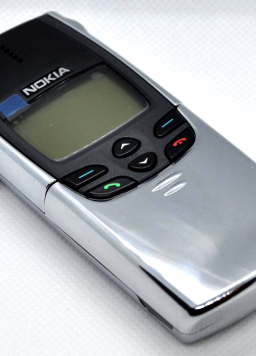

Nokia 8810
Quick View💎 Rarity Index: B (Uncommon)
⭐ WOW Factor: The first Nokia phone with internal antenna, The first Nokia Luxury phone.
👁 Evaluation in my collection: Brand New Swap – 10/10
⏱ Life timer: N/A | 📦 Boxed: YES – SWAP
📅 Release Year: 1998 | 💰 Release Price: ~1800 $
📊 Units Sold: ~500k
📰 Why this phone matters: In 1998, the Nokia 8810 was considered a luxury phone. This was due to the sleek new design the 8810 presented. It had no external whip or stub antenna, which was unusual for the time.Instead, it featured an internal antenna, which allowed the phone to be stored in a pocket upside down.Nokia invested hundreds of man hours into research on how people hold their phones for calls; this allowed them to place the antenna accordingly.The 8810 is tapered and weighted to encourage users to hold it below the antenna, minimizing interference. However, this also led to a poorer signal reception compared to an external antenna, which meant battery life was reduced. It was encased entirely in plastic parts; this case would slide down to reveal the keypad. This new appearance, in particular the lack of an external antenna, meant the 8810 had a desirable advantage over its competitors and enjoyed moderate success.The choice to make the antenna internal had a negative effect on battery life, but Nokia felt this was an acceptable tradeoff for getting rid of the external antenna.The design of the phone also made it particularly popular following its release. Unlike most other phones in the market at the time, the Nokia 8810 featured a chrome metal finish as well as a pull down metal slide which covered the keypad and kept it clean. Nokia claimed to prioritize antenna performance over physical design if they were ever in conflict.It was designed to be the flagship and the most luxurious of all Nokia phones at the time, and also one of the first phones with chrome plating.📝 Reviews when released: N/A 💔
-

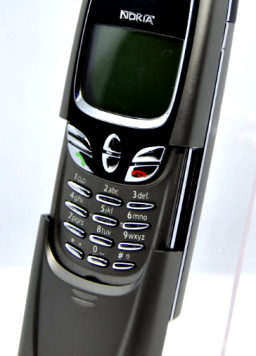
Nokia 8850
Quick View💎 Rarity Index: B (Uncommon)
👁 Evaluation in my collection: Great – 9/10
⏱ Life timer: N/A | 📦 Boxed: NO
📅 Release Year: 1999 | 💰 Release Price: N/A
📊 Units Sold: ~1.5M
📰 Why this phone matters: The Nokia 8850 is a mobile phone handset manufactured by Nokia. It was a light alloy-bodied enhanced version of Nokia 8210 model with slider protection of the keypad and white lighting of the keypad and screen. The 8850 is considered to be an un-repairable phone, thus resulting in very few active handsets in the market.It was introduced as a successor of an earlier model, the chrome phone Nokia 8810.
It was succeeded by the Nokia 8910, which was released in 2002.📝 Reviews when released: N/A 💔
-
Nokia 8850 Gold
Quick View💎 Rarity Index: A (Rare)
👁 Evaluation in my collection: Great – 9/10
⏱ Life timer: N/A | 📦 Boxed: NO
📅 Release Year: 1999 | 💰 Release Price: N/A
📊 Units Sold: ~1.5M
📰 Why this phone matters: The Nokia 8850 is a mobile phone handset manufactured by Nokia. It was a light alloy-bodied enhanced version of Nokia 8210 model with slider protection of the keypad and white lighting of the keypad and screen. The 8850 is considered to be an un-repairable phone, thus resulting in very few active handsets in the market.It was introduced as a successor of an earlier model, the chrome phone Nokia 8810.
It was succeeded by the Nokia 8910, which was released in 2002.📝 Reviews when released: N/A 💔
-


Nokia 8855
Quick View💎 Rarity Index: A (Rare)
👁 Evaluation in my collection: Great – 9/10
⏱ Life timer: 137h | 📦 Boxed: YES
📅 Release Year: 2002 | 💰 Release Price: N/A
📊 Units Sold: ~300k
📰 Why this phone matters: Small and lightweight, Stylish white illuminated display for better clarity, Smooth matt finish ,Ergonomically shaped keys
Refined design details including clean lines and a sleek color📝 Reviews when released: N/A 💔
-


Nokia 8855 Worn
Quick View💎 Rarity Index: A (Rare)
👁 Evaluation in my collection: Great – 9/10
⏱ Life timer: 137h | 📦 Boxed: NO
📅 Release Year: 2002 | 💰 Release Price: N/A
📊 Units Sold: ~300k
📰 Why this phone matters: Small and lightweight, Stylish white illuminated display for better clarity, Smooth matt finish ,Ergonomically shaped keys
Refined design details including clean lines and a sleek color📝 Reviews when released: N/A 💔
-


Nokia 8910
Quick View💎 Rarity Index: B (Uncommon)
👁 Evaluation in my collection: Good – 8/10
🕵 Nokia Codename: Demi
⏱ Life timer: N/A | 📦 Boxed: NO
📅 Release Year: 2002 | 💰 Release Price: ~650 $
📊 Units Sold: ~250k
📰 Why this phone matters: The Nokia 8910 is a mobile phone released in 2002 by Nokia. Part of the luxury 8xxx series, it was introduced as a successor of the Nokia 8850/8890. It has a white backlight, and features Bluetooth connectivity.
It was succeeded by the Nokia 8800, which was released in 2005.📝 Reviews when released: Mobile Review 🔗