

">

Showing 85–96 of 110 results
-


Nokia N76
Quick View💎 Rarity Index: B (Uncommon)
👁 Evaluation in my collection: Great – 9.5/10
⏱ Life timer: 0m | 📦 Boxed: No
📅 Release Year: 2007 | 💰 Release Price: ~390 €
📊 Units Sold: ~1M
📰 Why this phone matters: The Nokia N76 is a multimedia 3G Smartphone made by Nokia. It was introduced at the Las Vegas CES 2007 in January 2007 and was launched on 5 May 2007 with a sales price of 390 eur;. It is advertised as “The computer done beautifully” and as a “multimedia computer”. It is also the slimmest Nseries phone to date, following many trends such as mirrored exterior screen and Motorola RAZR metal keypad. Hardware-wise the N76 bases off a platform by Freescale, being a first of kind in the family of “cheap” 3G smartphones. In fact the difference between the OMAP2420 and this Freescale CPU, is the lack of a graphics accelerator.The phone was originally released without stereo bluetooth, but a later firmware update v30.0.015 adds A2DP and AVRCP bluetooth profiles. There are also numerous stability improvements and bug fixes as well as new features including the inclusion of Nokia Maps and a new search feature in active standby.
The N76 is among the more rarer Nokia devices and they go for relatively high prices in the second hand market.
📝 Reviews when released: Trusted Review 🔗
-


Nokia N77
Quick View💎 Rarity Index: A (Rare)
👁 Evaluation in my collection: Great – 9.5/10
⏱ Life timer: 80h | 📦 Boxed: No
📅 Release Year: 2007 | 💰 Release Price: ~370 €
📊 Units Sold: ~300k
📰 Why this phone matters: The?Nokia N77?is a?3G?smartphone?from?Nokia, introduced on 12 February 2007 and released in June 2007.?It runs on?Symbian?9.1 (S60?3rd Edition). The N77’s specs were somewhat basic compared with most?Nseries?devices at the time, but it included a?DVB-H?television tuner. As stated in Nokia’s press release, the N77 was designed as a low-cost mobile TV to accelerate DVB-H adoption.?Sporting a candybar design similar to the?N73, it was the company’s second DVB-H device after the?N92, though it did have a smaller screen.?The N77 was thus only available in limited DVB-H markets and are now hard to come by.📝 Reviews when released: Mobile Review 🔗
-
Nokia N77
Quick View📦 Collector-to-Collector Transaction
This item is from a private collection and sold as-is for collectors only. All devices have been verified for authenticity and condition as described, but no warranty or guarantee is provided. This is a private sale between individuals and not a commercial business transaction.
💎 Rarity Index: S (Ultra Rare)
👁 Evaluation: BNIB – 10/10
⏱ Life timer: 0m 📦 Boxed: YES
📰 About this collectible: The?Nokia N77?is a?3G?smartphone?from?Nokia, introduced on 12 February 2007 and released in June 2007.?It runs on?Symbian?9.1 (S60?3rd Edition). The N77’s specs were somewhat basic compared with most?Nseries?devices at the time, but it included a?DVB-H?television tuner. As stated in Nokia’s press release, the N77 was designed as a low-cost mobile TV to accelerate DVB-H adoption.?Sporting a candybar design similar to the?N73, it was the company’s second DVB-H device after the?N92, though it did have a smaller screen.?The N77 was thus only available in limited DVB-H markets and are now hard to come by.✓ Verification Checklist
Authenticity & Condition:
– Originality verification (exterior, labels)
– Matching IMEI (box, label, motherboard)
– Physical condition assessment (scratches, cracks, screws)Functional Testing:
– Powers on
– Display functionality
– Camera (when applicable)
– Vibration mechanism (when applicable)
– Security code
– Charging
– Network connectivity
– Call functionality including speaker (non-BNIB units on European networks)Additional specific tests available upon request.
-


Nokia N8
Quick View💎 Rarity Index: C (Common)
⭐ WOW Factor: The first Nokia phone to run on Symbian^3
👁 Evaluation in my collection: As New – 9.9/10
⏱ Life timer: N/A | 📦 Boxed: NO
📅 Release Year: 2010 | 💰 Release Price: ~400 €
📊 Units Sold: ~5M
📰 Why this phone matters: The Nokia N8 is a touchscreen-based smartphone developed by Nokia. Announced on 27 April 2010, the Nokia N8 was the first device to run on the Symbian^3 mobile operating system and it was the company’s flagship device for the year.It was released on 30 September 2010 at the Nokia Online Store before being released in markets around the world on 1 October 2010.📝 Reviews when released: Mobile Review 🔗
-


Nokia N80
Quick View💎 Rarity Index: S (Ultra Rare)
⭐ WOW Factor: The world first UPnP-compatible phone,
👁 Evaluation in my collection: Great – 9.5/10
🕵 Nokia Codename: Miro
⏱ Life timer: 0 | 📦 Boxed: NO
📅 Release Year: 2006 | 💰 Release Price: 500 €
📊 Units Sold: ~2M
📰 Why this phone matters: The N80 was the world’s first UPnP-compatible phone, allowing the transfer of media files to compatible devices over Wi-Fi.The N80 was officially described as a multimedia computer by Nokia, like its successor Nokia N95.📝 Reviews when released: CNET 🔗
-
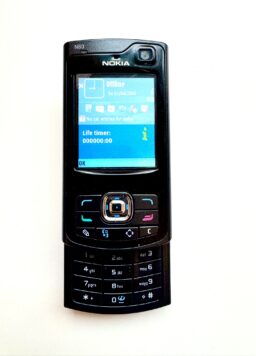
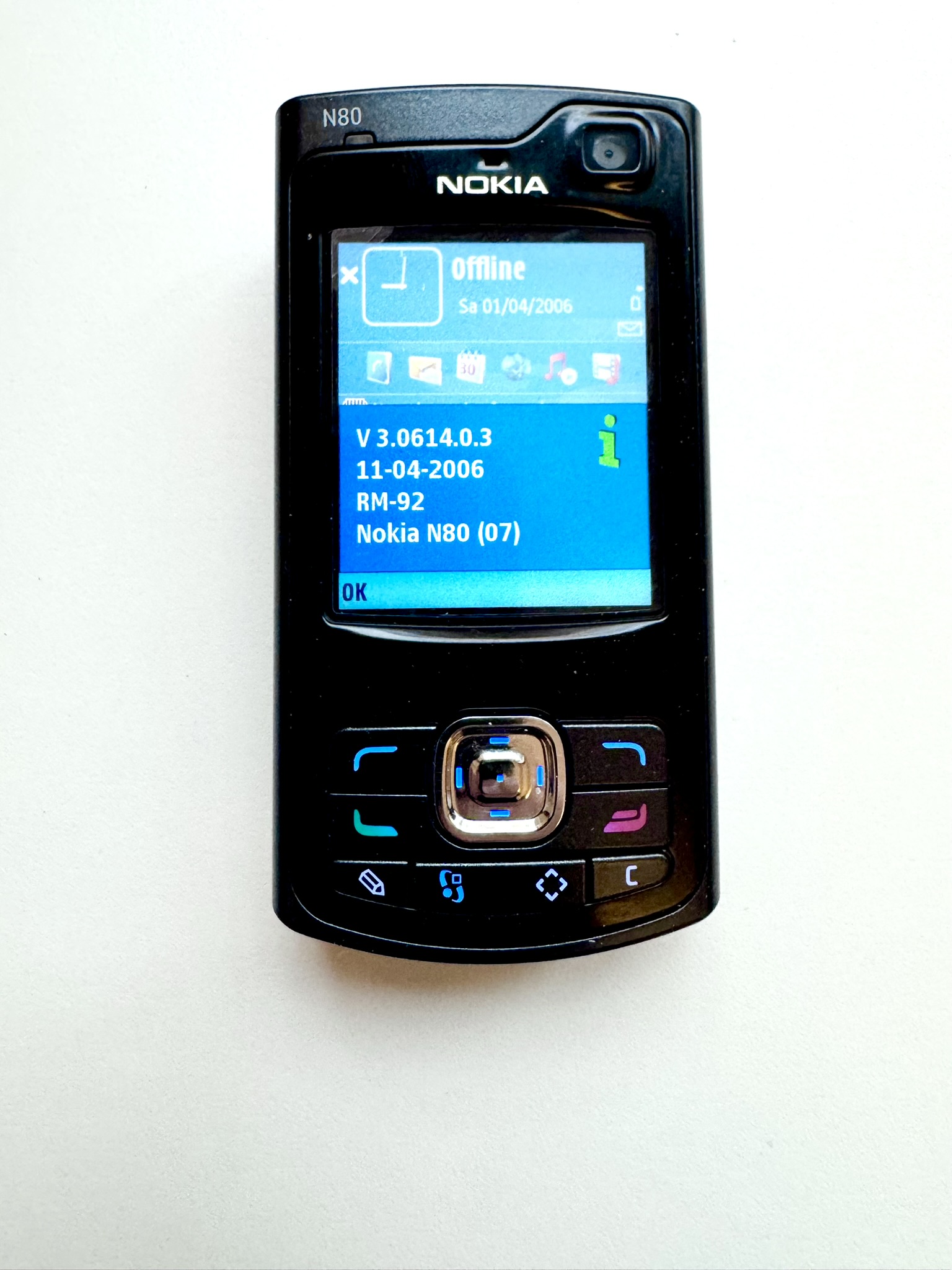
Nokia N80 Prototype S5.1: The birth of the World’s First UPnP Phone
Quick View💎 Rarity Index: S (Ultra Rare)
⭐ WOW Factor: The world first UPnP-compatible phone,
👁 Evaluation in my collection: Great – 9.5/10
🕵 Nokia Codename: Miro
⏱ Life timer: 0 | 📦 Boxed: NO
📅 Release Year: 2006 | 💰 Release Price: 500 €
📊 Units Sold: ~2M (final units)
📰 Why this phone matters: This unit represents the earliest surviving form of the world’s first
UPnP-compatible phone, the Nokia N80, shown here in its S5.1 prototype
stage long before the technology reached consumers. Built in Finland and
marked with the legendary 004400 Nokia internal IMEI range, this device
was part of Nokia’s secret push to bring home-network integration to
mobile phones for the first time in history.The internal label reveals everything expected from a genuine engineering
sample: a masked FCC and IC set, the placeholder Xyy-n model code, and an
unreleased product code known only to Nokia’s R&D teams. The bold PROTO
S5.1 stamp indicates an early hardware validation cycle, a phase where
engineers were still shaping the mechanics, RF behavior, and multimedia
stack that would define the N80. A matching S5.1 barcode sticker on the
side confirms that this device circulated between test teams, yet survived
in untouched, mint condition – almost impossible for units used at this
development depth.UPnP was the N80’s signature innovation, a world-first feature allowing a
mobile phone to discover and communicate with home media servers, TVs, and
computers. But before the world ever saw this capability demonstrated on a
stage, units like this one acted as the true testbeds. Early debug builds
of Symbian OS 9.1 ran experimental networking stacks, Wi-Fi drivers, and
service discovery modules. Engineers used devices like this to validate
seamless connectivity, file sharing, remote playback, and the foundation
of what would later become the connected-smartphone era.The Finnish build origin makes the device even rarer. Only the earliest
pilot-line N80 units came from Finland, assembled for hardware tuning,
firmware experiments, and RF calibration. Most were disassembled, reworked
to exhaustion, or destroyed after testing concluded. This one escaped
untouched – a true anomaly.With its dual proto identifiers preserved, its 004400 IMEI confirming deep
internal lineage, and its role at the dawn of UPnP mobility, this N80
S5.1 prototype is not just a rare device. It is a technological milestone
captured in physical form – the raw, unfiltered origin of the world’s
first UPnP phone.📝 Reviews when released: CNET 🔗
-
Nokia N82 Prototype S3.2: The Flash Xenon Genesis Device
Quick View💎 Rarity Index: S (Ultra Rare)
👁 Evaluation in my collection: As New – 10/10
🕵 Nokia Codename: Sharaku or Tiger
⏱ Life timer: 0m | 📦 Boxed: NO
📅 Release Year: 2007 | 💰 Release Price: ~450 €
📊 Units Sold: ~2M (final units)
📰 Why this phone matters: This unit is a genuine Nokia N82 PROTO S3.2, originating from a late-stage engineering batch used by Nokia for field validation prior to commercial release. The PROTO S3.2 marking identifies it as a Stage 3.2 engineering device, meaning it had near-final hardware but was still running precommercial firmware intended for network, camera, and stability testing. Only a very small number of these were produced, and most were destroyed after internal validation.The RM-314 internal board combined with the 004401 IMEI prefix, missing IMEI barcode, and CMII placeholder confirms that this unit predates formal regulatory submission and was never intended for retail sale. The presence of a 2D matrix tag rather than a standard retail IMEI label is a Nokia R&D signature seen only on true engineering property.
The chrome mirror housing is a known prototype mechanical shell used before finalizing the production colors. This non-retail reflective finish allowed engineers to detect micro-cracks, alignment issues, and housing fatigue during testing. The keypad includes Chinese character markings, indicating that this unit was part of the APAC field-testing program, where network compatibility, input methods, and Chinese localizations were evaluated.
The Nokia N82 itself was one of the most important camera phones of its era, introducing a xenon flash that outperformed the N95 and set new standards for mobile photography. Built on Symbian OS v9.2 with S60 3rd Edition FP1, the N82 combined GPS, Wi-Fi, HSDPA, and a 5 MP Carl Zeiss camera into what many considered the best camera phone of 2007. As the last high-end candybar Nseries device before the shift to sliders and touchscreens, the N82 marks the end of a major design era at Nokia.
This prototype captures the device at the critical moment before release, with a rare combination of S3.2 prototype labeling, APAC keypad, chrome housing, and internal RM-314 board markings. Few surviving units include all these characteristics, making this one of the most historically significant and collectible N82 prototypes known today.
📝 Reviews when released: Mobile Review 🔗
-
Nokia N90 Prototype NPI-2 F5.0
Quick View💎 Rarity Index: S (Ultra Rare)
⭐ WOW Factor: The first Nokia phone with unique swivel design
👁 Evaluation in my collection: Great – 9.8/10
🕵 Nokia Codename: Gromit
⏱ Life timer: 0 | 📦 Boxed: NO
📅 Release Year: 2005 | 💰 Release Price: ~250 €
📊 Units Sold: ~500k (final units)
📰 Why this phone matters: Nokia N90 Prototype – RM-42 (Proto NPI-2)
A rare engineering prototype from Nokia’s golden era, this RM-42 NPI-2 unit represents an early pre-production stage of the iconic Nokia N90, the first smartphone in history built around a full Carl Zeiss Tessar autofocus camera module.Hand-assembled in Finland and labeled “Proto NPI-2 – Not For Sale,” this device belongs to an internal batch reserved exclusively for Nokia’s imaging and mechanical engineering teams. It features the trademark twist-and-shoot camcorder design, the Tessar 2.9/5.5 AF lens, and the unmistakable dual-hinge architecture that made the N90 one of the most advanced camera phones of its time.
Carrying a prototype IMEI and early hardware IDs, this device offers a rare glimpse into Nokia’s development process during a period when mobile imaging innovation was at its peak. A true collector’s highlight – a milestone device in its pure, pre-release form.
📝 Reviews when released: Mobile Review 🔗
-


Nokia N91 4GB
Quick View💎 Rarity Index: B (Uncommon)
⭐ WOW Factor: The first ever phone encompassing a 4 GB internal hard drive allowing storage for 3.000 songs (the 8 GB revision came later), Tthe first Nokia phone to run on Symbian 9.1.
👁 Evaluation in my collection: Great – 9.5/10
🕵 Nokia Codename: Thunder
⏱ Life timer: 188h | 📦 Boxed: NO
📅 Release Year: 2007 | 💰 Release Price: ~700 $
📊 Units Sold: ~400k
📰 Why this phone matters: The Nokia N91 is a smartphone produced by Nokia as part of their Nseries line of portable devices. It was announced on April 27, 2005 along with N70 and N90 as the first three Nseries devices. The N91 ran on Symbian-based S60 3rd Edition (the first to run on Symbian 9.1). It was the first ever phone encompassing a 4 GB internal hard drive, allowing storage for 3,000 songs (an 8 GB revision came later). The N91 is highly focused on music, with dedicated music keys on the front which slide down to reveal the keypad. It also featured the industry-standard 3.5 mm headphone jack, and was anticipated as a major challenger to Apple, whose iPod dominated the industry. The design of the N91 is based on stainless steel with a matte finish.
The N91 became one of 2005’s most anticipated phones, however it suffered from a long delay of release. It was expected to begin shipping by the end of 2005; but in September that year the device was delayed till 2006.In February 2006, it was delayed yet again due to software issues, pushing the release to Q2.Finally in April 2006 it was first released to consumers, a full year after announcement.
Nevertheless, N91 won the ‘Most Innovative Product’ and ‘Most Technologically Advanced Product’ award in recognition of its true multimedia music experience, added together with its high-end smartphone capabilities.In advertisements for the phone, Nokia recommended Bose and Sennheiser headphones. Its sound output is considered by many to be of very high quality and very loud.📝 Reviews when released: Mobile Review 🔗
-
Nokia N91 4GB Prototype: B5.2 Asia Variant
Quick View💎 Rarity Index: S (Ultra Rare)
⭐ WOW Factor: The first ever phone encompassing a 4 GB internal hard drive allowing storage for 3.000 songs (the 8 GB revision came later), Tthe first Nokia phone to run on Symbian 9.1.
👁 Evaluation in my collection: Great – 9.5/10
🕵 Nokia Codename: Nemo-W
⏱ Life timer: 0h | 📦 Boxed: NO
📅 Release Year: 2007 | 💰 Release Price: ~700 $
📊 Units Sold: ~800k (final units)
📰 Why this phone matters: Nokia N91 – RM-158 Prototype (4GB, Asia Variant, B5.2 Hardware)This device is a genuine Nokia N91 4GB prototype, built on the RM-158 platform-a development variant created specifically for the Asia/APAC market. Unlike the standard eur;opean N91 4GB (RM-43), this pre-production unit showcases a different internal hardware configuration, unique labeling, and a regional color scheme that never appeared on global retail models.
Marked clearly with “PROTO B5.2 – NOT FOR SALE” and manufactured in Finland, this unit represents an early engineering build used by Nokia during the final testing stages of the Asia-market N91. The RM-158 board differs from RM-43 through its regional firmware branches, radio configuration, and production-specific tuning, making this prototype significantly rarer than any retail device.
Its exterior features the Asia-exclusive color variant, a darker, metallic finish paired with a distinct keypad shade-used only in APAC commercial releases but extremely scarce worldwide. In prototype form, the materials, texture, and finish differ subtly from production units, highlighting the transitional stage between engineering samples and final mass manufacturing.
With full prototype identifiers, pre-market barcodes, engineering hardware codes, and its unusual combination of Asia-market aesthetics with Finnish factory proto build, this RM-158 N91 stands as a prime collectible from Nokia’s golden era.
Perfect for collectors seeking regional hardware variations, early-stage engineering units, and rare prototype-only configurations.
📝 Reviews when released: Mobile Review 🔗
-
Nokia N91 8GB Prototype B4.0: Made in USA | Unreleased white white Camera Cover and silver keypad
Quick View💎 Rarity Index: X (Mystical Prototype)
⭐ WOW Factor: The first ever phone encompassing a 8 GB internal hard drive allowing storage for 3.000 songs (the 8 GB revision came later), Tthe first Nokia phone to run on Symbian 9.1.
👁 Evaluation in my collection: Great – 9.5/10
🕵 Nokia Codename: Thunder
⏱ Life timer: 0h | 📦 Boxed: NO
📅 Release Year: 2007 | 💰 Release Price: ~700 $
📊 Units Sold: ~400k (final units)
📰 Why this phone matters: Nokia N91 8GB – RM-43 – Prototype B4.0 – Made in USA – Unique White Camera CoverThis is a highly significant Nokia N91 8GB engineering prototype, built during Nokia’s internal development cycle and never intended for commercial release. The label identifies it as PROTO B4.0, a late-stage pre-production unit, but the hardware reveals something even more remarkable: a white camera cover, a part that was never used in production N91 or N91 8GB units.
All retail models featured a dark grey/black camera bezel, but this prototype houses a white pre-final CMF component – a rare internal test part used before Nokia approved the final color and material selection. Early tooling marks, alternate finishing, and non-standard coloration make this one of the only known N91 prototypes with this configuration.
Unlike mass-produced units manufactured in Finland or Germany, this device also carries the exceptionally rare “Made in USA” marking, confirming its role as a high-level engineering sample assembled for internal testing and hardware validation. The model field reads “XXXX”, and multiple internal codes differ from final production, reinforcing its early-preproduction status.
As the world’s first smartphone with an integrated 8GB micro-hard-drive, the N91 was born from bold experimentation – and this prototype embodies exactly that phase of innovation. With its unique white camera cover, U.S.-assembled chassis, RM-43 pre-production hardware, and B4.0 revision status, this unit stands as a near-one-of-a-kind artifact from Nokia’s golden age.
📝 Reviews when released: Mobile Review 🔗
-
Nokia N92 Prototype B4.0 | Unreleased 101 RM
Quick View💎 Rarity Index: S (Ultra Rare)
⭐ WOW Factor: The world first mobile phone with an integrated DVB-H tuner
👁 Evaluation in my collection: Great – 9/10
⏱ Life timer: 90h | 📦 Boxed: NO
📅 Release Year: 2005 | 💰 Release Price: ~600 €
📊 Units Sold: ~300k (final units)
📰 Why this phone matters: Ultra-rare pre-production hardware from Nokia’s most ambitious multimedia projectThis RM-101 Nokia N92 prototype is a remarkable survivor from Nokia’s golden era of experimental engineering – a time when the company was pushing the boundaries of what a mobile device could be. Built in Finland as a B4.0 late-stage engineering sample, it predates the commercial N92 and belongs to a hardware branch (RM-101) that never made it to public release.
Marked with “Prototype – Property of Nokia” and stamped with the internal Model: XXXX placeholder, it represents a phase where the N92’s revolutionary technologies were still being refined by Nokia’s R&D, DVB-H field-testing teams, and multimedia engineering groups.
At this stage of development, Nokia was integrating:
the world’s first DVB-H mobile TV system,
the unique dual-axis swivel display,
and a full multimedia platform designed for movie-style video playback and live broadcast reception.
This prototype embodies that engineering ambition. The RM-101 board configuration, unseen in retail production (which used RM-33/RM-100), offers a rare look into the deeper architecture behind the commercial N92 – making this unit not just uncommon, but historically significant.
There’s a special presence to this device: the unfinished model code, the engineering labels, the Made-in-Finland chassis, and the unmistakable scent of Nokia’s high-end R&D. Holding it feels like holding the N92 before it became the N92 – a snapshot of the innovation process itself.
A centerpiece for any serious Nokia prototype collection
This is more than a rare phone. It’s a piece of development history from one of the most technically complex devices Nokia ever built – a prototype that captures the excitement, experimentation, and engineering courage that defined the N-Series era.
📝 Reviews when released: ZDNet 🔗