

">

Showing 37–48 of 110 results
-


Nokia 7210
Quick View💎 Rarity Index: C (Common)
👁 Evaluation in my collection: As New – 10/10
🕵 Nokia Codename: Vanessa
⏱ Life timer: 03s | 📦 Boxed: YES
📅 Release Year: 2002 | 💰 Release Price: ~500$
📊 Units Sold: ~15M
📰 Why this phone matters: The Nokia 7210 is a handset by Nokia, built on the Series 40 1st Edition software platform and enabled with J2ME (Java). The device features text and picture messaging, WAP browser, Stereo FM radio, Polyphonic ringtones, two preinstalled games and a 1.5″, 128×128 pixel, 4,096 color display. It was the first Nokia phone for the mass market with a colour display and with polyphonic ringtones (they were already on the Nokia 7650).
The 7210 featured an all-new front cover design, with a unique keypad layout incorporating a 4-way scroll button. The phone came in a choice of colours, with changeable Xpress-on covers available. Eight colour schemes are available along with the ability to download images to save as wallpaper to add even more personalization.📝 Reviews when released: Mobile Review 🔗
-

Nokia 7250i James Brown Edition BNIB
Quick View💎 Rarity Index: A (Rare)
👁 Evaluation in my collection: BNIB – 10/10
🕵 Nokia Codename: James
⏱ Life timer: 0m | 📦 Boxed: YES
📅 Release Year: 2003 | 💰 Release Price: ~450 $
📊 Units Sold: ~12M
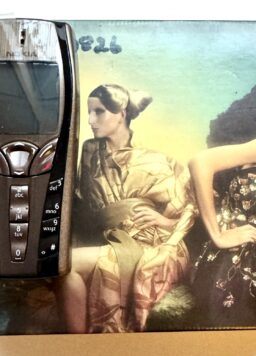
📰 Why this phone matters: Nokia 7250i Brown Edition NHL-4JX, codename James, is one of those devices that shows exactly why early 2000s Nokia was untouchable in phone design.The 7250i itself was launched in 2003 as an upgraded version of the 7250, keeping the wild, sculpted candybar body but hiding a better camera and a more advanced XHTML browser inside. It was part of Nokia’s fashion line, a hero product that mixed technology and style at a time when an integrated camera was still a futuristic feature.
This unit takes that story further. Finished in the ultra rare brown metallic shell, it looks completely different from the usual blue and plum variants. The front mixes a warm brown body with dark framing and a dramatic three piece keypad layout that flows up into the navigation cluster. It is unmistakably a fashion phone, and in this color it is almost never seen, especially BNIB.
Behind the design sits the NHL-4JX platform: a tri band GSM engine with Series 40 1st Edition software, CSTN 4096 color display and a CIF camera tuned for the 128 x 128 screen. The camera supports night mode and digital zoom, letting early adopters capture and send MMS pictures long before camera phones became standard. GPRS and HSCSD handle data, while the stereo FM radio, Java games and Nokia’s Pop-Port ecosystem turn the phone into a compact entertainment device.
The label confirms everything a collector wants to see: Model 7250i, Type NHL-4JX, product code 0511226, IMEI in the correct 351460 range, FCC ID PYANHL-4J, IC 661V-NHL4J, CE168 and Made in Hungary, one of Nokia’s most respected factories. In other words, a fully authentic, correctly configured eur;opean market 7250i in one of the rarest official colors.
This unit is BNIB in the collection, which is extremely unusual for a 2003 fashion device that was meant to be used hard and shown off. Most surviving 7250i phones are worn, repainted or rebuilt; finding an original brown example that has effectively never entered daily service is a serious trophy for any Nokia or fashion phone collector.
📝 Reviews when released: N/A 💔
-


Nokia 7360 (3x)
Quick View💎 Rarity Index: C (Common)
⭐ WOW Factor: One of the first cell phones to implement the use of materials such as metal and leather in mass production
👁 Evaluation in my collection: Great – 9.8/10
🕵 Nokia Codename: Sofix
⏱ Life timer: 24h | 📦 Boxed: YES
📅 Release Year: 2005 | 💰 Release Price: ~200 €
📊 Units Sold: ~3M
📰 Why this phone matters: Part of the “L’Amour Collection”, along with the 7370, 7373, 7380 and the 7390. The 7360 was designed at Nokia’s Design Center in California and was one of the first cell phones to implement the use of materials such as metal and leather in mass production📝 Reviews when released: Mobile Review 🔗
-


Nokia 7500 Prism Prototype B3.0: Engineering Sample | Unreleased Gray Colour
Quick View💎 Rarity Index: X (Mystical Prototype)
⭐ WOW Factor:
👁 Evaluation in my collection: Great – 9.5/10
🕵 Nokia Codename: Scorpion
⏱ Life timer: 4m | 📦 Boxed: NO
📅 Release Year: 2007 | 💰 Release Price: ~230 €
📊 Units Sold: ~1M (final units)
📰 Why this phone matters: Nokia 7500b Prism – RM-250 PROTOTYPE (Codename: SCORPION) – a genuine engineering sample from Nokia’s internal development program. Features prototype IMEI (004401?), HWID exposure, pre-final RF labeling, and early R&D markings. This unit also includes a rare, unreleased graphite/metallic grey prototype housing used only on SCORPION pre-production builds before final Prism colours were approved. A highly valuable and historically significant prototype from the Prism design era📝 Reviews when released: Mobile Review 🔗
-


Nokia 7500 Prism Swarovski : Never Sold
Quick View💎 Rarity Index: S (Ultra Rare)
⭐ WOW Factor:
👁 Evaluation in my collection: Great – 9.5/10
🕵 Nokia Codename: Scorpion
⏱ Life timer: 1h | 📦 Boxed: NO
📅 Release Year: 2007 | 💰 Release Price: N/A
📊 Units Sold: 0 units
📰 Why this phone matters: Nokia 7500 Prism (RM-249, codename SCORPION) – a rare China event-edition custom unit created for Nokia’s Our Internet Life 2008 exhibitions. Built on a genuine Made-in-Finland 7500 Prism mainboard (product code 0544425), this piece features the unique crystal-studded front and back housings used in Nokia’s fashion and design showcases in Beijing and Shanghai. The diamond-grid pattern was hand-decorated specifically for promotional display and was never released as a commercial product. With its authentic hardware, precise crystal layout, and event-only aesthetic, this is one of the rarest and most visually distinctive variations of the SCORPION Prism family.📝 Reviews when released: Mobile Review 🔗
-


Nokia 7600
Quick View💎 Rarity Index: B (Uncommon)
⭐ WOW Factor: The second 3g Nokia phone
👁 Evaluation in my collection: Great – 9.5/10
🕵 Nokia Codename: Mango
⏱ Life timer: 0m | 📦 Boxed: NO
📅 Release Year: 2003 | 💰 Release Price: ~450 $
📊 Units Sold: ~600k
📰 Why this phone matters: The Nokia 7600 is a camera phone developed by Nokia, running on Series 40. The 7600 was announced on 25 September 2003 and was Nokia’s second 3G handset after the Nokia 6650.It is notable for its unique radical design. The phone was primarily aimed at the “fashion” market, it had a unique teardrop shape and a variety of interchangeable covers were available. The number keys were located around the large screen. The VGA camera was of a good quality for its time, but poor by modern standards.
It has polyphonic ring-tone support. The built-in MP3/AAC audio player allows up to 29MB of songs to be transferred to the handset using Bluetooth, Infrared or a USB connection through its Pop-Port.The 7600 has a talk time of nearly three hours using a 3G connection. Stand-by time is up to 12.5 days.📝 Reviews when released: N/A 💔
-


Nokia 7610
Quick View💎 Rarity Index: C (Common)
👁 Evaluation in my collection: As New – 10/10
🕵 Nokia Codename: Catalina
⏱ Life timer: 3m | 📦 Boxed: YES
📅 Release Year: 2004 | 💰 Release Price: 500 €
📊 Units Sold: ~8M
📰 Why this phone matters: The Nokia 7610 is a Symbian OS smartphone introduced at CEBIT on 18 March 2004.It features a 1 megapixel camera (1152×864 pixels) and was targeted at the “fashion conscious” individual with a design similar to 2003’s Nokia 7600. It went on sale with a list price of &eur;o;500 and came with a 64 MB MMC card. It runs on Nokia’s Series 60 platform (version 2.1). It was marketed as a stylish and imaging device, and allowed direct Bluetooth photo printing.End-users can also use the 7610 with Nokia Lifeblog. Other pre-installed applications include the Opera Mobile web browser, RealOne player and Kodak Photo Sharing.📝 Reviews when released: Mobile Review 🔗
-


Nokia 7650
Quick View💎 Rarity Index: B (Uncommon)
⭐ WOW Factor: The first Nokia phone with a built-in?camera?
👁 Evaluation in my collection: Brand New Swap – 10/10
🕵 Nokia Codename: Calypso
⏱ Life timer: 0m | 📦 Boxed: NO
📅 Release Year: 2002 | 💰 Release Price: ~600 €
📊 Units Sold: ~3M
📰 Why this phone matters: The Nokia 7650 is a 2.5G consumer-oriented smartphone belonging to the fashion and experimental (7xxx) series. It was introduced in Barcelona on 19 November 2001, and was described by CEO Jorma Ollila as the company’s most important launch of that year.Feature-rich, it was the first Nokia phone with a built-in camera (VGA resolution), and thus its imaging capabilities was widely marketed. It has a large (at the time) 2.1″ colour display with a resolution of 176×208 pixels. The 7650 was also the company’s first to feature Multimedia Messaging Service (MMS), and it also has Bluetooth and GPRS connectivities (although to much criticism did not support Bluetooth headsets).
Nokia 7650 showing its Series 60 menu
In addition it was the first Series 60 platform device (which would go on to power the majority of Nokia smartphones for many years after), as well as the first mass market Symbian OS device to be released, allowing the sideloading of both Java and EPOC applications.📝 Reviews when released: N/A 💔
-


Nokia 7700 Prototype F5.0 Black | Unreleased
Quick View💎 Rarity Index: X (Mystical Prototype)
⭐ WOW Factor: The first Nokia unreleased phone with touch screen and Symbian S90
👁 Evaluation in my collection: Great – 9.5/10
🕵 Nokia Codename: MX
⏱ Life timer: N/A | 📦 Boxed: NO
📅 Release Year: 2003 | 💰 Release Price: N/A
📊 Units Produced: ~1k
📰 Why this phone matters: A true piece of Nokia history – the Nokia 7700 F5.0 Prototype, Type RAL-2, made in Finland and never released commercially. This is one of the most ambitious devices Nokia ever built: a full-touch “media communicator” years before the 7710 and long before modern smartphones adopted the concept.This listing includes two fully working prototypes, one in black and one in white, both belonging to the late engineering stage (F5.0) and carrying the internal Model: M designation. These units were intended for final validation and software testing, featuring the hardware configuration closest to what a retail 7700 would have been – had it reached the market.
The 7700 became legendary precisely because it never launched, making functional prototypes extremely rare. To find two, in different colours, in working condition, is virtually unheard of and places this set among the top-tier collector items of early smartphone history.
Whether displayed as design icons or preserved as engineering artifacts, these devices stand as one of Nokia’s boldest steps toward the touchscreen era.
📝 Reviews when released: Mobile Gazette 🔗
-


Nokia 7700 Prototype F5.0 White | Unreleased
Quick View💎 Rarity Index: X (Mystical Prototype)
⭐ WOW Factor: The first Nokia unreleased phone with touch screen and Symbian S90
👁 Evaluation in my collection: Great – 9.5/10
🕵 Nokia Codename: MX
⏱ Life timer: N/A | 📦 Boxed: NO
📅 Release Year: 2003 | 💰 Release Price: N/A
📊 Units Produced: ~1k
📰 Why this phone matters: The Nokia 7700 (Model – M Type RAL-2) is a smartphone produced by Nokia, announced in October 2003 but never released. It was produced as a prototype unit between 2003-2004 It was expected to be the first smartphone running the Series 90 GUI on Symbian OS and Nokia’s first pen-based device, intending to compete against handsets like Sony Ericsson P800. At announcement Nokia dubbed it a “media device.” Compatible with GSM/HSCSD/GPRS/EDGE 900/1800/1900 MHz networks, the 7700 featured a wide, 3.5-inch touch-screen colour LCD with a resolution of 640 x 320 pixels which is the first smartphone with 2:1 aspect ratio and supporting 65,000 colours. It had 64 MB of internal memory and a MultiMedia Card (MMC) slot. It also included an integrated VGA camera with a maximum resolution of 640 x 480 pixels, an integrated FM radio, Bluetooth, USB and Nokia’s proprietary Pop-Port interface for connectivity purposes.The 7700 was to include a comprehensive application suite (such as a complete PIM suite, ‘full’ web browser, email client and an office suite comprising Word Processor, Spread-Sheet and a PowerPoint viewer) and supported Java MIDP 2.0 applications. It was also to be the first phone to support Visual Radio, and the first Nokia phone to support DVB-H mobile television with the addition of the Nokia Streamer SU-6 accessory. The Nokia 7700 was cancelled in mid-2004. Several theories for the cancellation were put forward at the time: Nokia was refocusing on ‘normal’ phones due to decreasing market share; the phone would be too late to market; and the phone was unattractive and bulky. It also featured ‘sidetalking’ like the N-Gage, a feature that had attracted a great deal of negative publicity. The Nokia 7710 followed shortly later with increased memory, a different design, no ‘sidetalking’ and other improvements. However, the 7700 was nevertheless used for further trials of DVB-H. As stated above, the Nokia 7700 was never released to the public. It was only released to Nokia’s R&D (Research and Development) groups. A few models, estimated 20, were distributed prior to Nokia’s decision to discontinue the model before full-on production. However as they were preparing to make the move into stores, the final product prototypes were available in every Nokia Dealer store for display and show-off, so an estimate on how many pieces there actually were is impossible to make, or how many remained in factories and services that were testing them. Pricing is thus very difficult to assess due to lack of official sales. Nevertheless, a few models were sold on eBay since Nokia’s announcement of discontinuation. The lack of independent data to verify the sale records on eBay has caused some to overestimate the actual cost of the model. The phone is nevertheless considered by a number of Nokia collectors to be a rare piece.
📝 Reviews when released: Mobile Gazette 🔗
-
Nokia 7710 Full Box: Future Ahead of Its Time
Quick View💎 Rarity Index: A (Rare)
⭐ WOW Factor: The first Nokia released phone with touch screen
👁 Evaluation in my collection: Great – 9.5/10
🕵 Nokia Codename: Remix
⏱ Life timer: N/A | 📦 Boxed: YES
📅 Release Year: 2005 | 💰 Release Price: N/A
📊 Units Sold: ~500k
📰 Why this phone matters: The Nokia 7710 is a smartphone announced on 2 November 2004.It was the first Nokia device with a touchscreen, and first device with 2:1 aspect ratio display.The 7710 is based on the Nokia 7700 which was never released. It is Nokia’s only smartphone to run the Series 90 interface atop Symbian OS v7.0s.📝 Reviews when released: Mobile Review 🔗
-
Nokia 7710 Prototype F4.0: Future ahead of its Time | Unreleased Black Keypad
Quick View💎 Rarity Index: X (Mystical Prototype)
⭐ WOW Factor: The first Nokia released phone with touch screen
👁 Evaluation in my collection: Great – 9.5/10
🕵 Nokia Codename: Remix
⏱ Life timer: N/A | 📦 Boxed: NO
📅 Release Year: 2005 | 💰 Release Price: N/A
📊 Units Sold: ~500k (final units)
📰 Why this phone matters: A rare and impeccably preserved Nokia 7710 RM-12 F4.0 prototype, belonging to the final stage of Nokia’s pre-production cycle for the iconic Series 90 touchscreen smartphone.
This F4.0 unit – clearly marked PROTO and Property of Nokia – originates from Nokia’s internal validation program, used during the last wave of field testing, UI refinement and RF certification before the public release in 2005.Unlike retail units, this prototype features an unreleased keypad colour variant, with silver-toned navigation and side-control keys replacing the standard glossy black retail trim. This experimental colourway never reached commercial production, making this device a standout among surviving prototypes. The front bezel also shows the slightly grainier, matte finish characteristic of late hardware trials inside Nokia’s labs.
As with all authentic high-grade prototypes, the label carries the signature “Model: XXXX” placeholder, missing consumer certifications, serial markings and final manufacturing codes. These elements confirm it as a genuine internal unit, built in Finland during the last engineering revision of the platform.
The Nokia 7710 was Nokia’s most ambitious early touchscreen smartphone – a widescreen 640×320 device running the innovative Series 90 interface on Symbian OS. The prototype here predates the public release, offering collectors a rare glimpse into Nokia’s transition from experimental UI concepts to finalized commercial design.
This F4.0 RM-12 prototype is an exceptional find: a fully authentic late-stage engineering device with a unique, unreleased keypad trim, placing it among the rarest surviving 7710 variants and a valuable centrepiece for any advanced vintage Nokia collection.
📝 Reviews when released: Mobile Review 🔗