Showing 13–24 of 337 results
-


B&O 9800
Quick ViewBattery chargers for mobile phones are not the most exciting objects in the world, but Bang & Olufsen have a continual habit of making a virtue out of what others see as ordinary. By combining the battery charger with a specially designed holder, BeoCom 9800 suddenly became a mobile phone that users really wanted others to see!
Weighing less than 100 grams and able to fit snugly in a pocket, the BeoCom 9800 mobile phone was one of the world’s smallest cellular phones when it was introduced, with an equally impressive list of features. Tell it the name of the person you wish to telephone and BeoCom 9800 dialled it. The inclusive BeoCharger combined holder and battery charger in an attractive package.
Features: Caller ID; Call Forward; SMS; Voice Dial; Call Duration; Call Hold; redial function for last 10 numbers; 90 minutes’ battery talk time with 100 hours standby; graphic display; keypad lock; clock; data/fax connection; 100g with standard battery
Accessories: BeoCharger; extra battery; hands-free car kit
-
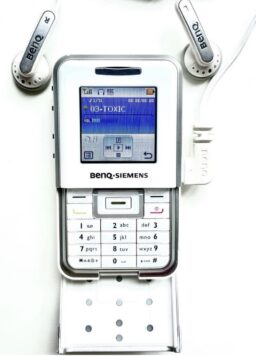

Benq Siemens EF51
Quick ViewAs odd as it may be for me to say, it’s a really cute phone, even a little girly perhaps. It has a certain je-ne-sais-quoi feel when it comes to its looks. A warped egg maybe? You decide. The EF51 has a small TFT display with a resolution of 128 x 128 pixels and 256k colors. The keypad is right behind the music player panel in front. So all you have to do is flip it open. The keys on the pad may seem small, but they’re easy to use.
On one side you’ll find a dedicated voice recorder key followed by the volume keys and the dedicated camera key. There’s also the proprietary charging port. On the other side is the proprietary earphone / USB socket, but thankfully BenQ-Siemens has provided a converter to 3.5mm. Underneath this socket is the miniSD card slot. The EF51 weighs in at 95g which also makes it a light mobile phone aside from being small.
-


Benq Siemens EF81 Special Star Wars Edition
Quick ViewThe BenQ-Siemens EF81 is undoubtedly similar specs-wise and even in looks to the Motorola Razr V3x. The most impressive design feature of this phone is how thin it is, considering it has the same features as the Motorola V3x — which is much bigger. The EF81 measures 51 by 94 by 16mm thin whereas the V3x is 55 by 99 by 20mm, making the EF81 4mm less wide, 5mm shorter and 4mm thinner.
-
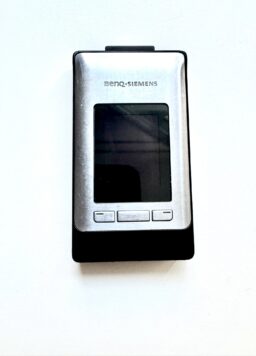
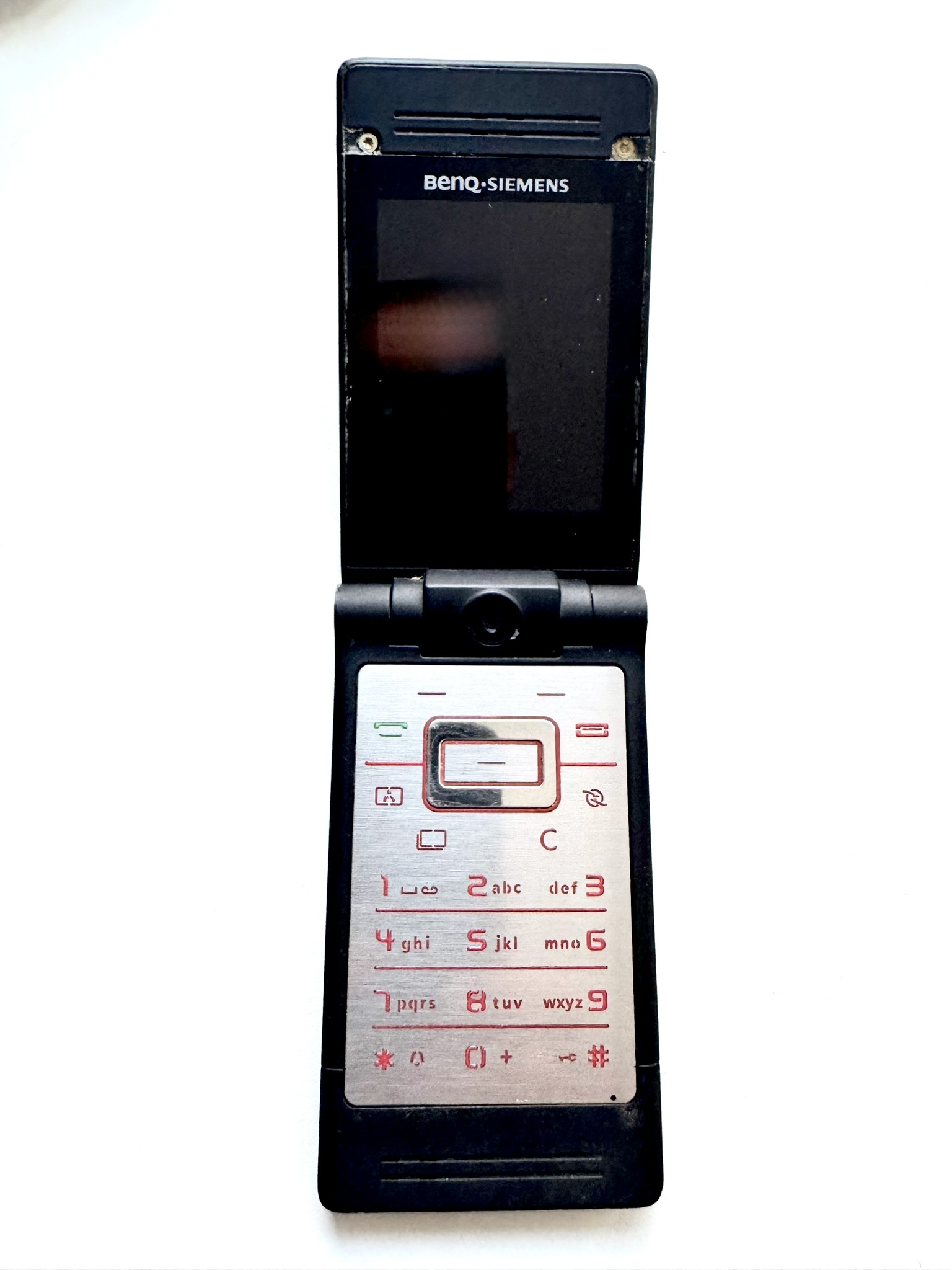
Benq Siemens EF81: Prototype in Black
Quick ViewBenQ-Siemens EF81 – Unreleased Black Prototype
A rare glimpse into an alternative design direction for the BenQ-Siemens EF81. This prototype features an unreleased black finish and a radically different keypad design compared to the commercially available model.
Its brushed-metal keypad, flat layout and distinctive red markings are particularly striking, bearing an interesting resemblance to the styling later seen on the Nokia N76.
Beyond the unusual appearance, this unit carries a prototype identification label marked “NOT FOR SALE”, further highlighting its pre-production status.
An intriguing piece of BenQ-Siemens history, offering a glimpse of a design variation that never made it to the retail market.
-
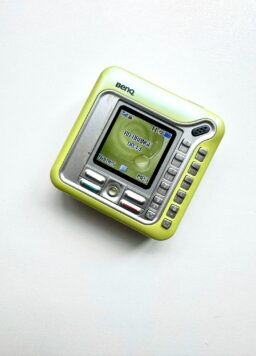
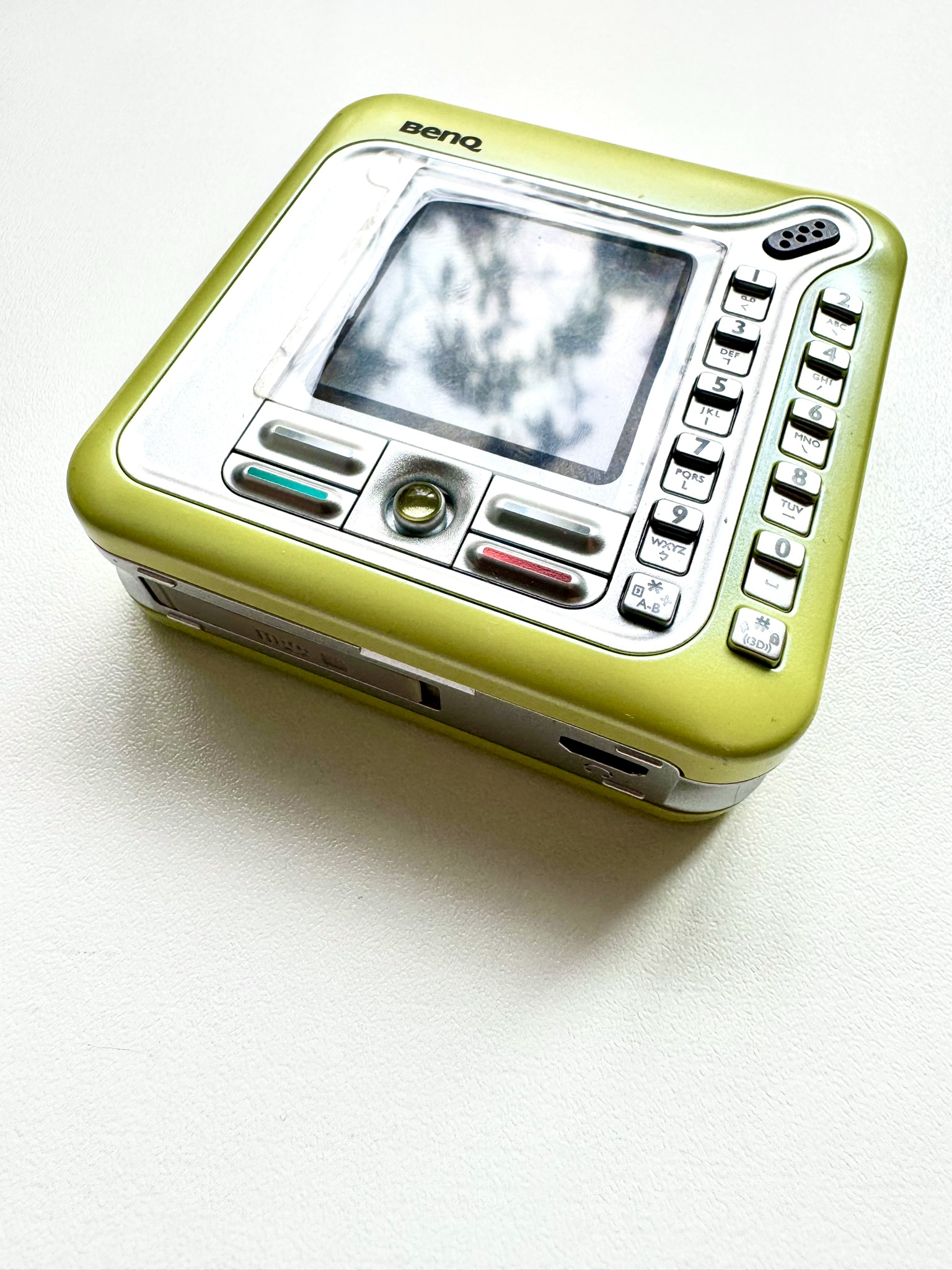
Benq Z2: Compact music phone
Quick ViewBenQ-Siemens Z2 – Ultra-Rare Square Music Phone (Made in Taiwan) – New, No Box
The BenQ-Siemens Z2 is one of the most unconventional and hard-to-find mobile phones ever produced by the brand. Released in very limited quantities around 2005, it features a distinctive square body, a side-mounted alphanumeric keypad, and a design language inspired more by early MP3 players and mini handheld consoles than by traditional phones.
Manufactured in Taiwan and introduced during the transition period just before the full BenQ-Siemens merger branding shift, the Z2 stands apart as a niche, short-lived model that never saw broad distribution. Today it is considered one of the rarest commercial BenQ / BenQ-Siemens devices.
This unit is new, showing no signs of prior use, but comes without its original box.
-
BlackBerry P’9982 Porsche Desgin
Quick ViewThe BlackBerry Porsche Design P’9982 is a high-end smartphone by BlackBerry and Porsche Design. Released in December 2013, it is based upon the BlackBerry Z10, having exactly the same internal hardware specifications except for an increase of internal memory from 16 GB to 64 GB and a microSD slot that is now verified for 64 GB cards.
Porsche Design has modified the phone design by adding stainless steel and satin materials to the body to create a more “premium” device, which is slightly larger and has more heft than the BlackBerry Z10. The P’9982 runs Blackberry 10.2.1 and features a slightly modified user interface by Porsche Design that features a new alarm clock, lock screen display, square-shaped icons and custom BBM PINs.
-


-
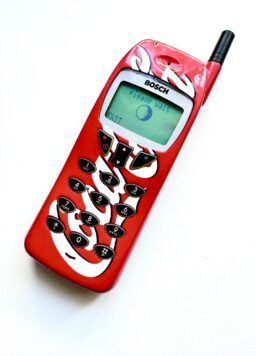
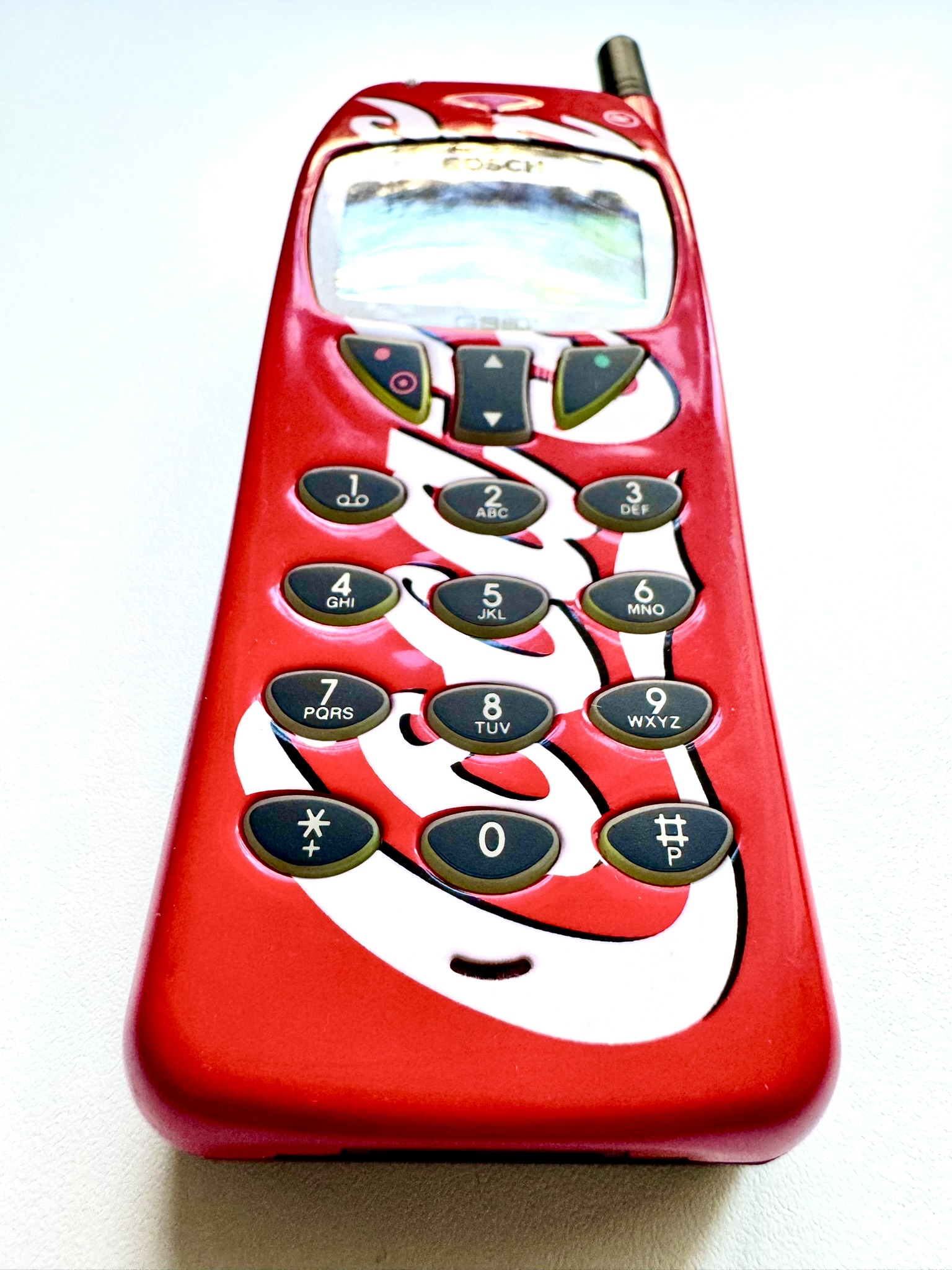
Bosch 608 | Coca Cola Edition
Quick ViewBosch 608 Coca-Cola Edition – A Taste of the ’90s
When mobile phones had personality and brand collaborations were something truly special, the Bosch 608 Coca-Cola Edition stood out as an unusual combination of mobile technology and pop culture.
Bringing together Bosch’s unmistakable late-1990s mobile phone design and Coca-Cola’s iconic branding, this special edition captures an era when mobile phones were becoming more than communication devices – they were also a way to express individuality.
Today, this unit represents a fascinating piece of mobile phone nostalgia, where two completely different worlds came together to create something memorable.
Not just a mobile phone. A little piece of ’90s pop culture.
-


Bosch 908
Quick ViewClap phone from Bosch back in 1998. It had a real analog modem inside for communication
-


-
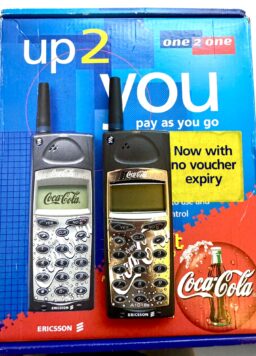
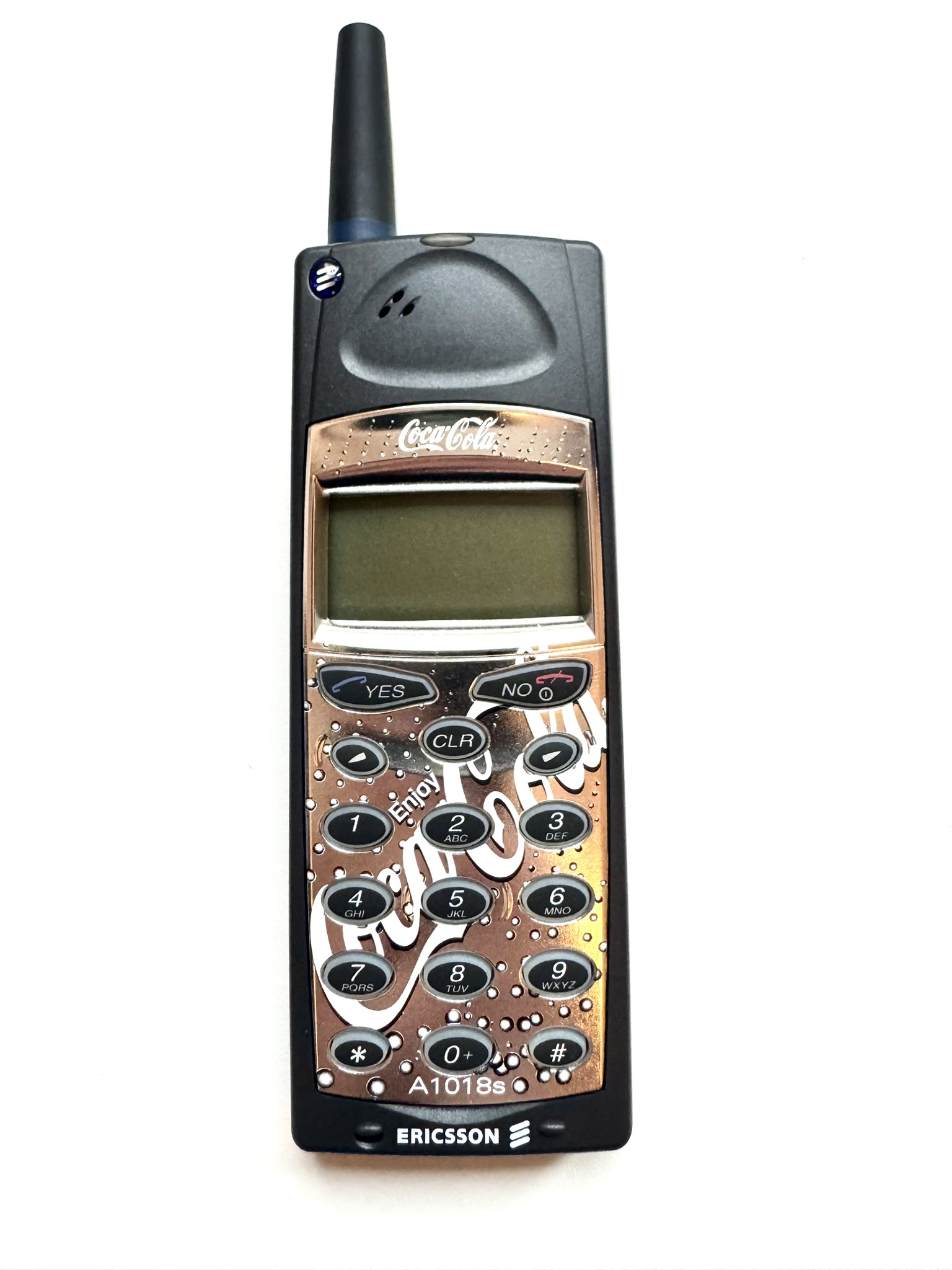
Ericsson A1018s: Coca-Cola Edition The Golden Age of Brand Collaborations
Quick ViewCreated during a unique moment when global brands began exploring mobile technology as a marketing medium, the Ericsson A1018s Coca-Cola Edition stands as one of the most iconic promotional phones ever released. Produced in Sweden at the start of the year 2000 and distributed exclusively through Coca-Cola campaigns, it was never sold in stores. Released exclusively through Coca-Cola Great Britain in partnership with the One-2-One network, this phone could not be purchased under any circumstances – instead, it required participants to collect 60 promotional Coca-Cola ring pulls or bottle tokens, attach them to an application sheet, fill out the official Coca-Cola Application Form in block capitals, and mail everything together with a £30 cheque or postal order before the 30 September 2000 cutoff. Approved applications received the phone by post along with a prepaid One-2-One SIM pack and accessories.
This edition is instantly recognizable by its factory-issued Coca-Cola fascia – a chrome surface decorated with rising bubble motifs and the flowing “Enjoy” script, perfectly echoing Coca-Cola’s classic advertising themes of the late ’90s and early 2000s. Combined with the elegant black frame and Ericsson’s signature oval keys, the design merges the energy of Coca-Cola branding with the industrial clarity of Ericsson’s pre-Sony mobile philosophy. It retains all the authentic A1018s internals: removable fascia, SMS capability, ringtone composer, and the special Coca-Cola ringtone delivered as part of the official promotional batch.
The full box presentation elevates the rarity even further. The promotional kit includes Coca-Cola branded inserts, themed accessories, original battery, documentation, and the distinctive packaging style documented in collector archives. Preserved in BNIB condition, it maintains the exact look and feel it had the day it left the factory – a true artifact of the era.
More than a mobile device, this edition represents a collaboration between two global icons and one of the most memorable reward-based phone campaigns of the early GSM era. Today, the A1018s Coca-Cola Edition is widely regarded as one of the most desirable and visually unique special editions ever produced.
-


Ericsson A2618s
Quick ViewEricsson A2618 offers WAP and SMS technology, it becomes the fourth Ericsson mobile phone with WAP function (the other belongs to MC218, R320 and R380).
Based on a new platform ‘Michelle’, it features a sensuous “S-curve” design and contains the latest developments in software and functionality.
The address book could store up to 100 telephone numbers and associated names in the phone’s memory with voice activated dialling and short cut keypad dialling for the first 9 entries. The call lists recorded the last 20 dialled, answered or missed calls.
The A2618s included time and date functions, an alarm clock, a stop watch, call timers and basic function calculator. It could also send and receive SMS text messages and allowed levels of personalisation by selecting from a range of pre-loaded ring tone melodies, by composing your own ring tone and by changing the external covers.
Three games were also provided on the phone, Tetris, Erix and E-Maze. Finally, limited Internet access was provided to mobile services using the Wireless Application Protocol (WAP) over an SMS bearer.