Showing 313–324 of 337 results
-


Sony CMD-Z1
Quick ViewHigh tech of the 90’s from Sony. A very innovative phone with an unique way of speaking. No fold, no slide, but just a stick used as a microphone. Also has the ability to record and play voices.
-
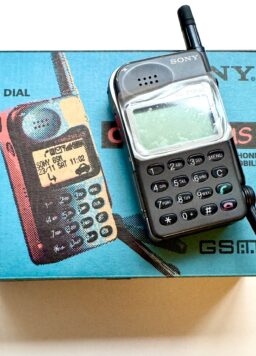
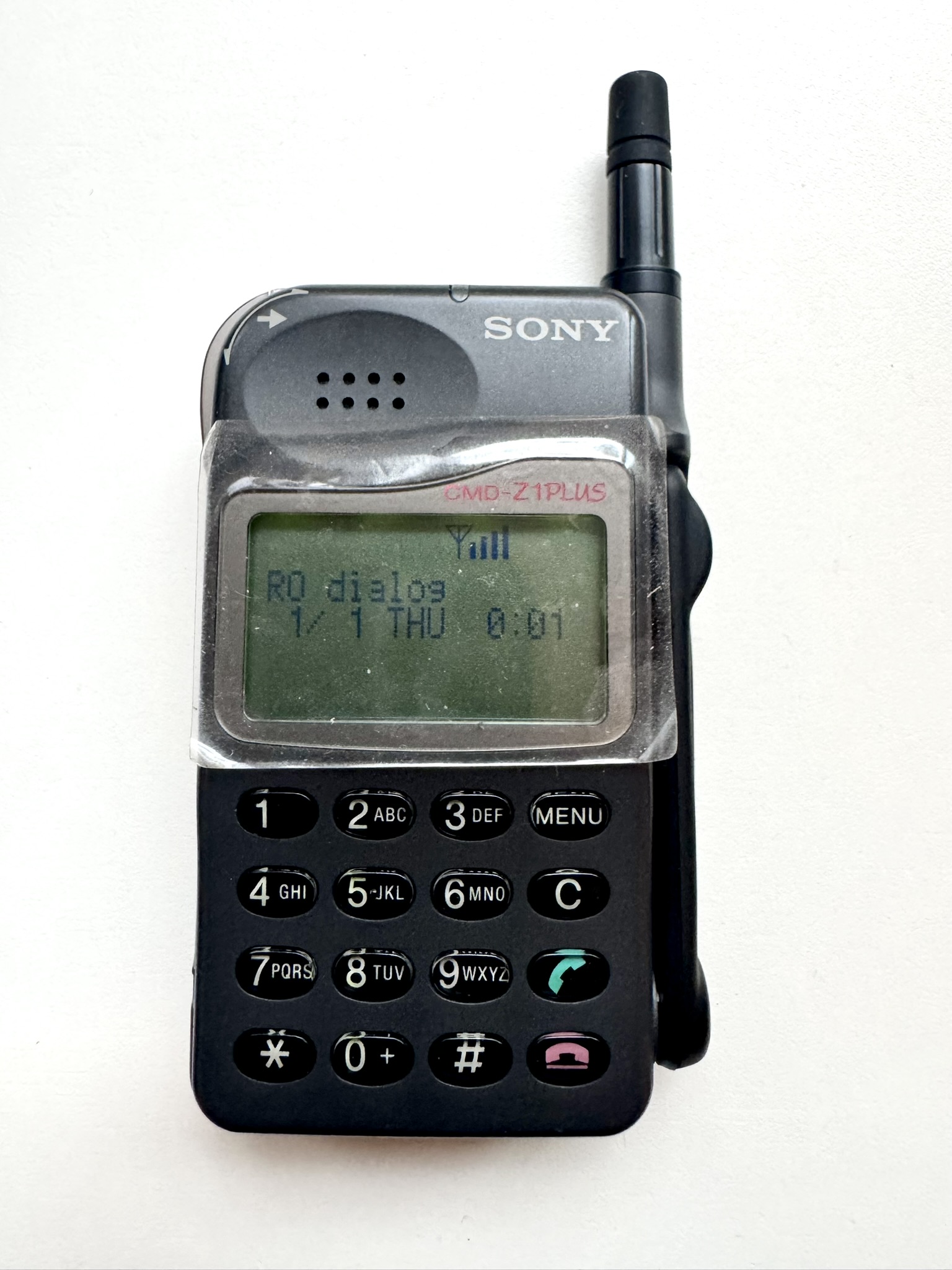
Sony CMD-Z1 Plus: Rare Complete Set, Mint Working Condition
Quick ViewA beautifully preserved Sony CMD-Z1 Plus, one of Sony’s most iconic pre-Sony Ericsson GSM phones, presented here in full box with all original accessories – a rarity even among seasoned collectors. Manufactured in France, this model represents the peak of Sony’s mid-90s mobile engineering before the joint-venture era.
The CMD-Z1 Plus stood out in its time for its elegant curves, premium materials, and Sony’s distinctive Jog Dial interface, which gave it a futuristic one-handed navigation system years ahead of competing brands. Another signature touch of this model is its extendable stick-style microphone, a precision sliding module that not only enhanced voice pickup but also acted as a control mechanism: extending the mic answered a call, and retracting it ended the call. This mechanical interaction became one of the most memorable and stylish features of Sony’s early GSM lineup.
The minimalist, industrial Sony aesthetic of the late 90s is captured perfectly in this device: compact, robust, and unmistakably high-end. Your unit’s complete condition – original packaging, matching accessories, fully functional handset, and intact label – places it among the top-tier collectible examples of the model, especially as most surviving units are worn or incomplete.
The “Plus” variant refined the original CMD-Z1 with software improvements, enhanced memory handling, and a smoother UI, making it the more desirable version of the lineup.
-


Sony CMD-Z5
Quick Viewake the cute-as-a-button Sony CMD-Z5, for example. Released in 2000 at a time when the idea of a phone having a colour screen was the stuff of a madman’s dreams, this sleek and pocket-sized blower looked truly amazing; it was a desirable piece of tech which could fit snugly in the palm of your hand.
Sure, the 96×72 pixel monochrome screen looks crude by modern standards, but at the time it was pin-sharp compared to the competition, and was even capable of hosting some decent games thanks to the inclusion of Sony’s unique ‘Jog-Dial’ wheel on the side of the phone; we spent many a happy bus trip playing the bundled fishing and clay pigeon shooting games. The Jog-Dial could also be used to navigate the phone’s carousel-style menu system.
Released just before Sony joined forces with communications giant Ericsson to create the Sony Ericsson brand, the CMD-Z5 – and its successor, the Z7 – have all the hallmarks of phones designed to fulfil a singular purpose, rather than cater for a wide range of functions.
-


Sony CMDX 1000
Quick ViewPhone CMD-X1000 by Sony is made in the classic shape. Phone dimensions: width – 45 millimeters, height – 150 millimeters, thickness – 33 millimeters. Weight – 235 grams. Capacity of Li-Ion battery is 1350 mA?h, this is approximately 70 hours of standby time and 10 hours of talk time.
-


Sony Ericsson Aspen M1i
Quick ViewThe Sony Ericsson Aspen belongs to the GreenHeart line-up and has a QWERTY keyboard and a resistive touchscreen. It is also the first Sony Ericsson phone with Windows Mobile (6.5.3)
-


Sony Ericsson F100i Jalou Dolce Gabbana
Quick ViewThe Sony Ericsson Jalou F100i, then, is a tiny clamshell fashion phone aimed squarely at, well, anyone that might invest in a clutch bag and care about their make-up routine. It’s certainly no smartphone but packs in a respectable number of features and, in its non-Dolce & Gabbana branded guise, it’s available for a respectable £130.
-


Sony Ericsson K660i CHEN: Lime White Prototype AP2
Quick ViewThis unit is a fully working Sony Ericsson K660i prototype built on the CHEN platform and finished in a striking lime and white color scheme that gives the phone a crisp, almost experimental aesthetic. The internal label confirms its origins: a prototype build AP2 from week 51 of 2007, carrying a prototype IMEI and the mandatory Prototype not for sale and Not Type Approved markings. The chassis and keypad display a pre-final finish, with the lime navigation bar and white keypad standing out as a rare color combination that may never have been intended for retail release.
The device has the full layout of the final K660i, including the 5-way joystick, QVGA display, media keys and the iconic Sony Ericsson design language of the late 2000s. Yet, as a prototype, it represents a development milestone rather than a commercial product. The preproduction color tones, engineering batch identifiers and prototype hardware references capture the exact moment when Sony Ericsson was refining the K660i before mass production. A fully functional unit in this condition is especially rare, making it a prized collectible and an authentic piece of the brand’s engineering history.
-


Sony Ericsson M600i
Quick ViewSony Ericsson M600 (sold as M600i model in some markets and originally labelled M608c in other markets) is a 3G smartphone based upon the UIQ 3 platform (which is built upon Symbian OS 9.1). It was announced on February 6, 2006 and is the first and only product of the M series of handsets from Sony Ericsson.The M600 is designed as a business tool and its features reflect this role. The M600 supports push email, document editing and PC synchronisation amongst other features. Notably the M600 does not have an integrated camera, which is a positive attribute for those working in environments where cameras are not permitted
-


Sony Ericsson P1i
Quick Viewhe Sony Ericsson P1 is a smartphone and the successor of the P990. It was the last of the Sony Ericsson “P” Smartphone series, introduced in 2002 with the Sony Ericsson P800 and it integrates many of the hardware features of its predecessor the P990 in the form factor of the M600. It was announced on 8 May 2007. There is a Chinese version of P1 called P1c. Compare with P1/ P1i, P1c lacks of 3G, thereby using EDGE which is much slower but more available especially in the US and parts of eur;ope.
The phone uses the UIQ 3.0 software platform, which is based upon Symbian OS 9.1. It is slightly thicker than the M600 as a result of the new hardware features, but this is reportedly largely indiscernible. It is nonetheless considerably thinner than the P990 (25% smaller – as the official press review states).
-


Sony Ericsson Pureness
Quick ViewSony Ericsson has decided to join the club rolling out the Xperia Pureness X5, a model with basic functionality and spectacular transparent screen. It would set you back with about $1,000 and you might well be thinking “Jeez, it should be able to cook for that amount of cash”, but sadly, this is not the case. What you get for the buck is the feeling of owning an expensive, luxurious accessory and being entitled to certain, premium services.
-
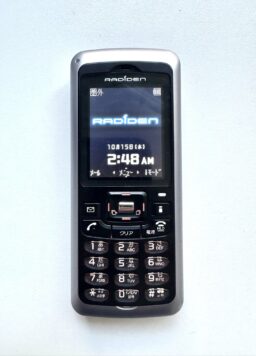
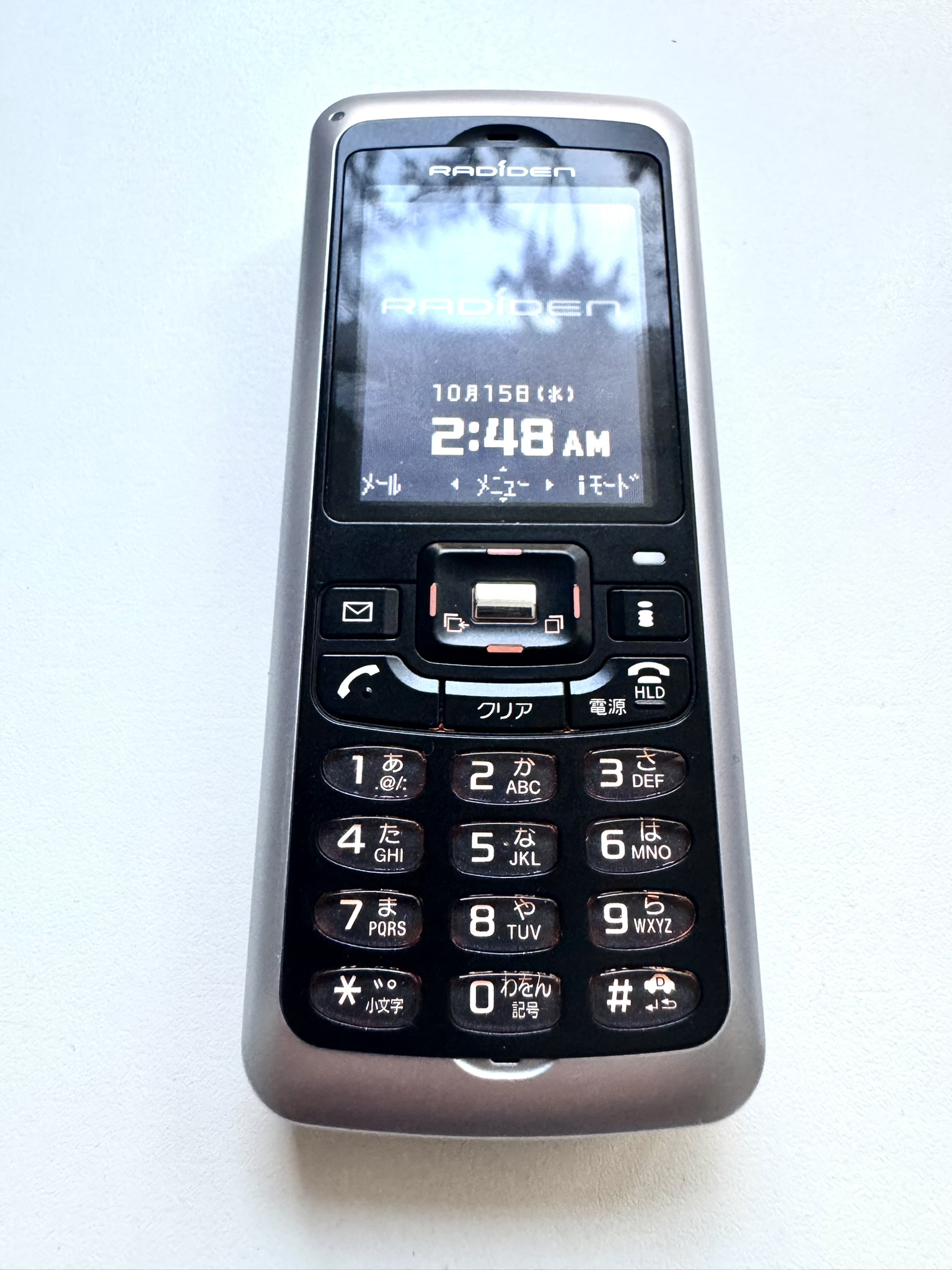
Sony Ericsson Radiden SO213iWR
Quick ViewThe Radiden is not a separate manufacturer but a product name created by Sony Ericsson exclusively for the Japanese market, and this particular device is the Sony Ericsson Radiden SO213iWR, released in late 2005 for NTT DoCoMo only, making it a true Japan domestic model that was never intended for export or international sales. The name Radiden comes from a contraction of the Japanese words for radio and telephone and was used by Sony Ericsson to highlight the phone primary purpose rather than its telephony features. This is not a normal mobile phone with a radio function added as an afterthought. It is a fully dedicated multi band radio receiver that happens to include mobile connectivity, featuring TV radio, FM radio, and AM radio through a standalone tuner module that can operate independently of the cellular network, meaning the radio works even with no SIM activity and minimal phone usage. At a time when most phones were simplifying hardware, this device went in the opposite direction by integrating a real broadcast receiver with physical preset buttons, a separate radio display, and ergonomics closer to a portable radio than a handset. Sony Ericsson leveraged its deep background in consumer electronics and broadcasting hardware for this model, something very few mobile manufacturers could do at the time. The Radiden line was aimed at commuters and emergency use cases in Japan where live broadcast access was considered essential, especially during natural disasters. Its strict DoCoMo only certification, Japanese language interface, and domestic regulatory markings confirm it as a Japan only experiment in hybrid hardware design, and today it stands as one of the most unusual crossover devices ever released under the Sony Ericsson name, combining mobile telephony and independent broadcast radio in a way that has never been repeated since.

