

">

Showing 73–84 of 93 results
-

Nokia N95 8GB BNIB: “Alderaan”.The Multimedia Powerhouse That Defined a Generation
Quick View💎 Rarity Index: B (Uncommon)
⭐ WOW Factor: The first Nokia phone with a built-in Global Positioning System (GPS) receiver
👁 Evaluation in my collection: BNIB – 10/10
🕵 Nokia Codename: Aino
⏱ Life timer: 0 | 📦 Boxed: YES
📅 Release Year: 2007 | 💰 Release Price: ~500 €
📊 Units Sold: ~4M
📰 Why this phone matters: The Nokia N95 8GB (RM-320) is widely regarded as the definitive and most perfected version of the original N95. This particular unit is BNIB, untouched since it left Nokia’s factory in Finland, making it one of the most desirable variants ever produced.While the first N95 shocked the world with dual-slide controls, GPS, Wi-Fi and a 5 MP Carl Zeiss autofocus camera, the N95 8GB went far beyond a simple memory upgrade. It is in fact a deep hardware refresh disguised as a cosmetic revision.
Internally, the RM-320 uses a redesigned motherboard with improved power management, a new memory configuration and an integrated 8 GB soldered flash package. According to engineering documentation referenced on LPCWiki, this redesign required new trace routing, a different memory controller setup and a strengthened slider rail structure. This makes the N95 8GB a significantly more advanced device under the hood than the N95-1.
The device also introduced hardware-accelerated 3D graphics via the PowerVR MBX Lite core, working together with the OMAP 2420 platform and its DSP media engine. At the time, this combination created one of the earliest smartphones capable of true console-like graphics and smooth video playback.
Display size also increased to 2.8 inches, giving the phone a more modern look and better multimedia usability. The removal of the microSD slot was not a downgrade but a design restructuring: Nokia shifted to internal storage specifically to improve performance, stability, transfer speed and reliability.
The N95 8GB also benefited from Nokia’s Location Platform 1.0, enabling A-GPS, offline vector maps and early positioning APIs. This was years before modern mobile navigation became standard, making the N95 series one of the earliest pioneers of smartphone location services.
For collectors, the Finland-made RM-320 units are the most desirable. Initial batches were produced in relatively small volumes before manufacturing was relocated. Being BNIB and Finnish-built puts this piece in the highest tier of collectible Nseries devices.
📝 Reviews when released: Mobile Review 🔗
-


Nokia N95-1
Quick View💎 Rarity Index: C (Common)
⭐ WOW Factor: The first Nokia phone with a built-in Global Positioning System (GPS) receiver
👁 Evaluation in my collection: Great – 9.5/10
🕵 Nokia Codename: Aino
⏱ Life timer: 165h | 📦 Boxed: NO
📅 Release Year: 2007 | 💰 Release Price: ~500 €
📊 Units Sold: ~8M
📰 Why this phone matters: The N95 was a high-end model that was marketed as a “multimedia computer”, much like other Nseries devices.It featured a then-high 5 megapixel resolution digital camera with Carl Zeiss optics and with a flash, as well as a then-large display measuring 2.6 inches. It was also Nokia’s first device with a built-in Global Positioning System (GPS) receiver, used for maps or turn-by-turn navigation, and their first with an accelerometer. It was also one of the earliest devices in the market supporting HSDPA (3.5G) signals.📝 Reviews when released: Mobile Review 🔗
-


Nokia N96
Quick View💎 Rarity Index: C (Common)
👁 Evaluation in my collection: Great – 9.7/10
🕵 Nokia Codename: Lumiere
⏱ Life timer: 136h | 📦 Boxed: NO
📅 Release Year: 2008 | 💰 Release Price: ~500 €
📊 Units Sold: ~3M
📰 Why this phone matters: Nokia N96 is a high-end smartphone, announced by Nokia on February 11, 2008 at the Mobile World Congress in Barcelona, part of the Nseries line.The N96 runs on the updated Symbian OS v9.3 (S60 3rd Edition, FP2). It is compatible with the N-Gage 2.0 gaming platform and also has a DVB-H television tuner.
Compared to the popular Nokia N95 8GB, the N96 has a doubled flash storage capacity (16 gigabytes), dual LED flash in the camera, and has a slimmer design. However critics had negative views on the N96’s battery life and user-unfriendlyness and its downgraded CPU clock speed raised questions.It was one of 2008’s most anticipated mobile phones, but its launch was delayed and was only widely available from October 2008.It is thus considered to have been a commercial failure.Critics felt that the Nokia N85 provided more new additions compared to the N96 for much cheaper.📝 Reviews when released: Mobile Review 🔗
-


Nokia Ringo 3
Quick View💎 Rarity Index: A (Rare)
👁 Evaluation in my collection: BNIB SEALED – 10/10
⏱ Life timer: 0 | 📦 Boxed: YES
📅 Release Year: 1998 | 💰 Release Price: N/A
📊 Units Sold: ~1M
📰 Why this phone matters: The Nokia rinGo was designed to be easy to use straight out of the box and was cheap to buy, due to special mobile carrier tariffs.[An ETACS version of the rinGo with minor design changes was launched in 1997 in the United Kingdom and Austria. It was the UK’s first pay as you go Nokia handset through Vodafone’s pay as you talk package. It was also sold in Thailand under the name Wave900.
In press releases it was also called a ‘concept’, a way of easily buying and using a mobile phone without operator registration. Nokia unusually created a unique “rinGo” brand and logo for it. ater in October 1998 a third (NHX-7) model was released for ETACS in Italy and Spain (the latter via operator Moviline). It featured the “Navi-key” like on the GSM Nokia 3110 and Nokia 5110 and had its top antenna positioned in the middle.
Nokia rinGo 3
The phones have the capacity to store about 60 contacts. Calculator, Watch and Calendar were pre installed on the handset.Nokia marketed original rinGo targeting women and children. However it gained a negative reputation and in Sweden earned the nickname “bimbo phone”, leading to low sales.Interest and popularity of the rinGo quickly faded and it has been largely forgotten since.
📝 Reviews when released: N/A 💔
-
Nokia Unknown Model Prototype: CodeName Kabaka | Unreleased
Quick View💎 Rarity Index: X (Mystical Prototype)
👁 Evaluation in my collection: Great – 9/10
🕵 Nokia Codename: Kabaka
⏱ Life timer: 0m | 📦 Boxed: NO
📅 Release Year: 2001 | 💰 Release Price: N/A
📊 Units Sold: 0
📰 Why this phone matters: Nokia NPM-3NA “Caballa” – Unreleased 3G Prototype (2001)The Nokia NPM-3NA is an extremely rare, unreleased prototype developed around 2001 during Nokia’s early work on Japan’s first 3G network, NTT DoCoMo’s FOMA. Built in very small internal batches, this device was used for radio testing, firmware evaluation and UI experiments, and was never certified or intended for public sale.
Running prototype firmware V55.40 (31-10-01) with the internal ? NMP signature and showing an unassigned IMEI (??????????????), the phone carries all hallmarks of an engineering sample. The internal hardware label NE8_06 / HW0250 suggests a development board related to NEC, a major DoCoMo technology partner in the early W-CDMA era. Its long extendable antenna and unique keypad design match the style of early FOMA trial devices, such as NEC’s X2001V.
With no public documentation, no final RM code, and no retail equivalent, the NPM-3NA stands as a rare glimpse into Nokia’s abandoned Japanese-market 3G program. A genuine collector-grade prototype, extremely uncommon and historically significant for anyone interested in unreleased Nokia hardware or the origins of modern 3G technology.
📝 Reviews when released: N/A 💔
-


Nokia X3-02
Quick View💎 Rarity Index: C (Common)
⭐ WOW Factor: The first Nokia with touch on a candy bar phone
👁 Evaluation in my collection: Very Good – 9.5/10
⏱ Life timer: 180h | 📦 Boxed: NO
📅 Release Year: 2010 | 💰 Release Price: N/A
📊 Units Sold: ~7M
📰 Why this phone matters: The Nokia X3 Touch and Type also known as Nokia X3-02 is a mobile telephone handset produced by Nokia. This is the first mobile handset released by Nokia that possesses a touchscreen in a “candybar” phone form factor. It is also the first touchscreen handset from Nokia that runs the Series 40 operating system. Previously released touchscreen devices from Nokia have either not had a physical keyboard, or they have had a slide-out, full-QWERTY keyboard. It was introduced on 13 August 2010 as one of the most advanced Series 40 devices in terms of features and specifications.There is also hardware upgrade version available of this phone, which can be identified from RM-775 and X3-02.5 codes in the sticker which can be found under the battery. The X3-02.5 (RM-775) differences compared to X3-02 (RM-639) are: 1GHz CPU vs 680 MHz CPU, 256 MB ROM vs 128 MB ROM and 128 MB RAM vs 64 MB RAM.
📝 Reviews when released: Mobile Review 🔗
-
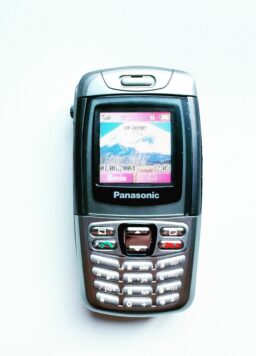
Panasonic EB X30: The Iconic Flip-Out Screen Camcorder Phone
Quick View💎 Rarity Index: A (Rare)
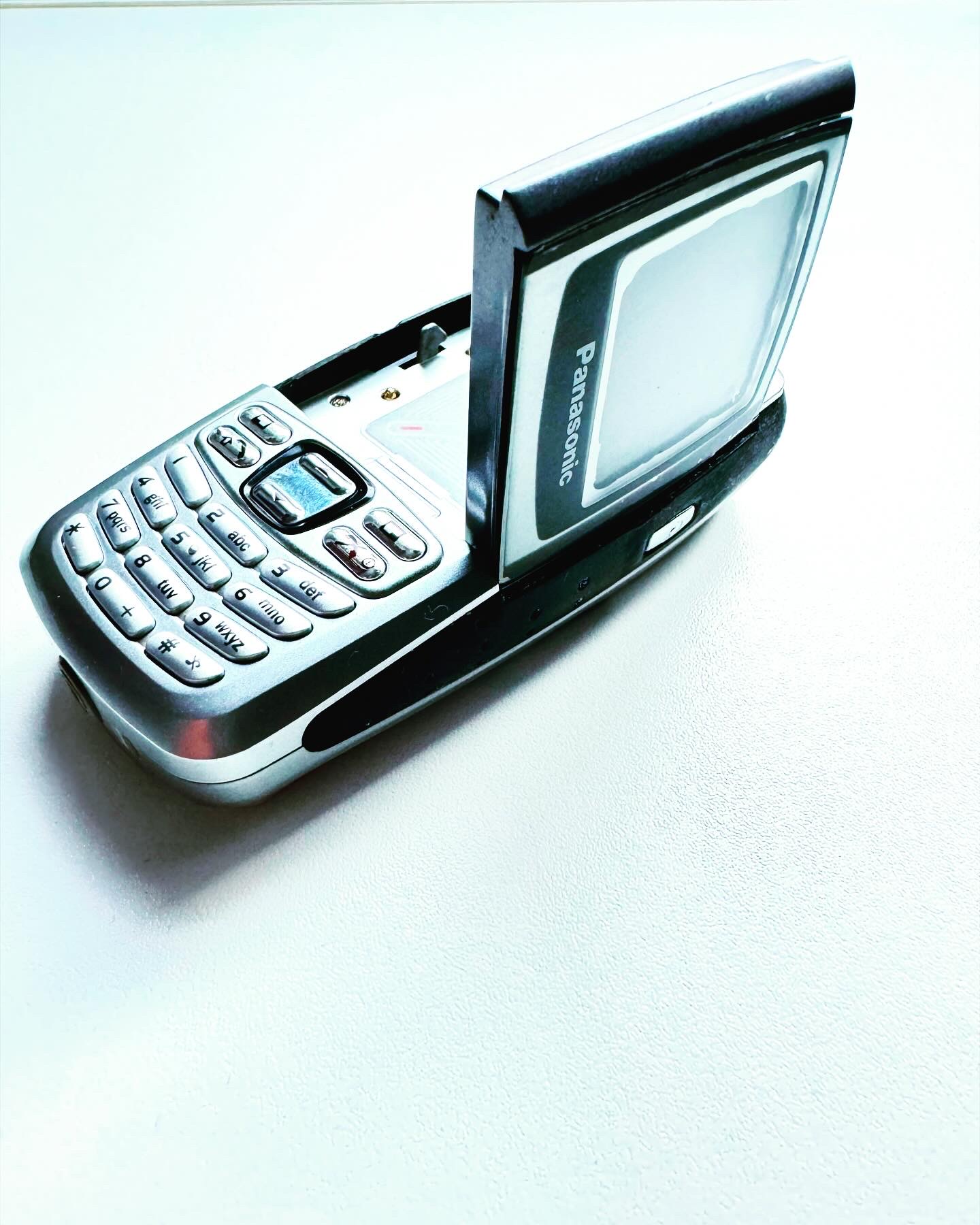
⭐ WOW Factor: The Panasonic EB-X300 is a transforming mobile device – a phone that literally turns into a miniature camcorder with a spring-launched, side-flipping screen.
One of the most mechanically innovative phones ever sold, and a true unicorn in any collection.👁 Evaluation in my collection: BNIB – 10/10
⏱ Life timer: 0 | 📦 Boxed: YES
📅 Release Year: 2004 | 💰 Release Price: ~250
📊 Units Sold: ~400k
📰 Why this phone matters: A spectacular and highly collectible Panasonic EB-X300, one of the most unique mobile phones ever produced. Released in 2004, the X300 stood out as a true piece of mobile engineering art, combining a classic keypad phone with a mechanically retractable, flip-out display that transformed the device into a miniature video camera at the press of a button.The X300 wasn’t just another camera phone – it was designed like a camcorder.
Press the spring-loaded release button and the entire screen swings out sideways into a horizontal viewfinder, giving the phone a completely different identity instantly. In this mode, the handset becomes a compact digital camera with a distinctive VGA (f/2.8, 3.3mm) lens mounted on the body, perfectly positioned for video capture and photography.This transforming mechanism makes the X300 one of the most mechanically ambitious GSM phones ever sold, and absolutely unforgettable among early-2000s Panasonic designs. Your unit, with all the moving parts functioning and its internal label intact, is a fantastic collector-grade example.
📝 Reviews when released: Mobile Review 🔗
-
Sharp 770SH: Vodafone McLaren Mercedes Fan Edition
Quick View💎 Rarity Index: A (Rare)
⭐ WOW Factor: Rare co-branded F1 team phone: A Sharp 770SH with Vodafone McLaren Mercedes branding – unique and tied to a major F1 partnership
👁 Evaluation in my collection: Great – 9/10
⏱ Life timer: 0m | 📦 Boxed: NO
📅 Release Year: 2007 | 💰 Release Price: N/A
📊 Units Sold: ~500k
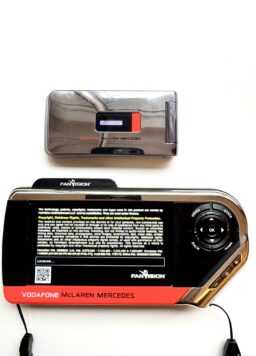
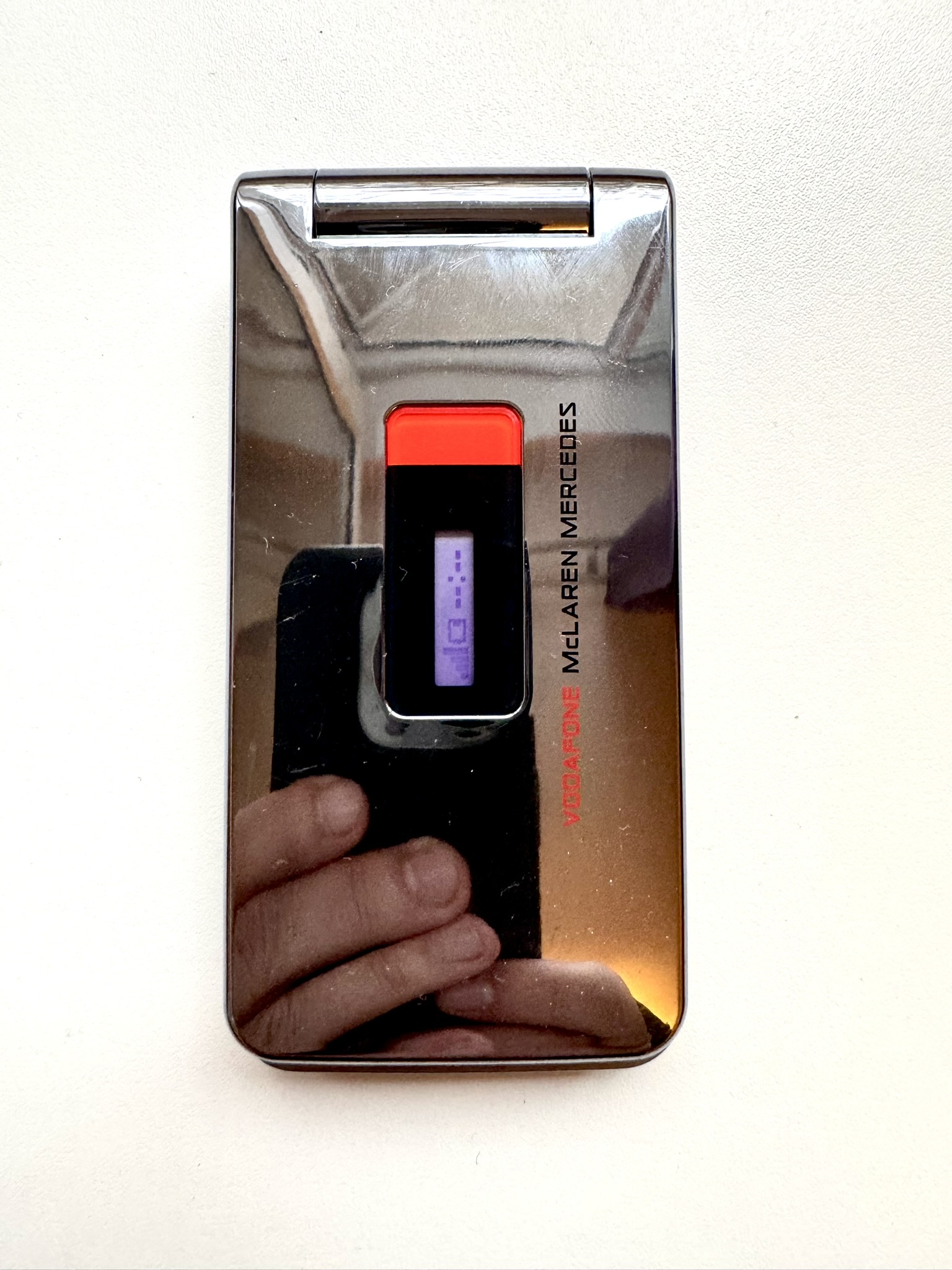
📰 Why this phone matters: This Sharp 770SH Vodafone McLaren Mercedes edition is a rare blend of mobile tech and Formula 1 identity, created at the height of the Vodafone and McLaren Mercedes partnership. The phone carries the official team branding directly on its polished metallic shell, making it instantly recognizable as part of the visual universe that surrounded the McLaren team in the late 2000s. It reflects the era when the team was front and center in the sport, with Vodafone leading its global marketing push and the car wearing the famous chrome and red livery seen on the grid.The 770SH itself comes from Sharp’s premium clamshell series used heavily by Vodafone across eur;ope and Asia. Known for its sharp internal display, clean hinge engineering and reliable hardware, the model was often used for carrier-specific special editions. This McLaren variant stands out through its unique exterior design, making it part of a very small group of officially branded motorsport phones.
What elevates this set even further is the addition of the FanVision McLaren Mercedes accessory, a special fan device that delivered race related content directly to spectators during live events. FanVision units were used at racing venues to provide exclusive video, audio, timing data or team information that regular spectators could not access. Branded in the same McLaren Mercedes style, the accessory completes a racing oriented package that represents a moment in time when mobile phones, live motorsport data and fan engagement started merging into a single experience.
Together, the phone and the FanVision device form a unique collectible that captures the feeling of the Vodafone McLaren Mercedes era. The chrome look, the red team accents, the matching strap and the coordinated branding all reflect the style and energy of one of Formula 1’s most iconic sponsorship periods. As a combined set, it stands as a remarkable piece of racing culture and mobile history.
📝 Reviews when released: N/A 💔
-
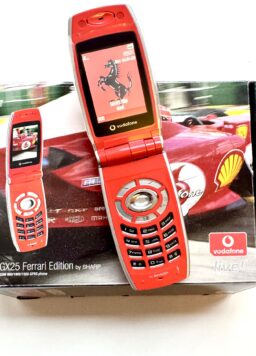
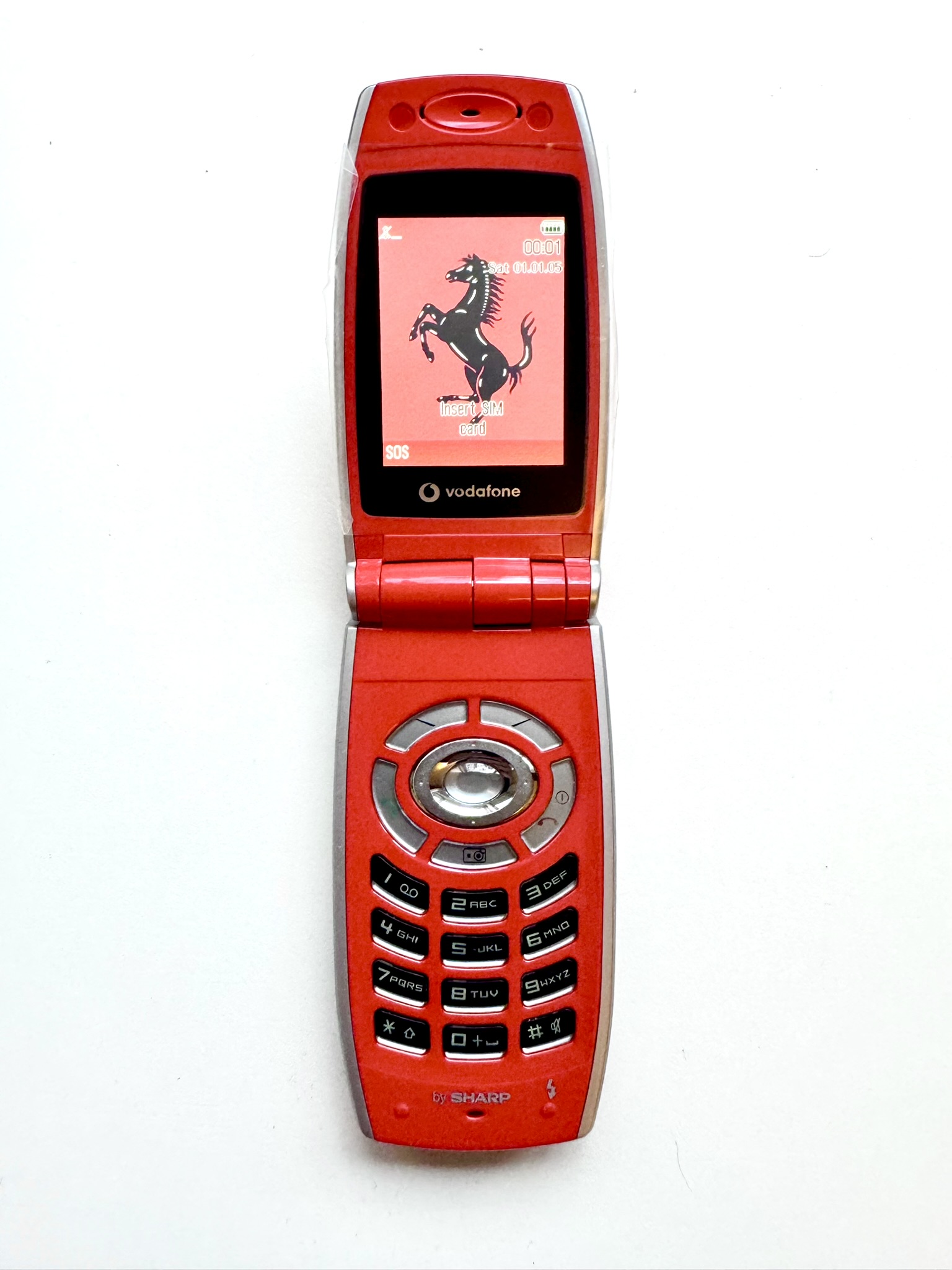
Sharp GX25 Ferrari Edition: Scuderia Signature Model
Quick View💎 Rarity Index: A (Rare)
⭐ WOW Factor: Genuine Rosso Corsa finish with Scuderia shield applied at factory.
👁 Evaluation in my collection: BNIB – 10/10
⏱ Life timer: 0m | 📦 Boxed: YES
📅 Release Year: 2005 | 💰 Release Price: N/A
📊 Units Sold: ~300k
📰 Why this phone matters: This unit is a pristine Sharp GX25 Ferrari Edition, a rare licensed collaboration between Sharp and the Scuderia Ferrari brand at the height of Ferrari mania in the mid 2000s. Finished in true Rosso Corsa red and framed with metallic silver edges, the phone captures the visual identity of Ferrari with surprising authenticity. The front shell carries the iconic Scuderia shield placed precisely below the external display, a detail that separates genuine factory editions from aftermarket conversions.Built on the respected GX25 platform, this handset reflects Sharp’s reputation for exceptional screen quality and tight hardware engineering. The Ferrari variant was released only in select Vodafone markets, never distributed widely, and typically tied to restricted promotional runs. As a result, surviving examples are exceptionally scarce, and BNIB units like this one are almost unheard of today.
Thanks to its protective films still intact, the phone shows zero external wear, preserving every original contour, lens surface, and paint transition exactly as delivered from the factory. Beyond the Ferrari branding, the GX25 remains a capable and stylish clamshell featuring a high resolution Sharp display, LED assisted camera, Java support, MMS, and the classic Vodafone Live interface. Together, the aesthetics, engineering, rarity, and condition make this Ferrari Edition one of the finest collectible Sharp releases of the era, representing the perfect fusion of Japanese mobile craftsmanship and Italian motorsport prestige
📝 Reviews when released: Engadget.com 🔗
-


Siemens CF62
Quick View💎 Rarity Index: C (Common)
👁 Evaluation in my collection: Great – 9/10
⏱ Life timer: N/A | 📦 Boxed: NO
📅 Release Year: 2004 | 💰 Release Price: ~150 $
📊 Units Sold: ~3M
📰 Why this phone matters: Siemens is not very strong in the clamshell phone segment, its first product, clamshell CL50 was accepted more than just cold by the consumers. The next product – CL55 did not even reach the market, this ODM-model was silently cancelled in the first quarter of year 2004. That’s why it was pretty useless to expect warm feedback from the consumers for the CF62 phone, it undeservedly lost attention by consumers who considered this phone another asian model. The irony is that this time Siemens had developed the model by itself and did it with their best traditions. After a long break Siemens introduced successful model, which has slipped out of consumer’s sight due to previous failures. I’d like to make a note here, that by saying successful model you should not expect maximal functionality, you will not find it here, but try looking for match of functions and segment – and you will find it, it is new generation of what Siemens M55 was for its time, by the way CF62 is the clone of this model.📝 Reviews when released: Mobile Review 🔗
-


Siemens MC60
Quick View💎 Rarity Index: C (Common)
👁 Evaluation in my collection: Great – 9.5/10
⏱ Life timer: N/A | 📦 Boxed: NO
📅 Release Year: 2003 | 💰 Release Price: 250 $
📊 Units Sold: ~5M
📰 Why this phone matters: The Siemens MC60 is a mobile phone sold by Siemens. It weighs 86 g and has improved resistance to water, shock and dust when compared with previous models. The phone also includes digital imaging and picture messaging. Its integrated camera takes pictures simply by holding the 5 key, then pressing it again. The Siemens MC60 has a number of pre-installed polyphonic ring tones, additionally own ringtones can be recorded.📝 Reviews when released: N/A 💔
-


Siemens SX1
Quick View💎 Rarity Index: A (Rare)
⭐ WOW Factor: The first Siemens with Symbian
👁 Evaluation in my collection: Good – 8.5/10
⏱ Life timer: N/A | 📦 Boxed: NO
📅 Release Year: 2004 | 💰 Release Price: 599 $
📊 Units Sold: ~1M
📰 Why this phone matters: The Siemens SX1 is a GSM mobile phone running version 1.2 of the Series 60 platform for the Symbian OS. It is the first such smartphone from the German phone manufacturer Siemens AG following their licensing agreement with Nokia for the use and development of Series 60. Though unveiled in February 2003 it launched only in December of that year. The phone has a very high feature list for its time of release. It had three built in games and support for more by downloads. The three games which were bundled with the phone were Mozzies, which was awarded the title of best mobile game in 2003, Typegun, which was a game made for acquainting users to the keypad layout, and Sitris, a Tetris version with multiplayer support (via Bluetooth). In Mozzies, the Camera is used to detect the motion. So you have to position the gun on the flying mosquitoes which are superimposed on the video feed from the camera. The objective is to shoot down the mosquitoes by moving the phone around and clicking when you are aiming correctly.
The phone also has a good number of connectivity options from Bluetooth to IrDA. It can also be used as a Fax Machine by connecting it to an appropriate device like a computer through the software provided. The File Manager allows sending and receiving of various files over either infrared or bluetooth. The phone has two shortcut keys on its side. One is used to start the camera and click pictures, while the other can be used to make a voice command driven call or start the voice memo. There is a built in picture editor which allows modification of images taken by the camera or any other type of image present on the phone. The phone has a few organizer capabilities. There are applications to take down short notes, a To-Do List, a scheduler application with reminders and a converter to convert currency and different measuring units. The mobile has been popular because of a Linux port to this mobile called “Linux on SX1”.📝 Reviews when released: Cnet.com 🔗