

">

Showing 1–12 of 93 results
-

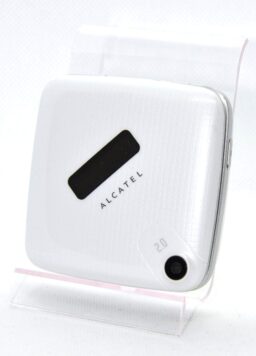
Alcatel OT 808
Quick View💎 Rarity Index: B (Uncommon)
⭐ WOW Factor: Made for Gossip
👁 Evaluation in my collection: Good – 8/10
⏱ Life timer: N/A | 📦 Boxed: NO
📅 Release Year: 2010 | 💰 Release Price: ~100 £
📊 Units Sold: ~300k
📰 Why this phone matters: Alcatel OT-808 is a shiny clamshell with QWERTY keyboard. It features a QVGA display, 2MP camera, stereo Bluetooth, microSD slot and music player.📝 Reviews when released: Cnet.com 🔗
-
BlackBerry P’9982 Porsche Desgin
Quick View💎 Rarity Index: A (Rare)
👁 Evaluation in my collection: BNIB – 10/10
⏱ Life timer: N/A | 📦 Boxed: YES
📅 Release Year: 2013 | 💰 Release Price: ~2350 $
📊 Units Sold: ~20k
📰 Why this phone matters: The BlackBerry Porsche Design P’9982 is a high-end smartphone by BlackBerry and Porsche Design. Released in December 2013, it is based upon the BlackBerry Z10, having exactly the same internal hardware specifications except for an increase of internal memory from 16 GB to 64 GB and a microSD slot that is now verified for 64 GB cards.Porsche Design has modified the phone design by adding stainless steel and satin materials to the body to create a more “premium” device, which is slightly larger and has more heft than the BlackBerry Z10. The P’9982 runs Blackberry 10.2.1 and features a slightly modified user interface by Porsche Design that features a new alarm clock, lock screen display, square-shaped icons and custom BBM PINs.
📝 Reviews when released: TechRadar 🔗
-
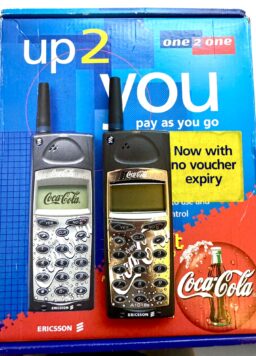
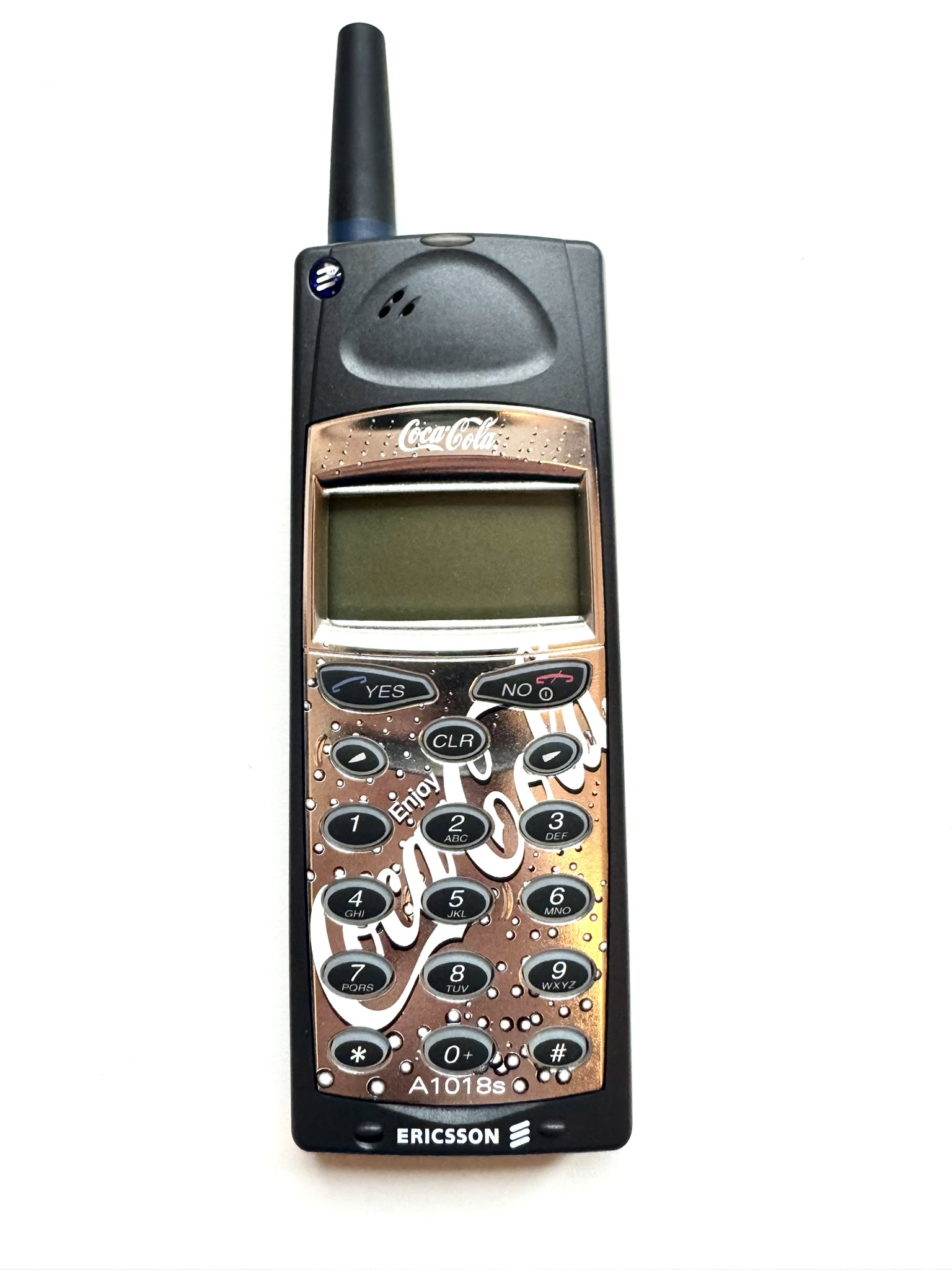
Ericsson A1018s: Coca-Cola Edition The Golden Age of Brand Collaborations
Quick View💎 Rarity Index: A (Rare)
⭐ WOW Factor: Rare Coca-Cola promotional edition with officially designed Coca-Cola fascia
👁 Evaluation in my collection: BNIB – 10/10
⏱ Life timer: 0m | 📦 Boxed: YES
📅 Release Year: 2000 | 💰 Release Price: N/A
📊 Units Sold: ~2k
📰 Why this phone matters: Created during a unique moment when global brands began exploring mobile technology as a marketing medium, the Ericsson A1018s Coca-Cola Edition stands as one of the most iconic promotional phones ever released. Produced in Sweden at the start of the year 2000 and distributed exclusively through Coca-Cola campaigns, it was never sold in stores. Released exclusively through Coca-Cola Great Britain in partnership with the One-2-One network, this phone could not be purchased under any circumstances – instead, it required participants to collect 60 promotional Coca-Cola ring pulls or bottle tokens, attach them to an application sheet, fill out the official Coca-Cola Application Form in block capitals, and mail everything together with a £30 cheque or postal order before the 30 September 2000 cutoff. Approved applications received the phone by post along with a prepaid One-2-One SIM pack and accessories.This edition is instantly recognizable by its factory-issued Coca-Cola fascia – a chrome surface decorated with rising bubble motifs and the flowing “Enjoy” script, perfectly echoing Coca-Cola’s classic advertising themes of the late ’90s and early 2000s. Combined with the elegant black frame and Ericsson’s signature oval keys, the design merges the energy of Coca-Cola branding with the industrial clarity of Ericsson’s pre-Sony mobile philosophy. It retains all the authentic A1018s internals: removable fascia, SMS capability, ringtone composer, and the special Coca-Cola ringtone delivered as part of the official promotional batch.
The full box presentation elevates the rarity even further. The promotional kit includes Coca-Cola branded inserts, themed accessories, original battery, documentation, and the distinctive packaging style documented in collector archives. Preserved in BNIB condition, it maintains the exact look and feel it had the day it left the factory – a true artifact of the era.
More than a mobile device, this edition represents a collaboration between two global icons and one of the most memorable reward-based phone campaigns of the early GSM era. Today, the A1018s Coca-Cola Edition is widely regarded as one of the most desirable and visually unique special editions ever produced.
📝 Reviews when released: Ericssoners 🔗
-


Ericsson GA 628
Quick View💎 Rarity Index: A (Rare)
👁 Evaluation in my collection: Great – 9/10
⏱ Life timer: N/A | 📦 Boxed: NO
📅 Release Year: 1996 | 💰 Release Price: ~50 £ with subscription
📊 Units Sold: ~10M
📰 Why this phone matters: The Ericsson GA628 was the first phone you could easily customise. Every new Ericsson GA628 came with four different front panels in green, yellow, blue or red.📝 Reviews when released: N/A 💔
-


Ericsson GF788e
Quick View💎 Rarity Index: B (Uncommon)
👁 Evaluation in my collection: Great – 9.5/10
⏱ Life timer: N/A | 📦 Boxed: NO
📅 Release Year: 1997 | 💰 Release Price: N/A
📊 Units Sold: ~2.5M
📰 Why this phone matters: The Ericsson GF 788 is a mobile device manufactured by the Ericsson manufacturer . The series was launched in 1997, has since been manufactured and is 105 x 49 x 24 mm in size and weighs 135 grams. The screen is alphanumeric with 1 x 10 character resolution. The Ericsson GF 788 is coded. Ringtones in the future are of this monoponic type . For texting, you can use SMS . The battery is removable, with a NiMH type of 550 mAh capacity and up to 60 hours of standbyand it lasts 180 minutes while calling. Whereas for communication, this router uses GSM networks📝 Reviews when released: N/A 💔
-


Ericsson T28s
Quick View💎 Rarity Index: B (Uncommon)
⭐ WOW Factor: The lightest handset on the market in 1999
👁 Evaluation in my collection: Great – 9.8/10
⏱ Life timer: N/A | 📦 Boxed: NO
📅 Release Year: 1999 | 💰 Release Price: N/A
📊 Units Sold: ~2.5M
📰 Why this phone matters: The T28 was the lightest and slimmest mobile phone at the time, with a weight of only 83 grams.Unlike many mobile phones of the time (1999-2001) it had a fixed, stubby external antenna. It was probably best known as the first phone that used lithium polymer batteries. At one point, it was the best selling mobile phone in America.
In terms of market positioning, Ericsson designated this as a premium phone, as such it was priced substantially higher (often more than triple) the price of the T10 and T18 devices – their nearest cosmetic and functional competitors. It has a tiny LCD screen and an spring-loaded latch mechanism to release the ‘flip.’
Models
Four different versions of the T28 were sold. T28z was compatible with GSM1900 for use in North America. T28s was compatible with GSM900/1800 for use in the rest of the world – this is by far the most common version. T28 World was compatible with GSM900/1900 for use worldwide on GSM900 and North America on GSM1900 (this was the second World phone Ericsson introduced, the first being the I888 which had the distinction of being the first commercially available GSM900/1900 phone). A special version, the T28sc was released in China with support for reading and entering Chinese characters.The device came in three colours-very dark blue, lighter blue and sand. The sand version being the least common.
The device was listed as compatible with two batteries. A normal slim-line and an ultra-slim lower capacity battery. However the device was also battery-compatible with the later R320 and R520 series.
📝 Reviews when released: Profit Warning 🔗
-


Ericsson T68m Champagne Gold: Early R2A Retail Unit
Quick View💎 Rarity Index: A (Rare)
⭐ WOW Factor: A compact flagship that fit Bluetooth, GPRS and a color screen into a sub-90 g body – the T68m remains a milestone piece of mobile history.
👁 Evaluation in my collection: As New – 9.8/10
⏱ Life timer: N/A | 📦 Boxed: YES
📅 Release Year: 2002 | 💰 Release Price: 650 €
📊 Units Sold: ~20k
📰 Why this phone matters: The Ericsson T68m stands as one of the defining milestones in mobile phone evolution and marks the moment when Ericsson transitioned from monochrome business devices into the era of compact multimedia handsets. Released in late 2001, it became Ericsson’s first color-screen phone, its first handset with integrated Bluetooth, and one of the smallest tri-band GSM devices ever produced at the time. The T68m concentrated cutting-edge features into an ultra-light 84 g body that set a new benchmark for compact flagship design.This particular unit is BNIB, a condition that is exceptionally rare due to the device’s age and the rapid corporate shift that followed its release. Very few untouched T68m boxes survived the transition from Ericsson to Sony Ericsson, as most retail stock was either sold through, upgraded, or rebranded into the T68i. BNIB units in the Champagne Gold finish are among the hardest to find, as this color variant was produced in notably smaller quantities. The preserved packaging, accessories, and original presentation elevate this device to a high collector tier, representing one of the best surviving examples of the model.
Technologically, the T68m was far ahead of its time. Its TFT 256-color display, GPRS Class 4 capability, EMS messaging, Bluetooth 1.0 module, IrDA port, and PC synchronization suite delivered features that were typically found only on much larger communicator-style devices. Reviewers in 2001 and 2002 described it as a “miniature business powerhouse,” praising its ability to merge advanced connectivity, a color user interface, and long battery life into a form factor that was dramatically smaller than its competitors. The joystick-based navigation and icon-driven color UI would later become the visual foundation for many Sony Ericsson models.
Historically, the T68m is also important because it represents the last flagship to carry the pure Ericsson branding. At the time of its release, Ericsson’s mobile division was undergoing a major financial and strategic shift. The joint venture with Sony was announced soon after, and the T68m became the bridge into the Sony Ericsson era. Within months, the T68m hardware was used as the base for the T68i, with updated casing, enhanced firmware, and Sony Ericsson branding. This conversion became so common that finding a true, untouched T68m is increasingly uncommon. A BNIB Champagne Gold example, therefore, holds exceptional preservation value.
Production data and period market analysis suggest that Champagne Gold units were produced in far smaller numbers than the standard grey and blue variants, making them significantly rarer in today’s collector market. The rapid discontinuation of T68m production due to the Sony Ericsson transition also reduced the number of sealed retail units available. Most T68m devices were heavily used, experienced joystick wear, or were converted to T68i firmware at service centers. As a result, BNIB condition elevates this particular unit into an elite tier of early-2000s GSM collectibles.
This T68m encapsulates the moment when the mobile industry transitioned from monochrome candybars to feature-rich multimedia phones. It demonstrates Ericsson’s technical ambitions at a time when the company was still shaping the direction of global GSM development. With its original firmware, rare Champagne Gold housing, compact footprint, color UI, Bluetooth, IrDA, GPRS support, and untouched BNIB condition, this unit is a top-tier collector artifact. It stands not only as a premium representation of Ericsson’s final standalone flagship, but also as one of the earliest true precursors to modern smartphones.
📝 Reviews when released: The Vooner 🔗
-
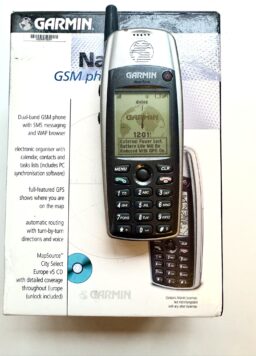
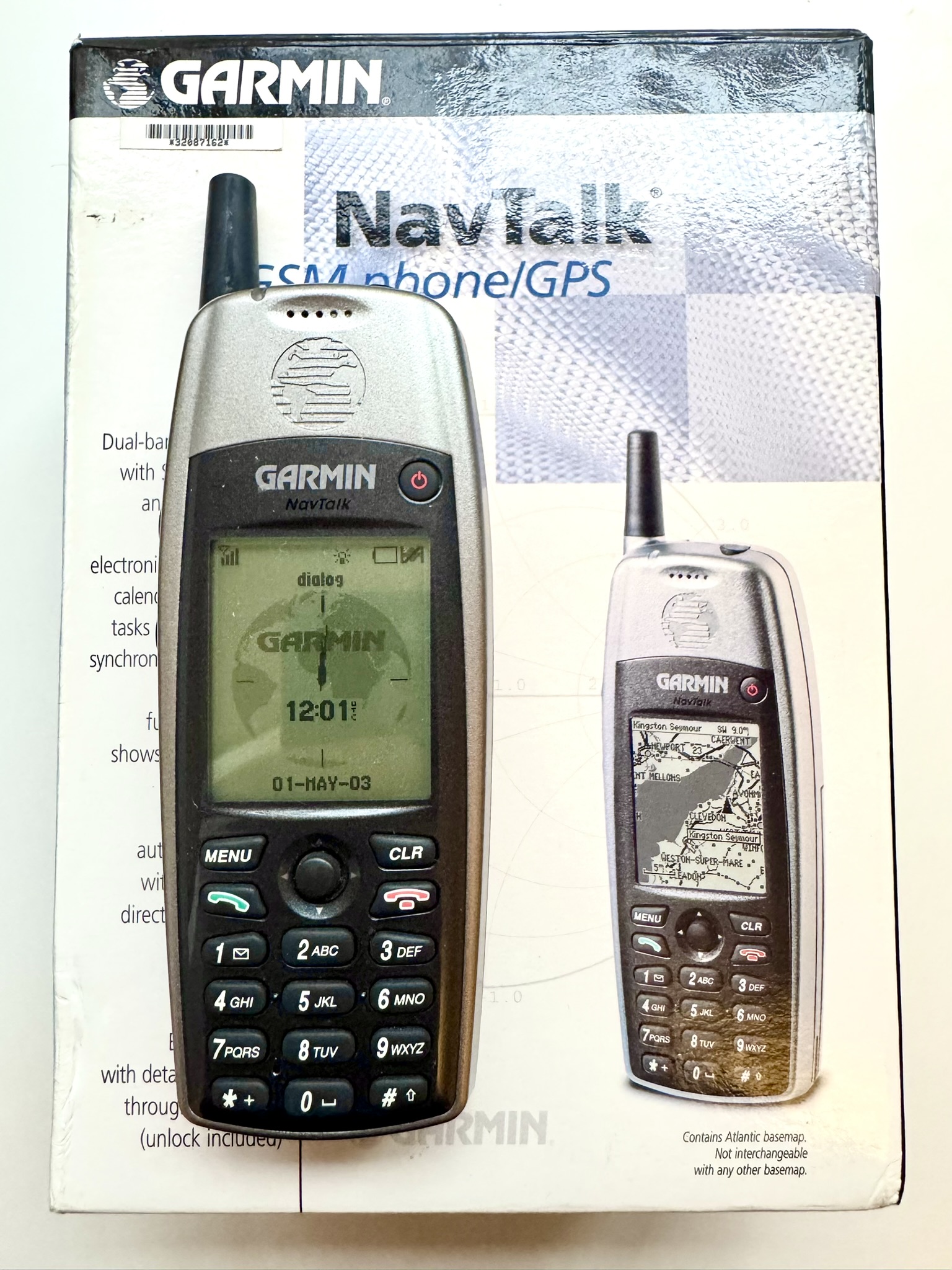
Garmin NavTalk GSM: Navigation Meets GSM
Quick View💎 Rarity Index: A (Rare)
⭐ WOW Factor: One of the first GPS phones ever made, predating modern smartphones
👁 Evaluation in my collection: Great – 9.5/10
⏱ Life timer: N/A | 📦 Boxed: YES
📅 Release Year: 2002 | 💰 Release Price: 600-800 $
📊 Units Sold: ~30k
📰 Why this phone matters: The Garmin NavTalk GSM is one of the most unusual and forward-thinking mobile devices ever created, combining a full GSM phone with a complete Garmin GPS receiver years before smartphones existed. Released in the early 2000s in extremely small numbers, the NavTalk GSM offered true satellite navigation, waypoint management, coordinate tools, map display, and even GPS-enhanced SMS at a time when mobile phones were still primarily used for calls and messages.This unit is fully working, full box, and includes functional maps, making it exceptionally rare among surviving examples. The device was engineered in Olathe, Kansas and manufactured in Taiwan, using Garmin’s proprietary GPS engine integrated with a dual-band GSM system. Its large monochrome screen, robust keypad, external antenna, and rugged body reflect Garmin’s roots in professional navigation equipment far more than consumer mobile phones.
The NavTalk GSM stands as a landmark in mobile history: one of the earliest true GPS phones ever produced and the only GSM handset Garmin ever made. Decades later, it remains a fascinating and highly collectible hybrid, representing an ambitious moment when navigation technology and mobile communication first converged into a single device.
📝 Reviews when released: N/A 💔
-


HP Ipaq – HW6915
Quick View💎 Rarity Index: C (Common)
👁 Evaluation in my collection: As New – 9.9/10
⏱ Life timer: N/A | 📦 Boxed: NO
📅 Release Year: 2006 | 💰 Release Price: N/A
📊 Units Sold: ~1.2M
📰 Why this phone matters: The iPAQ is a Pocket PC and personal digital assistant, first unveiled by Compaq in April 2000; the name was borrowed from Compaq’s earlier iPAQ Desktop Personal Computers. Since Hewlett-Packard’s acquisition of Compaq, the product has been marketed by HP. The devices use a Windows Mobile interface. In addition to this, there are several Linux distributions that will also operate on some of these devices. Earlier units were modular. “Sleeve” accessories, technically called jackets, which slide around the unit and add functionality such as a card reader, wireless networking, GPS, and even extra batteries were used. Later versions of iPAQs have most of these features integrated into the base device itself, some including GPRS mobile-telephony (sim-card slot and radio).📝 Reviews when released: N/A 💔
-
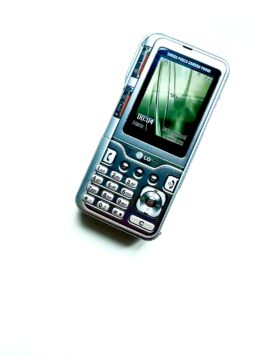
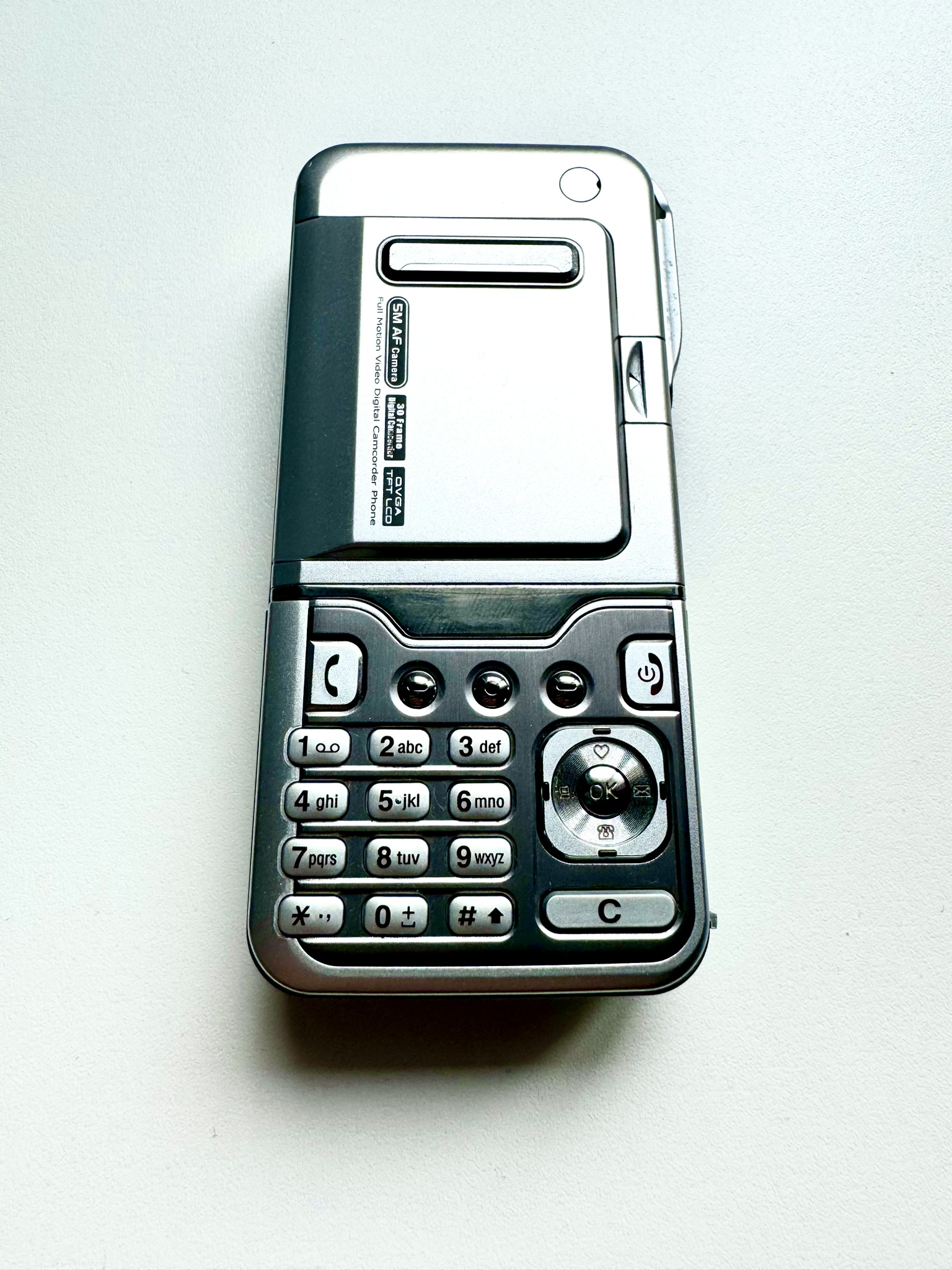
LG KG920
Quick View💎 Rarity Index: B (Uncommon)
⭐ WOW Factor: It delivered a 5-megapixel Schneider-Kreuznach camera in 2006 – beating most competitors by years.
👁 Evaluation in my collection: As New – 9.7/10
⏱ Life timer: N/A | 📦 Boxed: YES
📅 Release Year: 2006 | 💰 Release Price: 450 €
📊 Units Sold: ~500k
📰 Why this phone matters: The LG KG920 is one of the most daring and visionary camera phones ever released – a 2006 flagship that pushed boundaries years ahead of its time. With its 5-megapixel Schneider-Kreuznach camera, true xenon flash, and twist-rotating body, it belonged to a tiny elite family of experimental devices like the Nokia 3250 and Nokia 5700, yet it went even further by transforming into a full horizontal digital camera in one smooth motion.This was not just a phone with a camera – it was a camera that happened to be a phone.
The twist mechanism instantly reconfigured the device into a proper photography grip, something no mainstream device dared to replicate again. Combined with its premium build and Korea-exclusive engineering, the KG920 stood at the intersection of digital imaging and mobile design in a way that feels almost unbelievable today.
Launched in 2006 at a premium price of roughly &eur;o;450-&eur;o;500, it was heavily reviewed and praised for producing some of the cleanest, sharpest images of its generation. Today it remains vastly underrated, overshadowed by later icons, yet historically more important – it reached the 5 MP milestone before many of the industry’s giants and showcased a design concept that has never been revisited.
Your unit captures this legacy perfectly: a rare, twist-based camera phone from the golden era, preserved from a time when manufacturers dared to innovate radically.
A hybrid of digital camera ambition and bold mechanical engineering – the LG KG920 is a striking, unforgettable piece of mobile history.
📝 Reviews when released: Trusted Review 🔗
-


Mitsubishi Trium Galaxy Wind
Quick View💎 Rarity Index: B (Uncommon)
👁 Evaluation in my collection: As New – 10/10
⏱ Life timer: N/A | 📦 Boxed: NO
📅 Release Year: 1999 | 💰 Release Price: ~100 $
📊 Units Sold: ~150k
📰 Why this phone matters: N/A📝 Reviews when released: N/A 💔
-


Motorola Flipout
Quick View💎 Rarity Index: C (Common)
👁 Evaluation in my collection: Great – 9/10
⏱ Life timer: N/A | 📦 Boxed: NO
📅 Release Year: 2010 | 💰 Release Price: ~100 €
📊 Units Sold: ~700k
📰 Why this phone matters: Its square-shaped body has two parts that rotate near the bottom-right corner to reveal a five-row QWERTY keyboard below the screen. It has an accelerometer and includes a web browser with Adobe Flash Lite 3.0.The Flipout replaces the bigger Backflip.📝 Reviews when released: Mobile Review 🔗