

">

Showing 37–44 of 44 results
-


Nokia 7700 Prototype F5.0 White | Unreleased
Quick View💎 Rarity Index: X (Mystical Prototype)
⭐ WOW Factor: The first Nokia unreleased phone with touch screen and Symbian S90
👁 Evaluation in my collection: Great – 9.5/10
🕵 Nokia Codename: MX
⏱ Life timer: N/A | 📦 Boxed: NO
📅 Release Year: 2003 | 💰 Release Price: N/A
📊 Units Produced: ~1k
📰 Why this phone matters: The Nokia 7700 (Model – M Type RAL-2) is a smartphone produced by Nokia, announced in October 2003 but never released. It was produced as a prototype unit between 2003-2004 It was expected to be the first smartphone running the Series 90 GUI on Symbian OS and Nokia’s first pen-based device, intending to compete against handsets like Sony Ericsson P800. At announcement Nokia dubbed it a “media device.” Compatible with GSM/HSCSD/GPRS/EDGE 900/1800/1900 MHz networks, the 7700 featured a wide, 3.5-inch touch-screen colour LCD with a resolution of 640 x 320 pixels which is the first smartphone with 2:1 aspect ratio and supporting 65,000 colours. It had 64 MB of internal memory and a MultiMedia Card (MMC) slot. It also included an integrated VGA camera with a maximum resolution of 640 x 480 pixels, an integrated FM radio, Bluetooth, USB and Nokia’s proprietary Pop-Port interface for connectivity purposes.The 7700 was to include a comprehensive application suite (such as a complete PIM suite, ‘full’ web browser, email client and an office suite comprising Word Processor, Spread-Sheet and a PowerPoint viewer) and supported Java MIDP 2.0 applications. It was also to be the first phone to support Visual Radio, and the first Nokia phone to support DVB-H mobile television with the addition of the Nokia Streamer SU-6 accessory. The Nokia 7700 was cancelled in mid-2004. Several theories for the cancellation were put forward at the time: Nokia was refocusing on ‘normal’ phones due to decreasing market share; the phone would be too late to market; and the phone was unattractive and bulky. It also featured ‘sidetalking’ like the N-Gage, a feature that had attracted a great deal of negative publicity. The Nokia 7710 followed shortly later with increased memory, a different design, no ‘sidetalking’ and other improvements. However, the 7700 was nevertheless used for further trials of DVB-H. As stated above, the Nokia 7700 was never released to the public. It was only released to Nokia’s R&D (Research and Development) groups. A few models, estimated 20, were distributed prior to Nokia’s decision to discontinue the model before full-on production. However as they were preparing to make the move into stores, the final product prototypes were available in every Nokia Dealer store for display and show-off, so an estimate on how many pieces there actually were is impossible to make, or how many remained in factories and services that were testing them. Pricing is thus very difficult to assess due to lack of official sales. Nevertheless, a few models were sold on eBay since Nokia’s announcement of discontinuation. The lack of independent data to verify the sale records on eBay has caused some to overestimate the actual cost of the model. The phone is nevertheless considered by a number of Nokia collectors to be a rare piece.
📝 Reviews when released: Mobile Gazette 🔗
-
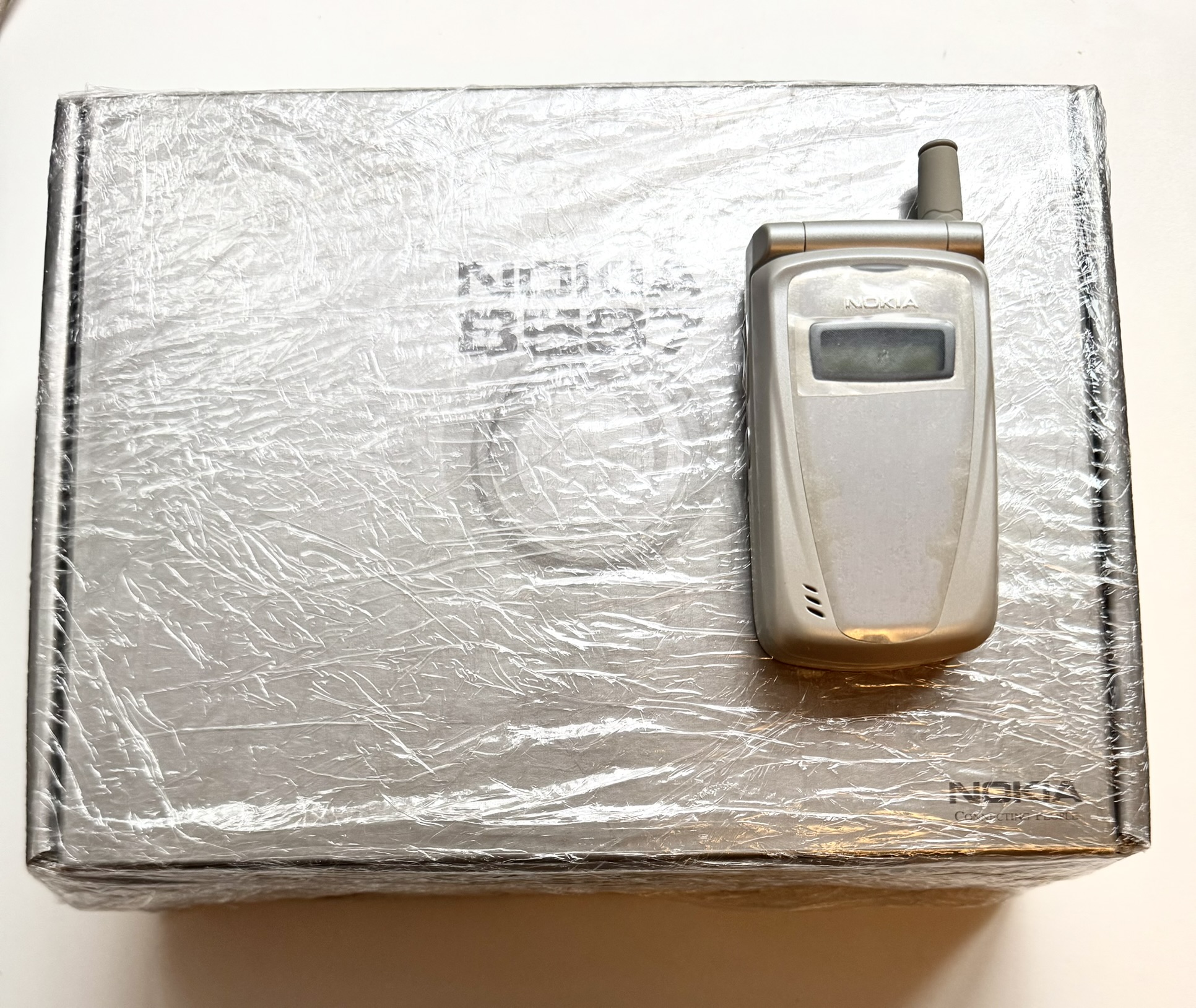
Nokia 8587: Korea Exclusive CDMA Rarity (BNIB)
Quick View💎 Rarity Index: A (Rare)
⭐ WOW Factor: A model using a battery and hardware ecosystem Nokia never used anywhere else
👁 Evaluation in my collection: BNIB – 10/10
⏱ Life timer: 0 | 📦 Boxed: YES
📅 Release Year: 2003 | 💰 Release Price: 350 €
📊 Units Sold: ~200k
📰 Why this phone matters: A truly unique Nokia released only for the South Korean market, the 8587 stands apart as one of the rarest and most unusual devices ever carrying the Nokia name. Built through a Korean ODM partnership, it blends classic Nokia software with Sanyo-style hardware, a proprietary domestic battery, and a design never used in any global Nokia model.This BNIB unit is a preserved time capsule from Nokia’s short-lived Korean CDMA experiment – a phone that looks Nokia on the outside but is unmistakably Korean-engineered inside. Closely related to models like the Nokia 8887, the 8587 represents a completely different branch of Nokia history, available only to local carriers and unseen outside Korea.
A standout collectible for any serious Nokia or CDMA enthusiast.
Highlights:
Korea-exclusive model (RH-15)
ODM-built with pseudo-Sanyo design and proprietary battery
MIC-certified Korean domestic release (Dec 2003)
Ultra-rare BNIB condition
Part of Nokia’s experimental Korean CDMA lineup (e.g., 8587 / 8887)
A true oddity: a Nokia that doesn’t follow Nokia’s global hardware standards
📝 Reviews when released: N/A 💔
-
Nokia 8587: Korea Exclusive CDMA Rarity (BNIB)
Quick View📦 Collector-to-Collector Transaction
This item is from a private collection and sold as-is for collectors only. All devices have been verified for authenticity and condition as described, but no warranty or guarantee is provided. This is a private sale between individuals and not a commercial business transaction.
💎 Rarity Index: A (Rare)
⭐ WOW Factor: A model using a battery and hardware ecosystem Nokia never used anywhere else
👁 Evaluation: BNIB – 10/10
⏱ Life timer: 0 📦 Boxed: YES
📰 About this collectible: A truly unique Nokia released only for the South Korean market, the 8587 stands apart as one of the rarest and most unusual devices ever carrying the Nokia name. Built through a Korean ODM partnership, it blends classic Nokia software with Sanyo-style hardware, a proprietary domestic battery, and a design never used in any global Nokia model.This BNIB unit is a preserved time capsule from Nokia’s short-lived Korean CDMA experiment – a phone that looks Nokia on the outside but is unmistakably Korean-engineered inside. Closely related to models like the Nokia 8887, the 8587 represents a completely different branch of Nokia history, available only to local carriers and unseen outside Korea.
A standout collectible for any serious Nokia or CDMA enthusiast.
Highlights:
Korea-exclusive model (RH-15)
ODM-built with pseudo-Sanyo design and proprietary battery
MIC-certified Korean domestic release (Dec 2003)
Ultra-rare BNIB condition
Part of Nokia’s experimental Korean CDMA lineup (e.g., 8587 / 8887)
A true oddity: a Nokia that doesn’t follow Nokia’s global hardware standards
✓ Verification Checklist
Authenticity & Condition:
– Originality verification (exterior, labels)
– Matching IMEI (box, label, motherboard)
– Physical condition assessment (scratches, cracks, screws)Functional Testing:
– Powers on
– Display functionality
– Camera (when applicable)
– Vibration mechanism (when applicable)
– Security code
– Charging
– Network connectivity
– Call functionality including speaker (non-BNIB units on European networks)Additional specific tests available upon request.
-


Nokia 8910i
Quick View💎 Rarity Index: B (Uncommon)
👁 Evaluation in my collection: Good – 8/10
🕵 Nokia Codename: Demi
⏱ Life timer: 240h | 📦 Boxed: NO
📅 Release Year: 2003 | 💰 Release Price: ~650 $
📊 Units Sold: ~300k
📰 Why this phone matters: Nokia 8910 became very popular due to a high price, unusual opening and titan exterior. A revised model – Nokia 8910i is also rather successful. It differs from its predecessor in color of the phone (now it has only one black color) and availability of color screen. Like the other models from this phone line, a new display is capable to support only 4096 color. The other important difference is Java applications support.The phone measures 103 – 140.5 x 46 x 20 mm, it can be comfortably worn in the pockets or a hostel. The handset weighs 112 grams, what is a little bit heavier than the weight of the standard phone. On the other hand, titan exterior, which increases the phone’s weight, absorbs shocks and protects hardware. Scratches can’t be noticed on this phone even within the time; the color is not changed. To open the phone, press 2 side keys simultaneously and main part of the phone would be slid.
📝 Reviews when released: Mobile Review 🔗
-
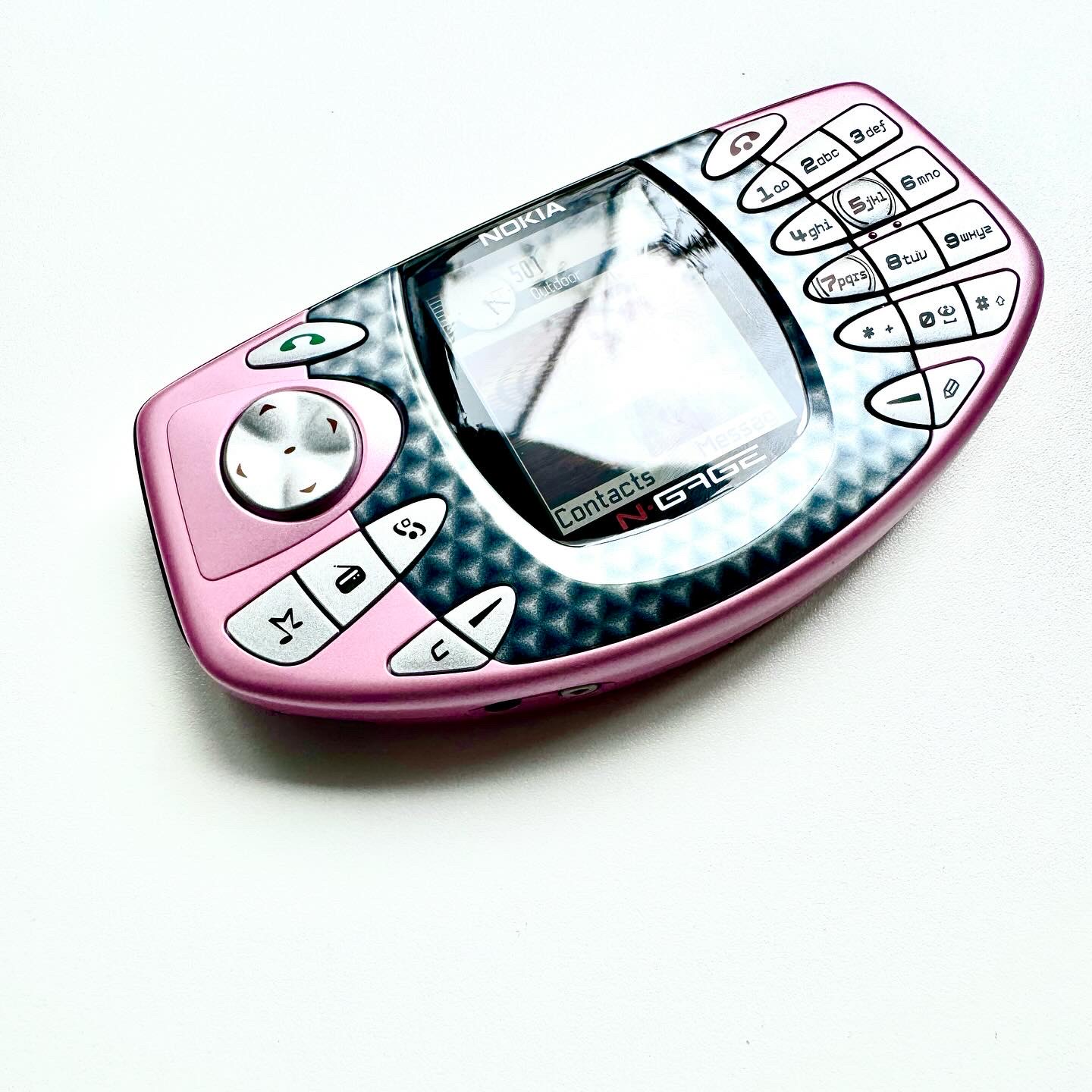
Nokia N-gage
Quick View💎 Rarity Index: B (Uncommon)
⭐ WOW Factor: The first Nokia game phone
👁 Evaluation in my collection: Brand New – 10/10
🕵 Nokia Codename: Starship
⏱ Life timer: 0m | 📦 Boxed: NO
📅 Release Year: 2003 | 💰 Release Price: ~ 350 $
📊 Units Sold: ~3M
📰 Why this phone matters: The N-Gage was a smartphone combining features of a mobile phone and a handheld game system developed by Nokia, announced on 4 November 2002 and released on 7 October 2003. It runs the original Series 60 platform on Symbian OS v6.1.
N-Gage attempted to lure gamers away from the Game Boy Advance by including telephone functionality. This was unsuccessful, partly because the buttons, designed for a telephone, were not well-suited for gaming. The original N-Gage was described as resembling a taco, which led to its mocking nickname “Taco phone”.📝 Reviews when released: Mobile Review 🔗
-


Panasonic G51
Quick View💎 Rarity Index: B (Uncommon)
👁 Evaluation in my collection: Great – 9/10
⏱ Life timer: N/A | 📦 Boxed: NO
📅 Release Year: 2003 | 💰 Release Price: N/A
📊 Units Sold: ~500k
📰 Why this phone matters: N/A📝 Reviews when released: N/A 💔
-
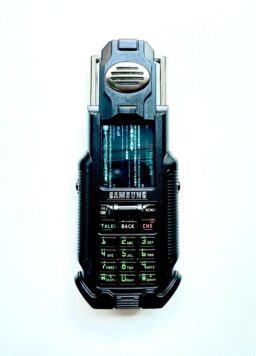
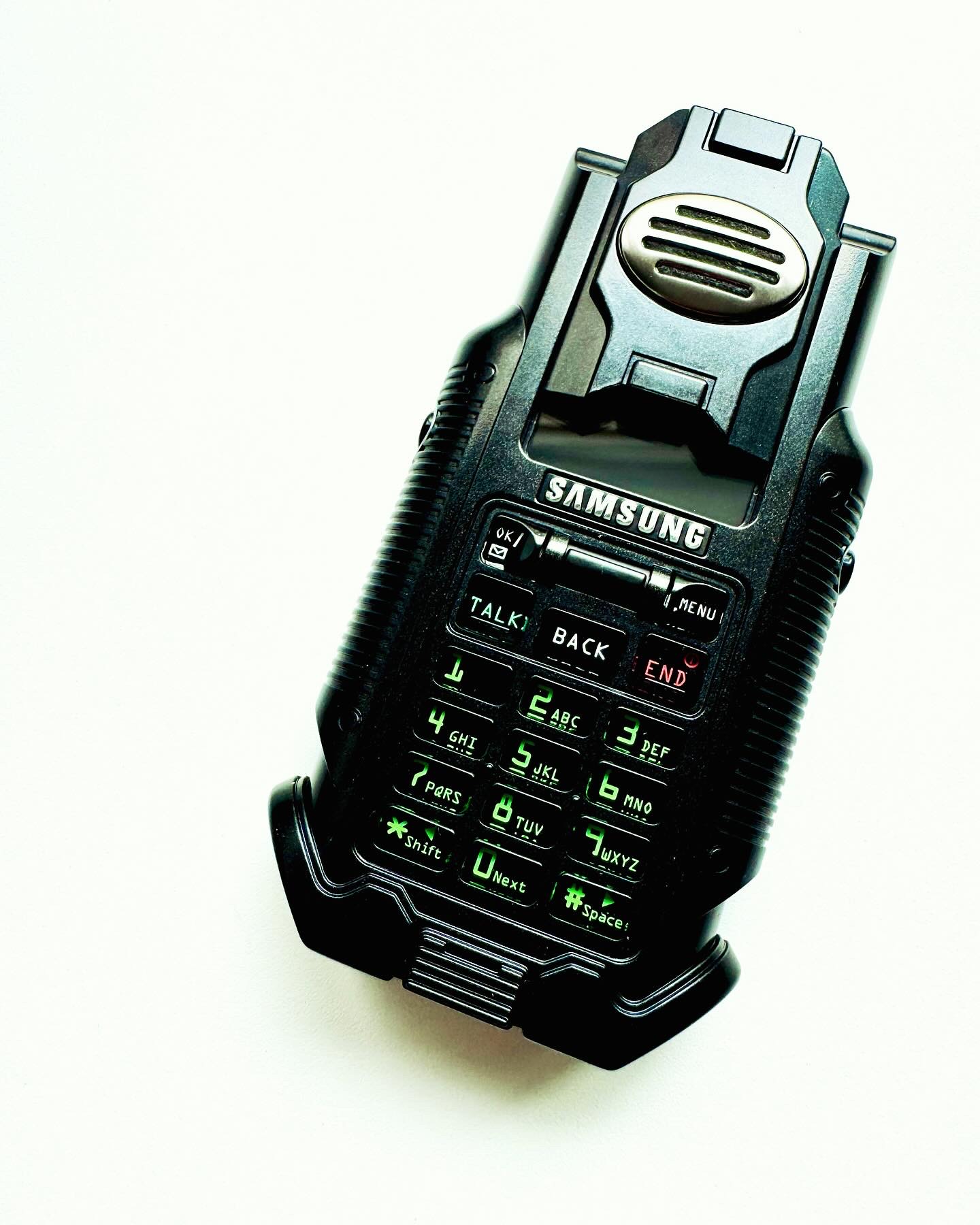
Samsung SPH-N270: The Matrix Phone Legendary Edition. 00303 and 00304 consecutive numbers and BNIB and sealed
Quick View💎 Rarity Index: S (Ultra Rare)
⭐ WOW Factor: limited numbered run, official Matrix phone, push-button spring-loaded opening, Matrix themed UI, sealed units 303 and 304 from Joel Silver stash, museum-grade rarity
👁 Evaluation in my collection: BNIB SEALED – 10/10
⏱ Life timer: 0m | 📦 Boxed: YES
📅 Release Year: 2003 | 💰 Release Price: 500 $
📊 Units Sold: ~10k
📰 Why this phone matters: The Samsung SPH-N270 is one of the most iconic and mythical mobile phones ever created, a device designed as a real-world functional replica of the phone used in The Matrix Reloaded. Released in an extremely limited production run of about 10,000 units, each individually numbered, the N270 was engineered as a collector-grade artifact rather than a traditional consumer handset. It remains one of the very few officially licensed Hollywood movie phones ever manufactured.This particular pair, numbers 303 and 304, comes from an original sealed stash owned by Joel Silver, the legendary producer of The Matrix trilogy. These units remained sealed for years, untouched since production, and you are preserving them in the exact condition in which they left the factory. Owning a sealed N270 is already rare. Owning sealed units from the producer of The Matrix is something most collectors will never even see in their lifetime.
The phone itself is a masterpiece of industrial design. With a press of the release button, the top speaker block shoots upward in a spring-loaded motion, revealing the display and keypad in the same dramatic way seen on screen. The long central spine, exposed rails, and rugged body give it the look of a prop lifted straight from the Nebuchadnezzar. The dark chassis, metallic speaker grille, ribbed grips, and Matrix-green backlit keypad all work together to create a device that feels more like a piece of cinematic hardware than a normal phone.
On the screen, custom Matrix themed graphics and menus reinforce the illusion. The digital rain styling, green-toned interface, and tailored sounds echo the film universe, making even simple actions like navigating the menu or placing a call feel like part of the movie. This is not just a phone with a logo on the box, but a handset that was built from the ground up to be The Matrix phone.
Even after two decades, these devices remain fully functional. When the battery is connected, the phone powers up instantly, the display comes to life, and the Matrix themed interface appears as if time has not passed. These units were never meant to be mass-market devices; they were built as cinematic technology brought to life.
Sealed Matrix N270 units are considered holy-grail items in the world of phone collecting. Sealed N270 units with verifiable provenance from Joel Silver himself are on an entirely different level of rarity, placing these two phones among the finest movie-linked mobile devices that exist anywhere today.
📝 Reviews when released: N/A 💔
-


Siemens MC60
Quick View💎 Rarity Index: C (Common)
👁 Evaluation in my collection: Great – 9.5/10
⏱ Life timer: N/A | 📦 Boxed: NO
📅 Release Year: 2003 | 💰 Release Price: 250 $
📊 Units Sold: ~5M
📰 Why this phone matters: The Siemens MC60 is a mobile phone sold by Siemens. It weighs 86 g and has improved resistance to water, shock and dust when compared with previous models. The phone also includes digital imaging and picture messaging. Its integrated camera takes pictures simply by holding the 5 key, then pressing it again. The Siemens MC60 has a number of pre-installed polyphonic ring tones, additionally own ringtones can be recorded.📝 Reviews when released: N/A 💔