

">

Showing 1–12 of 44 results
-


AU by KDDI Infobar
Quick View💎 Rarity Index: A (Rare)
👁 Evaluation in my collection: Great – 9.5/10
⏱ Life timer: N/A | 📦 Boxed: NO
📅 Release Year: 2003 | 💰 Release Price: n/a
📊 Units Sold: ~300k
📰 Why this phone matters: INFOBAR is the first terminal of the au design project . The base model is Sanyo Multimedia Tottori’s A5306ST , and there is almost no difference in performance except for the presence or absence of a sub-display (A5306ST has it, but INFOBAR does not). The prototype model “info.bar”, which was exhibited as a reference at the “Business Show 2002 TOKYO” held from May 17th to 19th, 2002 , is the basis of the design. Designed by product designer Naoto Fukasawa . The software also has a unified feel, with the image of a terminal design.The housing is a straight type made of magnesium . External memory is not supported. The camera is a 310,000 pixel CCD . There are three color variations: NISHIKIGOI (red and beige. Light blue on the button), ICHIMATSU (black and white), and BUILDING (indigo and silver). From April 2004 , ANNIN (white) was released as a new color. This color naming uses the name that engineers naturally started to call at the time of development. The response of INFOBAR was very large, and many stores were sold out after the release date.
This model is the last model made by Tottori Sanyo Electric, and the symbol at the end of the model number is “ST”. Subsequent terminals made by Tottori Sanyo Electric are the same as the terminals made by Sanyo Electric in Osaka, and the end of the model number. The symbol of is “SA”.
Selected for the 2003 Good Design Award , and received the “iF Product Design Award” from the German iF Design Award in 2005 . In 2007, the same model was selected as a collection in the Museum of Modern Art, New York , USA , and in 2013, in the Indianapolis Museum of Art, USA .
📝 Reviews when released: K Tai 🔗
-


Fujitsu F505i
Quick View💎 Rarity Index: A (Rare)
⭐ WOW Factor: first mobile phone using fingerprint authentication technology
👁 Evaluation in my collection: Good – 9/10
⏱ Life timer: N/A | 📦 Boxed: NO
📅 Release Year: 2003 | 💰 Release Price: N/A
📊 Units Sold: ~350k
📰 Why this phone matters: It’s the year 2003 . In the Western world today, people know Fujitsu for air conditioners, laptops and other electronics, but not so much for mobile phones.As a matter of fact, Fujitsu has a long-standing history of producing quality mobile phones for the three major telecom networks of Japan – NTT Docomo, Softbank and ‘au by KDDI’.
Let’s start with the Fujitsu F505i. It is known to be the world’s first commercially available mobile phone with an integrated fingerprint scanner. Now, we know fingerprint scanners well because of iPhone, the Samsung Galaxy range and other Androids, but a decade before the iPhone 5S debuted and made Touch ID a success (and still 8 years before the Motorola Atrix), Fujitsu equipped its range of mobile terminals with biometric support of this kind.
Why have many people never heard of it then? Well, it’s complicated. Japan’s exclusive 2G network technology – Personal Digital Cellular (PDC) – was, well exactly that? Yes, exclusive to Japan. But things didn’t become much better once the globally standardised W-CDMA services launched, and Fujitsu remained loyal to its local networks. Perhaps that’s the reason their efforts to introduce biometric security were largely ignored in the GSM and CDMA worlds.
📝 Reviews when released: PcWorld 🔗
-

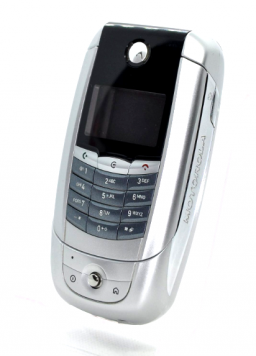
Motorola A780
Quick View💎 Rarity Index: A (Rare)
⭐ WOW Factor: The first Motorola with Linux Operating System
👁 Evaluation in my collection: Great – 9/10
⏱ Life timer: N/A | 📦 Boxed: NO
📅 Release Year: 2003 | 💰 Release Price: ~250 €
📊 Units Sold: ~500k
📰 Why this phone matters: The Motorola A780 is a cellular PDA running the Linux operating system.
It was introduced in 2003 and sold in eur;ope and Asia.Some models include GPS and navigation software. The phone is supplied with a number of applications including a POP and IMAP email client, Opera web browser, calendar and a viewer for PDF and Microsoft Office files. Calendar and address book can be synchronized with a Microsoft Exchange or SyncML server. The phone has a 1.3 megapixel camera recording still and video images. RealPlayer is included to play sound audio files and streamed audio and video. The phone has 48 megabytes of internal flash memory for storing user data and a slot for a microSD card. Both Bluetooth and USB are provided for communication with another computer. Character entry is via an on-screen QWERTY keyboard and hand writing recognition. Models including a GPS receiver are supplied with ALK Technologies’ CoPilot Live navigation software with street level maps of eur;ope.📝 Reviews when released: OS News 🔗
-
Motorola iDEN NASCAR: Dale Earnhardt Jr. – Driver Number 8
Quick View💎 Rarity Index: A (Rare)
⭐ WOW Factor: Limited-edition printed shells were released in very small quantities through promotions tied to NASCAR sponsors
👁 Evaluation in my collection: Great – 9/10
⏱ Life timer: N/A | 📦 Boxed: YES
📅 Release Year: 2003 | 💰 Release Price: N/A
📊 Units Sold: ~50k
📰 Why this phone matters: “This series brings together a rare and visually striking set of Motorola iDEN NASCAR edition phones, each one finished in the exact colors and markings of some of the most iconic drivers of the era. The front housings carry the bold driver numbers and printed signatures that fans once saw streaking around American tracks: the famous 8 used by Dale Earnhardt Jr.Other major NASCAR stars tied to number-based fan merchandising from the same period include Jimmie Johnson (48), Matt Kenseth (17), Kevin Harvick (29), Mark Martin (6), Rusty Wallace (2), Michael Waltrip (15), and others whose liveries became instantly recognizable in early 2000s motorsport culture. Mentioning them highlights the broader context in which these promotional Motorola phones were released.
Instead of simple decals, these editions feature full factory-printed graphics applied directly to the flip shell, giving them a premium, high-gloss look that stands far above ordinary Motorola releases. Built on Motorola’s rugged iDEN flip-phone platform, these devices were originally tied to the push-to-talk culture that defined the Nextel era. With their tall antennas, external displays, loud front speakers, and the classic M-logo medallions, they capture the unmistakable flavor of early 2000s telecom design.
Today, iDEN handsets with licensed NASCAR artwork are almost never found in mint or BNIB condition, making surviving units especially rare. Together, these themed phones stand as a vivid motorsport showcase, capturing the crossover between mobile technology and racing, and preserving a bold piece of American fan history that has long since disappeared from the mar
“
📝 Reviews when released: N/A 💔
-
Motorola iDEN NASCAR: Dale Jarrett – Driver Number 88
Quick View💎 Rarity Index: A (Rare)
⭐ WOW Factor: Limited-edition printed shells were released in very small quantities through promotions tied to NASCAR sponsors
👁 Evaluation in my collection: Great – 9/10
⏱ Life timer: N/A | 📦 Boxed: YES
📅 Release Year: 2003 | 💰 Release Price: N/A
📊 Units Sold: ~50k
📰 Why this phone matters: “This series brings together a rare and visually striking set of Motorola iDEN NASCAR edition phones, each one finished in the exact colors and markings of some of the most iconic drivers of the era. The front housings carry the bold driver numbers and printed signatures that fans once saw streaking around American tracks: 88 associated with Dale Jarrett and, in later seasons, Dale Earnhardt Jr. as well.Other major NASCAR stars tied to number-based fan merchandising from the same period include Jimmie Johnson (48), Matt Kenseth (17), Kevin Harvick (29), Mark Martin (6), Rusty Wallace (2), Michael Waltrip (15), and others whose liveries became instantly recognizable in early 2000s motorsport culture. Mentioning them highlights the broader context in which these promotional Motorola phones were released.
Instead of simple decals, these editions feature full factory-printed graphics applied directly to the flip shell, giving them a premium, high-gloss look that stands far above ordinary Motorola releases. Built on Motorola’s rugged iDEN flip-phone platform, these devices were originally tied to the push-to-talk culture that defined the Nextel era. With their tall antennas, external displays, loud front speakers, and the classic M-logo medallions, they capture the unmistakable flavor of early 2000s telecom design.
Today, iDEN handsets with licensed NASCAR artwork are almost never found in mint or BNIB condition, making surviving units especially rare. Together, these themed phones stand as a vivid motorsport showcase, capturing the crossover between mobile technology and racing, and preserving a bold piece of American fan history that has long since disappeared from the mar
“
📝 Reviews when released: N/A 💔
-
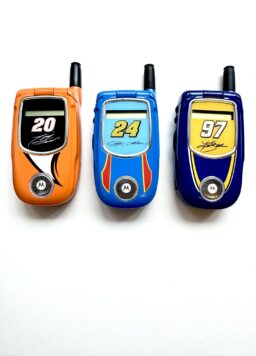
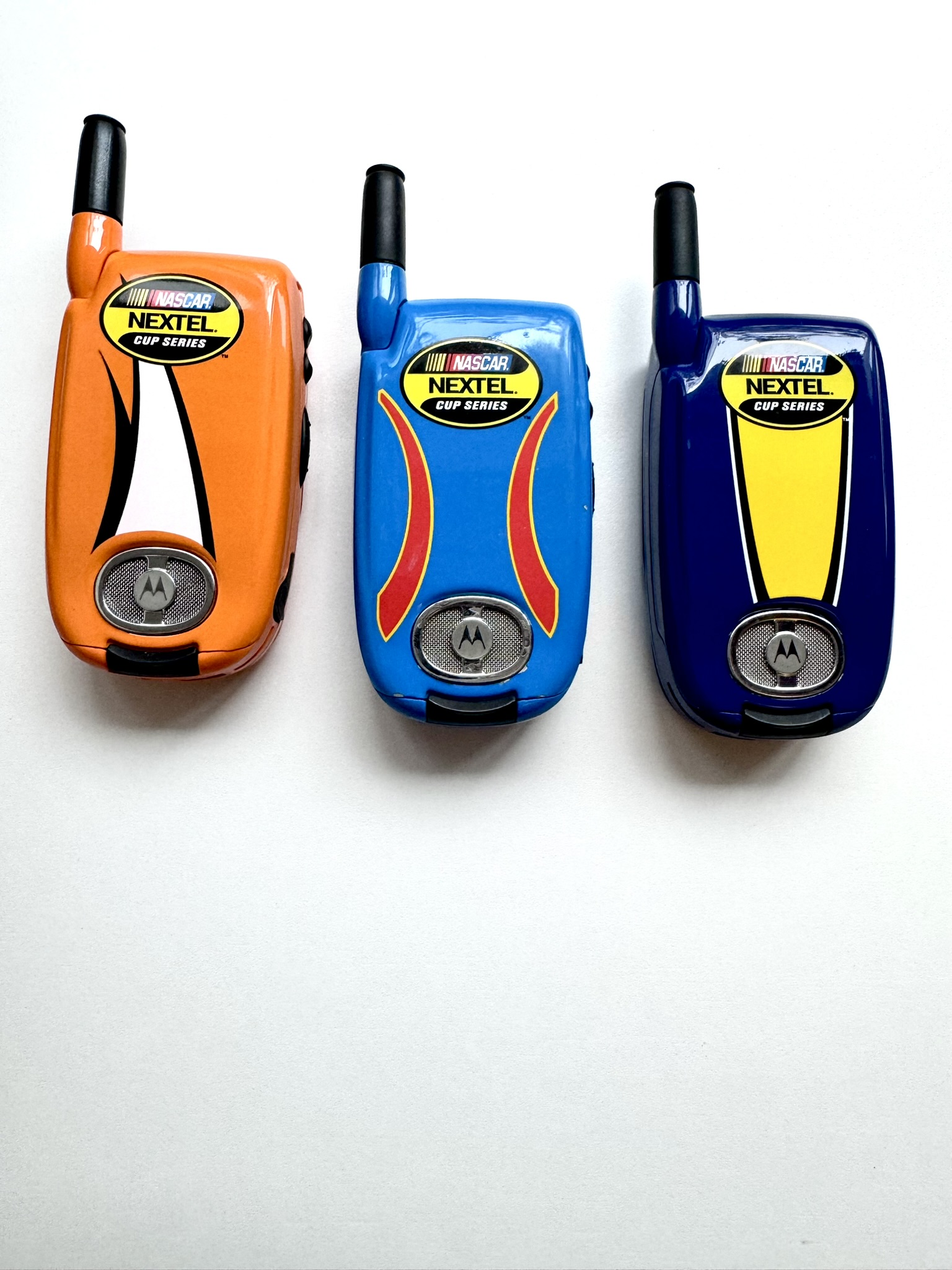
Motorola iDEN NASCAR: Driver Number Series
Quick View💎 Rarity Index: A (Rare)
⭐ WOW Factor: Limited-edition printed shells were released in very small quantities through promotions tied to NASCAR sponsors
👁 Evaluation in my collection: Great – 9/10
⏱ Life timer: N/A | 📦 Boxed: YES
📅 Release Year: 2003 | 💰 Release Price: N/A
📊 Units Sold: ~50k
📰 Why this phone matters: This series brings together a rare and visually striking set of Motorola iDEN NASCAR edition phones, each one finished in the exact colors and markings of some of the most iconic drivers of the era. The front housings carry the bold driver numbers and printed signatures that fans once saw streaking around American tracks: 24 in blue and yellow for Jeff Gordon, 20 in bright orange and black for Tony Stewart, 97 in deep blue with yellow for Kurt Busch, along with the famous 8 used by Dale Earnhardt Jr. and 88 associated with Dale Jarrett and, in later seasons, Dale Earnhardt Jr. as well.Other major NASCAR stars tied to number-based fan merchandising from the same period include Jimmie Johnson (48), Matt Kenseth (17), Kevin Harvick (29), Mark Martin (6), Rusty Wallace (2), Michael Waltrip (15), and others whose liveries became instantly recognizable in early 2000s motorsport culture. Mentioning them highlights the broader context in which these promotional Motorola phones were released.
Instead of simple decals, these editions feature full factory-printed graphics applied directly to the flip shell, giving them a premium, high-gloss look that stands far above ordinary Motorola releases. Built on Motorola’s rugged iDEN flip-phone platform, these devices were originally tied to the push-to-talk culture that defined the Nextel era. With their tall antennas, external displays, loud front speakers, and the classic M-logo medallions, they capture the unmistakable flavor of early 2000s telecom design.
Today, iDEN handsets with licensed NASCAR artwork are almost never found in mint or BNIB condition, making surviving units especially rare. Together, these themed phones stand as a vivid motorsport showcase, capturing the crossover between mobile technology and racing, and preserving a bold piece of American fan history that has long since disappeared from the mar
📝 Reviews when released: N/A 💔
-
Motorola iDEN NASCAR: Jeff Gordon – Driver Number 24
Quick View💎 Rarity Index: A (Rare)
⭐ WOW Factor: Limited-edition printed shells were released in very small quantities through promotions tied to NASCAR sponsors
👁 Evaluation in my collection: Great – 9/10
⏱ Life timer: N/A | 📦 Boxed: YES
📅 Release Year: 2003 | 💰 Release Price: N/A
📊 Units Sold: ~50k
📰 Why this phone matters: “This series brings together a rare and visually striking set of Motorola iDEN NASCAR edition phones, each one finished in the exact colors and markings of some of the most iconic drivers of the era. The front housings carry the bold driver numbers and printed signatures that fans once saw streaking around American tracks: 24 in blue and yellow for Jeff Gordon.Other major NASCAR stars tied to number-based fan merchandising from the same period include Jimmie Johnson (48), Matt Kenseth (17), Kevin Harvick (29), Mark Martin (6), Rusty Wallace (2), Michael Waltrip (15), and others whose liveries became instantly recognizable in early 2000s motorsport culture. Mentioning them highlights the broader context in which these promotional Motorola phones were released.
Instead of simple decals, these editions feature full factory-printed graphics applied directly to the flip shell, giving them a premium, high-gloss look that stands far above ordinary Motorola releases. Built on Motorola’s rugged iDEN flip-phone platform, these devices were originally tied to the push-to-talk culture that defined the Nextel era. With their tall antennas, external displays, loud front speakers, and the classic M-logo medallions, they capture the unmistakable flavor of early 2000s telecom design.
Today, iDEN handsets with licensed NASCAR artwork are almost never found in mint or BNIB condition, making surviving units especially rare. Together, these themed phones stand as a vivid motorsport showcase, capturing the crossover between mobile technology and racing, and preserving a bold piece of American fan history that has long since disappeared from the mar
“
📝 Reviews when released: N/A 💔
-
Motorola iDEN NASCAR: Kurt Busch – Driver Number 97
Quick View💎 Rarity Index: A (Rare)
⭐ WOW Factor: Limited-edition printed shells were released in very small quantities through promotions tied to NASCAR sponsors
👁 Evaluation in my collection: Great – 9/10
⏱ Life timer: N/A | 📦 Boxed: YES
📅 Release Year: 2003 | 💰 Release Price: N/A
📊 Units Sold: ~50k
📰 Why this phone matters: “This series brings together a rare and visually striking set of Motorola iDEN NASCAR edition phones, each one finished in the exact colors and markings of some of the most iconic drivers of the era. The front housings carry the bold driver numbers and printed signatures that fans once saw streaking around American tracks: 97 in deep blue with yellow for Kurt BuschOther major NASCAR stars tied to number-based fan merchandising from the same period include Jimmie Johnson (48), Matt Kenseth (17), Kevin Harvick (29), Mark Martin (6), Rusty Wallace (2), Michael Waltrip (15), and others whose liveries became instantly recognizable in early 2000s motorsport culture. Mentioning them highlights the broader context in which these promotional Motorola phones were released.
Instead of simple decals, these editions feature full factory-printed graphics applied directly to the flip shell, giving them a premium, high-gloss look that stands far above ordinary Motorola releases. Built on Motorola’s rugged iDEN flip-phone platform, these devices were originally tied to the push-to-talk culture that defined the Nextel era. With their tall antennas, external displays, loud front speakers, and the classic M-logo medallions, they capture the unmistakable flavor of early 2000s telecom design.
Today, iDEN handsets with licensed NASCAR artwork are almost never found in mint or BNIB condition, making surviving units especially rare. Together, these themed phones stand as a vivid motorsport showcase, capturing the crossover between mobile technology and racing, and preserving a bold piece of American fan history that has long since disappeared from the mar
“
📝 Reviews when released: N/A 💔
-
Motorola iDEN NASCAR: Tony Stewart – Driver Number 20
Quick View💎 Rarity Index: A (Rare)
⭐ WOW Factor: Limited-edition printed shells were released in very small quantities through promotions tied to NASCAR sponsors
👁 Evaluation in my collection: Great – 9/10
⏱ Life timer: N/A | 📦 Boxed: YES
📅 Release Year: 2003 | 💰 Release Price: N/A
📊 Units Sold: ~50k
📰 Why this phone matters: “This series brings together a rare and visually striking set of Motorola iDEN NASCAR edition phones, each one finished in the exact colors and markings of some of the most iconic drivers of the era. The front housings carry the bold driver numbers and printed signatures that fans once saw streaking around American tracks: 20 in bright orange and black for Tony Stewart.Other major NASCAR stars tied to number-based fan merchandising from the same period include Jimmie Johnson (48), Matt Kenseth (17), Kevin Harvick (29), Mark Martin (6), Rusty Wallace (2), Michael Waltrip (15), and others whose liveries became instantly recognizable in early 2000s motorsport culture. Mentioning them highlights the broader context in which these promotional Motorola phones were released.
Instead of simple decals, these editions feature full factory-printed graphics applied directly to the flip shell, giving them a premium, high-gloss look that stands far above ordinary Motorola releases. Built on Motorola’s rugged iDEN flip-phone platform, these devices were originally tied to the push-to-talk culture that defined the Nextel era. With their tall antennas, external displays, loud front speakers, and the classic M-logo medallions, they capture the unmistakable flavor of early 2000s telecom design.
Today, iDEN handsets with licensed NASCAR artwork are almost never found in mint or BNIB condition, making surviving units especially rare. Together, these themed phones stand as a vivid motorsport showcase, capturing the crossover between mobile technology and racing, and preserving a bold piece of American fan history that has long since disappeared from the mar
“
📝 Reviews when released: N/A 💔
-


NEC e616v
Quick View💎 Rarity Index: C (Common)
👁 Evaluation in my collection: Great – 9/10
⏱ Life timer: N/A | 📦 Boxed: NO
📅 Release Year: 2003 | 💰 Release Price: N/A
📊 Units Sold: ~2M
📰 Why this phone matters: N/A📝 Reviews when released: N/A 💔
-
Nokia 2260 AT&T
Quick View💎 Rarity Index: B (Uncommon)
👁 Evaluation in my collection: Good – 8.5/10
⏱ Life timer: 02h | 📦 Boxed: NO
📅 Release Year: 2003 | 💰 Release Price: N/A
📊 Units Sold: ~500k
📰 Why this phone matters: A basic phone for the American Market and AT&T, back in 2003. It has a very nice dark blue light and looks similar to 3x series📝 Reviews when released: N/A 💔
-


Nokia 2300 Purple
Quick View💎 Rarity Index: C (Common)
👁 Evaluation in my collection: Great – 9/10
🕵 Nokia Codename: Nickel
⏱ Life timer: 138h | 📦 Boxed: NO
📅 Release Year: 2003 | 💰 Release Price: ~150 $
📊 Units Sold: ~5M
📰 Why this phone matters: Nokia presented the Nokia 2300 model back in last year, in Moscow; however this model went for sale only now. This phone is targeted for the youth, and is presented in two colors – pink and grey. If the first one is obviously made for females, then the second one is made for men. The design once again became the company’s main target, the keyboard is made of smooth plastic, it pleasant when you touch it, the keys are oval and get crossed between each other. The keyboard looks unusual, but when you are actually use it no problems are encountered. I believe that this is the seldom exception when unusual keyboard design is actually convenient. The backlight is not even, the keys get highlighted differently, depending on the plastic’s color. For some reason this causes dissonance, typing without any source of light around is not as pleasant, as doing the same operation during the day.📝 Reviews when released: Mobile Review 🔗