

">

Showing 25–36 of 44 results
-


Nokia 5100
Quick View💎 Rarity Index: C (Common)
👁 Evaluation in my collection: Great – 9/10
🕵 Nokia Codename: Foxy
⏱ Life timer: N/A | 📦 Boxed: NO
📅 Release Year: 2003 | 💰 Release Price: N/A
📊 Units Sold: ~2M
📰 Why this phone matters: Nokia 5100 is a Nokia GSM mobile phone model that was announced on 4 November 2002 and released in early 2003.It was marketed as an outdoor device, hence it is in a rubber casing that provides protection against humidity, shocks and dust. It has some special functions like thermometer, flashlight, calorie counter and loudness meter (dB). It also has a stereo FM radio built in and is Tri-Band with up to 300 hours standby time.
The model type is NPM-6 and it is available in light blue (picture), dark grey, green and orange. It has Xpress-on shells which can be changed.
📝 Reviews when released: cNET 🔗
-


Nokia 5140i
Quick View💎 Rarity Index: C (Common)
👁 Evaluation in my collection: As New – 10/10
⏱ Life timer: 67h | 📦 Boxed: NO
📅 Release Year: 2003 | 💰 Release Price: ~300 $
📊 Units Sold: ~3M
📰 Why this phone matters: Released in 2003 it has a white backlit screen, FM radio, VGA display, and a USB pop-port operating on the GSM Network. The Nokia 5140 was the successor to the Nokia 5210📝 Reviews when released: Mobile Review 🔗
-
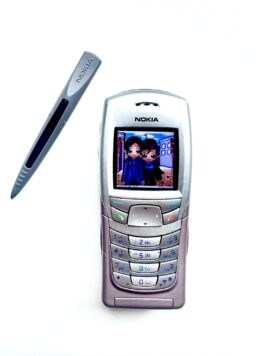
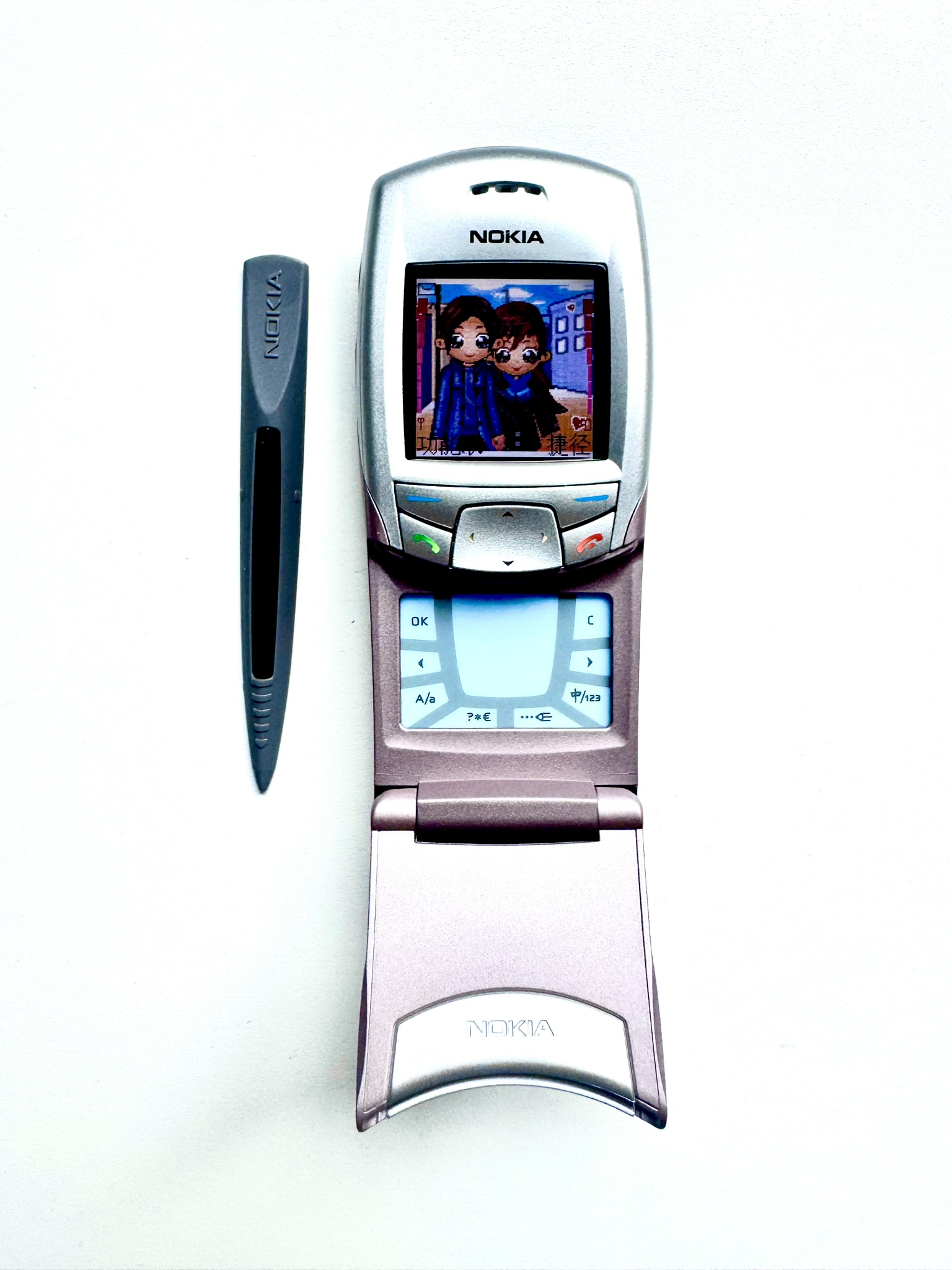
Nokia 6108 Prototype B5.0: Early Engineering Sample in Pink
Quick View💎 Rarity Index: S (Ultra Rare)
⭐ WOW Factor: Handwriting Recognition
👁 Evaluation in my collection: Good – 9/10
🕵 Nokia Codename: Libai
⏱ Life timer: 3 | 📦 Boxed: NO
📅 Release Year: 2003 | 💰 Release Price: 200 €
📊 Units Sold: ~300k (final units)
📰 Why this phone matters: A striking Nokia 6108 Prototype B5.0, internal codename “LiBai”, built under Type RH-4 and marked with the unmistakable Model: XXYY placeholder – one of Nokia’s classic signatures for true pre-production devices. The PROTO B5.0 designation places this unit in the late engineering stage, where final hardware refinements, handwriting-input validation and UI stability testing were performed before the model was green-lit for production.The pink housing paired with this prototype label makes it highly distinctive: while certain pink variants were later released in select Asian markets, the internal markings on this unit – early production codes, non-consumer label structure, and the development codename printed directly on the shield – confirm it as part of Nokia’s controlled R&D chain rather than a retail batch.
With its clean prototype identifiers, engineering-phase hardware and the unique “LiBai” project naming, this 6108 B5.0 proto stands as a rare and desirable example of Nokia’s experimental era, capturing the device exactly as it passed through the company’s internal development process.
📝 Reviews when released: N/A 💔
-
Nokia 6108: The First Handwriting Classic
Quick View💎 Rarity Index: A (Rare)
⭐ WOW Factor: Handwriting Recognition
👁 Evaluation in my collection: As New – 9.9/10
🕵 Nokia Codename: Libai
⏱ Life timer: 0 | 📦 Boxed: YES
📅 Release Year: 2003 | 💰 Release Price: 200 €
📊 Units Sold: ~300k
📰 Why this phone matters: The Nokia 6108 is one of the most unusual and innovative mass-released Nokia phones, designed specifically for the Chinese market and built around a unique flip-down handwriting input system. Released in the early 2000s, it combined a traditional candybar keypad with a dedicated handwriting pad hidden beneath the keys. The included stylus, neatly stored on the back of the device, enabled users to write Chinese or English characters directly onto the phone, making the 6108 a remarkably advanced hybrid device for its era.This full box example is extremely rare. Most 6108 units were heavily used in China and Southeast Asia, where handwriting input was a daily necessity. As a result, surviving phones usually show significant wear and often lack the stylus, manuals, or original packaging. A complete, intact full box with all accessories is very hard to find today and greatly increases the collectible value of this model.
With GPRS, MMS, email, Java applications, SyncML support, a two-way English/Chinese dictionary and speakerphone, the 6108 offered a feature set far beyond standard Series 40 devices of its time. Its IR port enabled early PC synchronization long before modern wireless standards became common.
Internally known as LiBai, the 6108 reflects Nokias experimental phase, merging conventional keypad use with stylus-driven handwriting input long before capacitive touchscreens became mainstream. Its distribution was limited to Asia-Pacific markets, and because it was heavily used for educational, business and translation purposes, complete boxed units like this one are exceptionally hard to source.
With its flip-down handwriting pad, integrated stylus, region-specific firmware and fully intact accessory set, this Nokia 6108 stands as a distinctive and rare piece of Nokia innovation, showcasing the company’s creative engineering during the early 2000s.
📝 Reviews when released: N/A 💔
-


Nokia 6220
Quick View💎 Rarity Index: C (Common)
👁 Evaluation in my collection: Good – 8.5/10
🕵 Nokia Codename: Jesse
⏱ Life timer: 18h | 📦 Boxed: NO
📅 Release Year: 2003 | 💰 Release Price: N/A
📊 Units Sold: ~5M
📰 Why this phone matters: The Nokia 6220 is the eur;opean cousin of the 6200. While lacking GSM 850, the 6220 adds world roaming, an integrated camera, video playback, and presence-enabled contacts. Key features in common with the 6200 include EDGE high-speed data, MMS, Java, stereo FM radio, voice dialing, and an XHTML (WAP 2.0) browser.📝 Reviews when released: N/A 💔
-


Nokia 6230 Cath Kidston
Quick View💎 Rarity Index: C (Common)
👁 Evaluation in my collection: Good – 8/10
🕵 Nokia Codename: MatrixII
⏱ Life timer: 67h | 📦 Boxed: NO
📅 Release Year: 2003 | 💰 Release Price: ~300 €
📊 Units Sold: ~20M
📰 Why this phone matters: The 6230 is business-styled but it does feature a VGA resolution digital camera, video camera, a music player and expandable memory. It is considered to be one of the loudest Nokia phones.📝 Reviews when released: Mobile Review 🔗
-


Nokia 6600
Quick View💎 Rarity Index: C (Common)
⭐ WOW Factor: The most advanced Nokia phone ever in 2003
👁 Evaluation in my collection: Great – 9.5/10
🕵 Nokia Codename: Calimero
⏱ Life timer: N/A | 📦 Boxed: YES
📅 Release Year: 2003 | 💰 Release Price: ~600 €
📊 Units Sold: ~6M
📰 Why this phone matters: The Nokia 6600 is a smartphone introduced on June 16, 2003 by Nokia, costing approximately &eur;o;600 when released in October 2003. It was Nokia’s high-end model of the 6xxx Classic Business Series. At the time of release, it was the most advanced product ever launched by Nokia, and it runs on Symbian OS 7.0s (Series 60 2nd Edition). It also featured a VGA camera, a music player and video player, Bluetooth and extended storage by memory card, being the second non-Communicator to do so (after the Nokia 3650).
The model is still in use in many parts of the world and has proved to be a durable product. By many users it is considered as the trend setter phone which proved to be a bright milestone for its manufacturer. The phone was intended to replace the popular 6310i as the predominant business class model in the Nokia range. It should not be confused with the newer Nokia 6600 fold, Nokia 6600 slide and Nokia 6600i phones which have little resemblance to the original 6600. A variant of the Nokia 6600 was launched in the U.S. market as the Nokia 6620.
During its lifespan, the 6600 sold 150 million units (along with Nokia 1200, Nokia 5230, Samsung E1100), making it one of the most successful phones to date.📝 Reviews when released: Mobile Review 🔗
-


Nokia 6650 The lost first Nokia’s 3G Phone
Quick View📦 Collector-to-Collector Transaction
This item is from a private collection and sold as-is for collectors only. All devices have been verified for authenticity and condition as described, but no warranty or guarantee is provided. This is a private sale between individuals and not a commercial business transaction.
💎 Rarity Index: S (Ultra Rare)
⭐ WOW Factor: The first Nokia 3G phone
👁 Evaluation: Great – 9/10
🕵 Nokia Codename: Kenny
⏱ Life timer: 37m 📦 Boxed: YES
📰 About this collectible: It was Nokia’s the company’s first 3G phone, first leaked in June 2002 and eventually unveiled on 26 September 2002.it was the last Nokia candybar phone with an external antenna✓ Verification Checklist
Authenticity & Condition:
– Originality verification (exterior, labels)
– Matching IMEI (box, label, motherboard)
– Physical condition assessment (scratches, cracks, screws)Functional Testing:
– Powers on
– Display functionality
– Camera (when applicable)
– Vibration mechanism (when applicable)
– Security code
– Charging
– Network connectivity
– Call functionality including speaker (non-BNIB units on European networks)Additional specific tests available upon request.
-
Nokia 6650 The lost first Nokia’s 3G Phone
Quick View📦 Collector-to-Collector Transaction
This item is from a private collection and sold as-is for collectors only. All devices have been verified for authenticity and condition as described, but no warranty or guarantee is provided. This is a private sale between individuals and not a commercial business transaction.
💎 Rarity Index: A (Rare)
⭐ WOW Factor: The first Nokia 3G phone
👁 Evaluation: Good – 8.5/10
🕵 Nokia Codename: Kenny
⏱ Life timer: 70h 📦 Boxed: NO
📰 About this collectible: It was Nokia’s the company’s first 3G phone, first leaked in June 2002 and eventually unveiled on 26 September 2002.it was the last Nokia candybar phone with an external antenna✓ Verification Checklist
Authenticity & Condition:
– Originality verification (exterior, labels)
– Matching IMEI (box, label, motherboard)
– Physical condition assessment (scratches, cracks, screws)Functional Testing:
– Powers on
– Display functionality
– Camera (when applicable)
– Vibration mechanism (when applicable)
– Security code
– Charging
– Network connectivity
– Call functionality including speaker (non-BNIB units on European networks)Additional specific tests available upon request.
-
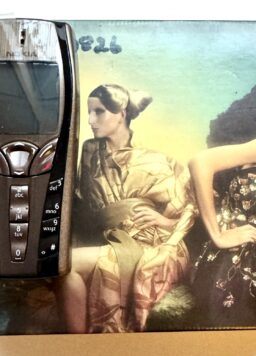

Nokia 7250i James Brown Edition BNIB
Quick View💎 Rarity Index: A (Rare)
👁 Evaluation in my collection: BNIB – 10/10
🕵 Nokia Codename: James
⏱ Life timer: 0m | 📦 Boxed: YES
📅 Release Year: 2003 | 💰 Release Price: ~450 $
📊 Units Sold: ~12M
📰 Why this phone matters: Nokia 7250i Brown Edition NHL-4JX, codename James, is one of those devices that shows exactly why early 2000s Nokia was untouchable in phone design.The 7250i itself was launched in 2003 as an upgraded version of the 7250, keeping the wild, sculpted candybar body but hiding a better camera and a more advanced XHTML browser inside. It was part of Nokia’s fashion line, a hero product that mixed technology and style at a time when an integrated camera was still a futuristic feature.
This unit takes that story further. Finished in the ultra rare brown metallic shell, it looks completely different from the usual blue and plum variants. The front mixes a warm brown body with dark framing and a dramatic three piece keypad layout that flows up into the navigation cluster. It is unmistakably a fashion phone, and in this color it is almost never seen, especially BNIB.
Behind the design sits the NHL-4JX platform: a tri band GSM engine with Series 40 1st Edition software, CSTN 4096 color display and a CIF camera tuned for the 128 x 128 screen. The camera supports night mode and digital zoom, letting early adopters capture and send MMS pictures long before camera phones became standard. GPRS and HSCSD handle data, while the stereo FM radio, Java games and Nokia’s Pop-Port ecosystem turn the phone into a compact entertainment device.
The label confirms everything a collector wants to see: Model 7250i, Type NHL-4JX, product code 0511226, IMEI in the correct 351460 range, FCC ID PYANHL-4J, IC 661V-NHL4J, CE168 and Made in Hungary, one of Nokia’s most respected factories. In other words, a fully authentic, correctly configured eur;opean market 7250i in one of the rarest official colors.
This unit is BNIB in the collection, which is extremely unusual for a 2003 fashion device that was meant to be used hard and shown off. Most surviving 7250i phones are worn, repainted or rebuilt; finding an original brown example that has effectively never entered daily service is a serious trophy for any Nokia or fashion phone collector.
📝 Reviews when released: N/A 💔
-


Nokia 7600
Quick View💎 Rarity Index: B (Uncommon)
⭐ WOW Factor: The second 3g Nokia phone
👁 Evaluation in my collection: Great – 9.5/10
🕵 Nokia Codename: Mango
⏱ Life timer: 0m | 📦 Boxed: NO
📅 Release Year: 2003 | 💰 Release Price: ~450 $
📊 Units Sold: ~600k
📰 Why this phone matters: The Nokia 7600 is a camera phone developed by Nokia, running on Series 40. The 7600 was announced on 25 September 2003 and was Nokia’s second 3G handset after the Nokia 6650.It is notable for its unique radical design. The phone was primarily aimed at the “fashion” market, it had a unique teardrop shape and a variety of interchangeable covers were available. The number keys were located around the large screen. The VGA camera was of a good quality for its time, but poor by modern standards.
It has polyphonic ring-tone support. The built-in MP3/AAC audio player allows up to 29MB of songs to be transferred to the handset using Bluetooth, Infrared or a USB connection through its Pop-Port.The 7600 has a talk time of nearly three hours using a 3G connection. Stand-by time is up to 12.5 days.📝 Reviews when released: N/A 💔
-


Nokia 7700 Prototype F5.0 Black | Unreleased
Quick View💎 Rarity Index: X (Mystical Prototype)
⭐ WOW Factor: The first Nokia unreleased phone with touch screen and Symbian S90
👁 Evaluation in my collection: Great – 9.5/10
🕵 Nokia Codename: MX
⏱ Life timer: N/A | 📦 Boxed: NO
📅 Release Year: 2003 | 💰 Release Price: N/A
📊 Units Produced: ~1k
📰 Why this phone matters: A true piece of Nokia history – the Nokia 7700 F5.0 Prototype, Type RAL-2, made in Finland and never released commercially. This is one of the most ambitious devices Nokia ever built: a full-touch “media communicator” years before the 7710 and long before modern smartphones adopted the concept.This listing includes two fully working prototypes, one in black and one in white, both belonging to the late engineering stage (F5.0) and carrying the internal Model: M designation. These units were intended for final validation and software testing, featuring the hardware configuration closest to what a retail 7700 would have been – had it reached the market.
The 7700 became legendary precisely because it never launched, making functional prototypes extremely rare. To find two, in different colours, in working condition, is virtually unheard of and places this set among the top-tier collector items of early smartphone history.
Whether displayed as design icons or preserved as engineering artifacts, these devices stand as one of Nokia’s boldest steps toward the touchscreen era.
📝 Reviews when released: Mobile Gazette 🔗