Showing 313–324 of 353 results
-


Samsung Serene B&O
Quick ViewSerene is a mobile phone produced as a joint venture between Samsung Electronics and Bang & Olufsen. It was released in the last quarter of 2005 in eur;ope. It was available in select stores throughout the world and cost $1275 (~&eur;o;1000).A successor to the Serene called the Serenata was announced and released in October 2007. It features a slide out speaker and has a heavy
-
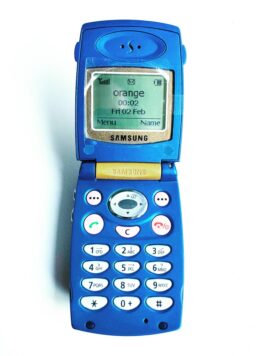
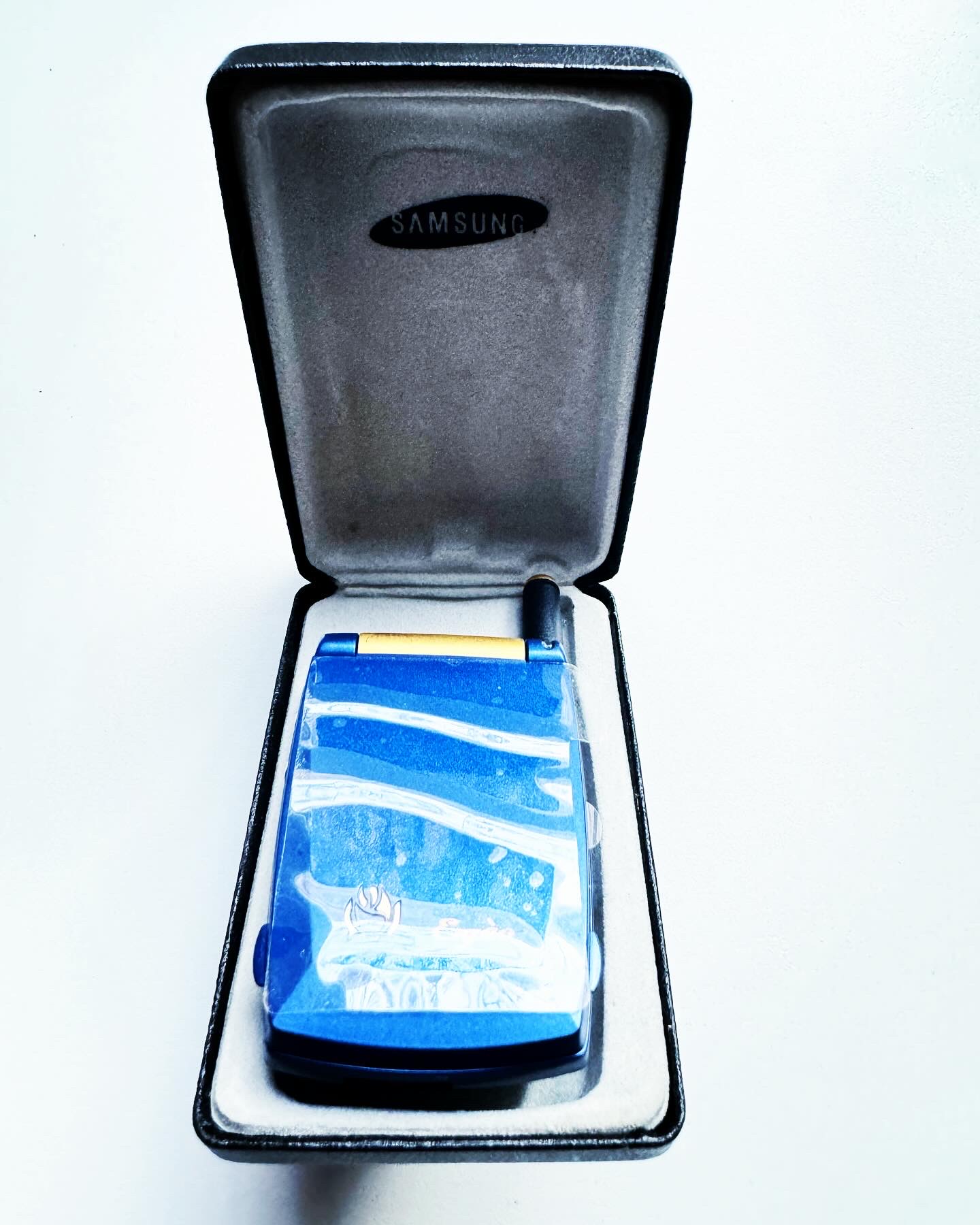
Samsung SGH-A408 “Egeo Edition”: Rare Custom Blue-Gold Variant
Quick ViewA rare Samsung SGH-A408 in the distinctive Egeo co-branded edition, featuring a striking blue-and-gold finish not seen in standard Samsung retail models. Manufactured in Korea, this version is part of a small-volume release used primarily for promotional partnerships and boutique-market customization, making it far harder to find than the regular A408.
The SGH-A408 was one of Samsung’s early compact flip phones, built during the transition period when Samsung began refining the sleek, stylized designs that later defined their SGH and X-series devices. The classic external antenna, metallic paint, and angular shell combine into a perfect late-90s / early-2000s Samsung aesthetic.
Your Egeo variant stands out through:
Gold hinge + gold logo unique to this edition
Branded Egeo flame insignia
Metallic deep-blue casing produced in limited quantities
Clean Korean manufacturing label indicating early production batch
Uncommon GSM variant (A408 GSMH)
These features make it one of the more unusual Samsung flip designs of its era – especially valuable for collectors of pre-2003 Samsung hardware and regional special editions.
-


Samsung X820
Quick ViewSamsung SGH-X820, also known as Ultra Edition 6.9, is a mobile phone created by Samsung and announced in Q3 2006, as part of the Samsung Ultra Edition range.
Samsung marketed the device as “the world’s slimmest mobile phone”, and as a competitor to the Motorola SLVR L7. The X820 surpassed Samsung D830, released that same year, which Samsung previously marketed as “the world’s slimmest”.
The carrier-unlocked U.S. price on late July 2006 was $449.00
-
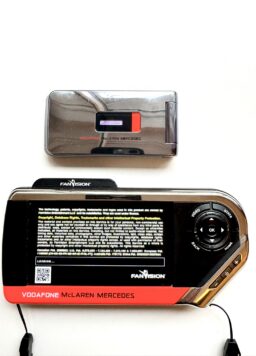
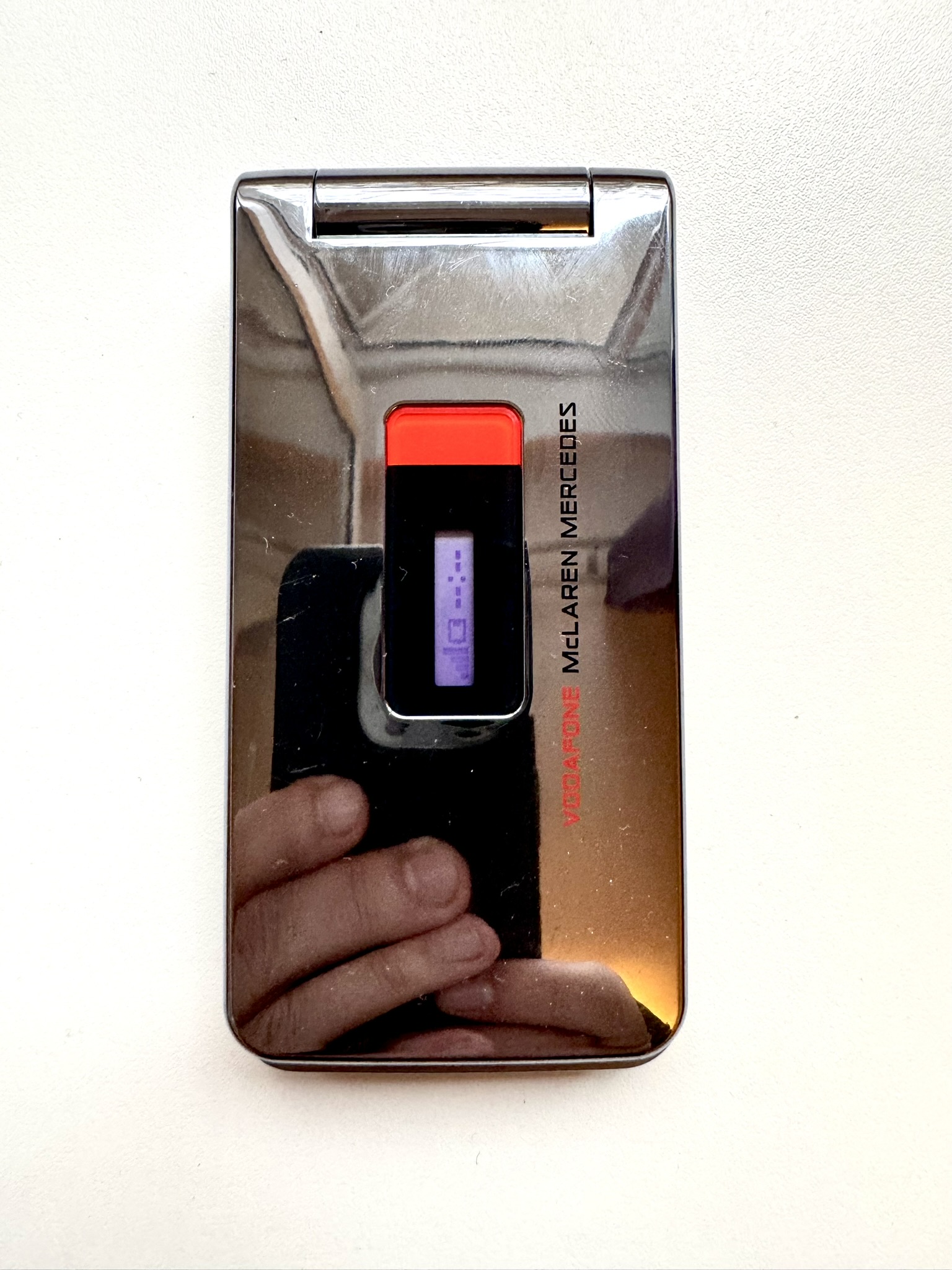
Sharp 770SH: Vodafone McLaren Mercedes Fan Edition
Quick ViewThis Sharp 770SH Vodafone McLaren Mercedes edition is a rare blend of mobile tech and Formula 1 identity, created at the height of the Vodafone and McLaren Mercedes partnership. The phone carries the official team branding directly on its polished metallic shell, making it instantly recognizable as part of the visual universe that surrounded the McLaren team in the late 2000s. It reflects the era when the team was front and center in the sport, with Vodafone leading its global marketing push and the car wearing the famous chrome and red livery seen on the grid.
The 770SH itself comes from Sharp’s premium clamshell series used heavily by Vodafone across eur;ope and Asia. Known for its sharp internal display, clean hinge engineering and reliable hardware, the model was often used for carrier-specific special editions. This McLaren variant stands out through its unique exterior design, making it part of a very small group of officially branded motorsport phones.
What elevates this set even further is the addition of the FanVision McLaren Mercedes accessory, a special fan device that delivered race related content directly to spectators during live events. FanVision units were used at racing venues to provide exclusive video, audio, timing data or team information that regular spectators could not access. Branded in the same McLaren Mercedes style, the accessory completes a racing oriented package that represents a moment in time when mobile phones, live motorsport data and fan engagement started merging into a single experience.
Together, the phone and the FanVision device form a unique collectible that captures the feeling of the Vodafone McLaren Mercedes era. The chrome look, the red team accents, the matching strap and the coordinated branding all reflect the style and energy of one of Formula 1’s most iconic sponsorship periods. As a combined set, it stands as a remarkable piece of racing culture and mobile history.
-
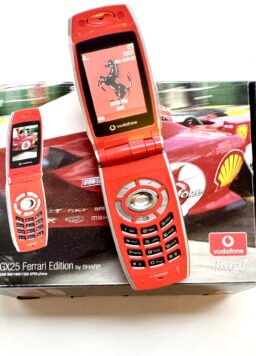
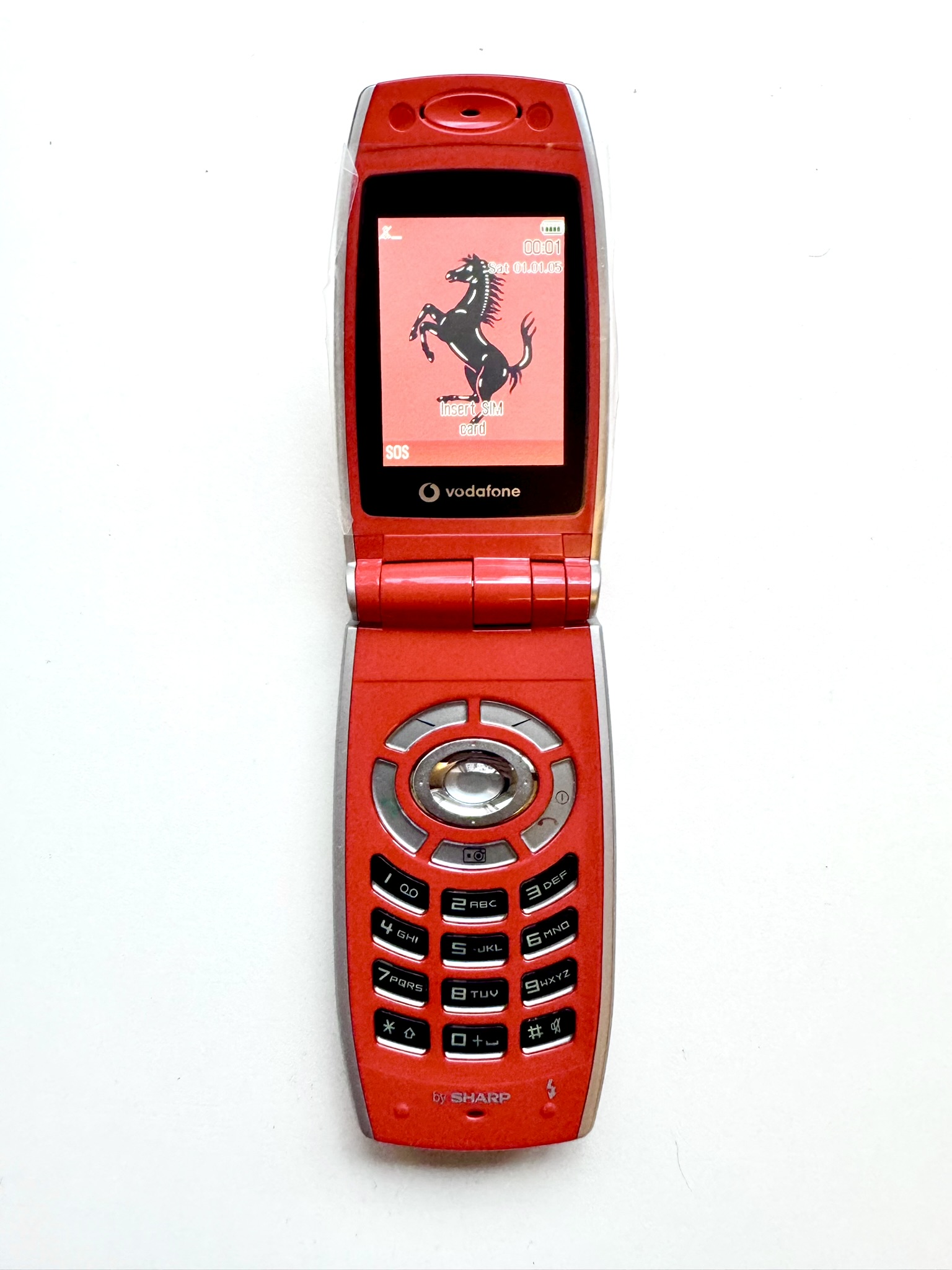
Sharp GX25 Ferrari Edition: Scuderia Signature Model
Quick ViewThis unit is a pristine Sharp GX25 Ferrari Edition, a rare licensed collaboration between Sharp and the Scuderia Ferrari brand at the height of Ferrari mania in the mid 2000s. Finished in true Rosso Corsa red and framed with metallic silver edges, the phone captures the visual identity of Ferrari with surprising authenticity. The front shell carries the iconic Scuderia shield placed precisely below the external display, a detail that separates genuine factory editions from aftermarket conversions.
Built on the respected GX25 platform, this handset reflects Sharp’s reputation for exceptional screen quality and tight hardware engineering. The Ferrari variant was released only in select Vodafone markets, never distributed widely, and typically tied to restricted promotional runs. As a result, surviving examples are exceptionally scarce, and BNIB units like this one are almost unheard of today.
Thanks to its protective films still intact, the phone shows zero external wear, preserving every original contour, lens surface, and paint transition exactly as delivered from the factory. Beyond the Ferrari branding, the GX25 remains a capable and stylish clamshell featuring a high resolution Sharp display, LED assisted camera, Java support, MMS, and the classic Vodafone Live interface. Together, the aesthetics, engineering, rarity, and condition make this Ferrari Edition one of the finest collectible Sharp releases of the era, representing the perfect fusion of Japanese mobile craftsmanship and Italian motorsport prestige
-


Siemens C10D
Quick ViewThe Siemens C10 is a mobile phone made by Siemens in December 1997. The phone was available in four colours: Blue, yellow, red and grey. The C10 had a green backlit display capable of showing three lines. It weighed 165 g with battery and 117 g without.
-


Siemens CF62
Quick ViewSiemens is not very strong in the clamshell phone segment, its first product, clamshell CL50 was accepted more than just cold by the consumers. The next product – CL55 did not even reach the market, this ODM-model was silently cancelled in the first quarter of year 2004. That’s why it was pretty useless to expect warm feedback from the consumers for the CF62 phone, it undeservedly lost attention by consumers who considered this phone another asian model. The irony is that this time Siemens had developed the model by itself and did it with their best traditions. After a long break Siemens introduced successful model, which has slipped out of consumer’s sight due to previous failures. I’d like to make a note here, that by saying successful model you should not expect maximal functionality, you will not find it here, but try looking for match of functions and segment – and you will find it, it is new generation of what Siemens M55 was for its time, by the way CF62 is the clone of this model.
-


Siemens MC60
Quick ViewThe Siemens MC60 is a mobile phone sold by Siemens. It weighs 86 g and has improved resistance to water, shock and dust when compared with previous models. The phone also includes digital imaging and picture messaging. Its integrated camera takes pictures simply by holding the 5 key, then pressing it again. The Siemens MC60 has a number of pre-installed polyphonic ring tones, additionally own ringtones can be recorded.
-


Siemens S10
Quick ViewThe Siemens S10 was the world’s first phone with a colour screen. It was a high end business phone with a number of a advanced features. However, the phone was not up to rival products from Nokia and Ericsson and the colour screen did not make it any more usable.
-

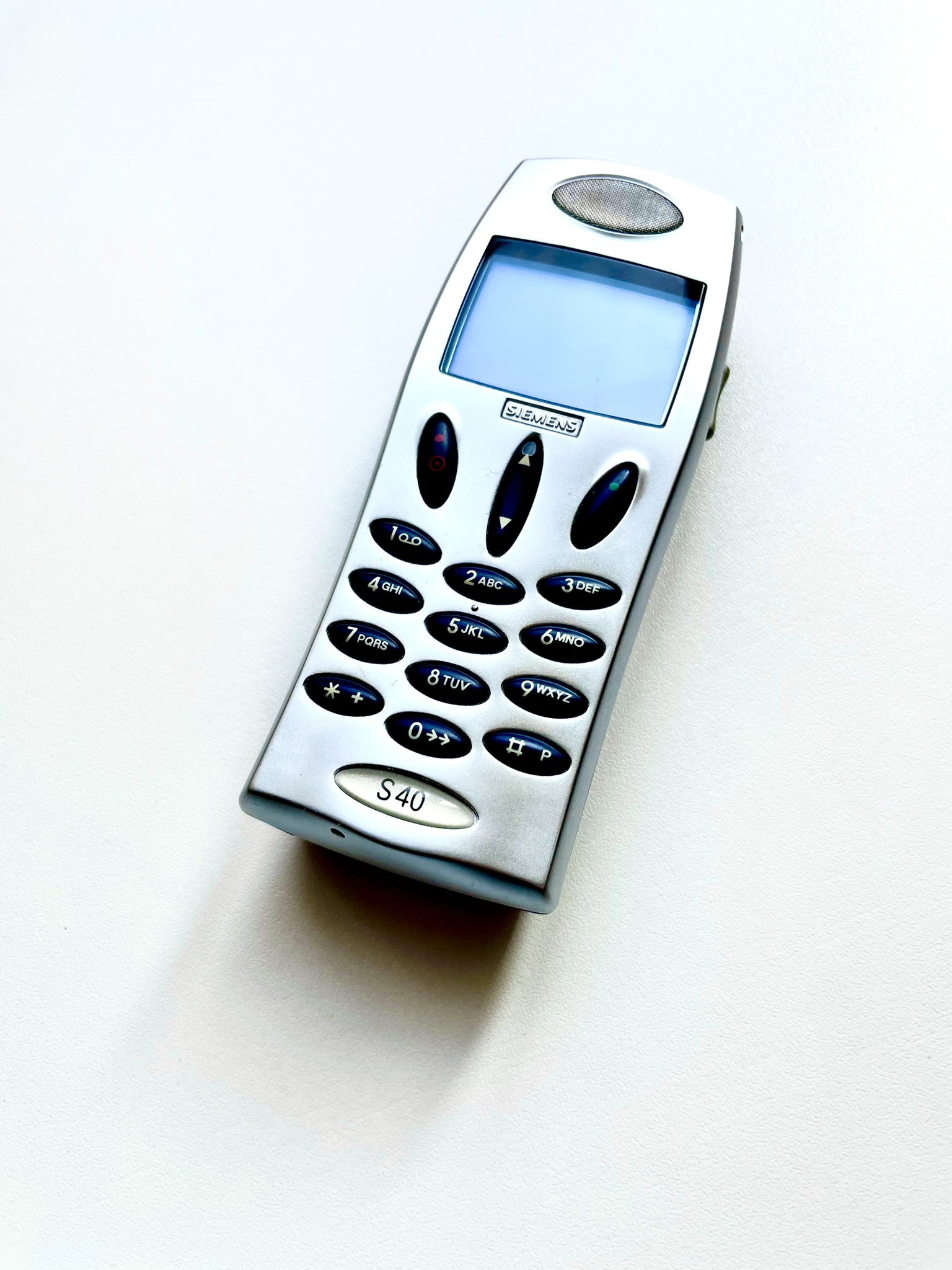
Siemens S40
Quick ViewThe Siemens S40 is a mobile phone. Originally developed as the Bosch 1886 in 2000, the phone was branded as the Siemens S40 after Siemens acquired the Bosch mobile phone division. The Siemens S40 is a tri-band mobile phone that operates on the GSM-900, GSM-1800, and GSM-1900 networks. Communication with a computer can be done either through the infrared port (IrDA) on the phone or a USB or serial port data cable. Its more distinctive features include the voice memo recorder, the mute feature for conversations, the ability to record phone conversations, and the ringtone composer (a useful alternative for those unsatisfied with the 47 monophonic ringtones).
In 2005, the phone made it onto CNET’s list of ten lowest-radiation cell phones, at #10, with a SAR (specific absorption rate) of 0.33.
The phone also supports WAP 1.1, SMS, HSCSD, and T9 predictive text input.
The S40 includes a 104×64 pixel monochrome liquid-crystal display with a blue backlight, an internal antenna, and rubbery buttons to prevent accidental dialing.
-
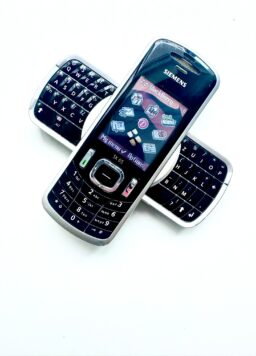
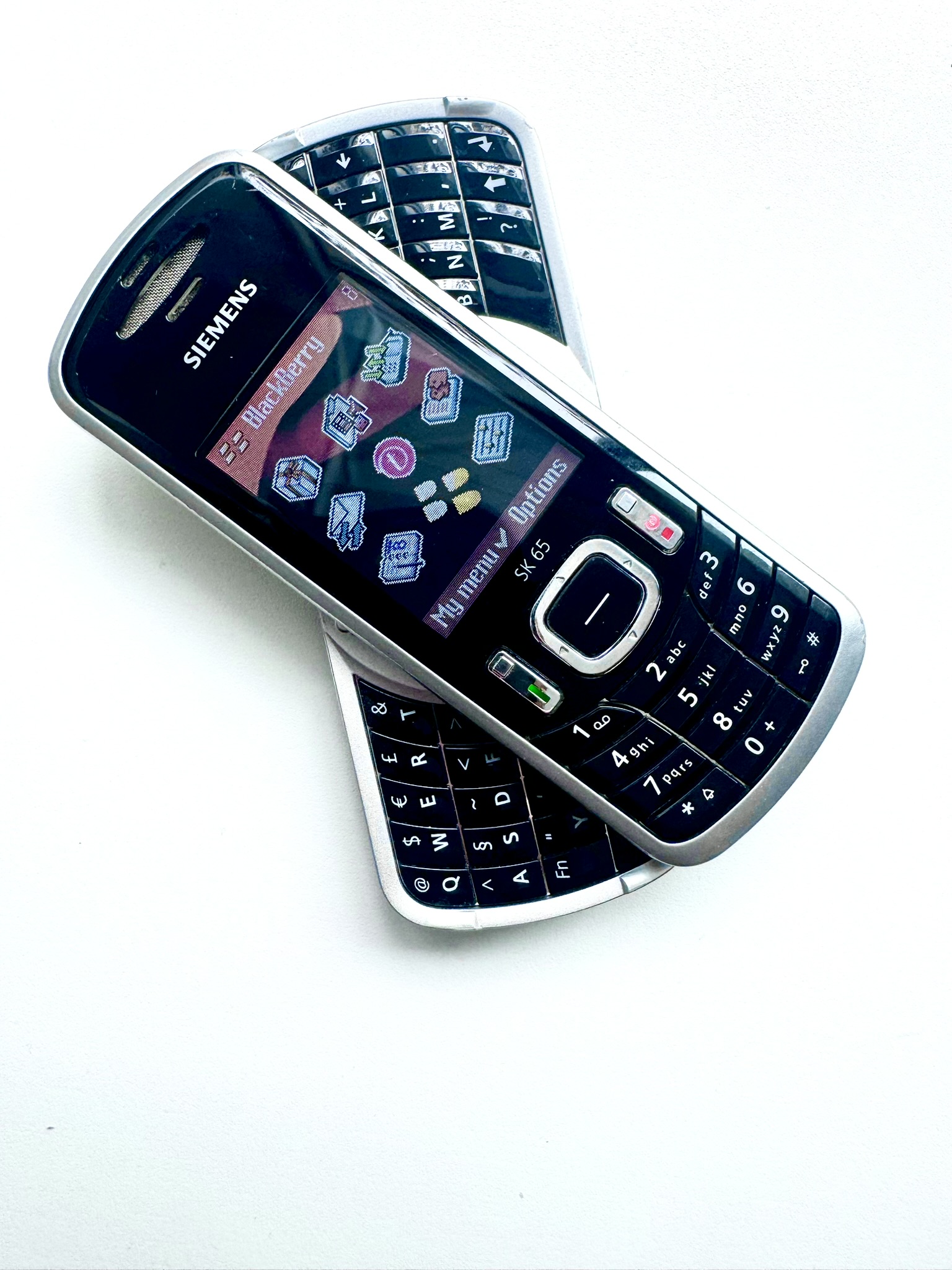
Siemens SK65: The Corporate Weapon With BlackBerry DNA
Quick ViewThe Siemens SK65 was introduced in late 2004 as one of the most advanced enterprise phones ever created, built during a period when Siemens placed enormous engineering resources into its high end S and SX series. The internal development codename is widely understood in documentation to align with Siemens’ business class platforms of the era, specifically derived from the SXG and BB integration programs. It runs on Siemens’ proprietary OS with a full BlackBerry Connect layer on top, giving it access to encrypted push email, corporate sync and RIM’s secure communication protocols.
When released, the SK65 targeted senior professionals and executives who needed BlackBerry functionality but preferred a sleeker eur;opean device. Launch pricing depended on region, but the unsubsidized cost ranged between 450 and 550 eur;os, placing it directly in the high end business category. Early reviews from major publications praised the crossblade mechanism as one of the most ingenious mobile keyboard designs ever made, noting that it allowed full QWERTY typing without increasing the device’s footprint. Reviewers highlighted its solid construction, the crisp Siemens display and the deep integration with BlackBerry Enterprise Server. The only criticisms at the time were limited multimedia features and the fact that the device focused purely on productivity, not entertainment.
The engineering story behind it is equally impressive. Siemens created an entirely new hinge system that rotates two symmetrical keyboard wings outward with perfect balance and alignment. No consumer phone before or after replicated this exact mechanism. When closed, the SK65 appears to be a traditional bar phone. When opened, it transforms instantly into a communication terminal, a true pocket sized workstation.
This unit is preserved in mint condition, with the crossblade mechanism still locking with the same satisfying precision it had in 2004. The BlackBerry Built-in branding remains fully intact on the back cover and the front chassis retains the clean Siemens lines with no warping or discoloration. The display still boots into the original BlackBerry menu structure, complete with the corporate iconography that defined mid 2000s business mobility.
The Siemens SK65 represents the moment when two giants, Siemens and BlackBerry, merged technologies to redefine what a business phone could be. It was a niche device at launch but has since gained legendary status among collectors because of its unusual hybrid nature, discontinued form factor and limited production run. Now considered one of the most unique enterprise phones of the early smartphone era, a mint example like this stands as a mechanical and historical masterpiece.
-


Siemens SL10 D
Quick ViewThe?Siemens SL10?is a sliding?mobile phone?with a four-color?screen?(red, green, blue, and white). It was the second mobile phone with a multicolor screen after the Siemens S10 and the first sliding?mobile phone