Showing 277–288 of 353 results
-
Nokia N91 4GB Prototype: B5.2 Asia Variant
Quick ViewNokia N91 – RM-158 Prototype (4GB, Asia Variant, B5.2 Hardware)
This device is a genuine Nokia N91 4GB prototype, built on the RM-158 platform-a development variant created specifically for the Asia/APAC market. Unlike the standard eur;opean N91 4GB (RM-43), this pre-production unit showcases a different internal hardware configuration, unique labeling, and a regional color scheme that never appeared on global retail models.
Marked clearly with “PROTO B5.2 – NOT FOR SALE” and manufactured in Finland, this unit represents an early engineering build used by Nokia during the final testing stages of the Asia-market N91. The RM-158 board differs from RM-43 through its regional firmware branches, radio configuration, and production-specific tuning, making this prototype significantly rarer than any retail device.
Its exterior features the Asia-exclusive color variant, a darker, metallic finish paired with a distinct keypad shade-used only in APAC commercial releases but extremely scarce worldwide. In prototype form, the materials, texture, and finish differ subtly from production units, highlighting the transitional stage between engineering samples and final mass manufacturing.
With full prototype identifiers, pre-market barcodes, engineering hardware codes, and its unusual combination of Asia-market aesthetics with Finnish factory proto build, this RM-158 N91 stands as a prime collectible from Nokia’s golden era.
Perfect for collectors seeking regional hardware variations, early-stage engineering units, and rare prototype-only configurations.
-
Nokia N91 8GB Prototype B4.0: Made in USA | Unreleased white white Camera Cover and silver keypad
Quick ViewNokia N91 8GB – RM-43 – Prototype B4.0 – Made in USA – Unique White Camera Cover
This is a highly significant Nokia N91 8GB engineering prototype, built during Nokia’s internal development cycle and never intended for commercial release. The label identifies it as PROTO B4.0, a late-stage pre-production unit, but the hardware reveals something even more remarkable: a white camera cover, a part that was never used in production N91 or N91 8GB units.
All retail models featured a dark grey/black camera bezel, but this prototype houses a white pre-final CMF component – a rare internal test part used before Nokia approved the final color and material selection. Early tooling marks, alternate finishing, and non-standard coloration make this one of the only known N91 prototypes with this configuration.
Unlike mass-produced units manufactured in Finland or Germany, this device also carries the exceptionally rare “Made in USA” marking, confirming its role as a high-level engineering sample assembled for internal testing and hardware validation. The model field reads “XXXX”, and multiple internal codes differ from final production, reinforcing its early-preproduction status.
As the world’s first smartphone with an integrated 8GB micro-hard-drive, the N91 was born from bold experimentation – and this prototype embodies exactly that phase of innovation. With its unique white camera cover, U.S.-assembled chassis, RM-43 pre-production hardware, and B4.0 revision status, this unit stands as a near-one-of-a-kind artifact from Nokia’s golden age.
-
Nokia N92 Prototype B4.0 | Unreleased 101 RM
Quick ViewNokia N92 RM-101 B4.0 Prototype – The Missing Camera Mystery
This RM-101 Nokia N92 prototype is a remarkable survivor from Nokia’s golden era of experimental engineering – a time when the company was pushing the boundaries of what a mobile device could be. Built in Finland as a B4.0 engineering sample, it predates the commercial N92 and represents a fascinating pre-production hardware configuration that differs from the familiar retail device.
Marked with “Prototype – Property of Nokia” and carrying the internal “Model: XXXX” placeholder, this unit preserves evidence of a development phase in which Nokia was refining the revolutionary technologies that would eventually define the N92, including DVB-H mobile television, its distinctive dual-axis swivel display and an ambitious multimedia platform.
One of the most intriguing differences is the complete absence of the front-facing camera, a feature present on the commercial Nokia N92. Rather than simply being a cosmetic variation, this represents a significant hardware distinction between the RM-101 prototype and the final production design. Interestingly, other documented RM-101 specimens also appear to lack the front-facing camera, suggesting that this may have been a characteristic of this particular development branch rather than an isolated feature of this unit.
The RM-101 designation itself adds another layer of significance. Unlike the commercially released N92 configurations, this prototype belongs to an earlier hardware development path, offering a rare opportunity to observe how Nokia experimented with different component arrangements and hardware capabilities before settling on the final product.
There is something particularly fascinating about the combination of its unfinished model identification, original engineering labels, Made-in-Finland construction and missing front-facing camera. Together, these details make the device much more than a conventional pre-production handset. They preserve visible traces of Nokia’s engineering decisions and the evolutionary steps behind one of its most technically ambitious mobile phones.
For serious Nokia collectors, prototypes displaying fundamental hardware differences are especially compelling. They provide physical evidence of alternative development configurations, features that were added or modified, and engineering decisions that rarely become visible outside the manufacturer’s laboratories.
Before the N92 became a mobile television with a fully developed multimedia identity, there was the RM-101. A rare surviving glimpse into the engineering process behind one of Nokia’s most extraordinary creations.
-
Nokia N92 Prototype S3.4 | An Unreleased Black & Grey Design
Quick ViewNokia N92 S3.4 Prototype – The Elusive Black & Grey Variant
In 2005, Nokia was pursuing an ambitious vision: transforming the mobile phone into a portable television. The Nokia N92 became one of the most unconventional devices of the Nseries era, introducing integrated DVB-H television reception, a remarkable dual-hinge rotating display and a multimedia experience designed years before mobile video streaming became part of everyday life.
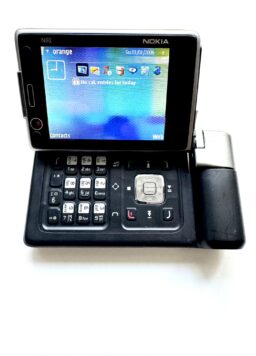
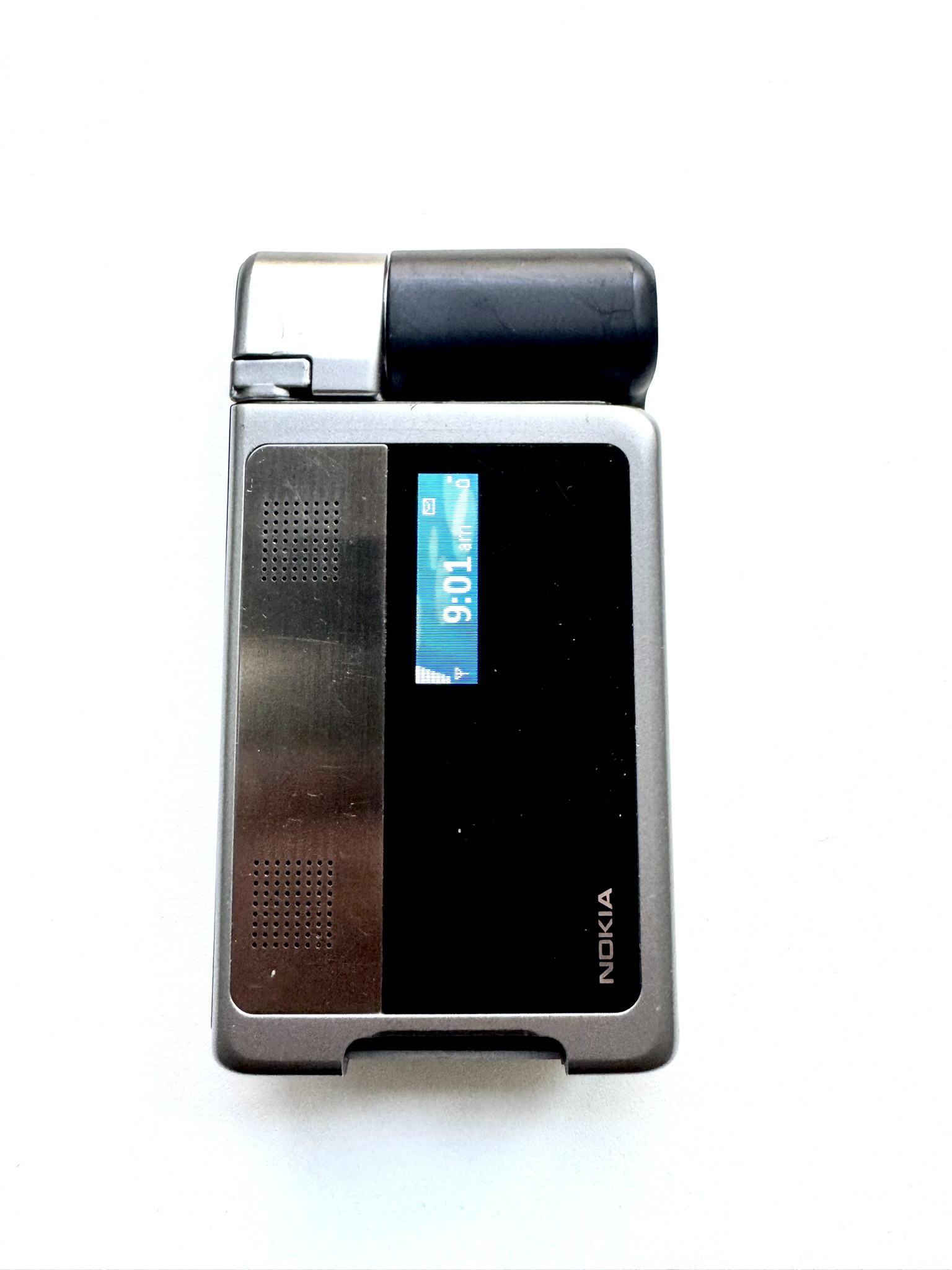
This particular unit is an exceptionally interesting S3.4 pre-production prototype, distinguished by its striking black and grey colour combination. Unlike the familiar commercial N92, this prototype presents an alternative visual identity, offering a fascinating glimpse into Nokia’s experimental design and development process.
But the differences go far beyond its unusual colour scheme. One of the most intriguing details is the noticeably larger memory card cover, a physical design variation that distinguishes this early unit from the final production model. Even more interesting is the clamshell closing mechanism, which differs from the commercial N92 when the device is folded shut. These subtle but significant differences reveal that Nokia was experimenting not only with colours and finishes, but also with the mechanical construction and physical design of the device.
The S3.4 development designation adds another layer of intrigue. This is not simply a standard N92 dressed in an unusual housing, but a pre-production specimen displaying tangible differences from the retail hardware. The combination of its distinctive finish, modified memory card cover and alternative clamshell closing arrangement makes it a particularly compelling example of Nokia’s engineering evolution.
What makes the N92 especially fascinating is the extraordinary ambition behind its design. Its rotating display could transform the device from a conventional mobile phone into a miniature widescreen television, while DVB-H technology represented Nokia’s vision of a future where television could be enjoyed almost anywhere.
For serious Nokia collectors, surviving prototypes with visible structural differences are particularly significant. They preserve evidence of design decisions, mechanical experiments and engineering refinements that may have disappeared entirely before commercial production. This black and grey S3.4 prototype offers precisely that: a rare opportunity to examine an alternative stage in the development of one of Nokia’s most unconventional devices.
More than an unusual colour variation, this is a different interpretation of the Nokia N92 itself – a remarkable survivor from a time when Nokia was still experimenting with how the future of mobile technology should look, feel and function.
-


Nokia N93
Quick ViewNokia N93 is a smartphone from Nokia, part of the multimedia Nseries. It was introduced on 25 April 2006 and released in July 2006. It runs on Symbian OS v9.1 and the S60 3rd Edition interface. It was the most advanced camera phone from Nokia at the time of its release, and was particularly marketed for its camcorder, packed in its unique swivel design like its predecessor Nokia N90.
The N93 improved upon camera capabilities over the N90. The phone has a 3.2-megapixel camera, Carl Zeiss optics and 3x optical zoom (the first Nokia phone to have it) as well as a 30 fps 640×480 (VGA) MPEG-4 video recording capability.
It was succeeded by the Nokia N93i.
-


Nokia N93i
Quick ViewThe Nokia N93i features a 3.2-megapixel camera, Carl Zeiss optics, 3x optical zoom and digital video stabilization. The ability to create “DVD-like videos” at 30 frames per second with MPEG4 technology and share them on the 2.4-inch display. The Nokia N93i can be connected to a compatible TV using direct TV out connectivity or via Wireless LAN and UPnP technology. The N93i also features a digital stereo microphone, music player and FM stereo radio, dual mode WCDMA/GSM and triband GSM coverage on up to five continents (EDGE/GSM 900/1800/1900 + WCDMA 2100 MHz networks).An N93i is seen in the 2007 movie, Transformers. It is the device used to demonstrate the AllSpark’s capability of turning any electronic device into a living robot. This phone turned out to be a Decepticon tiny but deadly robot.
The N93i used a different marketing strategy by incorporating Dallas based punk rock band Greyskull in its APAC campaign. Running an on-line competition in which contestants could submit their own videos to the band’s songs. Ads featuring the band Greyskull were run in newspapers and commercials on MTV Asia.
During the 2007 Cannes Lions Advertising Festival, camera crews using Nokia N93i devices tagged along with the Young Creative Film Competitors on their 48-hour mission to shoot a 30-second commercial, also using the Nokia N93i, for MTV SWITCH, a campaign from MTV Networks International designed to educate and encourage alternative options to help save the planet. With 40 hours of content filmed on the Nokia N93i, the footage was edited into an exclusive behind the scenes documentary, “Short Film Shootout: Cannes”, which was available for broadcast on MTV’s 61 TV channels across 161 countries on 20 December 2007.
-
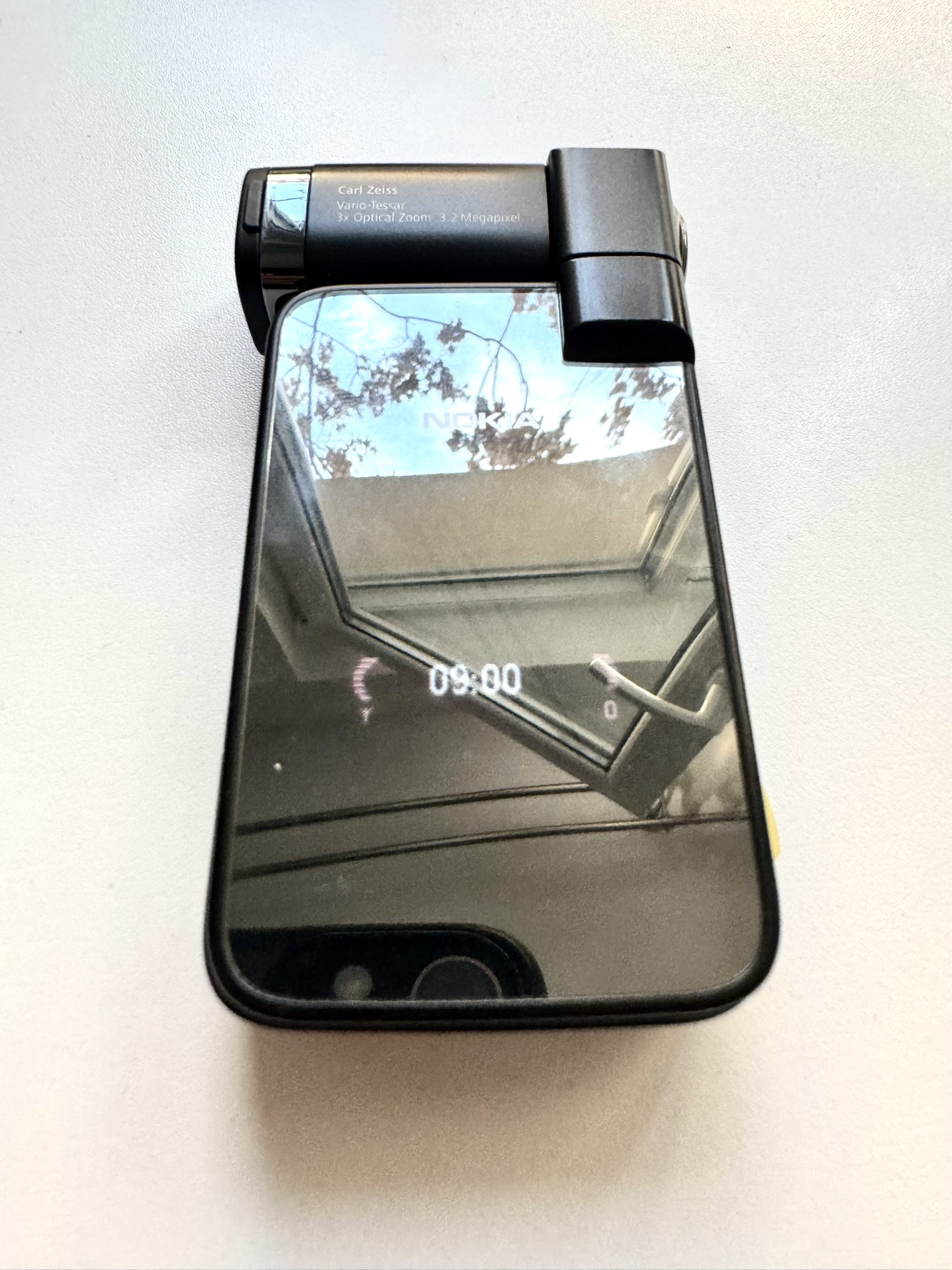
Nokia N93i Piano Black | The Elusive Asian Edition
Quick ViewNokia N93i Piano Black – The Elusive Asian Edition
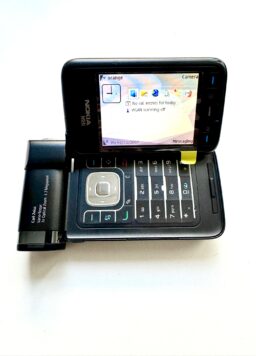
Introduced in early 2007, the Nokia N93i represented one of Nokia’s most ambitious creations, combining a unique rotating display, advanced imaging capabilities and a design unlike almost anything else on the market. While the silver version became the familiar face of the N93i, the elusive Piano Black variant tells a much more exclusive story.
Associated with the Asian market and rarely encountered compared to its silver counterpart, this striking black edition transforms the character of the device. Its deep, glossy finish gives the N93i a sophisticated, almost executive appearance, making it one of the most desirable visual variations of Nokia’s iconic multimedia flagship.
What makes this particular unit even more remarkable is its internal call timer, displaying exactly 0 hours, 0 minutes and 0 seconds. Although this alone cannot conclusively prove that a device has never been used, it is an exceptional detail for a surviving handset of this age and adds significantly to its appeal as a collector’s piece.
With its distinctive finish, uncommon market positioning and remarkably preserved usage record, this unit captures a fascinating chapter of Nokia’s golden era, when mobile phone design was bold, experimental and instantly recognizable.
Not simply another N93i – an elusive black interpretation of one of Nokia’s most extraordinary creations.
-
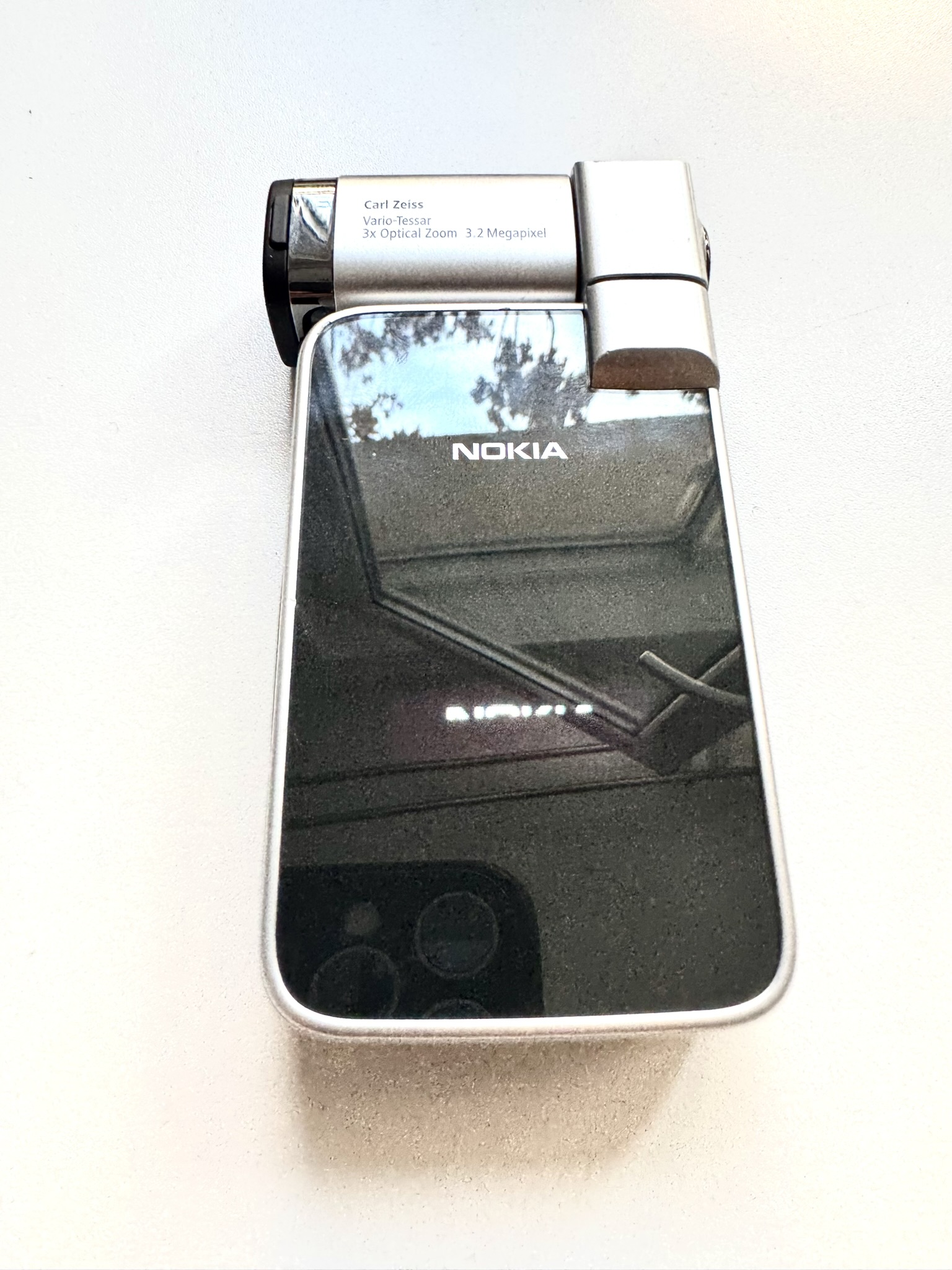
Nokia N93i Prototype B3 | The N00 Mystery
Quick ViewNokia N93i B3 Prototype – The N00 Enigma
Before the Nokia N93i became one of the most recognizable multimedia flagships of 2007, it existed behind closed doors as an experimental device, undergoing the development and validation stages that would eventually shape the final commercial product.
This extraordinary unit is a B3-stage pre-production prototype, but what makes it particularly fascinating is the mysterious “N00” inscription on its front housing, replacing the familiar N93i model designation. A remarkable detail that immediately distinguishes it from standard retail units and offers a rare glimpse into Nokia’s internal development world.
Unlike a conventional production handset, this prototype carries visible evidence of its unfinished identity. The unusual N00 marking raises intriguing questions about the naming, identification and design decisions made during development. Whether it served as a temporary placeholder or an internal identification convention remains undocumented, adding an element of mystery to an already exceptional device.
For collectors, prototype stage markings and physical differences from commercial models are particularly compelling, as they preserve evidence of a device’s evolution. The combination of its B3 development status and unconventional front housing makes this unit a fascinating survivor from one of Nokia’s most innovative periods.
Before it was an N93i, this one carried another name: N00. A small inscription, an extraordinary piece of Nokia history.
-
Nokia N95 8GB BNIB: “Alderaan”.The Multimedia Powerhouse That Defined a Generation
Quick ViewThe Nokia N95 8GB (RM-320) is widely regarded as the definitive and most perfected version of the original N95. This particular unit is BNIB, untouched since it left Nokia’s factory in Finland, making it one of the most desirable variants ever produced.
While the first N95 shocked the world with dual-slide controls, GPS, Wi-Fi and a 5 MP Carl Zeiss autofocus camera, the N95 8GB went far beyond a simple memory upgrade. It is in fact a deep hardware refresh disguised as a cosmetic revision.
Internally, the RM-320 uses a redesigned motherboard with improved power management, a new memory configuration and an integrated 8 GB soldered flash package. According to engineering documentation referenced on LPCWiki, this redesign required new trace routing, a different memory controller setup and a strengthened slider rail structure. This makes the N95 8GB a significantly more advanced device under the hood than the N95-1.
The device also introduced hardware-accelerated 3D graphics via the PowerVR MBX Lite core, working together with the OMAP 2420 platform and its DSP media engine. At the time, this combination created one of the earliest smartphones capable of true console-like graphics and smooth video playback.
Display size also increased to 2.8 inches, giving the phone a more modern look and better multimedia usability. The removal of the microSD slot was not a downgrade but a design restructuring: Nokia shifted to internal storage specifically to improve performance, stability, transfer speed and reliability.
The N95 8GB also benefited from Nokia’s Location Platform 1.0, enabling A-GPS, offline vector maps and early positioning APIs. This was years before modern mobile navigation became standard, making the N95 series one of the earliest pioneers of smartphone location services.
For collectors, the Finland-made RM-320 units are the most desirable. Initial batches were produced in relatively small volumes before manufacturing was relocated. Being BNIB and Finnish-built puts this piece in the highest tier of collectible Nseries devices.
-


Nokia N95-1
Quick ViewThe N95 was a high-end model that was marketed as a “multimedia computer”, much like other Nseries devices.It featured a then-high 5 megapixel resolution digital camera with Carl Zeiss optics and with a flash, as well as a then-large display measuring 2.6 inches. It was also Nokia’s first device with a built-in Global Positioning System (GPS) receiver, used for maps or turn-by-turn navigation, and their first with an accelerometer. It was also one of the earliest devices in the market supporting HSDPA (3.5G) signals.
-


Nokia N96
Quick ViewNokia N96 is a high-end smartphone, announced by Nokia on February 11, 2008 at the Mobile World Congress in Barcelona, part of the Nseries line.The N96 runs on the updated Symbian OS v9.3 (S60 3rd Edition, FP2). It is compatible with the N-Gage 2.0 gaming platform and also has a DVB-H television tuner. Compared to the popular Nokia N95 8GB, the N96 has a doubled flash storage capacity (16 gigabytes), dual LED flash in the camera, and has a slimmer design. However critics had negative views on the N96’s battery life and user-unfriendlyness and its downgraded CPU clock speed raised questions.It was one of 2008’s most anticipated mobile phones, but its launch was delayed and was only widely available from October 2008.It is thus considered to have been a commercial failure.Critics felt that the Nokia N85 provided more new additions compared to the N96 for much cheaper.
-
Nokia N96 Prototype B3.0 | Unreleased N00 label
Quick ViewNokia N96 is a high-end smartphone, announced by Nokia on February 11, 2008 at the Mobile World Congress in Barcelona, part of the Nseries line.The N96 runs on the updated Symbian OS v9.3 (S60 3rd Edition, FP2). It is compatible with the N-Gage 2.0 gaming platform and also has a DVB-H television tuner. Compared to the popular Nokia N95 8GB, the N96 has a doubled flash storage capacity (16 gigabytes), dual LED flash in the camera, and has a slimmer design. However critics had negative views on the N96’s battery life and user-unfriendlyness and its downgraded CPU clock speed raised questions.It was one of 2008’s most anticipated mobile phones, but its launch was delayed and was only widely available from October 2008.It is thus considered to have been a commercial failure.Critics felt that the Nokia N85 provided more new additions compared to the N96 for much cheaper.