

">

Showing 73–84 of 141 results
-


Nokia 7210
Quick View💎 Rarity Index: C (Common)
👁 Evaluation in my collection: As New – 10/10
🕵 Nokia Codename: Vanessa
⏱ Life timer: 03s | 📦 Boxed: YES
📅 Release Year: 2002 | 💰 Release Price: ~500$
📊 Units Sold: ~15M
📰 Why this phone matters: The Nokia 7210 is a handset by Nokia, built on the Series 40 1st Edition software platform and enabled with J2ME (Java). The device features text and picture messaging, WAP browser, Stereo FM radio, Polyphonic ringtones, two preinstalled games and a 1.5″, 128×128 pixel, 4,096 color display. It was the first Nokia phone for the mass market with a colour display and with polyphonic ringtones (they were already on the Nokia 7650).
The 7210 featured an all-new front cover design, with a unique keypad layout incorporating a 4-way scroll button. The phone came in a choice of colours, with changeable Xpress-on covers available. Eight colour schemes are available along with the ability to download images to save as wallpaper to add even more personalization.📝 Reviews when released: Mobile Review 🔗
-
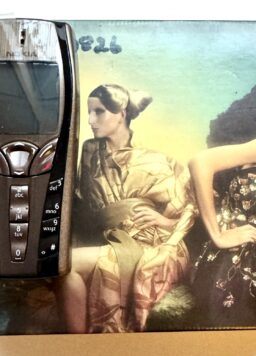

Nokia 7250i James Brown Edition BNIB
Quick View💎 Rarity Index: A (Rare)
👁 Evaluation in my collection: BNIB – 10/10
🕵 Nokia Codename: James
⏱ Life timer: 0m | 📦 Boxed: YES
📅 Release Year: 2003 | 💰 Release Price: ~450 $
📊 Units Sold: ~12M
📰 Why this phone matters: Nokia 7250i Brown Edition NHL-4JX, codename James, is one of those devices that shows exactly why early 2000s Nokia was untouchable in phone design.The 7250i itself was launched in 2003 as an upgraded version of the 7250, keeping the wild, sculpted candybar body but hiding a better camera and a more advanced XHTML browser inside. It was part of Nokia’s fashion line, a hero product that mixed technology and style at a time when an integrated camera was still a futuristic feature.
This unit takes that story further. Finished in the ultra rare brown metallic shell, it looks completely different from the usual blue and plum variants. The front mixes a warm brown body with dark framing and a dramatic three piece keypad layout that flows up into the navigation cluster. It is unmistakably a fashion phone, and in this color it is almost never seen, especially BNIB.
Behind the design sits the NHL-4JX platform: a tri band GSM engine with Series 40 1st Edition software, CSTN 4096 color display and a CIF camera tuned for the 128 x 128 screen. The camera supports night mode and digital zoom, letting early adopters capture and send MMS pictures long before camera phones became standard. GPRS and HSCSD handle data, while the stereo FM radio, Java games and Nokia’s Pop-Port ecosystem turn the phone into a compact entertainment device.
The label confirms everything a collector wants to see: Model 7250i, Type NHL-4JX, product code 0511226, IMEI in the correct 351460 range, FCC ID PYANHL-4J, IC 661V-NHL4J, CE168 and Made in Hungary, one of Nokia’s most respected factories. In other words, a fully authentic, correctly configured eur;opean market 7250i in one of the rarest official colors.
This unit is BNIB in the collection, which is extremely unusual for a 2003 fashion device that was meant to be used hard and shown off. Most surviving 7250i phones are worn, repainted or rebuilt; finding an original brown example that has effectively never entered daily service is a serious trophy for any Nokia or fashion phone collector.
📝 Reviews when released: N/A 💔
-


Nokia 7360 (3x)
Quick View💎 Rarity Index: C (Common)
⭐ WOW Factor: One of the first cell phones to implement the use of materials such as metal and leather in mass production
👁 Evaluation in my collection: Great – 9.8/10
🕵 Nokia Codename: Sofix
⏱ Life timer: 24h | 📦 Boxed: YES
📅 Release Year: 2005 | 💰 Release Price: ~200 €
📊 Units Sold: ~3M
📰 Why this phone matters: Part of the “L’Amour Collection”, along with the 7370, 7373, 7380 and the 7390. The 7360 was designed at Nokia’s Design Center in California and was one of the first cell phones to implement the use of materials such as metal and leather in mass production📝 Reviews when released: Mobile Review 🔗
-


Nokia 7610
Quick View💎 Rarity Index: C (Common)
👁 Evaluation in my collection: As New – 10/10
🕵 Nokia Codename: Catalina
⏱ Life timer: 3m | 📦 Boxed: YES
📅 Release Year: 2004 | 💰 Release Price: 500 €
📊 Units Sold: ~8M
📰 Why this phone matters: The Nokia 7610 is a Symbian OS smartphone introduced at CEBIT on 18 March 2004.It features a 1 megapixel camera (1152×864 pixels) and was targeted at the “fashion conscious” individual with a design similar to 2003’s Nokia 7600. It went on sale with a list price of &eur;o;500 and came with a 64 MB MMC card. It runs on Nokia’s Series 60 platform (version 2.1). It was marketed as a stylish and imaging device, and allowed direct Bluetooth photo printing.End-users can also use the 7610 with Nokia Lifeblog. Other pre-installed applications include the Opera Mobile web browser, RealOne player and Kodak Photo Sharing.📝 Reviews when released: Mobile Review 🔗
-


Nokia 7705 Twist Verizon
Quick View💎 Rarity Index: A (Rare)
⭐ WOW Factor: The first Nokia Swivel phone
👁 Evaluation in my collection: BNIB – 10/10
🕵 Nokia Codename: DIVA
⏱ Life timer: 0 | 📦 Boxed: YES
📅 Release Year: 2009 | 💰 Release Price: ~100 $
📊 Units Sold: ~300k
📰 Why this phone matters: The miniaturization of cell phone tech is enabling some truly unique designs lately. The Samsung Alias 2 was one, with its morphing e-ink keyboard. The Nokia 7705 Twist is another; it literally swivels open. It’s far from the first handset to do this; swivel phones were more popular several years ago, and of course the T-Mobile Sidekick line still does it. But with eye-catching devices like the Twist, they could make a comeback. The Twist is a decent choice for a Verizon feature phone, but there are several downsides-most of which are likely due to packing so much technology into such a small space.📝 Reviews when released: cNET 🔗
-
Nokia 7710 Full Box: Future Ahead of Its Time
Quick View💎 Rarity Index: A (Rare)
⭐ WOW Factor: The first Nokia released phone with touch screen
👁 Evaluation in my collection: Great – 9.5/10
🕵 Nokia Codename: Remix
⏱ Life timer: N/A | 📦 Boxed: YES
📅 Release Year: 2005 | 💰 Release Price: N/A
📊 Units Sold: ~500k
📰 Why this phone matters: The Nokia 7710 is a smartphone announced on 2 November 2004.It was the first Nokia device with a touchscreen, and first device with 2:1 aspect ratio display.The 7710 is based on the Nokia 7700 which was never released. It is Nokia’s only smartphone to run the Series 90 interface atop Symbian OS v7.0s.📝 Reviews when released: Mobile Review 🔗
-


Nokia 8110 4g
Quick View💎 Rarity Index: C (Common)
👁 Evaluation in my collection: BNIB – 10/10
⏱ Life timer: 0m | 📦 Boxed: YES
📅 Release Year: 2018 | 💰 Release Price: ~80 €
📊 Units Sold: ~2M
📰 Why this phone matters: Revival of the original Nokia 8110, which was popularly known as the “Matrix phone” or “banana phone📝 Reviews when released: N/A 💔
-


Nokia 8110 Michael Schumacher Limited Edition No.0296 – The Impossible-to-Find Edition
Quick View💎 Rarity Index: S (Ultra Rare)
⭐ WOW Factor: The first Nokia phone with a slider form factor, The first of Nokia high-end 8000 series, The first Nokia phone with monochrome graphic LCD, The first phone with SSMS (Smart SMS), The first phone to support ring tone receiving by SMS, The phone featured in the science fiction action film The Matrix (1999)
👁 Evaluation in my collection: As New – 9.8/10
⏱ Life timer: N/A | 📦 Boxed: YES
📅 Release Year: 1997 | 💰 Release Price: N/A
📊 Units Sold: 1997
📰 Why this phone matters: The Nokia 8110 Michael Schumacher Limited Edition No.0296 is one of the most remarkable collectible mobile phones ever released – and this specific unit stands out even within that ultra-rare group. Produced in a strictly limited run of 1,997 pieces worldwide, this device carries the official individual number 0296, matching the original Talkline-issued authenticity certificate, signed in print by Michael Schumacher himself. Every detail confirms its legitimacy as part of the official Michael Schumacher Collection, licensed by PPM.This particular device remains in full-box condition, a rarity in its own right. The package includes the complete original set: the official certificate with matching number, original box and inserts, accessories, and the pristine handset finished in the iconic Schumacher red. The front fascia features Michael’s portrait subtly integrated into the sliding cover, accompanied by his stylized signature. The back includes the factory-applied Schumacher Collection sticker, with the same official sticker also present on the box and on the label inside the phone, ensuring absolute consistency and authenticity across all components.
As part of the broader Michael Schumacher mobile series, Nokia also released a Schumacher Edition Nokia 2110, a similarly themed model from the same era. It is an important companion piece to the 8110, and while highly sought after, it is not yet present in the collection, making the 8110 even more of a standout centerpiece until its counterpart is added.
Beyond the collectible value, the phone itself is an icon of mobile history: the Nokia 8110 was the first high-end slider of the Nokia 8000 series, the earliest “banana phone,” and a technological status symbol of the late 90s. Its curved silhouette, sliding mechanism that answers calls, and monochrome graphic LCD defined the era. The improved 8110i later introduced Smart Messaging – making this line the origin point for many modern phone features. The 8110 also achieved pop-culture immortality when a modified version appeared in The Matrix.
Combined with the Schumacher branding, this edition transforms the classic 8110 into something far more significant: a celebration of a Formula 1 legend at the height of his career. Owning unit 0296 means holding a true numbered artifact of motorsport history – a device tied directly to the most dominant driver of the era.
This is not just a limited edition phone.
It is a preserved, authenticated piece of racing heritage, paired with one of the most iconic Nokia designs ever created.📝 Reviews when released: N/A 💔
-


Nokia 8110i
Quick View💎 Rarity Index: C (Common)
⭐ WOW Factor: The first Nokia phone with a slider form factor, The first of Nokia’s high-end 8000 series, The first Nokia phone with monochrome graphic LCD, The first phone with SSMS (Smart SMS), The first phone to support ring tone receiving by SMS, The phone featured in the science fiction action film The Matrix (1999)
👁 Evaluation in my collection: As New – 9.8/10
⏱ Life timer: N/A | 📦 Boxed: YES
📅 Release Year: 1997 | 💰 Release Price: N/A
📊 Units Sold: ~1.5M
📰 Why this phone matters: Nokia 8110 is a mobile phone released in 1996. It was announced on September 9, 1996 as the first of Nokia’s high-end 8000 series of phones.Its distinctive styling was the first example of a ‘slider’ form factor. A sliding cover protected the keypad when being carried in the pocket and extended downwards in use, bringing the microphone closer to the mouth.The action of opening the cover also answered an incoming call. The prominent curvature of the case, particularly when open, earned it the nickname “banana phone”. It was also the first Nokia phone with monochrome graphic LCD.
The phone was designed for the business market and was one of the smallest and lightest (152 grams) phones on the market, but still had better battery life than its predecessor Nokia 2110.
The improved 8110i model, announced in March 1997, was the first phone with the SSMS (Smart SMS) engine.The handsets could be updated OTA (Over The Air) with an intelligent menu structure, which allowed simple information input, input which was sent through a simple structured text message to an MT receiver. This station could interpret information and a structured text message back to the handset. Ring tone receiving by SMS was also part of the smart messaging protocol, so 8110i was also the first mobile phone to support it. Nokia later stopped marketing Smart messaging and concentrated on the upcoming WAP standard, but has not dropped smart messaging support from later phones. Both models were succeeded by Nokia 8810 in 1998.
The phone was famously featured in the science fiction action film The Matrix (1999), for which it was modified featuring spring-loaded mechanism (this later appeared on the Nokia 7110).📝 Reviews when released: N/A 💔
-
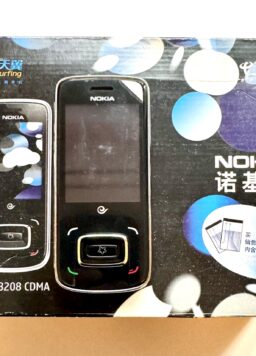
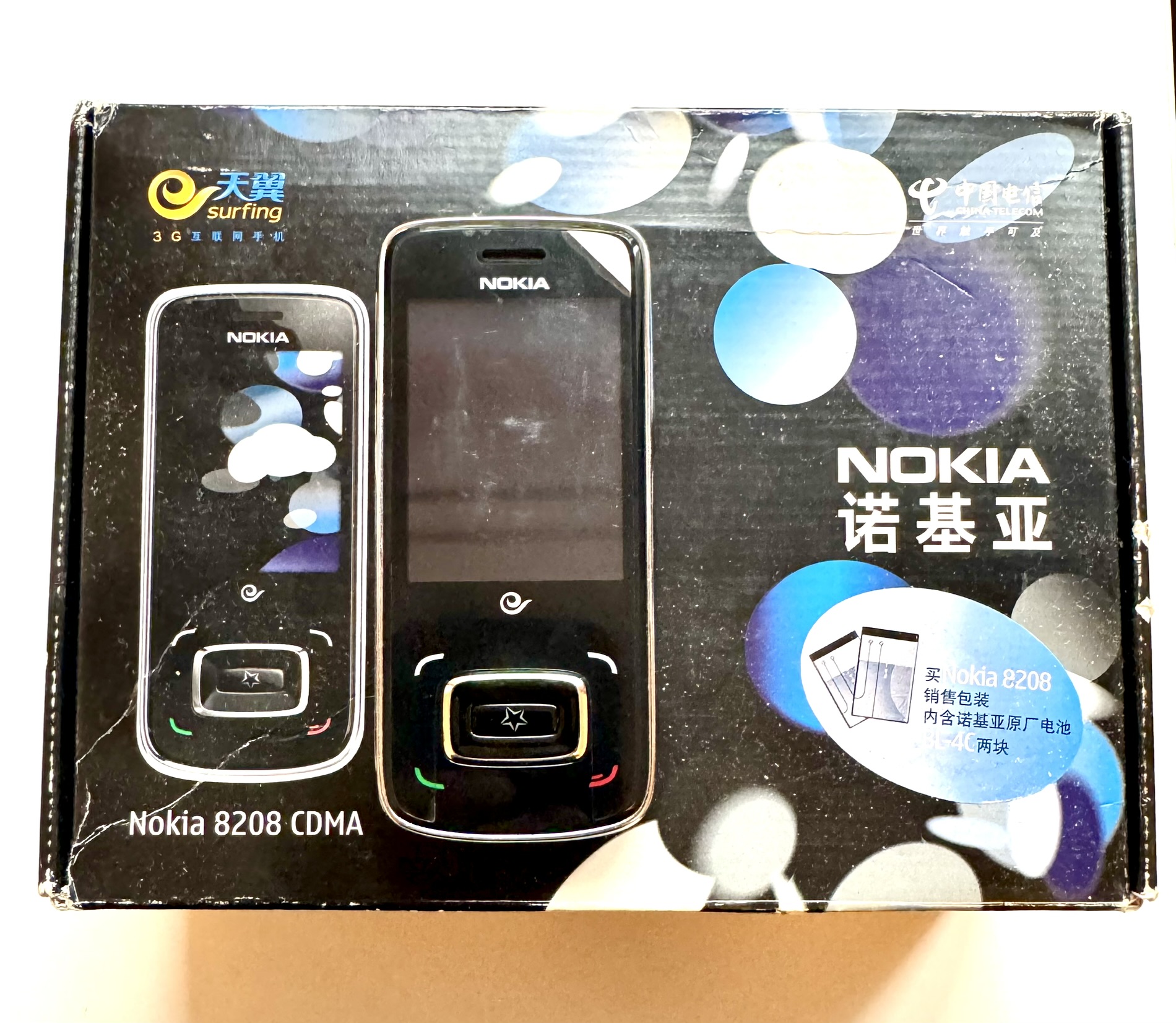
Nokia 8208: Dual-Slider Elite. The Rarest CDMA Flagship Nokia Ever Built
Quick View💎 Rarity Index: S (Ultra Rare)
⭐ WOW Factor: Rare Nokia Dual-Slider CDMA Flagship (China-Exclusive, Short Production Run)
👁 Evaluation in my collection: BNIB – 10/10
⏱ Life timer: 0 | 📦 Boxed: YES
📅 Release Year: 2009 | 💰 Release Price: 300 €
📊 Units Sold: ~200k
📰 Why this phone matters: The Nokia 8208 stands out as one of Nokia’s most distinctive high-end CDMA phones, created exclusively for the Chinese market in 2009. Built for China Telecom’s premium segment, it delivers a rare combination of power, design originality, and luxury-grade construction that places it among the most collectible CDMA-era Nokias ever made. This unit is preserved in factory-new condition, an exceptional find considering how few 8208 units escaped heavy carrier use. BNIB status significantly elevates its desirability and rarity for collectors.Its signature feature is the dual-slider design: slide up to reveal the keypad, slide down for dedicated multimedia controls – a layout rarely seen on a Nokia device. Combined with its solid feel, metal structural elements, sharp lines, and balanced weight, the 8208 feels like a deliberately crafted premium instrument rather than a typical feature phone.
Production numbers were limited, and the model never officially reached markets outside China, making surviving units scarce worldwide – especially in top condition.
📝 Reviews when released: N/A 💔
-


Nokia 8210
Quick View💎 Rarity Index: C (Common)
⭐ WOW Factor: The smallest and lightest Nokia phone at that time
👁 Evaluation in my collection: Great – 9/10
⏱ Life timer: N/A | 📦 Boxed: YES
📅 Release Year: 1999 | 💰 Release Price: 200 £
📊 Units Sold: ~10M
📰 Why this phone matters: At the time, it was the smallest, lightest Nokia mobile phone on the market,thus its selling point was based on its design and customization, with removable Xpress-on covers📝 Reviews when released: N/A 💔
-
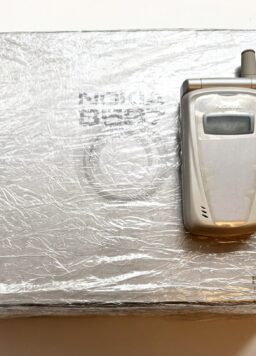
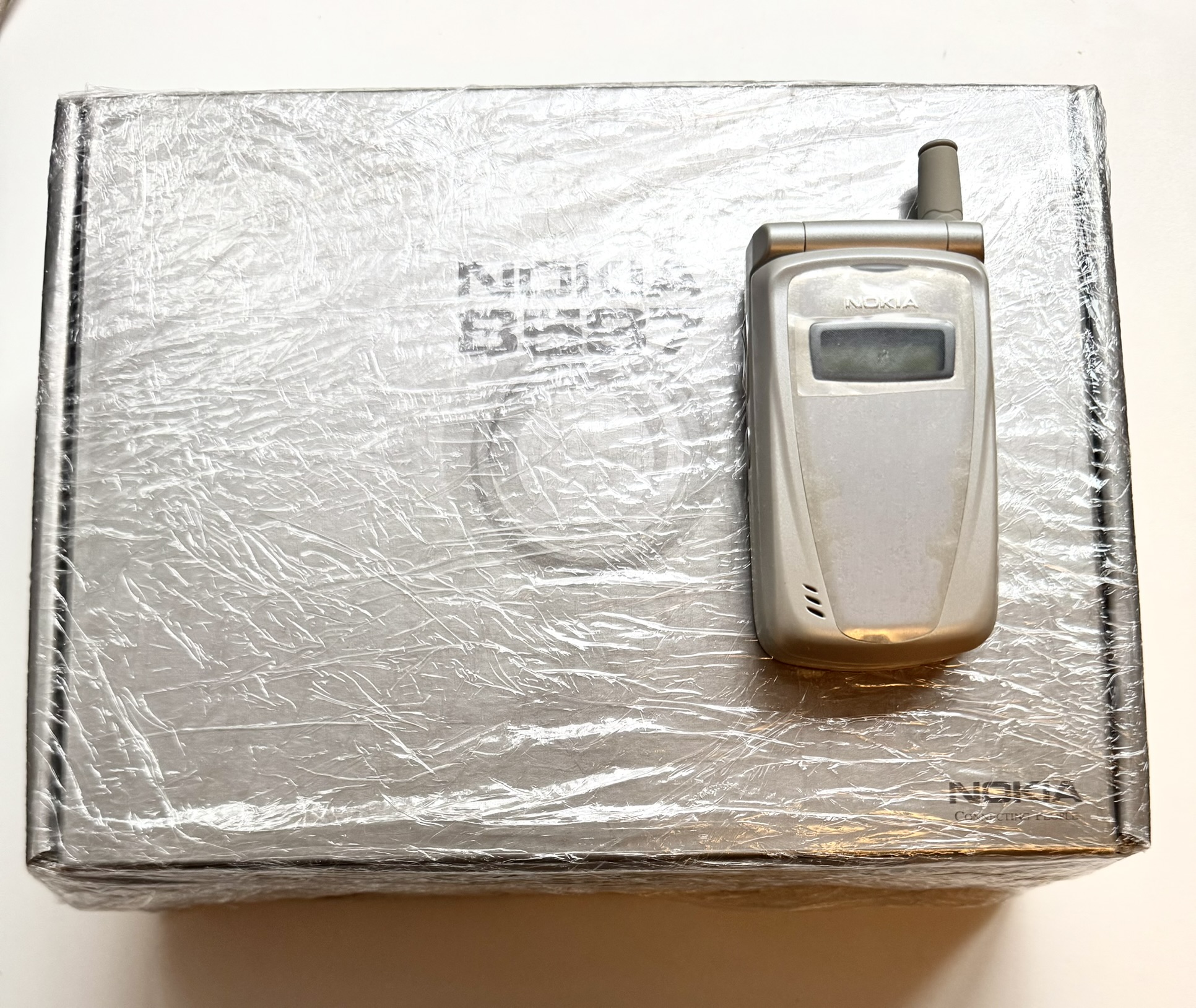
Nokia 8587: Korea Exclusive CDMA Rarity (BNIB)
Quick View💎 Rarity Index: A (Rare)
⭐ WOW Factor: A model using a battery and hardware ecosystem Nokia never used anywhere else
👁 Evaluation in my collection: BNIB – 10/10
⏱ Life timer: 0 | 📦 Boxed: YES
📅 Release Year: 2003 | 💰 Release Price: 350 €
📊 Units Sold: ~200k
📰 Why this phone matters: A truly unique Nokia released only for the South Korean market, the 8587 stands apart as one of the rarest and most unusual devices ever carrying the Nokia name. Built through a Korean ODM partnership, it blends classic Nokia software with Sanyo-style hardware, a proprietary domestic battery, and a design never used in any global Nokia model.This BNIB unit is a preserved time capsule from Nokia’s short-lived Korean CDMA experiment – a phone that looks Nokia on the outside but is unmistakably Korean-engineered inside. Closely related to models like the Nokia 8887, the 8587 represents a completely different branch of Nokia history, available only to local carriers and unseen outside Korea.
A standout collectible for any serious Nokia or CDMA enthusiast.
Highlights:
Korea-exclusive model (RH-15)
ODM-built with pseudo-Sanyo design and proprietary battery
MIC-certified Korean domestic release (Dec 2003)
Ultra-rare BNIB condition
Part of Nokia’s experimental Korean CDMA lineup (e.g., 8587 / 8887)
A true oddity: a Nokia that doesn’t follow Nokia’s global hardware standards
📝 Reviews when released: N/A 💔