

">

Showing 25–36 of 141 results
-
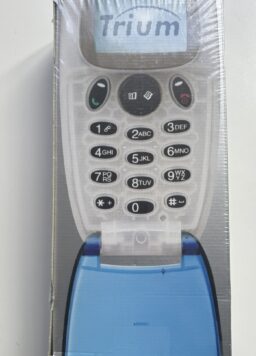
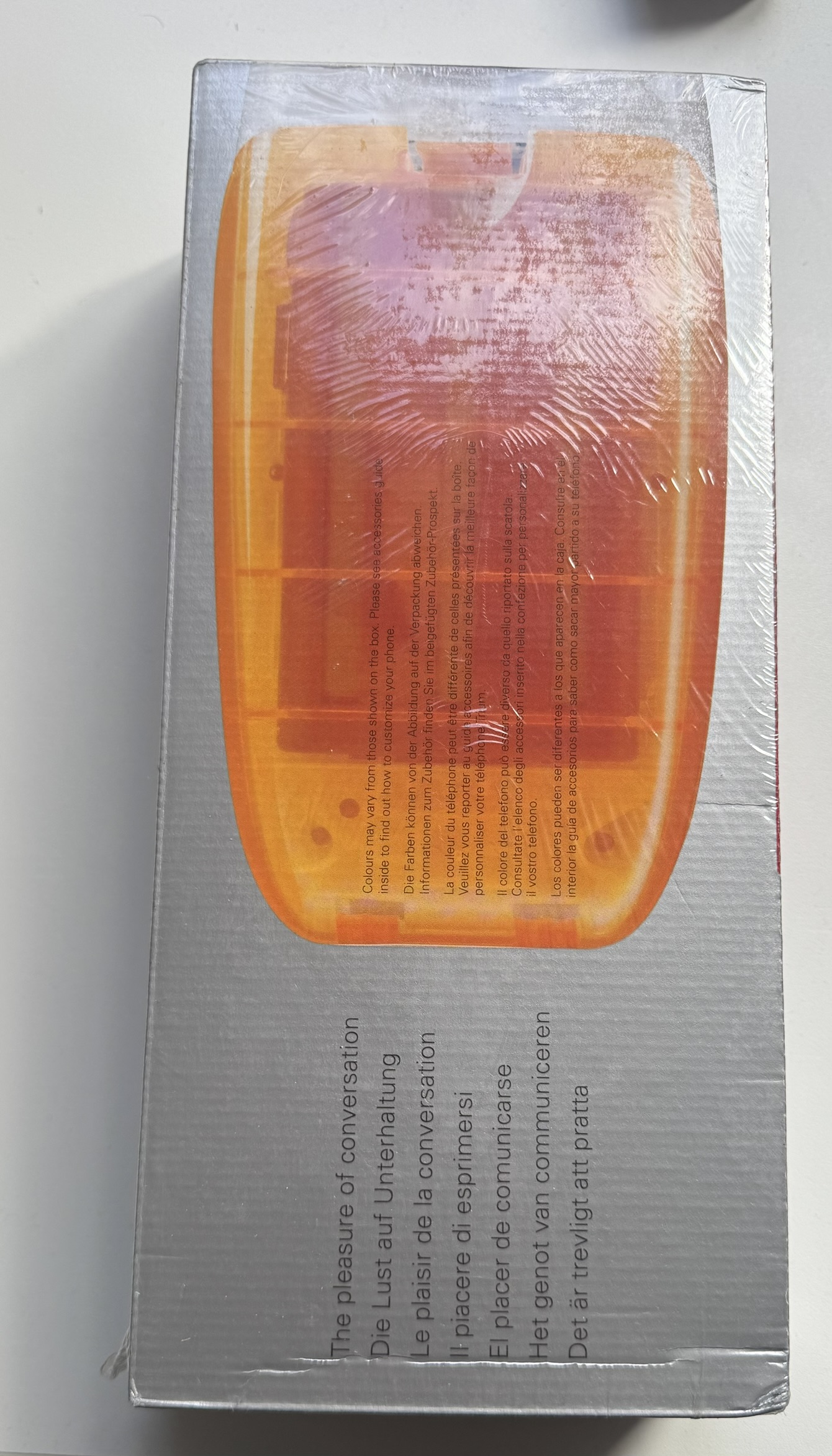
Mitsubishi Trium MT-250 Neptune Blue: Sealed Clamshell
Quick View💎 Rarity Index: A (Rare)
⭐ WOW Factor: The Neptune blue variant is likely one of the most visually striking finishes
👁 Evaluation in my collection: BNIB SEALED – 10/10
⏱ Life timer: N/A | 📦 Boxed: YES
📅 Release Year: 2001 | 💰 Release Price: n/a
📊 Units Sold: ~200k
📰 Why this phone matters: This unit is a sealed Trium MT-250 Neptune blue, preserved exactly as Mitsubishi shipped it during the final years of the Trium mobile era. Still wrapped in its original factory shrink, the box presents a classic early 2000s clamshell design with a translucent blue flip and a frosted keypad housing that defined the playful aesthetic of Trium handsets. The packaging shows the simple monochrome display with the Trium logo, underlining the minimalistic UI that characterized Mitsubishi’s compact GSM range.The side label confirms the exact variant: MT-250 Neptune blue with a Mitsubishi retail IMEI, CE0165 certification and an unbroken production batch code. Very little documentation exists for the MT-250 today, making this sealed example exceptionally rare. As Trium devices vanished from the market long before smartphones took over, complete unopened units almost never survived. This one stands as a pure, untouched snapshot of Mitsubishi’s design language, a lightweight clamshell aimed at style-focused users of its time. For collectors, it is a highly uncommon BNIB relic from a manufacturer whose mobile legacy has become increasingly scarce and desirable.
📝 Reviews when released: N/A 💔
-


Motorla 3200 International
Quick View💎 Rarity Index: A (Rare)
⭐ WOW Factor: The first Motorola portable GSM
👁 Evaluation in my collection: BNIB – 10/10
⏱ Life timer: 0 | 📦 Boxed: YES
📅 Release Year: 1992 | 💰 Release Price: ~750 £
📊 Units Sold: ~2M
📰 Why this phone matters: The Motorola International 3200 was the first digital hand-held mobile telephone introduced in 1992, along with the more compact 5200, 5080, 7200 and 7500 “flip phones” introduced in 1994. It was preceded by the International 1000 and 2000 GSM phones, quite big (small portable suitcase), and although being the first GSM portable phones, they were not GSM certified, therefore couldn’t be officially connected to the network (first to be certified was Orbitel TPU 900).The International 3200 was designed to substitute the phones using the original analog cell technology developed in the late 1960s and early 1970s and first commercially available in 1983. Because of the 3200’s GSM technology, units still operates on any current 900 MHz GSM networks operating to this day (not with 3G SIM’s).
📝 Reviews when released: N/A 💔
-


Motorola 527 by Telecom
Quick View💎 Rarity Index: B (Uncommon)
👁 Evaluation in my collection: BNIB – 10/10
⏱ Life timer: 0m | 📦 Boxed: YES
📅 Release Year: 1993 | 💰 Release Price: N/A
📊 Units Sold: ~300k
📰 Why this phone matters: A series of GSM models was produced beginning in 1994, mostly in the UK, such as the International 5200, International 7500, and the International 8400, all running on the GSM 900 network. Many of these models are functionally identical but feature cosmetic differences or software upgrades.📝 Reviews when released: N/A 💔
-


Motorola F3
Quick View💎 Rarity Index: C (Common)
⭐ WOW Factor: The first mobile phone to use electronic paper in its screen
👁 Evaluation in my collection: BNIB – 10/10
⏱ Life timer: 0m | 📦 Boxed: YES
📅 Release Year: 2006 | 💰 Release Price: ~20 €
📊 Units Sold: ~6M
📰 Why this phone matters: The F3 (frequently known as the Motofone) was a GSM phone available in two band variants, and was released on 28 November 2006.
The Motofone F3 was designed to appeal to the low-end market and developing countries, and was thus less functional, but also less expensive than most phones. Motorola made it appealing to developing markets and people with reading and visual difficulties by using only simple symbols and using speech synthesis to identify tasks in the menu.
The F3 was the first mobile phone to use electronic paper in its screen. Motorola used the term ClearVision to describe the new display, which was manufactured using E Ink’s electrophoretic imaging film. The electronic paper main display allowed for the phone’s thinness (no glass), longer battery life, and outdoor viewability (paper-like reflectivity). It had a backlight for the keypad and a slit that projects the backlight onto the screen so the display can be seen in darkness.The characteristics of the display were fairly restrictive. The text display contained only two lines of six characters each, making the use of text messaging (SMS) and data services less practical than on standard LCD displays. The display used a fixed ‘digital clock’ style font, with no functionality for changing between upper case and lower case text. All SMSs sent by the F3 were received entirely in lower case, and each character of any SMS received by the F3 is displayed in whichever case made the most sense using the font. Also, the non-alphabetic characters were severely limited due to this display, as the phone could only provide support for the following characters:
Comma (,) (periods . in incoming text messages are displayed as commas)
Hyphen (-)
Question mark (?)
At-sign (@)
Asterisk (*)
(+), to write this character, hold down the 0 key
No other non-alphanumeric characters could be entered, and on receiving an SMS any non-alphabetic character not listed above was displayed as a hyphen.Although the display could be restrictive when it came to text applications, the display was very energy efficient and conducive to extremely long battery life.
📝 Reviews when released: Trusted Reviews 🔗
-


Motorola Gleam
Quick View💎 Rarity Index: C (Common)
👁 Evaluation in my collection: Great – 9/10
⏱ Life timer: N/A | 📦 Boxed: YES
📅 Release Year: 2011 | 💰 Release Price: 99 €
📊 Units Sold: ~1M
📰 Why this phone matters: For the clamshell type factor and for the similar design, the terminal is considered the heir of the Motorola RAZR V3 .
On the upper part, under the lens of the 2 megapixel camera , there is a notification LED that informs about the time and about any incoming calls or messages; has Bluetooth 2.1 + EDR technology.
It is placed on the market in the three variants of gray ( gray ), thistle (thistle, a very light variety of violet ) and lacquer red ( lacquered red )📝 Reviews when released: N/A 💔
-
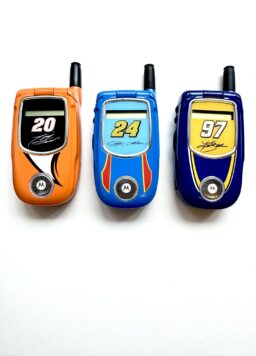
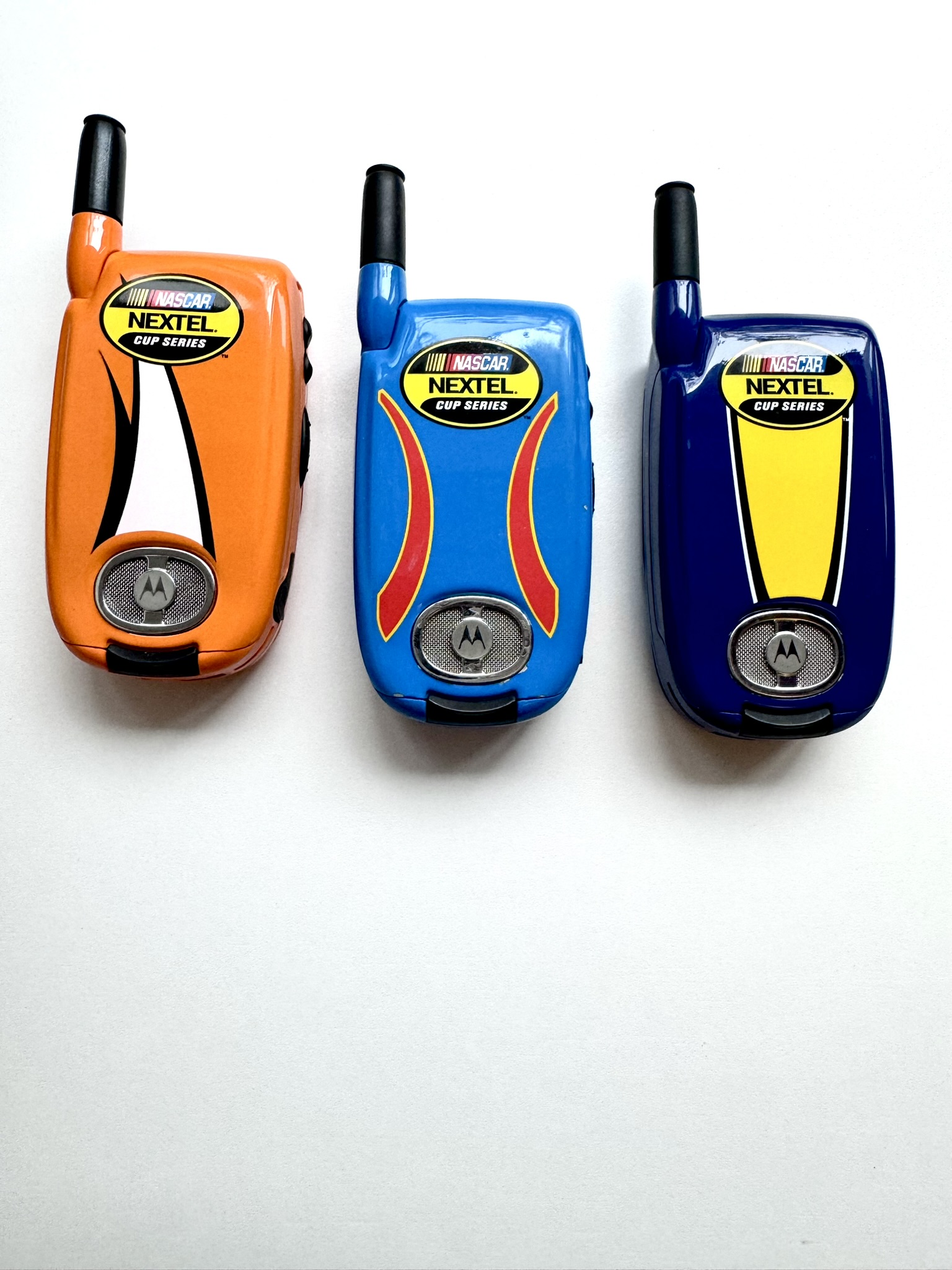
Motorola iDEN NASCAR: Dale Earnhardt Jr. – Driver Number 8
Quick View💎 Rarity Index: A (Rare)
⭐ WOW Factor: Limited-edition printed shells were released in very small quantities through promotions tied to NASCAR sponsors
👁 Evaluation in my collection: Great – 9/10
⏱ Life timer: N/A | 📦 Boxed: YES
📅 Release Year: 2003 | 💰 Release Price: N/A
📊 Units Sold: ~50k
📰 Why this phone matters: “This series brings together a rare and visually striking set of Motorola iDEN NASCAR edition phones, each one finished in the exact colors and markings of some of the most iconic drivers of the era. The front housings carry the bold driver numbers and printed signatures that fans once saw streaking around American tracks: the famous 8 used by Dale Earnhardt Jr.Other major NASCAR stars tied to number-based fan merchandising from the same period include Jimmie Johnson (48), Matt Kenseth (17), Kevin Harvick (29), Mark Martin (6), Rusty Wallace (2), Michael Waltrip (15), and others whose liveries became instantly recognizable in early 2000s motorsport culture. Mentioning them highlights the broader context in which these promotional Motorola phones were released.
Instead of simple decals, these editions feature full factory-printed graphics applied directly to the flip shell, giving them a premium, high-gloss look that stands far above ordinary Motorola releases. Built on Motorola’s rugged iDEN flip-phone platform, these devices were originally tied to the push-to-talk culture that defined the Nextel era. With their tall antennas, external displays, loud front speakers, and the classic M-logo medallions, they capture the unmistakable flavor of early 2000s telecom design.
Today, iDEN handsets with licensed NASCAR artwork are almost never found in mint or BNIB condition, making surviving units especially rare. Together, these themed phones stand as a vivid motorsport showcase, capturing the crossover between mobile technology and racing, and preserving a bold piece of American fan history that has long since disappeared from the mar
“
📝 Reviews when released: N/A 💔
-
Motorola iDEN NASCAR: Dale Jarrett – Driver Number 88
Quick View💎 Rarity Index: A (Rare)
⭐ WOW Factor: Limited-edition printed shells were released in very small quantities through promotions tied to NASCAR sponsors
👁 Evaluation in my collection: Great – 9/10
⏱ Life timer: N/A | 📦 Boxed: YES
📅 Release Year: 2003 | 💰 Release Price: N/A
📊 Units Sold: ~50k
📰 Why this phone matters: “This series brings together a rare and visually striking set of Motorola iDEN NASCAR edition phones, each one finished in the exact colors and markings of some of the most iconic drivers of the era. The front housings carry the bold driver numbers and printed signatures that fans once saw streaking around American tracks: 88 associated with Dale Jarrett and, in later seasons, Dale Earnhardt Jr. as well.Other major NASCAR stars tied to number-based fan merchandising from the same period include Jimmie Johnson (48), Matt Kenseth (17), Kevin Harvick (29), Mark Martin (6), Rusty Wallace (2), Michael Waltrip (15), and others whose liveries became instantly recognizable in early 2000s motorsport culture. Mentioning them highlights the broader context in which these promotional Motorola phones were released.
Instead of simple decals, these editions feature full factory-printed graphics applied directly to the flip shell, giving them a premium, high-gloss look that stands far above ordinary Motorola releases. Built on Motorola’s rugged iDEN flip-phone platform, these devices were originally tied to the push-to-talk culture that defined the Nextel era. With their tall antennas, external displays, loud front speakers, and the classic M-logo medallions, they capture the unmistakable flavor of early 2000s telecom design.
Today, iDEN handsets with licensed NASCAR artwork are almost never found in mint or BNIB condition, making surviving units especially rare. Together, these themed phones stand as a vivid motorsport showcase, capturing the crossover between mobile technology and racing, and preserving a bold piece of American fan history that has long since disappeared from the mar
“
📝 Reviews when released: N/A 💔
-
Motorola iDEN NASCAR: Driver Number Series
Quick View💎 Rarity Index: A (Rare)
⭐ WOW Factor: Limited-edition printed shells were released in very small quantities through promotions tied to NASCAR sponsors
👁 Evaluation in my collection: Great – 9/10
⏱ Life timer: N/A | 📦 Boxed: YES
📅 Release Year: 2003 | 💰 Release Price: N/A
📊 Units Sold: ~50k
📰 Why this phone matters: This series brings together a rare and visually striking set of Motorola iDEN NASCAR edition phones, each one finished in the exact colors and markings of some of the most iconic drivers of the era. The front housings carry the bold driver numbers and printed signatures that fans once saw streaking around American tracks: 24 in blue and yellow for Jeff Gordon, 20 in bright orange and black for Tony Stewart, 97 in deep blue with yellow for Kurt Busch, along with the famous 8 used by Dale Earnhardt Jr. and 88 associated with Dale Jarrett and, in later seasons, Dale Earnhardt Jr. as well.Other major NASCAR stars tied to number-based fan merchandising from the same period include Jimmie Johnson (48), Matt Kenseth (17), Kevin Harvick (29), Mark Martin (6), Rusty Wallace (2), Michael Waltrip (15), and others whose liveries became instantly recognizable in early 2000s motorsport culture. Mentioning them highlights the broader context in which these promotional Motorola phones were released.
Instead of simple decals, these editions feature full factory-printed graphics applied directly to the flip shell, giving them a premium, high-gloss look that stands far above ordinary Motorola releases. Built on Motorola’s rugged iDEN flip-phone platform, these devices were originally tied to the push-to-talk culture that defined the Nextel era. With their tall antennas, external displays, loud front speakers, and the classic M-logo medallions, they capture the unmistakable flavor of early 2000s telecom design.
Today, iDEN handsets with licensed NASCAR artwork are almost never found in mint or BNIB condition, making surviving units especially rare. Together, these themed phones stand as a vivid motorsport showcase, capturing the crossover between mobile technology and racing, and preserving a bold piece of American fan history that has long since disappeared from the mar
📝 Reviews when released: N/A 💔
-
Motorola iDEN NASCAR: Jeff Gordon – Driver Number 24
Quick View💎 Rarity Index: A (Rare)
⭐ WOW Factor: Limited-edition printed shells were released in very small quantities through promotions tied to NASCAR sponsors
👁 Evaluation in my collection: Great – 9/10
⏱ Life timer: N/A | 📦 Boxed: YES
📅 Release Year: 2003 | 💰 Release Price: N/A
📊 Units Sold: ~50k
📰 Why this phone matters: “This series brings together a rare and visually striking set of Motorola iDEN NASCAR edition phones, each one finished in the exact colors and markings of some of the most iconic drivers of the era. The front housings carry the bold driver numbers and printed signatures that fans once saw streaking around American tracks: 24 in blue and yellow for Jeff Gordon.Other major NASCAR stars tied to number-based fan merchandising from the same period include Jimmie Johnson (48), Matt Kenseth (17), Kevin Harvick (29), Mark Martin (6), Rusty Wallace (2), Michael Waltrip (15), and others whose liveries became instantly recognizable in early 2000s motorsport culture. Mentioning them highlights the broader context in which these promotional Motorola phones were released.
Instead of simple decals, these editions feature full factory-printed graphics applied directly to the flip shell, giving them a premium, high-gloss look that stands far above ordinary Motorola releases. Built on Motorola’s rugged iDEN flip-phone platform, these devices were originally tied to the push-to-talk culture that defined the Nextel era. With their tall antennas, external displays, loud front speakers, and the classic M-logo medallions, they capture the unmistakable flavor of early 2000s telecom design.
Today, iDEN handsets with licensed NASCAR artwork are almost never found in mint or BNIB condition, making surviving units especially rare. Together, these themed phones stand as a vivid motorsport showcase, capturing the crossover between mobile technology and racing, and preserving a bold piece of American fan history that has long since disappeared from the mar
“
📝 Reviews when released: N/A 💔
-
Motorola iDEN NASCAR: Kurt Busch – Driver Number 97
Quick View💎 Rarity Index: A (Rare)
⭐ WOW Factor: Limited-edition printed shells were released in very small quantities through promotions tied to NASCAR sponsors
👁 Evaluation in my collection: Great – 9/10
⏱ Life timer: N/A | 📦 Boxed: YES
📅 Release Year: 2003 | 💰 Release Price: N/A
📊 Units Sold: ~50k
📰 Why this phone matters: “This series brings together a rare and visually striking set of Motorola iDEN NASCAR edition phones, each one finished in the exact colors and markings of some of the most iconic drivers of the era. The front housings carry the bold driver numbers and printed signatures that fans once saw streaking around American tracks: 97 in deep blue with yellow for Kurt BuschOther major NASCAR stars tied to number-based fan merchandising from the same period include Jimmie Johnson (48), Matt Kenseth (17), Kevin Harvick (29), Mark Martin (6), Rusty Wallace (2), Michael Waltrip (15), and others whose liveries became instantly recognizable in early 2000s motorsport culture. Mentioning them highlights the broader context in which these promotional Motorola phones were released.
Instead of simple decals, these editions feature full factory-printed graphics applied directly to the flip shell, giving them a premium, high-gloss look that stands far above ordinary Motorola releases. Built on Motorola’s rugged iDEN flip-phone platform, these devices were originally tied to the push-to-talk culture that defined the Nextel era. With their tall antennas, external displays, loud front speakers, and the classic M-logo medallions, they capture the unmistakable flavor of early 2000s telecom design.
Today, iDEN handsets with licensed NASCAR artwork are almost never found in mint or BNIB condition, making surviving units especially rare. Together, these themed phones stand as a vivid motorsport showcase, capturing the crossover between mobile technology and racing, and preserving a bold piece of American fan history that has long since disappeared from the mar
“
📝 Reviews when released: N/A 💔
-
Motorola iDEN NASCAR: Tony Stewart – Driver Number 20
Quick View💎 Rarity Index: A (Rare)
⭐ WOW Factor: Limited-edition printed shells were released in very small quantities through promotions tied to NASCAR sponsors
👁 Evaluation in my collection: Great – 9/10
⏱ Life timer: N/A | 📦 Boxed: YES
📅 Release Year: 2003 | 💰 Release Price: N/A
📊 Units Sold: ~50k
📰 Why this phone matters: “This series brings together a rare and visually striking set of Motorola iDEN NASCAR edition phones, each one finished in the exact colors and markings of some of the most iconic drivers of the era. The front housings carry the bold driver numbers and printed signatures that fans once saw streaking around American tracks: 20 in bright orange and black for Tony Stewart.Other major NASCAR stars tied to number-based fan merchandising from the same period include Jimmie Johnson (48), Matt Kenseth (17), Kevin Harvick (29), Mark Martin (6), Rusty Wallace (2), Michael Waltrip (15), and others whose liveries became instantly recognizable in early 2000s motorsport culture. Mentioning them highlights the broader context in which these promotional Motorola phones were released.
Instead of simple decals, these editions feature full factory-printed graphics applied directly to the flip shell, giving them a premium, high-gloss look that stands far above ordinary Motorola releases. Built on Motorola’s rugged iDEN flip-phone platform, these devices were originally tied to the push-to-talk culture that defined the Nextel era. With their tall antennas, external displays, loud front speakers, and the classic M-logo medallions, they capture the unmistakable flavor of early 2000s telecom design.
Today, iDEN handsets with licensed NASCAR artwork are almost never found in mint or BNIB condition, making surviving units especially rare. Together, these themed phones stand as a vivid motorsport showcase, capturing the crossover between mobile technology and racing, and preserving a bold piece of American fan history that has long since disappeared from the mar
“
📝 Reviews when released: N/A 💔
-


Motorola StarTAC 70 “Rainbow Edition”: The Ultra-Rare Multicolor Icon of the GSM Era
Quick View💎 Rarity Index: S (Ultra Rare)
⭐ WOW Factor: A factory-produced StarTAC in full multicolor Rainbow livery is one of the most elusive special editions Motorola ever released.
👁 Evaluation in my collection: BNIB – 10/10
⏱ Life timer: N/A | 📦 Boxed: YES
📅 Release Year: 1996 | 💰 Release Price: More than 1000 $
📊 Units Sold: ~30k
📰 Why this phone matters: The Motorola StarTAC 70 Rainbow Edition is not just rare, it is one of the hardest to find and most aggressively hunted special editions ever created in the StarTAC lineage. Even among collectors of 90s GSM icons, the Rainbow sits in a tier of its own, a true ultra variant that almost never appears in genuine form. While over 60 million StarTACs were sold worldwide, the authentic Rainbow Edition represents a microscopic fraction of production, making it one of Motorola’s most elusive and valuable designs.Born from Motorola’s brief but daring attempt to break into the youth market, the Rainbow Edition abandoned every established rule. Instead of corporate black, it exploded in a palette of red, green, blue and yellow molded plastics. This was not a repaint or a gimmick. These colors were factory produced, region specific, and offered only in small numbers through select operators such as MoviStar and Telefonica. The visual impact was radical, and at a time dominated by monochrome Nokia bricks, this phone looked like nothing else on Earth.
The Rainbow was a commercial anomaly, too bold for the mainstream and too ahead of its time for conservative users, and because of that, extremely few survived. Its scarcity has driven collectors into near obsessive authentication hunts, especially with the flood of counterfeits and repainted shells that appeared over the years. Genuine units, with original multi tone housings and correct operator branding, are considered trophy level acquisitions.
This device is BNIB and fully functional, preserved in a condition that is virtually unheard of for this variant. And even more extraordinary, there are two BNIB Rainbow StarTAC 70 units in the collection. Owning even one authentic Rainbow is already almost impossible. Having two boxed originals elevates the rarity to a level normally reserved for museum archives or private corporate vaults.
The original box, with its dramatic rainbow arc and cosmic blue background, was produced only for this version, reinforcing how intentionally Motorola treated this colorway. Everything about this edition was designed to break conventions and redefine what a mobile phone could look like.
Today, the StarTAC 70 Rainbow Edition is considered one of the most desirable, visually unique and aggressively rare special editions ever created in the early GSM era. It is not just a phone, it is a declaration of design rebellion, a historical anomaly, and a centerpiece for any serious collector of mobile icons.
📝 Reviews when released: N/A 💔