

">

Showing 37–48 of 141 results
-


Motorola StarTAC 85: The Black Heritage BNIB
Quick View💎 Rarity Index: C (Common)
👁 Evaluation in my collection: BNIB – 10/10
⏱ Life timer: 7m | 📦 Boxed: YES
📅 Release Year: 1997 | 💰 Release Price: More than 1000 $
📊 Units Sold: ~2M
📰 Why this phone matters: The Motorola StarTAC 85 is one of the most refined and well balanced GSM variants of the legendary StarTAC family, the first true clamshell mobile phones ever produced. Introduced in the late 1990s, the StarTAC 85 improved on earlier versions with updated internal circuitry, stronger radio performance, reinforced hinge tolerances, and better durability, while preserving the compact flip design that made the StarTAC line a global icon.This unit is BNIB and comes as a complete full box set. That is an extremely rare condition for any StarTAC model. Most StarTAC 85 units were opened and used heavily, which over time led to worn housings, loose hinges, cracked antennas, and missing accessories. A full retail package with original box, inserts, charger, accessories and documentation, in unused or near unused state, places this device in the very top collector category. Fully boxed StarTAC 85 sets are believed to represent well under a few percent of all surviving devices.
Within the StarTAC GSM lineup, the 85 sits between the early 70 series and the later 130 models. It keeps the early generation proportions and clean design that collectors like, but benefits from mid cycle engineering improvements that make it more reliable for long term use. These refinements include improved grounding on the main board, more stable GSM 900 and 1800 radio stages, reinforced hinge stops, updated keypad dome sheets for more consistent feedback, and stronger internal plastics around key stress points. Many technicians consider the 85 one of the most robust early StarTAC variants.
The StarTAC family itself reshaped the mobile industry. Evolving from the earlier MicroTAC series, the StarTAC introduced the fully folding clamshell format and made compact, pocket friendly phones a reality for a wide audience. More than 60 million StarTAC units were sold worldwide, and in 2005 PC World listed the StarTAC as one of the greatest gadgets of the past 50 years. The StarTAC 85 carries this heritage with its minimalist black housing, slim antenna, clear monochrome display, compact footprint and precise hinge motion.
For collectors, a BNIB Motorola StarTAC 85 is one of the most desirable ways to own a piece of this history. It preserves not only the device, but also the full retail experience from the late 1990s, exactly as it would have been received by a first owner at that time. The combination of complete box, unused or near unused condition, and the technically refined 85 hardware makes this example a true boxed black heritage piece in the StarTAC line.
This StarTAC 85 – The Boxed Black Heritage stands as a museum grade artifact from the golden era of Motorola engineering. It is one of the finest surviving examples of the most influential flip phone design ever created and a centerpiece for any serious mobile phone collection.
📝 Reviews when released: N/A 💔
-


Motorola V3
Quick View💎 Rarity Index: D (Very Common)
👁 Evaluation in my collection: Great – 9.0/10
🕵 Motorola Codename: Siliqua
⏱ Life timer: N/A | 📦 Boxed: YES
📅 Release Year: 2005 | 💰 Release Price: ~450 $
📊 Units Sold: ~130M
📰 Why this phone matters: The Motorola Razr (styled RAZR codenamed Siliqua) was a series of mobile phones by Motorola, part of the 4LTR line. The V3 was the first phone released in the series and was introduced in July 2004 and released in the market in the third quarter of 2004.The V3 model was followed soon thereafter by the improved V3i, including a collaboration with Apple Inc. for iTunes to be built-in. It was launched in 2005.Because of its unique appearance and thin profile, it was initially marketed as an exclusive fashion phone. However, within a year, its price was lowered and as a result, it sold over 50 million units by July 2006. Leading up to the release, Motorola’s cell phone division sales were stagnant and losing money. The success of the Razr made the division profitable again. Over the Razr’s four-year run, the V3 model sold more than 130 million units, becoming the best-selling clamshell phone in the world to date.
The Razr series was marketed until July 2007, when the succeeding Motorola Razr2 series was released. The succeeding models were the V8, the V9, and the V9m. However, Razr2 sales were not as good as the original V3 series, with consumers moving to competing products. Because Motorola relied so long upon the Razr and its derivatives and was slow to develop new products in the growing market for feature-rich touchscreen and 3G phones, the Razr appeal declined, leading Motorola to eventually drop behind Samsung and LG in market share for mobile phones. Motorola’s strategy of grabbing market share by selling tens of millions of low-cost Razrs cut into margins and resulted in heavy losses in the cellular division.
In October 2011, Motorola resurrected the Razr brand for a line of Android smartphones: the Droid Razr for Verizon Wireless (known simply as the “Motorola RAZR” on other networks) and an improved variant, the Droid Razr Maxx. The new “Razr” line shares the trademark thinness and stylized tapered corners with the original. The series was marketed until 2013.
On November 14, 2019, Motorola again revived the Razr brand, this time for an Android-based foldable smartphone styled after the original Razr, which carried the same name.
📝 Reviews when released: Mobile Review 🔗
-


Motorola VE66
Quick View💎 Rarity Index: B (Uncommon)
👁 Evaluation in my collection: BNIB – 10/10
⏱ Life timer: 0m | 📦 Boxed: YES
📅 Release Year: 2008 | 💰 Release Price: ~250 €
📊 Units Sold: ~1M
📰 Why this phone matters: VE 66 had the MotoMagx which is a Linux kernel-based mobile operating system developed and launched in 2007 by Motorola to run on their mid-to-high-end mobile phones. The system is based on MontaVista’s Mobilinux. Originally intended for the 60% of their upcoming devices, it was soon dropped in favor of Android and Windows Mobile operating systems.📝 Reviews when released: N/A 💔
-


Nokia 1011: The mass GSM Genesis
Quick View💎 Rarity Index: B (Uncommon)
⭐ WOW Factor: The first mass produced GSM phone
👁 Evaluation in my collection: Great – 9/10
⏱ Life timer: N/A | 📦 Boxed: YES
📅 Release Year: 1992 | 💰 Release Price: ~2500 DM
📊 Units Sold: ~100k
📰 Why this phone matters: The Nokia 1011 is one of the most historically significant mobile phones ever produced, recognized as the first mass produced GSM handset in the world. Released on 10 November 1992, the model number itself reflects the launch date. This device marks the beginning of the digital mobile age and the starting point of Nokia’s rise as the dominant global mobile manufacturer. It was also sold as the Mobira Cityman 2000 during the transitional phase between Mobira and Nokia Mobile Phones branding.This unit is BNIB and comes in an extremely rare green housing, a color variant produced in very small numbers compared to the standard black version. Finding any Nokia 1011 in unused condition is exceptionally difficult. Finding one in green, boxed, complete, and fully functional places this device among the rarest known surviving examples of the 1011 family.
The Nokia 1011 features the earliest generation of GSM 900 MHz hardware, a monochrome LCD, an extendable antenna, and memory for 99 contacts. It predates the introduction of the Nokia ringtone by two years and represents the fundamental transition from analog communication to digital network reliability. In 1992 it retailed for about 2500 DM, the equivalent of roughly 1797 eur; today, reflecting its status as a premium business handset for early adopters.
Physically, the device follows the industrial design of the early 1990s with a tall form factor, robust plastics, and Nokia’s first steps into what would become its signature user interface. The green finish adds a unique visual identity rarely seen on this model and makes this specific unit highly desirable for collectors.
Because the 1011 was heavily used by professionals and early GSM adopters, most surviving units are worn, incomplete, or non functional. A BNIB example with manual, box, and rare color housing is almost impossible to find. This rare green Nokia 1011 stands as a genuine museum grade piece, directly connected to the origins of digital mobile communication and the earliest days of the GSM era.
📝 Reviews when released: N/A 💔
-

Nokia 1610
Quick View💎 Rarity Index: C (Common)
👁 Evaluation in my collection: Great – 9/10
⏱ Life timer: N/A | 📦 Boxed: YES
📅 Release Year: 1996 | 💰 Release Price: N/A
📊 Units Sold: ~10M
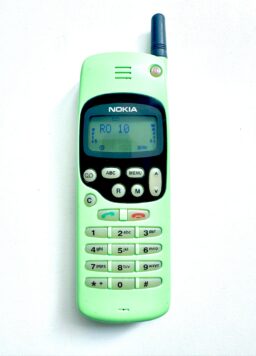
📰 Why this phone matters: Nokia 1610 is a mobile phone model manufactured by Nokia. It complemented the Nokia 2110 business model, but had significantly fewer features. It was introduced in April 1996 and released in May and became highly popular at the time.
The phone had a monochromatic display which could show two rows of text at a time. The operating manual did not mention a possibility to send text messages, but at least units sold from 1996 and onwards included the function. The SMS capable version was called 1610 Plus. The phone used an external rigid antenna, but had a groove on the inside of the battery to accommodate a pull-out type antenna. The 1610 used a credit card size SIM-card, and was powered by a NiMH type battery with a capacity of 600 mAh.📝 Reviews when released: N/A 💔
-


Nokia 2010
Quick View💎 Rarity Index: B (Uncommon)
👁 Evaluation in my collection: Great – 9.5/10
⏱ Life timer: N/A | 📦 Boxed: YES
📅 Release Year: 1994 | 💰 Release Price: N/A
📊 Units Sold: ~200k
📰 Why this phone matters: The Nokia 2010 is a mobile phone that was announced by Finnish phone manufacturer Nokia in January 1994.
According to the late Matti Makkonen, a manager of Nokia Mobile Phones at the time, Nokia 2010 was the first mobile phone to enable writing messages easily.
Other features include lists of 10 dialled calls, 10 received calls and 10 missed calls.
The phone has a monochromatic display that can show two rows of text at a time, which are surrounded by symbols for dedicated functions – battery status and reception level on either side; SMS message notification, keypad lock, et al. at the top. The handset has an antenna slot that supports either an external rigid antenna, or a pull-out type antenna (more common). The 2010 used a full-size (1FF) sim-card.
Nokia 2010 was the more affordable version in the 2xxx series than the business-oriented Nokia 2110, both of which were released in 1994.
In terms of design, the 2010 stayed truer to its predecessor model of Nokia 1011 than the 2110.📝 Reviews when released: N/A 💔
-
Nokia 2650 Quiksilver: Sealed Boost Mobile Brown Edition
Quick View💎 Rarity Index: S (Ultra Rare)
⭐ WOW Factor: Quiksilver Nokia 2650 by Boost Mobile is a co-branded surf lifestyle edition
👁 Evaluation in my collection: Great – 9.5/10
🕵 Nokia Codename: Pinoccchio
⏱ Life timer: 15h | 📦 Boxed: YES
📅 Release Year: 2004 | 💰 Release Price: ~125 $
📊 Units Sold: ~50k
📰 Why this phone matters: This unit is a sealed time capsule from the mid 2000s surf and pre paid boom: the Quiksilver Nokia 2650 by Boost Mobile, built on the Brown variant of Nokia’s classic clamshell and wrapped in a massive co branded retail pack. The front of the box is pure surf culture, with bold Quiksilver graphics, a surfer crashing through the waves and a custom Nokia 2650 shown with Quiksilver logos and stripes on the flip. Boost Mobile and yes Optus badges underline that this was the Australian youth offer of its time, complete with a free Boost mini lanyard and 10 dollars of pre paid credit right out of the box.The Quiksilver edition is more than a simple color variant. This bundle includes unique Quiksilver artwork on the phone’s shell, a dedicated Boost Mobile mini lanyard accessory, special surf themed packaging, and prepaid credit built into the offer. The entire package was created as a lifestyle product, tying Nokia’s entry level clamshell design to the surf and skate identity that Boost Mobile used to dominate the prepaid market in Australia. The huge graphic box and branded phone shell make this edition visually stand out far beyond the standard 2650 Brown.
Technically, the phone inside is a standard Nokia 2650: a compact clamshell Series 40 device with a 128×128 color CSTN display, LED alerts for calls and SMS, GPRS data, Java games and BL-4C battery. What makes this sealed Quiksilver edition extraordinary is not a change in hardware, but the way Nokia and Boost wrapped it into a lifestyle bundle. For a collector, this is more than just a phone box; it is a complete, untouched artifact of early 2000s mobile branding, merging Nokia engineering, Quiksilver surf identity and Boost Mobile’s prepaid culture into one rare, perfectly preserved package.
📝 Reviews when released: Mobile Review 🔗
-

Nokia 282 – The First Style Flip
Quick View💎 Rarity Index: A (Rare)
⭐ WOW Factor: The first Nokia Clamshell
👁 Evaluation in my collection: Great – 9.8/10
🕵 Nokia Codename: Pinoccchio
⏱ Life timer: 02h | 📦 Boxed: YES
📅 Release Year: 1998 | 💰 Release Price: ~500 $
📊 Units Sold: ~600k
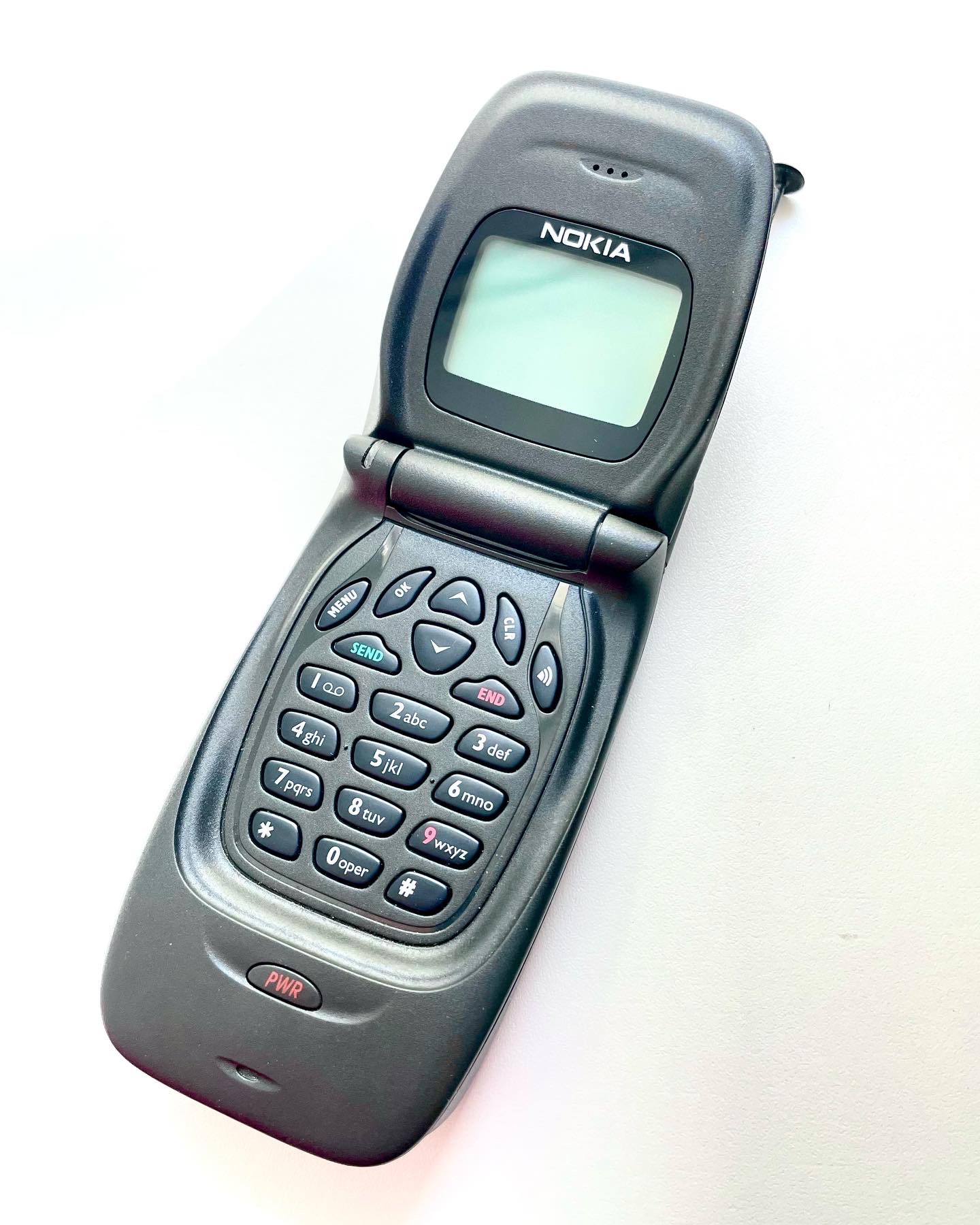
📰 Why this phone matters: The Nokia 282 is the latest example of style from the company that first introduced fashion to the world of cellular phones. And, since good looks are only half the solution, the Nokia 282 also includes all the features and performance that people have come to expect from a Nokia phone.This lightweight folding phone weighs only 130 g and comes in a range of sophisticated colours, including Brushed Pewter, Ruby Red, Velvet Indigo and Satin Silver. With a standard battery you’ll be able to talk for up to 100 minutes, or leave your phone on standby for up to 24 hours. You can also select from 12 ringing tune, and where carrier supported, you can even assign a special ringing tune to any number which will allow you to easily recognize a VIP caller.
The Nokia 282 has plenty of shortcuts to save you time, including one-touch access to your phone book and voicemail, and even one-touch dialing. And, with the profiles key, it is easy to change your ring settings to fit your environment. When you’re in a meeting, choose the discrete vibrating alert, or if you’re someplace noisy, switch to loud.
📝 Reviews when released: N/A 💔
-


Nokia 3110
Quick View💎 Rarity Index: D (Very Common)
⭐ WOW Factor: The first Nokia phone to feature the Navi-Key (a.k.a. D-Pad)
👁 Evaluation in my collection: Great – 9.8/10
⏱ Life timer: NA | 📦 Boxed: YES
📅 Release Year: 1997 | 💰 Release Price: N/A
📊 Units Sold: ~8M
📰 Why this phone matters: The 3110 is a GSM mobile phone handset manufactured by Nokia in Hungary, introduced at CEBIT in March 1997.The 3110 is notable as the first Nokia handset to feature the ‘Navi-Key’ (a.k.a. D-Pad) menu navigation system. The Navi-Key was featured heavily on Nokia handsets, especially the entry-level models such as the Nokia 1100 in the following years. Unlike its successor, the 3210, and subsequent handsets of similar design, the 3110 had an external antenna. The phone was available with a slim, standard or vibrating battery. It could only be used on a GSM-900 network.
The 3110 shared the platform and accessories of the Nokia 8110 “banana phone”.
The model number was reused by Nokia in 2007 when the company launched the Nokia 3110 classic. The 3110 Classic sports a candybar form factor similar to that of the 3110, but adds modern features such as Bluetooth, camera functionality, audio and video playback and recording, and packet data over EDGE, in addition to tri-band functionality.
Unlike subsequent 3000 series mobile phones, its display is not PCD8544 based. This is a special edition made for VW AG, it has red light and LI ION battery📝 Reviews when released: N/A 💔
-
Nokia 3208c: The BNIB Hybrid Touch Concept
Quick View💎 Rarity Index: B (Uncommon)
⭐ WOW Factor: One of the only Nokias ever made with a handwriting recognition touch-panel on the keypad – an experimental design exclusive to China.
👁 Evaluation in my collection: BNIB – 10/10
⏱ Life timer: 0 | 📦 Boxed: YES
📅 Release Year: 2009 | 💰 Release Price: ~200 $
📊 Units Sold: ~200k
📰 Why this phone matters: The Nokia 3208c (RM-572) is one of the most unusual and least-known Nokia models ever produced – a China-exclusive, touch-enhanced feature phone released only in select Asian markets and almost never seen in eur;ope today. This unit goes even further: it’s a BNIB (Brand New In Box) example, making it an exceptional collector’s piece given how few survived.What makes it special
The 3208c belongs to Nokia’s experimental lineup developed specifically for the Chinese market, where handwriting recognition and touch input were already mainstream years before global adoption.
Instead of a touchscreen smartphone, Nokia implemented a resistive touch layer on top of a traditional display, paired with a touch-enabled numeric keypad-allowing stylus input for handwriting without abandoning the classic keypad design. This hybrid concept existed only on a handful of China-only Nokias.
📝 Reviews when released: N/A 💔
-


Nokia 3210 – The Youth Icon
Quick View💎 Rarity Index: D (Very Common)
👁 Evaluation in my collection: As New – 10/10
⏱ Life timer: 5m | 📦 Boxed: YES
📅 Release Year: 1999 | 💰 Release Price: ~150 £
📊 Units Sold: ~160M
📰 Why this phone matters: The Nokia 3210 is one of the most important mobile phones ever made, a device that redefined the industry and introduced a new era of mobile culture. Released in 1999, it was the first Nokia phone designed specifically for young users, with a focus on style, entertainment, and ease of use. It introduced T9 predictive text, internal antenna design, customizable Xpress-On covers, and three built-in games that helped shape mobile entertainment.The 3210 is historically important as the first widely produced Nokia with a true internal antenna, a major step that defined the design of every Nokia released afterward. This engineering milestone allowed Nokia to eliminate the external antenna stub while maintaining strong GSM reception, setting a new standard for mobile phone design across the entire industry.
This BNIB unit represents the 3210 at its absolute best. With its lightweight form, strong reception, long battery life, and classic Nokia durability, the 3210 became a global phenomenon, selling around 160 million units worldwide. Its internal antenna was a major engineering achievement, eliminating the need for external protruding parts and contributing to its clean, modern look.
Customizable covers made the 3210 a fashion statement. The included green Xpress-On cover is a less common variant that adds even more collector value to this unit. Because the 3210 was heavily used by millions of people for years, finding a new-in-box example is extremely rare, and such units are now considered valuable pieces of mobile history.
The Nokia 3210 remains a cultural icon and a milestone in Nokia’s development. This BNIB example is a perfect representation of one of the most influential handsets ever produced and a standout addition to any serious mobile phone collection.
📝 Reviews when released: N/A 💔
-


Nokia 3300b
Quick View💎 Rarity Index: B (Uncommon)
👁 Evaluation in my collection: BNIB – 10/10
🕵 Nokia Codename: Hitchiker
⏱ Life timer: 0 | 📦 Boxed: YES
📅 Release Year: 2003 | 💰 Release Price: ~330 $
📊 Units Sold: ~2M
📰 Why this phone matters: The succesor of 5510, it supports MP3 and AAC audio and comes with an FM radio, and it can also be used as a digital voice recorder. Included in the standard package is a 64MB MMC memory card for storing data. GPRS data is supported, the display is a 128 x 128 pixel CSTN pane📝 Reviews when released: N/A 💔