

">

Showing 217–228 of 293 results
-


Nokia E90
Quick View💎 Rarity Index: B (Uncommon)
👁 Evaluation in my collection: Great – 9/10
🕵 Nokia Codename: Maxi
⏱ Life timer: 74h | 📦 Boxed: YES
📅 Release Year: 2007 | 💰 Release Price: 800 €
📊 Units Sold: ~500k
📰 Why this phone matters: Nokia E90 Communicator was a high-end 3G smartphone from Nokia, the fifth generation Communicator, and also part of the Eseries. It was announced on 11 February 2007 at the 3GSM show in Barcelona. It succeeded the Nokia 9500 Communicator as the company’s flagship business-oriented device. Its clamshell form and design are reminiscent of older palmtop computers.
Unlike its predecessors, the E90 runs on the S60 platform of Symbian OS (3rd Edition Feature Pack 1 and v9.2 respectively). Previous Communicators meanwhile have been based on either GeOS or Symbian-based Series 80. The move to the common S60 was good for software compatibility, but it did get rid of some exclusive Series 80 UI behaviours. The E90 is also the first Communicator to have UMTS/HSDPA connectivity and integrated GPS. It features OSGi and eRCP, Eclipse RCP for embedded systems.
The first Nokia E90 unit was sold in an auction in Jakarta, Indonesia on 17 May 2007 for Rp. 45,000,000 (5,000 US$). Indonesia being one of the largest market share for Nokia’s communicator series is cited as a reason for the unit’s first launch location.Early user-feedback and reviews highlighted a defect in the microphone of the Communicator. Nokia initially denied the existence of the defect, but Nokia eur;ope later acknowledged it in the Q3 earnings report released on 18 October 2007, and stated that the issue had been fully resolved.
The replacement of the QWERTY-ridden interface of Series 80 with the S60 software, which is designed to be used with one thumb, was criticised by some people.
The Communicator’s firmware version 7.40.1.2, released in late October 2007, added support for A-GPS and improved GPS performance. This version also upgraded the Maps application. As of June 2009, the Communicator’s most recent firmware version is 400.34.93. The free navigation program Ovi Maps is also available for this Communicator (currently just without the free navigation itself).
📝 Reviews when released: SoftPedia 🔗
-
Nokia J-NM02: Deep Blue Japan Exclusive
Quick View💎 Rarity Index: A (Rare)
⭐ WOW Factor: Built in Japan by Nokia Japan, not Finland
👁 Evaluation in my collection: Great – 9/10
⏱ Life timer: N/A | 📦 Boxed: NO
📅 Release Year: 2002 | 💰 Release Price: N/A
📊 Units Sold: ~50k
📰 Why this phone matters: The Nokia J-NM02 is one of the most distinctive and hard-to-find Japan-only Nokia flip phones, created for the J-Phone network in early 2002. Finished in a deep blue color scheme with a compact external display, SKY Mobile branding, and an elegant Japanese carrier design, this device stands out immediately from any eur;opean or American Nokia ever produced.This unit was manufactured in February 2002 and belongs to the NPY-6A hardware platform, a Nokia architecture used exclusively for Japanese regional devices. The NMAD01 marking inside identifies its specific J-Phone customization group, while codes such as A01-0923JP and JNMA1021492 tie it to a documented production run under Nokia Japan, not Nokia Finland. These production markers alone make the J-NM02 a very uncommon find in global collections.
What makes this example even more special is that it is fully functional. The phone powers on correctly, the external and internal displays work, and you can navigate the original Japanese menu system. Since the J-Phone PDC network no longer exists, very few surviving units still operate as intended, making working examples extremely rare.
The J-NM02 represents a unique moment in mobile history when Nokia adapted its engineering to the Japanese PDC ecosystem, resulting in features, menus, hardware layouts and design elements that never appeared in any global Nokia lineup. Today, it remains one of the most collectible Japanese-market Nokias for its exclusivity, design, and historical significance within the J-Phone era.
📝 Reviews when released: N/A 💔
-
Nokia N-gage
Quick View💎 Rarity Index: B (Uncommon)
⭐ WOW Factor: The first Nokia game phone
👁 Evaluation in my collection: Brand New – 10/10
🕵 Nokia Codename: Starship
⏱ Life timer: 0m | 📦 Boxed: NO
📅 Release Year: 2003 | 💰 Release Price: ~ 350 $
📊 Units Sold: ~3M
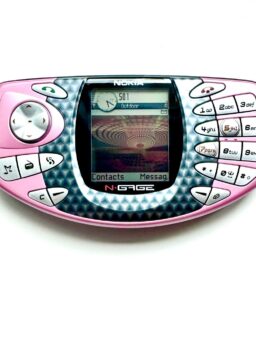
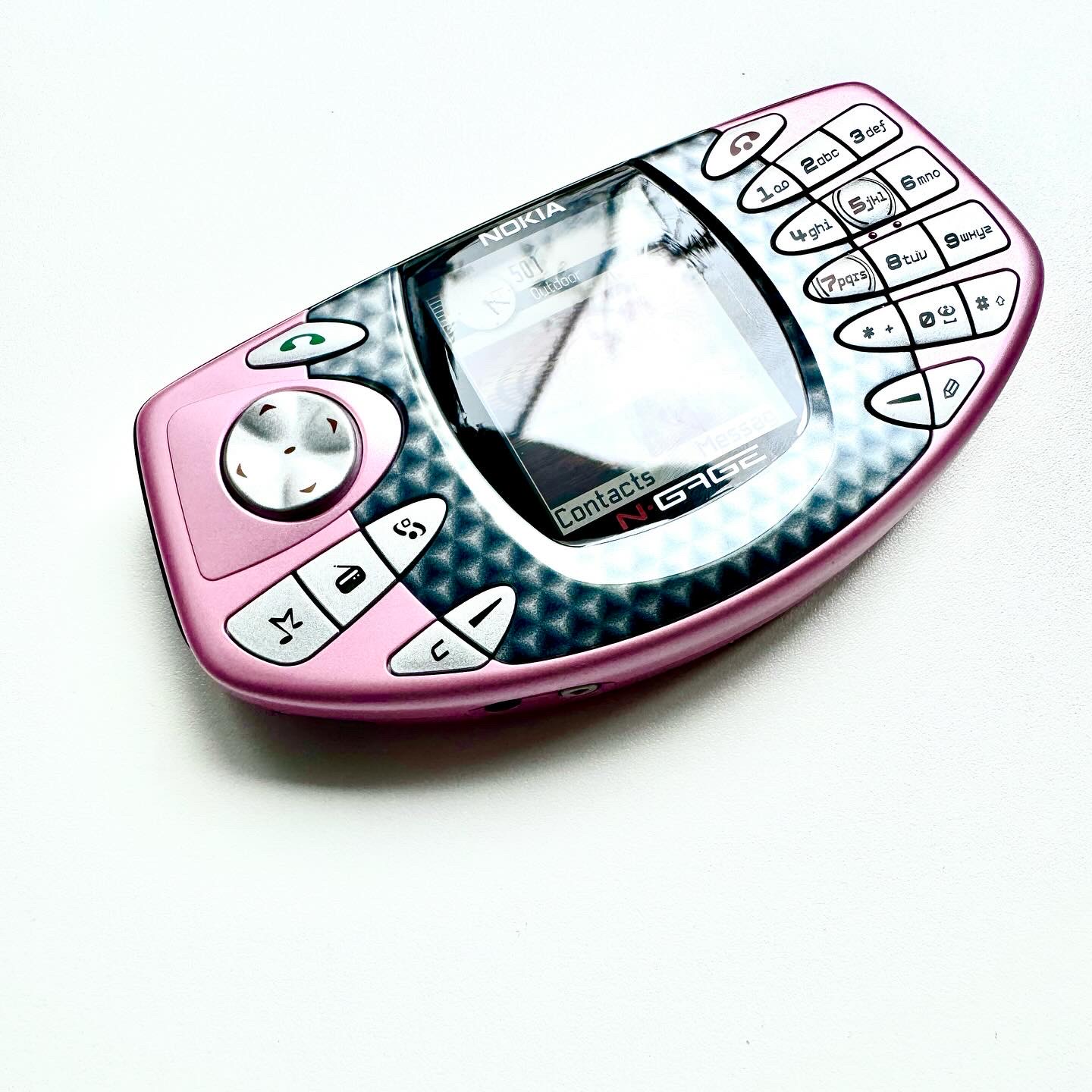
📰 Why this phone matters: The N-Gage was a smartphone combining features of a mobile phone and a handheld game system developed by Nokia, announced on 4 November 2002 and released on 7 October 2003. It runs the original Series 60 platform on Symbian OS v6.1.
N-Gage attempted to lure gamers away from the Game Boy Advance by including telephone functionality. This was unsuccessful, partly because the buttons, designed for a telephone, were not well-suited for gaming. The original N-Gage was described as resembling a taco, which led to its mocking nickname “Taco phone”.📝 Reviews when released: Mobile Review 🔗
-


Nokia N-gage QD
Quick View💎 Rarity Index: C (Common)
👁 Evaluation in my collection: Brand New – 10/10
⏱ Life timer: 0m | 📦 Boxed: NO
📅 Release Year: 2004 | 💰 Release Price: ~300 $
📊 Units Sold: ~2M
📰 Why this phone matters: N-Gage – Mobile gaming devices (2003-2004).The N-Gage QD is a handheld game console and smartphone by Nokia, and a redesign of the N-Gage. It was unveiled on April 14, 2004, and was released on May 26, 2004, running the same Symbian OS v6.1 with Series 60 1st Edition FP1.However, the new model was unable to make an impact, and with only 2 million units sold in its two years, the N-Gage and its QD model were a commercial failure, unable to challenge their Nintendo rival.📝 Reviews when released: Mobile Review 🔗
-
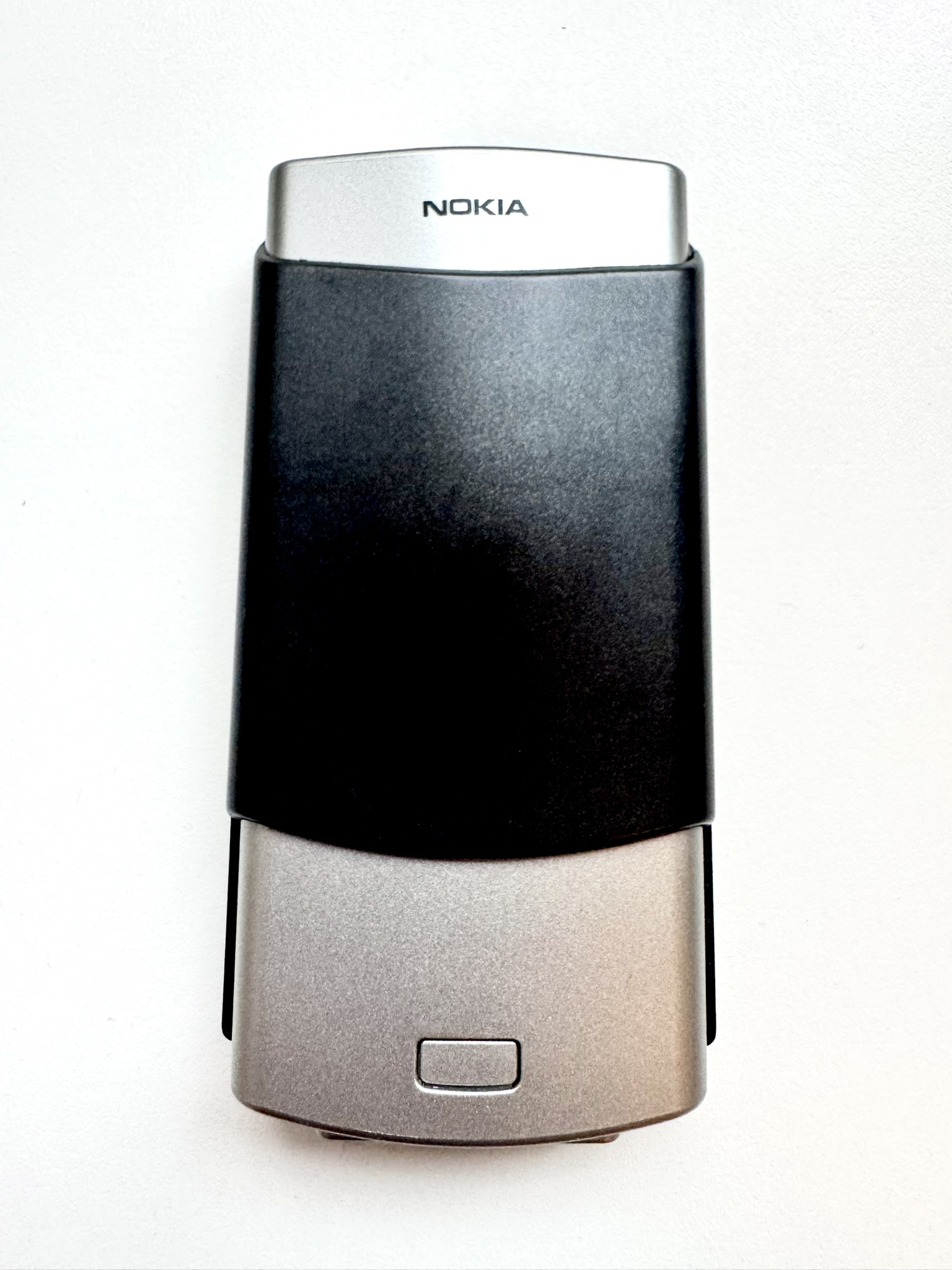
Nokia N70: RM-99 China No-Front-Camera Edition
Quick View💎 Rarity Index: S (Ultra Rare)
⭐ WOW Factor: A curious contradiction: N70 was marketed worldwide as a 3G video-calling device, but this variant removes the front camera entirely
👁 Evaluation in my collection: As New – 10/10
🕵 Nokia Codename: Rolf – for the standard N70
⏱ Life timer: 0m | 📦 Boxed: NO
📅 Release Year: 2005 | 💰 Release Price: ~400$
📊 Units Sold: ~200k
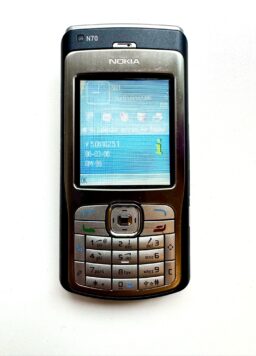
📰 Why this phone matters: The Nokia N70 RM-99 is one of the rarest and most unusual regional variants of Nokia’s early Symbian smartphone line. While the global N70 is known for its 3G capabilities and front-facing video camera, this China-market RM-99 edition removes the front camera entirely, resulting in a cleaner, simplified design not found in any Western release.RM-99 identifies a dedicated China-market hardware and firmware platform. This variant includes Chinese firmware languages, dedicated SAR certifications, local product codes, and a keypad printed with Chinese characters. These changes make the RM-99 version completely distinct from the RM-84 and RM-92 global models, both technically and visually.
This unit is fully working and appears in new condition. The dark-silver and charcoal color scheme gives it a different personality compared to the standard eur;opean N70, while the absence of the front camera further reinforces its uniqueness. The label confirms full CMIIT approval for China, an RM-99 type identifier, and Nokia’s original factory manufacturing codes.
The RM-99 N70 represents a rare and region-specific chapter in Nokia’s history, capturing the transition between 2.5G markets and the global shift toward 3G. Its unusual configuration, Chinese firmware, and non-export nature make it one of the hardest N70 variants to find worldwide.
📝 Reviews when released: CNET 🔗
-
Nokia N71 Prototype F5.0 | Unreleased white and purple colour
Quick View💎 Rarity Index: X (Mystical Prototype)
⭐ WOW Factor: The first Nokia joint-first clamshell smartphone
👁 Evaluation in my collection: Great – 9.5/10
🕵 Nokia Codename: Isetta
⏱ Life timer: 0m | 📦 Boxed: NO
📅 Release Year: 2005 | 💰 Release Price: ~400 €
📊 Units Sold: ~500k (final units)
📰 Why this phone matters: The Nokia N71 is a smartphone announced by Nokia on November 2, 2005 and released in June 2006. It was Nokia’s joint-first clamshell smartphone, like the N92 announced on the same day. The N71 runs on Symbian OS v9.1 (S60 3rd Edition).📝 Reviews when released: Mobile Review 🔗
-


Nokia N77
Quick View💎 Rarity Index: A (Rare)
👁 Evaluation in my collection: Great – 9.5/10
⏱ Life timer: 80h | 📦 Boxed: No
📅 Release Year: 2007 | 💰 Release Price: ~370 €
📊 Units Sold: ~300k
📰 Why this phone matters: The?Nokia N77?is a?3G?smartphone?from?Nokia, introduced on 12 February 2007 and released in June 2007.?It runs on?Symbian?9.1 (S60?3rd Edition). The N77’s specs were somewhat basic compared with most?Nseries?devices at the time, but it included a?DVB-H?television tuner. As stated in Nokia’s press release, the N77 was designed as a low-cost mobile TV to accelerate DVB-H adoption.?Sporting a candybar design similar to the?N73, it was the company’s second DVB-H device after the?N92, though it did have a smaller screen.?The N77 was thus only available in limited DVB-H markets and are now hard to come by.📝 Reviews when released: Mobile Review 🔗
-
Nokia N77
Quick View📦 Collector-to-Collector Transaction
This item is from a private collection and sold as-is for collectors only. All devices have been verified for authenticity and condition as described, but no warranty or guarantee is provided. This is a private sale between individuals and not a commercial business transaction.
💎 Rarity Index: S (Ultra Rare)
👁 Evaluation: BNIB – 10/10
⏱ Life timer: 0m 📦 Boxed: YES
📰 About this collectible: The?Nokia N77?is a?3G?smartphone?from?Nokia, introduced on 12 February 2007 and released in June 2007.?It runs on?Symbian?9.1 (S60?3rd Edition). The N77’s specs were somewhat basic compared with most?Nseries?devices at the time, but it included a?DVB-H?television tuner. As stated in Nokia’s press release, the N77 was designed as a low-cost mobile TV to accelerate DVB-H adoption.?Sporting a candybar design similar to the?N73, it was the company’s second DVB-H device after the?N92, though it did have a smaller screen.?The N77 was thus only available in limited DVB-H markets and are now hard to come by.✓ Verification Checklist
Authenticity & Condition:
– Originality verification (exterior, labels)
– Matching IMEI (box, label, motherboard)
– Physical condition assessment (scratches, cracks, screws)Functional Testing:
– Powers on
– Display functionality
– Camera (when applicable)
– Vibration mechanism (when applicable)
– Security code
– Charging
– Network connectivity
– Call functionality including speaker (non-BNIB units on European networks)Additional specific tests available upon request.
-


Nokia N79
Quick View💎 Rarity Index: C (Common)
⭐ WOW Factor: The first Nokia with a rotated Nokia logo
👁 Evaluation in my collection: Brand New Swap – 10/10
⏱ Life timer: 0m | 📦 Boxed: NO
📅 Release Year: 2008 | 💰 Release Price: ~350 €
📊 Units Sold: ~1.5M
📰 Why this phone matters: The N79 has a somewhat more vibrant style compared to usual Nseries devices, with a rotated NOKIA logo(this would later appear on the Nokia N97). Nokia advertised the N79’s bold-coloured Xpress-on covers which change the software’s colour theme to the cover’s. It was also slim by Nseries standards and considered to be attractive.Other features include a 2.4-inch display, 369 MHz ARM11 processor, physical keylock switch, FM transmitter and the Navi wheel.📝 Reviews when released: Mobile Review 🔗
-
Nokia N80 Prototype S5.1: The birth of the World’s First UPnP Phone
Quick View💎 Rarity Index: S (Ultra Rare)
⭐ WOW Factor: The world first UPnP-compatible phone,
👁 Evaluation in my collection: Great – 9.5/10
🕵 Nokia Codename: Miro
⏱ Life timer: 0 | 📦 Boxed: NO
📅 Release Year: 2006 | 💰 Release Price: 500 €
📊 Units Sold: ~2M (final units)
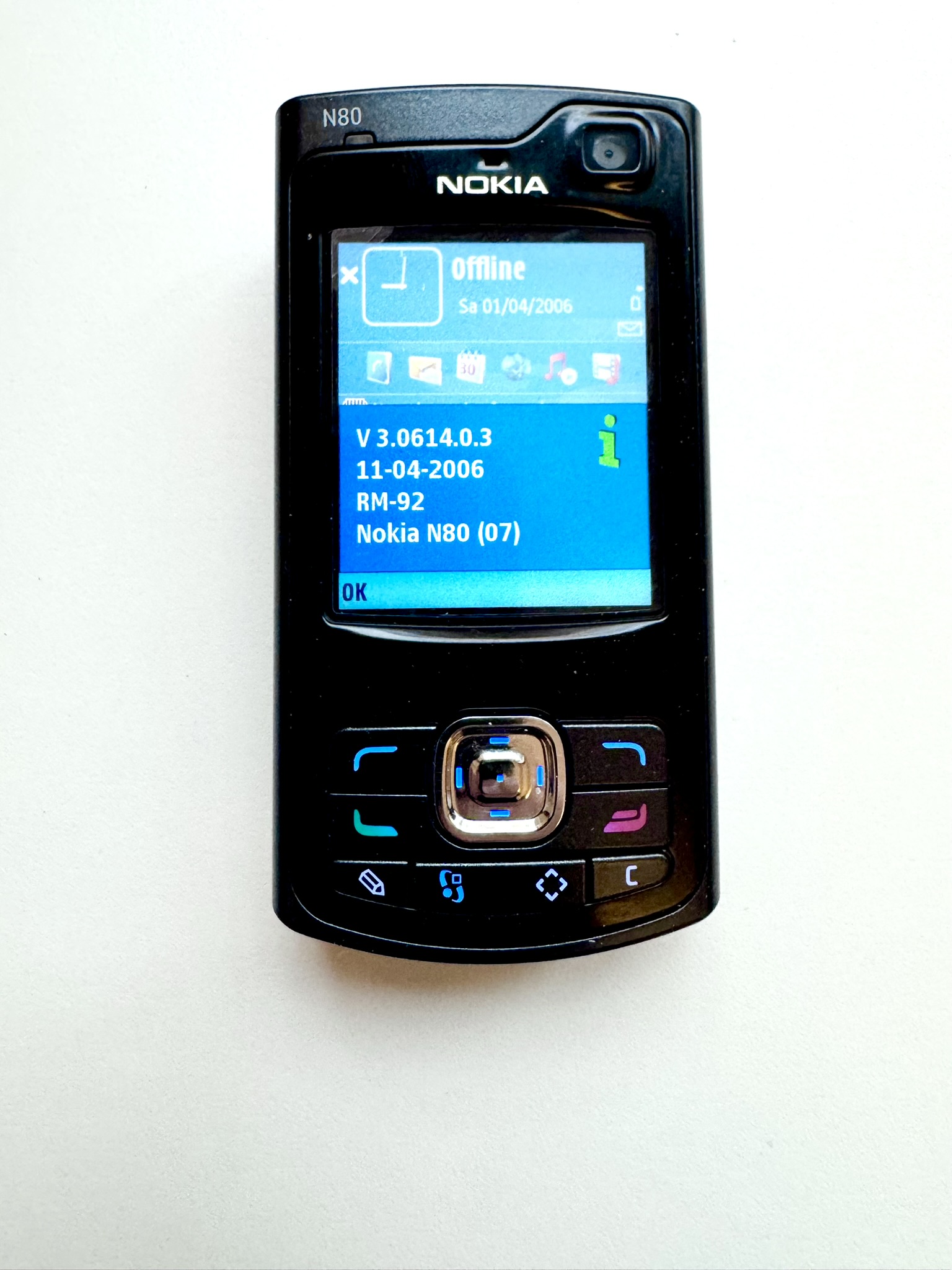
📰 Why this phone matters: This unit represents the earliest surviving form of the world’s first
UPnP-compatible phone, the Nokia N80, shown here in its S5.1 prototype
stage long before the technology reached consumers. Built in Finland and
marked with the legendary 004400 Nokia internal IMEI range, this device
was part of Nokia’s secret push to bring home-network integration to
mobile phones for the first time in history.The internal label reveals everything expected from a genuine engineering
sample: a masked FCC and IC set, the placeholder Xyy-n model code, and an
unreleased product code known only to Nokia’s R&D teams. The bold PROTO
S5.1 stamp indicates an early hardware validation cycle, a phase where
engineers were still shaping the mechanics, RF behavior, and multimedia
stack that would define the N80. A matching S5.1 barcode sticker on the
side confirms that this device circulated between test teams, yet survived
in untouched, mint condition – almost impossible for units used at this
development depth.UPnP was the N80’s signature innovation, a world-first feature allowing a
mobile phone to discover and communicate with home media servers, TVs, and
computers. But before the world ever saw this capability demonstrated on a
stage, units like this one acted as the true testbeds. Early debug builds
of Symbian OS 9.1 ran experimental networking stacks, Wi-Fi drivers, and
service discovery modules. Engineers used devices like this to validate
seamless connectivity, file sharing, remote playback, and the foundation
of what would later become the connected-smartphone era.The Finnish build origin makes the device even rarer. Only the earliest
pilot-line N80 units came from Finland, assembled for hardware tuning,
firmware experiments, and RF calibration. Most were disassembled, reworked
to exhaustion, or destroyed after testing concluded. This one escaped
untouched – a true anomaly.With its dual proto identifiers preserved, its 004400 IMEI confirming deep
internal lineage, and its role at the dawn of UPnP mobility, this N80
S5.1 prototype is not just a rare device. It is a technological milestone
captured in physical form – the raw, unfiltered origin of the world’s
first UPnP phone.📝 Reviews when released: CNET 🔗
-


Nokia N810
Quick View💎 Rarity Index: B (Uncommon)
👁 Evaluation in my collection: As New – 9.8/10
⏱ Life timer: N/A | 📦 Boxed: YES
📅 Release Year: 2007 | 💰 Release Price: ~480 $
📊 Units Sold: ~500k
📰 Why this phone matters: The Nokia N810 Internet tablet is an Internet appliance from Nokia and despite Nokia’s strong association with cellular products, the N810, like preceding tablets produced by Nokia, was not a phone, but instead allowed the user to browse the Internet and communicate using Wi-Fi networks or with a mobile phone via Bluetooth. It built on the hardware and software of the Nokia N800 with some features added and some removed.📝 Reviews when released: Trusted Reviews 🔗
-
Nokia N82 Prototype S3.2: The Flash Xenon Genesis Device
Quick View💎 Rarity Index: S (Ultra Rare)
👁 Evaluation in my collection: As New – 10/10
🕵 Nokia Codename: Sharaku or Tiger
⏱ Life timer: 0m | 📦 Boxed: NO
📅 Release Year: 2007 | 💰 Release Price: ~450 €
📊 Units Sold: ~2M (final units)
📰 Why this phone matters: This unit is a genuine Nokia N82 PROTO S3.2, originating from a late-stage engineering batch used by Nokia for field validation prior to commercial release. The PROTO S3.2 marking identifies it as a Stage 3.2 engineering device, meaning it had near-final hardware but was still running precommercial firmware intended for network, camera, and stability testing. Only a very small number of these were produced, and most were destroyed after internal validation.The RM-314 internal board combined with the 004401 IMEI prefix, missing IMEI barcode, and CMII placeholder confirms that this unit predates formal regulatory submission and was never intended for retail sale. The presence of a 2D matrix tag rather than a standard retail IMEI label is a Nokia R&D signature seen only on true engineering property.
The chrome mirror housing is a known prototype mechanical shell used before finalizing the production colors. This non-retail reflective finish allowed engineers to detect micro-cracks, alignment issues, and housing fatigue during testing. The keypad includes Chinese character markings, indicating that this unit was part of the APAC field-testing program, where network compatibility, input methods, and Chinese localizations were evaluated.
The Nokia N82 itself was one of the most important camera phones of its era, introducing a xenon flash that outperformed the N95 and set new standards for mobile photography. Built on Symbian OS v9.2 with S60 3rd Edition FP1, the N82 combined GPS, Wi-Fi, HSDPA, and a 5 MP Carl Zeiss camera into what many considered the best camera phone of 2007. As the last high-end candybar Nseries device before the shift to sliders and touchscreens, the N82 marks the end of a major design era at Nokia.
This prototype captures the device at the critical moment before release, with a rare combination of S3.2 prototype labeling, APAC keypad, chrome housing, and internal RM-314 board markings. Few surviving units include all these characteristics, making this one of the most historically significant and collectible N82 prototypes known today.
📝 Reviews when released: Mobile Review 🔗