

">

Showing 265–276 of 293 results
-
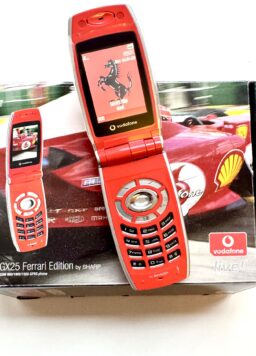
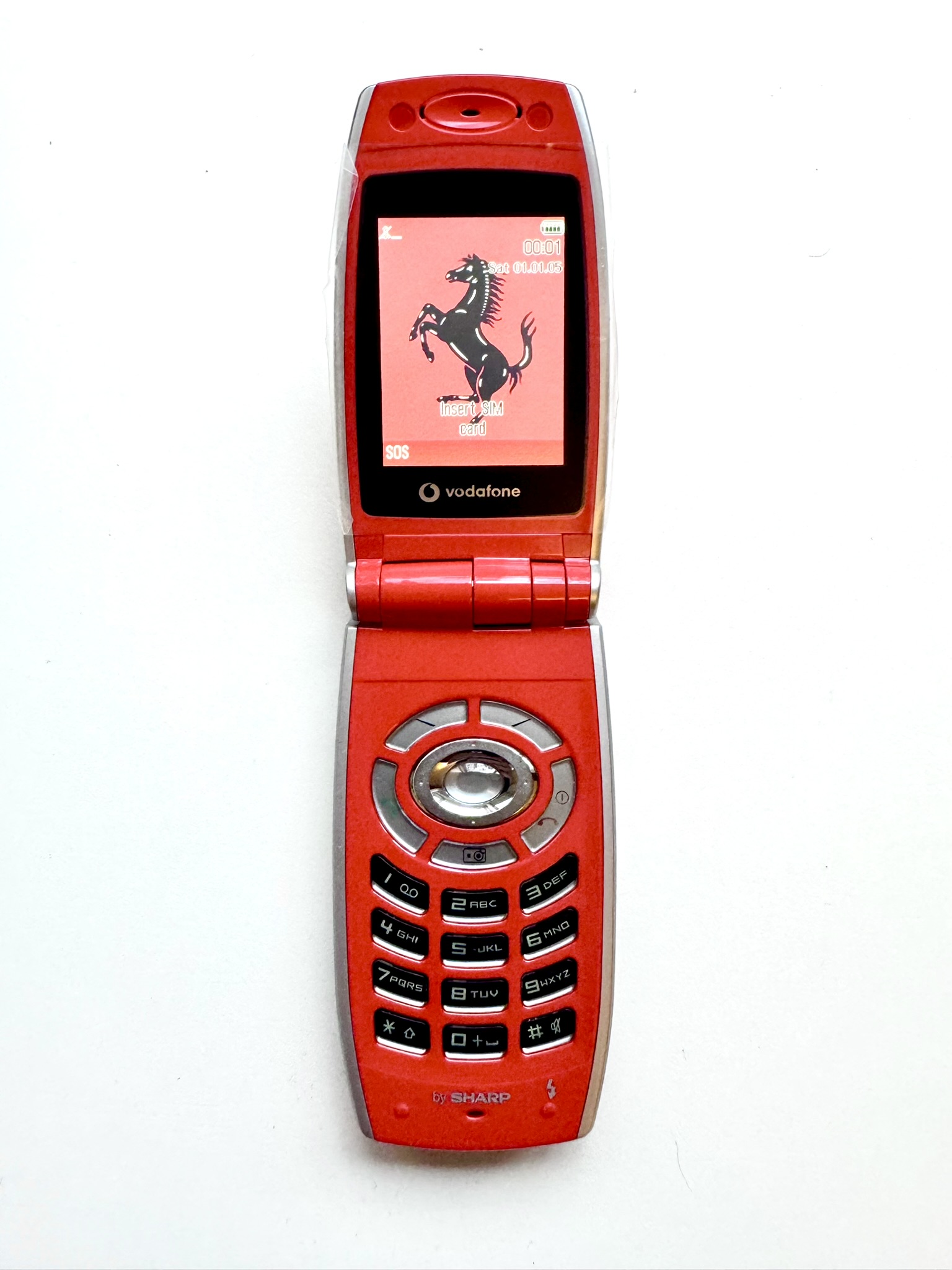
Sharp GX25 Ferrari Edition: Scuderia Signature Model
Quick View💎 Rarity Index: A (Rare)
⭐ WOW Factor: Genuine Rosso Corsa finish with Scuderia shield applied at factory.
👁 Evaluation in my collection: BNIB – 10/10
⏱ Life timer: 0m | 📦 Boxed: YES
📅 Release Year: 2005 | 💰 Release Price: N/A
📊 Units Sold: ~300k
📰 Why this phone matters: This unit is a pristine Sharp GX25 Ferrari Edition, a rare licensed collaboration between Sharp and the Scuderia Ferrari brand at the height of Ferrari mania in the mid 2000s. Finished in true Rosso Corsa red and framed with metallic silver edges, the phone captures the visual identity of Ferrari with surprising authenticity. The front shell carries the iconic Scuderia shield placed precisely below the external display, a detail that separates genuine factory editions from aftermarket conversions.Built on the respected GX25 platform, this handset reflects Sharp’s reputation for exceptional screen quality and tight hardware engineering. The Ferrari variant was released only in select Vodafone markets, never distributed widely, and typically tied to restricted promotional runs. As a result, surviving examples are exceptionally scarce, and BNIB units like this one are almost unheard of today.
Thanks to its protective films still intact, the phone shows zero external wear, preserving every original contour, lens surface, and paint transition exactly as delivered from the factory. Beyond the Ferrari branding, the GX25 remains a capable and stylish clamshell featuring a high resolution Sharp display, LED assisted camera, Java support, MMS, and the classic Vodafone Live interface. Together, the aesthetics, engineering, rarity, and condition make this Ferrari Edition one of the finest collectible Sharp releases of the era, representing the perfect fusion of Japanese mobile craftsmanship and Italian motorsport prestige
📝 Reviews when released: Engadget.com 🔗
-


Siemens C10D
Quick View💎 Rarity Index: C (Common)
👁 Evaluation in my collection: As New – 10/10
⏱ Life timer: N/A | 📦 Boxed: NO
📅 Release Year: 1998 | 💰 Release Price: N/A
📊 Units Sold: ~2M
📰 Why this phone matters: The Siemens C10 is a mobile phone made by Siemens in December 1997. The phone was available in four colours: Blue, yellow, red and grey. The C10 had a green backlit display capable of showing three lines. It weighed 165 g with battery and 117 g without.📝 Reviews when released: N/A 💔
-


Siemens MC60
Quick View💎 Rarity Index: C (Common)
👁 Evaluation in my collection: Great – 9.5/10
⏱ Life timer: N/A | 📦 Boxed: NO
📅 Release Year: 2003 | 💰 Release Price: 250 $
📊 Units Sold: ~5M
📰 Why this phone matters: The Siemens MC60 is a mobile phone sold by Siemens. It weighs 86 g and has improved resistance to water, shock and dust when compared with previous models. The phone also includes digital imaging and picture messaging. Its integrated camera takes pictures simply by holding the 5 key, then pressing it again. The Siemens MC60 has a number of pre-installed polyphonic ring tones, additionally own ringtones can be recorded.📝 Reviews when released: N/A 💔
-


Siemens S10
Quick View💎 Rarity Index: C (Common)
⭐ WOW Factor: The world first phone with a colour screen
👁 Evaluation in my collection: Great – 9.5/10
⏱ Life timer: N/A | 📦 Boxed: NO
📅 Release Year: 1997 | 💰 Release Price: N/A
📊 Units Sold: ~200k
📰 Why this phone matters: The Siemens S10 was the world’s first phone with a colour screen. It was a high end business phone with a number of a advanced features. However, the phone was not up to rival products from Nokia and Ericsson and the colour screen did not make it any more usable.📝 Reviews when released: N/A 💔
-

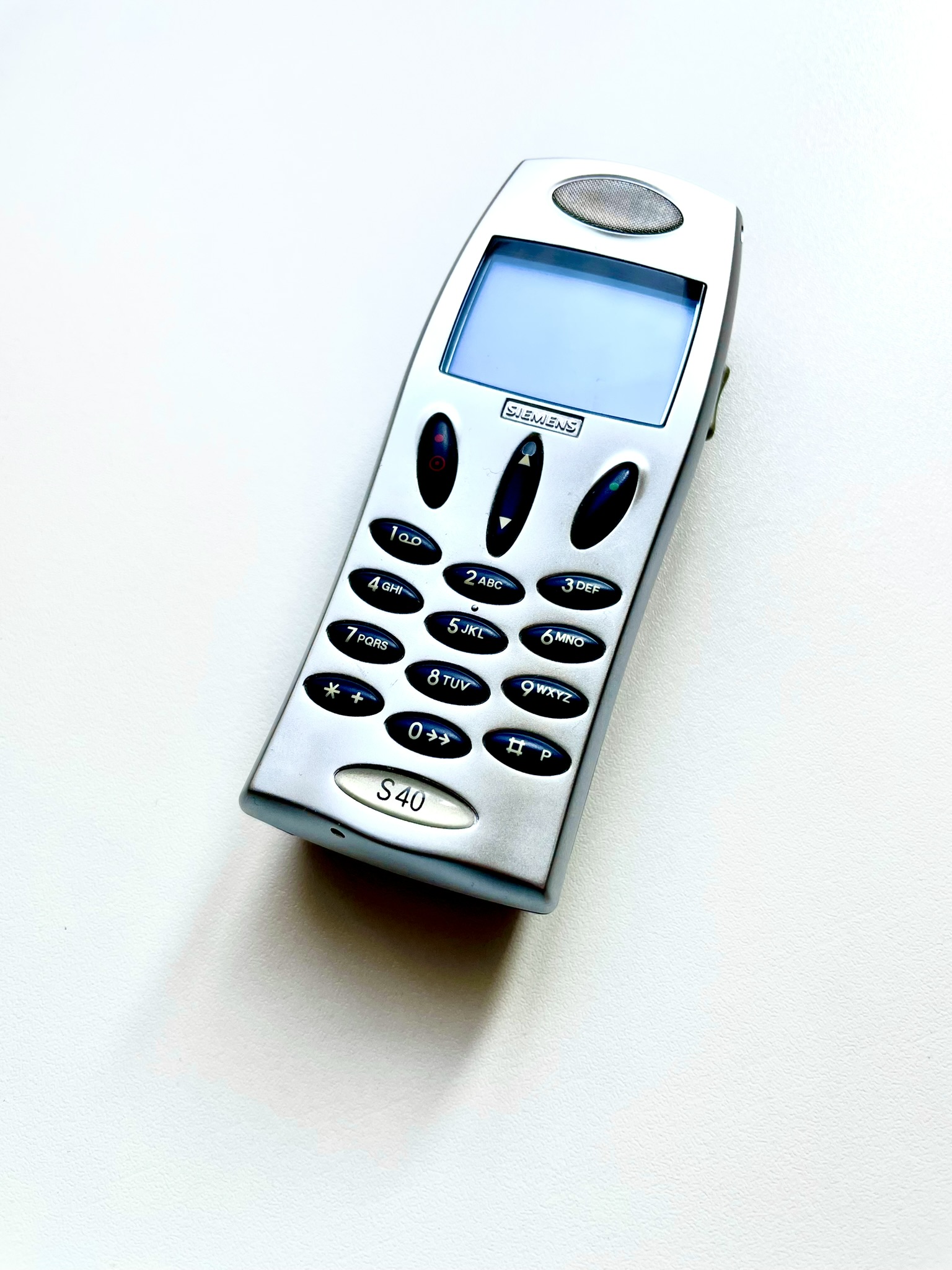
Siemens S40
Quick View💎 Rarity Index: B (Uncommon)
⭐ WOW Factor: Made it in top 10 in the lowest radiation phone
👁 Evaluation in my collection: Great – 9.0/10
⏱ Life timer: 20h | 📦 Boxed: YES
📅 Release Year: 2001 | 💰 Release Price: N/A
📊 Units Sold: ~400k
📰 Why this phone matters: The Siemens S40 is a mobile phone. Originally developed as the Bosch 1886 in 2000, the phone was branded as the Siemens S40 after Siemens acquired the Bosch mobile phone division. The Siemens S40 is a tri-band mobile phone that operates on the GSM-900, GSM-1800, and GSM-1900 networks. Communication with a computer can be done either through the infrared port (IrDA) on the phone or a USB or serial port data cable. Its more distinctive features include the voice memo recorder, the mute feature for conversations, the ability to record phone conversations, and the ringtone composer (a useful alternative for those unsatisfied with the 47 monophonic ringtones).In 2005, the phone made it onto CNET’s list of ten lowest-radiation cell phones, at #10, with a SAR (specific absorption rate) of 0.33.
The phone also supports WAP 1.1, SMS, HSCSD, and T9 predictive text input.
The S40 includes a 104×64 pixel monochrome liquid-crystal display with a blue backlight, an internal antenna, and rubbery buttons to prevent accidental dialing.
📝 Reviews when released: N/A 💔
-
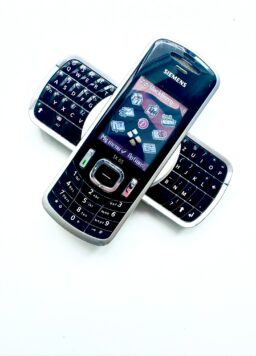
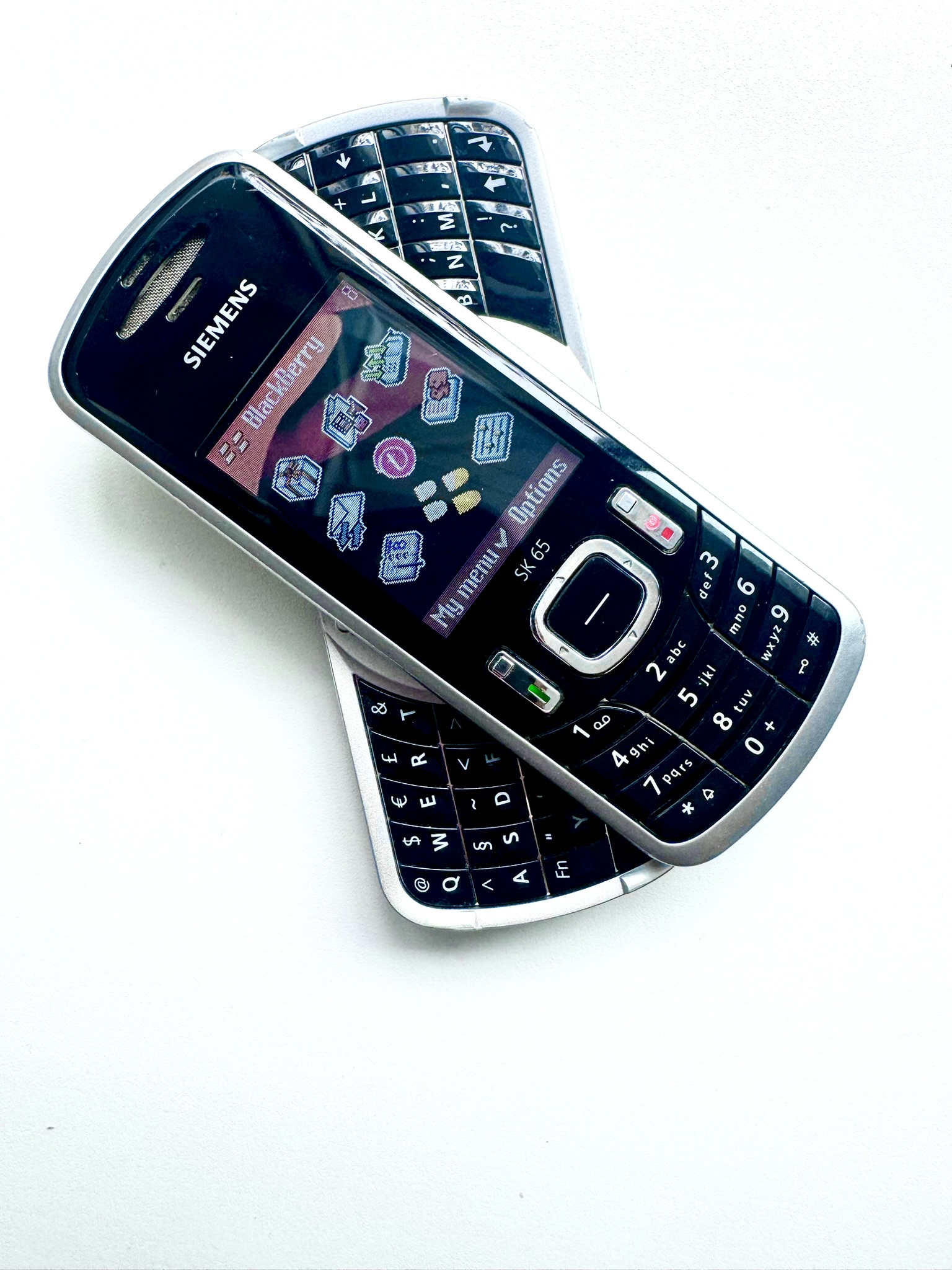
Siemens SK65: The Corporate Weapon With BlackBerry DNA
Quick View💎 Rarity Index: A (Rare)
⭐ WOW Factor: A rotating crossblade keyboard that still feels like a mechanical trick from the future
👁 Evaluation in my collection: Good – 9/10
⏱ Life timer: N/A | 📦 Boxed: NO
📅 Release Year: 2004 | 💰 Release Price: 500 €
📊 Units Sold: ~500k
📰 Why this phone matters: The Siemens SK65 was introduced in late 2004 as one of the most advanced enterprise phones ever created, built during a period when Siemens placed enormous engineering resources into its high end S and SX series. The internal development codename is widely understood in documentation to align with Siemens’ business class platforms of the era, specifically derived from the SXG and BB integration programs. It runs on Siemens’ proprietary OS with a full BlackBerry Connect layer on top, giving it access to encrypted push email, corporate sync and RIM’s secure communication protocols.When released, the SK65 targeted senior professionals and executives who needed BlackBerry functionality but preferred a sleeker eur;opean device. Launch pricing depended on region, but the unsubsidized cost ranged between 450 and 550 eur;os, placing it directly in the high end business category. Early reviews from major publications praised the crossblade mechanism as one of the most ingenious mobile keyboard designs ever made, noting that it allowed full QWERTY typing without increasing the device’s footprint. Reviewers highlighted its solid construction, the crisp Siemens display and the deep integration with BlackBerry Enterprise Server. The only criticisms at the time were limited multimedia features and the fact that the device focused purely on productivity, not entertainment.
The engineering story behind it is equally impressive. Siemens created an entirely new hinge system that rotates two symmetrical keyboard wings outward with perfect balance and alignment. No consumer phone before or after replicated this exact mechanism. When closed, the SK65 appears to be a traditional bar phone. When opened, it transforms instantly into a communication terminal, a true pocket sized workstation.
This unit is preserved in mint condition, with the crossblade mechanism still locking with the same satisfying precision it had in 2004. The BlackBerry Built-in branding remains fully intact on the back cover and the front chassis retains the clean Siemens lines with no warping or discoloration. The display still boots into the original BlackBerry menu structure, complete with the corporate iconography that defined mid 2000s business mobility.
The Siemens SK65 represents the moment when two giants, Siemens and BlackBerry, merged technologies to redefine what a business phone could be. It was a niche device at launch but has since gained legendary status among collectors because of its unusual hybrid nature, discontinued form factor and limited production run. Now considered one of the most unique enterprise phones of the early smartphone era, a mint example like this stands as a mechanical and historical masterpiece.
📝 Reviews when released: Engadget.com 🔗
-


Siemens SL10 D
Quick View💎 Rarity Index: A (Rare)
⭐ WOW Factor: The first slider phone
👁 Evaluation in my collection: BNIB – 10/10
⏱ Life timer: N/A | 📦 Boxed: YES
📅 Release Year: 1999 | 💰 Release Price: N/A
📊 Units Sold: ~500k
📰 Why this phone matters: The?Siemens SL10?is a sliding?mobile phone?with a four-color?screen?(red, green, blue, and white). It was the second mobile phone with a multicolor screen after the Siemens S10 and the first sliding?mobile phone📝 Reviews when released: N/A 💔
-


Siemens SL42
Quick View💎 Rarity Index: A (Rare)
👁 Evaluation in my collection: Good – 9/10
⏱ Life timer: N/A | 📦 Boxed: NO
📅 Release Year: 2001 | 💰 Release Price: N/A
📊 Units Sold: ~300k
📰 Why this phone matters: The SL42 was cost reduced variant of the Siemens SL45.It shipped with a Siemens branded 16MB Hitachi MultiMediaCard which had a holder that slide into the side of the phone.
The phone also lacked headphones and a sync cradle which were included with the SL45.
Other features included a digital voice recorder, WAP browser, address book and currency converter.
📝 Reviews when released: N/A 💔
-


Siemens SX1
Quick View💎 Rarity Index: A (Rare)
⭐ WOW Factor: The first Siemens with Symbian
👁 Evaluation in my collection: Good – 8.5/10
⏱ Life timer: N/A | 📦 Boxed: NO
📅 Release Year: 2004 | 💰 Release Price: 599 $
📊 Units Sold: ~1M
📰 Why this phone matters: The Siemens SX1 is a GSM mobile phone running version 1.2 of the Series 60 platform for the Symbian OS. It is the first such smartphone from the German phone manufacturer Siemens AG following their licensing agreement with Nokia for the use and development of Series 60. Though unveiled in February 2003 it launched only in December of that year. The phone has a very high feature list for its time of release. It had three built in games and support for more by downloads. The three games which were bundled with the phone were Mozzies, which was awarded the title of best mobile game in 2003, Typegun, which was a game made for acquainting users to the keypad layout, and Sitris, a Tetris version with multiplayer support (via Bluetooth). In Mozzies, the Camera is used to detect the motion. So you have to position the gun on the flying mosquitoes which are superimposed on the video feed from the camera. The objective is to shoot down the mosquitoes by moving the phone around and clicking when you are aiming correctly.
The phone also has a good number of connectivity options from Bluetooth to IrDA. It can also be used as a Fax Machine by connecting it to an appropriate device like a computer through the software provided. The File Manager allows sending and receiving of various files over either infrared or bluetooth. The phone has two shortcut keys on its side. One is used to start the camera and click pictures, while the other can be used to make a voice command driven call or start the voice memo. There is a built in picture editor which allows modification of images taken by the camera or any other type of image present on the phone. The phone has a few organizer capabilities. There are applications to take down short notes, a To-Do List, a scheduler application with reminders and a converter to convert currency and different measuring units. The mobile has been popular because of a Linux port to this mobile called “Linux on SX1”.📝 Reviews when released: Cnet.com 🔗
-


Siemens SX45
Quick View💎 Rarity Index: A (Rare)
⭐ WOW Factor: Considered by Siemens: a new milestone in today’s communication
👁 Evaluation in my collection: As New – 9.8/10
⏱ Life timer: N/A | 📦 Boxed: YES
📅 Release Year: 2002 | 💰 Release Price: ~1000 €
📊 Units Sold: ~100k
📰 Why this phone matters: The Siemens SX45 is a PDA mobile phone released by Siemens AG in 2002. It was one of the first Pocket PCs with mobile phone functionality. Because of its size and the fact that phone calls could only be made using a headset, it was not really in the same marketing segment as current smartphones.It was replaced by the Siemens SX56.
📝 Reviews when released: Pocket PC FAQ 🔗
-


Sony CMD-C1
Quick View💎 Rarity Index: B (Uncommon)
👁 Evaluation in my collection: Great – 9/10
⏱ Life timer: N/A | 📦 Boxed: NO
📅 Release Year: 1999 | 💰 Release Price: N/A
📊 Units Sold: ~400k
📰 Why this phone matters: N/A📝 Reviews when released: N/A 💔
-
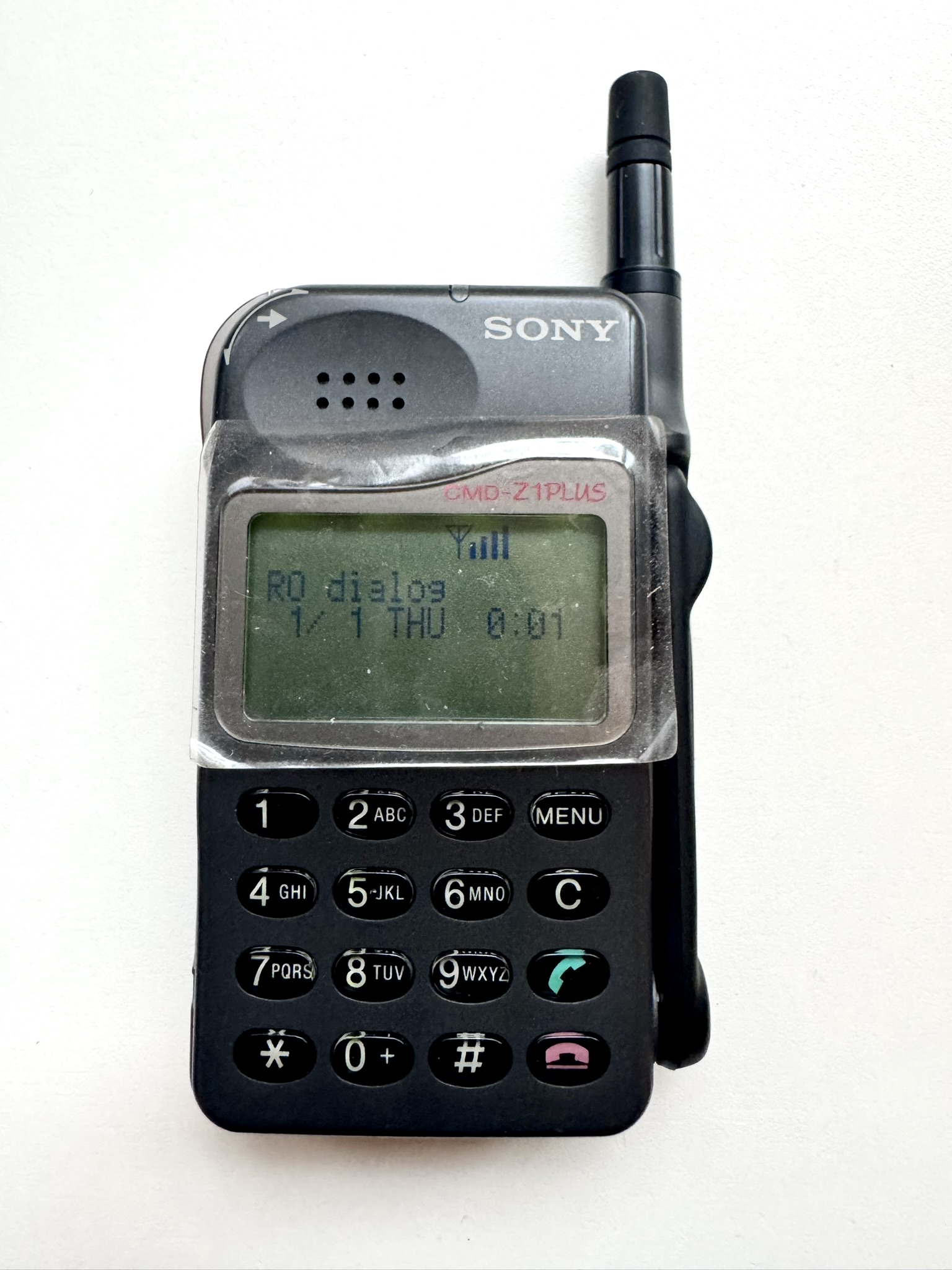
Sony CMD-Z1 Plus: Rare Complete Set, Mint Working Condition
Quick View💎 Rarity Index: A (Rare)
⭐ WOW Factor: A jog dial, aircraft-style mic extension, extend-to-answer mechanism, and precision mechanics made it one of the most futuristic GSM phones of the 90s.
👁 Evaluation in my collection: As New – 9.5/10
⏱ Life timer: N/A | 📦 Boxed: YES
📅 Release Year: 1999 | 💰 Release Price: 1200 DM
📊 Units Sold: ~300k (base model Z1 family)
📰 Why this phone matters: A beautifully preserved Sony CMD-Z1 Plus, one of Sony’s most iconic pre-Sony Ericsson GSM phones, presented here in full box with all original accessories – a rarity even among seasoned collectors.
Manufactured in France, this model represents the peak of Sony’s mid-90s mobile engineering before the joint-venture era.The CMD-Z1 Plus stood out in its time for its elegant curves, premium materials, and Sony’s distinctive Jog Dial interface, which gave it a futuristic one-handed navigation system years ahead of competing brands. Another signature touch of this model is its extendable stick-style microphone, a precision sliding module that not only enhanced voice pickup but also acted as a control mechanism: extending the mic answered a call, and retracting it ended the call. This mechanical interaction became one of the most memorable and stylish features of Sony’s early GSM lineup.
The minimalist, industrial Sony aesthetic of the late 90s is captured perfectly in this device: compact, robust, and unmistakably high-end. Your unit’s complete condition – original packaging, matching accessories, fully functional handset, and intact label – places it among the top-tier collectible examples of the model, especially as most surviving units are worn or incomplete.
The “Plus” variant refined the original CMD-Z1 with software improvements, enhanced memory handling, and a smoother UI, making it the more desirable version of the lineup.
📝 Reviews when released: N/A 💔