

">

Showing 1–12 of 293 results
-


Alcatel One Touch Com
Quick View💎 Rarity Index: B (Uncommon)
👁 Evaluation in my collection: Good- 8.5/10
⏱ Life timer: N/A | 📦 Boxed: NO
📅 Release Year: 1997 | 💰 Release Price: N/A
📊 Units Sold: ~1.2M
📰 Why this phone matters: The year is 1997. Nokia has just brought out the “Matrix cell phone” 8110, the Communicator is said to be another 3 years away. At Siemens you get either the S6 cooking spoon or the S10 with a three-color display. Ericsson has nothing to do with Sony yet, and the GF768 had to – and could – live with a single-line display. Until then, Alcatel was best known for the super cheap One Touch Easy series, but is now launching the One Touch Com. Alternatively, you can also order it from Sharp in the form of the identical MC-G1.📝 Reviews when released: N/A 💔
-


AU by KDDI Casio CA001
Quick View💎 Rarity Index: A (Rare)
👁 Evaluation in my collection: Good – 9/10
⏱ Life timer: N/A | 📦 Boxed: NO
📅 Release Year: 2009 | 💰 Release Price: N/A
📊 Units Sold: ~200k
📰 Why this phone matters: equipped with sound and music apps made by Yamaha and a touchscreen📝 Reviews when released: Blog of Mobile 🔗
-


AU by KDDI Infobar
Quick View💎 Rarity Index: A (Rare)
👁 Evaluation in my collection: Great – 9.5/10
⏱ Life timer: N/A | 📦 Boxed: NO
📅 Release Year: 2003 | 💰 Release Price: n/a
📊 Units Sold: ~300k
📰 Why this phone matters: INFOBAR is the first terminal of the au design project . The base model is Sanyo Multimedia Tottori’s A5306ST , and there is almost no difference in performance except for the presence or absence of a sub-display (A5306ST has it, but INFOBAR does not). The prototype model “info.bar”, which was exhibited as a reference at the “Business Show 2002 TOKYO” held from May 17th to 19th, 2002 , is the basis of the design. Designed by product designer Naoto Fukasawa . The software also has a unified feel, with the image of a terminal design.The housing is a straight type made of magnesium . External memory is not supported. The camera is a 310,000 pixel CCD . There are three color variations: NISHIKIGOI (red and beige. Light blue on the button), ICHIMATSU (black and white), and BUILDING (indigo and silver). From April 2004 , ANNIN (white) was released as a new color. This color naming uses the name that engineers naturally started to call at the time of development. The response of INFOBAR was very large, and many stores were sold out after the release date.
This model is the last model made by Tottori Sanyo Electric, and the symbol at the end of the model number is “ST”. Subsequent terminals made by Tottori Sanyo Electric are the same as the terminals made by Sanyo Electric in Osaka, and the end of the model number. The symbol of is “SA”.
Selected for the 2003 Good Design Award , and received the “iF Product Design Award” from the German iF Design Award in 2005 . In 2007, the same model was selected as a collection in the Museum of Modern Art, New York , USA , and in 2013, in the Indianapolis Museum of Art, USA .
📝 Reviews when released: K Tai 🔗
-


AU by KDDI Infobar 2
Quick View💎 Rarity Index: A (Rare)
👁 Evaluation in my collection: New – 10/10
⏱ Life timer: N/A | 📦 Boxed: YES
📅 Release Year: 2007 | 💰 Release Price: n/a
📊 Units Sold: ~200k
📰 Why this phone matters: The INFOBAR 2, while inheriting the attractiveness and ease of use of the INFOBAR, has evolved into a shape like a square candy melting in the mouth, and features the latest capabilities such as One-Seg and Osaifu Keitai.
With a 2.6-inch, QVGA, organic EL display that provides bright, sharp pictures, as well as stereo speakers, the INFOBAR 2 also enables customers to fully enjoy services such as LISMO and One-Seg.Additionally, in the collaborative project “mobile fashion,” INFOBAR 2 goods will be produced through collaboration with famous brands. They will be available for sale via the mobile fashion site in au’s Internet service, EZ web
📝 Reviews when released: Wired 🔗
-


AU by KDDI Infobar A01
Quick View💎 Rarity Index: A (Rare)
👁 Evaluation in my collection: New – 10/10
⏱ Life timer: N/A | 📦 Boxed: YES
📅 Release Year: 2011 | 💰 Release Price: N/A
📊 Units Sold: ~250k
📰 Why this phone matters: “INFOBAR A01” is a smartphone which adopts unique tile-style key succeeded from the first generation “INFOBAR” released in 2003, and multi-colors of “NISHIKIGOI” and other patterns. Despite of its small size, it features useful functions such as Osaifu-Keitai, infrared light communication and one-seg. In addition to the exterior, it features “iida UI”, a user interface with high operability and function to propose easy usage and joy of usage.Ten peripheral items specialized for “INFOBAR A01” and an AC adapter for smartphones named “JUPITRIS” will be released. Eight items by “iida and NAVA”, a brand born from collaboration with Italian stationary brand NAVA and displayed at Milano Salone 2011, will also be released.
📝 Reviews when released: KDDI 🔗
-


AU by KDDI Infobar C01
Quick View💎 Rarity Index: A (Rare)
👁 Evaluation in my collection: As New – 9.7/10
⏱ Life timer: N/A | 📦 Boxed: NO
📅 Release Year: 2012 | 💰 Release Price: N/A
📊 Units Sold: ~180k
📰 Why this phone matters: Japan’s mobile landscape is currently in the midst of an Android revolution, and today KDDI au (the country’s second biggest carrier) announced another 5 smartphones with that OS on board for the local market. The most interesting model in the new line-up is the so-called INFOBAR C01 , a candy bar coming with a heavily customized UI (based on Android 2.3).KDDI au introduced a similar model back in May last year, the INFOBAR A01 (both handsets are part of KDDI’s designer sub-brand iida).
📝 Reviews when released: TechRunch 🔗
-


AU IIDA TOSHIBA TSX05 LIGHT POOL
Quick View💎 Rarity Index: S (Ultra Rare)
⭐ WOW Factor: Beautiful design that looks like an architectural frame and window by product designer Hironao Tsuboi
👁 Evaluation in my collection: Great – 9.5/10
⏱ Life timer: N/A | 📦 Boxed: NO
📅 Release Year: 2010 | 💰 Release Price: N/A
📊 Units Sold: ~50k
📰 Why this phone matters: Beautiful design that looks like an architectural frame and window by product designer Hironao Tsuboi
The aim was one “landscape”. Time, light, sound, smell and sign … The design targets everyday emotions and scenes themselves, and acts beautifully on human emotions and environment as phenomena and “states” in the same way as “sunset” and “fog”. I aimed to be a mobile phone.
“LIGHT POOL” wears a unique form composed of truss-like structures and surfaces. This new composition, which looks like an architectural frame and window, gives a beautiful rhythmic feeling and visual comfort that has never been seen in mobile phones, and looks like an organic product with a variety of expressions. It came true.LIGHT & SOUND that creates a beautiful scene
Twenty-two high-brightness LEDs are placed in the triangular window that covers the surface, creating a beautiful scene while blending with the rhythm of music. The production and direction of light and music was done by Masakatsu Takagi, a videographer and musician.“LIGHT POOL” beautifully wraps the space with about 100 patterns of light variations.
“Long play mode” that produces light and sound that can be enjoyed with one button
We have prepared 10 patterns with various themes such as “Spring”, and “Circle” .
When receiving an incoming call, you can select from 60 types of light patterns.
A number is created with light at 0 minutes every hour to inform you of the time (time signal mode).
In addition, light appears randomly when opening and closing a mobile phone. Even during a call, it will be colored with light.📝 Reviews when released: KDDI 🔗
-


AU Sharp E06SH
Quick View💎 Rarity Index: A (Rare)
👁 Evaluation in my collection: BNIB – 10/10
⏱ Life timer: 0m | 📦 Boxed: YES
📅 Release Year: 2009 | 💰 Release Price: N/A
📊 Units Sold: ~150k
📰 Why this phone matters: KDDI au announced the new Sharp E05SH and E06SH rugged mobile phones for business users. Both phones are IPX5/IPX7 certified for waterproof. They both feature a 2.6-inch 240×400 ASV LCD display, a 2 Megapixel camera, GPS support and WiFi. They support SDIO.Sharp’s E06SH has additional RFID scanner.1
📝 Reviews when released: Sharp Japan 🔗
-


B&O 9500
Quick View💎 Rarity Index: S (Ultra Rare)
👁 Evaluation in my collection: Very Good – 9/10
⏱ Life timer: N/A | 📦 Boxed: NO
📅 Release Year: 1994 | 💰 Release Price: N/A
📊 Units Sold: ~20k
📰 Why this phone matters: One of B&O’s first mobile telephones was created in partnership with Ericsson. The basic design was Ericsson’s while B&O contributed its expertise within sound reproduction. Technically identical to Ericsson’s own model, the B&O version had its own special design feature in the shape of its inclining buttons.” Always there for you but never a burden – BeoCom 9500. Because of its extremely small size and low weight, you could easily forget that you were carrying around an extremely powerful communication tool in your pocket. The pressure chamber loudspeaker gave an extremely clean sound when you received calls.”
Designed for GSM systems the BeoCom 9500 had a pressure chamber loudspeaker; display, including status indication, a high number of numbers in memory dependant on the SIM card, redial function, volume control, microphone mute, adjustable tone ringer, keypad lock, phone lock, intelligent security lock, battery low warning, SMS, call hold/wait function, CLI (Caller Line Identification), call forwarding and DTMF tones.
Batteries: Standard battery giving 100 minutes talk time or 20 hours stand-by. Plus battery giving 180 minutes talk time or 30 hours stand-by. Light battery giving 80minutes talk time or 15 hours stand-by. Charging time: 1 – 2 hours depending on battery types
📝 Reviews when released: BeoWorld 🔗
-


B&O 9600
Quick View💎 Rarity Index: S (Ultra Rare)
👁 Evaluation in my collection: Very Good – 9/10
⏱ Life timer: N/A | 📦 Boxed: NO
📅 Release Year: 1996 | 💰 Release Price: N/A
📊 Units Sold: ~15k
📰 Why this phone matters: Telephones are for speaking into and for listening to, but why stop at that? When Bang & Olufsen developed their own, they were built on the accumulated knowledge of natural sound, the durability of materials and of logical operation and function.BeoCom 9600 was a GSM mobile phone in a class of its own as far as materials, manufacture and function were concerned. In spite of its unassuming appearance, it gave the user a loud and clear connection, even in noisy environments and with a card for fax and PC, it gave total mobility.
📝 Reviews when released: BeoWorld 🔗
-


B&O 9800
Quick View💎 Rarity Index: S (Ultra Rare)
👁 Evaluation in my collection: Good – 8/10
⏱ Life timer: N/A | 📦 Boxed: NO
📅 Release Year: 1999 | 💰 Release Price: N/A
📊 Units Sold: ~10k
📰 Why this phone matters: Battery chargers for mobile phones are not the most exciting objects in the world, but Bang & Olufsen have a continual habit of making a virtue out of what others see as ordinary. By combining the battery charger with a specially designed holder, BeoCom 9800 suddenly became a mobile phone that users really wanted others to see!Weighing less than 100 grams and able to fit snugly in a pocket, the BeoCom 9800 mobile phone was one of the world’s smallest cellular phones when it was introduced, with an equally impressive list of features. Tell it the name of the person you wish to telephone and BeoCom 9800 dialled it. The inclusive BeoCharger combined holder and battery charger in an attractive package.
Features:
Caller ID; Call Forward; SMS; Voice Dial; Call Duration; Call Hold; redial function for last 10 numbers; 90 minutes’ battery talk time with 100 hours standby; graphic display; keypad lock; clock; data/fax connection; 100g with standard batteryAccessories:
BeoCharger; extra battery; hands-free car kit📝 Reviews when released: BeoWorld 🔗
-
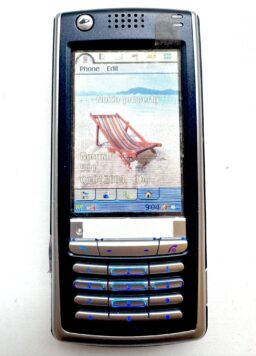
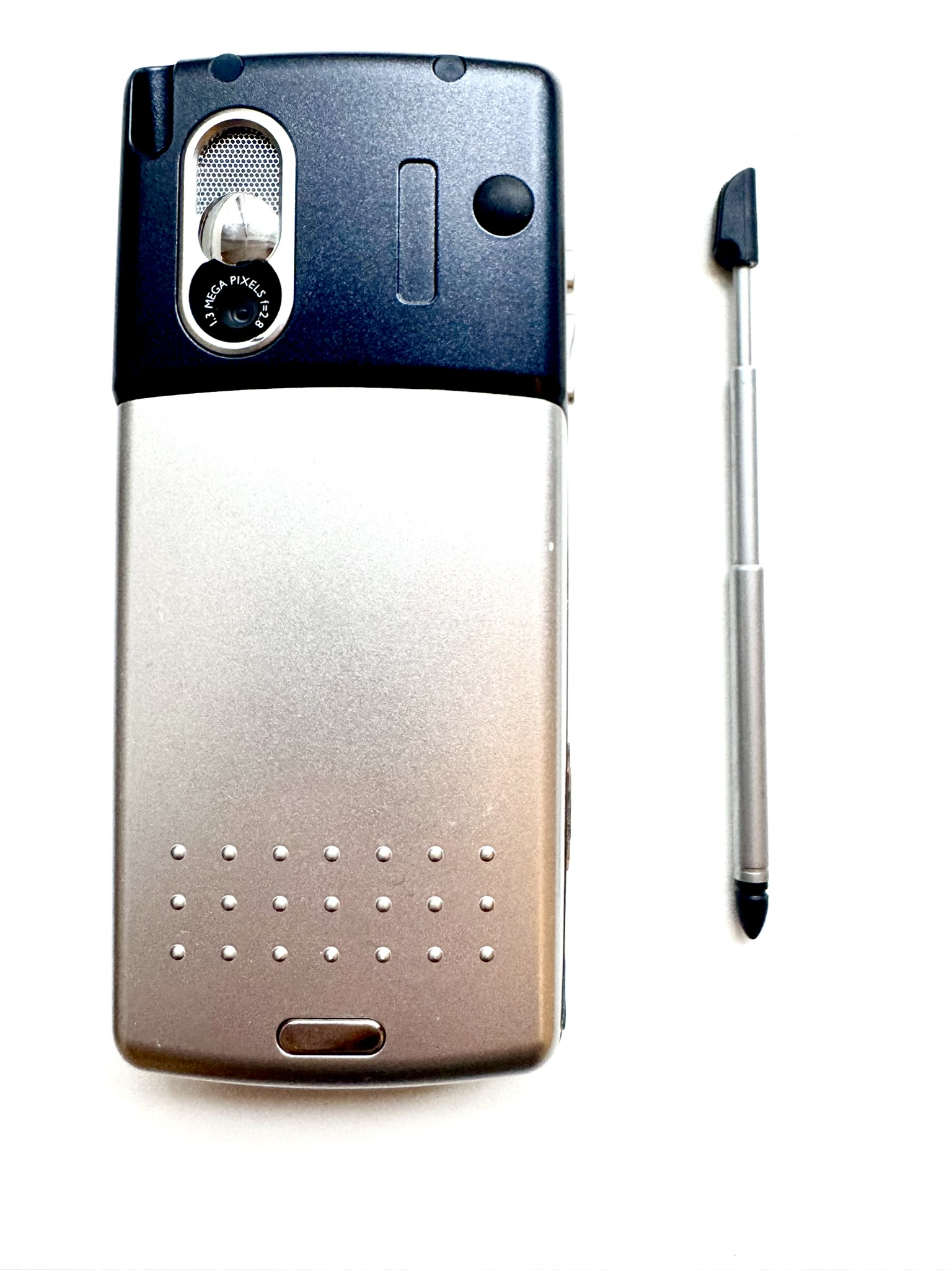
BenQ P31 Unreleased Prototype: Nokia 6708’s Hidden Twin
Quick View💎 Rarity Index: X (Mystical Prototype)
⭐ WOW Factor: The BenQ P31 is the original device behind the Nokia 6708
It is one of the only non-Nokia smartphones ever sold with Nokia branding.
👁 Evaluation in my collection: Great – 9.5/10
⏱ Life timer: N/A | 📦 Boxed: NO
📅 Release Year: 2004 | 💰 Release Price: N/A
📊 Units Sold: 0
📰 Why this phone matters: This unit is an ultra-rare BenQ P31 engineering prototype, representing one of the most historically significant missing links in Symbian UIQ development. Originally conceived around 2003-2004 as BenQ’s entry into the high-end touchscreen smartphone market, the P31 was built on Symbian OS 7 with UIQ 2.1 and designed as a compact, stylus-driven business device. It never reached commercial release, and only a very small number of early engineering samples were ever produced.This unit stands out immediately. It carries no BenQ branding, no label, no IMEI sticker, and no certification markings whatsoever, confirming it as a direct engineering lab device belonging to the EVT or very early DVT phase. Even more extraordinary, it boots with Nokia startup logos, revealing its role in one of the most unusual collaborations in Symbian history: the transformation of the BenQ P31 hardware platform into the commercial Nokia 6708.
During development, Nokia needed a UIQ device for Asian markets but did not want to engineer new UIQ hardware from scratch. Instead, Nokia evaluated the P31 as a potential base. This unit belongs to the narrow transitional window where Nokia UIQ firmware branches were loaded onto BenQ hardware to test compatibility, performance, and UIQ adaptation. Evidence of this includes Nokia boot screens, Nokia font structures, early Nokia overlays for PIM apps, and firmware variant directories corresponding to internal Nokia identifiers such as E582 or UIQ test builds. This type of cross-firmware contamination is almost never seen outside internal Symbian development environments.
Hardware examination indicates the original P31 layout: touchscreen with stylus input, UIQ key structure, OMAP-based platform, VGA camera module, and early UIQ 2.1 software stack. The matte prototype plastics, generic shielding, unbranded flex cables, and absence of final molding marks clearly separate it from the later Nokia 6708 retail hardware. Meanwhile, the Nokia firmware elements confirm the device was active during the validation period before Nokia redesigned the shell, finalized the PCB revisions, and prepared the 6708 for market release.
Historically, the BenQ P31 is known from documents, press mentions, and UIQ SDK references but extremely few physical units survive. Most were destroyed when BenQ cancelled its Symbian efforts and shifted to Windows Mobile and Siemens acquisition projects. Estimates based on engineering validation patterns suggest fewer than 40 to 80 EVT devices were made, with only a fraction entering Nokia testing flows. Units that display Nokia boot elements but retain full P31 prototype hardware are believed to number in the low single digits, making this unit one of the rarest Symbian UIQ artifacts in private hands.
Beyond rarity, this unit captures an entire unspoken chapter of smartphone evolution. It demonstrates how early OEM partnerships shaped device portfolios, how Symbian UIQ was adapted beyond Sony Ericsson hardware, and how Nokia explored touchscreen ecosystems prior to its Series 90 and later platforms. The P31 shows that Nokia was more deeply involved in UIQ experimentation than publicly acknowledged, using BenQ hardware as a bridge to enter UIQ markets quickly. It also highlights the technical flexibility of Symbian OS 7 and UIQ 2.1, which could be made to run on foreign hardware architectures with relatively limited porting.
For collectors, this unit sits at the highest echelon of prototype rarity. It is a never-released engineering platform, positioned between two manufacturers, with firmware that exposes internal development layers normally hidden inside corporate labs. It is a device that not only predates the Nokia 6708, but directly influenced its existence. As a result, this BenQ P31 prototype is not just a smartphone; it is a critical historical artifact documenting the intersection of BenQ’s abandoned Symbian ambitions and Nokia’s strategic adaptation of UIQ technology.
This unit, with its untouched prototype housing, label-free chassis, stylus support, UIQ interface, and Nokia boot sequences, stands as one of the finest surviving examples of transitional Symbian engineering hardware. It is a cornerstone piece for any top-tier collection focused on prototypes, UIQ development, or cross-manufacturer Symbian evolution.
📝 Reviews when released: N/A 💔