

">

Showing 169–180 of 226 results
-


Nokia 9110
Quick View💎 Rarity Index: C (Common)
👁 Evaluation in my collection: Great – 9/10
⏱ Life timer: N/A | 📦 Boxed: YES
📅 Release Year: 2000 | 💰 Release Price: N/A
📊 Units Sold: ~300k
📰 Why this phone matters: The?Nokia 9110 Communicator?is the updated model of the Nokia 9000 Communicator in the?Communicator series. Its biggest change from the 9000 is that it weighs much less. The product line was continued in 2000 by the introduction of Nokia 9210 Communicator which introduced a wide TFT colour internal screen📝 Reviews when released: N/A 💔
-


Nokia 9210
Quick View💎 Rarity Index: B (Uncommon)
⭐ WOW Factor: The first Nokia phone to run on the Symbian OS platform version 6, The first Nokia phone with card slot for expandable memory
👁 Evaluation in my collection: Great – 9.5/10
🕵 Nokia Codename: Linda
⏱ Life timer: N/A | 📦 Boxed: YES
📅 Release Year: 2000 | 💰 Release Price: ~1150 $
📊 Units Sold: ~500k
📰 Why this phone matters: It was the first device to run on the Symbian OS platform, version 6, succeeding version 5 of EPOC. It also introduced Nokia’s Series 80 interface, which was the result of Symbian Ltd.’s ‘Crystal’ design.It was also the first Nokia with a card slot for expandable memory.📝 Reviews when released: Mobile Review 🔗
-


Nokia 9300
Quick View💎 Rarity Index: C (Common)
👁 Evaluation in my collection: As New – 10/10
🕵 Nokia Codename: Mini
⏱ Life timer: N/A | 📦 Boxed: YES
📅 Release Year: 2005 | 💰 Release Price: ~800-850$
📊 Units Sold: ~800k
📰 Why this phone matters: The Nokia 9300 is a Nokia Series 80 Symbian Smartphone introduced in 2004. It is used as a normal though bulky mobile phone in closed mode, when it is flipped open it can be used like a very small notebook computer with a 640×200 screen. The phone also has speakerphone functionality, which is activated automatically when the phone is flipped open. An MP3 player is also built into the phone.📝 Reviews when released: Mobile Review 🔗
-


Nokia 9300i
Quick View💎 Rarity Index: C (Common)
👁 Evaluation in my collection: As New – 10/10
🕵 Nokia Codename: Mini
⏱ Life timer: 1 m | 📦 Boxed: YES
📅 Release Year: 2006 | 💰 Release Price: ~600 €
📊 Units Sold: ~400k
📰 Why this phone matters: The Nokia 9300i is an updated version of 9300 with WiFi capability. The Nokia 9300 is a Nokia Series 80 Symbian Smartphone introduced in 2004. It is used as a normal though bulky mobile phone in closed mode, when it is flipped open it can be used like a very small notebook computer with a 640×200 screen. The phone also has speakerphone functionality, which is activated automatically when the phone is flipped open. An MP3 player is also built into the phone.📝 Reviews when released: All about symbian 🔗
-


Nokia 9500 Black
Quick View💎 Rarity Index: B (Uncommon)
⭐ WOW Factor: The first Nokia phone with WI-FI
👁 Evaluation in my collection: Great – 9/10
🕵 Nokia Codename: Erin
⏱ Life timer: 3h | 📦 Boxed: NO
📅 Release Year: 2005 | 💰 Release Price: ~500 €
📊 Units Sold: ~1M
📰 Why this phone matters: Nokia 9500 Communicator is a smartphone produced by Nokia, introduced on 24 February 2004 and released in November 2004. It runs on the Symbian-based Series 80 platform.
The 9500 is equipped with a 150 MHz Texas Instruments OMAP processor and 64 megabytes of SDRAM. It features two screens – a fully functional interior screen, and a restricted-function external screen, which operates on a stripped-down Series 40 user interface.
Connectivity features of the 9500 include: Bluetooth, infrared, USB, Wi-Fi (Nokia’s first device with Wi-Fi), CSD, HSCSD, GPRS and EDGE. It has send and receive fax facilities (without scanner) and multi-account POP3/IMAP email client.
The built-in Web browser, a Nokia-branded version of Opera, is able to render both WAP and HTML Web pages. Like others in the Communicator series, the 9500 has a full QWERTY keyboard.
Built-in software includes a word processor, spreadsheet and presentation program, which are compatible with the Microsoft Office suite equivalents; also featured is an MP3 player. In addition to the software applications provided by Nokia, a large range of third-party software is available; many programs written for older Nokia Communicators are compatible with the 9500 and new software can be written in C++ or OPL.
The 9500 also runs Java ME applications, but some do not make full use of the unusually large and wide screen, so that many existing Java games will run, but only use the top left hand corner of the screen. It supports storage on a Multimedia Card (MMC) of up to 2 GB (on later firmware versions).
The 9500 is only available with 900 MHz, 1800 MHz and 1900 MHz radios. There were many rumors that a U.S. version with 850 MHz radio capability was going to be made, but it never materialized. Nokia was producing simultaneously the 9500 and its related version, the 9300, so they decided to make a U.S. version of the 9300 instead.📝 Reviews when released: CNET 🔗
-
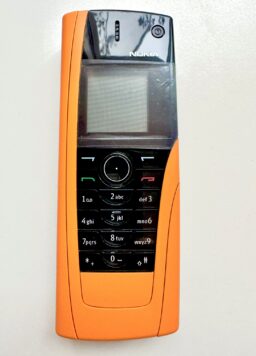
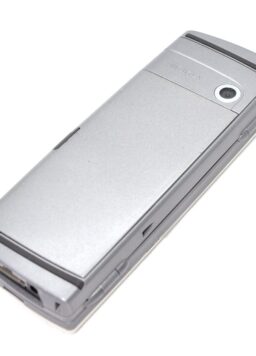
Nokia 9500 Orange
Quick View💎 Rarity Index: S (Ultra Rare)
⭐ WOW Factor: The first Nokia phone with WI-FI
👁 Evaluation in my collection: Great – 9/10
🕵 Nokia Codename: Erin
⏱ Life timer: 3h | 📦 Boxed: NO
📅 Release Year: 2005 | 💰 Release Price: ~500 €
📊 Units Sold: ~1M
📰 Why this phone matters: Nokia 9500 Communicator is a smartphone produced by Nokia, introduced on 24 February 2004 and released in November 2004. It runs on the Symbian-based Series 80 platform.
The 9500 is equipped with a 150 MHz Texas Instruments OMAP processor and 64 megabytes of SDRAM. It features two screens – a fully functional interior screen, and a restricted-function external screen, which operates on a stripped-down Series 40 user interface.
Connectivity features of the 9500 include: Bluetooth, infrared, USB, Wi-Fi (Nokia’s first device with Wi-Fi), CSD, HSCSD, GPRS and EDGE. It has send and receive fax facilities (without scanner) and multi-account POP3/IMAP email client.
The built-in Web browser, a Nokia-branded version of Opera, is able to render both WAP and HTML Web pages. Like others in the Communicator series, the 9500 has a full QWERTY keyboard.
Built-in software includes a word processor, spreadsheet and presentation program, which are compatible with the Microsoft Office suite equivalents; also featured is an MP3 player. In addition to the software applications provided by Nokia, a large range of third-party software is available; many programs written for older Nokia Communicators are compatible with the 9500 and new software can be written in C++ or OPL.
The 9500 also runs Java ME applications, but some do not make full use of the unusually large and wide screen, so that many existing Java games will run, but only use the top left hand corner of the screen. It supports storage on a Multimedia Card (MMC) of up to 2 GB (on later firmware versions).
The 9500 is only available with 900 MHz, 1800 MHz and 1900 MHz radios. There were many rumors that a U.S. version with 850 MHz radio capability was going to be made, but it never materialized. Nokia was producing simultaneously the 9500 and its related version, the 9300, so they decided to make a U.S. version of the 9300 instead.📝 Reviews when released: CNET 🔗
-


Nokia C3-00
Quick View💎 Rarity Index: D (Very Common)
👁 Evaluation in my collection: Good – 8/10
⏱ Life timer: 37h | 📦 Boxed: NO
📅 Release Year: 2010 | 💰 Release Price: N/A
📊 Units Sold: ~15M
📰 Why this phone matters: The Nokia C3-00 is a QWERTY bar feature phone with Nokia Series 40 mobile operating system released under the Cseries line of phones by Nokia. It features a full 4-line QWERTY keyboard, like the earlier Nokia 6800 series models. It is being advertised as an entry-level messaging and social networking phone, retailing at 90 eur;os before taxes. It was introduced on 13 April 2010 alongside the Nokia E5 and C6.📝 Reviews when released: Mobile Review 🔗
-


Nokia E50-2
Quick View💎 Rarity Index: A (Rare)
👁 Evaluation in my collection: Great – 9.8/10
🕵 Nokia Codename: Siperia
⏱ Life timer: 273h | 📦 Boxed: YES
📅 Release Year: 2006 | 💰 Release Price: ~200 £
📊 Units Sold: ~200k
📰 Why this phone matters: The Nokia E50 Business Device is a bar-style monoblock quad-band smartphone from Nokia announced 18 May 2006 as part of the Eseries, intended primarily for the corporate business market. It includes sophisticated e-mail support for Nokia’s Intellisync Wireless Email, BlackBerry Connect, Visto Mobile, Activesync Mail for Exchange, Altexia as well as IMAP4. It also has the ability to view Microsoft Word, PowerPoint, and Excel attachments, and PDF documents but it cannot be used for editing these without additional apps. An application manager downloads, removes and installs both Nokia and third-party applications. Device to device synchronization is possible with Data transfer application. Features include EDGE, Bluetooth 2.0, a 1,280 x 960 pixels (1.3-megapixel) camera, a MicroSD memory-card slot, and digital music and video player functionality through RealPlayer and Flash Player. This unit does not support UMTS, Wi-Fi, or FM radio.It uses the third edition of the Series 60 user-interface (S60v3) and the Symbian operating system version 9.1. It is not binary compatible with software compiled for earlier versions of the Symbian operating system.
📝 Reviews when released: CNET 🔗
-


Nokia E60 Prototype F5.0
Quick View💎 Rarity Index: S (Ultra Rare)
👁 Evaluation in my collection: Great – 9.5/10
🕵 Nokia Codename: Mars
⏱ Life timer: 0m | 📦 Boxed: NO
📅 Release Year: 2006 | 💰 Release Price: N/A
📊 Units Sold: ~500k (final units)
📰 Why this phone matters: The Nokia E60 is a traditional candybar style smartphone from the Eseries business phone range, an S60 3rd Edition Symbian device. It was introduced on 12 October 2005 along with Nokia E61 and Nokia E70📝 Reviews when released: Mobile Review 🔗
-
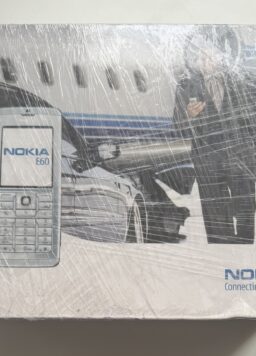
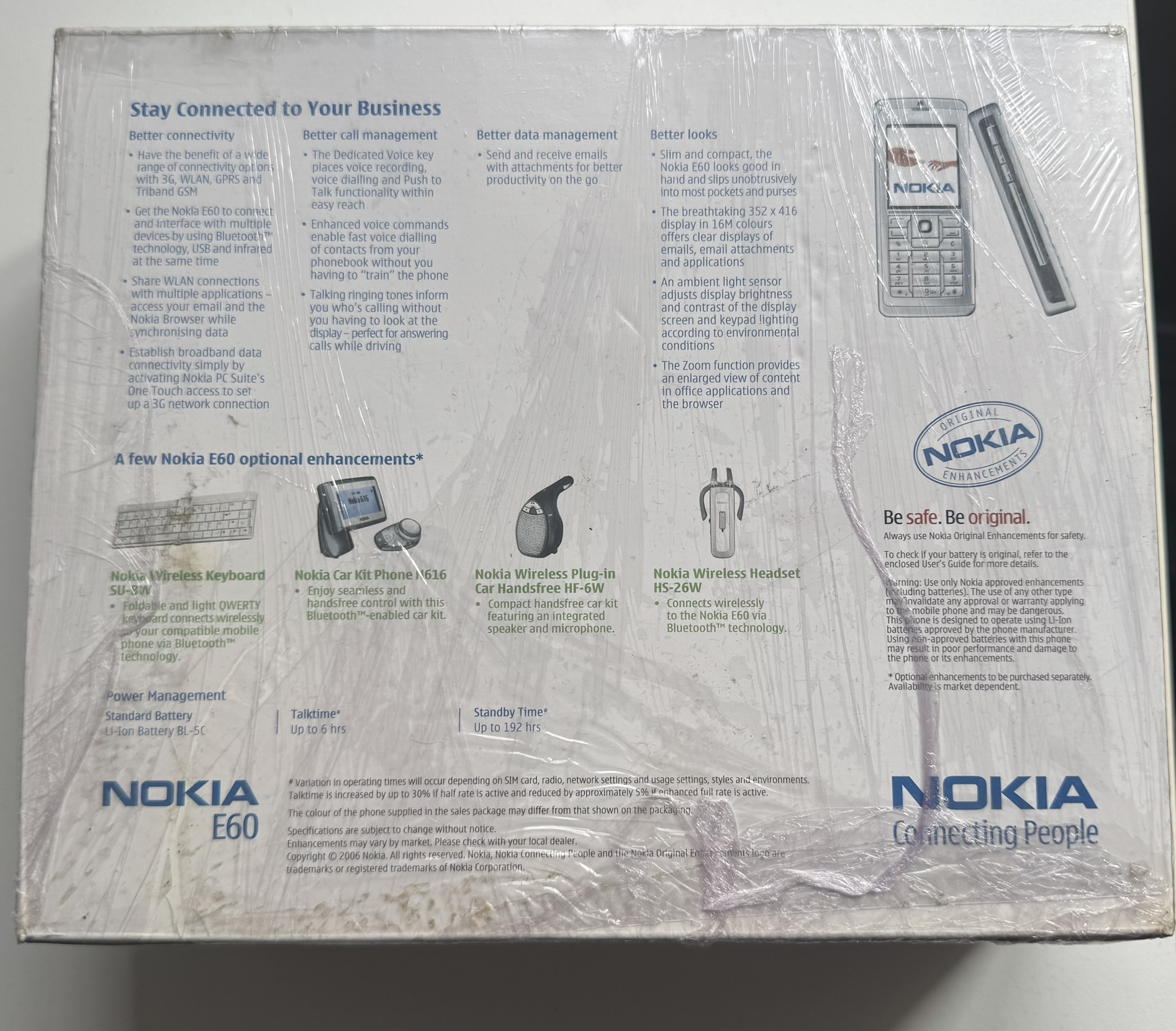
Nokia E60: Sealed Australia Variant BNIB
Quick View💎 Rarity Index: S (Ultra Rare)
👁 Evaluation in my collection: Great – 9.5/10
🕵 Nokia Codename: Mars
⏱ Life timer: 0m | 📦 Boxed: NO
📅 Release Year: 2006 | 💰 Release Price: N/A
📊 Units Sold: ~500k
📰 Why this phone matters: This unit is an exceptionally rare sealed Nokia E60 from the Australia market, preserved in untouched BNIB condition. The E60 was Nokia’s pure business flagship, a Symbian S60 3rd Edition device built without a camera for use in secure enterprise environments, from financial institutions to restricted industrial sites. The large 352×416 display, metal construction and corporate-grade hardware defined the early Eseries approach to mobile productivity.As an Australia variant, this unit carries the region’s specific labeling and certification marks, reflecting Nokia’s APAC distribution of enterprise devices. Nearly all E60 phones were deployed in heavy-use corporate environments, making sealed retail examples virtually impossible to find today. This unopened box protects a complete and unhandled device exactly as it left Nokia’s distribution pipeline, complete with its regional accessories and packaging.
For collectors, the sealed condition elevates this E60 into a true time capsule: a high-spec business smartphone from an era when Nokia dominated enterprise mobility. Its camera-free design, powerful connectivity suite and advanced VoIP capabilities made it a unique hardware configuration even when new, and today it stands as one of the most elusive Eseries devices to acquire in untouched form.
📝 Reviews when released: Mobile Review 🔗
-
Nokia E61 Prototype B3.0 : The “Smailer” | Unreleased Rare Black and Silver colour
Quick View💎 Rarity Index: S (Ultra Rare)
👁 Evaluation in my collection: Great – 9.8/10
🕵 Nokia Codename: Smailer
⏱ Life timer: 0 | 📦 Boxed: NO
📅 Release Year: 2006 | 💰 Release Price: ~250 €
📊 Units Sold: ~1M (final units)
📰 Why this phone matters: This unit is a remarkable historic artefact: a prototype Smailer RM-89 hardware build of the Nokia E61, finished in an unreleased two-tone silver and black housing that never reached consumer production. The color layout is unlike any retail E61, combining a silver frame with a black upper section and a unique keypad palette that does not exist on final units. The keypad itself uses a mixed color scheme reminiscent of the later E62 look, but with a configuration that was never approved for market release.Inside the casing you find the clearest testimony to its origin: model field XXXX, prototype build B3, product code 0523307, internal R&D IMEI beginning with 004400, and full Property Of Nokia, Not For Sale, Made In Finland labeling. This confirms the phone as an authentic preproduction engineering unit created during early development cycles before cosmetic design and final materials were locked down.
Externally the device presents the full QWERTY keyboard layout, 5-way joystick and wide landscape display that defined the E61 family. Yet this prototype stands apart because of its unreleased finish: a rare two-tone silver and black shell matched with a hybrid keypad coloring that blurs the line between E61 and E62 aesthetics. The magnesium-alloy structure and rugged business-class construction already appear in place, but the cosmetics clearly represent a transitional stage in Nokia’s decision process.
Although this prototype may never have carried final firmware or passed network certification, its hardware is essentially complete. It captures a frozen moment when Nokia was experimenting with materials, colors and layouts for what would become one of the defining smartphones of the business-centric Eseries. For collectors and historians, this unit is far more than a phone: it is a one-off window into Nokia’s internal design evolution, a rare glimpse of what the E61 might have looked like had this striking silver-and-black, E62-influenced combination reached the market.
📝 Reviews when released: All About Symbian 🔗
-


Nokia E61i
Quick View💎 Rarity Index: C (Common)
👁 Evaluation in my collection: Great – 9/10
⏱ Life timer: 218h | 📦 Boxed: NO
📅 Release Year: 2007 | 💰 Release Price: ~650 $
📊 Units Sold: ~1.5M
📰 Why this phone matters: The E61i is thinner than the E61 by a small margin but is 11 cc smaller. The E61i has a better build quality over the E61 and possesses a rather stable and solid body. The keyboard has definitely got a few updates – first, the navigation joystick is replaced with a D-pad, which is a great choice by the way. Then there are two new shortcut keys – the Phonebook and My Own key. The My Own key is a customizable shortcut key that you can use for starting an application of your choice. The keys of the QWERTY keyboard have gotten just a notch smaller, but the space between them has increased. Furthermore their tactile feedback is far better on E61i than on the E61. As a result the ergonomics of the QWERTY keyboard have greatly increased.📝 Reviews when released: SoftPedia 🔗