

">

Showing 25–36 of 226 results
-
Nokia 3128 Prototype “ID SAMPLE”: BenQ Hybrid | Unreleases Colour Light Blue
Quick View💎 Rarity Index: X (Mystical Prototype)
⭐ WOW Factor: Represents a short-lived moment when BenQ attempted to showcase its ability to deliver a complete UI solution, hoping to convince Nokia that full software outsourcing for low-cost devices was feasible.
The existence of this device is proof of a BenQ-driven initiative, briefly evaluated and ultimately rejected by Nokia.
Only a handful of such BenQ UI?on?Nokia hardware identity samples were ever created, making surviving units exceptionally rare.👁 Evaluation in my collection: New – 10/10
🕵 Nokia Codename: Kirin
⏱ Life timer: 0 | 📦 Boxed: NO
📅 Release Year: 2003 | 💰 Release Price: ~300 $
📊 Units Sold: ~15M (final units)
📰 Why this phone matters: This device is one of the strangest, most intriguing Nokia 3128 variants ever uncovered. Externally it follows the familiar engineering path of the 3128 platform, but once powered on, everything breaks the pattern. There is no Nokia branding in the software, no Nokia splash screen, no Series 40 heritage, instead it boots into a BenQ-style interface, complete with custom icons, Chinese menu structures, and UI elements never found on any released Nokia product.The label inside reads “ID SAMPLE”, marking it as a pre-production identity unit used for internal validation during Nokia’s ODM sourcing phase. These ID Samples were not mass-produced, not distributed to carriers, and not meant to survive outside the labs. The combination of Nokia hardware and a BenQ firmware stack indicates that this device comes from the period when Nokia briefly explored outsourcing complete handset UI development to third-party Asian manufacturers before ultimately abandoning the idea.
The handwriting is a timestamp from the engineering team: “August 16, 2004.”
It marks when this specific prototype was logged, flashed, or validated.The software screens match early prototypes from unreleased BenQ flip designs, particularly those associated with the never-released BenQ A-Series Asian clamshells, hinting that this firmware was being evaluated on Nokia shells for cost and speed benchmarking. The UI animations, iconography, and color palettes align far more with BenQ’s internal 2004-2005 development than with anything Nokia ever shipped.
A detail that further confirms how early this unit is, the SIM card lock mechanism is completely missing, leaving the slot open and unfinished exactly as seen on raw factory evaluation samples. Even more telling, the device reports an IMEI of 0000000, a clear sign of a pre-IMEI-burning engineering stage where the radio stack and identity fields had not yet been finalized.
The mysterious “cmg” sticker seen on the display is consistent with internal testing labels used during configuration management, marking the unit for firmware staging or UI evaluation. These stickers usually identify a branch, a module, or a build handler inside the engineering workflow and marks it as a monitored experimental build – exactly the kind of anomaly this prototype represents.
All the elements together, the missing SIM lock, the IMEI 0000000, the absent Nokia splash, the BenQ interface, the “ID SAMPLE” marking, the prototype hardware architecture, and the inconsistencies between software and chassis, place this device among the rarest 3128 developmental anomalies, far more unusual than standard prototypes or early F-series units. It is a tangible piece of the abandoned Nokia-BenQ convergence experiments, where Nokia evaluated whether foreign UI stacks could run on their hardware to accelerate low-cost market entry.
A true one-off laboratory hybrid, and one of the most unusual pre-production Nokia 3128 derivatives ever documented.
📝 Reviews when released: N/A 💔
-
Nokia 3128 Prototype F5.0 : Codename Kirin| Unreleased Colour (Orange)
Quick View💎 Rarity Index: S (Ultra Rare)
⭐ WOW Factor: Represents a short-lived moment when BenQ attempted to showcase its ability to deliver a complete UI solution, hoping to convince Nokia that full software outsourcing for low-cost devices was feasible.
The existence of this device is proof of a BenQ-driven initiative, briefly evaluated and ultimately rejected by Nokia.
Only a handful of such BenQ UI?on?Nokia hardware identity samples were ever created, making surviving units exceptionally rare.👁 Evaluation in my collection: New – 10/10
🕵 Nokia Codename: Kirin
⏱ Life timer: 0 | 📦 Boxed: NO
📅 Release Year: 2003 | 💰 Release Price: ~300 $
📊 Units Sold: ~15M (final units)
📰 Why this phone matters: A remarkably rare piece of Nokia’s China-market CDMA history, the Nokia 3128 (Type RH-72) stands apart from the brand’s mainstream lineup.
Developed during Nokia’s short-lived collaboration with BenQ/Qisda for ODM CDMA devices, the 3128 blends Nokia’s software customisation with a hardware platform originating from BenQ’s Kirin F5.0 design family – a handset architecture that BenQ itself never released commercially.This prototype unit, finished in an unreleased Orange colourway, represents a pre-production stage never intended for the public market. The colour scheme follows BenQ’s design language rather than Nokia’s, making it instantly identifiable among collectors familiar with early-2000s ODM manufacturing. Hardware elements – including the casing geometry, battery interface and Qualcomm-based CDMA internals – further underline its BenQ lineage while still carrying official Nokia branding, labels and firmware.
The device offered compact CDMA 1X connectivity, a lightweight clamshell form factor and the simplified user interface typical of Nokia’s China-exclusive CDMA portfolio of the era.
This example is preserved brand new, never used in the collection – a highly desirable state for a model whose production numbers were already extremely small.
A rare convergence of two major manufacturers’ design philosophies, the Nokia 3128 prototype in Orange stands as one of the most distinctive and least-known ODM Nokia variants ever created.
📝 Reviews when released: N/A 💔
-


Nokia 3200
Quick View💎 Rarity Index: C (Common)
👁 Evaluation in my collection: As New – 10/10
🕵 Nokia Codename: Rio
⏱ Life timer: 92h | 📦 Boxed: NO
📅 Release Year: 2003 | 💰 Release Price: ~300 $
📊 Units Sold: ~8M
📰 Why this phone matters: An interesting feature present in this phone is that the face plate system allows users to print out their own cut-out cover designs and use it in the phone. The official special released designs include “Snowboard,” “Street life” and “Urban chic”. It was thus marketed as being “fun and funky” with a unique style📝 Reviews when released: Mobile Review 🔗
-
Nokia 3208c: The BNIB Hybrid Touch Concept
Quick View💎 Rarity Index: B (Uncommon)
⭐ WOW Factor: One of the only Nokias ever made with a handwriting recognition touch-panel on the keypad – an experimental design exclusive to China.
👁 Evaluation in my collection: BNIB – 10/10
⏱ Life timer: 0 | 📦 Boxed: YES
📅 Release Year: 2009 | 💰 Release Price: ~200 $
📊 Units Sold: ~200k
📰 Why this phone matters: The Nokia 3208c (RM-572) is one of the most unusual and least-known Nokia models ever produced – a China-exclusive, touch-enhanced feature phone released only in select Asian markets and almost never seen in eur;ope today. This unit goes even further: it’s a BNIB (Brand New In Box) example, making it an exceptional collector’s piece given how few survived.What makes it special
The 3208c belongs to Nokia’s experimental lineup developed specifically for the Chinese market, where handwriting recognition and touch input were already mainstream years before global adoption.
Instead of a touchscreen smartphone, Nokia implemented a resistive touch layer on top of a traditional display, paired with a touch-enabled numeric keypad-allowing stylus input for handwriting without abandoning the classic keypad design. This hybrid concept existed only on a handful of China-only Nokias.
📝 Reviews when released: N/A 💔
-


Nokia 3210 – The Youth Icon
Quick View💎 Rarity Index: D (Very Common)
👁 Evaluation in my collection: As New – 10/10
⏱ Life timer: 5m | 📦 Boxed: YES
📅 Release Year: 1999 | 💰 Release Price: ~150 £
📊 Units Sold: ~160M
📰 Why this phone matters: The Nokia 3210 is one of the most important mobile phones ever made, a device that redefined the industry and introduced a new era of mobile culture. Released in 1999, it was the first Nokia phone designed specifically for young users, with a focus on style, entertainment, and ease of use. It introduced T9 predictive text, internal antenna design, customizable Xpress-On covers, and three built-in games that helped shape mobile entertainment.The 3210 is historically important as the first widely produced Nokia with a true internal antenna, a major step that defined the design of every Nokia released afterward. This engineering milestone allowed Nokia to eliminate the external antenna stub while maintaining strong GSM reception, setting a new standard for mobile phone design across the entire industry.
This BNIB unit represents the 3210 at its absolute best. With its lightweight form, strong reception, long battery life, and classic Nokia durability, the 3210 became a global phenomenon, selling around 160 million units worldwide. Its internal antenna was a major engineering achievement, eliminating the need for external protruding parts and contributing to its clean, modern look.
Customizable covers made the 3210 a fashion statement. The included green Xpress-On cover is a less common variant that adds even more collector value to this unit. Because the 3210 was heavily used by millions of people for years, finding a new-in-box example is extremely rare, and such units are now considered valuable pieces of mobile history.
The Nokia 3210 remains a cultural icon and a milestone in Nokia’s development. This BNIB example is a perfect representation of one of the most influential handsets ever produced and a standout addition to any serious mobile phone collection.
📝 Reviews when released: N/A 💔
-


Nokia 3220 Blue
Quick View💎 Rarity Index: C (Common)
👁 Evaluation in my collection: Great – 9/10
🕵 Nokia Codename: Asterix
⏱ Life timer: 04h | 📦 Boxed: NO
📅 Release Year: 2004 | 💰 Release Price: ~230 $
📊 Units Sold: ~8M
📰 Why this phone matters: The Nokia 3220 is a GSM, Series 40 mobile phone from Nokia. The Nokia 3220 was introduced on 31 May 2004 as a “fun” device with LED lights and Xpress-on covers.It was the first entry-level phone that offered full access to the Internet, with an XHTML browser and POP3/IMAP email client. The tri-band camera phone uses GPRS and EDGE for its internet connections.📝 Reviews when released: Mobile Review 🔗
-


Nokia 3220 Brown
Quick View💎 Rarity Index: C (Common)
👁 Evaluation in my collection: Brand New Swap – 10/10
🕵 Nokia Codename: Asterix
⏱ Life timer: 01m | 📦 Boxed: NO
📅 Release Year: 2004 | 💰 Release Price: ~230 $
📊 Units Sold: ~8M
📰 Why this phone matters: The Nokia 3220 is a GSM, Series 40 mobile phone from Nokia. The Nokia 3220 was introduced on 31 May 2004 as a “fun” device with LED lights and Xpress-on covers.It was the first entry-level phone that offered full access to the Internet, with an XHTML browser and POP3/IMAP email client. The tri-band camera phone uses GPRS and EDGE for its internet connections.📝 Reviews when released: Mobile Review 🔗
-


Nokia 3230
Quick View💎 Rarity Index: C (Common)
👁 Evaluation in my collection: Great – 9.5/10
⏱ Life timer: N/A | 📦 Boxed: NO
📅 Release Year: 2005 | 💰 Release Price: 350 €
📊 Units Sold: ~5M
📰 Why this phone matters: The Nokia 3230 is a Symbian Series 60 smartphone announced on November 2, 2004. It was billed as the first Series 60 phone aimed at the mass-market rather than the higher-end Series 60 devices with a relatively low cost of 350 eur;os when released in Q1 2005.This phone was designed as a replacement for two previous youth-oriented Nokia phones – the Nokia 3660 Series 60 smartphone and the Nokia 3220 feature phone. No variant of this phone was released for the United States market.It runs on Series 60 2nd Edition Feature Pack 1 (Version 2.1), based on Symbian OS 7.0s. It features several games (including multiplayer Bluetooth games), a 1.23-megapixel camera, Nokia Lifeblog, a 32 MB RS-MMC to store extra images and applications, Push to Talk, a 176×208 pixel 65,536-colour screen, multimedia messaging, and RealPlayer.
The Nokia 3230 is one of the first with Push to Talk over Cellular (PoC), a walkie-talkie style method of communicating, and also Visual Radio, which enhances a normal radio receiver with extra info about artists and songs delivered over GPRS.
For data transfer, the phone can use EDGE to upload up to 35.2 kbit/s and download up to 178.6 kbit/s, and is a GPRS multislot class 10, up to 80 kbit/s.
Known issues
It has been frequently reported that fine dust get into the space between the LCD screen and the transparent plastic cover. The dust can be manually removed by opening the plastic case.In common with many phones of this type, the battery life is not as much as you would expect on older models of phones. Less than 2 days is typical whereas older ‘mono screen’ phones can often manage a week between recharging.
Users also reported that before the call ringtone sound, the 3230 would give a loud “beep” sound, with no way to turn it off or control its volume. The device would beep even on silent mode. This issue was most common in the early models of the phone.
Other users have reported slow response times for the camera, sudden screen blackouts and random reboots.
📝 Reviews when released: Trusted Review 🔗
-
Nokia 3250 Prototype F5.0: Black & Pink
Quick View💎 Rarity Index: S (Ultra Rare)
👁 Evaluation in my collection: Great – 9.8/10
🕵 Nokia Codename: Thunder
⏱ Life timer: 0 | 📦 Boxed: NO
📅 Release Year: 2006 | 💰 Release Price: ~300 €
📊 Units Sold: ~1.5M (final units)
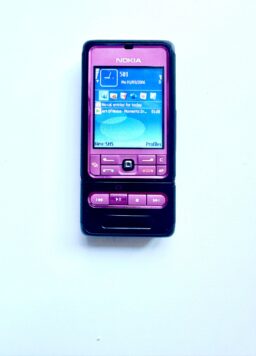
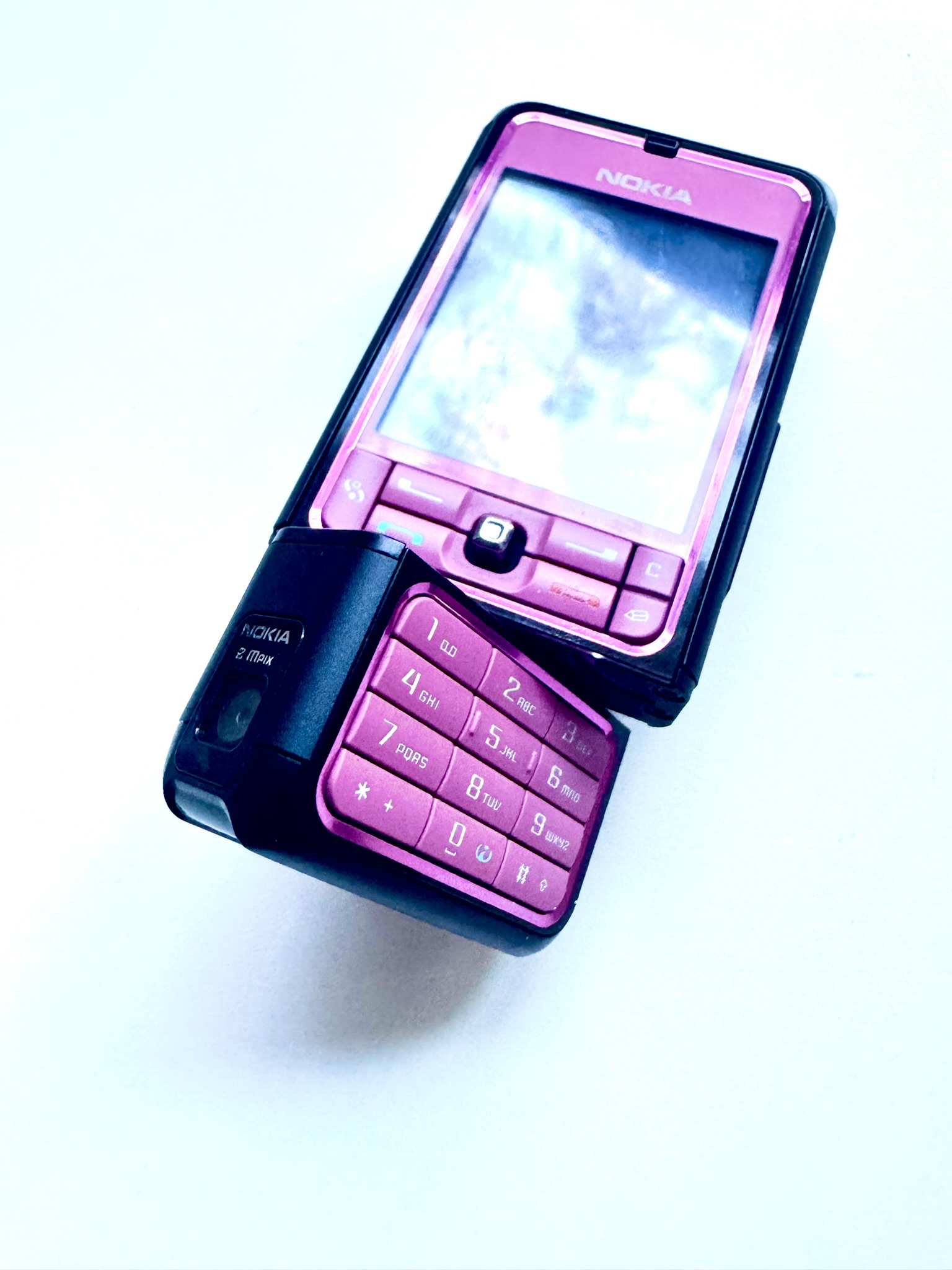
📰 Why this phone matters: Rare Nokia 3250 RM-38 engineering prototype featuring Nokia’s F5/NCT/BDA validation markings. Labeled Prototype – Not for Sale – Property of Nokia and built with pre-production hardware, prototype IMEI, and internal test circuitry. Although the Black & Pink shell reached retail, this device is a true R&D unit used for field testing (F5), Nokia Compatibility Testing (NCT – accessory, firmware, Bluetooth, and sync compatibility validation), and Board Design Assessment (BDA – PCB layout, electrical stability, and radio integrity evaluation). A prototype with NCT + BDA validation tags is exceptionally rare, as these were normally destroyed after evaluation, making this one of the few surviving engineering-stage 3250 units-a remarkable piece of Nokia’s swivel-phone development history.📝 Reviews when released: cNET 🔗
-


Nokia 3300a
Quick View💎 Rarity Index: B (Uncommon)
👁 Evaluation in my collection: Brand New – 10/10
🕵 Nokia Codename: Hitchiker
⏱ Life timer: 0m | 📦 Boxed: NO
📅 Release Year: 2003 | 💰 Release Price: ~330 $
📊 Units Sold: ~2M
📰 Why this phone matters: The succesor of 5510, it supports MP3 and AAC audio and comes with an FM radio, and it can also be used as a digital voice recorder. Included in the standard package is a 64MB MMC memory card for storing data. GPRS data is supported, the display is a 128 x 128 pixel CSTN pane📝 Reviews when released: Mobile Review 🔗
-


Nokia 3300b
Quick View💎 Rarity Index: B (Uncommon)
👁 Evaluation in my collection: BNIB – 10/10
🕵 Nokia Codename: Hitchiker
⏱ Life timer: 0 | 📦 Boxed: YES
📅 Release Year: 2003 | 💰 Release Price: ~330 $
📊 Units Sold: ~2M
📰 Why this phone matters: The succesor of 5510, it supports MP3 and AAC audio and comes with an FM radio, and it can also be used as a digital voice recorder. Included in the standard package is a 64MB MMC memory card for storing data. GPRS data is supported, the display is a 128 x 128 pixel CSTN pane📝 Reviews when released: N/A 💔
-


Nokia 3310 DS
Quick View💎 Rarity Index: D (Very Common)
👁 Evaluation in my collection: Great – 9/10
⏱ Life timer: N/A | 📦 Boxed: YES
📅 Release Year: 2017 | 💰 Release Price: ~50 €
📊 Units Sold: ~12M
📰 Why this phone matters: The Nokia 3310 (2017) is a Nokia-branded feature phone developed by HMD Global. It was announced on 26 February 2017 at Mobile World Congress (MWC) 2017 in Barcelona, Spain, as a revival of the original Nokia 3310 that was produced from early 2000s. An improved model with 3G support was released on 29 October 2017. On 14 February 2017, it was reported that a modernised version of the 3310 would be unveiled at the 2017 Mobile World Congress in Barcelona by HMD Global Oy, a Finnish manufacturer with rights to market phones under the Nokia brand, with the price point of 59 eur;os. On 26 February 2017, the modernised version of the 3310 was relaunched at a price of &eur;o;49.The initial 3310 release only came with support for 2G networks, which led to criticism especially as a number of countries, including the United States,Australia and Singapore were in the process of phasing out their 2G networks; an improved variant of the phone with support for 3G networks was later announced by HMD, released on 29 October 2017.
📝 Reviews when released: PCMag 🔗