

">

Showing 13–24 of 226 results
-


Nokia 2650 Gray
Quick View💎 Rarity Index: C (Common)
👁 Evaluation in my collection: Great – 9.5/10
🕵 Nokia Codename: Pinoccchio
⏱ Life timer: 15h | 📦 Boxed: NO
📅 Release Year: 2004 | 💰 Release Price: ~125 $
📊 Units Sold: ~2M
📰 Why this phone matters: The Nokia 2650 was first made public in the second quarter of 2004. The model was one of Nokia’s few clamshell releases at that time, and being an entry-level phone, it became popular largely due to its low price.📝 Reviews when released: Mobile Review 🔗
-
Nokia 2650 Quiksilver: Sealed Boost Mobile Brown Edition
Quick View💎 Rarity Index: S (Ultra Rare)
⭐ WOW Factor: Quiksilver Nokia 2650 by Boost Mobile is a co-branded surf lifestyle edition
👁 Evaluation in my collection: Great – 9.5/10
🕵 Nokia Codename: Pinoccchio
⏱ Life timer: 15h | 📦 Boxed: YES
📅 Release Year: 2004 | 💰 Release Price: ~125 $
📊 Units Sold: ~50k
📰 Why this phone matters: This unit is a sealed time capsule from the mid 2000s surf and pre paid boom: the Quiksilver Nokia 2650 by Boost Mobile, built on the Brown variant of Nokia’s classic clamshell and wrapped in a massive co branded retail pack. The front of the box is pure surf culture, with bold Quiksilver graphics, a surfer crashing through the waves and a custom Nokia 2650 shown with Quiksilver logos and stripes on the flip. Boost Mobile and yes Optus badges underline that this was the Australian youth offer of its time, complete with a free Boost mini lanyard and 10 dollars of pre paid credit right out of the box.The Quiksilver edition is more than a simple color variant. This bundle includes unique Quiksilver artwork on the phone’s shell, a dedicated Boost Mobile mini lanyard accessory, special surf themed packaging, and prepaid credit built into the offer. The entire package was created as a lifestyle product, tying Nokia’s entry level clamshell design to the surf and skate identity that Boost Mobile used to dominate the prepaid market in Australia. The huge graphic box and branded phone shell make this edition visually stand out far beyond the standard 2650 Brown.
Technically, the phone inside is a standard Nokia 2650: a compact clamshell Series 40 device with a 128×128 color CSTN display, LED alerts for calls and SMS, GPRS data, Java games and BL-4C battery. What makes this sealed Quiksilver edition extraordinary is not a change in hardware, but the way Nokia and Boost wrapped it into a lifestyle bundle. For a collector, this is more than just a phone box; it is a complete, untouched artifact of early 2000s mobile branding, merging Nokia engineering, Quiksilver surf identity and Boost Mobile’s prepaid culture into one rare, perfectly preserved package.
📝 Reviews when released: Mobile Review 🔗
-


Nokia 2650 Red
Quick View💎 Rarity Index: C (Common)
👁 Evaluation in my collection: Great – 9.5/10
🕵 Nokia Codename: Pinoccchio
⏱ Life timer: 28h | 📦 Boxed: NO
📅 Release Year: 2004 | 💰 Release Price: ~125 $
📊 Units Sold: ~2M
📰 Why this phone matters: The Nokia 2650 was first made public in the second quarter of 2004. The model was one of Nokia’s few clamshell releases at that time, and being an entry-level phone, it became popular largely due to its low price.📝 Reviews when released: Mobile Review 🔗
-


Nokia 2652
Quick View💎 Rarity Index: C (Common)
👁 Evaluation in my collection: Great – 9.5/10
🕵 Nokia Codename: Pinoccchio
⏱ Life timer: N/A | 📦 Boxed: NO
📅 Release Year: 2004 | 💰 Release Price: ~125 $
📊 Units Sold: ~500k
📰 Why this phone matters: The Nokia 2650 was first made public in the second quarter of 2004. The model was one of Nokia’s few clamshell releases at that time, and being an entry-level phone, it became popular largely due to its low price.📝 Reviews when released: Mobile Review 🔗
-

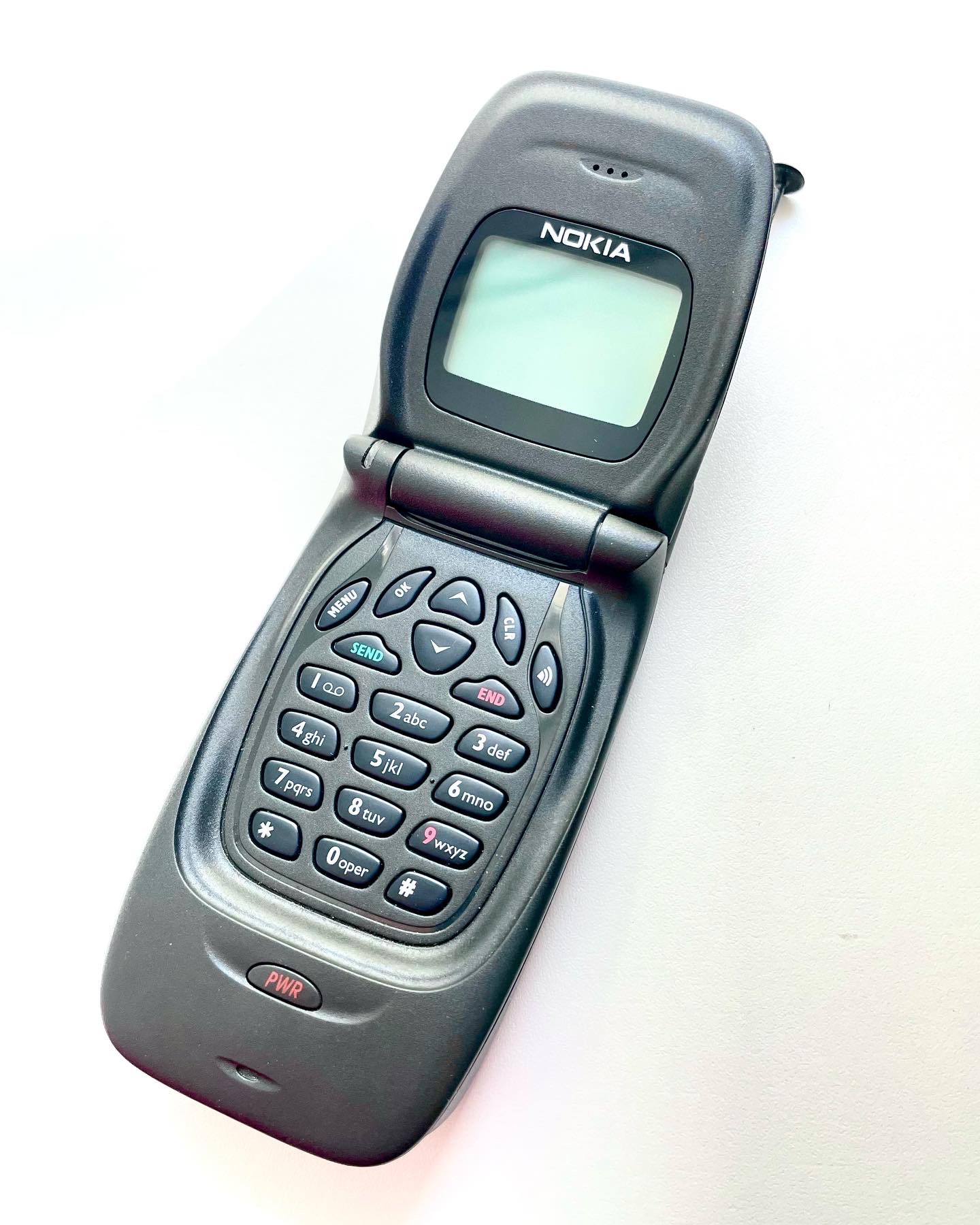
Nokia 282 – The First Style Flip
Quick View💎 Rarity Index: A (Rare)
⭐ WOW Factor: The first Nokia Clamshell
👁 Evaluation in my collection: Great – 9.8/10
🕵 Nokia Codename: Pinoccchio
⏱ Life timer: 02h | 📦 Boxed: YES
📅 Release Year: 1998 | 💰 Release Price: ~500 $
📊 Units Sold: ~600k
📰 Why this phone matters: The Nokia 282 is the latest example of style from the company that first introduced fashion to the world of cellular phones. And, since good looks are only half the solution, the Nokia 282 also includes all the features and performance that people have come to expect from a Nokia phone.This lightweight folding phone weighs only 130 g and comes in a range of sophisticated colours, including Brushed Pewter, Ruby Red, Velvet Indigo and Satin Silver. With a standard battery you’ll be able to talk for up to 100 minutes, or leave your phone on standby for up to 24 hours. You can also select from 12 ringing tune, and where carrier supported, you can even assign a special ringing tune to any number which will allow you to easily recognize a VIP caller.
The Nokia 282 has plenty of shortcuts to save you time, including one-touch access to your phone book and voicemail, and even one-touch dialing. And, with the profiles key, it is easy to change your ring settings to fit your environment. When you’re in a meeting, choose the discrete vibrating alert, or if you’re someplace noisy, switch to loud.
📝 Reviews when released: N/A 💔
-


Nokia 3100
Quick View💎 Rarity Index: D (Very Common)
👁 Evaluation in my collection: Great – 9.8/10
🕵 Nokia Codename: Maxine
⏱ Life timer: 270h | 📦 Boxed: NO
📅 Release Year: 2003 | 💰 Release Price: 50 $
📊 Units Sold: ~15M
📰 Why this phone matters: The Nokia 3100 is a triband-GSM mobile phone announced on 17 June 2003 as an entry-level phone from Nokia and released in September 2003, designed primarily for the newer generation of marketing audience.
The Nokia 3100 was developed from the Nokia 6100 as a successor to the Nokia 3510. The phone was Nokia’s first in the youth-oriented 3000-series to be equipped with a 128×128 pixel passive colour display (4096 colors/12-bit), and included Java MIDP 1.0, XHTML and WAP browser, GPRS, Pop-Port connectivity and Lithium-ion battery. It is also capable of playing polyphonic MIDI files, which can be used as ringtones.
It is compact in size and lightweight, and also features special lighting effects.📝 Reviews when released: N/A 💔
-


Nokia 3100 Orange Gaming
Quick View💎 Rarity Index: B (Uncommon)
👁 Evaluation in my collection: Great – 9.8/10
🕵 Nokia Codename: Maxine
⏱ Life timer: 44h | 📦 Boxed: NO
📅 Release Year: 2003 | 💰 Release Price: 50 $
📊 Units Sold: ~100k
📰 Why this phone matters: The Nokia 3100 is a triband-GSM mobile phone announced on 17 June 2003 as an entry-level phone from Nokia and released in September 2003, designed primarily for the newer generation of marketing audience.
The Nokia 3100 was developed from the Nokia 6100 as a successor to the Nokia 3510. The phone was Nokia’s first in the youth-oriented 3000-series to be equipped with a 128×128 pixel passive colour display (4096 colors/12-bit), and included Java MIDP 1.0, XHTML and WAP browser, GPRS, Pop-Port connectivity and Lithium-ion battery. It is also capable of playing polyphonic MIDI files, which can be used as ringtones.
It is compact in size and lightweight, and also features special lighting effects.📝 Reviews when released: N/A 💔
-


Nokia 3100b
Quick View💎 Rarity Index: C (Common)
👁 Evaluation in my collection: Good – 9/10
🕵 Nokia Codename: Maxine
⏱ Life timer: 79h | 📦 Boxed: NO
📅 Release Year: 2003 | 💰 Release Price: 50 $
📊 Units Sold: ~1.5M
📰 Why this phone matters: This version intended to be used in American GSM networks. It works in GSM 850/1800/1900.Differences from the basic 3100:
The Grid (originally the Line), an additional main menu interface in the settings menu
TTY/TTD option in Menu > Settings > Enhancement settings that appears only if the phone has been connected to a headset, TTD, or similar device
Voice recording during an active call, up to 1 minute
World clock that displays the time for various time zones. The Nokia 3100 is a triband-GSM mobile phone announced on 17 June 2003 as an entry-level phone from Nokia and released in September 2003, designed primarily for the newer generation of marketing audience.
The Nokia 3100 was developed from the Nokia 6100 as a successor to the Nokia 3510. The phone was Nokia’s first in the youth-oriented 3000-series to be equipped with a 128×128 pixel passive colour display (4096 colors/12-bit), and included Java MIDP 1.0, XHTML and WAP browser, GPRS, Pop-Port connectivity and Lithium-ion battery. It is also capable of playing polyphonic MIDI files, which can be used as ringtones.
It is compact in size and lightweight, and also features special lighting effects.📝 Reviews when released: N/A 💔
-


Nokia 3108 – The Handwriting Pioneer
Quick View💎 Rarity Index: A (Rare)
⭐ WOW Factor: Handwriting Recognition
👁 Evaluation in my collection: New – 10/10
⏱ Life timer: 0 | 📦 Boxed: NO
📅 Release Year: 2003 | 💰 Release Price: N/A
📊 Units Sold: ~300k
📰 Why this phone matters: The Nokia 3108 is one of Nokia’s most unusual and innovative feature phones, created specifically for the Chinese market and designed around pen-based handwriting recognition. Built on the early Series 40 platform, the 3108 combines a compact candybar form with a flip-down translucent keypad that reveals a dedicated writing pad. Using the included stylus, the phone can recognize both English and Chinese handwriting, offering an input method perfectly adapted to the complexity of Chinese characters.This unit represents one of Nokia’s rare experiments in interface design, developed long before touchscreens became mainstream. The writing pad system uses stroke detection software and a pressure-sensitive surface, making the 3108 function as an early hybrid between classic keypad phones and later touch-driven devices. It also includes MMS, Java support, and a speakerphone, bringing modern features to a form factor centered on pen input.
Because the 3108 was sold only in China and produced for a short period, surviving units are uncommon, and examples in clean condition are even harder to find. As part of Nokia’s limited Pen Input family, the 3108 stands out as a unique collector piece that captures a moment of bold experimentation in Nokia’s history. It remains one of the very few non-touchscreen devices in the world capable of recognizing handwritten text, making it an important and highly distinctive addition to any serious mobile phone collection.
📝 Reviews when released: N/A 💔
-


Nokia 3110
Quick View💎 Rarity Index: D (Very Common)
⭐ WOW Factor: The first Nokia phone to feature the Navi-Key (a.k.a. D-Pad)
👁 Evaluation in my collection: Great – 9.8/10
⏱ Life timer: NA | 📦 Boxed: YES
📅 Release Year: 1997 | 💰 Release Price: N/A
📊 Units Sold: ~8M
📰 Why this phone matters: The 3110 is a GSM mobile phone handset manufactured by Nokia in Hungary, introduced at CEBIT in March 1997.The 3110 is notable as the first Nokia handset to feature the ‘Navi-Key’ (a.k.a. D-Pad) menu navigation system. The Navi-Key was featured heavily on Nokia handsets, especially the entry-level models such as the Nokia 1100 in the following years. Unlike its successor, the 3210, and subsequent handsets of similar design, the 3110 had an external antenna. The phone was available with a slim, standard or vibrating battery. It could only be used on a GSM-900 network.
The 3110 shared the platform and accessories of the Nokia 8110 “banana phone”.
The model number was reused by Nokia in 2007 when the company launched the Nokia 3110 classic. The 3110 Classic sports a candybar form factor similar to that of the 3110, but adds modern features such as Bluetooth, camera functionality, audio and video playback and recording, and packet data over EDGE, in addition to tri-band functionality.
Unlike subsequent 3000 series mobile phones, its display is not PCD8544 based. This is a special edition made for VW AG, it has red light and LI ION battery📝 Reviews when released: N/A 💔
-


Nokia 3110 Blue VW Edition
Quick View💎 Rarity Index: S (Ultra Rare)
⭐ WOW Factor: The first Nokia phone to feature the Navi-Key (a.k.a. D-Pad)
👁 Evaluation in my collection: Good – 9/10
⏱ Life timer: NA | 📦 Boxed: NO
📅 Release Year: 1997 | 💰 Release Price: N/A
📊 Units Sold: ~10k
📰 Why this phone matters: The 3110 is a GSM mobile phone handset manufactured by Nokia in Hungary, introduced at CEBIT in March 1997.The 3110 is notable as the first Nokia handset to feature the ‘Navi-Key’ (a.k.a. D-Pad) menu navigation system. The Navi-Key was featured heavily on Nokia handsets, especially the entry-level models such as the Nokia 1100 in the following years. Unlike its successor, the 3210, and subsequent handsets of similar design, the 3110 had an external antenna. The phone was available with a slim, standard or vibrating battery. It could only be used on a GSM-900 network.
The 3110 shared the platform and accessories of the Nokia 8110 “banana phone”.
The model number was reused by Nokia in 2007 when the company launched the Nokia 3110 classic. The 3110 Classic sports a candybar form factor similar to that of the 3110, but adds modern features such as Bluetooth, camera functionality, audio and video playback and recording, and packet data over EDGE, in addition to tri-band functionality.
Unlike subsequent 3000 series mobile phones, its display is not PCD8544 based. This is a special edition made for VW AG, it has red light and LI ION battery📝 Reviews when released: N/A 💔
-


Nokia 3110 Orange
Quick View💎 Rarity Index: B (Uncommon)
⭐ WOW Factor: The first Nokia phone to feature the Navi-Key (a.k.a. D-Pad)
👁 Evaluation in my collection: Good – 9/10
⏱ Life timer: NA | 📦 Boxed: NO
📅 Release Year: 1997 | 💰 Release Price: N/A
📊 Units Sold: ~8M
📰 Why this phone matters: The 3110 is a GSM mobile phone handset manufactured by Nokia in Hungary, introduced at CEBIT in March 1997.The 3110 is notable as the first Nokia handset to feature the ‘Navi-Key’ (a.k.a. D-Pad) menu navigation system. The Navi-Key was featured heavily on Nokia handsets, especially the entry-level models such as the Nokia 1100 in the following years. Unlike its successor, the 3210, and subsequent handsets of similar design, the 3110 had an external antenna. The phone was available with a slim, standard or vibrating battery. It could only be used on a GSM-900 network.
The 3110 shared the platform and accessories of the Nokia 8110 “banana phone”.
The model number was reused by Nokia in 2007 when the company launched the Nokia 3110 classic. The 3110 Classic sports a candybar form factor similar to that of the 3110, but adds modern features such as Bluetooth, camera functionality, audio and video playback and recording, and packet data over EDGE, in addition to tri-band functionality.
Unlike subsequent 3000 series mobile phones, its display is not PCD8544 based. This is a special edition made for VW AG, it has red light and LI ION battery📝 Reviews when released: N/A 💔