Showing 229–240 of 353 results
-


Nokia 8800 Silver Glass
Quick ViewThe 8800 features a stainless-steel housing with a scratch-resistant screen and has a weight of 134 grams. According to Nokia, the 8800’s “sophisticated slide mechanism uses premium ball bearings crafted by the makers of bearings used in high performance cars”
-


Nokia 8800 Sirocco Black
Quick ViewThe Nokia 8800 Sirocco Edition (88 redesigned fascia and in “gold” and “queen black”, was released in 2006. This version of the phone has a 2-megapixel camera and slightly updated keypad layout. The phone chassis was slightly modified to include the upgraded 700mAH BP-6X battery. It includes ringtones composed by Brian Eno, who also composed the Windows 95 start-up sound.
In early 2007 Nokia released the 24ct gold plated version of the 8800 Sirocco, which became the most expensive phone (RRP $2049.00) in Nokia’s catalogue of cell phone models up until the newest generation of mobile phones.
-


Nokia 8800 Sirocco Gold
Quick ViewThe Nokia 8800 Sirocco Edition (88 redesigned fascia and in “gold” and “queen black”, was released in 2006. This version of the phone has a 2-megapixel camera and slightly updated keypad layout. The phone chassis was slightly modified to include the upgraded 700mAH BP-6X battery. It includes ringtones composed by Brian Eno, who also composed the Windows 95 start-up sound.
In early 2007 Nokia released the 24ct gold plated version of the 8800 Sirocco, which became the most expensive phone (RRP $2049.00) in Nokia’s catalogue of cell phone models up until the newest generation of mobile phones.
-


Nokia 8800 Special Edition
Quick ViewNokia 8800 Special Edition (RM-13) – a premium stainless-steel slider phone handmade in Nokia’s Salo (Finland) factory and featuring a precision ball-bearing sliding mechanism, mineral glass display and exclusive sound design by Ryuichi Sakamoto. This rare Special Edition variant includes a brushed steel backplate with engraved branding and was produced in limited numbers. A true luxury icon of the mid-2000s, combining exceptional materials with Nokia’s Series 40 premium interface
-
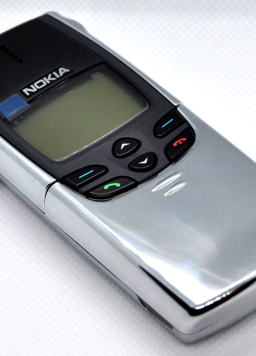

Nokia 8810
Quick ViewIn 1998, the Nokia 8810 was considered a luxury phone. This was due to the sleek new design the 8810 presented. It had no external whip or stub antenna, which was unusual for the time.Instead, it featured an internal antenna, which allowed the phone to be stored in a pocket upside down.Nokia invested hundreds of man hours into research on how people hold their phones for calls; this allowed them to place the antenna accordingly.The 8810 is tapered and weighted to encourage users to hold it below the antenna, minimizing interference. However, this also led to a poorer signal reception compared to an external antenna, which meant battery life was reduced. It was encased entirely in plastic parts; this case would slide down to reveal the keypad. This new appearance, in particular the lack of an external antenna, meant the 8810 had a desirable advantage over its competitors and enjoyed moderate success.The choice to make the antenna internal had a negative effect on battery life, but Nokia felt this was an acceptable tradeoff for getting rid of the external antenna.The design of the phone also made it particularly popular following its release. Unlike most other phones in the market at the time, the Nokia 8810 featured a chrome metal finish as well as a pull down metal slide which covered the keypad and kept it clean. Nokia claimed to prioritize antenna performance over physical design if they were ever in conflict.It was designed to be the flagship and the most luxurious of all Nokia phones at the time, and also one of the first phones with chrome plating.
-

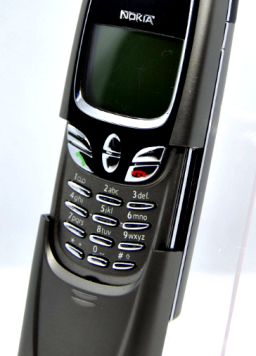
Nokia 8850
Quick ViewThe Nokia 8850 is a mobile phone handset manufactured by Nokia. It was a light alloy-bodied enhanced version of Nokia 8210 model with slider protection of the keypad and white lighting of the keypad and screen. The 8850 is considered to be an un-repairable phone, thus resulting in very few active handsets in the market.It was introduced as a successor of an earlier model, the chrome phone Nokia 8810. It was succeeded by the Nokia 8910, which was released in 2002.
-
Nokia 8850 Gold
Quick ViewThe Nokia 8850 is a mobile phone handset manufactured by Nokia. It was a light alloy-bodied enhanced version of Nokia 8210 model with slider protection of the keypad and white lighting of the keypad and screen. The 8850 is considered to be an un-repairable phone, thus resulting in very few active handsets in the market.It was introduced as a successor of an earlier model, the chrome phone Nokia 8810. It was succeeded by the Nokia 8910, which was released in 2002.
-


Nokia 8855
Quick ViewSmall and lightweight, Stylish white illuminated display for better clarity, Smooth matt finish ,Ergonomically shaped keys Refined design details including clean lines and a sleek color
-


Nokia 8855 Worn
Quick ViewSmall and lightweight, Stylish white illuminated display for better clarity, Smooth matt finish ,Ergonomically shaped keys Refined design details including clean lines and a sleek color
-


Nokia 8910
Quick ViewThe Nokia 8910 is a mobile phone released in 2002 by Nokia. Part of the luxury 8xxx series, it was introduced as a successor of the Nokia 8850/8890. It has a white backlight, and features Bluetooth connectivity. It was succeeded by the Nokia 8800, which was released in 2005.
-


Nokia 8910i
Quick ViewNokia 8910 became very popular due to a high price, unusual opening and titan exterior. A revised model – Nokia 8910i is also rather successful. It differs from its predecessor in color of the phone (now it has only one black color) and availability of color screen. Like the other models from this phone line, a new display is capable to support only 4096 color. The other important difference is Java applications support.
The phone measures 103 – 140.5 x 46 x 20 mm, it can be comfortably worn in the pockets or a hostel. The handset weighs 112 grams, what is a little bit heavier than the weight of the standard phone. On the other hand, titan exterior, which increases the phone’s weight, absorbs shocks and protects hardware. Scratches can’t be noticed on this phone even within the time; the color is not changed. To open the phone, press 2 side keys simultaneously and main part of the phone would be slid.
-


Nokia 9000 Communicator
Quick ViewThe Nokia 9000 Communicator was the first product in Nokia’s Communicator series, announced at CeBIT 1996 and introduced into the market on 15 August 1996.The phone was large and heavy at 397 grams (14.0 oz) but powerful at the time. It is powered by an Intel 24 MHz i386 CPU and has 8 MB of memory, which is divided between applications (4 MB), program memory (2 MB) and user data (2 MB).The operating system is PEN/GEOS 3.0. The Communicator is one of the earliest smartphones on the market,after the IBM Simon in 1994 and the HP OmniGo 700LX, a DOS-based palmtop PC with integrated cradle for the Nokia 2110 cellular phone, announced in late 1995 and shipped in March 1996. It was highly advanced, featuring sending and receiving e-mail and fax via its 9.6 kbit/s GSM modem, and it also had a web browser and business programs. The Communicator is formed of a clamshell design that opens up to reveal a monochrome LCD display with a 640×200 resolution and a full QWERTY keyboard similar to a Psion PDA. It was priced £1,000 in the UK upon launch. Then-CEO of Nokia, Jorma Ollila, said in 2012 regarding the device: “We were five years ahead.”