Showing 1–12 of 40 results
-


Alcatel One Touch Com
Quick ViewThe year is 1997. Nokia has just brought out the “Matrix cell phone” 8110, the Communicator is said to be another 3 years away. At Siemens you get either the S6 cooking spoon or the S10 with a three-color display. Ericsson has nothing to do with Sony yet, and the GF768 had to – and could – live with a single-line display. Until then, Alcatel was best known for the super cheap One Touch Easy series, but is now launching the One Touch Com. Alternatively, you can also order it from Sharp in the form of the identical MC-G1.
-

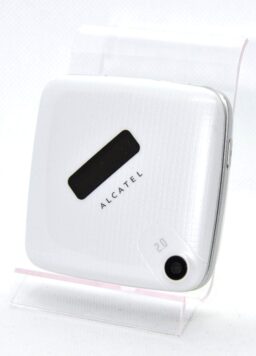
Alcatel OT 808
Quick ViewAlcatel OT-808 is a shiny clamshell with QWERTY keyboard. It features a QVGA display, 2MP camera, stereo Bluetooth, microSD slot and music player.
-


B&O 9800
Quick ViewBattery chargers for mobile phones are not the most exciting objects in the world, but Bang & Olufsen have a continual habit of making a virtue out of what others see as ordinary. By combining the battery charger with a specially designed holder, BeoCom 9800 suddenly became a mobile phone that users really wanted others to see!
Weighing less than 100 grams and able to fit snugly in a pocket, the BeoCom 9800 mobile phone was one of the world’s smallest cellular phones when it was introduced, with an equally impressive list of features. Tell it the name of the person you wish to telephone and BeoCom 9800 dialled it. The inclusive BeoCharger combined holder and battery charger in an attractive package.
Features: Caller ID; Call Forward; SMS; Voice Dial; Call Duration; Call Hold; redial function for last 10 numbers; 90 minutes’ battery talk time with 100 hours standby; graphic display; keypad lock; clock; data/fax connection; 100g with standard battery
Accessories: BeoCharger; extra battery; hands-free car kit
-
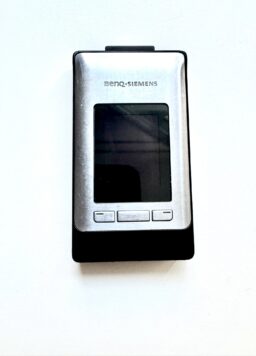
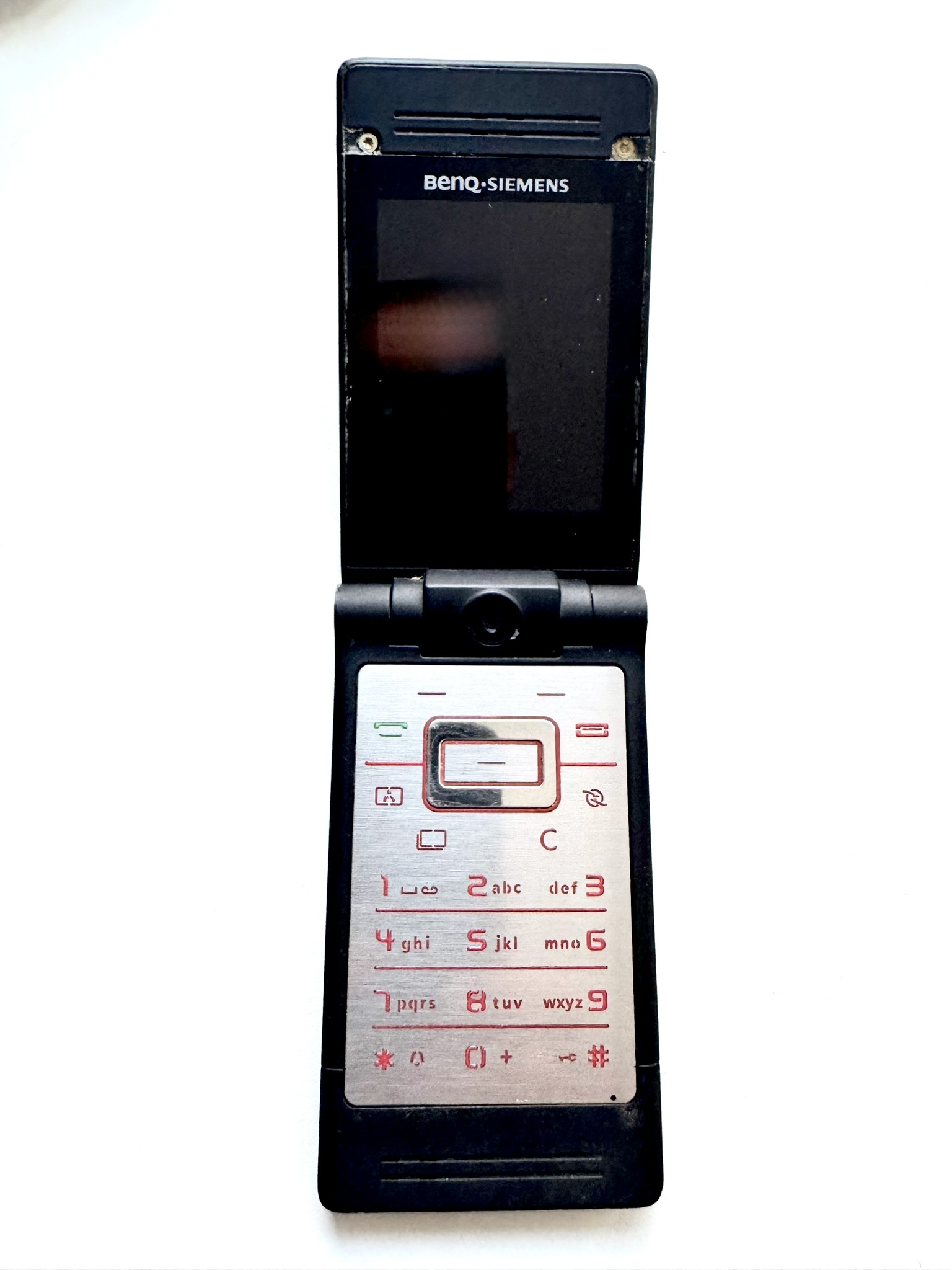
Benq Siemens EF81: Prototype in Black
Quick ViewBenQ-Siemens EF81 – Unreleased Black Prototype
A rare glimpse into an alternative design direction for the BenQ-Siemens EF81. This prototype features an unreleased black finish and a radically different keypad design compared to the commercially available model.
Its brushed-metal keypad, flat layout and distinctive red markings are particularly striking, bearing an interesting resemblance to the styling later seen on the Nokia N76.
Beyond the unusual appearance, this unit carries a prototype identification label marked “NOT FOR SALE”, further highlighting its pre-production status.
An intriguing piece of BenQ-Siemens history, offering a glimpse of a design variation that never made it to the retail market.
-
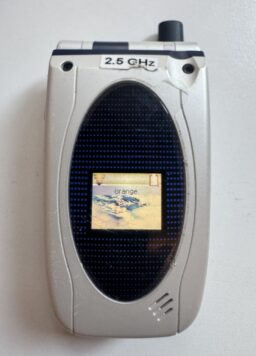
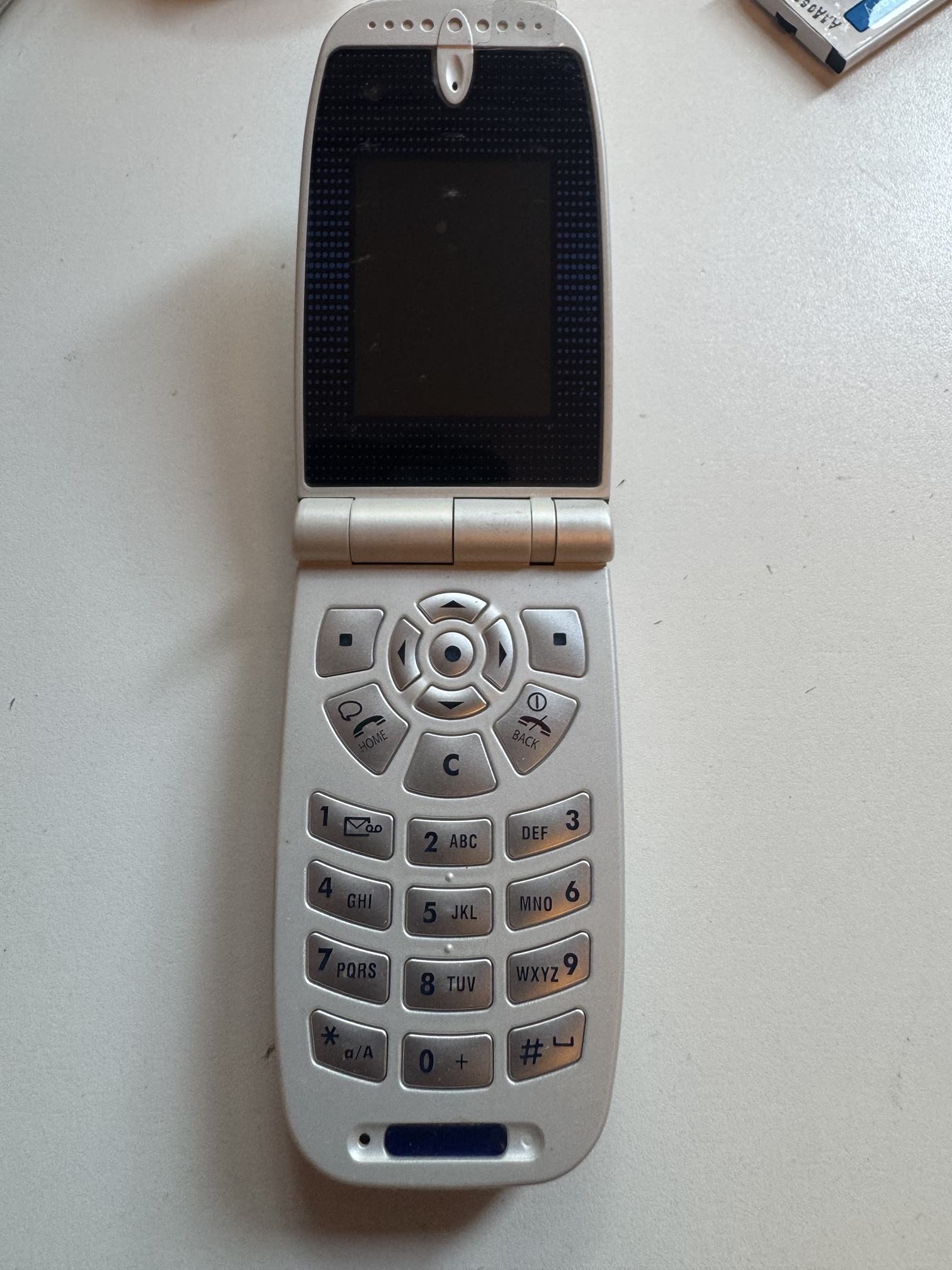
Ericsson Futaba | Unreleased Prototype
Quick ViewAn extremely rare, never-released Ericsson prototype: a 2.5 GHz engineering unit labelled “Not Type approved”, made in Sweden (label: KRH 901 80 EP2, 06W38).
Fully functional. Tested in a live call on the Orange network, and to my surprise both the earpiece and the microphone work perfectly. Both screens still carry their protective films.
The original battery is swollen, so the phone was powered with another battery from the collection. Good to know: it takes the same battery as the Ericsson T66.
Overall condition: good.
-


Ericsson GH 174
Quick ViewEricsson’s new GSM digital pocket telephone, the GH172, has now received the ITA (Interim Type Approval) certificate from German authorities. The GH172 has passed all segments of the required testing, and was approved for the digital telephone standard in eur;ope, GSM. Deliveries of the product will begin in Germany in November, 1992. Ericsson’s first GSM phone was a re-engineered version of the similar looking, NH72. N refers to NMT, the old Nordic analogue network, G to GSM and H stands for hand portable/handset. The NH72 was developed from a larger brown and orange creation, Ericsson’s first hand portable, the HotLine Pocket. Nils Rylands, Head of Research at the Ericsson Mobile Telephone Laboratory and his team took a police radio and turned it into a mobile phone. The codename for this project was ‘Curt’. ‘Curt’ broke a long running Ericsson tradition.
Up until then, all Ericsson mobile phone research projects had been given female names. The female naming returned for the GH172/NH72, which was called ‘Olivia’. The successor, a slightly updated version GH174, made in white buttons.
-


-


John’s 1 snow
Quick ViewJohn’s Phone is a mobile phone that is made in the Netherlands and sold by John’s (Phone From The Supermarket BV). It claims to be the world’s most basic cell phone, allowing the user only to make and receive calls, with none of the features of modern smartphones such as a camera, Internet access and text messaging; the address book is a paper pad and a pen, built into the back of the device. It is built around the Keep It Simple concept.It was designed and developed by Hein Mevissen and Diederiekje Bok of Dutch advertising and design agency John Doe Amsterdam.It is marketed as being ideal for children, the elderly, and technophobes.
-


Kyocera DS-320
Quick ViewThe concept of mobile phones equipped with camera functions is not uncommon today. However, in the 90s of the last era, it is still a very incredible thing. At that time, the pager boom in China had just passed, and mobile phones were still in the ascendant. Fresh stuff, who would have thought of stuffing a small lens into such a small and exquisite body? Japan’s Kyocera first thought of this. In 1997, Kyocera launched a brand-new Datascope series, including DS-110 and DS-320 mobile phones. Monochrome LCD screens seem unremarkable, but, Also launched with them is a very eye-catching accessory-VS-110.
This accessory is driven by 2 AA batteries, can rotate 210 degrees, and can be movedIt can also be used as a standalone digital camera for video calls on the Internet. It is the world’s first mobile phone equipped with a camera and supports video calls. Although the practicality is very low, it is the first step taken by mobile phone manufacturers. From 1997 to 1999, Kyocera conducted two years of research and development on the basis of this mobile phone. In May 1999 The VP-210 is officially launched, which integrates the camera on the top of the phone, is equipped with a 110,000-pixel front lens and a 2-inch TFT color screen. It can not only make video calls, but also take 20 photos and share them via email. The first camera phone in the true sense.
-


Motorola V70
Quick ViewThe Motorola V70 is by far one of the sleekest mobiles seen to date. Its innovative design; silver casing; compact size (3.7 by 1.5 by 0.7 inches; 2.9 ounces); and inverse-image (black background, white letters), five-line circular display all contribute to this mobile’s “wow” factor. But the real eye-catcher is its 360-degree rotating keypad cover.
-


Nokia 2110 D2 Platinum
Quick ViewRare and special edition D2 Platinum Club 1/100 Series.The Nokia 2110 is a cellular phone made by the Finnish telecommunications firm Nokia, first announced in February 1994. It was the first Nokia phone with the famous Nokia tune ringtone.The phone can send and receive SMS messages, and lists 10 dialed calls, 10 received calls and 10 missed calls. At the time of the phone’s release, it was considerably smaller than others of its price and had a bigger display, so it became very popular. It also featured a “revolutionary” new user interface featuring with two dynamic softkeys, which would later lead to the development of the Navi-key on its successor, the Nokia 3110, as well as the Series 20 interface. A later version, the Nokia 2110i, released in 1994, came with more memory and a protruding antenna knob.
-
Nokia 2260 AT&T
Quick ViewA basic phone for the American Market and AT&T, back in 2003. It has a very nice dark blue light and looks similar to 3x series