Showing 13–24 of 40 results
-


Nokia 3410
Quick ViewThe Nokia 3410 is a mobile phone made by Nokia being the successor of the popular Nokia 3310. It was announced at CEBIT on 12 March 2002.The 3410 was the first Java phone by Nokia, as well as being one of the earliest mobile phones outside Japan to feature 3D graphics and an image editor.The Nokia 3410 was never being released in Asia-Pacific due to the release of their variant of the 3310,called the Nokia 3315, which featured almost same design cues as from Nokia 3410.
-


Nokia 3589i Verizon
Quick ViewThe first Nokia to have BREW technology enabled together with Verizon
-


Nokia 3810: The Lost Asian Shadow of the 3110
Quick ViewNokia 3810 is one of the most obscure and region-locked handsets Nokia ever released, a model that at first sight looks like a Nokia 3110 from the late 90s, but in reality is a completely different device built specifically for the Southeast Asian market. Created around late 1998 to early 1999 for operators like Globe Telecom in the Philippines and Singtel in Singapore, it was never part of Nokia’s global roadmap and never appeared in eur;opean or American catalogs.
Internally, the 3810 belongs to the extended NHE-8A platform, a rare fork of the 3110 architecture that Nokia used only for operator-specific customizations. Unlike typical localized firmware builds, this model has a modified PCB layout, different RF filters, region-specific power amplifiers, and firmware adjusted for hot and congested GSM-900 networks in Asia. The firmware also contains unique operator menus, a different startup behavior, and a SIM Toolkit implementation that the original 3110 did not have.
Visually, the 3810 shares the silhouette of the 3110, but key differences immediately confirm it as its own device. It has a redesigned navigation cluster, different soft keys, a unique lower mask, and a housing made from a thicker, more rubberized plastic type. These material changes were intentional, allowing the phone to survive the high humidity and heat typical of Southeast Asia. The keypad layout is also subtly different, confirming that this is not a housing replacement but a dedicated mold used only for this variant.
The 3810 was priced below the 5110 and slightly below the original 3110 in the APAC region, typically selling around PHP 7000 to 9000, often bundled with prepaid or SIM activation packages. Because Nokia kept production extremely limited and distributed the model only through operator channels, most units were used heavily and eventually scrapped. Almost none were exported, and very few examples have survived in clean or working condition. Today it stands as one of the rarest late 90s Nokias, more elusive than many prototypes, and almost never seen in Western collections.
The unit presented here is a remarkable surviving example, displaying Globe firmware on boot and all the unique hardware traits of the genuine 3810 platform. More than just a variant, it represents a hidden branch of Nokia history, a fully official model that Nokia itself barely acknowledged and one that existed only because regional operators demanded a slightly more modern, network-optimized alternative to the aging 3110. Devices like this highlight how complex Nokia’s APAC strategy truly was and why some of the rarest Nokias were never sold outside their home markets.
-
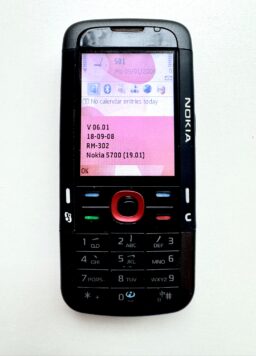
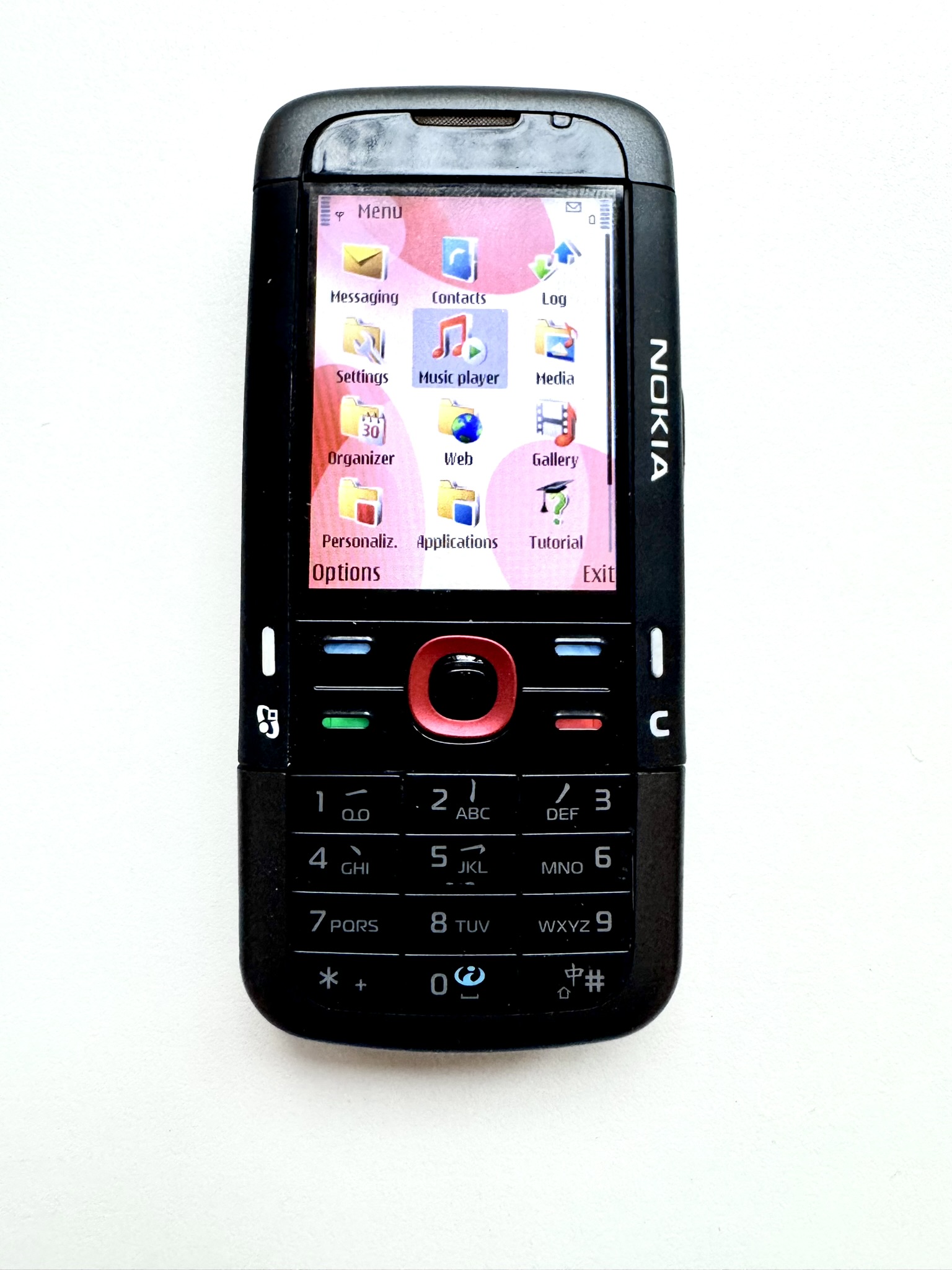
Nokia 5700: RM-302 Black China Edition
Quick ViewThe Nokia 5700 XpressMusic in full black is one of the rarest variants of Nokia’s rotating-multimedia smartphone lineup, produced in limited quantities for the Chinese market under type RM-302. Unlike the classic red-and-white global release, this black edition was never widely exported, and its appearance alone gives it a more modern, stealth-like identity compared to the traditional XpressMusic theme.
RM-302 identifies the dedicated China-market hardware and firmware platform. This variant features localized Chinese firmware languages, regional GSM frequency configurations, Chinese SAR certifications, and distinct product codes used only in mainland China. It also includes Chinese-market keypad print variants and often slightly different audio tuning profiles for the XpressMusic sound engine, making it unique compared to the RM-230 and RM-235 global versions.
This model is instantly recognizable thanks to its iconic twist design: the lower half of the phone physically rotates, switching between phone keypad, camera mode, and dedicated multimedia controls. No other Nokia device combined physical transformation with smartphone features in this playful and functional way. Even today, the rotating mechanism feels sharp, solid, and satisfying in the hand.
This unit is fully working, and everything from the bright display to the twist motion and the XpressMusic player still operates correctly. The black housing appears clean and unique, and the handset reflects the Chinese-market identity through its labeling, firmware, and certification patterns. The label confirms this is a 2007 manufacturing batch for China, complete with regional approvals and variant coding specific to RM-302.
The Nokia 5700 remains one of the most unusual and entertaining Symbian smartphones ever made, remembered for its creative design, its music-centric features, and its transformation-style body that stands out even among Nokia’s most ambitious experiments. The RM-302 black Chinese-market edition elevates that uniqueness to a higher level, making it one of the hardest versions to find in full working condition.
-
Nokia 6208c
Quick ViewNokia 6208c (RM-458) – China-Exclusive Handwriting Edition
The Nokia 6208c is a rare China-market exclusive released in 2009, designed around Nokia’s handwriting-recognition platform. Built for users who preferred writing Chinese characters by hand, it combines a resistive touchscreen with a stylus elegantly integrated into the back cover – a design found on almost no other Nokia model worldwide.
Its construction features metal structural elements, a solid chassis, and a clean, premium industrial look. Running Series 40 (Touch & Type variant), the 6208c delivers a unique blend of traditional keypad control and touchscreen handwriting input, offering a very specific user experience tailored to the Chinese market.
With its limited regional release, short production window, and distinctive hardware concept, the 6208c stands out today as one of the most uncommon and collectible touchscreen feature phones from Nokia’s late-2000s era.
-


Nokia 6220
Quick ViewThe Nokia 6220 is the eur;opean cousin of the 6200. While lacking GSM 850, the 6220 adds world roaming, an integrated camera, video playback, and presence-enabled contacts. Key features in common with the 6200 include EDGE high-speed data, MMS, Java, stereo FM radio, voice dialing, and an XHTML (WAP 2.0) browser.
-


Nokia 6230 Cath Kidston
Quick ViewThe 6230 is business-styled but it does feature a VGA resolution digital camera, video camera, a music player and expandable memory. It is considered to be one of the loudest Nokia phones.
-


Nokia 6300 Bronze
Quick ViewThe Nokia 6300 is a mobile telephone handset produced by Nokia. It was announced on 28 November 2006 and released in January 2007. This model was assembled in several factories, including Jucu plant, near Cluj, in Romania. The Nokia 6300 is a mid-ranger combining a classic candybar design with a durable stainless steel and slim (11.7 mm thick) body.It runs on Series 40. The 6300 was a hit and became one of the top-selling Nokia models on the market during its time. Slightly improved models Nokia 6301 and Nokia 6300i were launched later in 2007 and 2008 respectively. The 6300 was considered to have been the successor of several models, including 6230i, and 6310i.
-


Nokia 6310i
Quick ViewThe Nokia 6310i is a mobile phone from Nokia first introduced at the CeBIT fair in March 2002 with sales starting later that year and discontinued in late 2005, it was Nokia’s first tri-band phone offering (GSM 900/1800/1900). Primarily marketed as a business phone it was for some years the dominant GSM device in the corporate world. The device was most commonly offered in Two-tone Silver/Grey or Two-tone Gold/Black trim; the third option, a Copper coloured variant, was much rarer.The model is basically the same as the earlier 6310 from 2001, with the addition of tri-band reception, Java and a blue-backlit LCD Screen (as opposed to the earlier green backlighting). The 6310 itself replaced the 6210 from 2000, preceded by the 6150 (1998) and 6110 (1997). Accessories (such as batteries) can generally be swapped between all these models.This phone has been (and still is)very popular for its robustness, simplicity and long battery life years after being discontinued as a product.Many have called the 6310i one of the best handsets Nokia ever produced.
-


Nokia 6340i Cingular
Quick ViewThe 6340i was a GAIT phone (GSM-ANSI-136 Interoperability Team) that was offered in the US market by the Cingular network. This meant that it was capable of providing seamless connectivity to both GSM and TDMA network. It was an upgraded version of the 6340 which was the first GAIT phone to be offered in the US. The 6340i variant added the support the GSM 850 MHz frequency.
The 6340 / 6340i was almost identical to the TDMA-only 6360.
This phone is also one of the few Nokia phones to have the number 4 in the model name. This was due to the fact that number 4 was considered an inauspicious number in Asian markets.
-
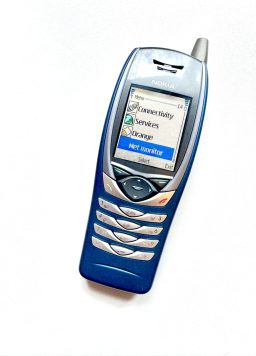
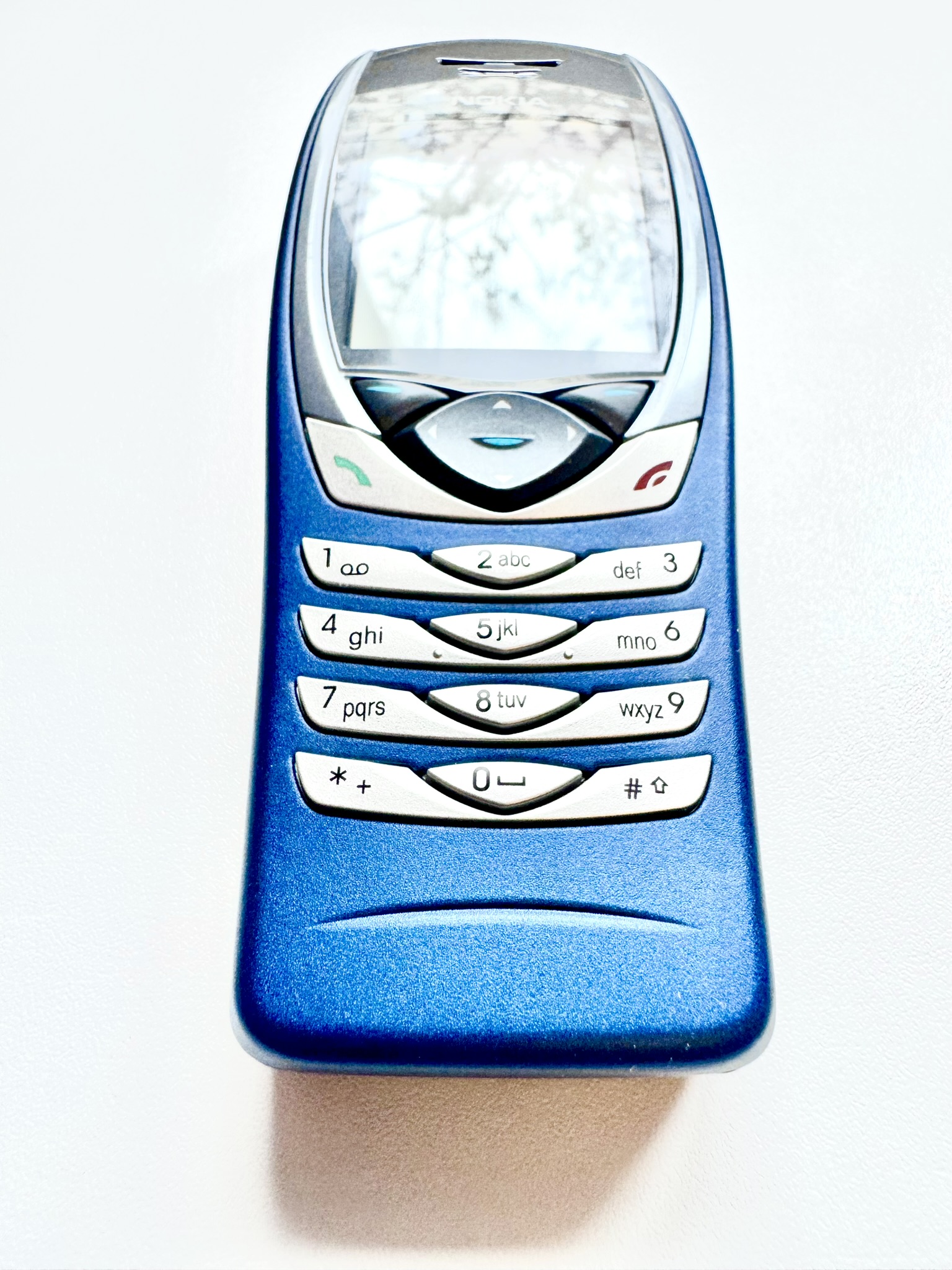
Nokia 6650 Prototype B1 6.2 : The lost first Nokia’s 3G Phone | Unreleased Black and Blue Colour
Quick ViewThe Nokia 6650 Prototype B1 6.2 represents one of the most important and fragile transition moments in Nokia history. This device is not just an early unit, but a full internal engineering prototype that captures the very first attempt to bring 3G technology into a classic Nokia candybar form factor.
An engineering device, not a consumer phone
The rear label clearly identifies this unit as Nokia internal property, explicitly marked PROTO and Made in Finland. The device uses a placeholder model designation XXXX, a standard practice for Nokia engineering hardware that was never approved for commercial sale. Hardware identifiers such as B1.6.2 and HWID 4122 place this unit deep inside Nokia internal testing cycles, well before mass production validation.
These labels were never meant to survive outside Nokia labs. Their presence confirms this phone was used strictly for internal testing, radio validation, and early software integration rather than marketing or carrier trials.
The unreleased early design language
This prototype showcases design elements that never reached the market. The blue front cover was never commercially released, while the black rear housing with its distinctive camera ornament remains completely unique to early prototype builds. When the Nokia 6650 eventually launched, it appeared only in a dark green colorway for both front and back, making this blue and black combination a lost design direction.
The body shape, materials, and external antenna confirm this device as the final Nokia candybar with an external antenna, closing an entire design era.
Early software and version identity
The software screen reveals version Vp1.301 dated 30-09-02, running on platform NHM-1 with PRI P1.1. This places the firmware only days after the official unveiling of the Nokia 6650 on 26 September 2002. The Vp prefix identifies a prototype firmware branch, used internally before public release software was finalized.
This version is not a commercial build and was never distributed outside Nokia engineering teams. It represents an unstable development snapshot used for functional validation rather than end user experience.
The startup warning and the two minute limitation
On boot, the phone displays a rare internal warning message stating that this is a Nokia prototype intended only for testing use, and that the software must be updated by the end of November 2002. This message is exceptionally rare and confirms the temporary nature of the firmware installed on the device.
Additionally, this prototype is restricted to a two minute operational window, a known internal safeguard used by Nokia to prevent prolonged use of unfinished hardware outside controlled environments. This limitation reinforces the fact that this unit was never meant to operate as a normal phone.
Why it truly matters
This prototype is the missing link between Nokias 2G legacy and its first step into the 3G world. It captures an unreleased design, unfinished software, and internal safeguards that almost never survive. More than a phone, it is a frozen engineering moment, documenting how Nokia experimented, tested, and iterated before rewriting its own future.
-


Nokia 6750 Mural AT&T
Quick ViewNokia has given U.S. carriers an interesting selection of cell phones over the past few months. We’ve seen quality music phones, quirky square models, and basic handsets just for making calls. The newest device to land on our desk, the Nokia Mural 6750 for AT&T, falls into yet another category. Slim, shiny, and armed with push-to-talk (PTT) and 3G, the Mural has a solid feel, thanks to its metal skin. Its performance was inconsistent, however, and it doesn’t offer anything that we haven’t seen before. The Mural costs $49.99 with a two-year contract and a $50 mail-in rebate.