

">

Showing 109–120 of 214 results
-


Nokia 6630
Quick View💎 Rarity Index: C (Common)
⭐ WOW Factor: The first phone ever that allows truly global roaming(including Japan)
👁 Evaluation in my collection: Great – 9.5/10
🕵 Nokia Codename: Charlie
⏱ Life timer: 19h | 📦 Boxed: NO
📅 Release Year: 2004 | 💰 Release Price: ~450 €
📊 Units Sold: ~10M
📰 Why this phone matters: The Nokia 6630 is a 3G smartphone announced by Nokia on 14 June 2004 and released in November.It runs on Symbian OS 8.0a (Series 60 2nd Edition FP2). Codenamed Charlie during development, it is an evolution of the 6600 and 6620 smartphones, supporting tri-band GSM (run on lower operating systems).
The Nokia 6630 is the first phone ever that allows truly global roaming; previously GSM phones have had near-global coverage except in Japan where 2G phone standards were different. The 6630 automatically uses the W-CDMA network in Japan. Nokia 6650 and 7600 were also able to function in Japan, but they did not support GSM 1900, often needed in the United States and Canada (the Nokia 6651 has the GSM 1900).
Nokia says the Nokia 6630 is the first dual-mode, tri-band handset designed to work on 3G (WCDMA), EDGE and 2G networks in eur;ope, Asia and the Americas.📝 Reviews when released: Mobile Review 🔗
-
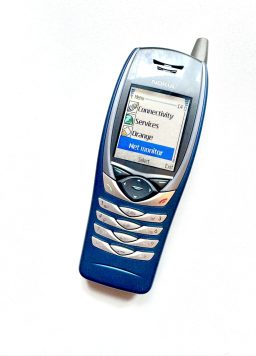
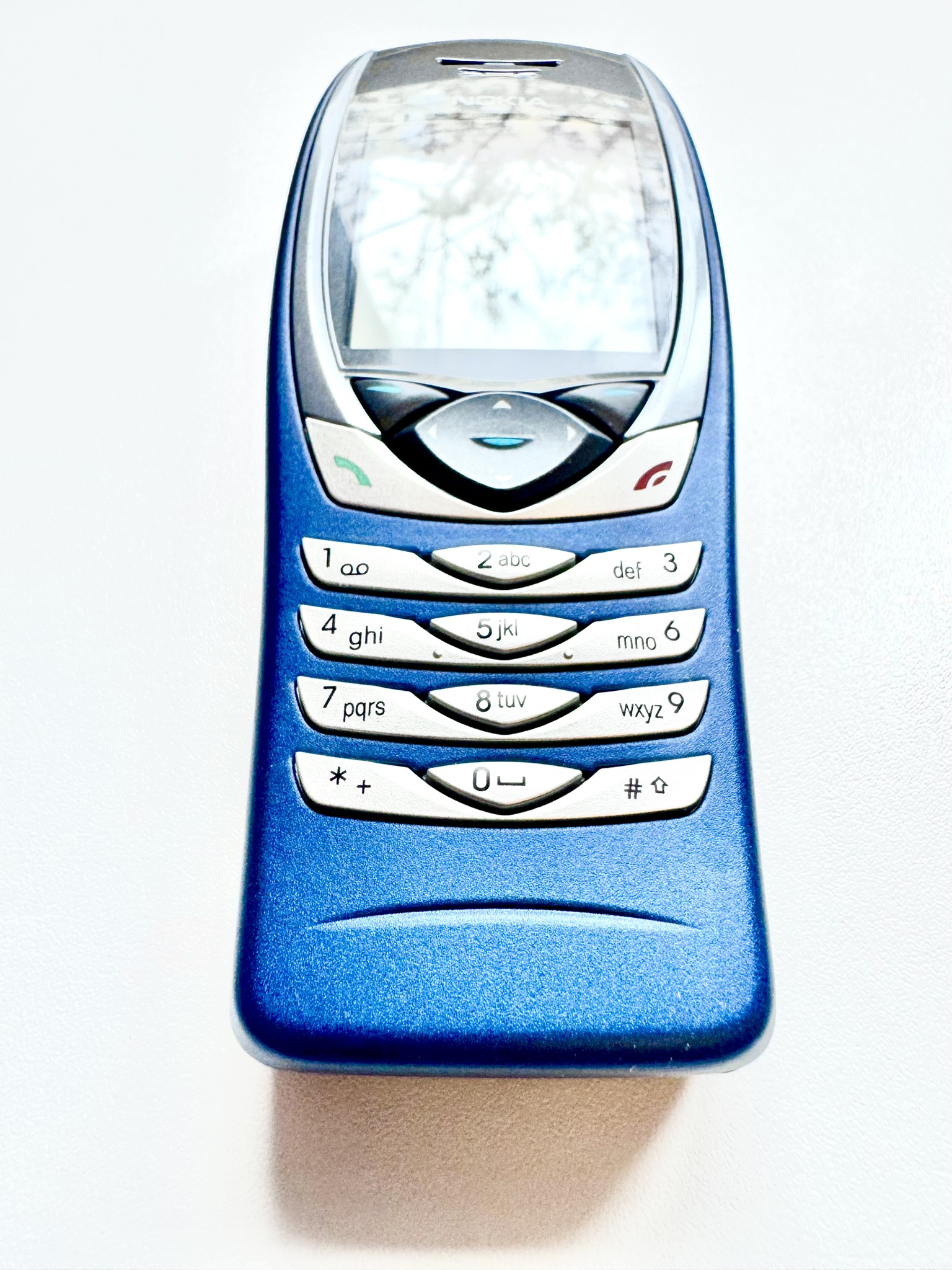
Nokia 6650 Prototype B1 6.2 : The lost first Nokia’s 3G Phone | Unreleased Black and Blue Colour
Quick View💎 Rarity Index: X (Mystical Prototype)
⭐ WOW Factor: The first Nokia 3G phone
👁 Evaluation in my collection: Good – 8.5/10
🕵 Nokia Codename: Kenny
⏱ Life timer: 2m | 📦 Boxed: NO
📅 Release Year: 2002 | 💰 Release Price: N/A
📊 Units Sold: 100k (final units)
📰 Why this phone matters: The Nokia 6650 Prototype B1 6.2 represents one of the most important and fragile transition moments in Nokia history. This device is not just an early unit, but a full internal engineering prototype that captures the very first attempt to bring 3G technology into a classic Nokia candybar form factor.An engineering device, not a consumer phone
The rear label clearly identifies this unit as Nokia internal property, explicitly marked PROTO and Made in Finland. The device uses a placeholder model designation XXXX, a standard practice for Nokia engineering hardware that was never approved for commercial sale. Hardware identifiers such as B1.6.2 and HWID 4122 place this unit deep inside Nokia internal testing cycles, well before mass production validation.
These labels were never meant to survive outside Nokia labs. Their presence confirms this phone was used strictly for internal testing, radio validation, and early software integration rather than marketing or carrier trials.
The unreleased early design language
This prototype showcases design elements that never reached the market. The blue front cover was never commercially released, while the black rear housing with its distinctive camera ornament remains completely unique to early prototype builds. When the Nokia 6650 eventually launched, it appeared only in a dark green colorway for both front and back, making this blue and black combination a lost design direction.
The body shape, materials, and external antenna confirm this device as the final Nokia candybar with an external antenna, closing an entire design era.
Early software and version identity
The software screen reveals version Vp1.301 dated 30-09-02, running on platform NHM-1 with PRI P1.1. This places the firmware only days after the official unveiling of the Nokia 6650 on 26 September 2002. The Vp prefix identifies a prototype firmware branch, used internally before public release software was finalized.
This version is not a commercial build and was never distributed outside Nokia engineering teams. It represents an unstable development snapshot used for functional validation rather than end user experience.
The startup warning and the two minute limitation
On boot, the phone displays a rare internal warning message stating that this is a Nokia prototype intended only for testing use, and that the software must be updated by the end of November 2002. This message is exceptionally rare and confirms the temporary nature of the firmware installed on the device.
Additionally, this prototype is restricted to a two minute operational window, a known internal safeguard used by Nokia to prevent prolonged use of unfinished hardware outside controlled environments. This limitation reinforces the fact that this unit was never meant to operate as a normal phone.
Why it truly matters
This prototype is the missing link between Nokias 2G legacy and its first step into the 3G world. It captures an unreleased design, unfinished software, and internal safeguards that almost never survive. More than a phone, it is a frozen engineering moment, documenting how Nokia experimented, tested, and iterated before rewriting its own future.
📝 Reviews when released: N/A 💔
-
Nokia 6650 The lost first Nokia’s 3G Phone
Quick View📦 Collector-to-Collector Transaction
This item is from a private collection and sold as-is for collectors only. All devices have been verified for authenticity and condition as described, but no warranty or guarantee is provided. This is a private sale between individuals and not a commercial business transaction.
💎 Rarity Index: A (Rare)
⭐ WOW Factor: The first Nokia 3G phone
👁 Evaluation: Good – 8.5/10
🕵 Nokia Codename: Kenny
⏱ Life timer: 70h 📦 Boxed: NO
📰 About this collectible: It was Nokia’s the company’s first 3G phone, first leaked in June 2002 and eventually unveiled on 26 September 2002.it was the last Nokia candybar phone with an external antenna✓ Verification Checklist
Authenticity & Condition:
– Originality verification (exterior, labels)
– Matching IMEI (box, label, motherboard)
– Physical condition assessment (scratches, cracks, screws)Functional Testing:
– Powers on
– Display functionality
– Camera (when applicable)
– Vibration mechanism (when applicable)
– Security code
– Charging
– Network connectivity
– Call functionality including speaker (non-BNIB units on European networks)Additional specific tests available upon request.
-


Nokia 6700c
Quick View💎 Rarity Index: C (Common)
👁 Evaluation in my collection: Great – 9.5/10
⏱ Life timer: 83h | 📦 Boxed: NO
📅 Release Year: 2009 | 💰 Release Price: ~300 €
📊 Units Sold: ~12M
📰 Why this phone matters: The Nokia 6700 classic is a mobile phone made by Nokia and successor of the 6300 and 6500 classic. It was announced in January 2009 and arrived on the eur;opean market in June that year. It has a stainless steel body and a chrome-covered keypad.
Note that the 6700 classic is quite different from the Nokia 6700 slide, which is based on the higher powered Symbian-based Series 60 operating system.📝 Reviews when released: Mobile Review 🔗
-


Nokia 6790
Quick View💎 Rarity Index: C (Common)
👁 Evaluation in my collection: Brand New Swap – 10/10
⏱ Life timer: 0m | 📦 Boxed: NO
📅 Release Year: 2009 | 💰 Release Price: ~90 €
📊 Units Sold: ~500k
📰 Why this phone matters: Also known as Nokia Mako, Nokia 6790 Surge is a futuristic looking side-slider GSM smarthphone with a full QWERTY keyboard. It runs on the Symbian 9.3, S60 3rd Edition, Feature Pack 2 OS and sports a 2-megapixel camera, GPS and a 2.5 mm jack.📝 Reviews when released: N/A 💔
-


Nokia 6800
Quick View💎 Rarity Index: C (Common)
⭐ WOW Factor: The first Nokia phone with fold-out QWERTY keyboard
👁 Evaluation in my collection: Great – 9.5/10
⏱ Life timer: 66h | 📦 Boxed: NO
📅 Release Year: 2002 | 💰 Release Price: ~500 €
📊 Units Sold: ~1M
📰 Why this phone matters: The Nokia 6800 series are a selection of Nokia Series 68 phones with an unusual fold-out QWERTY keyboard. This type of keyboard is also used in the more recent Nokia Series 60 Symbian-based Nokia E70. These phones were marketed as “messaging devices”: all had built-in email clients, and some had BlackBerry support.
The 6800 and 6810 had four electrical contacts at the very top of the phone for the left side of the keyboard and another four just under the screen for when the regular 12-key numeric keypad was being used. A small magnet was built into the left side of the keyboard and the phones would switch to landscape mode as soon as this was lifted up. The 6800 was the first in the series and was a dual-band GSM 900/1800 phone with support for GPRS. The 6800 had an FM radio tuner and 5MB of memory. It was announced on 4 November 2002.📝 Reviews when released: Mobile Review 🔗
-
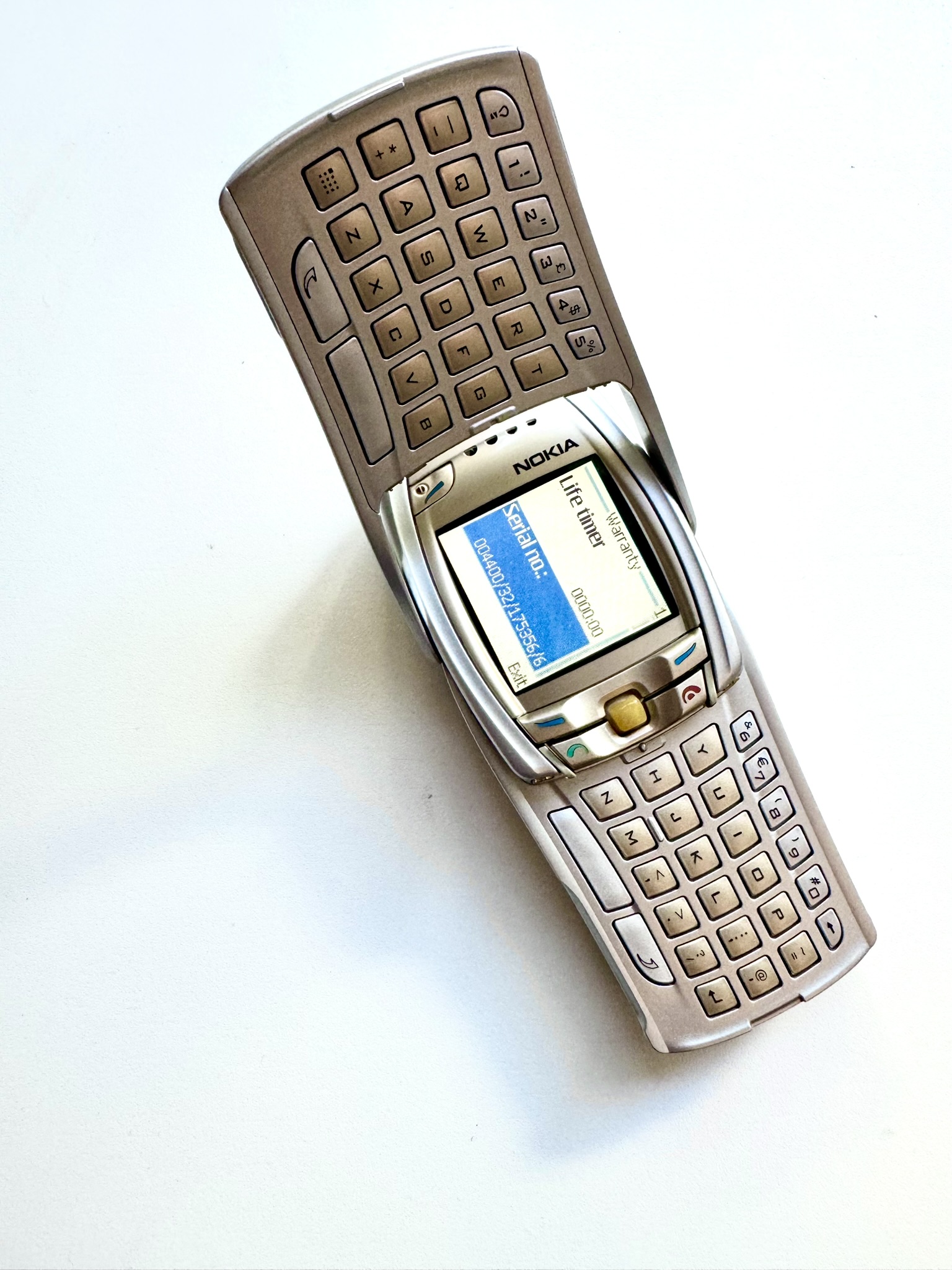
Nokia 6810 Prototype B3.0 : Engineering Sample
Quick View💎 Rarity Index: S (Ultra Rare)
⭐ WOW Factor: A pre-RM Nokia 6810 prototype from Finland-capturing the birth of Nokia’s most original fold-out QWERTY design.
👁 Evaluation in my collection: Great – 9.5/10
⏱ Life timer: 0 | 📦 Boxed: NO
📅 Release Year: 2004 | 💰 Release Price: ~350 €
📊 Units Sold: ~700k (final units)
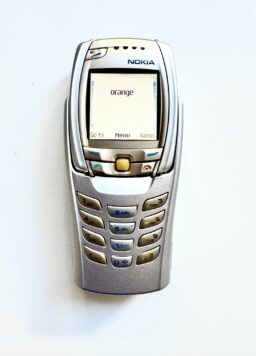
📰 Why this phone matters: A rare early-stage prototype of the Nokia 6810, the business-class messaging phone famous for its fold-out QWERTY keyboard design. This internal test unit predates the commercial RM-2 variant and carries blank “Model XXXX / Type XXXX” fields, together with the unmistakable “Property of Nokia” and B3.0 engineering markings. Built in Finland and never intended for sale, it represents the development phase where Nokia refined the mechanical flip-out keyboard and RF tuning for one of its most innovative business devices.📝 Reviews when released: Mobile Review 🔗
-


Nokia 6820a
Quick View💎 Rarity Index: C (Common)
👁 Evaluation in my collection: Good – 8/10
🕵 Nokia Codename: Mercurius
⏱ Life timer: 80h | 📦 Boxed: NO
📅 Release Year: 2004 | 💰 Release Price: ~400 $
📊 Units Sold: ~1M
📰 Why this phone matters: The Nokia 6800 series are a selection of Nokia Series 68 phones with an unusual fold-out QWERTY keyboard. These phones were marketed as “messaging devices”: all had built-in email clients, and some had BlackBerry support.The 6820 and 6822 had the wiring for the keypad built into the hinges without any external contacts.📝 Reviews when released: N/A 💔
-


Nokia 7020
Quick View💎 Rarity Index: C (Common)
👁 Evaluation in my collection: Very Good – 9/10
⏱ Life timer: N/A | 📦 Boxed: NO
📅 Release Year: 2009 | 💰 Release Price: ~100 $
📊 Units Sold: ~1M
📰 Why this phone matters: The Nokia 7020 is a very impressive phone which is sure to catch the ladies due to it’s very nice design and quirky external screen.It is a stylish flip phone that features an illuminating secondary display. It packs a 2 megapixel camera, social networking capability, and a hidden external display. A microSD slot allows users to save all their multimedia files onto a microSD card instead of the phone’s internal memory. Other notable features include a vivid 2.2-inch display, an integrated MP3 player, and FM radio.📝 Reviews when released: N/A 💔
-
Nokia 7070 Prism Prototype S2.1: The Prism Collection
Quick View💎 Rarity Index: S (Ultra Rare)
👁 Evaluation in my collection: As New – 10/10
⏱ Life timer: | 📦 Boxed: NO
📅 Release Year: 2008 | 💰 Release Price: ~230 €
📊 Units Sold: ~1.5M (final units)
📰 Why this phone matters: A genuine pre-production Nokia 7070 Prism – RH-116 prototype from the SCORPION design family, used during Nokia’s hardware and software validation cycle. This engineering sample features a prototype IMEI (004401?), PSN labeling, exposed HWID (0211), and the rare ‘Kiev S2-1’ internal test sticker.Manufactured in China as part of Nokia’s early prototype assembly runs, the device was then shipped to Nokia’s Kyiv (Ukraine) R&D validation center, where Software Stage 2 (S2) firmware and first-revision hardware (Substage 1) were tested for CIS-region operators. This China-production + Kyiv-testing pipeline was standard for Nokia’s mid-2000s development workflow and confirms the device’s authentic R&D provenance.
Fitted with an original Nokia ‘Market Sample’ back housing used for pre-launch demonstrations and retail previews, still carrying factory protective film. A rare SCORPION prototype combining true engineering hardware, regional R&D testing history, and pre-market cosmetic hardware – one of the most collectible 7070 Prism variants ever found
📝 Reviews when released: Phone Arena 🔗
-


Nokia 7100 Supernova
Quick View💎 Rarity Index: C (Common)
👁 Evaluation in my collection: Great – 9.5/10
⏱ Life timer: 14h | 📦 Boxed: NO
📅 Release Year: 2008 | 💰 Release Price: ~100 £
📊 Units Sold: ~2M
📰 Why this phone matters: The 7100 is a slider with a mechanism that thunks nicely and feels solid enough to remain reliable over time. The numberpad, revealed when the slide is up, comprises large-ish buttons with a no frills design. Each button is slightly raised in its centre making it easy to find and hit. With the slide closed this isn’t quite as small as I generally like slider phones to be. It is a bit tall at 98mm. However, its 48.4mm of width and 15mm of thickness are OK. With the slide opened the 7100 is 125mm tall and as for weight, it tips the scales at 103.5g.The casing is made of plastic, which might not stand too many drops down the stairs or crunches in a bag. As for its colour scheme, the 7100 looks designed to appeal to a young and bling-friendly audience. The front fascia is mostly black with, in the case of my review sample, a flash of bright metallic pink sitting below the screen. The back of the casing is also pink. Nokia calls this colour ‘jelly red’ but it looks pink to me. You can also get it in a rather nice shade of blue as well as an almost all black guise with just a flash of blue round the navi button.
The colour splash is where you’ll find the two softkeys and Call and End keys, the latter doubling as the main on/off switch. The navi button is large and its frame is also sizeable. I’d say even those with really stubby fingers should be able to get around this handset fine.
📝 Reviews when released: cNET 🔗

