

">

Showing 25–36 of 214 results
-


Mitsubishi Trium Galaxy Wind
Quick View💎 Rarity Index: B (Uncommon)
👁 Evaluation in my collection: As New – 10/10
⏱ Life timer: N/A | 📦 Boxed: NO
📅 Release Year: 1999 | 💰 Release Price: ~100 $
📊 Units Sold: ~150k
📰 Why this phone matters: N/A📝 Reviews when released: N/A 💔
-
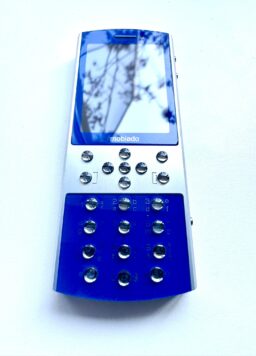
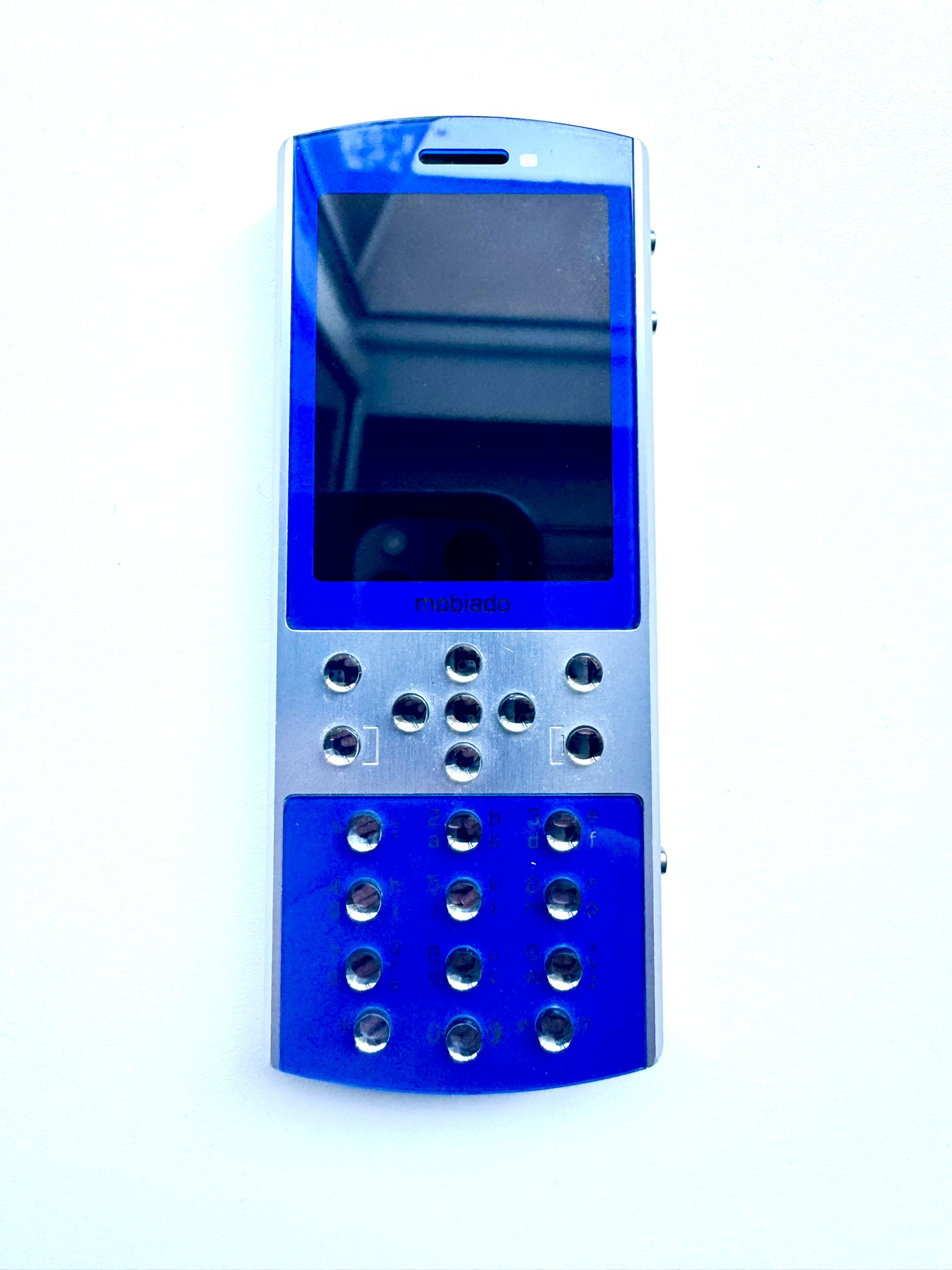
Mobiado 712 Dream Sapphire: The Last True Sapphire Bar
Quick View💎 Rarity Index: S (Ultra Rare)
⭐ WOW Factor: Real sapphire crystal on both the front and back, a fully CNC-machined aluminum chassis, individual sapphire keys, and hand assembly in Canada make the 712 Dream one of the last true mechanical luxury phones. It represents the final sapphire-bar generation before Mobiado shifted to newer production methods, which is why it remains one of the most sought-after models among collectors.
👁 Evaluation in my collection: As New – 9.9/10
⏱ Life timer: 5min | 📦 Boxed: NO
📅 Release Year: 2010 | 💰 Release Price: 3500$
📊 Units Sold: 750
📰 Why this phone matters: The Mobiado Classic 712 Dream is the embodiment of mechanical luxury in mobile design, created at a time when perfection, materials, and craftsmanship mattered more than specifications or software trends. Built entirely by hand in Canada, the 712 Dream belongs to the last generation of Mobiado phones produced using traditional artisanal methods, before luxury mobile design shifted toward modern smartphones and simplified manufacturing processes.At its core, the phone is based on the proven Nokia 6700 classic hardware platform, selected for its stability, longevity, and refined performance. Mobiado stripped the device down to its essential electronics and rebuilt it as a precision object. The entire exterior was replaced with a CNC-milled aluminum chassis, sapphire crystal panels on both the front and rear, and a keypad made of individual sapphire keys, each secured with exposed stainless steel screws. Ceramic side inserts and meticulously machined details reinforce the industrial, almost architectural character of the design.
Every surface, edge, and material was chosen to convey permanence. The sapphire panels offer a cold, dense feel and a unique light refraction, while the exposed mechanical elements celebrate construction rather than conceal it. The Dream variant elevated this philosophy further by introducing colored sapphire, heraldic engraving, and artistic finishing details produced in extremely small numbers, resulting in subtle variations between individual units.
More than a luxury phone, the Classic 712 Dream is a statement of intent. It represents a moment when mobile devices were designed as lasting objects, built to be admired, handled, and preserved. Often regarded as the last true sapphire-bar Mobiado, it stands today as a benchmark for mechanical perfection in the era of luxury feature phones.
📝 Reviews when released: N/A 💔
-

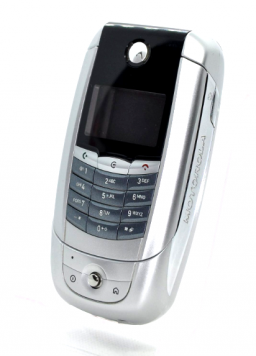
Motorola A780
Quick View💎 Rarity Index: A (Rare)
⭐ WOW Factor: The first Motorola with Linux Operating System
👁 Evaluation in my collection: Great – 9/10
⏱ Life timer: N/A | 📦 Boxed: NO
📅 Release Year: 2003 | 💰 Release Price: ~250 €
📊 Units Sold: ~500k
📰 Why this phone matters: The Motorola A780 is a cellular PDA running the Linux operating system.
It was introduced in 2003 and sold in eur;ope and Asia.Some models include GPS and navigation software. The phone is supplied with a number of applications including a POP and IMAP email client, Opera web browser, calendar and a viewer for PDF and Microsoft Office files. Calendar and address book can be synchronized with a Microsoft Exchange or SyncML server. The phone has a 1.3 megapixel camera recording still and video images. RealPlayer is included to play sound audio files and streamed audio and video. The phone has 48 megabytes of internal flash memory for storing user data and a slot for a microSD card. Both Bluetooth and USB are provided for communication with another computer. Character entry is via an on-screen QWERTY keyboard and hand writing recognition. Models including a GPS receiver are supplied with ALK Technologies’ CoPilot Live navigation software with street level maps of eur;ope.📝 Reviews when released: OS News 🔗
-
Motorola Aura R1 Diamond: The Motorola Crownpiece
Quick View💎 Rarity Index: S (Ultra Rare)
⭐ WOW Factor: A fully mechanical, diamond-framed phone with exposed gears and sapphire glass, the Motorola AURA Diamond is less a handset and more a wearable piece of moving luxury engineering.
👁 Evaluation in my collection: Great – 9/10
⏱ Life timer: N/A | 📦 Boxed: NO
📅 Release Year: 2009 | 💰 Release Price: ~5000$
📊 Units Sold: ~20k
📰 Why this phone matters: The Motorola AURA Diamond represents one of the most uncompromising luxury phones ever created, conceived at the intersection of mobile technology and mechanical watchmaking during the final years of the feature phone era. Evolving from the original AURA concept, the Diamond edition elevates the design through a bezel set with real diamonds, framing a circular sapphire crystal display and immediately setting the device apart from anything produced for the mass market. Beneath the sapphire, a fully exposed mechanical gear system is visible at all times, allowing the user to observe the precision components in motion whenever the phone is rotated open or closed, transforming a simple interaction into a deliberate mechanical experience.The chassis is crafted from stainless steel with a combination of polished and brushed finishes, while the rear panel features a finely textured metal surface that emphasizes durability and craftsmanship over decorative excess. A gold-accented central navigation wheel anchors the keypad and reinforces the watch-inspired design language, complemented by precisely machined screws and engraved internal components visible during disassembly. Unlike conventional sliding or clamshell phones, the AURA Diamond uses a smooth rotating opening mechanism engineered to withstand thousands of cycles, echoing the construction standards of high-end timepieces rather than consumer electronics.
Produced in extremely limited numbers and sold through select luxury channels, the AURA Diamond was never intended to compete on specifications or software features. Instead, it was designed as a statement object, prioritizing materials, mechanical precision, and exclusivity above all else. Its high launch price, limited availability, and unconventional engineering ensured that few were ever sold, and even fewer survive today in complete and original condition. As a result, the Motorola AURA Diamond stands as a rare artifact from a moment when mobile phones briefly crossed into the realm of mechanical art, making it a true collector-grade icon of luxury mobile design.
📝 Reviews when released: Cnet.Com 🔗
-
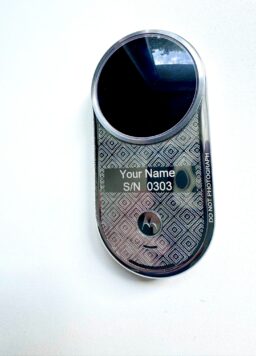
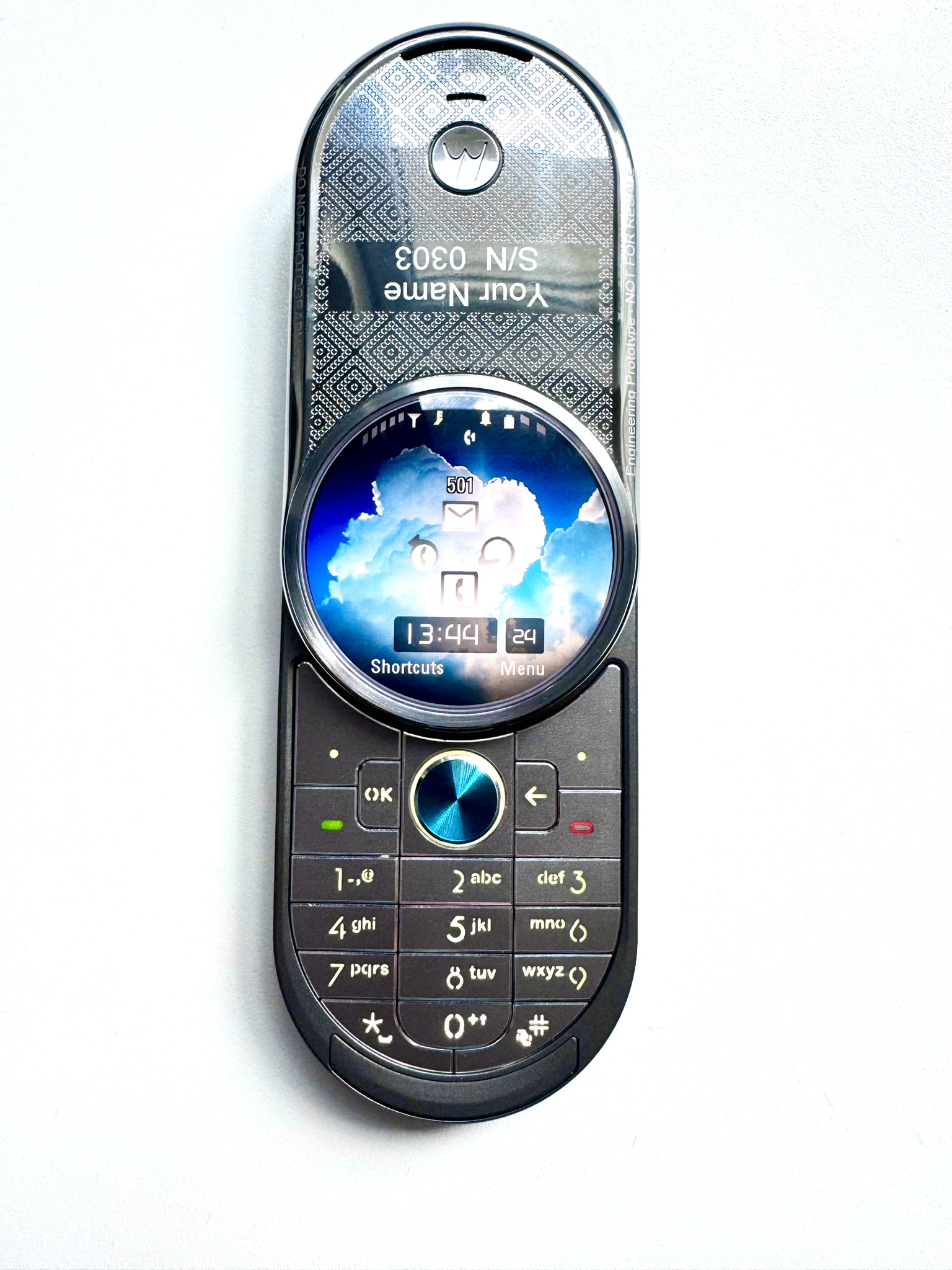
Motorola Aura R1 Unreleased Prototype : Engineering Design S/N 0303
Quick View💎 Rarity Index: X (Mystical Prototype)
⭐ WOW Factor: Saphire glass, stainless steel, swivel like opening mechanism, Swis Made gears for the mechanism.
👁 Evaluation in my collection: Great – 9.5/10
⏱ Life timer: N/A | 📦 Boxed: NO
📅 Release Year: 2008 | 💰 Release Price: ~2000$
📊 Units Sold: 0
📰 Why this phone matters: A masterpiece from Motorola’s most ambitious luxury project, this is an extremely early pre-production Aura prototype, created before the final 2008 model and never meant to leave the design labs. It carries full engineering markings – “Prototype – Not For Resale”, “Do Not Photograph”, and a personalized engineer-assigned S/N (0303) – making it a true artifact of Motorola’s internal design history.Unlike the retail Aura, this prototype features a unique diamond-etched metal housing, a larger mechanical gear window, unreleased keypad styling, and early internal board architecture. It represents the original mechanical vision for the Aura’s iconic rotating display mechanism – built more like a Swiss watch movement than a phone.
Surviving prototypes of the Aura are almost mythical.
One with unreleased design, internal engraving, and full confidentiality markings is beyond rare – a museum-level piece and a highlight for any high-end mobile collection.📝 Reviews when released: Cnet.Com 🔗
-


Motorola Aura R1: The Motorola Crownpiece
Quick View💎 Rarity Index: A (Rare)
⭐ WOW Factor: Saphire glass, stainless steel, swivel like opening mechanism, Swis Made gears for the mechanism.
👁 Evaluation in my collection: Great – 9.5/10
⏱ Life timer: N/A | 📦 Boxed: NO
📅 Release Year: 2008 | 💰 Release Price: ~2000$
📊 Units Sold: ~20k
📰 Why this phone matters: This unit is a Motorola Aura R1, one of the most mechanically advanced and visually distinctive luxury phones ever produced. Released in late 2008 as part of Motorola’s ultra-premium 4LTR line, the Aura was created not to compete with emerging smartphones, but to demonstrate the highest possible level of industrial craftsmanship, materials engineering, and mechanical design. The Aura is widely recognized as the final true mechanical masterpiece from Motorola before the touchscreen era ended the age of such devices.This particular unit is from the Australian market and is labeled simply as R1 rather than carrying the full Aura branding on the regulatory sticker. This detail is a documented regional distinction: Australian-market units were typically marked R1 only, while eur;opean units often carried the full “Aura” designation. For collectors, this is an important variant because it shows how Motorola adapted the labeling conventions for certain regions while retaining the exact same premium hardware. The unit is in as-new condition, showing minimal or no signs of use, making it highly desirable for collectors given the mechanical nature of the device and the low survival rate of pristine examples.
The Aura’s defining features remain extraordinary even today. Its iconic circular display offers 300 dpi resolution, protected by a 62-carat sapphire crystal lens cut and polished with extremely low-yield manufacturing processes. The sapphire window is among the most premium and expensive components ever mass-produced for a mobile device. The circular screen required Motorola to heavily modify its MotoMagx Linux platform, creating a custom UI layer and a unique rotational visual experience matched to the mechanical opening motion.
The rotating front mechanism is a mechanical achievement unmatched by any other production phone. Built with more than 200 precision-machined components, 130 micro ball bearings, and Swiss-made hardened steel gears, the hinge delivers a controlled, watch-like motion engineered to remain consistent over thousands of rotations. The metal surfaces use coatings derived from high-performance racing engines, and tolerances within the rotational assembly reach watchmaking precision levels. These characteristics place the Aura closer to horology than consumer electronics.
Constructed from surgical-grade stainless steel, the Aura R1 features hand-machined finishing, a weighty and solid feel, and a premium tactile character that cannot be replicated with modern materials. Despite its luxurious build, it retains practical functions: quad-band GSM, Bluetooth, a 2 MP camera, microSD support, custom audio themes, and a refined circular UI layout. At launch, the Aura sold for approximately 2000 $, reflecting both its engineering cost and its intended role as a luxury lifestyle object rather than a mass-market handset.
Because production was extremely limited and the device was released during the iPhone-driven smartphone revolution, few Aura units were manufactured, and even fewer survive in excellent mechanical condition. Many suffered rotational mechanism wear, sapphire damage, or cosmetic deterioration. As-new units, even without the original box, are very rare and increasingly valued as the Aura’s reputation continues to grow among collectors.
This unit represents one of the most iconic expressions of Motorola’s industrial design heritage. With its as-new presentation, Australian-market R1 label variant, circular sapphire display, watch-grade rotating mechanism, and stainless-steel construction, it stands as a top-tier collectible luxury phone. It captures a unique moment when mechanical artistry, materials science, and mobile technology converged to produce a device unlike anything before or since. The Aura R1 remains one of the most extraordinary and desirable non-smartphone luxury handsets ever made.
📝 Reviews when released: Cnet.Com 🔗
-
Motorola E18 Ivory Unreleased Prototype: The Lost Luxury
Quick View💎 Rarity Index: X (Mystical Prototype)
Ultra expensive luxury phone after Aura
👁 Evaluation in my collection: 9/10 – 10/10
⏱ Life timer: N/A | 📦 Boxed: NO
📅 Release Year: 2008 | 💰 Release Price: ~2000
📊 Units Sold: 0 unreleased
📰 Why this phone matters: The Motorola E18 Ivory is one of the rarest and most intriguing unreleased devices ever created by Motorola. Designed as a luxury slider phone with high-end materials and a unique dual-stop sliding mechanism, the E18 represented a bold and experimental direction that Motorola never brought to market. This prototype was intended to compete in the ultra-premium segment, with the stainless steel production version carrying a projected retail price of around 2000 eur;, placing it far above standard Motorola models of the era.This unit is an Ivory prototype in mint, as new, fully working condition, making it an exceptionally rare survivor. Very few E18 units were ever completed, and prototypes were typically scrapped, destroyed, or left non-functional. Having a working device in such preserved condition is considered unicorn-level rarity among Motorola collectors.
The defining feature of the E18 is its dual-stop slider mechanism. The first sliding step reveals a set of function keys, while the second sliding step exposes the complete T9 keypad. This layered mechanical design is unlike any mass-produced Motorola phone and reflects a level of engineering experimentation seen only in internal development devices. The combination of compact size, premium detailing, and complex mechanical motion makes the E18 one of the most innovative unreleased designs Motorola ever attempted.
Equipped with a 3 MP camera, premium external materials, and a sleek luxury aesthetic, the E18 Ivory was planned as a flagship device aimed at high-end buyers. Its design blends minimalist clean lines, luxury cues, and an advanced sliding system that offers a distinct tactile experience. The overall look and feel suggest that Motorola intended the E18 to stand alongside boutique luxury brands rather than mainstream consumer models.
Because the E18 project was cancelled before launch, surviving prototypes are extremely scarce. Most did not reach a stable operational state or were never finished to production quality. A mint, fully operational Ivory prototype is almost impossible to find, and it represents one of the most important pre-production artifacts in Motorola’s history. This device stands as a rare window into a luxury direction the company never pursued, making it a true collector trophy and a highlight in any high-end mobile phone collection.
📝 Reviews when released: PhoneArena.com 🔗
-


Motorola Flipout
Quick View💎 Rarity Index: C (Common)
👁 Evaluation in my collection: Great – 9/10
⏱ Life timer: N/A | 📦 Boxed: NO
📅 Release Year: 2010 | 💰 Release Price: ~100 €
📊 Units Sold: ~700k
📰 Why this phone matters: Its square-shaped body has two parts that rotate near the bottom-right corner to reveal a five-row QWERTY keyboard below the screen. It has an accelerometer and includes a web browser with Adobe Flash Lite 3.0.The Flipout replaces the bigger Backflip.📝 Reviews when released: Mobile Review 🔗
-


Motorola StarTAC 130: The Business Clip-On Set
Quick View💎 Rarity Index: C (Common)
👁 Evaluation in my collection: Good – 9/10
⏱ Life timer: N/A | 📦 Boxed: NO
📅 Release Year: 1998 | 💰 Release Price: More than 1000 $
📊 Units Sold: ~1.5M
📰 Why this phone matters: The Motorola StarTAC 130 represents the mature evolution of the most iconic clamshell mobile phone line ever created. Released in the late 1990s, the StarTAC 130 refined the GSM performance, stability, and usability of earlier models while preserving the legendary compact flip design that made the StarTAC the most influential mobile phone of its era. As one of the most widely used business phones of its time, the 130 became a symbol of professional mobility during the transition into the digital GSM age.This unit is in excellent preserved condition and remains fully functional, a rarity considering that most StarTAC 130 devices were used heavily throughout their service life. The phone retains the clean lines, compact proportions, curved upper housing, responsive keypad, and trademark Motorola RF performance that define the late generation StarTAC experience.
What elevates this set far beyond the typical StarTAC 130 is the inclusion of an extremely rare BNIB Motorola Clip-On Organizer. This accessory was produced in small numbers and marketed mainly toward corporate users. It clipped directly onto the phone, offering storage for small notes, papers, and business cards, while giving the device a more professional, utility oriented profile. These organizers were rarely kept, often cracked or discarded, and almost never preserved in unused condition. Finding one BNIB is exceptionally uncommon, and having it paired with a clean StarTAC 130 makes this configuration significantly more collectible.
The Clip-On Organizer was part of Motorola’s push to position the StarTAC line as a full business mobility solution. While leather pouches and holsters were common accessories, the organizer was different: it was designed to integrate directly with the phone using the same rear mounting system as extended batteries. Its rigid construction, matte business finish, and direct clip mechanism made it a unique product that combined phone protection with practical office functionality. This accessory adds strong historical authenticity to the set, reflecting how professionals equipped their devices during the height of the StarTAC era.
From a technical perspective, the StarTAC 130 introduced later generation internal improvements compared to earlier models such as the 70 and 85. These refinements included improved PCB grounding, more stable GSM 900 and 1800 radio stages, better power management, reinforced internal structures around high stress points, and a more durable keypad dome sheet. These upgrades made the 130 one of the most reliable and consistent StarTAC models ever produced.
As part of the StarTAC lineage, the 130 carries the heritage of the original 1996 StarTAC, the first true clamshell phone in mobile history. The upward folding flip mechanism, compact size, slim antenna, and minimalist industrial design reshaped the mobile world and sold more than 60 million units globally. Even decades later, the StarTAC remains one of the most recognizable and culturally significant mobile phones ever built.
For collectors, this StarTAC 130 paired with a BNIB Clip-On Organizer stands out as a rare and highly desirable configuration. The phone delivers the mature, stable hardware platform of the late StarTAC generation, while the unused organizer provides an accessory that is rarely found intact, let alone in original packaging. Together they form a complete, historically accurate business set from Motorola’s peak period of design and engineering.
This StarTAC 130 – The Business Organizer Set is not just a preserved phone, but a fully authentic snapshot of professional mobile equipment from the late 1990s. It is a valuable and uncommon piece of Motorola history and a distinguished addition to any serious vintage mobile collection.
📝 Reviews when released: N/A 💔
-


Motorola StarTAC 70: The Early Grey Flip Legend
Quick View💎 Rarity Index: B (Uncommon)
⭐ WOW Factor: First ever clamshell mobile
👁 Evaluation in my collection: Great – 9/10
⏱ Life timer: N/A | 📦 Boxed: NO
📅 Release Year: 1996 | 💰 Release Price: More than 1000 $
📊 Units Sold: ~4M
📰 Why this phone matters: The Motorola StarTAC 70 stands as one of the earliest and most historically significant variants of the legendary StarTAC family, the first true clamshell (flip) mobile phone ever released. Introduced shortly after the landmark 1996 launch, the StarTAC 70 preserved the original revolutionary design while offering improved digital GSM functionality, refined internal boards, and sturdier mechanical tolerances compared to the earliest production runs. It belongs to the foundational generation of StarTAC devices that bridged the analog-to-digital transition and helped define the identity of the modern mobile phone.This particular unit is in mint condition, fully working, and comes with a matching rare grey external battery. Grey StarTAC phones were produced in far lower quantities than the classic black versions, and grey batteries were even scarcer, often sold regionally or in limited early batches. Finding both components in matching grey and in such well-preserved condition is uncommon, placing this device among the rarer StarTAC 70 configurations still surviving today.
The StarTAC 70 retains the pure early design language that collectors value. Unlike later variants such as the StarTAC 85 or 130, which introduced more standardized housings and updated internal structures, the 70 is mechanically closer to the original 1996 models. It features the earlier-generation hinge architecture, slimmer battery rails, pre-2000 internal plastics, and the original tactile keypad dome sheets that defined the early StarTAC experience. These traits make it a more authentic representation of the original engineering philosophy.
Historically, the StarTAC series reshaped the global mobile market, becoming one of the first phones to achieve true mainstream popularity. With more than 60 million units sold, the design became iconic, influencing nearly all clamshell phones released during the late 1990s and early 2000s. The StarTAC’s upward-folding flip mechanism was the evolutionary successor to the MicroTAC and became the foundation of Motorola’s global dominance. In 2005, PC World ranked the StarTAC as one of the 50 greatest gadgets in history, underscoring its impact on consumer electronics.
The StarTAC 70 sits at a key point in this evolution. It helped solidify the device’s reputation during the early expansion of GSM networks, delivering the compactness, superb RF performance, and minimalist industrial design that made Motorola the preferred brand for business users of the time. Its perfectly balanced hinge action, clean clamshell silhouette, and ultra-portable size embody the design purity of the early StarTAC models before later variants pursued broader mass-market refinements.
As a mint-condition, fully functional example with a rare matching grey battery, this StarTAC 70 is an exceptional collector piece. Most surviving units have worn housings, hinge looseness, cracked antenna plastics, or mismatched batteries. A preserved, uniform grey configuration with flawless operation is exceedingly difficult to find. This unit captures a major historical moment in mobile engineering, representing one of Motorola’s most influential designs and the early era of compact digital GSM phones.
The StarTAC 70 remains a cornerstone of 1990s mobile history. Its significance lies not just in its rarity or preserved state, but in its direct connection to the original StarTAC architecture that forever changed mobile device design. For collectors, this mint grey StarTAC 70 with matching external battery stands as one of the finest surviving examples of Motorola’s early clamshell innovation.
📝 Reviews when released: N/A 💔
-


Motorola V50
Quick View💎 Rarity Index: B (Uncommon)
👁 Evaluation in my collection: Great – 9/10
⏱ Life timer: N/A | 📦 Boxed: NO
📅 Release Year: 2000 | 💰 Release Price: N/A
📊 Units Sold: ~1.5M
📰 Why this phone matters: The Motorola V50 stands as one of the most elegant and compact folding phones of the late 1990s and marks a turning point in Motorola’s design language as the company transitioned from the iconic StarTAC era toward more refined clamshell engineering. Released in 1999, the V50 belonged to Motorola’s premium business class, offering a sophisticated build, extremely compact chassis, and the unmistakable industrial design that defined Motorola’s dominance during the GSM boom.This unit is in as-new condition and remains fully functional, a rarity today given the age of the model and the fragility of early clamshell hinges. The phone comes together with an original-style leather case, a period-correct accessory that was considered essential for protecting premium Motorola devices. The preserved state of this V50 makes it a desirable collector piece, as most surviving units show heavy wear, hinge slack, or display fading.
The V50 was notable for its engineering precision and extremely small footprint. At the time of release, it was one of the most compact dual-band GSM clamshells available, weighing around 83 g and offering a slim linear profile when closed. Motorola built the V50 on an evolution of the StarTAC mechanical platform, with improved hinge reinforcement, a tighter clamshell action, and upgraded internal components for better long-term durability compared to earlier models.
In the late 1990s, the V50 was positioned as a premium compact business device, bridging the gap between the iconic StarTAC and the more modern V-series models that would dominate the early 2000s. It carried the minimalist, understated design that Motorola became famous for, with tight tolerances, robust construction, and a sleek, business-oriented aesthetic. Because it was not a mass-market fashion device like later models, production volumes were lower, and surviving near-mint examples are uncommon.
Today, the V50 holds strong historical importance as part of Motorola’s transition from analog-to-digital GSM, as well as the evolution of the clamshell form factor. As a fully functional, as-new example paired with a period-correct leather case, this unit stands as a highly collectible piece of late-1990s mobile engineering. Its preserved condition, compact build, and clean mechanical structure make it a standout addition to any high-end GSM or Motorola-focused collection.
📝 Reviews when released: N/A 💔
-


Motorola V70
Quick View💎 Rarity Index: A (Rare)
⭐ WOW Factor: The first Motorola with a rotary design
👁 Evaluation in my collection: Good – 8.5/10
⏱ Life timer: N/A | 📦 Boxed: NO
📅 Release Year: 2002 | 💰 Release Price: ~400 $
📊 Units Sold: ~700k
📰 Why this phone matters: The Motorola V70 is by far one of the sleekest mobiles seen to date. Its innovative design; silver casing; compact size (3.7 by 1.5 by 0.7 inches; 2.9 ounces); and inverse-image (black background, white letters), five-line circular display all contribute to this mobile’s “wow” factor. But the real eye-catcher is its 360-degree rotating keypad cover.📝 Reviews when released: Cnet.com 🔗