

">

Showing 1–12 of 37 results
-


AU by KDDI Casio CA001
Quick View💎 Rarity Index: A (Rare)
👁 Evaluation in my collection: Good – 9/10
⏱ Life timer: N/A | 📦 Boxed: NO
📅 Release Year: 2009 | 💰 Release Price: N/A
📊 Units Sold: ~200k
📰 Why this phone matters: equipped with sound and music apps made by Yamaha and a touchscreen📝 Reviews when released: Blog of Mobile 🔗
-


AU by KDDI Infobar
Quick View💎 Rarity Index: A (Rare)
👁 Evaluation in my collection: Great – 9.5/10
⏱ Life timer: N/A | 📦 Boxed: NO
📅 Release Year: 2003 | 💰 Release Price: n/a
📊 Units Sold: ~300k
📰 Why this phone matters: INFOBAR is the first terminal of the au design project . The base model is Sanyo Multimedia Tottori’s A5306ST , and there is almost no difference in performance except for the presence or absence of a sub-display (A5306ST has it, but INFOBAR does not). The prototype model “info.bar”, which was exhibited as a reference at the “Business Show 2002 TOKYO” held from May 17th to 19th, 2002 , is the basis of the design. Designed by product designer Naoto Fukasawa . The software also has a unified feel, with the image of a terminal design.The housing is a straight type made of magnesium . External memory is not supported. The camera is a 310,000 pixel CCD . There are three color variations: NISHIKIGOI (red and beige. Light blue on the button), ICHIMATSU (black and white), and BUILDING (indigo and silver). From April 2004 , ANNIN (white) was released as a new color. This color naming uses the name that engineers naturally started to call at the time of development. The response of INFOBAR was very large, and many stores were sold out after the release date.
This model is the last model made by Tottori Sanyo Electric, and the symbol at the end of the model number is “ST”. Subsequent terminals made by Tottori Sanyo Electric are the same as the terminals made by Sanyo Electric in Osaka, and the end of the model number. The symbol of is “SA”.
Selected for the 2003 Good Design Award , and received the “iF Product Design Award” from the German iF Design Award in 2005 . In 2007, the same model was selected as a collection in the Museum of Modern Art, New York , USA , and in 2013, in the Indianapolis Museum of Art, USA .
📝 Reviews when released: K Tai 🔗
-


AU by KDDI Infobar 2
Quick View💎 Rarity Index: A (Rare)
👁 Evaluation in my collection: New – 10/10
⏱ Life timer: N/A | 📦 Boxed: YES
📅 Release Year: 2007 | 💰 Release Price: n/a
📊 Units Sold: ~200k
📰 Why this phone matters: The INFOBAR 2, while inheriting the attractiveness and ease of use of the INFOBAR, has evolved into a shape like a square candy melting in the mouth, and features the latest capabilities such as One-Seg and Osaifu Keitai.
With a 2.6-inch, QVGA, organic EL display that provides bright, sharp pictures, as well as stereo speakers, the INFOBAR 2 also enables customers to fully enjoy services such as LISMO and One-Seg.Additionally, in the collaborative project “mobile fashion,” INFOBAR 2 goods will be produced through collaboration with famous brands. They will be available for sale via the mobile fashion site in au’s Internet service, EZ web
📝 Reviews when released: Wired 🔗
-


AU by KDDI Infobar A01
Quick View💎 Rarity Index: A (Rare)
👁 Evaluation in my collection: New – 10/10
⏱ Life timer: N/A | 📦 Boxed: YES
📅 Release Year: 2011 | 💰 Release Price: N/A
📊 Units Sold: ~250k
📰 Why this phone matters: “INFOBAR A01” is a smartphone which adopts unique tile-style key succeeded from the first generation “INFOBAR” released in 2003, and multi-colors of “NISHIKIGOI” and other patterns. Despite of its small size, it features useful functions such as Osaifu-Keitai, infrared light communication and one-seg. In addition to the exterior, it features “iida UI”, a user interface with high operability and function to propose easy usage and joy of usage.Ten peripheral items specialized for “INFOBAR A01” and an AC adapter for smartphones named “JUPITRIS” will be released. Eight items by “iida and NAVA”, a brand born from collaboration with Italian stationary brand NAVA and displayed at Milano Salone 2011, will also be released.
📝 Reviews when released: KDDI 🔗
-


AU by KDDI Infobar C01
Quick View💎 Rarity Index: A (Rare)
👁 Evaluation in my collection: As New – 9.7/10
⏱ Life timer: N/A | 📦 Boxed: NO
📅 Release Year: 2012 | 💰 Release Price: N/A
📊 Units Sold: ~180k
📰 Why this phone matters: Japan’s mobile landscape is currently in the midst of an Android revolution, and today KDDI au (the country’s second biggest carrier) announced another 5 smartphones with that OS on board for the local market. The most interesting model in the new line-up is the so-called INFOBAR C01 , a candy bar coming with a heavily customized UI (based on Android 2.3).KDDI au introduced a similar model back in May last year, the INFOBAR A01 (both handsets are part of KDDI’s designer sub-brand iida).
📝 Reviews when released: TechRunch 🔗
-
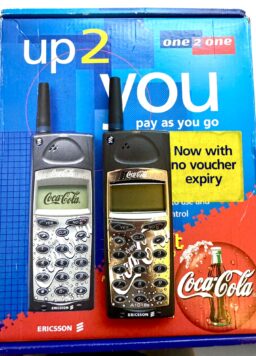
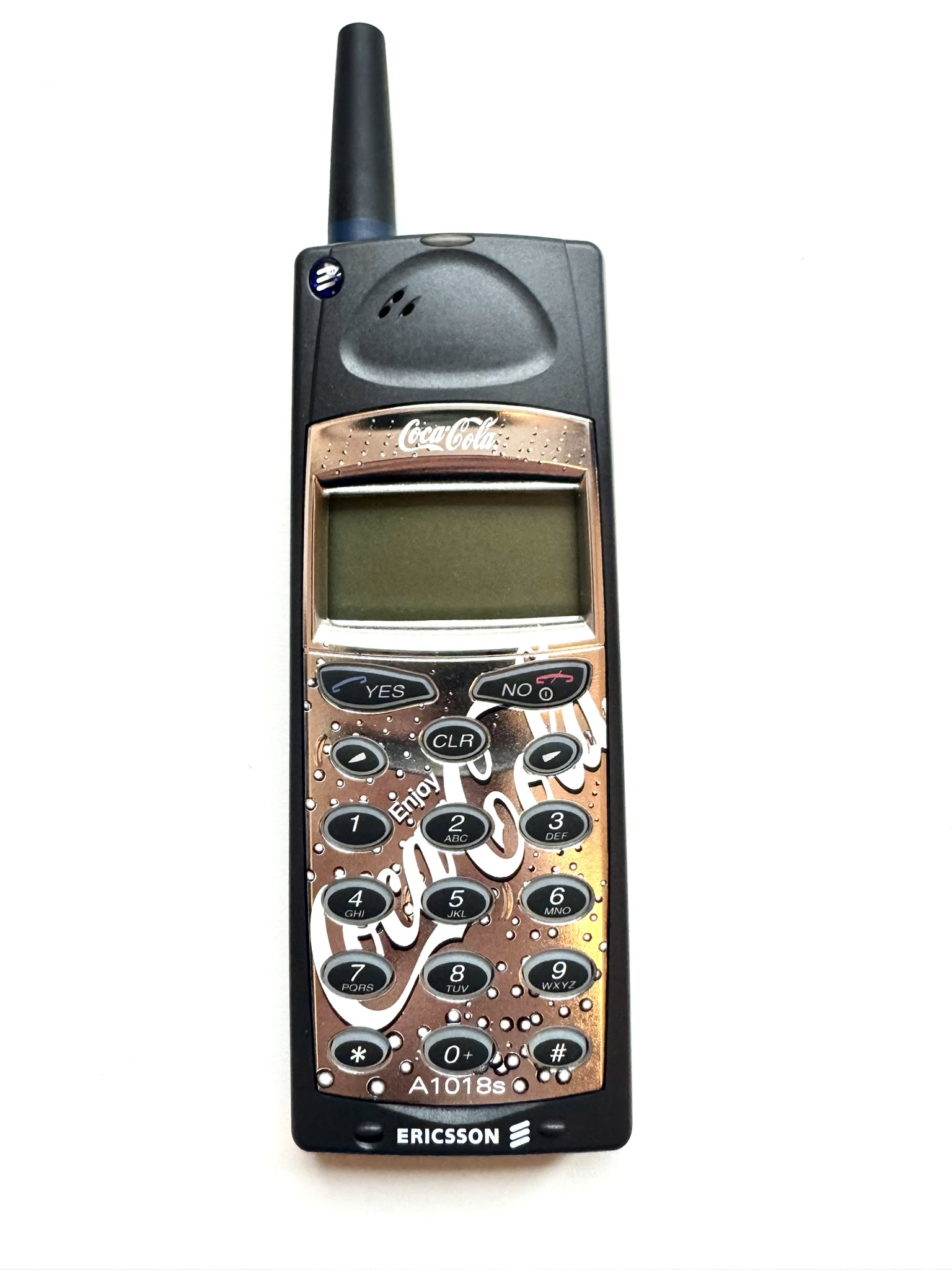
Ericsson A1018s: Coca-Cola Edition The Golden Age of Brand Collaborations
Quick View💎 Rarity Index: A (Rare)
⭐ WOW Factor: Rare Coca-Cola promotional edition with officially designed Coca-Cola fascia
👁 Evaluation in my collection: BNIB – 10/10
⏱ Life timer: 0m | 📦 Boxed: YES
📅 Release Year: 2000 | 💰 Release Price: N/A
📊 Units Sold: ~2k
📰 Why this phone matters: Created during a unique moment when global brands began exploring mobile technology as a marketing medium, the Ericsson A1018s Coca-Cola Edition stands as one of the most iconic promotional phones ever released. Produced in Sweden at the start of the year 2000 and distributed exclusively through Coca-Cola campaigns, it was never sold in stores. Released exclusively through Coca-Cola Great Britain in partnership with the One-2-One network, this phone could not be purchased under any circumstances – instead, it required participants to collect 60 promotional Coca-Cola ring pulls or bottle tokens, attach them to an application sheet, fill out the official Coca-Cola Application Form in block capitals, and mail everything together with a £30 cheque or postal order before the 30 September 2000 cutoff. Approved applications received the phone by post along with a prepaid One-2-One SIM pack and accessories.This edition is instantly recognizable by its factory-issued Coca-Cola fascia – a chrome surface decorated with rising bubble motifs and the flowing “Enjoy” script, perfectly echoing Coca-Cola’s classic advertising themes of the late ’90s and early 2000s. Combined with the elegant black frame and Ericsson’s signature oval keys, the design merges the energy of Coca-Cola branding with the industrial clarity of Ericsson’s pre-Sony mobile philosophy. It retains all the authentic A1018s internals: removable fascia, SMS capability, ringtone composer, and the special Coca-Cola ringtone delivered as part of the official promotional batch.
The full box presentation elevates the rarity even further. The promotional kit includes Coca-Cola branded inserts, themed accessories, original battery, documentation, and the distinctive packaging style documented in collector archives. Preserved in BNIB condition, it maintains the exact look and feel it had the day it left the factory – a true artifact of the era.
More than a mobile device, this edition represents a collaboration between two global icons and one of the most memorable reward-based phone campaigns of the early GSM era. Today, the A1018s Coca-Cola Edition is widely regarded as one of the most desirable and visually unique special editions ever produced.
📝 Reviews when released: Ericssoners 🔗
-


Ericsson ER209i (NTT DoCoMo): Ultra-Rare Japan-Only Release
Quick View💎 Rarity Index: S (Ultra Rare)
⭐ WOW Factor: The first i-mode enabled mobile phone for the PDC standard
👁 Evaluation in my collection: Great – 9.5/10
⏱ Life timer: N/A | 📦 Boxed: NO
📅 Release Year: 2000 | 💰 Release Price: N/A
📊 Units Sold: ~50k
📰 Why this phone matters: DoCoMo by Ericsson ER209i’ (hereafter ER209i) is Ericsson’s first i-mode enabled mobile phone for the PDC standard. In Japan, the growth of the mobile Internet market is very strong, and NTT-DoCoMo’s i-mode service contributes to this expansion. The number of subscribers who use the i-mode services is 15,227,000 as of November 26, 2000 (reference to data of NTT-DoCoMo).📝 Reviews when released: Ericssoners 🔗
-


Ericsson S868: Swedish Bronze Edition
Quick View💎 Rarity Index: A (Rare)
⭐ WOW Factor: One of the first dual-band GSM 900/1800 phones – built for roaming and network resilience.
👁 Evaluation in my collection: As New – 9.8/10
⏱ Life timer: N/A | 📦 Boxed: YES
📅 Release Year: 1998 | 💰 Release Price: ~600 $
📊 Units Sold: ~150k
📰 Why this phone matters: The Ericsson S868 is a legendary late-1990s dual-band GSM phone that pushed mobile communication into a new era of reliability and quality. Introduced by Ericsson in 1998 as a premium dual-band (GSM 900/1800) handset, the S868 delivered enhanced roaming capabilities, robust build quality, and the kind of dependable performance that made it a top choice for business users and world travelers.This unit is fully functional, comes with its full original box, and remains in as-new condition – a rare find for a model built in 1999. Its rare bronze-metallic finish and pristine Swedish-made shell underline the exclusivity of this phone.
Built in week 20 of 1999 in Sweden, this S868 is part of one of the final production runs before Ericsson transitioned to their next-generation series. The original label confirms its eur;opean configuration, dual-band network support, and certification compliance – affirming it as a genuine factory piece rather than a later reproduction or modded unit.
What makes the S868 truly special is its dual-band capability (GSM 900 & GSM 1800), implemented at a time when network congestion was growing rapidly. Ericsson designed the S868 to automatically switch between bands for uninterrupted calls and roaming – a cutting-edge feature in 1998 that many rivals lacked.
The phone also supported the then-high-end Enhanced Full Rate (EFR) speech coding, delivering voice clarity comparable to fixed-line phones.
In a world before smartphones, the S868 offered elegant simplicity and robust functionality: reliable calls across multiple GSM bands, solid build, crisp keypad, clean external antenna, and minimalist design. As a Swedish-made executive-class handset from the twilight of the 1990s GSM era, this S868 stands as a collectible relic of where mobile telephony once stood – before internet browsing, cameras, and data plans.
Whether kept as a pristine collector’s piece or admired for its engineering purity, the S868 remains a symbol of “classic mobile phone” craftsmanship. Its rarity, condition, and historical significance make it more than just a phone – it’s a time capsule of mobile communication’s golden age.
📝 Reviews when released: Ericssoners 🔗
-


Kyocera DS-320
Quick View💎 Rarity Index: A (Rare)
⭐ WOW Factor: The first ever phone that could have a camera attached to it, back in 1997
👁 Evaluation in my collection: Good – 8.5/10
⏱ Life timer: N/A | 📦 Boxed: YES
📅 Release Year: 1997 | 💰 Release Price: N/A
📊 Units Sold: ~100k
📰 Why this phone matters: The concept of mobile phones equipped with camera functions is not uncommon today. However, in the 90s of the last era, it is still a very incredible thing. At that time, the pager boom in China had just passed, and mobile phones were still in the ascendant. Fresh stuff, who would have thought of stuffing a small lens into such a small and exquisite body?
Japan’s Kyocera first thought of this. In 1997, Kyocera launched a brand-new Datascope series, including DS-110 and DS-320 mobile phones. Monochrome LCD screens seem unremarkable, but, Also launched with them is a very eye-catching accessory-VS-110.This accessory is driven by 2 AA batteries, can rotate 210 degrees, and can be movedIt can also be used as a standalone digital camera for video calls on the Internet. It is the world’s first mobile phone equipped with a camera and supports video calls.
Although the practicality is very low, it is the first step taken by mobile phone manufacturers. From 1997 to 1999, Kyocera conducted two years of research and development on the basis of this mobile phone. In May 1999 The VP-210 is officially launched, which integrates the camera on the top of the phone, is equipped with a 110,000-pixel front lens and a 2-inch TFT color screen. It can not only make video calls, but also take 20 photos and share them via email. The first camera phone in the true sense.📝 Reviews when released: W 01 🔗
-
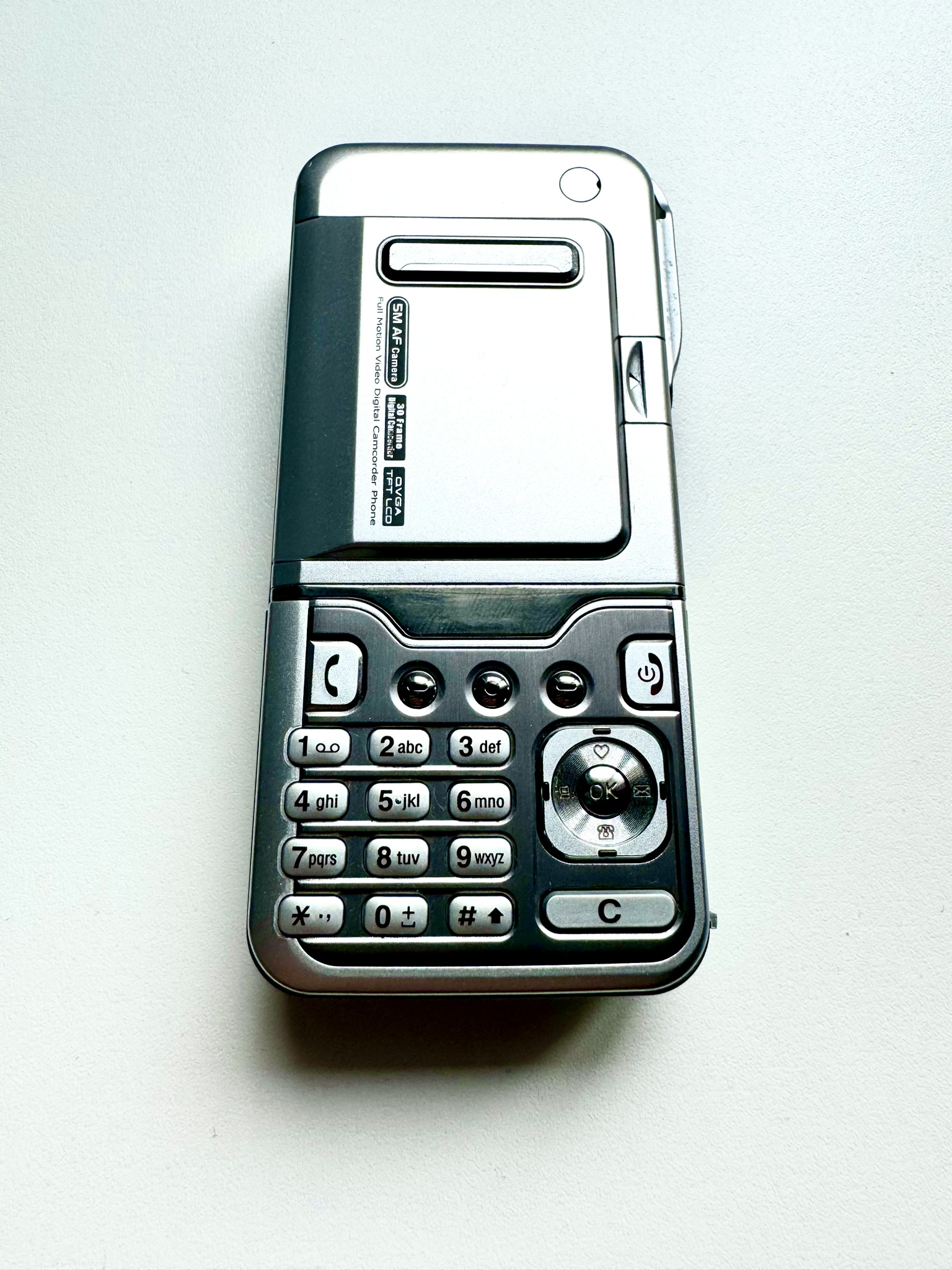
LG KG920
Quick View💎 Rarity Index: B (Uncommon)
⭐ WOW Factor: It delivered a 5-megapixel Schneider-Kreuznach camera in 2006 – beating most competitors by years.
👁 Evaluation in my collection: As New – 9.7/10
⏱ Life timer: N/A | 📦 Boxed: YES
📅 Release Year: 2006 | 💰 Release Price: 450 €
📊 Units Sold: ~500k
📰 Why this phone matters: The LG KG920 is one of the most daring and visionary camera phones ever released – a 2006 flagship that pushed boundaries years ahead of its time. With its 5-megapixel Schneider-Kreuznach camera, true xenon flash, and twist-rotating body, it belonged to a tiny elite family of experimental devices like the Nokia 3250 and Nokia 5700, yet it went even further by transforming into a full horizontal digital camera in one smooth motion.This was not just a phone with a camera – it was a camera that happened to be a phone.
The twist mechanism instantly reconfigured the device into a proper photography grip, something no mainstream device dared to replicate again. Combined with its premium build and Korea-exclusive engineering, the KG920 stood at the intersection of digital imaging and mobile design in a way that feels almost unbelievable today.
Launched in 2006 at a premium price of roughly &eur;o;450-&eur;o;500, it was heavily reviewed and praised for producing some of the cleanest, sharpest images of its generation. Today it remains vastly underrated, overshadowed by later icons, yet historically more important – it reached the 5 MP milestone before many of the industry’s giants and showcased a design concept that has never been revisited.
Your unit captures this legacy perfectly: a rare, twist-based camera phone from the golden era, preserved from a time when manufacturers dared to innovate radically.
A hybrid of digital camera ambition and bold mechanical engineering – the LG KG920 is a striking, unforgettable piece of mobile history.
📝 Reviews when released: Trusted Review 🔗
-
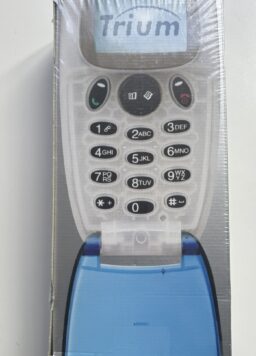
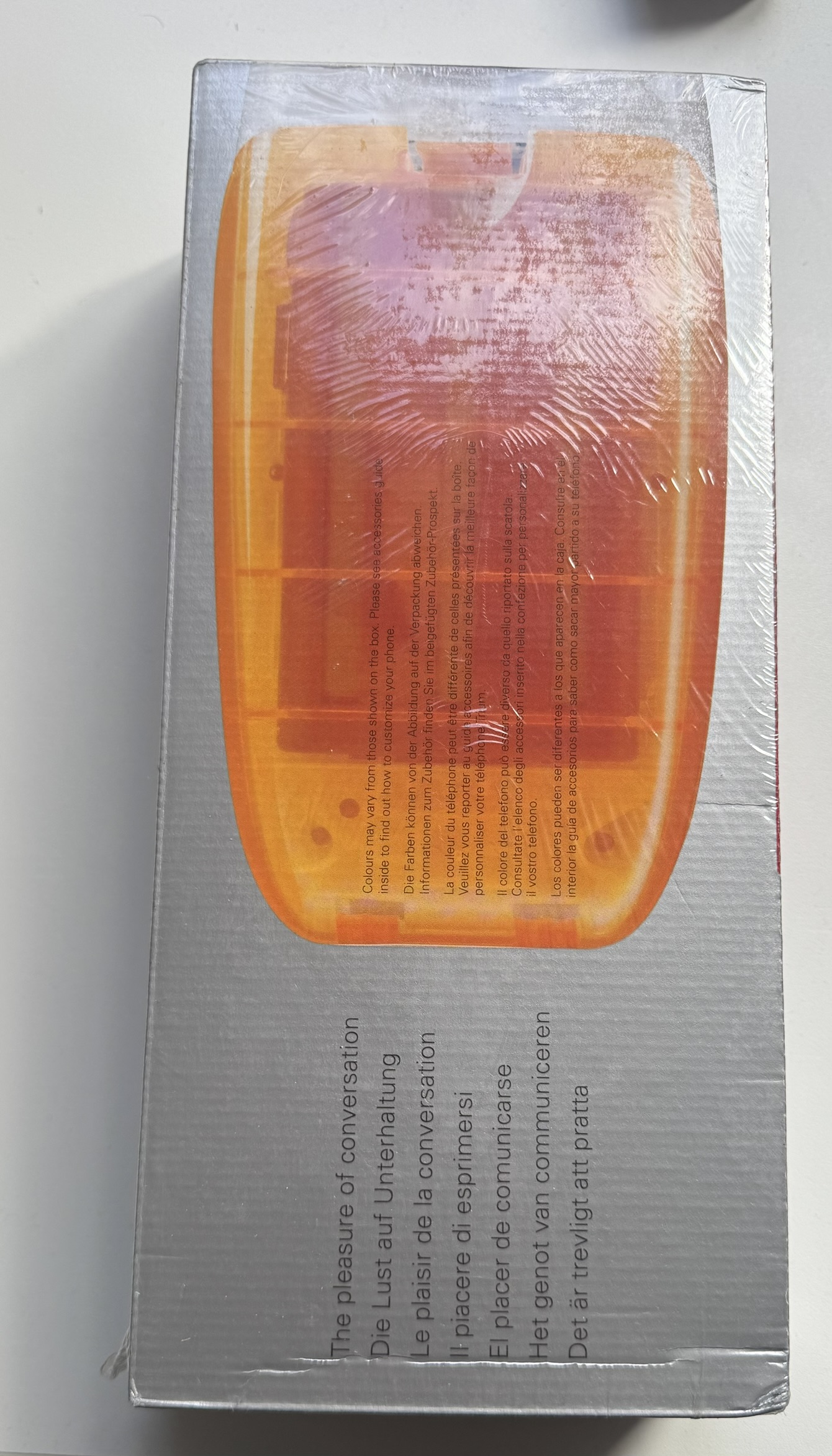
Mitsubishi Trium MT-250 Neptune Blue: Sealed Clamshell
Quick View💎 Rarity Index: A (Rare)
⭐ WOW Factor: The Neptune blue variant is likely one of the most visually striking finishes
👁 Evaluation in my collection: BNIB SEALED – 10/10
⏱ Life timer: N/A | 📦 Boxed: YES
📅 Release Year: 2001 | 💰 Release Price: n/a
📊 Units Sold: ~200k
📰 Why this phone matters: This unit is a sealed Trium MT-250 Neptune blue, preserved exactly as Mitsubishi shipped it during the final years of the Trium mobile era. Still wrapped in its original factory shrink, the box presents a classic early 2000s clamshell design with a translucent blue flip and a frosted keypad housing that defined the playful aesthetic of Trium handsets. The packaging shows the simple monochrome display with the Trium logo, underlining the minimalistic UI that characterized Mitsubishi’s compact GSM range.The side label confirms the exact variant: MT-250 Neptune blue with a Mitsubishi retail IMEI, CE0165 certification and an unbroken production batch code. Very little documentation exists for the MT-250 today, making this sealed example exceptionally rare. As Trium devices vanished from the market long before smartphones took over, complete unopened units almost never survived. This one stands as a pure, untouched snapshot of Mitsubishi’s design language, a lightweight clamshell aimed at style-focused users of its time. For collectors, it is a highly uncommon BNIB relic from a manufacturer whose mobile legacy has become increasingly scarce and desirable.
📝 Reviews when released: N/A 💔
-
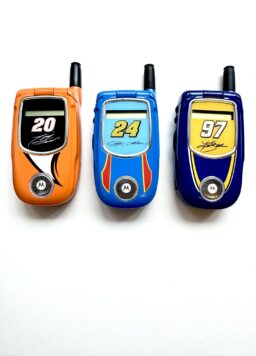
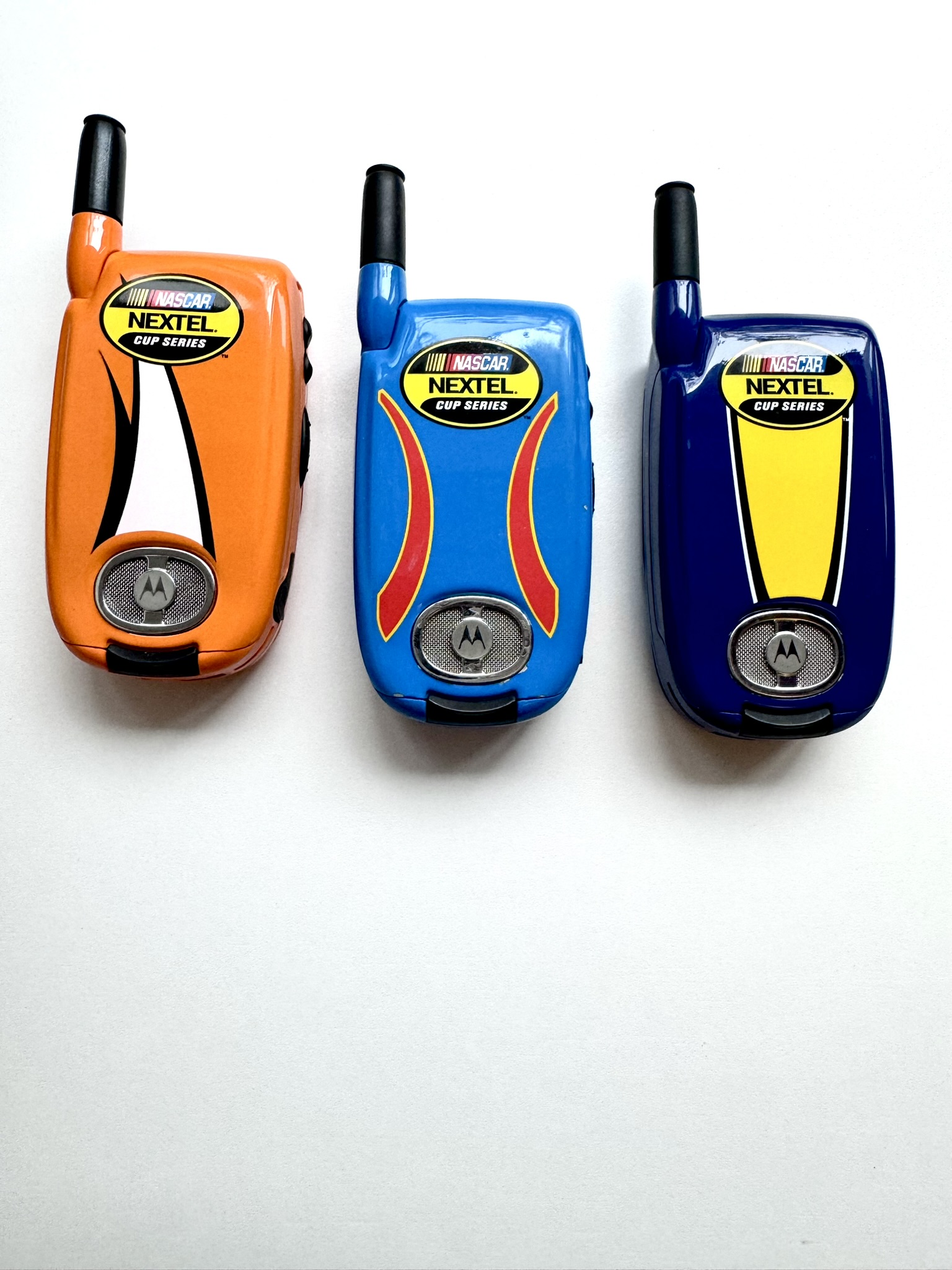
Motorola iDEN NASCAR: Dale Earnhardt Jr. – Driver Number 8
Quick View💎 Rarity Index: A (Rare)
⭐ WOW Factor: Limited-edition printed shells were released in very small quantities through promotions tied to NASCAR sponsors
👁 Evaluation in my collection: Great – 9/10
⏱ Life timer: N/A | 📦 Boxed: YES
📅 Release Year: 2003 | 💰 Release Price: N/A
📊 Units Sold: ~50k
📰 Why this phone matters: “This series brings together a rare and visually striking set of Motorola iDEN NASCAR edition phones, each one finished in the exact colors and markings of some of the most iconic drivers of the era. The front housings carry the bold driver numbers and printed signatures that fans once saw streaking around American tracks: the famous 8 used by Dale Earnhardt Jr.Other major NASCAR stars tied to number-based fan merchandising from the same period include Jimmie Johnson (48), Matt Kenseth (17), Kevin Harvick (29), Mark Martin (6), Rusty Wallace (2), Michael Waltrip (15), and others whose liveries became instantly recognizable in early 2000s motorsport culture. Mentioning them highlights the broader context in which these promotional Motorola phones were released.
Instead of simple decals, these editions feature full factory-printed graphics applied directly to the flip shell, giving them a premium, high-gloss look that stands far above ordinary Motorola releases. Built on Motorola’s rugged iDEN flip-phone platform, these devices were originally tied to the push-to-talk culture that defined the Nextel era. With their tall antennas, external displays, loud front speakers, and the classic M-logo medallions, they capture the unmistakable flavor of early 2000s telecom design.
Today, iDEN handsets with licensed NASCAR artwork are almost never found in mint or BNIB condition, making surviving units especially rare. Together, these themed phones stand as a vivid motorsport showcase, capturing the crossover between mobile technology and racing, and preserving a bold piece of American fan history that has long since disappeared from the mar
“
📝 Reviews when released: N/A 💔