

">

Showing 25–36 of 37 results
-


Nokia 7100 Supernova
Quick View💎 Rarity Index: C (Common)
👁 Evaluation in my collection: Great – 9.5/10
⏱ Life timer: 14h | 📦 Boxed: NO
📅 Release Year: 2008 | 💰 Release Price: ~100 £
📊 Units Sold: ~2M
📰 Why this phone matters: The 7100 is a slider with a mechanism that thunks nicely and feels solid enough to remain reliable over time. The numberpad, revealed when the slide is up, comprises large-ish buttons with a no frills design. Each button is slightly raised in its centre making it easy to find and hit. With the slide closed this isn’t quite as small as I generally like slider phones to be. It is a bit tall at 98mm. However, its 48.4mm of width and 15mm of thickness are OK. With the slide opened the 7100 is 125mm tall and as for weight, it tips the scales at 103.5g.The casing is made of plastic, which might not stand too many drops down the stairs or crunches in a bag. As for its colour scheme, the 7100 looks designed to appeal to a young and bling-friendly audience. The front fascia is mostly black with, in the case of my review sample, a flash of bright metallic pink sitting below the screen. The back of the casing is also pink. Nokia calls this colour ‘jelly red’ but it looks pink to me. You can also get it in a rather nice shade of blue as well as an almost all black guise with just a flash of blue round the navi button.
The colour splash is where you’ll find the two softkeys and Call and End keys, the latter doubling as the main on/off switch. The navi button is large and its frame is also sizeable. I’d say even those with really stubby fingers should be able to get around this handset fine.
📝 Reviews when released: cNET 🔗
-

Nokia 7250i James Brown Edition BNIB
Quick View💎 Rarity Index: A (Rare)
👁 Evaluation in my collection: BNIB – 10/10
🕵 Nokia Codename: James
⏱ Life timer: 0m | 📦 Boxed: YES
📅 Release Year: 2003 | 💰 Release Price: ~450 $
📊 Units Sold: ~12M
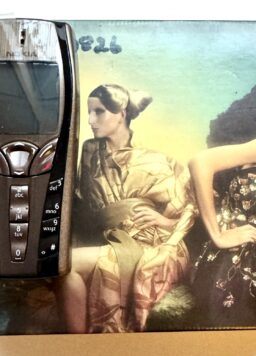
📰 Why this phone matters: Nokia 7250i Brown Edition NHL-4JX, codename James, is one of those devices that shows exactly why early 2000s Nokia was untouchable in phone design.The 7250i itself was launched in 2003 as an upgraded version of the 7250, keeping the wild, sculpted candybar body but hiding a better camera and a more advanced XHTML browser inside. It was part of Nokia’s fashion line, a hero product that mixed technology and style at a time when an integrated camera was still a futuristic feature.
This unit takes that story further. Finished in the ultra rare brown metallic shell, it looks completely different from the usual blue and plum variants. The front mixes a warm brown body with dark framing and a dramatic three piece keypad layout that flows up into the navigation cluster. It is unmistakably a fashion phone, and in this color it is almost never seen, especially BNIB.
Behind the design sits the NHL-4JX platform: a tri band GSM engine with Series 40 1st Edition software, CSTN 4096 color display and a CIF camera tuned for the 128 x 128 screen. The camera supports night mode and digital zoom, letting early adopters capture and send MMS pictures long before camera phones became standard. GPRS and HSCSD handle data, while the stereo FM radio, Java games and Nokia’s Pop-Port ecosystem turn the phone into a compact entertainment device.
The label confirms everything a collector wants to see: Model 7250i, Type NHL-4JX, product code 0511226, IMEI in the correct 351460 range, FCC ID PYANHL-4J, IC 661V-NHL4J, CE168 and Made in Hungary, one of Nokia’s most respected factories. In other words, a fully authentic, correctly configured eur;opean market 7250i in one of the rarest official colors.
This unit is BNIB in the collection, which is extremely unusual for a 2003 fashion device that was meant to be used hard and shown off. Most surviving 7250i phones are worn, repainted or rebuilt; finding an original brown example that has effectively never entered daily service is a serious trophy for any Nokia or fashion phone collector.
📝 Reviews when released: N/A 💔
-


Nokia 7900 Prism Gold
Quick View💎 Rarity Index: A (Rare)
⭐ WOW Factor: The first Nokia?phone with OLED Display
👁 Evaluation in my collection: Great – 9.0/10
⏱ Life timer: 263h | 📦 Boxed: NO
📅 Release Year: 2007 | 💰 Release Price: ~375 €
📊 Units Sold: ~1M
📰 Why this phone matters: The Nokia 7900 is a mobile phone produced by Nokia and announced on August 7, 2007. It is part of Nokia’s Prism Collection. It runs S40 5th Edition. It is a quadband phone and has WCDMA on 850 MHz and 2100 MHz. The 2-inch (51 mm) screen is powered by OLED technology, Nokia’s first, and has a resolution of 320×240 pixels showing 16 million colors. Included is a 2-megapixel camera with flash, an 850mAh battery, and 1 GB of on board memory.Dimensions are as follows: 112 x 45 x 11.3 mm; 101 grams.
📝 Reviews when released: Mobile Review 🔗
-


Nokia 8110 Michael Schumacher Limited Edition No.0296 – The Impossible-to-Find Edition
Quick View💎 Rarity Index: S (Ultra Rare)
⭐ WOW Factor: The first Nokia phone with a slider form factor, The first of Nokia high-end 8000 series, The first Nokia phone with monochrome graphic LCD, The first phone with SSMS (Smart SMS), The first phone to support ring tone receiving by SMS, The phone featured in the science fiction action film The Matrix (1999)
👁 Evaluation in my collection: As New – 9.8/10
⏱ Life timer: N/A | 📦 Boxed: YES
📅 Release Year: 1997 | 💰 Release Price: N/A
📊 Units Sold: 1997
📰 Why this phone matters: The Nokia 8110 Michael Schumacher Limited Edition No.0296 is one of the most remarkable collectible mobile phones ever released – and this specific unit stands out even within that ultra-rare group. Produced in a strictly limited run of 1,997 pieces worldwide, this device carries the official individual number 0296, matching the original Talkline-issued authenticity certificate, signed in print by Michael Schumacher himself. Every detail confirms its legitimacy as part of the official Michael Schumacher Collection, licensed by PPM.This particular device remains in full-box condition, a rarity in its own right. The package includes the complete original set: the official certificate with matching number, original box and inserts, accessories, and the pristine handset finished in the iconic Schumacher red. The front fascia features Michael’s portrait subtly integrated into the sliding cover, accompanied by his stylized signature. The back includes the factory-applied Schumacher Collection sticker, with the same official sticker also present on the box and on the label inside the phone, ensuring absolute consistency and authenticity across all components.
As part of the broader Michael Schumacher mobile series, Nokia also released a Schumacher Edition Nokia 2110, a similarly themed model from the same era. It is an important companion piece to the 8110, and while highly sought after, it is not yet present in the collection, making the 8110 even more of a standout centerpiece until its counterpart is added.
Beyond the collectible value, the phone itself is an icon of mobile history: the Nokia 8110 was the first high-end slider of the Nokia 8000 series, the earliest “banana phone,” and a technological status symbol of the late 90s. Its curved silhouette, sliding mechanism that answers calls, and monochrome graphic LCD defined the era. The improved 8110i later introduced Smart Messaging – making this line the origin point for many modern phone features. The 8110 also achieved pop-culture immortality when a modified version appeared in The Matrix.
Combined with the Schumacher branding, this edition transforms the classic 8110 into something far more significant: a celebration of a Formula 1 legend at the height of his career. Owning unit 0296 means holding a true numbered artifact of motorsport history – a device tied directly to the most dominant driver of the era.
This is not just a limited edition phone.
It is a preserved, authenticated piece of racing heritage, paired with one of the most iconic Nokia designs ever created.📝 Reviews when released: N/A 💔
-
Nokia 8208: Dual-Slider Elite. The Rarest CDMA Flagship Nokia Ever Built
Quick View💎 Rarity Index: S (Ultra Rare)
⭐ WOW Factor: Rare Nokia Dual-Slider CDMA Flagship (China-Exclusive, Short Production Run)
👁 Evaluation in my collection: BNIB – 10/10
⏱ Life timer: 0 | 📦 Boxed: YES
📅 Release Year: 2009 | 💰 Release Price: 300 €
📊 Units Sold: ~200k
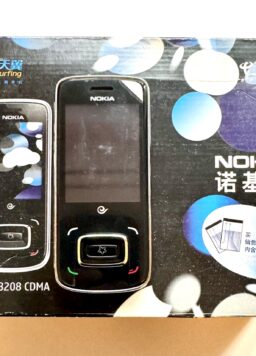
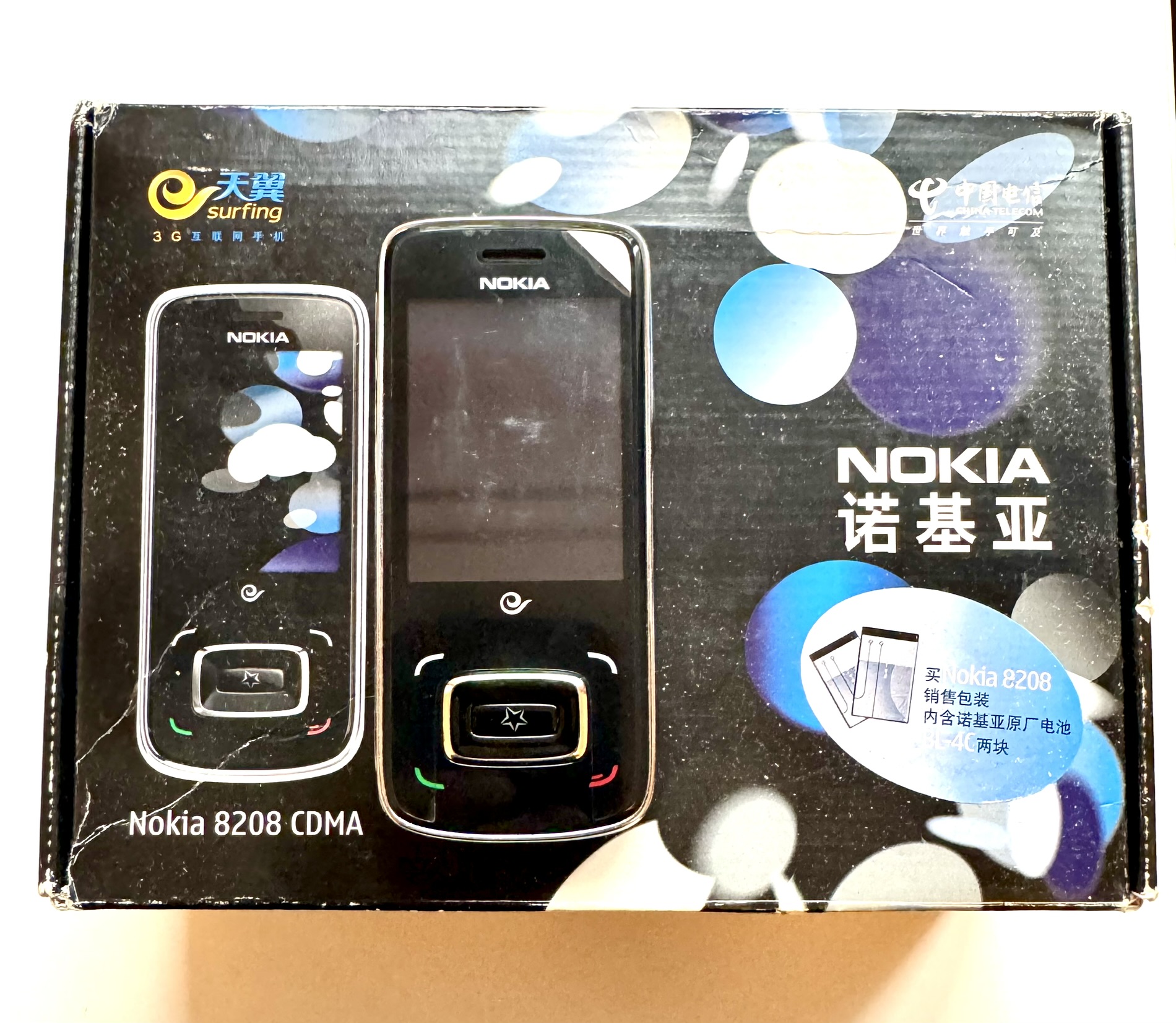
📰 Why this phone matters: The Nokia 8208 stands out as one of Nokia’s most distinctive high-end CDMA phones, created exclusively for the Chinese market in 2009. Built for China Telecom’s premium segment, it delivers a rare combination of power, design originality, and luxury-grade construction that places it among the most collectible CDMA-era Nokias ever made. This unit is preserved in factory-new condition, an exceptional find considering how few 8208 units escaped heavy carrier use. BNIB status significantly elevates its desirability and rarity for collectors.Its signature feature is the dual-slider design: slide up to reveal the keypad, slide down for dedicated multimedia controls – a layout rarely seen on a Nokia device. Combined with its solid feel, metal structural elements, sharp lines, and balanced weight, the 8208 feels like a deliberately crafted premium instrument rather than a typical feature phone.
Production numbers were limited, and the model never officially reached markets outside China, making surviving units scarce worldwide – especially in top condition.
📝 Reviews when released: N/A 💔
-
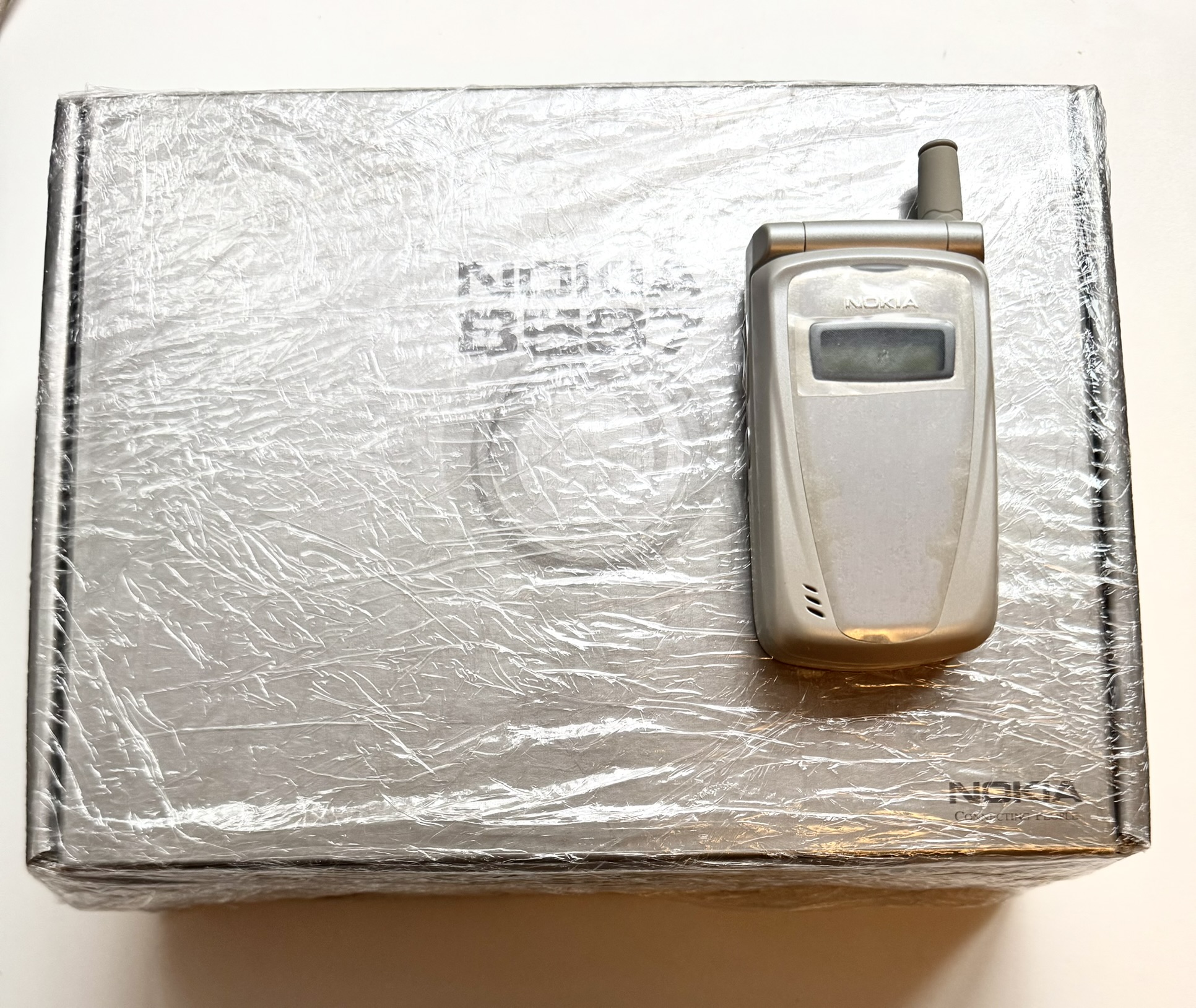
Nokia 8587: Korea Exclusive CDMA Rarity (BNIB)
Quick View💎 Rarity Index: A (Rare)
⭐ WOW Factor: A model using a battery and hardware ecosystem Nokia never used anywhere else
👁 Evaluation in my collection: BNIB – 10/10
⏱ Life timer: 0 | 📦 Boxed: YES
📅 Release Year: 2003 | 💰 Release Price: 350 €
📊 Units Sold: ~200k
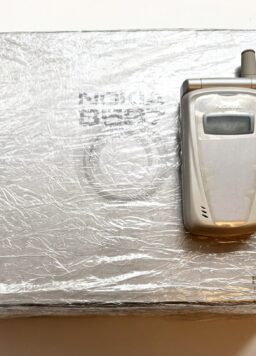
📰 Why this phone matters: A truly unique Nokia released only for the South Korean market, the 8587 stands apart as one of the rarest and most unusual devices ever carrying the Nokia name. Built through a Korean ODM partnership, it blends classic Nokia software with Sanyo-style hardware, a proprietary domestic battery, and a design never used in any global Nokia model.This BNIB unit is a preserved time capsule from Nokia’s short-lived Korean CDMA experiment – a phone that looks Nokia on the outside but is unmistakably Korean-engineered inside. Closely related to models like the Nokia 8887, the 8587 represents a completely different branch of Nokia history, available only to local carriers and unseen outside Korea.
A standout collectible for any serious Nokia or CDMA enthusiast.
Highlights:
Korea-exclusive model (RH-15)
ODM-built with pseudo-Sanyo design and proprietary battery
MIC-certified Korean domestic release (Dec 2003)
Ultra-rare BNIB condition
Part of Nokia’s experimental Korean CDMA lineup (e.g., 8587 / 8887)
A true oddity: a Nokia that doesn’t follow Nokia’s global hardware standards
📝 Reviews when released: N/A 💔
-
Nokia 8587: Korea Exclusive CDMA Rarity (BNIB)
Quick View📦 Collector-to-Collector Transaction
This item is from a private collection and sold as-is for collectors only. All devices have been verified for authenticity and condition as described, but no warranty or guarantee is provided. This is a private sale between individuals and not a commercial business transaction.
💎 Rarity Index: A (Rare)
⭐ WOW Factor: A model using a battery and hardware ecosystem Nokia never used anywhere else
👁 Evaluation: BNIB – 10/10
⏱ Life timer: 0 📦 Boxed: YES
📰 About this collectible: A truly unique Nokia released only for the South Korean market, the 8587 stands apart as one of the rarest and most unusual devices ever carrying the Nokia name. Built through a Korean ODM partnership, it blends classic Nokia software with Sanyo-style hardware, a proprietary domestic battery, and a design never used in any global Nokia model.This BNIB unit is a preserved time capsule from Nokia’s short-lived Korean CDMA experiment – a phone that looks Nokia on the outside but is unmistakably Korean-engineered inside. Closely related to models like the Nokia 8887, the 8587 represents a completely different branch of Nokia history, available only to local carriers and unseen outside Korea.
A standout collectible for any serious Nokia or CDMA enthusiast.
Highlights:
Korea-exclusive model (RH-15)
ODM-built with pseudo-Sanyo design and proprietary battery
MIC-certified Korean domestic release (Dec 2003)
Ultra-rare BNIB condition
Part of Nokia’s experimental Korean CDMA lineup (e.g., 8587 / 8887)
A true oddity: a Nokia that doesn’t follow Nokia’s global hardware standards
✓ Verification Checklist
Authenticity & Condition:
– Originality verification (exterior, labels)
– Matching IMEI (box, label, motherboard)
– Physical condition assessment (scratches, cracks, screws)Functional Testing:
– Powers on
– Display functionality
– Camera (when applicable)
– Vibration mechanism (when applicable)
– Security code
– Charging
– Network connectivity
– Call functionality including speaker (non-BNIB units on European networks)Additional specific tests available upon request.
-


Nokia N86
Quick View💎 Rarity Index: B (Uncommon)
⭐ WOW Factor: The first Nokia phone with a 8MP camera
👁 Evaluation in my collection: BNIB – 10/10
⏱ Life timer: 0m | 📦 Boxed: YES
📅 Release Year: 2009 | 💰 Release Price: ~375 €
📊 Units Sold: ~1M
📰 Why this phone matters: The Nokia N86 8MP is a high-end smartphone announced on 17 February 2009 and released in May 2009. It runs on Symbian OS 9.3 (S60 3rd Edition FP2) and is part of the Nseries. It shares similar design features with the N97.
One of its main selling points is its Carl Zeiss photography features. It was Nokia’s first camera phone to have an 8 megapixel sensor (although late compared to other manufacturers),and features both multiple aperture settings and a mechanical shutter (uncommon features by the standards of camera phones), and a Carl Zeiss lens with a wide angle of view (28 mm equivalent). It also has auto focus and a dual LED flash (3rd generation dual-LEDs), and an AF assist light. Video capture resolution is 640 x 480 pixels (VGA) at 30 frames per second.The N86 continuous the form factor of the Nokia N95 and N85 with its dual-sliding form factor, whilst adding a toughened glass front cover and metal detailing and keypad, making it look and feel premium.It has a 2.6-inch AMOLED display, a fast 434 MHz processor, and an 8 GB internal memory.It also has the same kickback stand as the N85 so it is possible to use as a small standalone screen, and it is possible to configure the opening of the stand to launch applications such as the video player. It also supports the N-Gage gaming platform. The N86 8MP is regarded as the spiritual successor of the N95 8GB due to its feature set in the same sliding form factor, and the commercial failure of the N96. Some regard it a successor of the N82 due to its camera.
📝 Reviews when released: Mobile Review 🔗
-


Nokia NM502i Docomo
Quick View💎 Rarity Index: A (Rare)
👁 Evaluation in my collection: As New – 9.9/10
⏱ Life timer: 0m | 📦 Boxed: NO
📅 Release Year: 2000 | 💰 Release Price: N/A
📊 Units Sold: ~100k
📰 Why this phone matters: Nokia was not promoting?i-mode?widely in its portfolio. However, Japan market was important and Nokia introduced own models using?PDC?technology. This Nokia NM502i was developed for?NTT DoCoMo?and was introduced in premium category on March 28, 2002.📝 Reviews when released: Nokia Museum 🔗
-


NTT Docomo Mitsubishi Foma D800iDS
Quick View💎 Rarity Index: S (Ultra Rare)
👁 Evaluation in my collection: Great – 9.5/10
⏱ Life timer: N/A | 📦 Boxed: NO
📅 Release Year: 2007 | 💰 Release Price: N/A
📊 Units Sold: ~120k
📰 Why this phone matters: With the NTT DoCoMo FOMA D800iDS, Mitsubishi has succeeded in converting the folded mobile phone keypad into a touch panel. The 2.2-inch QVGA liquid crystal screen is divided above and below the fold in the phone frame, and the lower half features a touch panel with touch feedback function. This panel allows users to operate the phone using three, six, or ten keys, as well as to select 2-touch, 5-touch or handwritten text input. When the phone is folded closed, the time and newly received data are displayed in large format on a 144 LED screen. Lined on the back in rubber, the phone can be placed on any hard surface without risk of sliding. The phone also features a scan mode operated with external switches to enable those who do not have full use of their hands to operate the functions easily. In addition to games and paint applications operated via the touch panel, the FOMA D800iDS also features telephone, email, camera, TV-phone, Internet surfing, and JAVA application functions.📝 Reviews when released: G Mark 🔗
-
Panasonic EB X30: The Iconic Flip-Out Screen Camcorder Phone
Quick View💎 Rarity Index: A (Rare)
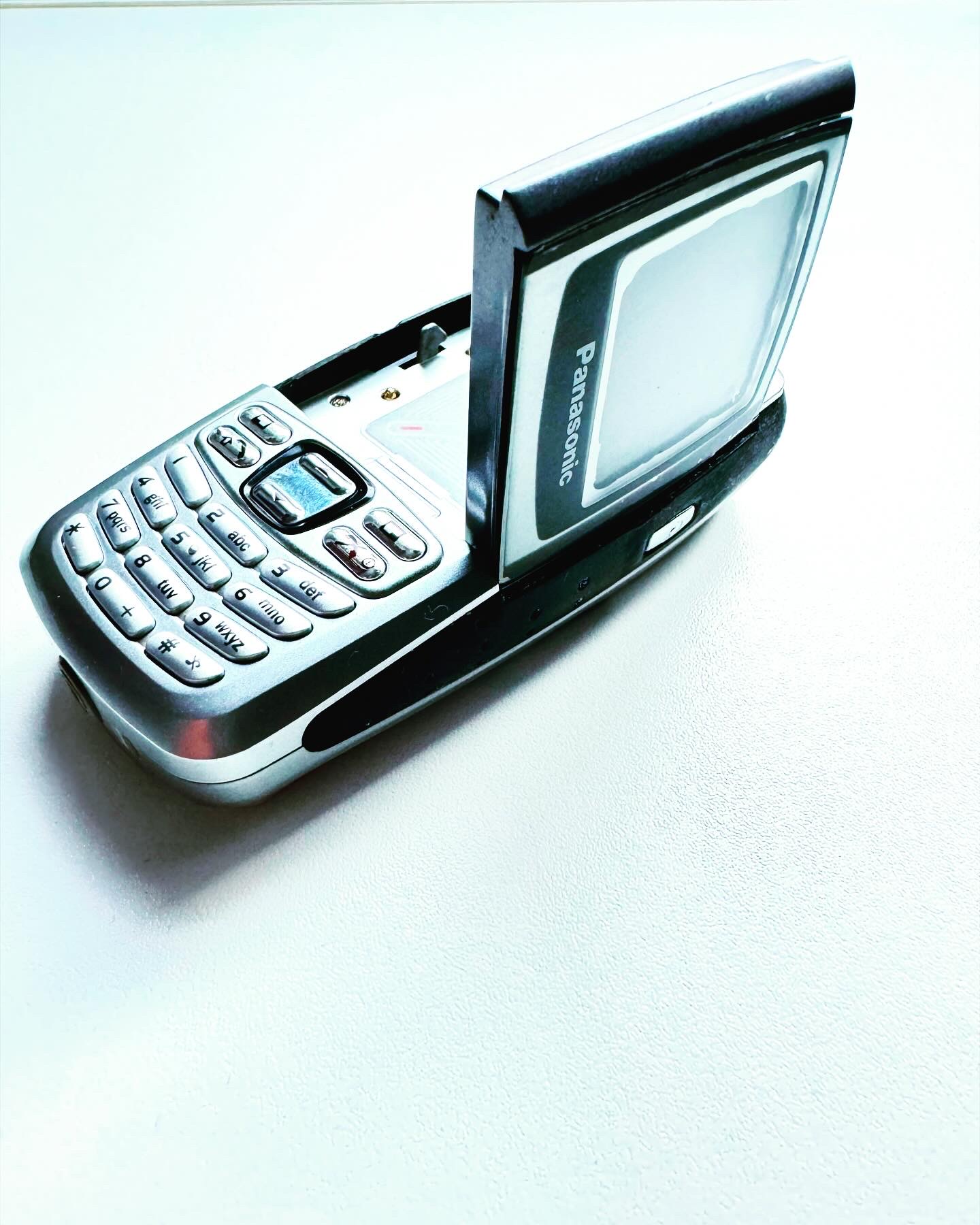
⭐ WOW Factor: The Panasonic EB-X300 is a transforming mobile device – a phone that literally turns into a miniature camcorder with a spring-launched, side-flipping screen.
One of the most mechanically innovative phones ever sold, and a true unicorn in any collection.👁 Evaluation in my collection: BNIB – 10/10
⏱ Life timer: 0 | 📦 Boxed: YES
📅 Release Year: 2004 | 💰 Release Price: ~250
📊 Units Sold: ~400k
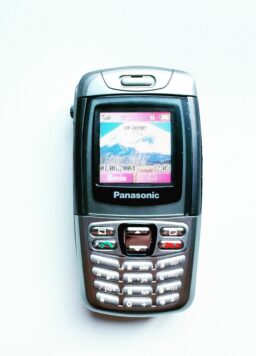
📰 Why this phone matters: A spectacular and highly collectible Panasonic EB-X300, one of the most unique mobile phones ever produced. Released in 2004, the X300 stood out as a true piece of mobile engineering art, combining a classic keypad phone with a mechanically retractable, flip-out display that transformed the device into a miniature video camera at the press of a button.The X300 wasn’t just another camera phone – it was designed like a camcorder.
Press the spring-loaded release button and the entire screen swings out sideways into a horizontal viewfinder, giving the phone a completely different identity instantly. In this mode, the handset becomes a compact digital camera with a distinctive VGA (f/2.8, 3.3mm) lens mounted on the body, perfectly positioned for video capture and photography.This transforming mechanism makes the X300 one of the most mechanically ambitious GSM phones ever sold, and absolutely unforgettable among early-2000s Panasonic designs. Your unit, with all the moving parts functioning and its internal label intact, is a fantastic collector-grade example.
📝 Reviews when released: Mobile Review 🔗
-
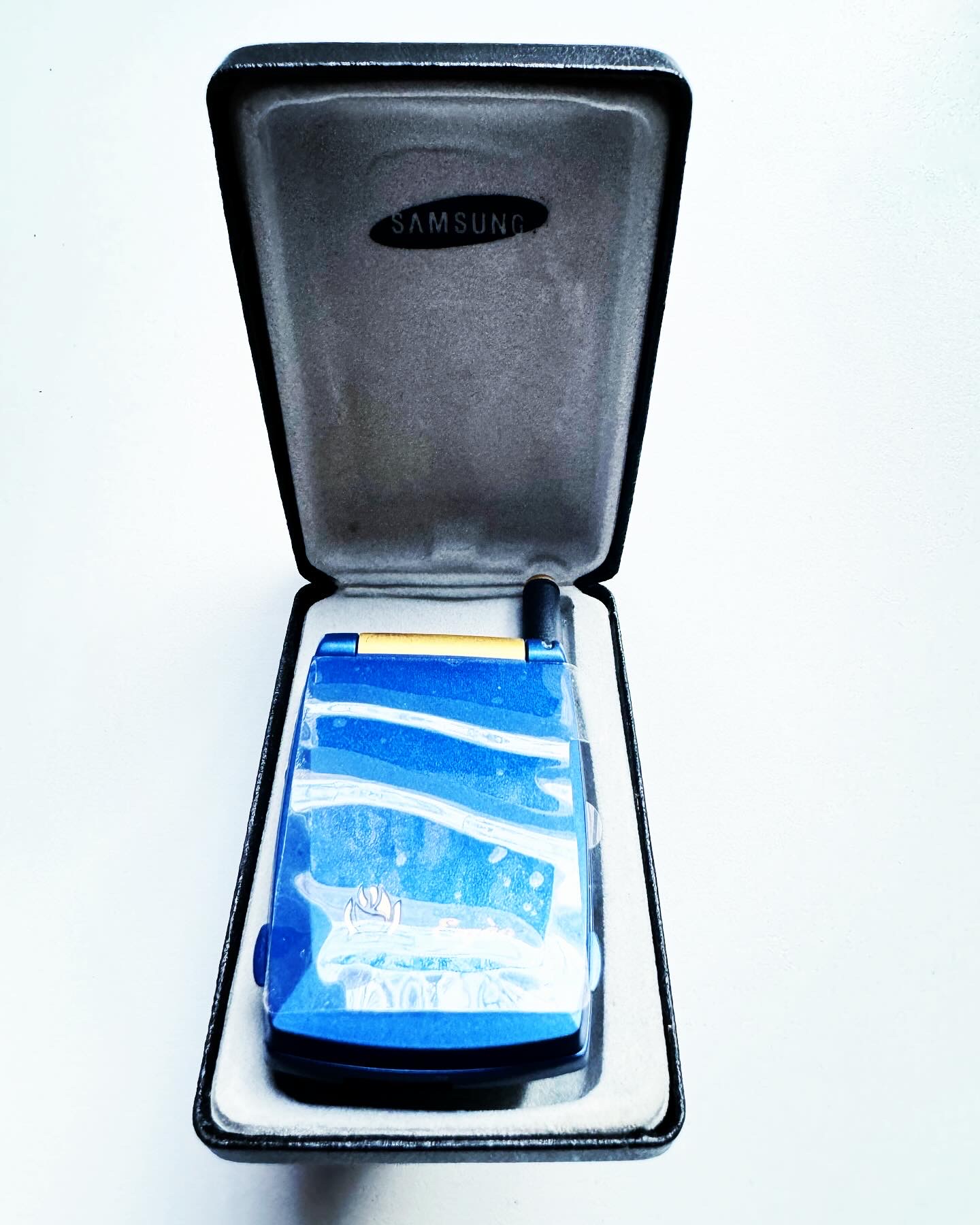
Samsung SGH-A408 “Egeo Edition”: Rare Custom Blue-Gold Variant
Quick View💎 Rarity Index: A (Rare)
⭐ WOW Factor: This isn’t a normal A408.
The Egeo branding with the golden flame and scripted logo marks it as a co-branded boutique variant, distributed in extremely low quantities through select retailers.This edition barely appears in global phone archives.
👁 Evaluation in my collection: BNIB – 10/10
⏱ Life timer: 0m | 📦 Boxed: YES
📅 Release Year: 2001 | 💰 Release Price: 200 $
📊 Units Sold: ~300k
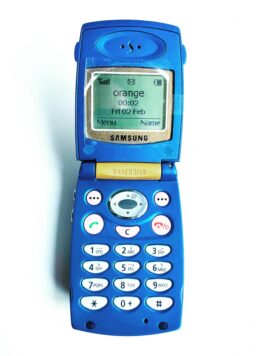
📰 Why this phone matters: A rare Samsung SGH-A408 in the distinctive Egeo co-branded edition, featuring a striking blue-and-gold finish not seen in standard Samsung retail models. Manufactured in Korea, this version is part of a small-volume release used primarily for promotional partnerships and boutique-market customization, making it far harder to find than the regular A408.The SGH-A408 was one of Samsung’s early compact flip phones, built during the transition period when Samsung began refining the sleek, stylized designs that later defined their SGH and X-series devices. The classic external antenna, metallic paint, and angular shell combine into a perfect late-90s / early-2000s Samsung aesthetic.
Your Egeo variant stands out through:
Gold hinge + gold logo unique to this edition
Branded Egeo flame insignia
Metallic deep-blue casing produced in limited quantities
Clean Korean manufacturing label indicating early production batch
Uncommon GSM variant (A408 GSMH)
These features make it one of the more unusual Samsung flip designs of its era – especially valuable for collectors of pre-2003 Samsung hardware and regional special editions.
📝 Reviews when released: N/A 💔