

Showing all 10 results
-


Nokia 8110 Michael Schumacher Limited Edition No.0296 – The Impossible-to-Find Edition
Quick View💎 Rarity Index: S (Ultra Rare)
⭐ WOW Factor: The first Nokia phone with a slider form factor, The first of Nokia high-end 8000 series, The first Nokia phone with monochrome graphic LCD, The first phone with SSMS (Smart SMS), The first phone to support ring tone receiving by SMS, The phone featured in the science fiction action film The Matrix (1999)
👁 Evaluation in my collection: As New – 9.8/10
⏱ Life timer: N/A | 📦 Boxed: YES
📅 Release Year: 1997 | 💰 Release Price: N/A
📊 Units Sold: 1997
📰 Why this phone matters: The Nokia 8110 Michael Schumacher Limited Edition No.0296 is one of the most remarkable collectible mobile phones ever released – and this specific unit stands out even within that ultra-rare group. Produced in a strictly limited run of 1,997 pieces worldwide, this device carries the official individual number 0296, matching the original Talkline-issued authenticity certificate, signed in print by Michael Schumacher himself. Every detail confirms its legitimacy as part of the official Michael Schumacher Collection, licensed by PPM.This particular device remains in full-box condition, a rarity in its own right. The package includes the complete original set: the official certificate with matching number, original box and inserts, accessories, and the pristine handset finished in the iconic Schumacher red. The front fascia features Michael’s portrait subtly integrated into the sliding cover, accompanied by his stylized signature. The back includes the factory-applied Schumacher Collection sticker, with the same official sticker also present on the box and on the label inside the phone, ensuring absolute consistency and authenticity across all components.
As part of the broader Michael Schumacher mobile series, Nokia also released a Schumacher Edition Nokia 2110, a similarly themed model from the same era. It is an important companion piece to the 8110, and while highly sought after, it is not yet present in the collection, making the 8110 even more of a standout centerpiece until its counterpart is added.
Beyond the collectible value, the phone itself is an icon of mobile history: the Nokia 8110 was the first high-end slider of the Nokia 8000 series, the earliest “banana phone,” and a technological status symbol of the late 90s. Its curved silhouette, sliding mechanism that answers calls, and monochrome graphic LCD defined the era. The improved 8110i later introduced Smart Messaging – making this line the origin point for many modern phone features. The 8110 also achieved pop-culture immortality when a modified version appeared in The Matrix.
Combined with the Schumacher branding, this edition transforms the classic 8110 into something far more significant: a celebration of a Formula 1 legend at the height of his career. Owning unit 0296 means holding a true numbered artifact of motorsport history – a device tied directly to the most dominant driver of the era.
This is not just a limited edition phone.
It is a preserved, authenticated piece of racing heritage, paired with one of the most iconic Nokia designs ever created.📝 Reviews when released: N/A 💔
-


Nokia 2110i: Special Festival de Cannes 1995 No. 0929 of 1000
Quick View💎 Rarity Index: S (Ultra Rare)
⭐ WOW Factor: The first Nokia phone with famous Nokia ringtone
👁 Evaluation in my collection: Great – 9/10
⏱ Life timer: N/A | 📦 Boxed: NO
📅 Release Year: 1994 | 💰 Release Price: ~700 £
📊 Units Sold: ~1000
📰 Why this phone matters: The Nokia 2110i Special Festival de Cannes 1995 edition is one of the earliest officially numbered Nokia limited editions ever created. Produced in a run of only 1000 units for the French operator Itineris, this handset features a unique multi-color artistic design celebrating the Cannes film festival, with the official serial number printed directly on the housing. This unit is number 0929 of 1000, making it a rare and collectible piece of Nokia history.Based on the Nokia 2110i platform, this special edition includes all the technological milestones that made the 2110 series one of Nokia’s most important early models. It was the first Nokia phone to feature the now iconic Nokia tune ringtone, and introduced the dynamic softkey interface that later evolved into the Navi-key concept used across Nokia’s Series 20 devices. The 2110i version expanded memory and improved performance, making it one of the most popular business-class handsets of the mid 1990s.
What sets this edition apart is the custom Festival de Cannes artwork. The bright, artistic color scheme and festival-themed illustrations stand in sharp contrast to the conservative designs of the era. Each handset in the series features the Itineris branding and the printed inscription Special Festival de Cannes 1995 followed by its official number in the 0001 to 1000 range. Few promotional Nokia models were as bold or as culturally connected as this one.
Because these phones were used in real-world promotional campaigns, most surviving units show heavy wear or faded artwork. A well-preserved, fully functional unit with vibrant colors and a clearly legible serial number is rare. As one of the earliest limited editions ever produced by Nokia, and one tied directly to a global cultural event, the Festival de Cannes 1995 edition is a highly desirable collector item and an important part of Nokia’s pre-smartphone legacy.
📝 Reviews when released: N/A 💔
-


Motorola StarTAC 70 “Rainbow Edition”: The Ultra-Rare Multicolor Icon of the GSM Era
Quick View💎 Rarity Index: S (Ultra Rare)
⭐ WOW Factor: A factory-produced StarTAC in full multicolor Rainbow livery is one of the most elusive special editions Motorola ever released.
👁 Evaluation in my collection: BNIB – 10/10
⏱ Life timer: N/A | 📦 Boxed: YES
📅 Release Year: 1996 | 💰 Release Price: More than 1000 $
📊 Units Sold: ~30k
📰 Why this phone matters: The Motorola StarTAC 70 Rainbow Edition is not just rare, it is one of the hardest to find and most aggressively hunted special editions ever created in the StarTAC lineage. Even among collectors of 90s GSM icons, the Rainbow sits in a tier of its own, a true ultra variant that almost never appears in genuine form. While over 60 million StarTACs were sold worldwide, the authentic Rainbow Edition represents a microscopic fraction of production, making it one of Motorola’s most elusive and valuable designs.Born from Motorola’s brief but daring attempt to break into the youth market, the Rainbow Edition abandoned every established rule. Instead of corporate black, it exploded in a palette of red, green, blue and yellow molded plastics. This was not a repaint or a gimmick. These colors were factory produced, region specific, and offered only in small numbers through select operators such as MoviStar and Telefonica. The visual impact was radical, and at a time dominated by monochrome Nokia bricks, this phone looked like nothing else on Earth.
The Rainbow was a commercial anomaly, too bold for the mainstream and too ahead of its time for conservative users, and because of that, extremely few survived. Its scarcity has driven collectors into near obsessive authentication hunts, especially with the flood of counterfeits and repainted shells that appeared over the years. Genuine units, with original multi tone housings and correct operator branding, are considered trophy level acquisitions.
This device is BNIB and fully functional, preserved in a condition that is virtually unheard of for this variant. And even more extraordinary, there are two BNIB Rainbow StarTAC 70 units in the collection. Owning even one authentic Rainbow is already almost impossible. Having two boxed originals elevates the rarity to a level normally reserved for museum archives or private corporate vaults.
The original box, with its dramatic rainbow arc and cosmic blue background, was produced only for this version, reinforcing how intentionally Motorola treated this colorway. Everything about this edition was designed to break conventions and redefine what a mobile phone could look like.
Today, the StarTAC 70 Rainbow Edition is considered one of the most desirable, visually unique and aggressively rare special editions ever created in the early GSM era. It is not just a phone, it is a declaration of design rebellion, a historical anomaly, and a centerpiece for any serious collector of mobile icons.
📝 Reviews when released: N/A 💔
-


Nokia 3110 Blue VW Edition
Quick View💎 Rarity Index: S (Ultra Rare)
⭐ WOW Factor: The first Nokia phone to feature the Navi-Key (a.k.a. D-Pad)
👁 Evaluation in my collection: Good – 9/10
⏱ Life timer: NA | 📦 Boxed: NO
📅 Release Year: 1997 | 💰 Release Price: N/A
📊 Units Sold: ~10k
📰 Why this phone matters: The 3110 is a GSM mobile phone handset manufactured by Nokia in Hungary, introduced at CEBIT in March 1997.The 3110 is notable as the first Nokia handset to feature the ‘Navi-Key’ (a.k.a. D-Pad) menu navigation system. The Navi-Key was featured heavily on Nokia handsets, especially the entry-level models such as the Nokia 1100 in the following years. Unlike its successor, the 3210, and subsequent handsets of similar design, the 3110 had an external antenna. The phone was available with a slim, standard or vibrating battery. It could only be used on a GSM-900 network.
The 3110 shared the platform and accessories of the Nokia 8110 “banana phone”.
The model number was reused by Nokia in 2007 when the company launched the Nokia 3110 classic. The 3110 Classic sports a candybar form factor similar to that of the 3110, but adds modern features such as Bluetooth, camera functionality, audio and video playback and recording, and packet data over EDGE, in addition to tri-band functionality.
Unlike subsequent 3000 series mobile phones, its display is not PCD8544 based. This is a special edition made for VW AG, it has red light and LI ION battery📝 Reviews when released: N/A 💔
-
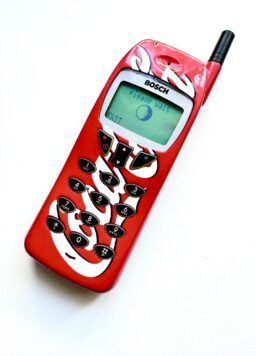
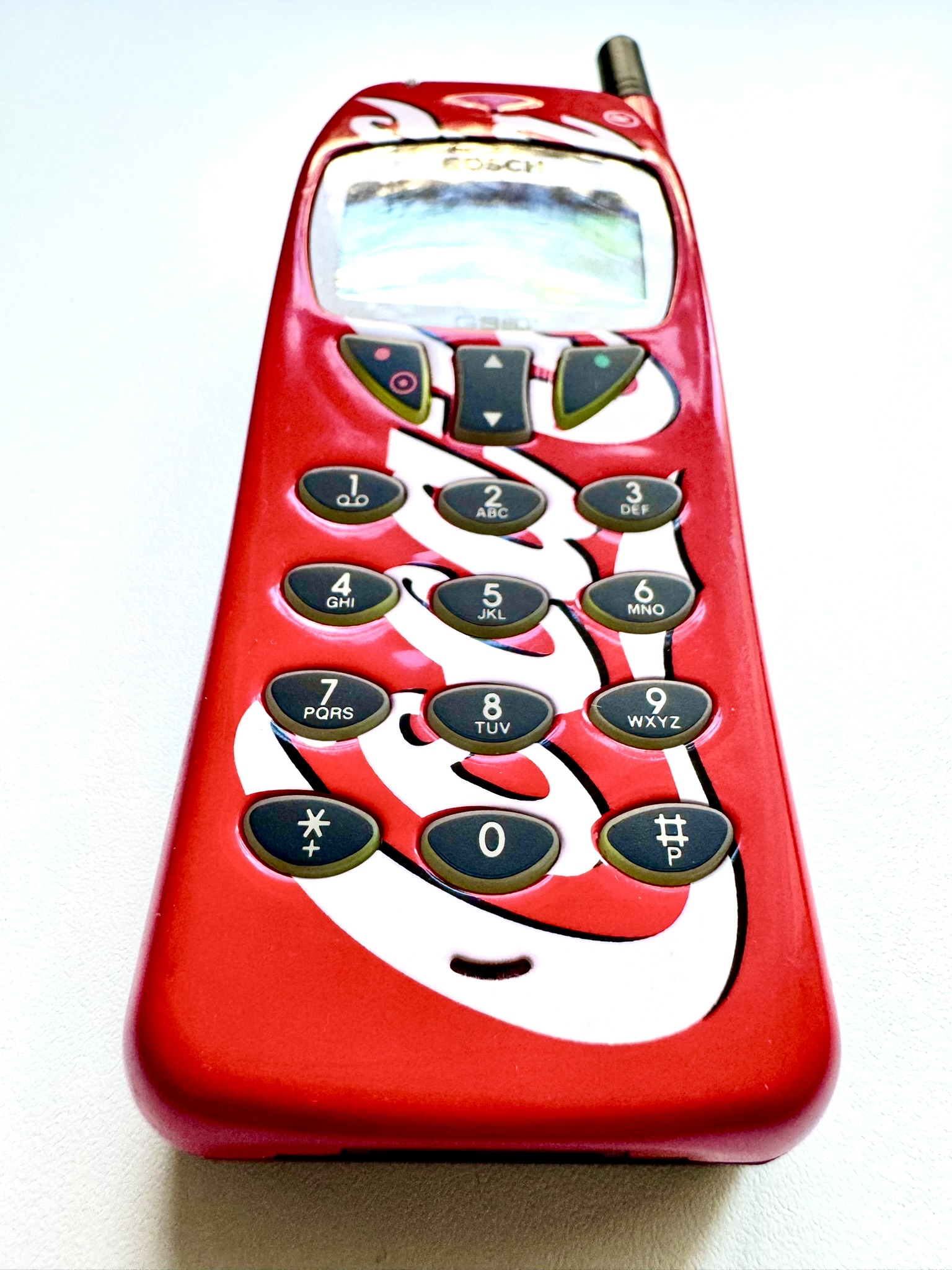
Bosch 608 | Coca Cola Edition
Quick View💎 Rarity Index: A (Rare)
👁 Evaluation in my collection: Great – 9/10
⏱ Life timer: 15h | 📦 Boxed: NO
📅 Release Year: 1998 | 💰 Release Price: N/A
📊 Units Sold: N/A
📰 Why this phone matters: Bosch 608 Coca-Cola Edition – A Taste of the ’90sWhen mobile phones had personality and brand collaborations were something truly special, the Bosch 608 Coca-Cola Edition stood out as an unusual combination of mobile technology and pop culture.
Bringing together Bosch’s unmistakable late-1990s mobile phone design and Coca-Cola’s iconic branding, this special edition captures an era when mobile phones were becoming more than communication devices – they were also a way to express individuality.
Today, this unit represents a fascinating piece of mobile phone nostalgia, where two completely different worlds came together to create something memorable.
Not just a mobile phone. A little piece of ’90s pop culture.
📝 Reviews when released: N/A 💔
-


Hagenuk F10 Ferrari Edition – Giallo Modena
Quick View💎 Rarity Index: S (Ultra Rare)
⭐ WOW Factor: A phone built for a network the rest of the world never used, in a market sealed off from global designs, with features and styling that existed nowhere else on Earth.
👁 Evaluation in my collection: Great – 9.5/10
⏱ Life timer: N/A | 📦 Boxed: YES
📅 Release Year: 1998 | 💰 Release Price: N/A
📊 Units Sold: ~3k
📰 Why this phone matters: This special Ferrari edition where only given to people who bought a Ferrari back in the day. The phone operates on GSM 900MHz.📝 Reviews when released: N/A 💔
-


Ericsson S868: Swedish Bronze Edition
Quick View💎 Rarity Index: A (Rare)
⭐ WOW Factor: One of the first dual-band GSM 900/1800 phones – built for roaming and network resilience.
👁 Evaluation in my collection: As New – 9.8/10
⏱ Life timer: N/A | 📦 Boxed: YES
📅 Release Year: 1998 | 💰 Release Price: ~600 $
📊 Units Sold: ~150k
📰 Why this phone matters: The Ericsson S868 is a legendary late-1990s dual-band GSM phone that pushed mobile communication into a new era of reliability and quality. Introduced by Ericsson in 1998 as a premium dual-band (GSM 900/1800) handset, the S868 delivered enhanced roaming capabilities, robust build quality, and the kind of dependable performance that made it a top choice for business users and world travelers.This unit is fully functional, comes with its full original box, and remains in as-new condition – a rare find for a model built in 1999. Its rare bronze-metallic finish and pristine Swedish-made shell underline the exclusivity of this phone.
Built in week 20 of 1999 in Sweden, this S868 is part of one of the final production runs before Ericsson transitioned to their next-generation series. The original label confirms its eur;opean configuration, dual-band network support, and certification compliance – affirming it as a genuine factory piece rather than a later reproduction or modded unit.
What makes the S868 truly special is its dual-band capability (GSM 900 & GSM 1800), implemented at a time when network congestion was growing rapidly. Ericsson designed the S868 to automatically switch between bands for uninterrupted calls and roaming – a cutting-edge feature in 1998 that many rivals lacked.
The phone also supported the then-high-end Enhanced Full Rate (EFR) speech coding, delivering voice clarity comparable to fixed-line phones.
In a world before smartphones, the S868 offered elegant simplicity and robust functionality: reliable calls across multiple GSM bands, solid build, crisp keypad, clean external antenna, and minimalist design. As a Swedish-made executive-class handset from the twilight of the 1990s GSM era, this S868 stands as a collectible relic of where mobile telephony once stood – before internet browsing, cameras, and data plans.
Whether kept as a pristine collector’s piece or admired for its engineering purity, the S868 remains a symbol of “classic mobile phone” craftsmanship. Its rarity, condition, and historical significance make it more than just a phone – it’s a time capsule of mobile communication’s golden age.
📝 Reviews when released: Ericssoners 🔗
-
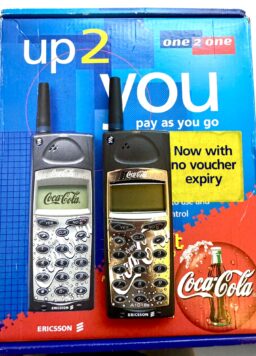
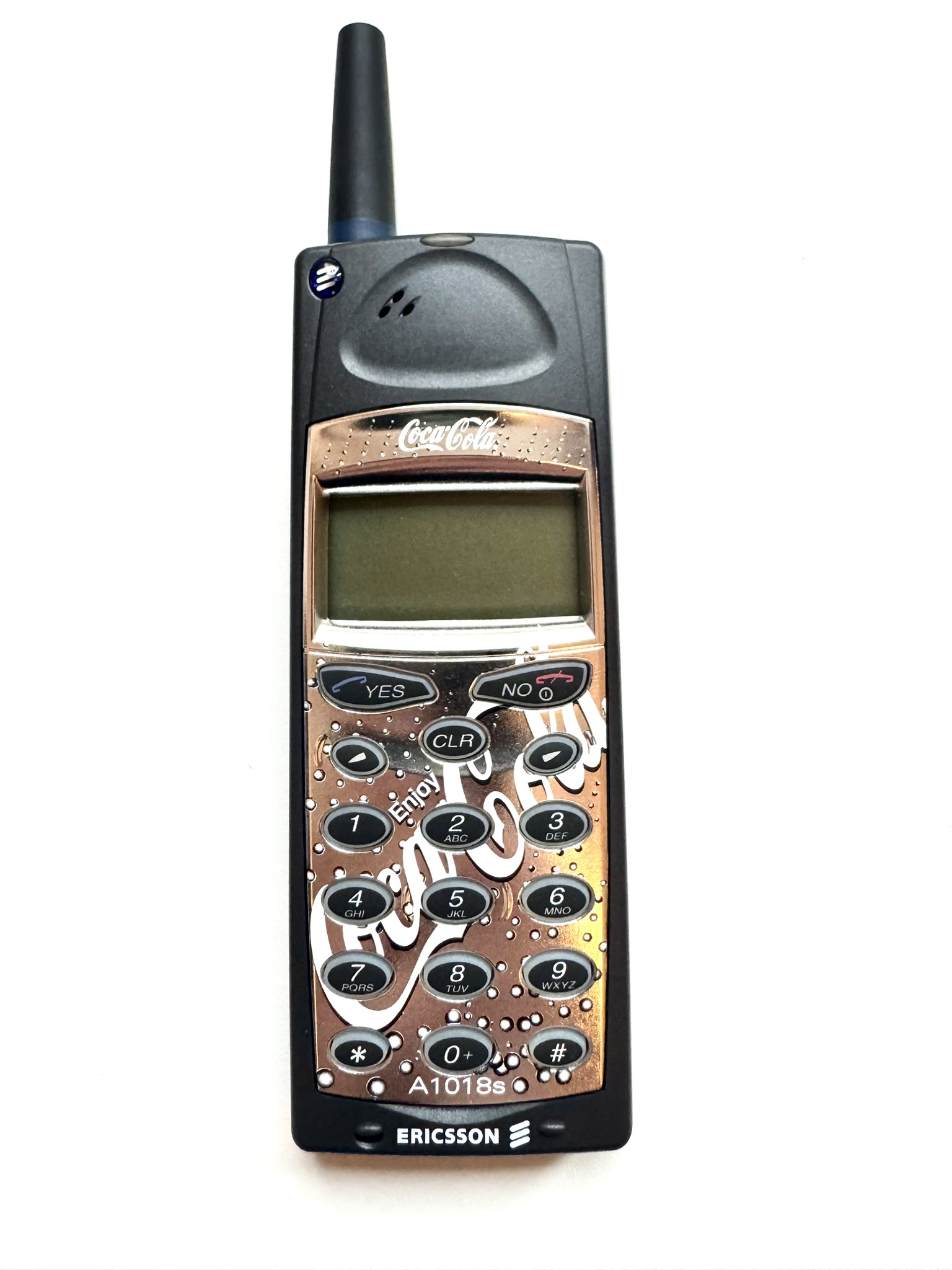
Ericsson A1018s: Coca-Cola Edition The Golden Age of Brand Collaborations
Quick View💎 Rarity Index: A (Rare)
⭐ WOW Factor: Rare Coca-Cola promotional edition with officially designed Coca-Cola fascia
👁 Evaluation in my collection: BNIB – 10/10
⏱ Life timer: 0m | 📦 Boxed: YES
📅 Release Year: 2000 | 💰 Release Price: N/A
📊 Units Sold: ~2k
📰 Why this phone matters: Created during a unique moment when global brands began exploring mobile technology as a marketing medium, the Ericsson A1018s Coca-Cola Edition stands as one of the most iconic promotional phones ever released. Produced in Sweden at the start of the year 2000 and distributed exclusively through Coca-Cola campaigns, it was never sold in stores. Released exclusively through Coca-Cola Great Britain in partnership with the One-2-One network, this phone could not be purchased under any circumstances – instead, it required participants to collect 60 promotional Coca-Cola ring pulls or bottle tokens, attach them to an application sheet, fill out the official Coca-Cola Application Form in block capitals, and mail everything together with a £30 cheque or postal order before the 30 September 2000 cutoff. Approved applications received the phone by post along with a prepaid One-2-One SIM pack and accessories.This edition is instantly recognizable by its factory-issued Coca-Cola fascia – a chrome surface decorated with rising bubble motifs and the flowing “Enjoy” script, perfectly echoing Coca-Cola’s classic advertising themes of the late ’90s and early 2000s. Combined with the elegant black frame and Ericsson’s signature oval keys, the design merges the energy of Coca-Cola branding with the industrial clarity of Ericsson’s pre-Sony mobile philosophy. It retains all the authentic A1018s internals: removable fascia, SMS capability, ringtone composer, and the special Coca-Cola ringtone delivered as part of the official promotional batch.
The full box presentation elevates the rarity even further. The promotional kit includes Coca-Cola branded inserts, themed accessories, original battery, documentation, and the distinctive packaging style documented in collector archives. Preserved in BNIB condition, it maintains the exact look and feel it had the day it left the factory – a true artifact of the era.
More than a mobile device, this edition represents a collaboration between two global icons and one of the most memorable reward-based phone campaigns of the early GSM era. Today, the A1018s Coca-Cola Edition is widely regarded as one of the most desirable and visually unique special editions ever produced.
📝 Reviews when released: Ericssoners 🔗
-
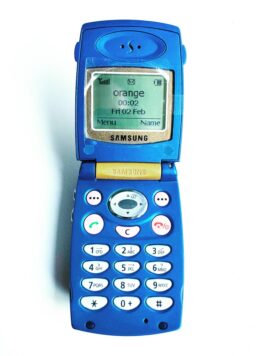
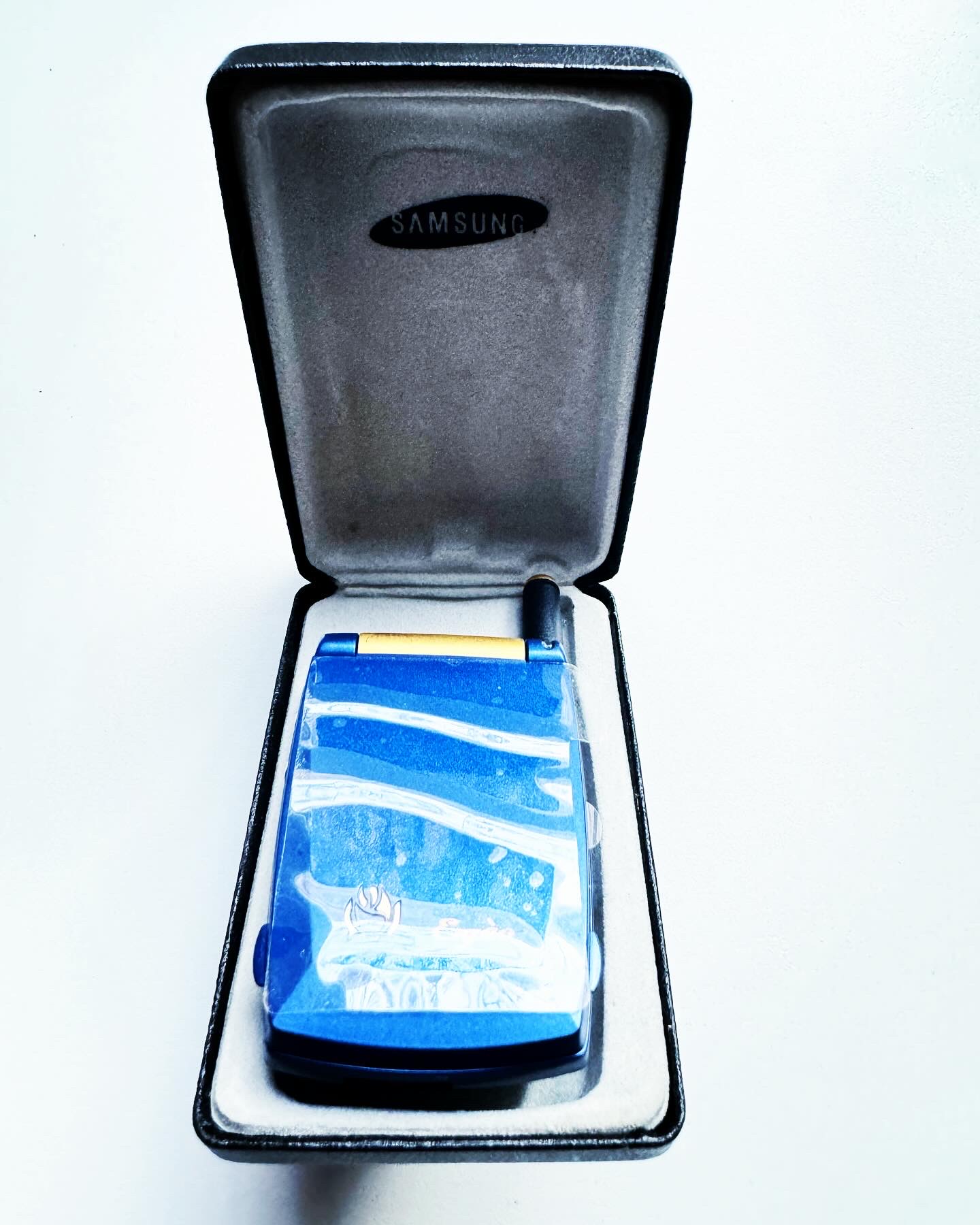
Samsung SGH-A408 “Egeo Edition”: Rare Custom Blue-Gold Variant
Quick View💎 Rarity Index: A (Rare)
⭐ WOW Factor: This isn’t a normal A408.
The Egeo branding with the golden flame and scripted logo marks it as a co-branded boutique variant, distributed in extremely low quantities through select retailers.This edition barely appears in global phone archives.
👁 Evaluation in my collection: BNIB – 10/10
⏱ Life timer: 0m | 📦 Boxed: YES
📅 Release Year: 2001 | 💰 Release Price: 200 $
📊 Units Sold: ~300k
📰 Why this phone matters: A rare Samsung SGH-A408 in the distinctive Egeo co-branded edition, featuring a striking blue-and-gold finish not seen in standard Samsung retail models. Manufactured in Korea, this version is part of a small-volume release used primarily for promotional partnerships and boutique-market customization, making it far harder to find than the regular A408.The SGH-A408 was one of Samsung’s early compact flip phones, built during the transition period when Samsung began refining the sleek, stylized designs that later defined their SGH and X-series devices. The classic external antenna, metallic paint, and angular shell combine into a perfect late-90s / early-2000s Samsung aesthetic.
Your Egeo variant stands out through:
Gold hinge + gold logo unique to this edition
Branded Egeo flame insignia
Metallic deep-blue casing produced in limited quantities
Clean Korean manufacturing label indicating early production batch
Uncommon GSM variant (A408 GSMH)
These features make it one of the more unusual Samsung flip designs of its era – especially valuable for collectors of pre-2003 Samsung hardware and regional special editions.
📝 Reviews when released: N/A 💔
-


Sony Ericsson F100i Jalou Dolce Gabbana
Quick View💎 Rarity Index: S (Ultra Rare)
⭐ WOW Factor: First Sony Ericcson with D&G
👁 Evaluation in my collection: Good – 9/10
⏱ Life timer: N/A | 📦 Boxed: YES
📅 Release Year: 2006 | 💰 Release Price: ~380 £
📊 Units Sold: ~20k
📰 Why this phone matters: The Sony Ericsson Jalou F100i, then, is a tiny clamshell fashion phone aimed squarely at, well, anyone that might invest in a clutch bag and care about their make-up routine. It’s certainly no smartphone but packs in a respectable number of features and, in its non-Dolce & Gabbana branded guise, it’s available for a respectable £130.📝 Reviews when released: Trusted Reviews 🔗