

">

Showing 73–84 of 293 results
-
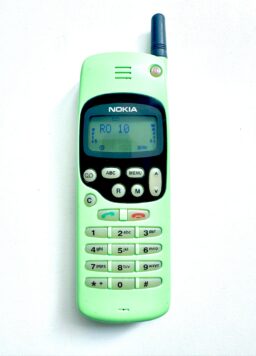

Nokia 1610
Quick View💎 Rarity Index: C (Common)
👁 Evaluation in my collection: Great – 9/10
⏱ Life timer: N/A | 📦 Boxed: YES
📅 Release Year: 1996 | 💰 Release Price: N/A
📊 Units Sold: ~10M
📰 Why this phone matters: Nokia 1610 is a mobile phone model manufactured by Nokia. It complemented the Nokia 2110 business model, but had significantly fewer features. It was introduced in April 1996 and released in May and became highly popular at the time.
The phone had a monochromatic display which could show two rows of text at a time. The operating manual did not mention a possibility to send text messages, but at least units sold from 1996 and onwards included the function. The SMS capable version was called 1610 Plus. The phone used an external rigid antenna, but had a groove on the inside of the battery to accommodate a pull-out type antenna. The 1610 used a credit card size SIM-card, and was powered by a NiMH type battery with a capacity of 600 mAh.📝 Reviews when released: N/A 💔
-


Nokia 2010
Quick View💎 Rarity Index: B (Uncommon)
👁 Evaluation in my collection: Great – 9.5/10
⏱ Life timer: N/A | 📦 Boxed: YES
📅 Release Year: 1994 | 💰 Release Price: N/A
📊 Units Sold: ~200k
📰 Why this phone matters: The Nokia 2010 is a mobile phone that was announced by Finnish phone manufacturer Nokia in January 1994.
According to the late Matti Makkonen, a manager of Nokia Mobile Phones at the time, Nokia 2010 was the first mobile phone to enable writing messages easily.
Other features include lists of 10 dialled calls, 10 received calls and 10 missed calls.
The phone has a monochromatic display that can show two rows of text at a time, which are surrounded by symbols for dedicated functions – battery status and reception level on either side; SMS message notification, keypad lock, et al. at the top. The handset has an antenna slot that supports either an external rigid antenna, or a pull-out type antenna (more common). The 2010 used a full-size (1FF) sim-card.
Nokia 2010 was the more affordable version in the 2xxx series than the business-oriented Nokia 2110, both of which were released in 1994.
In terms of design, the 2010 stayed truer to its predecessor model of Nokia 1011 than the 2110.📝 Reviews when released: N/A 💔
-


Nokia 2110i: Special Festival de Cannes 1995 No. 0929 of 1000
Quick View💎 Rarity Index: S (Ultra Rare)
⭐ WOW Factor: The first Nokia phone with famous Nokia ringtone
👁 Evaluation in my collection: Great – 9/10
⏱ Life timer: N/A | 📦 Boxed: NO
📅 Release Year: 1994 | 💰 Release Price: ~700 £
📊 Units Sold: ~1000
📰 Why this phone matters: The Nokia 2110i Special Festival de Cannes 1995 edition is one of the earliest officially numbered Nokia limited editions ever created. Produced in a run of only 1000 units for the French operator Itineris, this handset features a unique multi-color artistic design celebrating the Cannes film festival, with the official serial number printed directly on the housing. This unit is number 0929 of 1000, making it a rare and collectible piece of Nokia history.Based on the Nokia 2110i platform, this special edition includes all the technological milestones that made the 2110 series one of Nokia’s most important early models. It was the first Nokia phone to feature the now iconic Nokia tune ringtone, and introduced the dynamic softkey interface that later evolved into the Navi-key concept used across Nokia’s Series 20 devices. The 2110i version expanded memory and improved performance, making it one of the most popular business-class handsets of the mid 1990s.
What sets this edition apart is the custom Festival de Cannes artwork. The bright, artistic color scheme and festival-themed illustrations stand in sharp contrast to the conservative designs of the era. Each handset in the series features the Itineris branding and the printed inscription Special Festival de Cannes 1995 followed by its official number in the 0001 to 1000 range. Few promotional Nokia models were as bold or as culturally connected as this one.
Because these phones were used in real-world promotional campaigns, most surviving units show heavy wear or faded artwork. A well-preserved, fully functional unit with vibrant colors and a clearly legible serial number is rare. As one of the earliest limited editions ever produced by Nokia, and one tied directly to a global cultural event, the Festival de Cannes 1995 edition is a highly desirable collector item and an important part of Nokia’s pre-smartphone legacy.
📝 Reviews when released: N/A 💔
-
Nokia 2260 AT&T
Quick View💎 Rarity Index: B (Uncommon)
👁 Evaluation in my collection: Good – 8.5/10
⏱ Life timer: 02h | 📦 Boxed: NO
📅 Release Year: 2003 | 💰 Release Price: N/A
📊 Units Sold: ~500k
📰 Why this phone matters: A basic phone for the American Market and AT&T, back in 2003. It has a very nice dark blue light and looks similar to 3x series📝 Reviews when released: N/A 💔
-


Nokia 2300 Purple
Quick View💎 Rarity Index: C (Common)
👁 Evaluation in my collection: Great – 9/10
🕵 Nokia Codename: Nickel
⏱ Life timer: 138h | 📦 Boxed: NO
📅 Release Year: 2003 | 💰 Release Price: ~150 $
📊 Units Sold: ~5M
📰 Why this phone matters: Nokia presented the Nokia 2300 model back in last year, in Moscow; however this model went for sale only now. This phone is targeted for the youth, and is presented in two colors – pink and grey. If the first one is obviously made for females, then the second one is made for men. The design once again became the company’s main target, the keyboard is made of smooth plastic, it pleasant when you touch it, the keys are oval and get crossed between each other. The keyboard looks unusual, but when you are actually use it no problems are encountered. I believe that this is the seldom exception when unusual keyboard design is actually convenient. The backlight is not even, the keys get highlighted differently, depending on the plastic’s color. For some reason this causes dissonance, typing without any source of light around is not as pleasant, as doing the same operation during the day.📝 Reviews when released: Mobile Review 🔗
-
Nokia 2650 Quiksilver: Sealed Boost Mobile Brown Edition
Quick View💎 Rarity Index: S (Ultra Rare)
⭐ WOW Factor: Quiksilver Nokia 2650 by Boost Mobile is a co-branded surf lifestyle edition
👁 Evaluation in my collection: Great – 9.5/10
🕵 Nokia Codename: Pinoccchio
⏱ Life timer: 15h | 📦 Boxed: YES
📅 Release Year: 2004 | 💰 Release Price: ~125 $
📊 Units Sold: ~50k
📰 Why this phone matters: This unit is a sealed time capsule from the mid 2000s surf and pre paid boom: the Quiksilver Nokia 2650 by Boost Mobile, built on the Brown variant of Nokia’s classic clamshell and wrapped in a massive co branded retail pack. The front of the box is pure surf culture, with bold Quiksilver graphics, a surfer crashing through the waves and a custom Nokia 2650 shown with Quiksilver logos and stripes on the flip. Boost Mobile and yes Optus badges underline that this was the Australian youth offer of its time, complete with a free Boost mini lanyard and 10 dollars of pre paid credit right out of the box.The Quiksilver edition is more than a simple color variant. This bundle includes unique Quiksilver artwork on the phone’s shell, a dedicated Boost Mobile mini lanyard accessory, special surf themed packaging, and prepaid credit built into the offer. The entire package was created as a lifestyle product, tying Nokia’s entry level clamshell design to the surf and skate identity that Boost Mobile used to dominate the prepaid market in Australia. The huge graphic box and branded phone shell make this edition visually stand out far beyond the standard 2650 Brown.
Technically, the phone inside is a standard Nokia 2650: a compact clamshell Series 40 device with a 128×128 color CSTN display, LED alerts for calls and SMS, GPRS data, Java games and BL-4C battery. What makes this sealed Quiksilver edition extraordinary is not a change in hardware, but the way Nokia and Boost wrapped it into a lifestyle bundle. For a collector, this is more than just a phone box; it is a complete, untouched artifact of early 2000s mobile branding, merging Nokia engineering, Quiksilver surf identity and Boost Mobile’s prepaid culture into one rare, perfectly preserved package.
📝 Reviews when released: Mobile Review 🔗
-


Nokia 3100
Quick View💎 Rarity Index: D (Very Common)
👁 Evaluation in my collection: Great – 9.8/10
🕵 Nokia Codename: Maxine
⏱ Life timer: 270h | 📦 Boxed: NO
📅 Release Year: 2003 | 💰 Release Price: 50 $
📊 Units Sold: ~15M
📰 Why this phone matters: The Nokia 3100 is a triband-GSM mobile phone announced on 17 June 2003 as an entry-level phone from Nokia and released in September 2003, designed primarily for the newer generation of marketing audience.
The Nokia 3100 was developed from the Nokia 6100 as a successor to the Nokia 3510. The phone was Nokia’s first in the youth-oriented 3000-series to be equipped with a 128×128 pixel passive colour display (4096 colors/12-bit), and included Java MIDP 1.0, XHTML and WAP browser, GPRS, Pop-Port connectivity and Lithium-ion battery. It is also capable of playing polyphonic MIDI files, which can be used as ringtones.
It is compact in size and lightweight, and also features special lighting effects.📝 Reviews when released: N/A 💔
-


Nokia 3100 Orange Gaming
Quick View💎 Rarity Index: B (Uncommon)
👁 Evaluation in my collection: Great – 9.8/10
🕵 Nokia Codename: Maxine
⏱ Life timer: 44h | 📦 Boxed: NO
📅 Release Year: 2003 | 💰 Release Price: 50 $
📊 Units Sold: ~100k
📰 Why this phone matters: The Nokia 3100 is a triband-GSM mobile phone announced on 17 June 2003 as an entry-level phone from Nokia and released in September 2003, designed primarily for the newer generation of marketing audience.
The Nokia 3100 was developed from the Nokia 6100 as a successor to the Nokia 3510. The phone was Nokia’s first in the youth-oriented 3000-series to be equipped with a 128×128 pixel passive colour display (4096 colors/12-bit), and included Java MIDP 1.0, XHTML and WAP browser, GPRS, Pop-Port connectivity and Lithium-ion battery. It is also capable of playing polyphonic MIDI files, which can be used as ringtones.
It is compact in size and lightweight, and also features special lighting effects.📝 Reviews when released: N/A 💔
-


Nokia 3108 – The Handwriting Pioneer
Quick View💎 Rarity Index: A (Rare)
⭐ WOW Factor: Handwriting Recognition
👁 Evaluation in my collection: New – 10/10
⏱ Life timer: 0 | 📦 Boxed: NO
📅 Release Year: 2003 | 💰 Release Price: N/A
📊 Units Sold: ~300k
📰 Why this phone matters: The Nokia 3108 is one of Nokia’s most unusual and innovative feature phones, created specifically for the Chinese market and designed around pen-based handwriting recognition. Built on the early Series 40 platform, the 3108 combines a compact candybar form with a flip-down translucent keypad that reveals a dedicated writing pad. Using the included stylus, the phone can recognize both English and Chinese handwriting, offering an input method perfectly adapted to the complexity of Chinese characters.This unit represents one of Nokia’s rare experiments in interface design, developed long before touchscreens became mainstream. The writing pad system uses stroke detection software and a pressure-sensitive surface, making the 3108 function as an early hybrid between classic keypad phones and later touch-driven devices. It also includes MMS, Java support, and a speakerphone, bringing modern features to a form factor centered on pen input.
Because the 3108 was sold only in China and produced for a short period, surviving units are uncommon, and examples in clean condition are even harder to find. As part of Nokia’s limited Pen Input family, the 3108 stands out as a unique collector piece that captures a moment of bold experimentation in Nokia’s history. It remains one of the very few non-touchscreen devices in the world capable of recognizing handwritten text, making it an important and highly distinctive addition to any serious mobile phone collection.
📝 Reviews when released: N/A 💔
-


Nokia 3110 Blue VW Edition
Quick View💎 Rarity Index: S (Ultra Rare)
⭐ WOW Factor: The first Nokia phone to feature the Navi-Key (a.k.a. D-Pad)
👁 Evaluation in my collection: Good – 9/10
⏱ Life timer: NA | 📦 Boxed: NO
📅 Release Year: 1997 | 💰 Release Price: N/A
📊 Units Sold: ~10k
📰 Why this phone matters: The 3110 is a GSM mobile phone handset manufactured by Nokia in Hungary, introduced at CEBIT in March 1997.The 3110 is notable as the first Nokia handset to feature the ‘Navi-Key’ (a.k.a. D-Pad) menu navigation system. The Navi-Key was featured heavily on Nokia handsets, especially the entry-level models such as the Nokia 1100 in the following years. Unlike its successor, the 3210, and subsequent handsets of similar design, the 3110 had an external antenna. The phone was available with a slim, standard or vibrating battery. It could only be used on a GSM-900 network.
The 3110 shared the platform and accessories of the Nokia 8110 “banana phone”.
The model number was reused by Nokia in 2007 when the company launched the Nokia 3110 classic. The 3110 Classic sports a candybar form factor similar to that of the 3110, but adds modern features such as Bluetooth, camera functionality, audio and video playback and recording, and packet data over EDGE, in addition to tri-band functionality.
Unlike subsequent 3000 series mobile phones, its display is not PCD8544 based. This is a special edition made for VW AG, it has red light and LI ION battery📝 Reviews when released: N/A 💔
-


Nokia 3110 Orange
Quick View💎 Rarity Index: B (Uncommon)
⭐ WOW Factor: The first Nokia phone to feature the Navi-Key (a.k.a. D-Pad)
👁 Evaluation in my collection: Good – 9/10
⏱ Life timer: NA | 📦 Boxed: NO
📅 Release Year: 1997 | 💰 Release Price: N/A
📊 Units Sold: ~8M
📰 Why this phone matters: The 3110 is a GSM mobile phone handset manufactured by Nokia in Hungary, introduced at CEBIT in March 1997.The 3110 is notable as the first Nokia handset to feature the ‘Navi-Key’ (a.k.a. D-Pad) menu navigation system. The Navi-Key was featured heavily on Nokia handsets, especially the entry-level models such as the Nokia 1100 in the following years. Unlike its successor, the 3210, and subsequent handsets of similar design, the 3110 had an external antenna. The phone was available with a slim, standard or vibrating battery. It could only be used on a GSM-900 network.
The 3110 shared the platform and accessories of the Nokia 8110 “banana phone”.
The model number was reused by Nokia in 2007 when the company launched the Nokia 3110 classic. The 3110 Classic sports a candybar form factor similar to that of the 3110, but adds modern features such as Bluetooth, camera functionality, audio and video playback and recording, and packet data over EDGE, in addition to tri-band functionality.
Unlike subsequent 3000 series mobile phones, its display is not PCD8544 based. This is a special edition made for VW AG, it has red light and LI ION battery📝 Reviews when released: N/A 💔
-
Nokia 3128 Prototype “ID SAMPLE”: BenQ Hybrid | Unreleases Colour Light Blue
Quick View💎 Rarity Index: X (Mystical Prototype)
⭐ WOW Factor: Represents a short-lived moment when BenQ attempted to showcase its ability to deliver a complete UI solution, hoping to convince Nokia that full software outsourcing for low-cost devices was feasible.
The existence of this device is proof of a BenQ-driven initiative, briefly evaluated and ultimately rejected by Nokia.
Only a handful of such BenQ UI?on?Nokia hardware identity samples were ever created, making surviving units exceptionally rare.👁 Evaluation in my collection: New – 10/10
🕵 Nokia Codename: Kirin
⏱ Life timer: 0 | 📦 Boxed: NO
📅 Release Year: 2003 | 💰 Release Price: ~300 $
📊 Units Sold: ~15M (final units)
📰 Why this phone matters: This device is one of the strangest, most intriguing Nokia 3128 variants ever uncovered. Externally it follows the familiar engineering path of the 3128 platform, but once powered on, everything breaks the pattern. There is no Nokia branding in the software, no Nokia splash screen, no Series 40 heritage, instead it boots into a BenQ-style interface, complete with custom icons, Chinese menu structures, and UI elements never found on any released Nokia product.The label inside reads “ID SAMPLE”, marking it as a pre-production identity unit used for internal validation during Nokia’s ODM sourcing phase. These ID Samples were not mass-produced, not distributed to carriers, and not meant to survive outside the labs. The combination of Nokia hardware and a BenQ firmware stack indicates that this device comes from the period when Nokia briefly explored outsourcing complete handset UI development to third-party Asian manufacturers before ultimately abandoning the idea.
The handwriting is a timestamp from the engineering team: “August 16, 2004.”
It marks when this specific prototype was logged, flashed, or validated.The software screens match early prototypes from unreleased BenQ flip designs, particularly those associated with the never-released BenQ A-Series Asian clamshells, hinting that this firmware was being evaluated on Nokia shells for cost and speed benchmarking. The UI animations, iconography, and color palettes align far more with BenQ’s internal 2004-2005 development than with anything Nokia ever shipped.
A detail that further confirms how early this unit is, the SIM card lock mechanism is completely missing, leaving the slot open and unfinished exactly as seen on raw factory evaluation samples. Even more telling, the device reports an IMEI of 0000000, a clear sign of a pre-IMEI-burning engineering stage where the radio stack and identity fields had not yet been finalized.
The mysterious “cmg” sticker seen on the display is consistent with internal testing labels used during configuration management, marking the unit for firmware staging or UI evaluation. These stickers usually identify a branch, a module, or a build handler inside the engineering workflow and marks it as a monitored experimental build – exactly the kind of anomaly this prototype represents.
All the elements together, the missing SIM lock, the IMEI 0000000, the absent Nokia splash, the BenQ interface, the “ID SAMPLE” marking, the prototype hardware architecture, and the inconsistencies between software and chassis, place this device among the rarest 3128 developmental anomalies, far more unusual than standard prototypes or early F-series units. It is a tangible piece of the abandoned Nokia-BenQ convergence experiments, where Nokia evaluated whether foreign UI stacks could run on their hardware to accelerate low-cost market entry.
A true one-off laboratory hybrid, and one of the most unusual pre-production Nokia 3128 derivatives ever documented.
📝 Reviews when released: N/A 💔