Showing 1–12 of 22 results
-


AU by KDDI Infobar 2
Quick ViewThe INFOBAR 2, while inheriting the attractiveness and ease of use of the INFOBAR, has evolved into a shape like a square candy melting in the mouth, and features the latest capabilities such as One-Seg and Osaifu Keitai. With a 2.6-inch, QVGA, organic EL display that provides bright, sharp pictures, as well as stereo speakers, the INFOBAR 2 also enables customers to fully enjoy services such as LISMO and One-Seg.
Additionally, in the collaborative project “mobile fashion,” INFOBAR 2 goods will be produced through collaboration with famous brands. They will be available for sale via the mobile fashion site in au’s Internet service, EZ web
-


Nokia 5610 Xpress Music Red Prototype Label: Just Proto Software
Quick ViewThe Nokia 5610 is a slider mobile phone from Nokia part of the XpressMusic series. Introduced August 2007 and launched in December, it runs on the Series 40 platform. The 5610’s design is similar to that of the Nokia 5310 XpressMusic (announced same day), with aluminium brushed sides and bold side colours of either red, blue, white, or pink.Above the regular D-pad with music buttons, the 5610 features a “sliding switch” below the display for navigation.
-
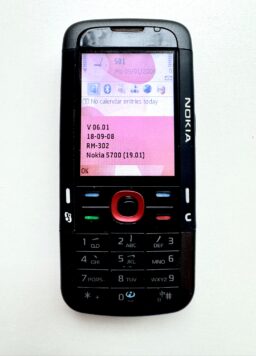
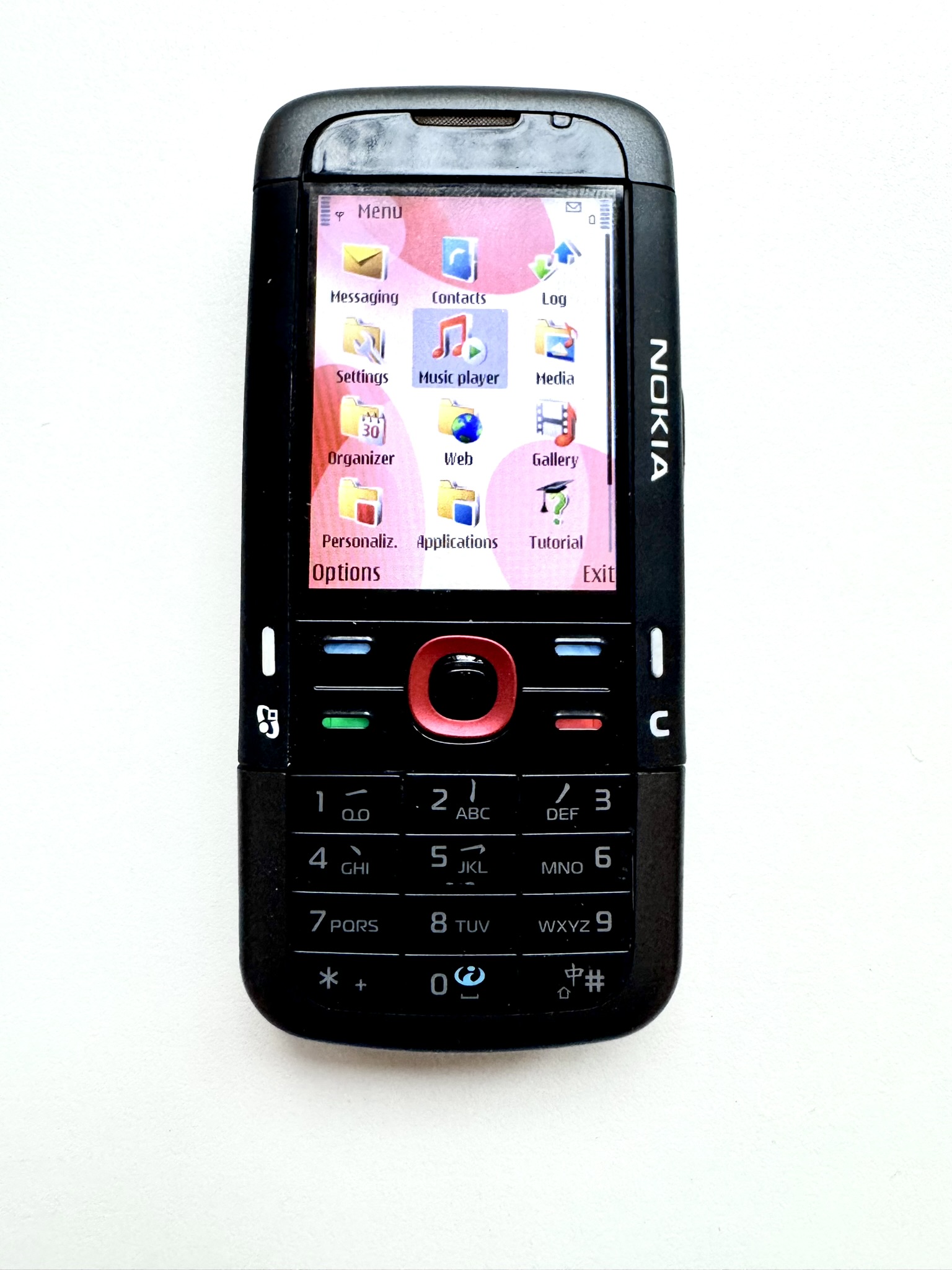
Nokia 5700: RM-302 Black China Edition
Quick ViewThe Nokia 5700 XpressMusic in full black is one of the rarest variants of Nokia’s rotating-multimedia smartphone lineup, produced in limited quantities for the Chinese market under type RM-302. Unlike the classic red-and-white global release, this black edition was never widely exported, and its appearance alone gives it a more modern, stealth-like identity compared to the traditional XpressMusic theme.
RM-302 identifies the dedicated China-market hardware and firmware platform. This variant features localized Chinese firmware languages, regional GSM frequency configurations, Chinese SAR certifications, and distinct product codes used only in mainland China. It also includes Chinese-market keypad print variants and often slightly different audio tuning profiles for the XpressMusic sound engine, making it unique compared to the RM-230 and RM-235 global versions.
This model is instantly recognizable thanks to its iconic twist design: the lower half of the phone physically rotates, switching between phone keypad, camera mode, and dedicated multimedia controls. No other Nokia device combined physical transformation with smartphone features in this playful and functional way. Even today, the rotating mechanism feels sharp, solid, and satisfying in the hand.
This unit is fully working, and everything from the bright display to the twist motion and the XpressMusic player still operates correctly. The black housing appears clean and unique, and the handset reflects the Chinese-market identity through its labeling, firmware, and certification patterns. The label confirms this is a 2007 manufacturing batch for China, complete with regional approvals and variant coding specific to RM-302.
The Nokia 5700 remains one of the most unusual and entertaining Symbian smartphones ever made, remembered for its creative design, its music-centric features, and its transformation-style body that stands out even among Nokia’s most ambitious experiments. The RM-302 black Chinese-market edition elevates that uniqueness to a higher level, making it one of the hardest versions to find in full working condition.
-
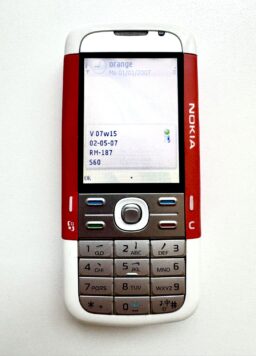
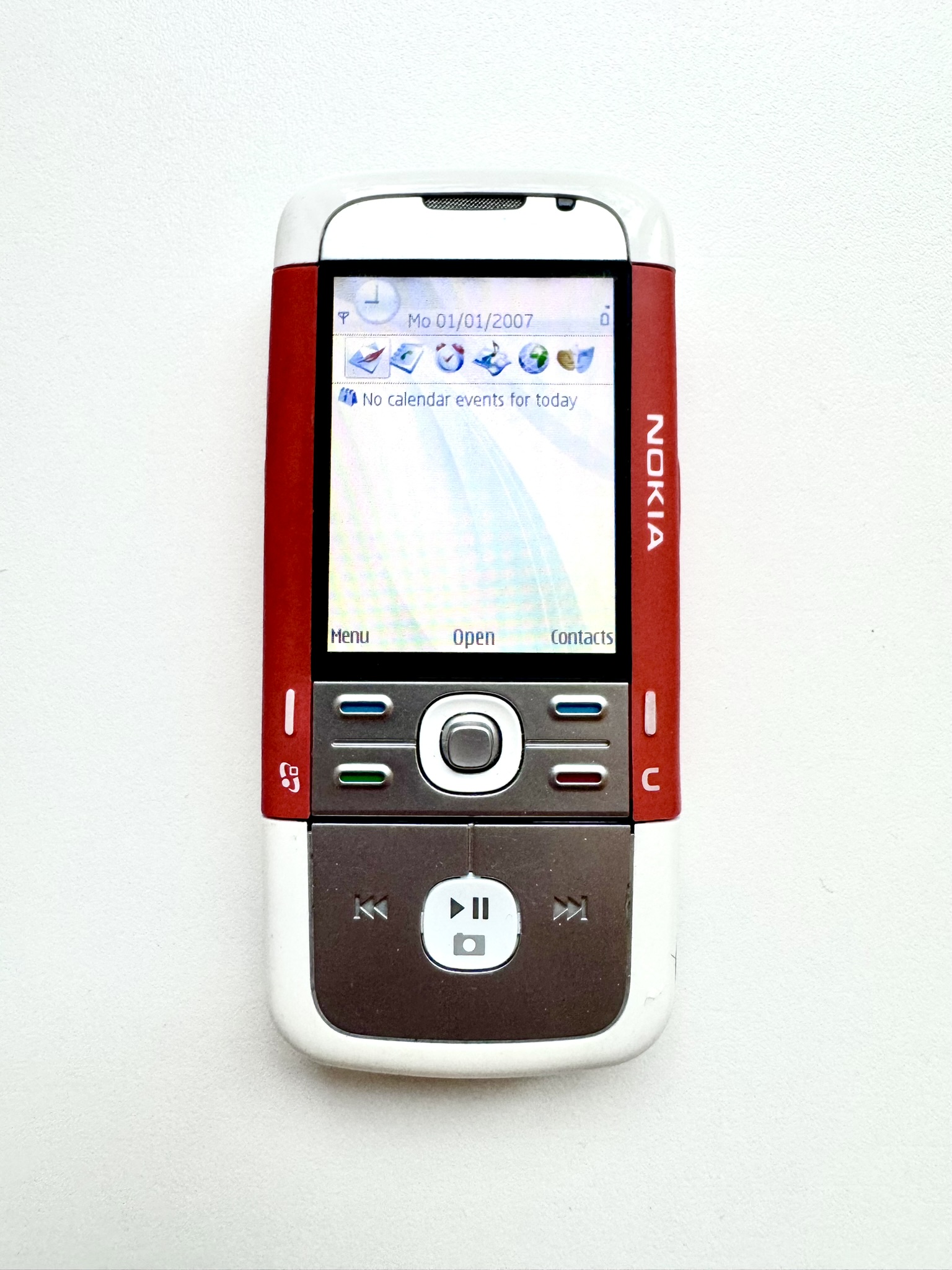
Nokia 5710 Unreleased Prototype B3.0: RM-187
Quick ViewThe Nokia 5710 (RM-187) prototype represents one of the rarest and most technically fascinating chapters in Nokia’s experimental design era. Built in Finland as a late-stage engineering sample, this unreleased device was intended to become the successor to the Nokia 5700 XpressMusic – and the final evolution of Nokia’s iconic twist-mechanism platform.
Carrying the markings “Prototype ? Property of Nokia ? Not for Sale”, this RM-187 unit showcases hardware that never reached production: a redesigned rotating lower module, a reinforced hinge, and an upgraded rotary connector meant to eliminate the flex-cable failures seen on earlier twist models. Every piece of internal labeling, from its pre-production QR matrix to the B-series hardware stamps, confirms its status as an authentic high-level engineering device.
Unlike the retail 5700, the 5710 was slimmer, structurally stronger, and technically more advanced – an ambitious internal attempt to create the third-generation twist phone, following the 3250 and 5700. Development was ultimately halted, making RM-187 the final Nokia twist platform ever constructed.
The result is a prototype that combines unfinished industrial design, experimental hardware, and a form factor that was already disappearing from Nokia’s roadmap. With no retail release and only a handful of RM-187 boards ever confirmed, this piece stands as a true collector’s artifact – a preserved snapshot of a daring design direction that Nokia never shipped.
-


Nokia 7500 Prism Prototype B3.0: Engineering Sample | Unreleased Gray Colour
Quick ViewNokia 7500b Prism – RM-250 PROTOTYPE (Codename: SCORPION) – a genuine engineering sample from Nokia’s internal development program. Features prototype IMEI (004401?), HWID exposure, pre-final RF labeling, and early R&D markings. This unit also includes a rare, unreleased graphite/metallic grey prototype housing used only on SCORPION pre-production builds before final Prism colours were approved. A highly valuable and historically significant prototype from the Prism design era
-


Nokia 7500 Prism Swarovski : Never Sold
Quick ViewNokia 7500 Prism (RM-249, codename SCORPION) – a rare China event-edition custom unit created for Nokia’s Our Internet Life 2008 exhibitions. Built on a genuine Made-in-Finland 7500 Prism mainboard (product code 0544425), this piece features the unique crystal-studded front and back housings used in Nokia’s fashion and design showcases in Beijing and Shanghai. The diamond-grid pattern was hand-decorated specifically for promotional display and was never released as a commercial product. With its authentic hardware, precise crystal layout, and event-only aesthetic, this is one of the rarest and most visually distinctive variations of the SCORPION Prism family.
-


Nokia 8600 Luna
Quick ViewLike previous luxury Nokia models, the Luna is largely encased by its stainless steel chassis but has one important difference: the slider is made from semi-opaque smoked glass that leaves the keypad to glow through, rather ethereally. It glides open with a smooth slide-action, and closes with a reassuring click.
Two long loudspeaker grills add to the overall impression of luxury, and little else is allowed to clutter the edges of the handset save for the microUSB port. This is used for the charger, data cable and stereo headset, conveniently ridding the need for extra connections.
Opening the handset reveals a decent-sized keypad, larger than its predecessor and plenty big enough for man-sized digits, although the lower row is a bit close set to the slider for comfort. Nokia users will be immediately familiar with the standard layout of the Series 40 graphic interface and four-way navigational pad, but will have to have fairly good eyesight as the default font is rather small
-


Nokia E61i
Quick ViewThe E61i is thinner than the E61 by a small margin but is 11 cc smaller. The E61i has a better build quality over the E61 and possesses a rather stable and solid body. The keyboard has definitely got a few updates – first, the navigation joystick is replaced with a D-pad, which is a great choice by the way. Then there are two new shortcut keys – the Phonebook and My Own key. The My Own key is a customizable shortcut key that you can use for starting an application of your choice. The keys of the QWERTY keyboard have gotten just a notch smaller, but the space between them has increased. Furthermore their tactile feedback is far better on E61i than on the E61. As a result the ergonomics of the QWERTY keyboard have greatly increased.
-


Nokia E90
Quick ViewNokia E90 Communicator was a high-end 3G smartphone from Nokia, the fifth generation Communicator, and also part of the Eseries. It was announced on 11 February 2007 at the 3GSM show in Barcelona. It succeeded the Nokia 9500 Communicator as the company’s flagship business-oriented device. Its clamshell form and design are reminiscent of older palmtop computers. Unlike its predecessors, the E90 runs on the S60 platform of Symbian OS (3rd Edition Feature Pack 1 and v9.2 respectively). Previous Communicators meanwhile have been based on either GeOS or Symbian-based Series 80. The move to the common S60 was good for software compatibility, but it did get rid of some exclusive Series 80 UI behaviours. The E90 is also the first Communicator to have UMTS/HSDPA connectivity and integrated GPS. It features OSGi and eRCP, Eclipse RCP for embedded systems. The first Nokia E90 unit was sold in an auction in Jakarta, Indonesia on 17 May 2007 for Rp. 45,000,000 (5,000 US$). Indonesia being one of the largest market share for Nokia’s communicator series is cited as a reason for the unit’s first launch location.
Early user-feedback and reviews highlighted a defect in the microphone of the Communicator. Nokia initially denied the existence of the defect, but Nokia eur;ope later acknowledged it in the Q3 earnings report released on 18 October 2007, and stated that the issue had been fully resolved.
The replacement of the QWERTY-ridden interface of Series 80 with the S60 software, which is designed to be used with one thumb, was criticised by some people.
The Communicator’s firmware version 7.40.1.2, released in late October 2007, added support for A-GPS and improved GPS performance. This version also upgraded the Maps application. As of June 2009, the Communicator’s most recent firmware version is 400.34.93. The free navigation program Ovi Maps is also available for this Communicator (currently just without the free navigation itself).
-


Nokia EADS THR880i
Quick ViewThe EADS THR880i Light is a reliable TETRA handportable radio designed for safe and easy voice and data communication. It combines phone and radio capabilities. The phone side features a colour display, a convenient keypad and a user-friendly menu for making phone calls and sending messages.
-


Nokia N76
Quick ViewThe Nokia N76 is a multimedia 3G Smartphone made by Nokia. It was introduced at the Las Vegas CES 2007 in January 2007 and was launched on 5 May 2007 with a sales price of 390 eur;. It is advertised as “The computer done beautifully” and as a “multimedia computer”. It is also the slimmest Nseries phone to date, following many trends such as mirrored exterior screen and Motorola RAZR metal keypad. Hardware-wise the N76 bases off a platform by Freescale, being a first of kind in the family of “cheap” 3G smartphones. In fact the difference between the OMAP2420 and this Freescale CPU, is the lack of a graphics accelerator.
The phone was originally released without stereo bluetooth, but a later firmware update v30.0.015 adds A2DP and AVRCP bluetooth profiles. There are also numerous stability improvements and bug fixes as well as new features including the inclusion of Nokia Maps and a new search feature in active standby.
The N76 is among the more rarer Nokia devices and they go for relatively high prices in the second hand market.
-


Nokia N810
Quick ViewThe Nokia N810 Internet tablet is an Internet appliance from Nokia and despite Nokia’s strong association with cellular products, the N810, like preceding tablets produced by Nokia, was not a phone, but instead allowed the user to browse the Internet and communicate using Wi-Fi networks or with a mobile phone via Bluetooth. It built on the hardware and software of the Nokia N800 with some features added and some removed.