Showing 1–12 of 21 results
-
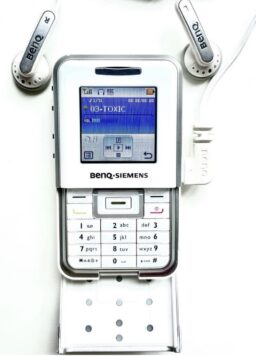

Benq Siemens EF51
Quick ViewAs odd as it may be for me to say, it’s a really cute phone, even a little girly perhaps. It has a certain je-ne-sais-quoi feel when it comes to its looks. A warped egg maybe? You decide. The EF51 has a small TFT display with a resolution of 128 x 128 pixels and 256k colors. The keypad is right behind the music player panel in front. So all you have to do is flip it open. The keys on the pad may seem small, but they’re easy to use.
On one side you’ll find a dedicated voice recorder key followed by the volume keys and the dedicated camera key. There’s also the proprietary charging port. On the other side is the proprietary earphone / USB socket, but thankfully BenQ-Siemens has provided a converter to 3.5mm. Underneath this socket is the miniSD card slot. The EF51 weighs in at 95g which also makes it a light mobile phone aside from being small.
-


Benq Siemens EF81 Special Star Wars Edition
Quick ViewThe BenQ-Siemens EF81 is undoubtedly similar specs-wise and even in looks to the Motorola Razr V3x. The most impressive design feature of this phone is how thin it is, considering it has the same features as the Motorola V3x — which is much bigger. The EF81 measures 51 by 94 by 16mm thin whereas the V3x is 55 by 99 by 20mm, making the EF81 4mm less wide, 5mm shorter and 4mm thinner.
-
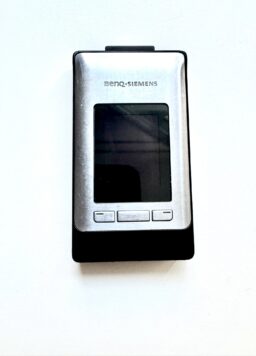
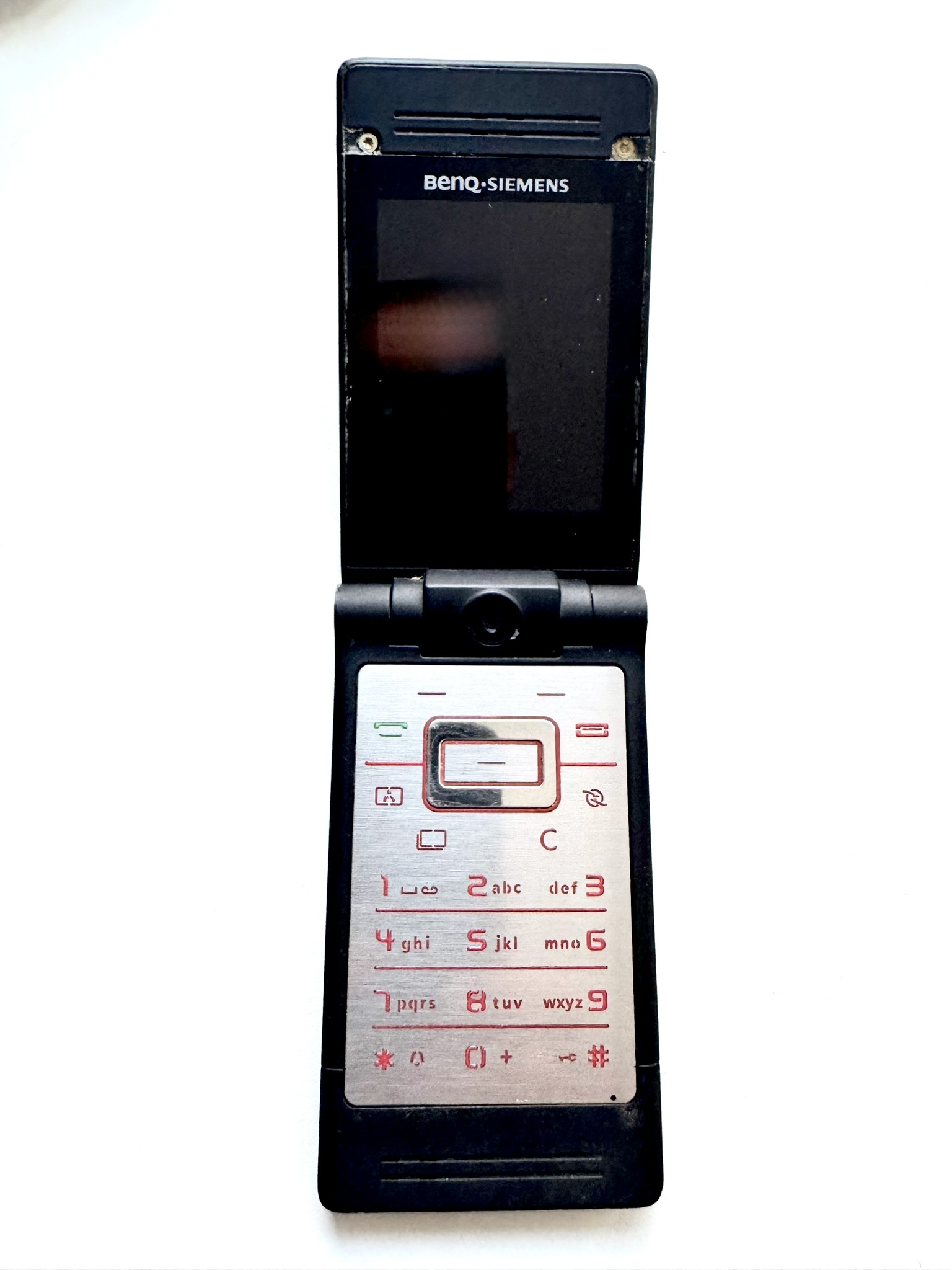
Benq Siemens EF81: Prototype in Black
Quick ViewBenQ-Siemens EF81 – Unreleased Black Prototype
A rare glimpse into an alternative design direction for the BenQ-Siemens EF81. This prototype features an unreleased black finish and a radically different keypad design compared to the commercially available model.
Its brushed-metal keypad, flat layout and distinctive red markings are particularly striking, bearing an interesting resemblance to the styling later seen on the Nokia N76.
Beyond the unusual appearance, this unit carries a prototype identification label marked “NOT FOR SALE”, further highlighting its pre-production status.
An intriguing piece of BenQ-Siemens history, offering a glimpse of a design variation that never made it to the retail market.
-


HP Ipaq – HW6915
Quick ViewThe iPAQ is a Pocket PC and personal digital assistant, first unveiled by Compaq in April 2000; the name was borrowed from Compaq’s earlier iPAQ Desktop Personal Computers. Since Hewlett-Packard’s acquisition of Compaq, the product has been marketed by HP. The devices use a Windows Mobile interface. In addition to this, there are several Linux distributions that will also operate on some of these devices. Earlier units were modular. “Sleeve” accessories, technically called jackets, which slide around the unit and add functionality such as a card reader, wireless networking, GPS, and even extra batteries were used. Later versions of iPAQs have most of these features integrated into the base device itself, some including GPRS mobile-telephony (sim-card slot and radio).
-
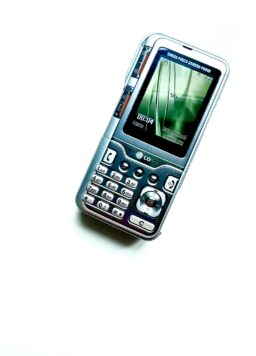
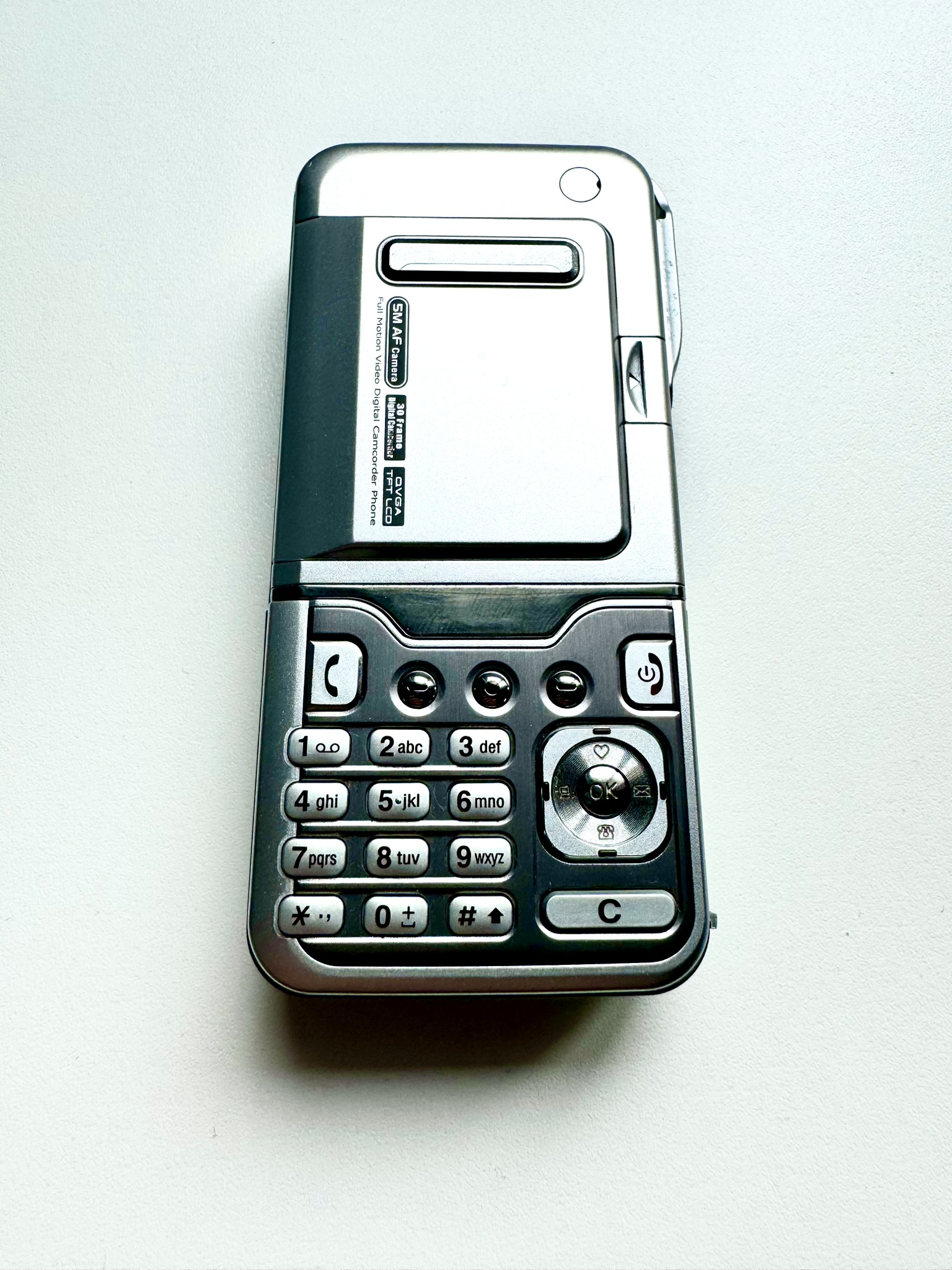
LG KG920
Quick ViewThe LG KG920 is one of the most daring and visionary camera phones ever released – a 2006 flagship that pushed boundaries years ahead of its time. With its 5-megapixel Schneider-Kreuznach camera, true xenon flash, and twist-rotating body, it belonged to a tiny elite family of experimental devices like the Nokia 3250 and Nokia 5700, yet it went even further by transforming into a full horizontal digital camera in one smooth motion.
This was not just a phone with a camera – it was a camera that happened to be a phone.
The twist mechanism instantly reconfigured the device into a proper photography grip, something no mainstream device dared to replicate again. Combined with its premium build and Korea-exclusive engineering, the KG920 stood at the intersection of digital imaging and mobile design in a way that feels almost unbelievable today.
Launched in 2006 at a premium price of roughly &eur;o;450-&eur;o;500, it was heavily reviewed and praised for producing some of the cleanest, sharpest images of its generation. Today it remains vastly underrated, overshadowed by later icons, yet historically more important – it reached the 5 MP milestone before many of the industry’s giants and showcased a design concept that has never been revisited.
Your unit captures this legacy perfectly: a rare, twist-based camera phone from the golden era, preserved from a time when manufacturers dared to innovate radically.
A hybrid of digital camera ambition and bold mechanical engineering – the LG KG920 is a striking, unforgettable piece of mobile history.
-


LG T Phone LD 1200
Quick ViewLG Electronics has just launched in Korea its new DMB-compatible mobile phone, the LG-LD1200, which has a 2.2 ” rotating screen with QVGA resolution, 256MB of internal memory, TransFlash slot, all in 103x50x23.5mm.
-


Motorola F3
Quick ViewThe F3 (frequently known as the Motofone) was a GSM phone available in two band variants, and was released on 28 November 2006. The Motofone F3 was designed to appeal to the low-end market and developing countries, and was thus less functional, but also less expensive than most phones. Motorola made it appealing to developing markets and people with reading and visual difficulties by using only simple symbols and using speech synthesis to identify tasks in the menu. The F3 was the first mobile phone to use electronic paper in its screen. Motorola used the term ClearVision to describe the new display, which was manufactured using E Ink’s electrophoretic imaging film. The electronic paper main display allowed for the phone’s thinness (no glass), longer battery life, and outdoor viewability (paper-like reflectivity). It had a backlight for the keypad and a slit that projects the backlight onto the screen so the display can be seen in darkness.
The characteristics of the display were fairly restrictive. The text display contained only two lines of six characters each, making the use of text messaging (SMS) and data services less practical than on standard LCD displays. The display used a fixed ‘digital clock’ style font, with no functionality for changing between upper case and lower case text. All SMSs sent by the F3 were received entirely in lower case, and each character of any SMS received by the F3 is displayed in whichever case made the most sense using the font. Also, the non-alphabetic characters were severely limited due to this display, as the phone could only provide support for the following characters:
Comma (,) (periods . in incoming text messages are displayed as commas) Hyphen (-) Question mark (?) At-sign (@) Asterisk (*) (+), to write this character, hold down the 0 key No other non-alphanumeric characters could be entered, and on receiving an SMS any non-alphabetic character not listed above was displayed as a hyphen.
Although the display could be restrictive when it came to text applications, the display was very energy efficient and conducive to extremely long battery life.
-
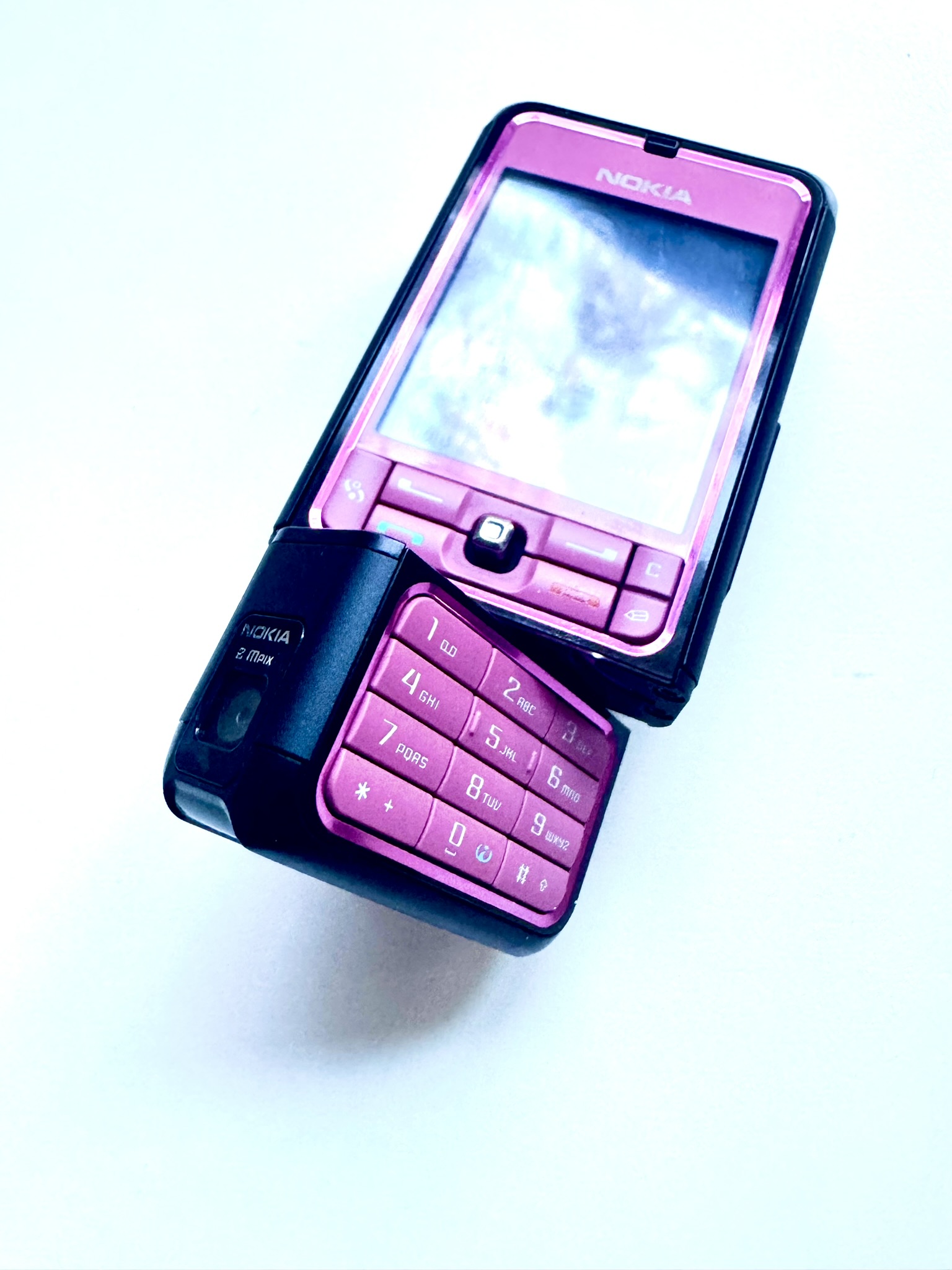
Nokia 3250 Prototype F5.0: Black & Pink
Quick ViewRare Nokia 3250 RM-38 engineering prototype featuring Nokia’s F5/NCT/BDA validation markings. Labeled Prototype – Not for Sale – Property of Nokia and built with pre-production hardware, prototype IMEI, and internal test circuitry. Although the Black & Pink shell reached retail, this device is a true R&D unit used for field testing (F5), Nokia Compatibility Testing (NCT – accessory, firmware, Bluetooth, and sync compatibility validation), and Board Design Assessment (BDA – PCB layout, electrical stability, and radio integrity evaluation). A prototype with NCT + BDA validation tags is exceptionally rare, as these were normally destroyed after evaluation, making this one of the few surviving engineering-stage 3250 units-a remarkable piece of Nokia’s swivel-phone development history.
-


Nokia 6708: Nokia’s Only BenQ-Engineered Touchscreen Anomaly
Quick ViewThe Nokia 6708 (RM-139) is a China-market smartphone released in 2005 during Nokia’s experimental touchscreen era. Unlike any other Nokia device, the 6708 is not built on Nokia’s own S60/S40 architecture – instead, it is based on the BenQ P31, using UIQ 2.1 on Symbian 7.0, a TI OMAP processor, and a stylus-driven 2.7″ resistive touchscreen.
Nokia redesigned the exterior, adjusted the UI elements, and released it exclusively to the Chinese market, where both Nokia and BenQ already had strong local footprints. Because of this limited and unusual partnership, the 6708 never appeared in eur;ope or the US and is extremely rare outside Asia.
With its hybrid DNA – Nokia branding + BenQ internals + UIQ touchscreen – the 6708 stands out as a one-off anomaly in Nokia’s entire catalog and is highly sought after by collectors who focus on prototypes, regional exclusives, and crossover devices.
-


Nokia 9300i
Quick ViewThe Nokia 9300i is an updated version of 9300 with WiFi capability. The Nokia 9300 is a Nokia Series 80 Symbian Smartphone introduced in 2004. It is used as a normal though bulky mobile phone in closed mode, when it is flipped open it can be used like a very small notebook computer with a 640×200 screen. The phone also has speakerphone functionality, which is activated automatically when the phone is flipped open. An MP3 player is also built into the phone.
-


Nokia E50-2
Quick ViewThe Nokia E50 Business Device is a bar-style monoblock quad-band smartphone from Nokia announced 18 May 2006 as part of the Eseries, intended primarily for the corporate business market. It includes sophisticated e-mail support for Nokia’s Intellisync Wireless Email, BlackBerry Connect, Visto Mobile, Activesync Mail for Exchange, Altexia as well as IMAP4. It also has the ability to view Microsoft Word, PowerPoint, and Excel attachments, and PDF documents but it cannot be used for editing these without additional apps. An application manager downloads, removes and installs both Nokia and third-party applications. Device to device synchronization is possible with Data transfer application. Features include EDGE, Bluetooth 2.0, a 1,280 x 960 pixels (1.3-megapixel) camera, a MicroSD memory-card slot, and digital music and video player functionality through RealPlayer and Flash Player. This unit does not support UMTS, Wi-Fi, or FM radio.
It uses the third edition of the Series 60 user-interface (S60v3) and the Symbian operating system version 9.1. It is not binary compatible with software compiled for earlier versions of the Symbian operating system.
-


Nokia E60 Prototype F5.0
Quick ViewThe Nokia E60 is a traditional candybar style smartphone from the Eseries business phone range, an S60 3rd Edition Symbian device. It was introduced on 12 October 2005 along with Nokia E61 and Nokia E70