Showing 13–23 of 23 results
-


Nokia 8800 Special Edition
Quick ViewNokia 8800 Special Edition (RM-13) – a premium stainless-steel slider phone handmade in Nokia’s Salo (Finland) factory and featuring a precision ball-bearing sliding mechanism, mineral glass display and exclusive sound design by Ryuichi Sakamoto. This rare Special Edition variant includes a brushed steel backplate with engraved branding and was produced in limited numbers. A true luxury icon of the mid-2000s, combining exceptional materials with Nokia’s Series 40 premium interface
-


Nokia 9300
Quick ViewThe Nokia 9300 is a Nokia Series 80 Symbian Smartphone introduced in 2004. It is used as a normal though bulky mobile phone in closed mode, when it is flipped open it can be used like a very small notebook computer with a 640×200 screen. The phone also has speakerphone functionality, which is activated automatically when the phone is flipped open. An MP3 player is also built into the phone.
-


Nokia 9500 Black
Quick ViewNokia 9500 Communicator is a smartphone produced by Nokia, introduced on 24 February 2004 and released in November 2004. It runs on the Symbian-based Series 80 platform. The 9500 is equipped with a 150 MHz Texas Instruments OMAP processor and 64 megabytes of SDRAM. It features two screens – a fully functional interior screen, and a restricted-function external screen, which operates on a stripped-down Series 40 user interface. Connectivity features of the 9500 include: Bluetooth, infrared, USB, Wi-Fi (Nokia’s first device with Wi-Fi), CSD, HSCSD, GPRS and EDGE. It has send and receive fax facilities (without scanner) and multi-account POP3/IMAP email client. The built-in Web browser, a Nokia-branded version of Opera, is able to render both WAP and HTML Web pages. Like others in the Communicator series, the 9500 has a full QWERTY keyboard. Built-in software includes a word processor, spreadsheet and presentation program, which are compatible with the Microsoft Office suite equivalents; also featured is an MP3 player. In addition to the software applications provided by Nokia, a large range of third-party software is available; many programs written for older Nokia Communicators are compatible with the 9500 and new software can be written in C++ or OPL. The 9500 also runs Java ME applications, but some do not make full use of the unusually large and wide screen, so that many existing Java games will run, but only use the top left hand corner of the screen. It supports storage on a Multimedia Card (MMC) of up to 2 GB (on later firmware versions). The 9500 is only available with 900 MHz, 1800 MHz and 1900 MHz radios. There were many rumors that a U.S. version with 850 MHz radio capability was going to be made, but it never materialized. Nokia was producing simultaneously the 9500 and its related version, the 9300, so they decided to make a U.S. version of the 9300 instead.
-
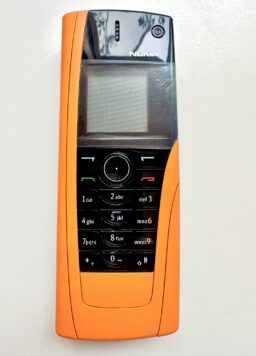
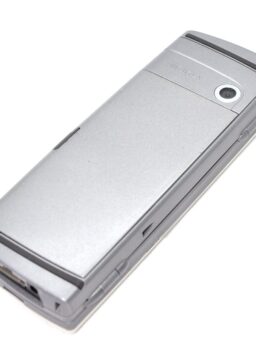
Nokia 9500 Orange
Quick ViewNokia 9500 Communicator is a smartphone produced by Nokia, introduced on 24 February 2004 and released in November 2004. It runs on the Symbian-based Series 80 platform. The 9500 is equipped with a 150 MHz Texas Instruments OMAP processor and 64 megabytes of SDRAM. It features two screens – a fully functional interior screen, and a restricted-function external screen, which operates on a stripped-down Series 40 user interface. Connectivity features of the 9500 include: Bluetooth, infrared, USB, Wi-Fi (Nokia’s first device with Wi-Fi), CSD, HSCSD, GPRS and EDGE. It has send and receive fax facilities (without scanner) and multi-account POP3/IMAP email client. The built-in Web browser, a Nokia-branded version of Opera, is able to render both WAP and HTML Web pages. Like others in the Communicator series, the 9500 has a full QWERTY keyboard. Built-in software includes a word processor, spreadsheet and presentation program, which are compatible with the Microsoft Office suite equivalents; also featured is an MP3 player. In addition to the software applications provided by Nokia, a large range of third-party software is available; many programs written for older Nokia Communicators are compatible with the 9500 and new software can be written in C++ or OPL. The 9500 also runs Java ME applications, but some do not make full use of the unusually large and wide screen, so that many existing Java games will run, but only use the top left hand corner of the screen. It supports storage on a Multimedia Card (MMC) of up to 2 GB (on later firmware versions). The 9500 is only available with 900 MHz, 1800 MHz and 1900 MHz radios. There were many rumors that a U.S. version with 850 MHz radio capability was going to be made, but it never materialized. Nokia was producing simultaneously the 9500 and its related version, the 9300, so they decided to make a U.S. version of the 9300 instead.
-
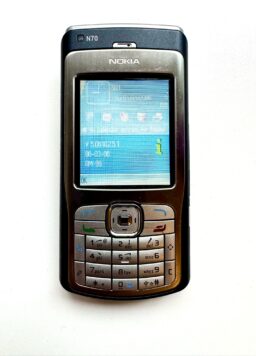
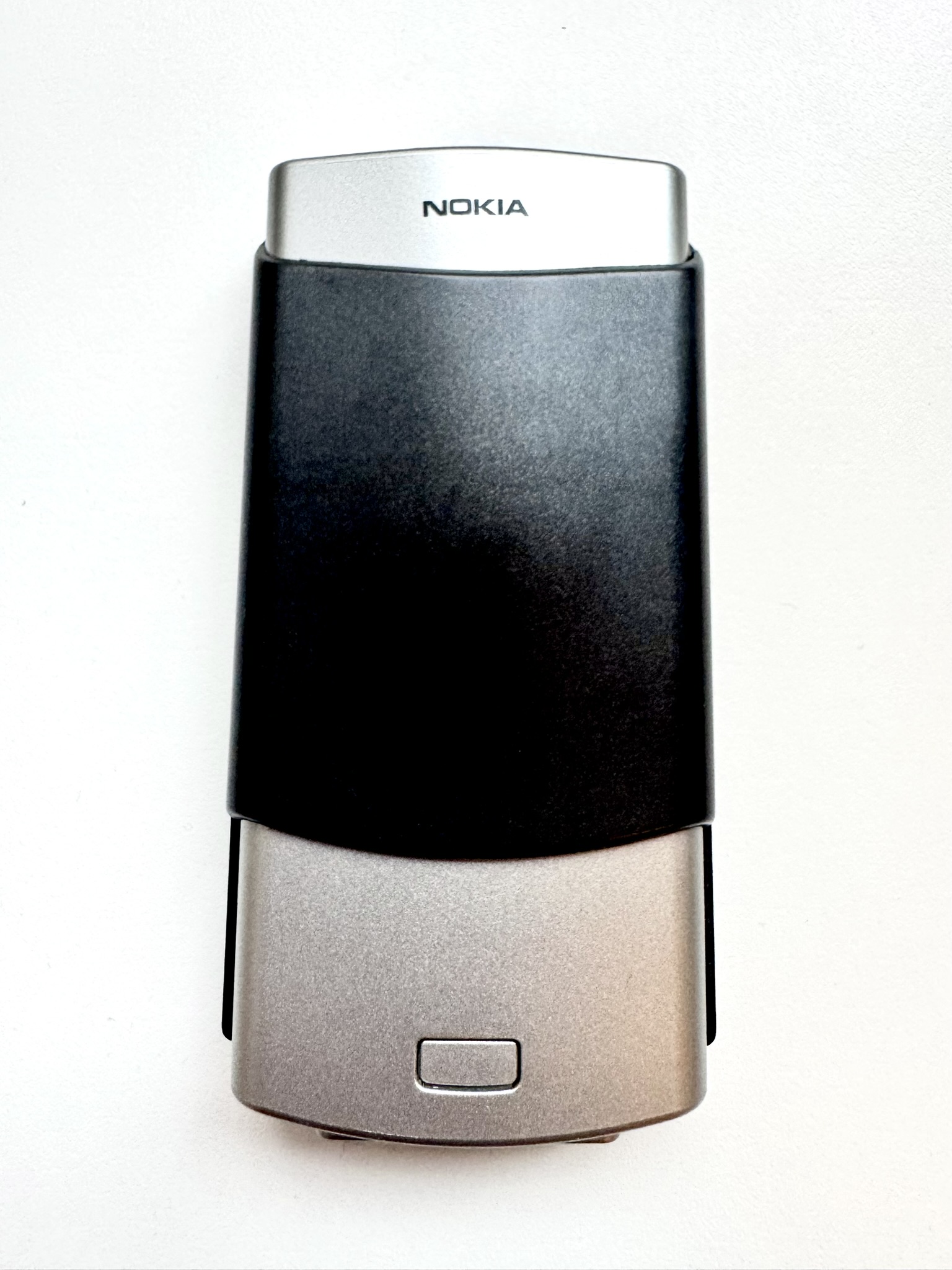
Nokia N70: RM-99 China No-Front-Camera Edition
Quick ViewThe Nokia N70 RM-99 is one of the rarest and most unusual regional variants of Nokia’s early Symbian smartphone line. While the global N70 is known for its 3G capabilities and front-facing video camera, this China-market RM-99 edition removes the front camera entirely, resulting in a cleaner, simplified design not found in any Western release.
RM-99 identifies a dedicated China-market hardware and firmware platform. This variant includes Chinese firmware languages, dedicated SAR certifications, local product codes, and a keypad printed with Chinese characters. These changes make the RM-99 version completely distinct from the RM-84 and RM-92 global models, both technically and visually.
This unit is fully working and appears in new condition. The dark-silver and charcoal color scheme gives it a different personality compared to the standard eur;opean N70, while the absence of the front camera further reinforces its uniqueness. The label confirms full CMIIT approval for China, an RM-99 type identifier, and Nokia’s original factory manufacturing codes.
The RM-99 N70 represents a rare and region-specific chapter in Nokia’s history, capturing the transition between 2.5G markets and the global shift toward 3G. Its unusual configuration, Chinese firmware, and non-export nature make it one of the hardest N70 variants to find worldwide.
-
Nokia N90 Prototype NPI-2 F5.0
Quick ViewNokia N90 Prototype – RM-42 (Proto NPI-2) A rare engineering prototype from Nokia’s golden era, this RM-42 NPI-2 unit represents an early pre-production stage of the iconic Nokia N90, the first smartphone in history built around a full Carl Zeiss Tessar autofocus camera module.
Hand-assembled in Finland and labeled “Proto NPI-2 – Not For Sale,” this device belongs to an internal batch reserved exclusively for Nokia’s imaging and mechanical engineering teams. It features the trademark twist-and-shoot camcorder design, the Tessar 2.9/5.5 AF lens, and the unmistakable dual-hinge architecture that made the N90 one of the most advanced camera phones of its time.
Carrying a prototype IMEI and early hardware IDs, this device offers a rare glimpse into Nokia’s development process during a period when mobile imaging innovation was at its peak. A true collector’s highlight – a milestone device in its pure, pre-release form.
-
Nokia N92 Prototype B4.0 | Unreleased 101 RM
Quick ViewNokia N92 RM-101 B4.0 Prototype – The Missing Camera Mystery
This RM-101 Nokia N92 prototype is a remarkable survivor from Nokia’s golden era of experimental engineering – a time when the company was pushing the boundaries of what a mobile device could be. Built in Finland as a B4.0 engineering sample, it predates the commercial N92 and represents a fascinating pre-production hardware configuration that differs from the familiar retail device.
Marked with “Prototype – Property of Nokia” and carrying the internal “Model: XXXX” placeholder, this unit preserves evidence of a development phase in which Nokia was refining the revolutionary technologies that would eventually define the N92, including DVB-H mobile television, its distinctive dual-axis swivel display and an ambitious multimedia platform.
One of the most intriguing differences is the complete absence of the front-facing camera, a feature present on the commercial Nokia N92. Rather than simply being a cosmetic variation, this represents a significant hardware distinction between the RM-101 prototype and the final production design. Interestingly, other documented RM-101 specimens also appear to lack the front-facing camera, suggesting that this may have been a characteristic of this particular development branch rather than an isolated feature of this unit.
The RM-101 designation itself adds another layer of significance. Unlike the commercially released N92 configurations, this prototype belongs to an earlier hardware development path, offering a rare opportunity to observe how Nokia experimented with different component arrangements and hardware capabilities before settling on the final product.
There is something particularly fascinating about the combination of its unfinished model identification, original engineering labels, Made-in-Finland construction and missing front-facing camera. Together, these details make the device much more than a conventional pre-production handset. They preserve visible traces of Nokia’s engineering decisions and the evolutionary steps behind one of its most technically ambitious mobile phones.
For serious Nokia collectors, prototypes displaying fundamental hardware differences are especially compelling. They provide physical evidence of alternative development configurations, features that were added or modified, and engineering decisions that rarely become visible outside the manufacturer’s laboratories.
Before the N92 became a mobile television with a fully developed multimedia identity, there was the RM-101. A rare surviving glimpse into the engineering process behind one of Nokia’s most extraordinary creations.
-
Nokia N92 Prototype S3.4 | An Unreleased Black & Grey Design
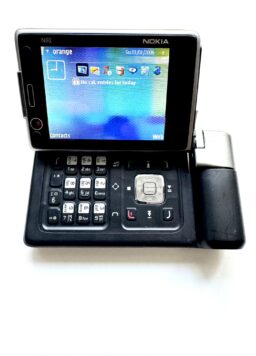
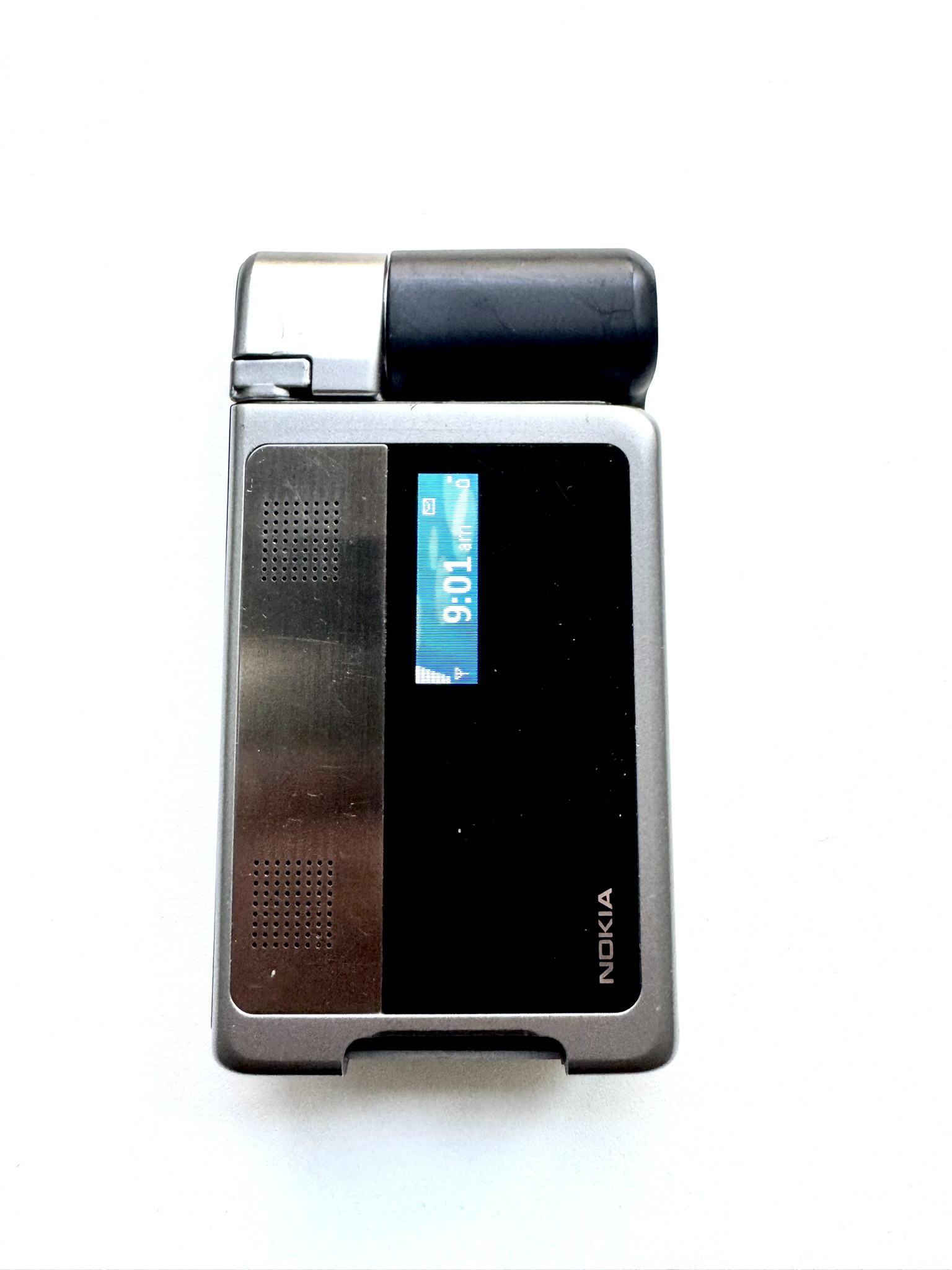
Quick ViewNokia N92 S3.4 Prototype – The Elusive Black & Grey Variant
In 2005, Nokia was pursuing an ambitious vision: transforming the mobile phone into a portable television. The Nokia N92 became one of the most unconventional devices of the Nseries era, introducing integrated DVB-H television reception, a remarkable dual-hinge rotating display and a multimedia experience designed years before mobile video streaming became part of everyday life.
This particular unit is an exceptionally interesting S3.4 pre-production prototype, distinguished by its striking black and grey colour combination. Unlike the familiar commercial N92, this prototype presents an alternative visual identity, offering a fascinating glimpse into Nokia’s experimental design and development process.
But the differences go far beyond its unusual colour scheme. One of the most intriguing details is the noticeably larger memory card cover, a physical design variation that distinguishes this early unit from the final production model. Even more interesting is the clamshell closing mechanism, which differs from the commercial N92 when the device is folded shut. These subtle but significant differences reveal that Nokia was experimenting not only with colours and finishes, but also with the mechanical construction and physical design of the device.
The S3.4 development designation adds another layer of intrigue. This is not simply a standard N92 dressed in an unusual housing, but a pre-production specimen displaying tangible differences from the retail hardware. The combination of its distinctive finish, modified memory card cover and alternative clamshell closing arrangement makes it a particularly compelling example of Nokia’s engineering evolution.
What makes the N92 especially fascinating is the extraordinary ambition behind its design. Its rotating display could transform the device from a conventional mobile phone into a miniature widescreen television, while DVB-H technology represented Nokia’s vision of a future where television could be enjoyed almost anywhere.
For serious Nokia collectors, surviving prototypes with visible structural differences are particularly significant. They preserve evidence of design decisions, mechanical experiments and engineering refinements that may have disappeared entirely before commercial production. This black and grey S3.4 prototype offers precisely that: a rare opportunity to examine an alternative stage in the development of one of Nokia’s most unconventional devices.
More than an unusual colour variation, this is a different interpretation of the Nokia N92 itself – a remarkable survivor from a time when Nokia was still experimenting with how the future of mobile technology should look, feel and function.
-


Samsung Serenata B&O
Quick ViewBang & Olufsen and Samsung formed the joint venture with the aim of competing in the high end mobile phone market, primarily competing with several handsets from Nokia. The partnership has drawn on the design strengths of Bang & Olufsen and Samsung’s mobile phone technology enabling Bang & Olufsen to re-enter the mobile phone market after an absence of several years and Samsung to expand into premium mobile phones.
-
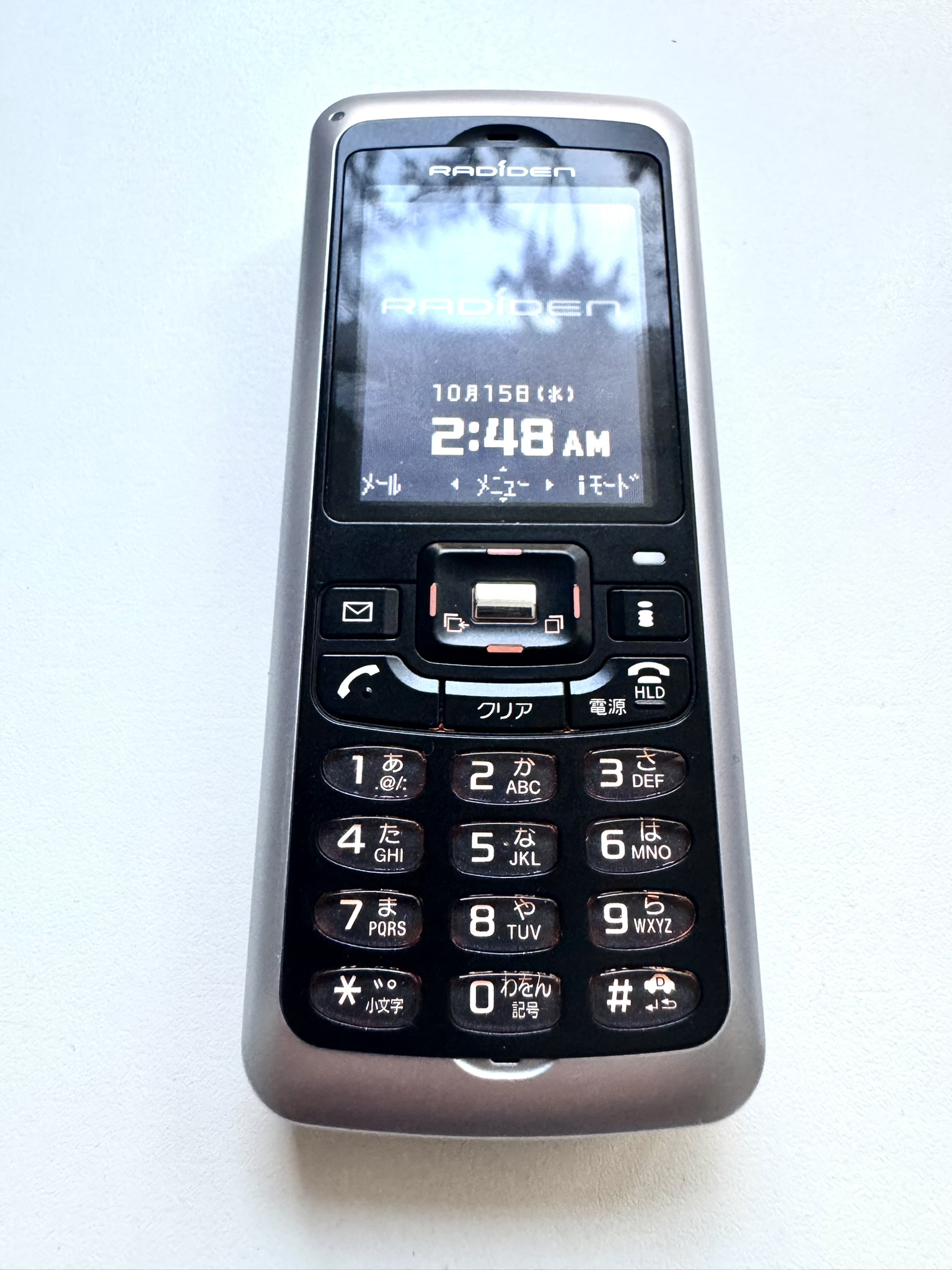
Sony Ericsson Radiden SO213iWR
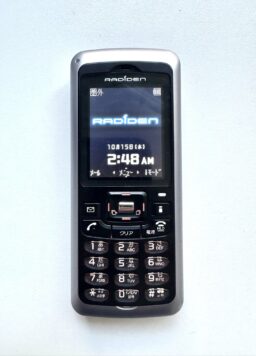
Quick ViewThe Radiden is not a separate manufacturer but a product name created by Sony Ericsson exclusively for the Japanese market, and this particular device is the Sony Ericsson Radiden SO213iWR, released in late 2005 for NTT DoCoMo only, making it a true Japan domestic model that was never intended for export or international sales. The name Radiden comes from a contraction of the Japanese words for radio and telephone and was used by Sony Ericsson to highlight the phone primary purpose rather than its telephony features. This is not a normal mobile phone with a radio function added as an afterthought. It is a fully dedicated multi band radio receiver that happens to include mobile connectivity, featuring TV radio, FM radio, and AM radio through a standalone tuner module that can operate independently of the cellular network, meaning the radio works even with no SIM activity and minimal phone usage. At a time when most phones were simplifying hardware, this device went in the opposite direction by integrating a real broadcast receiver with physical preset buttons, a separate radio display, and ergonomics closer to a portable radio than a handset. Sony Ericsson leveraged its deep background in consumer electronics and broadcasting hardware for this model, something very few mobile manufacturers could do at the time. The Radiden line was aimed at commuters and emergency use cases in Japan where live broadcast access was considered essential, especially during natural disasters. Its strict DoCoMo only certification, Japanese language interface, and domestic regulatory markings confirm it as a Japan only experiment in hybrid hardware design, and today it stands as one of the most unusual crossover devices ever released under the Sony Ericsson name, combining mobile telephony and independent broadcast radio in a way that has never been repeated since.
-


Sony Ericsson W800i
Quick ViewThe W800 Walkman, released in 2005 (1 August 2005 in the UK), was the first Sony Ericsson phone to use the Walkman brand. The phone features Bluetooth v1.2 (with full Bluetooth 2.0 compliance), Infrared and USB connectivity.