Showing 1–12 of 23 results
-
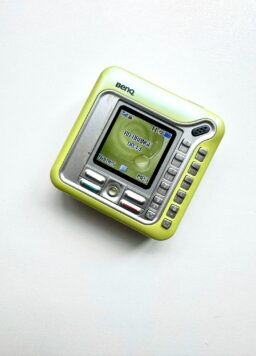
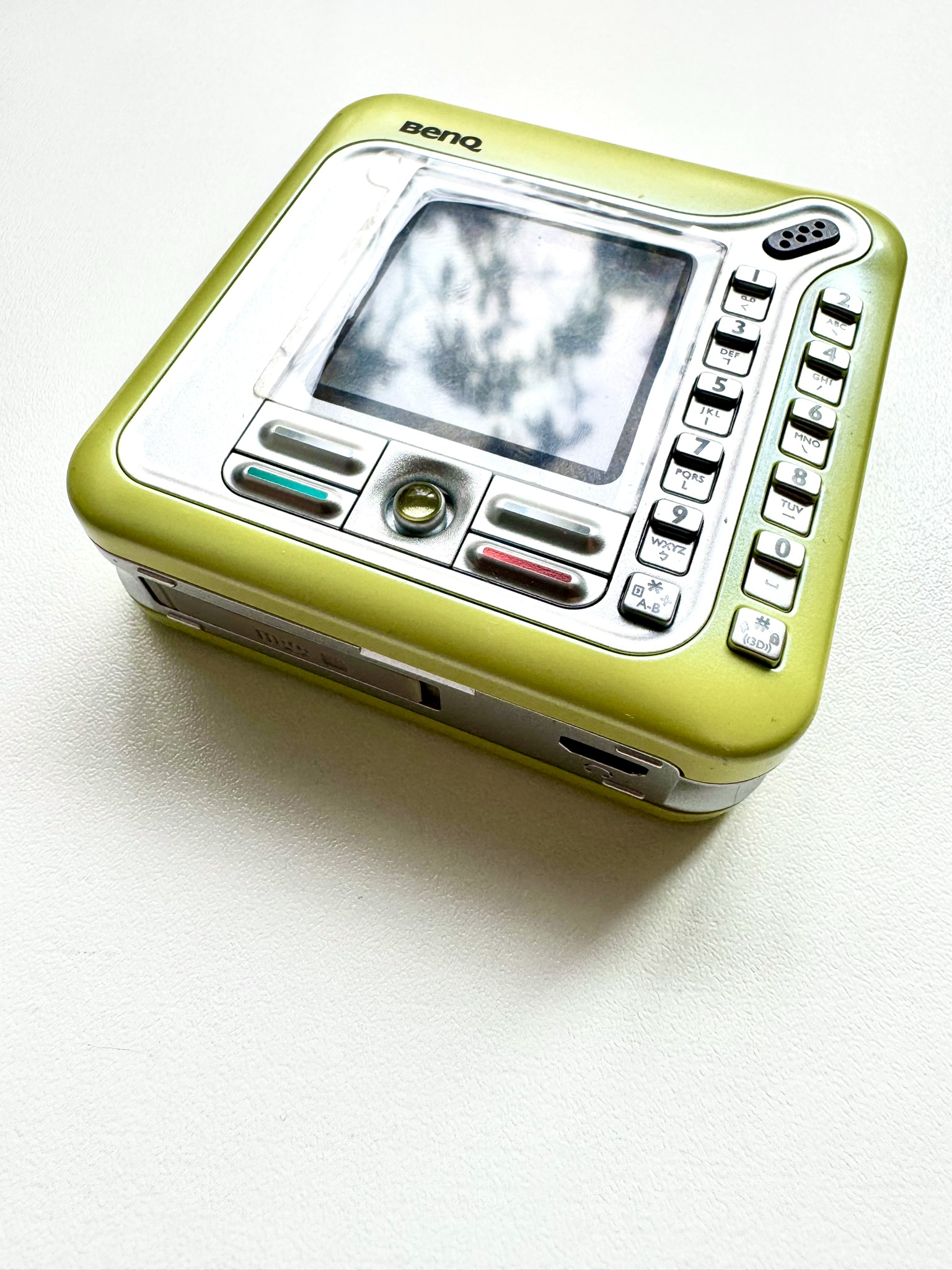
Benq Z2: Compact music phone
Quick ViewBenQ-Siemens Z2 – Ultra-Rare Square Music Phone (Made in Taiwan) – New, No Box
The BenQ-Siemens Z2 is one of the most unconventional and hard-to-find mobile phones ever produced by the brand. Released in very limited quantities around 2005, it features a distinctive square body, a side-mounted alphanumeric keypad, and a design language inspired more by early MP3 players and mini handheld consoles than by traditional phones.
Manufactured in Taiwan and introduced during the transition period just before the full BenQ-Siemens merger branding shift, the Z2 stands apart as a niche, short-lived model that never saw broad distribution. Today it is considered one of the rarest commercial BenQ / BenQ-Siemens devices.
This unit is new, showing no signs of prior use, but comes without its original box.
-


LG F3000
Quick ViewThe LG F3000 is a vaguely Porsche-looking cameraphone that not only emits some engine revs every time you flip it open, it actually honks at you when you receive a text message.
-


Motorola V3
Quick ViewThe Motorola Razr (styled RAZR codenamed Siliqua) was a series of mobile phones by Motorola, part of the 4LTR line. The V3 was the first phone released in the series and was introduced in July 2004 and released in the market in the third quarter of 2004.The V3 model was followed soon thereafter by the improved V3i, including a collaboration with Apple Inc. for iTunes to be built-in. It was launched in 2005.
Because of its unique appearance and thin profile, it was initially marketed as an exclusive fashion phone. However, within a year, its price was lowered and as a result, it sold over 50 million units by July 2006. Leading up to the release, Motorola’s cell phone division sales were stagnant and losing money. The success of the Razr made the division profitable again. Over the Razr’s four-year run, the V3 model sold more than 130 million units, becoming the best-selling clamshell phone in the world to date.
The Razr series was marketed until July 2007, when the succeeding Motorola Razr2 series was released. The succeeding models were the V8, the V9, and the V9m. However, Razr2 sales were not as good as the original V3 series, with consumers moving to competing products. Because Motorola relied so long upon the Razr and its derivatives and was slow to develop new products in the growing market for feature-rich touchscreen and 3G phones, the Razr appeal declined, leading Motorola to eventually drop behind Samsung and LG in market share for mobile phones. Motorola’s strategy of grabbing market share by selling tens of millions of low-cost Razrs cut into margins and resulted in heavy losses in the cellular division.
In October 2011, Motorola resurrected the Razr brand for a line of Android smartphones: the Droid Razr for Verizon Wireless (known simply as the “Motorola RAZR” on other networks) and an improved variant, the Droid Razr Maxx. The new “Razr” line shares the trademark thinness and stylized tapered corners with the original. The series was marketed until 2013.
On November 14, 2019, Motorola again revived the Razr brand, this time for an Android-based foldable smartphone styled after the original Razr, which carried the same name.
-


Nokia 6111
Quick ViewIt was being one of first devices running Nokia Series 40 3rd Edition, along with Nokia 6233, Nokia 6270 and Nokia 6280 which also offers even QVGA display resolution and better multimedia support.
-
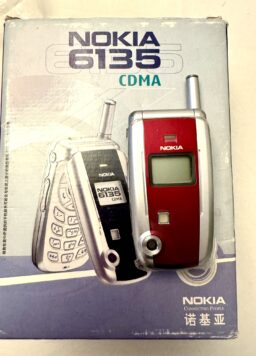
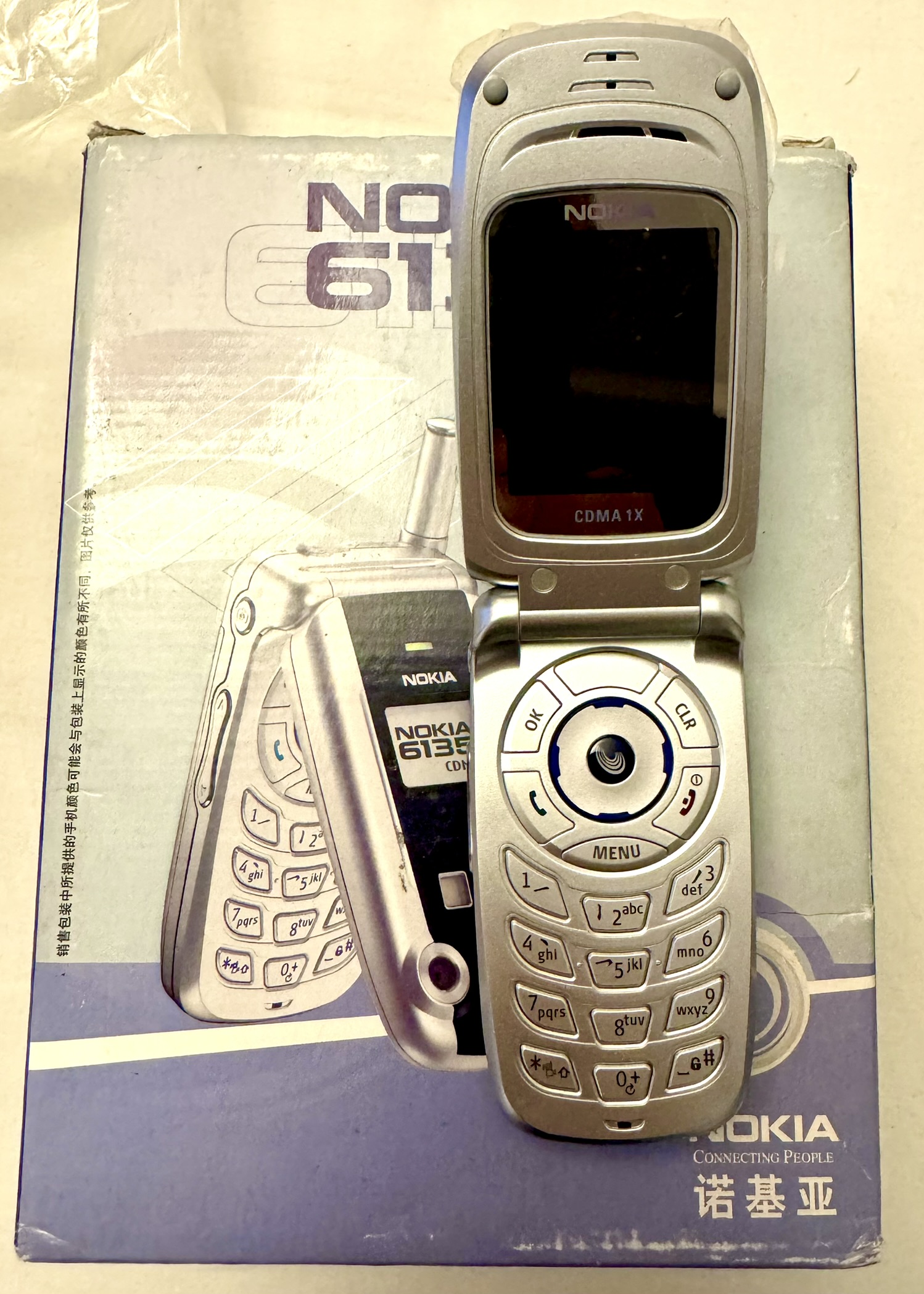
Nokia 6135: China-Market CDMA Edition
Quick ViewA rare Nokia CDMA clamshell created exclusively for the Chinese market and engineered around Qualcomm’s CDMA2000 1x platform. Unlike Nokia’s global GSM lineup, the 6135 uses a Nokia-custom CDMA OS with BREW support, the “CDMA by Qualcomm” branding, and the distinctive hardware configuration unique to early China Telecom devices.
Certified under CMII in 2004 and produced in limited volume, the 6135 remains one of the least-known Nokia models ever released. Running on the classic BL-5C battery and carrying RM-98 internal architecture, it represents a rarely seen branch of Nokia’s portfolio – a hybrid of Nokia design and Qualcomm radio technology.
-


Nokia 7280 Prototype F4.0 : The Jinx
Quick ViewA centerpiece for any top-tier Nokia collection, this Nokia 7280 JINX Prototype represents the earliest incarnation of one of the most iconic fashion phones ever created. Designed as part of the luxurious L’Amour Collection, the 7280 redefined mobile aesthetics with its lipstick-inspired form factor, mirror-black finish, and rotating Navi-Spinner, earning TIME Magazine’s “Gadget of the Year” distinction.
This prototype predates the commercial release, carrying the internal codename JINX and the early F4 hardware build, along with restricted-use labels such as “PROPERTY OF NOKIA” and a prototype IMEI range exclusive to engineering units. These details confirm its use in internal validation, UI testing, radio calibration, and industrial design approvals.
Pristine, original, and fully authentic, this piece represents the raw development phase of a phone that shaped Nokia’s luxury image in the mid-2000s. A true collector’s artefact.
-


Nokia 7360
Quick ViewPart of the “L’Amour Collection”, along with the 7370, 7373, 7380 and the 7390. The 7360 was designed at Nokia’s Design Center in California and was one of the first cell phones to implement the use of materials such as metal and leather in mass production
-


Nokia 7380
Quick ViewThe Nokia 7380 fashion phone was released in 2005, as part of the “L’Amour Collection”, along with the 7360, 7370, 7373 and 7390. The 7380 was designed at Nokia’s Design Center in California, led by Miki Mehandjiysky. What distinguishes this phone from others is its sensory navigation key which differs greatly from a conventional keypad and functions similarly to the touch-sensitive navigation wheel of the iPod. The display of the phone is another point if interest, measuring approximately 1.5 cm by 7 cm. The screen also becomes highly reflective in power saving mode, so it can double as a mirror. The Nokia 7380 has a 2-megapixel camera, up to 52 MB built-in memory (non-expandable), FM radio and Bluetooth and sports Pop-Port connectivity. The “L’Amour Collection” was awarded the 2006 IDEA Award (Silver) by the Industrial Designers Society of America (IDSA).
-
Nokia 7710 Full Box: Future Ahead of Its Time
Quick ViewThe Nokia 7710 is a smartphone announced on 2 November 2004.It was the first Nokia device with a touchscreen, and first device with 2:1 aspect ratio display.The 7710 is based on the Nokia 7700 which was never released. It is Nokia’s only smartphone to run the Series 90 interface atop Symbian OS v7.0s.
-
Nokia 7710 Prototype F4.0: Future ahead of its Time | Unreleased Black Keypad
Quick ViewA rare and impeccably preserved Nokia 7710 RM-12 F4.0 prototype, belonging to the final stage of Nokia’s pre-production cycle for the iconic Series 90 touchscreen smartphone. This F4.0 unit – clearly marked PROTO and Property of Nokia – originates from Nokia’s internal validation program, used during the last wave of field testing, UI refinement and RF certification before the public release in 2005.
Unlike retail units, this prototype features an unreleased keypad colour variant, with silver-toned navigation and side-control keys replacing the standard glossy black retail trim. This experimental colourway never reached commercial production, making this device a standout among surviving prototypes. The front bezel also shows the slightly grainier, matte finish characteristic of late hardware trials inside Nokia’s labs.
As with all authentic high-grade prototypes, the label carries the signature “Model: XXXX” placeholder, missing consumer certifications, serial markings and final manufacturing codes. These elements confirm it as a genuine internal unit, built in Finland during the last engineering revision of the platform.
The Nokia 7710 was Nokia’s most ambitious early touchscreen smartphone – a widescreen 640×320 device running the innovative Series 90 interface on Symbian OS. The prototype here predates the public release, offering collectors a rare glimpse into Nokia’s transition from experimental UI concepts to finalized commercial design.
This F4.0 RM-12 prototype is an exceptional find: a fully authentic late-stage engineering device with a unique, unreleased keypad trim, placing it among the rarest surviving 7710 variants and a valuable centrepiece for any advanced vintage Nokia collection.
-


Nokia 8800 Classic
Quick ViewThe 8800 features a stainless-steel housing with a scratch-resistant screen and has a weight of 134 grams. According to Nokia, the 8800’s “sophisticated slide mechanism uses premium ball bearings crafted by the makers of bearings used in high performance cars”
-


Nokia 8800 Silver Glass
Quick ViewThe 8800 features a stainless-steel housing with a scratch-resistant screen and has a weight of 134 grams. According to Nokia, the 8800’s “sophisticated slide mechanism uses premium ball bearings crafted by the makers of bearings used in high performance cars”