Showing all 12 results
-
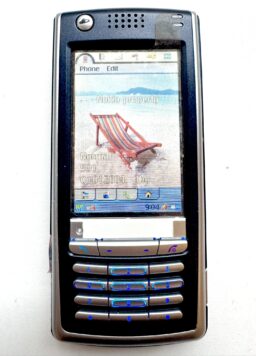
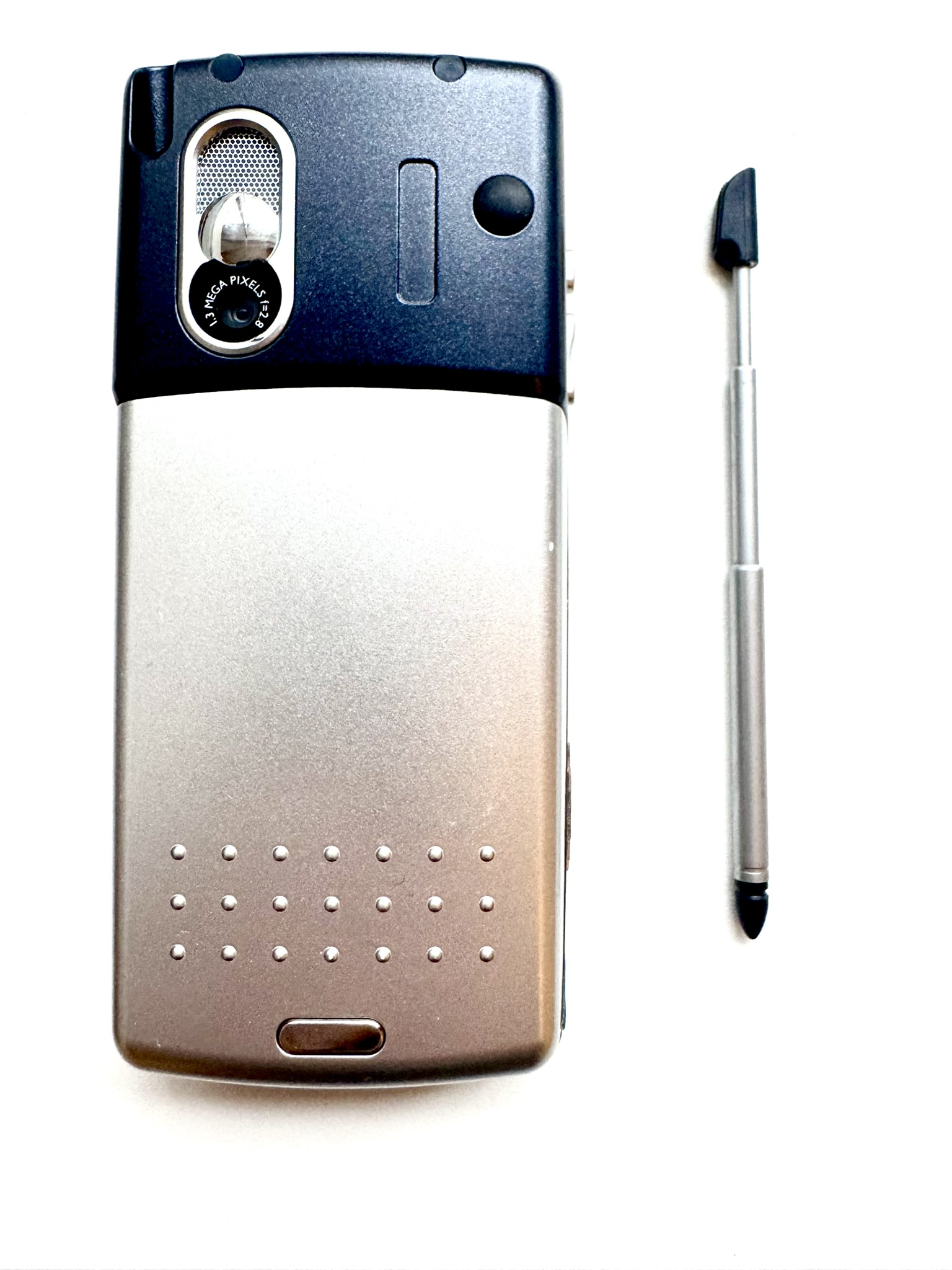
BenQ P31 Unreleased Prototype: Nokia 6708’s Hidden Twin
Quick ViewThis unit is an ultra-rare BenQ P31 engineering prototype, representing one of the most historically significant missing links in Symbian UIQ development. Originally conceived around 2003-2004 as BenQ’s entry into the high-end touchscreen smartphone market, the P31 was built on Symbian OS 7 with UIQ 2.1 and designed as a compact, stylus-driven business device. It never reached commercial release, and only a very small number of early engineering samples were ever produced.
This unit stands out immediately. It carries no BenQ branding, no label, no IMEI sticker, and no certification markings whatsoever, confirming it as a direct engineering lab device belonging to the EVT or very early DVT phase. Even more extraordinary, it boots with Nokia startup logos, revealing its role in one of the most unusual collaborations in Symbian history: the transformation of the BenQ P31 hardware platform into the commercial Nokia 6708.
During development, Nokia needed a UIQ device for Asian markets but did not want to engineer new UIQ hardware from scratch. Instead, Nokia evaluated the P31 as a potential base. This unit belongs to the narrow transitional window where Nokia UIQ firmware branches were loaded onto BenQ hardware to test compatibility, performance, and UIQ adaptation. Evidence of this includes Nokia boot screens, Nokia font structures, early Nokia overlays for PIM apps, and firmware variant directories corresponding to internal Nokia identifiers such as E582 or UIQ test builds. This type of cross-firmware contamination is almost never seen outside internal Symbian development environments.
Hardware examination indicates the original P31 layout: touchscreen with stylus input, UIQ key structure, OMAP-based platform, VGA camera module, and early UIQ 2.1 software stack. The matte prototype plastics, generic shielding, unbranded flex cables, and absence of final molding marks clearly separate it from the later Nokia 6708 retail hardware. Meanwhile, the Nokia firmware elements confirm the device was active during the validation period before Nokia redesigned the shell, finalized the PCB revisions, and prepared the 6708 for market release.
Historically, the BenQ P31 is known from documents, press mentions, and UIQ SDK references but extremely few physical units survive. Most were destroyed when BenQ cancelled its Symbian efforts and shifted to Windows Mobile and Siemens acquisition projects. Estimates based on engineering validation patterns suggest fewer than 40 to 80 EVT devices were made, with only a fraction entering Nokia testing flows. Units that display Nokia boot elements but retain full P31 prototype hardware are believed to number in the low single digits, making this unit one of the rarest Symbian UIQ artifacts in private hands.
Beyond rarity, this unit captures an entire unspoken chapter of smartphone evolution. It demonstrates how early OEM partnerships shaped device portfolios, how Symbian UIQ was adapted beyond Sony Ericsson hardware, and how Nokia explored touchscreen ecosystems prior to its Series 90 and later platforms. The P31 shows that Nokia was more deeply involved in UIQ experimentation than publicly acknowledged, using BenQ hardware as a bridge to enter UIQ markets quickly. It also highlights the technical flexibility of Symbian OS 7 and UIQ 2.1, which could be made to run on foreign hardware architectures with relatively limited porting.
For collectors, this unit sits at the highest echelon of prototype rarity. It is a never-released engineering platform, positioned between two manufacturers, with firmware that exposes internal development layers normally hidden inside corporate labs. It is a device that not only predates the Nokia 6708, but directly influenced its existence. As a result, this BenQ P31 prototype is not just a smartphone; it is a critical historical artifact documenting the intersection of BenQ’s abandoned Symbian ambitions and Nokia’s strategic adaptation of UIQ technology.
This unit, with its untouched prototype housing, label-free chassis, stylus support, UIQ interface, and Nokia boot sequences, stands as one of the finest surviving examples of transitional Symbian engineering hardware. It is a cornerstone piece for any top-tier collection focused on prototypes, UIQ development, or cross-manufacturer Symbian evolution.
-

NEC N900: Ultra-Compact 2004 GSM Phone
Quick ViewThe NEC N900 is one of the most obscure and fascinating micro-handsets ever released in the early 2000s-a device that looks like a tiny PDA more than a phone, designed for the Chinese GSM/GPRS market and produced in extremely limited numbers. This particular unit stands out even further for its unconventional keypad layout, with keys positioned in a way that differs from final versions, suggesting an early-batch or special-production configuration rarely seen today.
The N900 was engineered around minimalism and compactness, which led NEC to take one of its boldest decisions: the phone has no built-in earpiece. All voice calls must be made using the proprietary NEC headset, making it one of the few mobile phones in history that cannot be held to the ear to talk. This unusual constraint reflects NEC’s original intention for the N900 to be a messaging-centric smart device, not a traditional voice phone.
Despite its tiny footprint, the N900 packs surprising features for its era:
– a touch-style 2.2-inch display framed in metal
– circular metallic keys arranged in a distinctive grid
– full GSM/GPRS support
– NEC’s proprietary OS used on early N-series smart devices
– ultra-compact form factor comparable to the Nokia 82xx series, yet far more futuristic
This unit retains its authentic operator security seal, original structural components, and the rare keypad configuration-making it a genuinely collectible piece of early-2000s mobile experimentation.
A device like this embodies a short-lived moment when manufacturers dared to rethink what a phone could look like-before smartphones standardized everything. The NEC N900 is a perfect example of that creative chaos, and your piece is one of the cleanest surviving specimens.
-


Nokia 6260
Quick ViewThe Nokia 6260 is a high-end business orientated clamshell phone, similar in many ways to the Nokia 6230 bar phone.The 6260 has some interesting features, including Push-To-Talk (PTT) enabling low-cost and easy conferencing or one-to-one chat using the inbuilt GPRS data connection, a swivelling screen to help with web surfing and picture taking, and a mobile VPN client to allow business users to connect to corporate networks securely. There’s also Bluetooth, removable MMC memory cards and the Symbian Series 60 operating system.
-


Nokia 6620 Cingular Edition: Symbian Powerhouse for the US Market
Quick ViewThe Nokia 6620 is a landmark Symbian Series 60 smartphone created specifically for the North American market, at a time when true smartphones were still rare outside Europe. Built in Finland and sold through Cingular Wireless, it delivered real multitasking, third-party application support, Bluetooth connectivity, MMC expansion, and an integrated camera in a compact candybar form. Unlike most Nokia smartphones of the era, the 6620 was never widely distributed in Europe, making original US carrier units exceptionally rare on this side of the Atlantic. More than just a regional variant, it represents a pivotal moment when Finnish smartphone engineering was successfully adapted to American carrier requirements, turning the 6620 into a true crossover classic and a highly desirable collector piece today.
-


Nokia 6630
Quick ViewThe Nokia 6630 is a 3G smartphone announced by Nokia on 14 June 2004 and released in November.It runs on Symbian OS 8.0a (Series 60 2nd Edition FP2). Codenamed Charlie during development, it is an evolution of the 6600 and 6620 smartphones, supporting tri-band GSM (run on lower operating systems). The Nokia 6630 is the first phone ever that allows truly global roaming; previously GSM phones have had near-global coverage except in Japan where 2G phone standards were different. The 6630 automatically uses the W-CDMA network in Japan. Nokia 6650 and 7600 were also able to function in Japan, but they did not support GSM 1900, often needed in the United States and Canada (the Nokia 6651 has the GSM 1900). Nokia says the Nokia 6630 is the first dual-mode, tri-band handset designed to work on 3G (WCDMA), EDGE and 2G networks in eur;ope, Asia and the Americas.
-


Nokia N-gage QD
Quick ViewN-Gage – Mobile gaming devices (2003-2004).The N-Gage QD is a handheld game console and smartphone by Nokia, and a redesign of the N-Gage. It was unveiled on April 14, 2004, and was released on May 26, 2004, running the same Symbian OS v6.1 with Series 60 1st Edition FP1.However, the new model was unable to make an impact, and with only 2 million units sold in its two years, the N-Gage and its QD model were a commercial failure, unable to challenge their Nintendo rival.
-
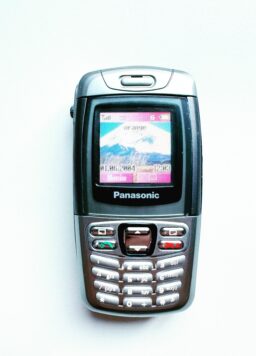
Panasonic EB X30: The Iconic Flip-Out Screen Camcorder Phone
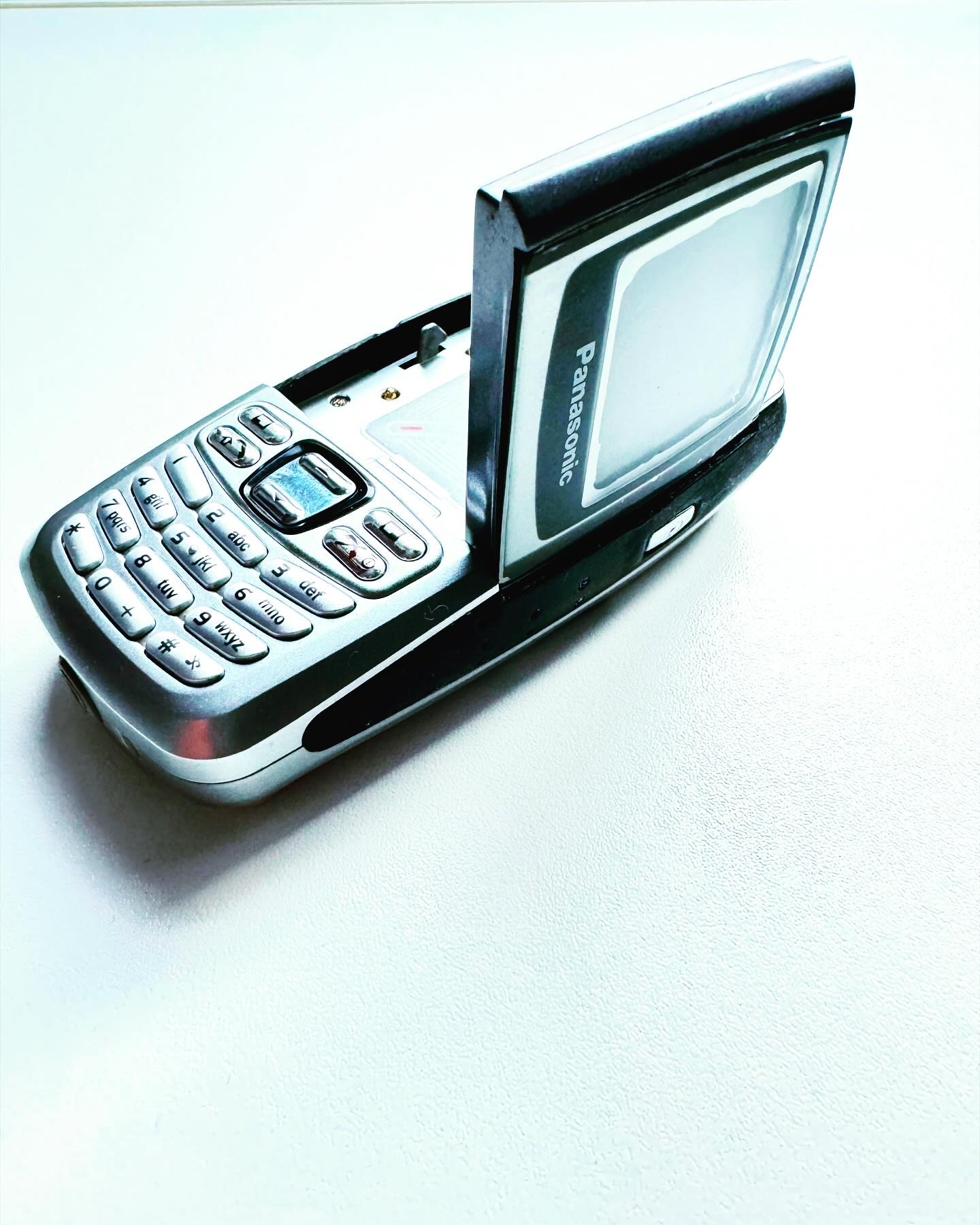
Quick ViewA spectacular and highly collectible Panasonic EB-X300, one of the most unique mobile phones ever produced. Released in 2004, the X300 stood out as a true piece of mobile engineering art, combining a classic keypad phone with a mechanically retractable, flip-out display that transformed the device into a miniature video camera at the press of a button.
The X300 wasn’t just another camera phone – it was designed like a camcorder. Press the spring-loaded release button and the entire screen swings out sideways into a horizontal viewfinder, giving the phone a completely different identity instantly. In this mode, the handset becomes a compact digital camera with a distinctive VGA (f/2.8, 3.3mm) lens mounted on the body, perfectly positioned for video capture and photography.
This transforming mechanism makes the X300 one of the most mechanically ambitious GSM phones ever sold, and absolutely unforgettable among early-2000s Panasonic designs. Your unit, with all the moving parts functioning and its internal label intact, is a fantastic collector-grade example.
-


Pantech GB100
Quick ViewPantech Inc. (Korean: ???? ??) is a South Korean company that manufactures mobile phones. Established in 1991, its market is mainly domestic with partners in the United States, Japan, China, eur;ope and finally Vietnam. In 2012 Pantech was the second best-selling handset maker in South Korea, according to Gartner. In 2013 Samsung Electronics bought a 10% stake in Pantech.Pantech also partners with PCD for specialized phones.
-


Samsung p510
Quick ViewThe first thing you’ll notice about the P510 is that it has an auto-opening feature for the ultra-lazy. A press of the side button and the phone will open and close automatically, through a smooth motor driven action. While such automation may seem twee, until you have experienced the sweet sound the motor makes, or felt the adoration of inspired onlookers, you shouldn’t be too hasty to write it off as a novelty gimmick.
-


Siemens CF62
Quick ViewSiemens is not very strong in the clamshell phone segment, its first product, clamshell CL50 was accepted more than just cold by the consumers. The next product – CL55 did not even reach the market, this ODM-model was silently cancelled in the first quarter of year 2004. That’s why it was pretty useless to expect warm feedback from the consumers for the CF62 phone, it undeservedly lost attention by consumers who considered this phone another asian model. The irony is that this time Siemens had developed the model by itself and did it with their best traditions. After a long break Siemens introduced successful model, which has slipped out of consumer’s sight due to previous failures. I’d like to make a note here, that by saying successful model you should not expect maximal functionality, you will not find it here, but try looking for match of functions and segment – and you will find it, it is new generation of what Siemens M55 was for its time, by the way CF62 is the clone of this model.
-
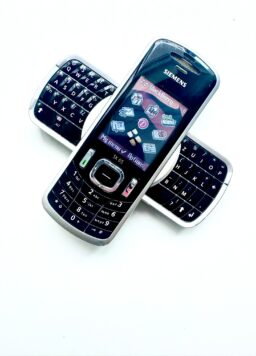
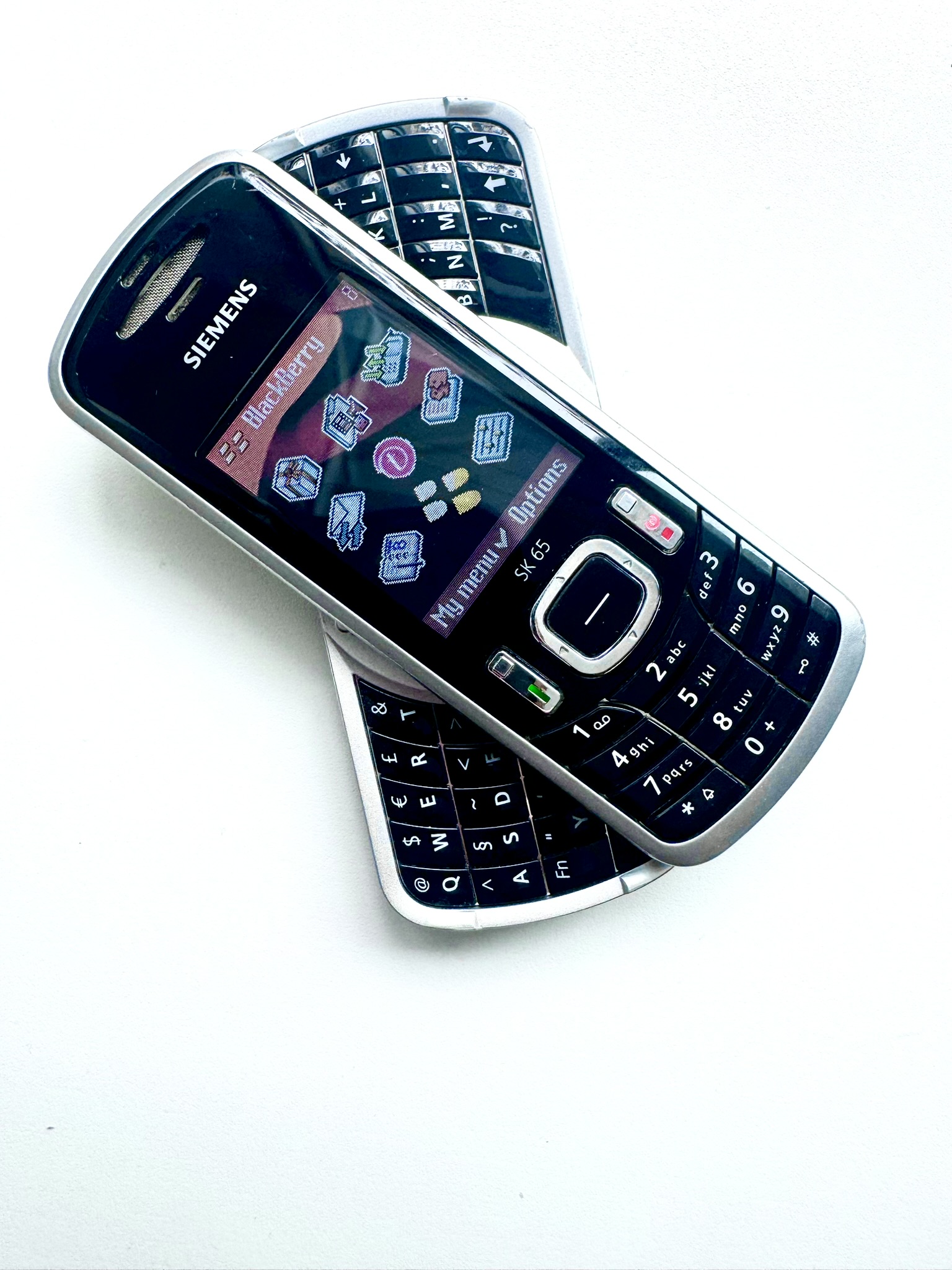
Siemens SK65: The Corporate Weapon With BlackBerry DNA
Quick ViewThe Siemens SK65 was introduced in late 2004 as one of the most advanced enterprise phones ever created, built during a period when Siemens placed enormous engineering resources into its high end S and SX series. The internal development codename is widely understood in documentation to align with Siemens’ business class platforms of the era, specifically derived from the SXG and BB integration programs. It runs on Siemens’ proprietary OS with a full BlackBerry Connect layer on top, giving it access to encrypted push email, corporate sync and RIM’s secure communication protocols.
When released, the SK65 targeted senior professionals and executives who needed BlackBerry functionality but preferred a sleeker eur;opean device. Launch pricing depended on region, but the unsubsidized cost ranged between 450 and 550 eur;os, placing it directly in the high end business category. Early reviews from major publications praised the crossblade mechanism as one of the most ingenious mobile keyboard designs ever made, noting that it allowed full QWERTY typing without increasing the device’s footprint. Reviewers highlighted its solid construction, the crisp Siemens display and the deep integration with BlackBerry Enterprise Server. The only criticisms at the time were limited multimedia features and the fact that the device focused purely on productivity, not entertainment.
The engineering story behind it is equally impressive. Siemens created an entirely new hinge system that rotates two symmetrical keyboard wings outward with perfect balance and alignment. No consumer phone before or after replicated this exact mechanism. When closed, the SK65 appears to be a traditional bar phone. When opened, it transforms instantly into a communication terminal, a true pocket sized workstation.
This unit is preserved in mint condition, with the crossblade mechanism still locking with the same satisfying precision it had in 2004. The BlackBerry Built-in branding remains fully intact on the back cover and the front chassis retains the clean Siemens lines with no warping or discoloration. The display still boots into the original BlackBerry menu structure, complete with the corporate iconography that defined mid 2000s business mobility.
The Siemens SK65 represents the moment when two giants, Siemens and BlackBerry, merged technologies to redefine what a business phone could be. It was a niche device at launch but has since gained legendary status among collectors because of its unusual hybrid nature, discontinued form factor and limited production run. Now considered one of the most unique enterprise phones of the early smartphone era, a mint example like this stands as a mechanical and historical masterpiece.
-


Siemens SX1
Quick ViewThe Siemens SX1 is a GSM mobile phone running version 1.2 of the Series 60 platform for the Symbian OS. It is the first such smartphone from the German phone manufacturer Siemens AG following their licensing agreement with Nokia for the use and development of Series 60. Though unveiled in February 2003 it launched only in December of that year. The phone has a very high feature list for its time of release. It had three built in games and support for more by downloads. The three games which were bundled with the phone were Mozzies, which was awarded the title of best mobile game in 2003, Typegun, which was a game made for acquainting users to the keypad layout, and Sitris, a Tetris version with multiplayer support (via Bluetooth). In Mozzies, the Camera is used to detect the motion. So you have to position the gun on the flying mosquitoes which are superimposed on the video feed from the camera. The objective is to shoot down the mosquitoes by moving the phone around and clicking when you are aiming correctly. The phone also has a good number of connectivity options from Bluetooth to IrDA. It can also be used as a Fax Machine by connecting it to an appropriate device like a computer through the software provided. The File Manager allows sending and receiving of various files over either infrared or bluetooth. The phone has two shortcut keys on its side. One is used to start the camera and click pictures, while the other can be used to make a voice command driven call or start the voice memo. There is a built in picture editor which allows modification of images taken by the camera or any other type of image present on the phone. The phone has a few organizer capabilities. There are applications to take down short notes, a To-Do List, a scheduler application with reminders and a converter to convert currency and different measuring units. The mobile has been popular because of a Linux port to this mobile called “Linux on SX1”.