Showing 1–12 of 15 results
-


Ericsson A2618s
Quick ViewEricsson A2618 offers WAP and SMS technology, it becomes the fourth Ericsson mobile phone with WAP function (the other belongs to MC218, R320 and R380).
Based on a new platform ‘Michelle’, it features a sensuous “S-curve” design and contains the latest developments in software and functionality.
The address book could store up to 100 telephone numbers and associated names in the phone’s memory with voice activated dialling and short cut keypad dialling for the first 9 entries. The call lists recorded the last 20 dialled, answered or missed calls.
The A2618s included time and date functions, an alarm clock, a stop watch, call timers and basic function calculator. It could also send and receive SMS text messages and allowed levels of personalisation by selecting from a range of pre-loaded ring tone melodies, by composing your own ring tone and by changing the external covers.
Three games were also provided on the phone, Tetris, Erix and E-Maze. Finally, limited Internet access was provided to mobile services using the Wireless Application Protocol (WAP) over an SMS bearer.
-


Ericsson ER209i (NTT DoCoMo): Ultra-Rare Japan-Only Release
Quick ViewDoCoMo by Ericsson ER209i’ (hereafter ER209i) is Ericsson’s first i-mode enabled mobile phone for the PDC standard. In Japan, the growth of the mobile Internet market is very strong, and NTT-DoCoMo’s i-mode service contributes to this expansion. The number of subscribers who use the i-mode services is 15,227,000 as of November 26, 2000 (reference to data of NTT-DoCoMo).
-
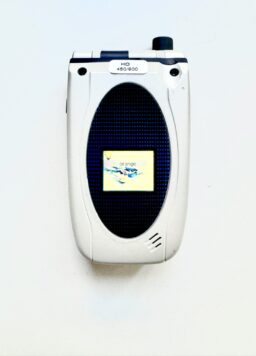
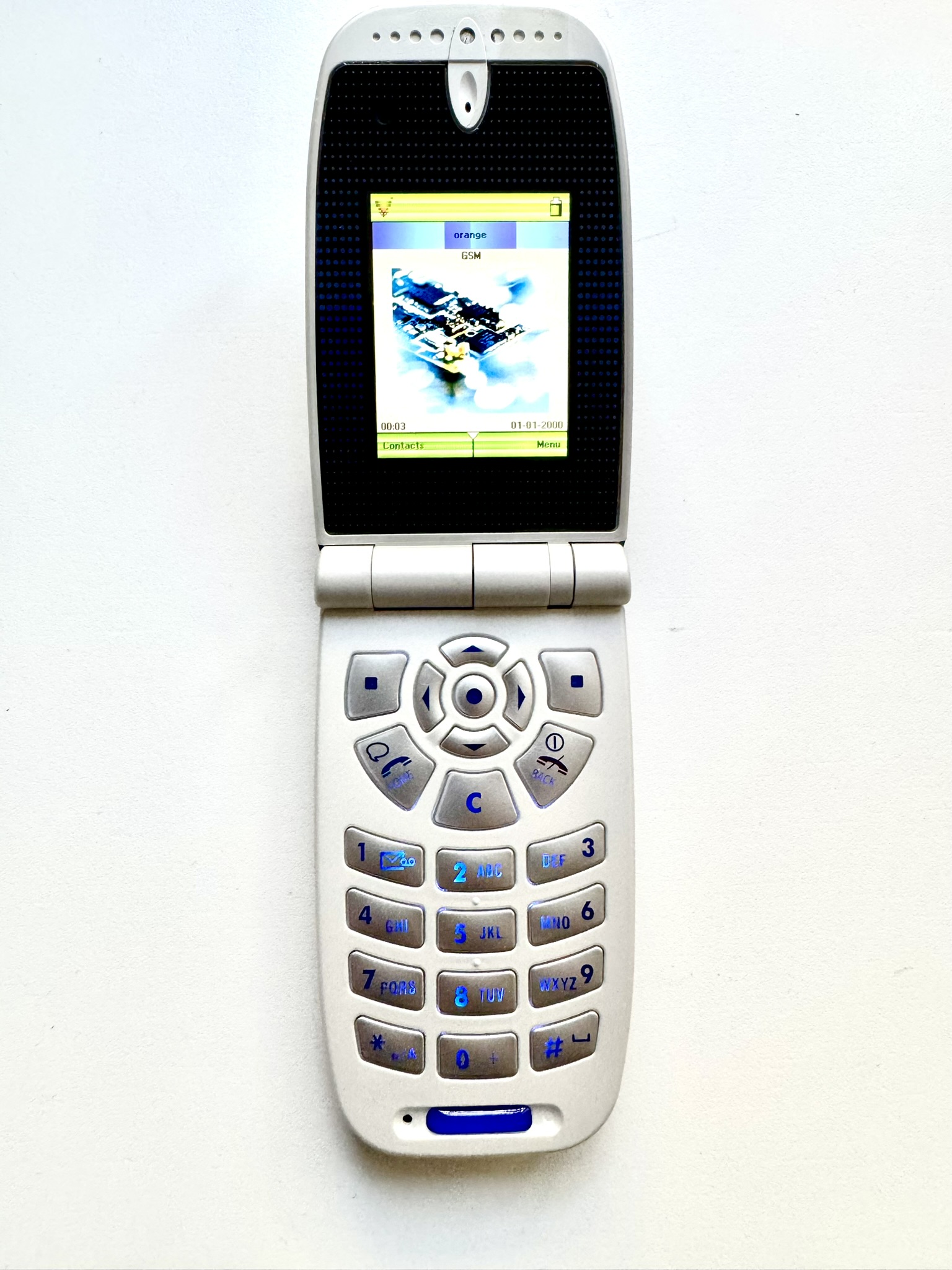
Ericsson Futaba | Unreleased Prototype
Quick ViewEricsson A2618 offers WAP and SMS technology, it becomes the fourth Ericsson mobile phone with WAP function (the other belongs to MC218, R320 and R380).
Based on a new platform ‘Michelle’, it features a sensuous “S-curve” design and contains the latest developments in software and functionality.
The address book could store up to 100 telephone numbers and associated names in the phone’s memory with voice activated dialling and short cut keypad dialling for the first 9 entries. The call lists recorded the last 20 dialled, answered or missed calls.
The A2618s included time and date functions, an alarm clock, a stop watch, call timers and basic function calculator. It could also send and receive SMS text messages and allowed levels of personalisation by selecting from a range of pre-loaded ring tone melodies, by composing your own ring tone and by changing the external covers.
Three games were also provided on the phone, Tetris, Erix and E-Maze. Finally, limited Internet access was provided to mobile services using the Wireless Application Protocol (WAP) over an SMS bearer.
-
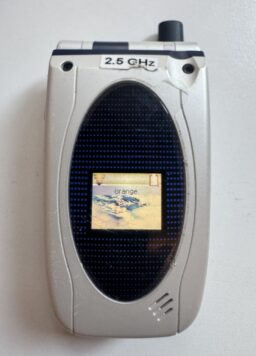
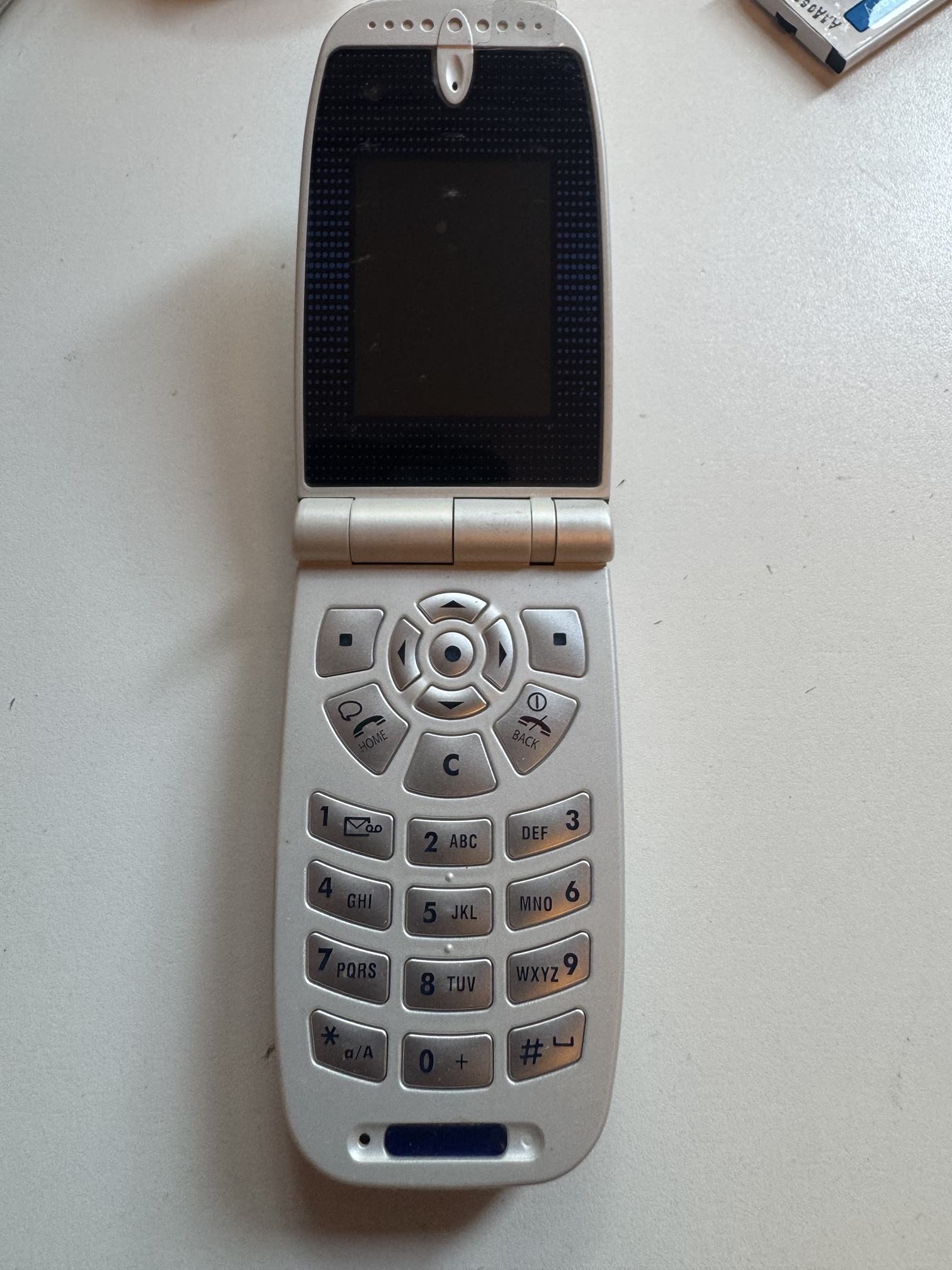
Ericsson Futaba | Unreleased Prototype
Quick ViewAn extremely rare, never-released Ericsson prototype: a 2.5 GHz engineering unit labelled “Not Type approved”, made in Sweden (label: KRH 901 80 EP2, 06W38).
Fully functional. Tested in a live call on the Orange network, and to my surprise both the earpiece and the microphone work perfectly. Both screens still carry their protective films.
The original battery is swollen, so the phone was powered with another battery from the collection. Good to know: it takes the same battery as the Ericsson T66.
Overall condition: good.
-


Motorola V50
Quick ViewThe Motorola V50 stands as one of the most elegant and compact folding phones of the late 1990s and marks a turning point in Motorola’s design language as the company transitioned from the iconic StarTAC era toward more refined clamshell engineering. Released in 1999, the V50 belonged to Motorola’s premium business class, offering a sophisticated build, extremely compact chassis, and the unmistakable industrial design that defined Motorola’s dominance during the GSM boom.
This unit is in as-new condition and remains fully functional, a rarity today given the age of the model and the fragility of early clamshell hinges. The phone comes together with an original-style leather case, a period-correct accessory that was considered essential for protecting premium Motorola devices. The preserved state of this V50 makes it a desirable collector piece, as most surviving units show heavy wear, hinge slack, or display fading.
The V50 was notable for its engineering precision and extremely small footprint. At the time of release, it was one of the most compact dual-band GSM clamshells available, weighing around 83 g and offering a slim linear profile when closed. Motorola built the V50 on an evolution of the StarTAC mechanical platform, with improved hinge reinforcement, a tighter clamshell action, and upgraded internal components for better long-term durability compared to earlier models.
In the late 1990s, the V50 was positioned as a premium compact business device, bridging the gap between the iconic StarTAC and the more modern V-series models that would dominate the early 2000s. It carried the minimalist, understated design that Motorola became famous for, with tight tolerances, robust construction, and a sleek, business-oriented aesthetic. Because it was not a mass-market fashion device like later models, production volumes were lower, and surviving near-mint examples are uncommon.
Today, the V50 holds strong historical importance as part of Motorola’s transition from analog-to-digital GSM, as well as the evolution of the clamshell form factor. As a fully functional, as-new example paired with a period-correct leather case, this unit stands as a highly collectible piece of late-1990s mobile engineering. Its preserved condition, compact build, and clean mechanical structure make it a standout addition to any high-end GSM or Motorola-focused collection.
-


Nokia 3310: The Indestructible Classic – Tetris backcover
Quick ViewThe Nokia 3310 is one of the most iconic and beloved mobile phones ever created. Released in 2000, it combined exceptional durability, long battery life, and a clean, easy-to-use interface that made it a global phenomenon. With more than 126 million units sold, the 3310 became a symbol of reliability and simplicity, defining the mobile experience for an entire generation.
The 3310 was developed at the Copenhagen Nokia site in Denmark and unveiled at the “Dont be bored. Be totally board.” lifestyle event in Oberhausen, Germany, as well as during “Nokia Unplugged” concerts in the Asia-Pacific region. These youth-focused launches reinforced the phones cultural influence and helped establish the 3310 as a global pop icon from the moment it was introduced.
The 3310 carried forward the internal antenna design introduced by Nokias previous models, delivering excellent reception in a compact and ergonomic body. Its Xpress-On cover system allowed complete customization of the phone, a feature that helped shape the youth-driven personalization trend of the early 2000s. Preloaded with Snake II, Space Impact, and Bantumi, the 3310 also became a gaming icon, with Snake II achieving legendary status across global markets.
This collection includes several rare and unusual 3310 variants. One features an official Michael Schumacher licensed cover, a highly collectible design from Nokias peak merchandising era. Another unit includes a back cover with a working Tetris module, an accessory produced in very limited numbers. A third unit has a Snake joystick back cover, turning the 3310 into a dedicated gaming device with physical controls. These accessories are exceptionally rare and greatly enhance the collectible value of the models.
The Nokia 3310 remains a cultural classic and one of the most influential mobile phones in history. With its durability, customization options, and iconic software, it continues to hold a special place in mobile history. These rare units, combined with unique official and third-party accessories, make this collection an outstanding representation of Nokias most legendary handset.
-


Nokia 3310: The Indestructible Classic with a Michael Schumacher cover
Quick ViewThe Nokia 3310 is one of the most iconic and beloved mobile phones ever created. Released in 2000, it combined exceptional durability, long battery life, and a clean, easy-to-use interface that made it a global phenomenon. With more than 126 million units sold, the 3310 became a symbol of reliability and simplicity, defining the mobile experience for an entire generation.
The 3310 was developed at the Copenhagen Nokia site in Denmark and unveiled at the “Dont be bored. Be totally board.” lifestyle event in Oberhausen, Germany, as well as during “Nokia Unplugged” concerts in the Asia-Pacific region. These youth-focused launches reinforced the phones cultural influence and helped establish the 3310 as a global pop icon from the moment it was introduced.
The 3310 carried forward the internal antenna design introduced by Nokias previous models, delivering excellent reception in a compact and ergonomic body. Its Xpress-On cover system allowed complete customization of the phone, a feature that helped shape the youth-driven personalization trend of the early 2000s. Preloaded with Snake II, Space Impact, and Bantumi, the 3310 also became a gaming icon, with Snake II achieving legendary status across global markets.
This collection includes several rare and unusual 3310 variants. One features an official Michael Schumacher licensed cover, a highly collectible design from Nokias peak merchandising era. Another unit includes a back cover with a working Tetris module, an accessory produced in very limited numbers. A third unit has a Snake joystick back cover, turning the 3310 into a dedicated gaming device with physical controls. These accessories are exceptionally rare and greatly enhance the collectible value of the models.
The Nokia 3310 remains a cultural classic and one of the most influential mobile phones in history. With its durability, customization options, and iconic software, it continues to hold a special place in mobile history. These rare units, combined with unique official and third-party accessories, make this collection an outstanding representation of Nokias most legendary handset.
-


Nokia 6210
Quick ViewThe Nokia 6210 is a mobile phone made by Nokia. It was introduced at the CeBIT fair in Hanover in February 2000 succeeding Nokia 6110. In addition to calling and SMS messaging, the phone has many other features, such as an alarm clock, a HSCSD modem, a WAP web client, 3 games (Snake 2, Pairs II and Opposite), a calculator, a ‘to-do’ list application, a calendar, infrared connectivity, a voice recorder and a stopwatch. In keeping with Nokia’s practice of selling phones that the user can customize the physical appearance of, the 6210 is minimally customizable. The plastic detail below the keypad, which Nokia called the ‘Personal Badge’ is removable. For a time, Nokia would send replacements, screen-printed with text of the customer’s choosing. These were free for a promotional period. The 6210 could have bluetooth functionality added to it, with the use of the Nokia Connectivity Pack, which included a replacement battery which incorporated a Bluetooth adaptor and antenna (interfacing with the phone via normally unused electrical contacts in the battery compartment), and a connectivity card with a PCMCIA adaptor to bring bluetooth to a portable computer (at the time, December 2000, bluetooth was not widespread). The connectivity batteries were available separately. A software upgrade was needed for existing 6210 owners. For this reason, an upgraded 6210 was the earliest cellular phone with bluetooth connectivity. The upgrade pack was ready several months before the launch of the first cellphone with bluetooth built-in, however, it was not released to market until sometime after the first integrated-bluetooth phone had been launched. It can certainly be considered to be the first phone with a bluetooth option.
-


Nokia 6250
Quick ViewThe Nokia 6250 is a mobile phone made by Nokia. It is a more rugged version of the Nokia 6210 phone. It has a monochrome graphic LCD display of resolution 96 x 60 pixels. Its memory can hold up to 500 phone book records with up to three numbers per name, and up to 150 text messages (SMS).
-


Nokia 9110
Quick ViewThe?Nokia 9110 Communicator?is the updated model of the Nokia 9000 Communicator in the?Communicator series. Its biggest change from the 9000 is that it weighs much less. The product line was continued in 2000 by the introduction of Nokia 9210 Communicator which introduced a wide TFT colour internal screen
-


Nokia 9210
Quick ViewIt was the first device to run on the Symbian OS platform, version 6, succeeding version 5 of EPOC. It also introduced Nokia’s Series 80 interface, which was the result of Symbian Ltd.’s ‘Crystal’ design.It was also the first Nokia with a card slot for expandable memory.
-


Nokia NM502i Docomo
Quick ViewNokia was not promoting?i-mode?widely in its portfolio. However, Japan market was important and Nokia introduced own models using?PDC?technology. This Nokia NM502i was developed for?NTT DoCoMo?and was introduced in premium category on March 28, 2002.