

">

Showing all 6 results
-


Nokia 5610 Xpress Music Red Prototype Label: Just Proto Software
Quick View💎 Rarity Index: A (Rare)
👁 Evaluation in my collection: As New – 10/10
⏱ Life timer: 0m | 📦 Boxed: NO
📅 Release Year: 2007 | 💰 Release Price: ~280 €
📊 Units Sold: ~2.5M (final units)
📰 Why this phone matters: The Nokia 5610 is a slider mobile phone from Nokia part of the XpressMusic series. Introduced August 2007 and launched in December, it runs on the Series 40 platform. The 5610’s design is similar to that of the Nokia 5310 XpressMusic (announced same day), with aluminium brushed sides and bold side colours of either red, blue, white, or pink.Above the regular D-pad with music buttons, the 5610 features a “sliding switch” below the display for navigation.📝 Reviews when released: Mobile Review 🔗
-
Nokia 5700: RM-302 Black China Edition
Quick View💎 Rarity Index: A (Rare)
⭐ WOW Factor: The only Nokia design where a single twist instantly switched the device’s personality: messaging, music, or camera.
👁 Evaluation in my collection: Good – 8.5/10
⏱ Life timer: 2h | 📦 Boxed: NO
📅 Release Year: 2007 | 💰 Release Price: N/A
📊 Units Sold: ~1.5M
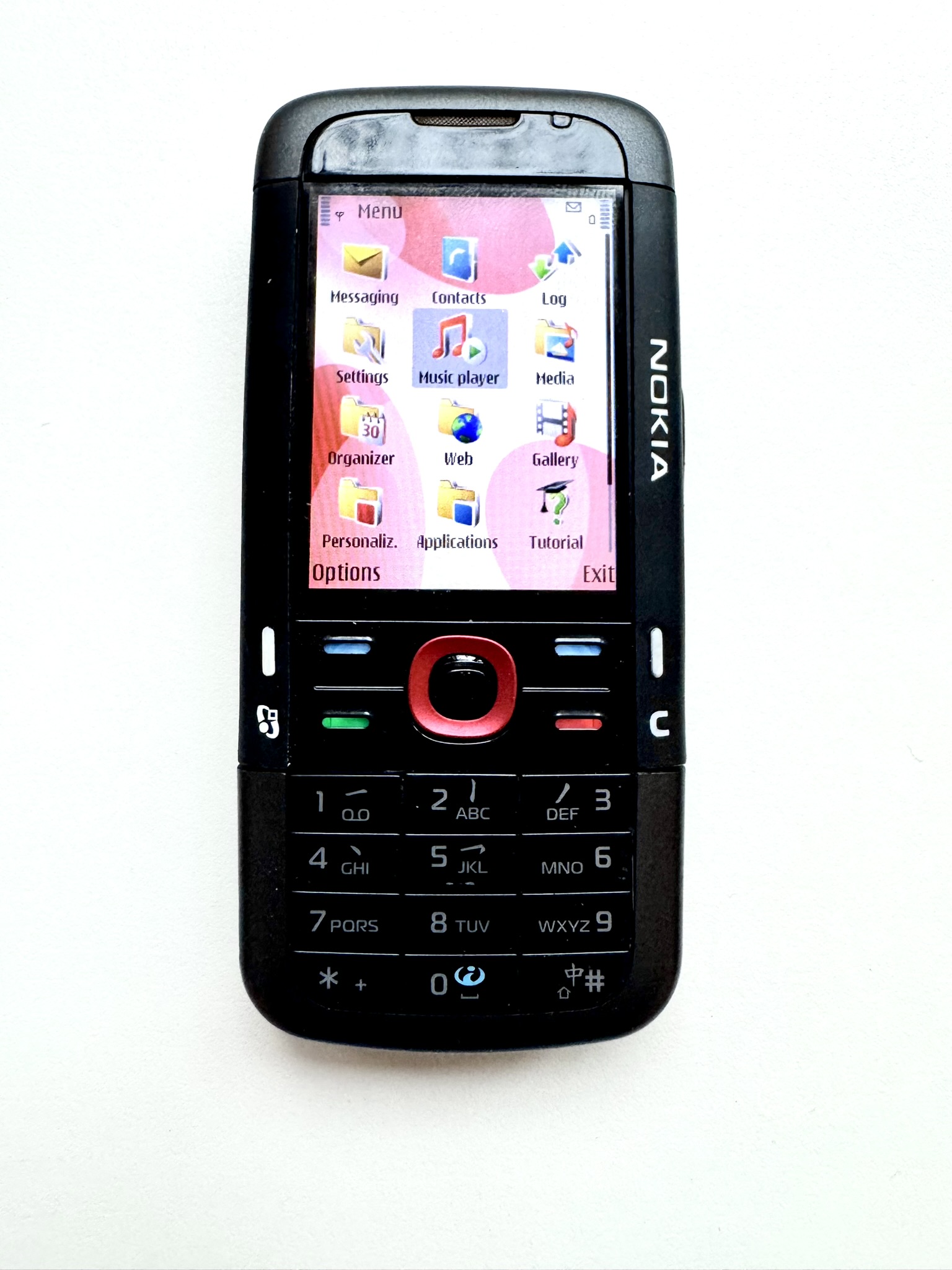
📰 Why this phone matters: The Nokia 5700 XpressMusic in full black is one of the rarest variants of Nokia’s rotating-multimedia smartphone lineup, produced in limited quantities for the Chinese market under type RM-302. Unlike the classic red-and-white global release, this black edition was never widely exported, and its appearance alone gives it a more modern, stealth-like identity compared to the traditional XpressMusic theme.RM-302 identifies the dedicated China-market hardware and firmware platform. This variant features localized Chinese firmware languages, regional GSM frequency configurations, Chinese SAR certifications, and distinct product codes used only in mainland China. It also includes Chinese-market keypad print variants and often slightly different audio tuning profiles for the XpressMusic sound engine, making it unique compared to the RM-230 and RM-235 global versions.
This model is instantly recognizable thanks to its iconic twist design: the lower half of the phone physically rotates, switching between phone keypad, camera mode, and dedicated multimedia controls. No other Nokia device combined physical transformation with smartphone features in this playful and functional way. Even today, the rotating mechanism feels sharp, solid, and satisfying in the hand.
This unit is fully working, and everything from the bright display to the twist motion and the XpressMusic player still operates correctly. The black housing appears clean and unique, and the handset reflects the Chinese-market identity through its labeling, firmware, and certification patterns. The label confirms this is a 2007 manufacturing batch for China, complete with regional approvals and variant coding specific to RM-302.
The Nokia 5700 remains one of the most unusual and entertaining Symbian smartphones ever made, remembered for its creative design, its music-centric features, and its transformation-style body that stands out even among Nokia’s most ambitious experiments. The RM-302 black Chinese-market edition elevates that uniqueness to a higher level, making it one of the hardest versions to find in full working condition.
📝 Reviews when released: cNET 🔗
-
Nokia 5710 Unreleased Prototype B3.0: RM-187
Quick View💎 Rarity Index: X (Mystical Prototype)
⭐ WOW Factor: The only Nokia design where a single twist instantly switched the device’s personality: messaging, music, or camera.
👁 Evaluation in my collection: Great – 9/10
⏱ Life timer: 0m | 📦 Boxed: NO
📅 Release Year: 2006 | 💰 Release Price: N/A
📊 Units Sold: 0 unreleased
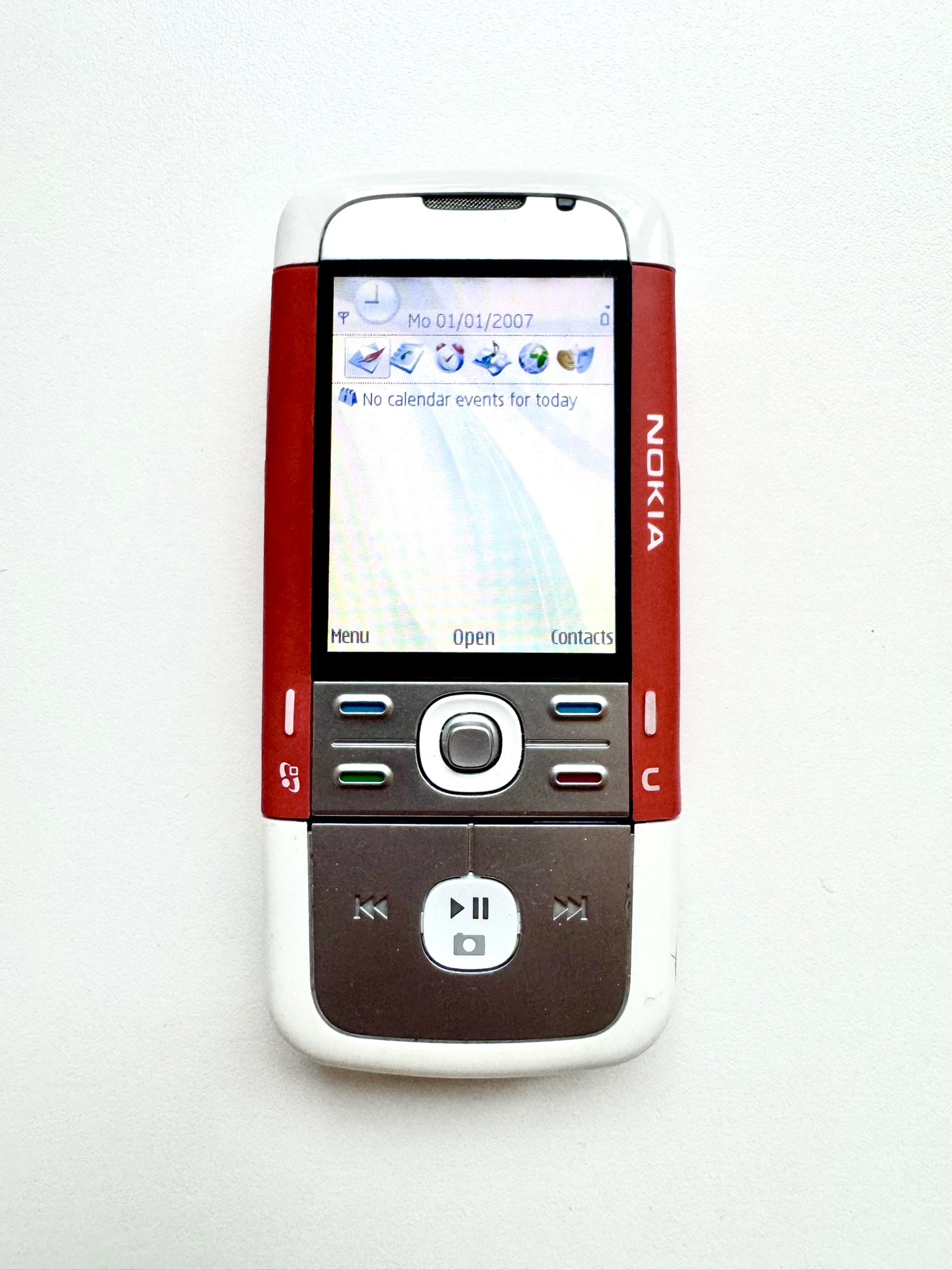
📰 Why this phone matters: The Nokia 5710 (RM-187) prototype represents one of the rarest and most technically fascinating chapters in Nokia’s experimental design era. Built in Finland as a late-stage engineering sample, this unreleased device was intended to become the successor to the Nokia 5700 XpressMusic – and the final evolution of Nokia’s iconic twist-mechanism platform.Carrying the markings “Prototype ? Property of Nokia ? Not for Sale”, this RM-187 unit showcases hardware that never reached production: a redesigned rotating lower module, a reinforced hinge, and an upgraded rotary connector meant to eliminate the flex-cable failures seen on earlier twist models. Every piece of internal labeling, from its pre-production QR matrix to the B-series hardware stamps, confirms its status as an authentic high-level engineering device.
Unlike the retail 5700, the 5710 was slimmer, structurally stronger, and technically more advanced – an ambitious internal attempt to create the third-generation twist phone, following the 3250 and 5700. Development was ultimately halted, making RM-187 the final Nokia twist platform ever constructed.
The result is a prototype that combines unfinished industrial design, experimental hardware, and a form factor that was already disappearing from Nokia’s roadmap. With no retail release and only a handful of RM-187 boards ever confirmed, this piece stands as a true collector’s artifact – a preserved snapshot of a daring design direction that Nokia never shipped.
📝 Reviews when released: N/A 💔
-

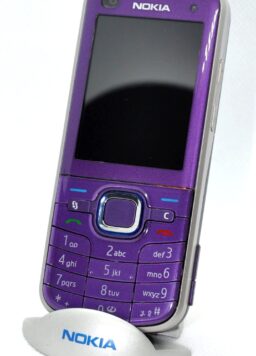
Nokia 6220 Classic
Quick View💎 Rarity Index: B (Uncommon)
👁 Evaluation in my collection: Great – 10/10
🕵 Nokia Codename: Astro
⏱ Life timer: 60h | 📦 Boxed: NO
📅 Release Year: 2008 | 💰 Release Price: N/A
📊 Units Sold: ~3M
📰 Why this phone matters: Nokia 6220 classic is a Symbian OS smartphone announced by Nokia on 11 February 2008. It is notable for featuring a Xenon flash for its 5-megapixel camera, similar to the Nokia N82 and often considered as a “budget” version of the N82. Despite its compact size, it offers features comparable the Nseries lineup, although lacks Wi-Fi or a 3.5 mm audio jack, probably to cut costs.📝 Reviews when released: cNET 🔗
-


Nokia 7390
Quick View💎 Rarity Index: B (Uncommon)
👁 Evaluation in my collection: Good – 8/10
⏱ Life timer: 181h | 📦 Boxed: NO
📅 Release Year: 2007 | 💰 Release Price: ~400 €
📊 Units Sold: ~200k
📰 Why this phone matters: The Nokia 7390 is a mobile phone featuring the Series 40 interface from the L’Amour Collection. It was released in the United States in early 2007, elsewhere in late 2006. One of the useful features of the phone is the ability to play music or take pictures without opening it. The camera’s maximum resolution is at 3 megapixels. The on-board music player can play MP3, AAC, eAAC+, and WMA formats and more.📝 Reviews when released: Mobile Review 🔗
-


Nokia 8600 Luna
Quick View💎 Rarity Index: B (Uncommon)
👁 Evaluation in my collection: Great – 9.5/10
🕵 Nokia Codename: Luna
⏱ Life timer: 9h | 📦 Boxed: NO
📅 Release Year: 2007 | 💰 Release Price: ~700 €
📊 Units Sold: ~1M
📰 Why this phone matters: Like previous luxury Nokia models, the Luna is largely encased by its stainless steel chassis but has one important difference: the slider is made from semi-opaque smoked glass that leaves the keypad to glow through, rather ethereally. It glides open with a smooth slide-action, and closes with a reassuring click.Two long loudspeaker grills add to the overall impression of luxury, and little else is allowed to clutter the edges of the handset save for the microUSB port. This is used for the charger, data cable and stereo headset, conveniently ridding the need for extra connections.
Opening the handset reveals a decent-sized keypad, larger than its predecessor and plenty big enough for man-sized digits, although the lower row is a bit close set to the slider for comfort. Nokia users will be immediately familiar with the standard layout of the Series 40 graphic interface and four-way navigational pad, but will have to have fairly good eyesight as the default font is rather small
📝 Reviews when released: Tech Radar 🔗