

">

Showing 49–54 of 54 results
-


Panasonic EB-G450
Quick View💎 Rarity Index: A (Rare)
👁 Evaluation in my collection: Good – 8.5/10
⏱ Life timer: N/A | 📦 Boxed: NO
📅 Release Year: 1997 | 💰 Release Price: N/A
📊 Units Sold: ~300k
📰 Why this phone matters: N/A📝 Reviews when released: N/A 💔
-
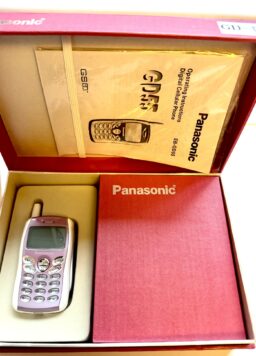
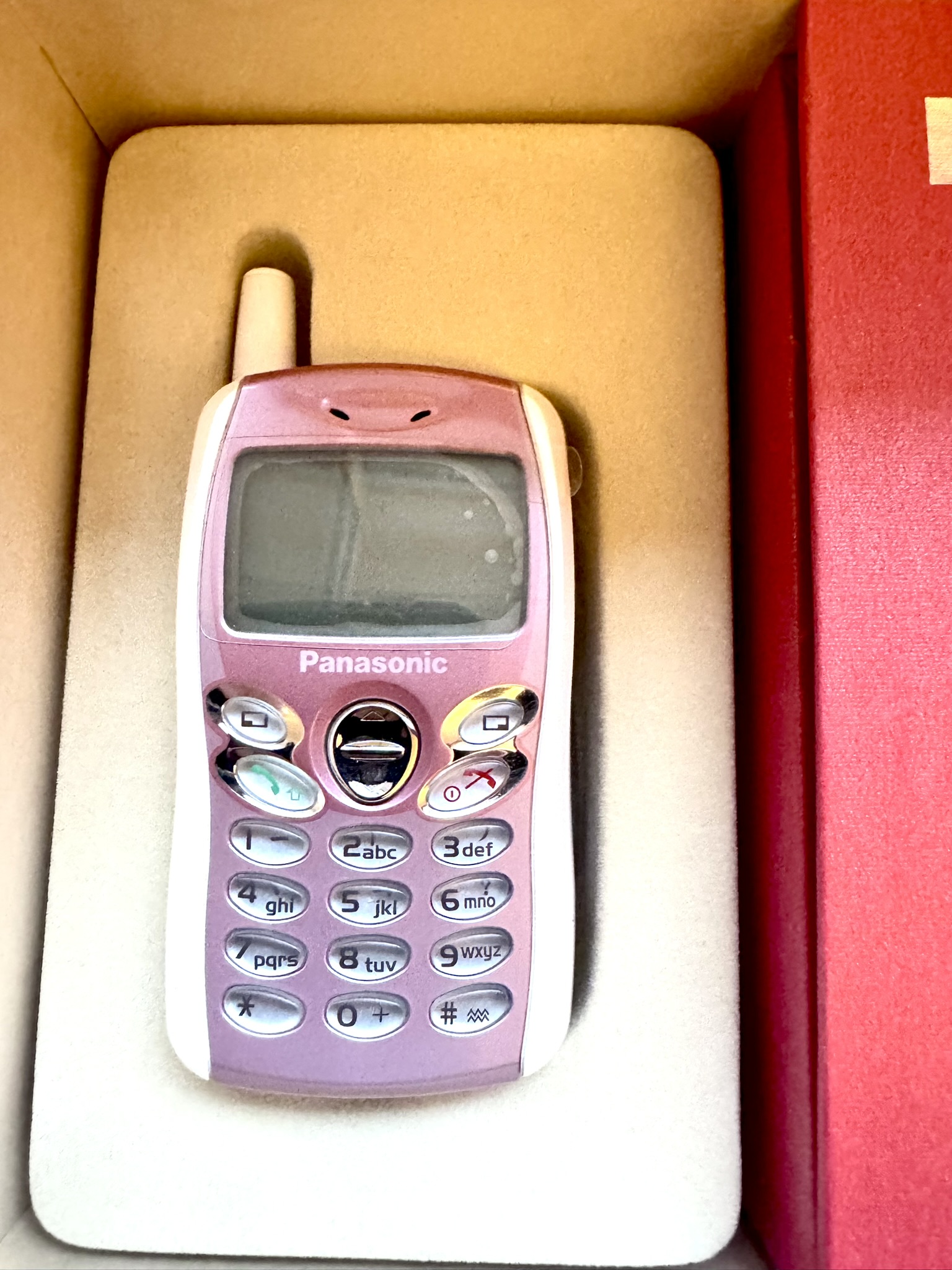
Panasonic EB-GD55: Full-Box Pink Edition (Ultra-Compact GSM Classic)
Quick View💎 Rarity Index: A (Rare)
⭐ WOW Factor: At just 31 mm wide, the GD55 was microscopic compared to Nokia and Ericsson competitors.It became a design icon instantly.
It became a design icon instantly.👁 Evaluation in my collection: BNIB – 10/10
⏱ Life timer: 0 | 📦 Boxed: YES
📅 Release Year: 2002 | 💰 Release Price: ~200 €
📊 Units Sold: ~3M
📰 Why this phone matters: A beautifully preserved Panasonic EB-GD55 in the rare pink colour variant, complete with full original box and accessories. The GD55 is one of the most recognizable ultra-compact GSM phones of the early 2000s – famous for its tiny footprint, stylish design, and Panasonic’s unmistakable minimalist UI.Released at a time when manufacturers competed to build the smallest possible mobile phone, the GD55 became iconic for its micro-sized form factor, ultra-light weight, and playful colour themes. Your pink variant is especially desirable, as many were heavily used and few survived in pristine, boxed condition.
This unit’s clean internal label, intact antenna, crisp keypad, and fully functional electronics make it a high-grade collector’s example of Panasonic’s most charming compact GSM handset.
📝 Reviews when released: N/A 💔
-


Panasonic G51
Quick View💎 Rarity Index: B (Uncommon)
👁 Evaluation in my collection: Great – 9/10
⏱ Life timer: N/A | 📦 Boxed: NO
📅 Release Year: 2003 | 💰 Release Price: N/A
📊 Units Sold: ~500k
📰 Why this phone matters: N/A📝 Reviews when released: N/A 💔
-


Philips Xenium 9@9
Quick View💎 Rarity Index: A (Rare)
👁 Evaluation in my collection: Great – 9/10
⏱ Life timer: N/A | 📦 Boxed: YES
📅 Release Year: 2000 | 💰 Release Price: N/A
📊 Units Sold: ~400k
📰 Why this phone matters: Premium by Philips and Internet back in 2000📝 Reviews when released: N/A 💔
-

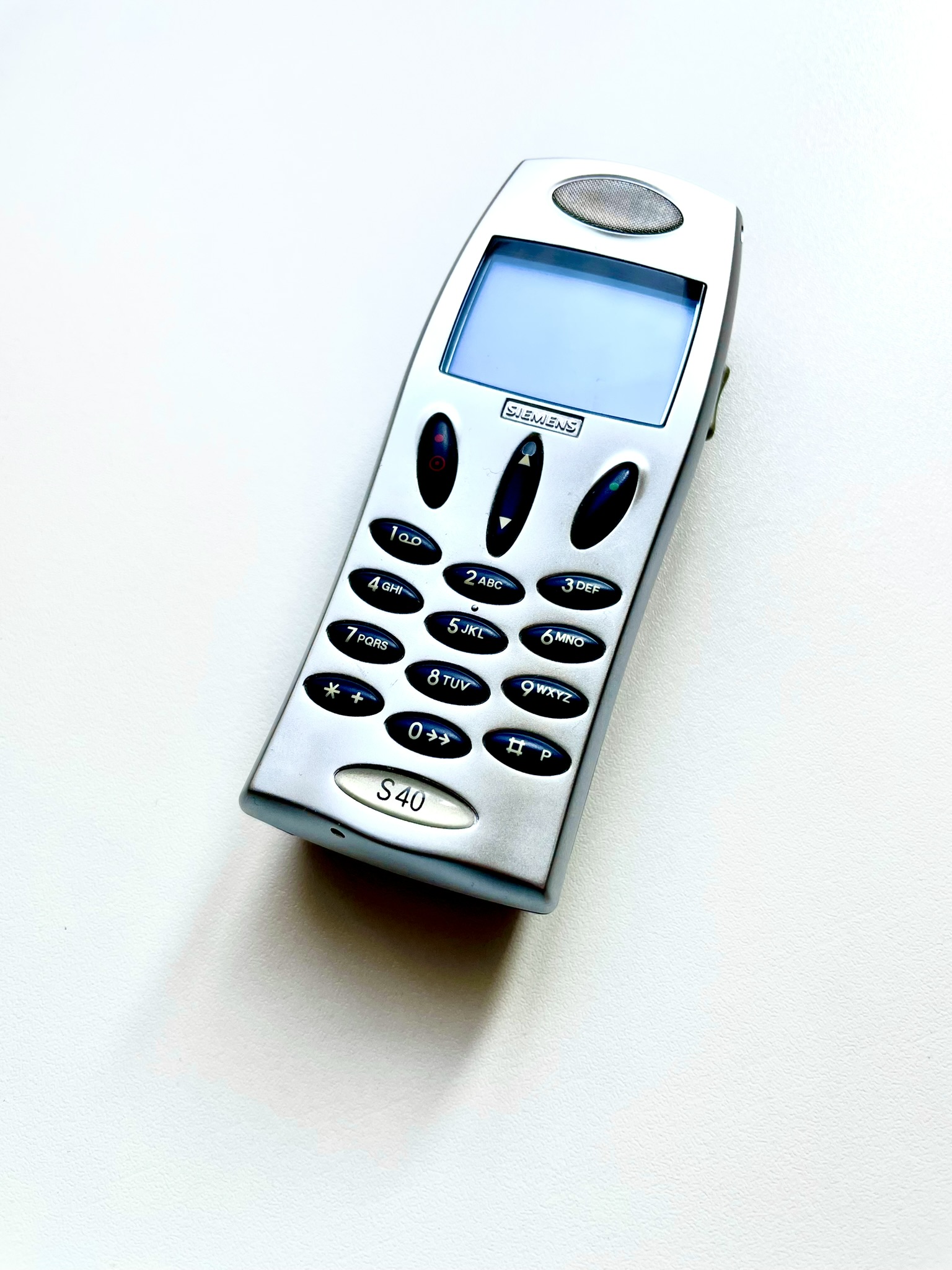
Siemens S40
Quick View💎 Rarity Index: B (Uncommon)
⭐ WOW Factor: Made it in top 10 in the lowest radiation phone
👁 Evaluation in my collection: Great – 9.0/10
⏱ Life timer: 20h | 📦 Boxed: YES
📅 Release Year: 2001 | 💰 Release Price: N/A
📊 Units Sold: ~400k
📰 Why this phone matters: The Siemens S40 is a mobile phone. Originally developed as the Bosch 1886 in 2000, the phone was branded as the Siemens S40 after Siemens acquired the Bosch mobile phone division. The Siemens S40 is a tri-band mobile phone that operates on the GSM-900, GSM-1800, and GSM-1900 networks. Communication with a computer can be done either through the infrared port (IrDA) on the phone or a USB or serial port data cable. Its more distinctive features include the voice memo recorder, the mute feature for conversations, the ability to record phone conversations, and the ringtone composer (a useful alternative for those unsatisfied with the 47 monophonic ringtones).In 2005, the phone made it onto CNET’s list of ten lowest-radiation cell phones, at #10, with a SAR (specific absorption rate) of 0.33.
The phone also supports WAP 1.1, SMS, HSCSD, and T9 predictive text input.
The S40 includes a 104×64 pixel monochrome liquid-crystal display with a blue backlight, an internal antenna, and rubbery buttons to prevent accidental dialing.
📝 Reviews when released: N/A 💔
-


Sony Ericsson T68i
Quick View💎 Rarity Index: C (Common)
⭐ WOW Factor: The first Ericsson phone with a colour display
👁 Evaluation in my collection: Great – 9.8/10
⏱ Life timer: N/A | 📦 Boxed: NO
📅 Release Year: 2001 | 💰 Release Price: ~500 €
📊 Units Sold: ~8M
📰 Why this phone matters: The Ericsson T68m (often called simply T68) was a candy-bar style mobile phone by Ericsson Mobile Communications. Launched in time for the 2001 Christmas season, the T68 was the first Ericsson mobile phone to have a colour screen, a passive LCD-STN with a resolution of 101×80 and 256 colours. Despite its diminute size (3.94×1.89×0.79 in or 100x48x20 mm, 2.96 oz or 84 g), it was one of the most feature-rich mobile phones at the time, with Bluetooth, IrDA port, GPRS 3+1, tri-band compatibility (900 MHz, 1800 MHz and 1900 MHz), SMS with T9 (predictive text), EMS, WAP, and customizable monophonic ring tones. A simple bitmap image editor was provided, allowing the creation of monochrome pictures by guiding a cursor around the canvas and setting or unsetting individual pixels (several ‘brush’ sizes were selectable to make this easier). These images could be set as the phone’s background image in standby mode, and sent to owners of EMS-compliant phones. With EMS soon to be succeeded by the superior MMS, few owners made much use of this feature. At its release, the phone cost around &eur;o; 500, £299 in the UK, in either two-tone grey or all-gold.📝 Reviews when released: Mobile Review 🔗