

">

Showing 1–12 of 106 results
-


B&O 9500
Quick View💎 Rarity Index: S (Ultra Rare)
👁 Evaluation in my collection: Very Good – 9/10
⏱ Life timer: N/A | 📦 Boxed: NO
📅 Release Year: 1994 | 💰 Release Price: N/A
📊 Units Sold: ~20k
📰 Why this phone matters: One of B&O’s first mobile telephones was created in partnership with Ericsson. The basic design was Ericsson’s while B&O contributed its expertise within sound reproduction. Technically identical to Ericsson’s own model, the B&O version had its own special design feature in the shape of its inclining buttons.” Always there for you but never a burden – BeoCom 9500. Because of its extremely small size and low weight, you could easily forget that you were carrying around an extremely powerful communication tool in your pocket. The pressure chamber loudspeaker gave an extremely clean sound when you received calls.”
Designed for GSM systems the BeoCom 9500 had a pressure chamber loudspeaker; display, including status indication, a high number of numbers in memory dependant on the SIM card, redial function, volume control, microphone mute, adjustable tone ringer, keypad lock, phone lock, intelligent security lock, battery low warning, SMS, call hold/wait function, CLI (Caller Line Identification), call forwarding and DTMF tones.
Batteries: Standard battery giving 100 minutes talk time or 20 hours stand-by. Plus battery giving 180 minutes talk time or 30 hours stand-by. Light battery giving 80minutes talk time or 15 hours stand-by. Charging time: 1 – 2 hours depending on battery types
📝 Reviews when released: BeoWorld 🔗
-


B&O 9600
Quick View💎 Rarity Index: S (Ultra Rare)
👁 Evaluation in my collection: Very Good – 9/10
⏱ Life timer: N/A | 📦 Boxed: NO
📅 Release Year: 1996 | 💰 Release Price: N/A
📊 Units Sold: ~15k
📰 Why this phone matters: Telephones are for speaking into and for listening to, but why stop at that? When Bang & Olufsen developed their own, they were built on the accumulated knowledge of natural sound, the durability of materials and of logical operation and function.BeoCom 9600 was a GSM mobile phone in a class of its own as far as materials, manufacture and function were concerned. In spite of its unassuming appearance, it gave the user a loud and clear connection, even in noisy environments and with a card for fax and PC, it gave total mobility.
📝 Reviews when released: BeoWorld 🔗
-


B&O 9800
Quick View💎 Rarity Index: S (Ultra Rare)
👁 Evaluation in my collection: Good – 8/10
⏱ Life timer: N/A | 📦 Boxed: NO
📅 Release Year: 1999 | 💰 Release Price: N/A
📊 Units Sold: ~10k
📰 Why this phone matters: Battery chargers for mobile phones are not the most exciting objects in the world, but Bang & Olufsen have a continual habit of making a virtue out of what others see as ordinary. By combining the battery charger with a specially designed holder, BeoCom 9800 suddenly became a mobile phone that users really wanted others to see!Weighing less than 100 grams and able to fit snugly in a pocket, the BeoCom 9800 mobile phone was one of the world’s smallest cellular phones when it was introduced, with an equally impressive list of features. Tell it the name of the person you wish to telephone and BeoCom 9800 dialled it. The inclusive BeoCharger combined holder and battery charger in an attractive package.
Features:
Caller ID; Call Forward; SMS; Voice Dial; Call Duration; Call Hold; redial function for last 10 numbers; 90 minutes’ battery talk time with 100 hours standby; graphic display; keypad lock; clock; data/fax connection; 100g with standard batteryAccessories:
BeoCharger; extra battery; hands-free car kit📝 Reviews when released: BeoWorld 🔗
-


Ericsson GH 174
Quick View💎 Rarity Index: A (Rare)
👁 Evaluation in my collection: Very Good – 8.5/10
🕵 Ericsson Codename: Curt
⏱ Life timer: N/A | 📦 Boxed: YES
📅 Release Year: 1992 | 💰 Release Price: ~300 €
📊 Units Sold: ~500k
📰 Why this phone matters: Ericsson’s new GSM digital pocket telephone, the GH172, has now received the ITA (Interim Type Approval) certificate from German authorities. The GH172 has passed all segments of the required testing, and was approved for the digital telephone standard in eur;ope, GSM. Deliveries of the product will begin in Germany in November, 1992. Ericsson’s first GSM phone was a re-engineered version of the similar looking, NH72. N refers to NMT, the old Nordic analogue network, G to GSM and H stands for hand portable/handset. The NH72 was developed from a larger brown and orange creation, Ericsson’s first hand portable, the HotLine Pocket. Nils Rylands, Head of Research at the Ericsson Mobile Telephone Laboratory and his team took a police radio and turned it into a mobile phone. The codename for this project was ‘Curt’. ‘Curt’ broke a long running Ericsson tradition.Up until then, all Ericsson mobile phone research projects had been given female names. The female naming returned for the GH172/NH72, which was called ‘Olivia’. The successor, a slightly updated version GH174, made in white buttons.
📝 Reviews when released: Ericssoners 🔗
-


Ericsson R250s PRO
Quick View💎 Rarity Index: A (Rare)
👁 Evaluation in my collection: Great – 9/10
⏱ Life timer: N/A | 📦 Boxed: NO
📅 Release Year: 2000 | 💰 Release Price: ~300 €
📊 Units Sold: ~400k
📰 Why this phone matters: The R250 PRO dual band phone is also the first mobile phone to support both GSM phase 2+ technology and the GSM Pro system, which will give the users a unique opportunity to combine the advantages of GSM phones with Private Mobile Radio (PMR) functionality. The support of GSM Pro will give the user a unique opportunity to subscribe to features that, so far, have been the privilege of Private Mobile Radio (PMR) users. With the special GSM Pro SIM card, it is possible to use just one number to initiate group calls with up to 16 members.📝 Reviews when released: Ericssoners 🔗
-


Ericsson T28s
Quick View💎 Rarity Index: B (Uncommon)
⭐ WOW Factor: The lightest handset on the market in 1999
👁 Evaluation in my collection: Great – 9.8/10
⏱ Life timer: N/A | 📦 Boxed: NO
📅 Release Year: 1999 | 💰 Release Price: N/A
📊 Units Sold: ~2.5M
📰 Why this phone matters: The T28 was the lightest and slimmest mobile phone at the time, with a weight of only 83 grams.Unlike many mobile phones of the time (1999-2001) it had a fixed, stubby external antenna. It was probably best known as the first phone that used lithium polymer batteries. At one point, it was the best selling mobile phone in America.
In terms of market positioning, Ericsson designated this as a premium phone, as such it was priced substantially higher (often more than triple) the price of the T10 and T18 devices – their nearest cosmetic and functional competitors. It has a tiny LCD screen and an spring-loaded latch mechanism to release the ‘flip.’
Models
Four different versions of the T28 were sold. T28z was compatible with GSM1900 for use in North America. T28s was compatible with GSM900/1800 for use in the rest of the world – this is by far the most common version. T28 World was compatible with GSM900/1900 for use worldwide on GSM900 and North America on GSM1900 (this was the second World phone Ericsson introduced, the first being the I888 which had the distinction of being the first commercially available GSM900/1900 phone). A special version, the T28sc was released in China with support for reading and entering Chinese characters.The device came in three colours-very dark blue, lighter blue and sand. The sand version being the least common.
The device was listed as compatible with two batteries. A normal slim-line and an ultra-slim lower capacity battery. However the device was also battery-compatible with the later R320 and R520 series.
📝 Reviews when released: Profit Warning 🔗
-


Ericsson T68m Champagne Gold: Early R2A Retail Unit
Quick View💎 Rarity Index: A (Rare)
⭐ WOW Factor: A compact flagship that fit Bluetooth, GPRS and a color screen into a sub-90 g body – the T68m remains a milestone piece of mobile history.
👁 Evaluation in my collection: As New – 9.8/10
⏱ Life timer: N/A | 📦 Boxed: YES
📅 Release Year: 2002 | 💰 Release Price: 650 €
📊 Units Sold: ~20k
📰 Why this phone matters: The Ericsson T68m stands as one of the defining milestones in mobile phone evolution and marks the moment when Ericsson transitioned from monochrome business devices into the era of compact multimedia handsets. Released in late 2001, it became Ericsson’s first color-screen phone, its first handset with integrated Bluetooth, and one of the smallest tri-band GSM devices ever produced at the time. The T68m concentrated cutting-edge features into an ultra-light 84 g body that set a new benchmark for compact flagship design.This particular unit is BNIB, a condition that is exceptionally rare due to the device’s age and the rapid corporate shift that followed its release. Very few untouched T68m boxes survived the transition from Ericsson to Sony Ericsson, as most retail stock was either sold through, upgraded, or rebranded into the T68i. BNIB units in the Champagne Gold finish are among the hardest to find, as this color variant was produced in notably smaller quantities. The preserved packaging, accessories, and original presentation elevate this device to a high collector tier, representing one of the best surviving examples of the model.
Technologically, the T68m was far ahead of its time. Its TFT 256-color display, GPRS Class 4 capability, EMS messaging, Bluetooth 1.0 module, IrDA port, and PC synchronization suite delivered features that were typically found only on much larger communicator-style devices. Reviewers in 2001 and 2002 described it as a “miniature business powerhouse,” praising its ability to merge advanced connectivity, a color user interface, and long battery life into a form factor that was dramatically smaller than its competitors. The joystick-based navigation and icon-driven color UI would later become the visual foundation for many Sony Ericsson models.
Historically, the T68m is also important because it represents the last flagship to carry the pure Ericsson branding. At the time of its release, Ericsson’s mobile division was undergoing a major financial and strategic shift. The joint venture with Sony was announced soon after, and the T68m became the bridge into the Sony Ericsson era. Within months, the T68m hardware was used as the base for the T68i, with updated casing, enhanced firmware, and Sony Ericsson branding. This conversion became so common that finding a true, untouched T68m is increasingly uncommon. A BNIB Champagne Gold example, therefore, holds exceptional preservation value.
Production data and period market analysis suggest that Champagne Gold units were produced in far smaller numbers than the standard grey and blue variants, making them significantly rarer in today’s collector market. The rapid discontinuation of T68m production due to the Sony Ericsson transition also reduced the number of sealed retail units available. Most T68m devices were heavily used, experienced joystick wear, or were converted to T68i firmware at service centers. As a result, BNIB condition elevates this particular unit into an elite tier of early-2000s GSM collectibles.
This T68m encapsulates the moment when the mobile industry transitioned from monochrome candybars to feature-rich multimedia phones. It demonstrates Ericsson’s technical ambitions at a time when the company was still shaping the direction of global GSM development. With its original firmware, rare Champagne Gold housing, compact footprint, color UI, Bluetooth, IrDA, GPRS support, and untouched BNIB condition, this unit is a top-tier collector artifact. It stands not only as a premium representation of Ericsson’s final standalone flagship, but also as one of the earliest true precursors to modern smartphones.
📝 Reviews when released: The Vooner 🔗
-


John’s 1 snow
Quick View💎 Rarity Index: S (Ultra Rare)
⭐ WOW Factor: The first world simplest mobile phone
👁 Evaluation in my collection: Good – 8.5/10
⏱ Life timer: N/A | 📦 Boxed: YES
📅 Release Year: 2010 | 💰 Release Price: ~80 €
📊 Units Sold: ~10k
📰 Why this phone matters: John’s Phone is a mobile phone that is made in the Netherlands and sold by John’s (Phone From The Supermarket BV). It claims to be the world’s most basic cell phone, allowing the user only to make and receive calls, with none of the features of modern smartphones such as a camera, Internet access and text messaging; the address book is a paper pad and a pen, built into the back of the device. It is built around the Keep It Simple concept.It was designed and developed by Hein Mevissen and Diederiekje Bok of Dutch advertising and design agency John Doe Amsterdam.It is marketed as being ideal for children, the elderly, and technophobes.📝 Reviews when released: Engadget 🔗
-


LG F3000
Quick View💎 Rarity Index: B (Uncommon)
👁 Evaluation in my collection: Very Good – 9/10
⏱ Life timer: N/A | 📦 Boxed: YES
📅 Release Year: 2005 | 💰 Release Price: N/A
📊 Units Sold: ~400k
📰 Why this phone matters: The LG F3000 is a vaguely Porsche-looking cameraphone that not only emits some engine revs every time you flip it open, it actually honks at you when you receive a text message.📝 Reviews when released: Engadget 🔗
-


LG T Phone LD 1200
Quick View💎 Rarity Index: A (Rare)
👁 Evaluation in my collection: As New – 9.7/10
⏱ Life timer: N/A | 📦 Boxed: YES
📅 Release Year: 2006 | 💰 Release Price: N/A
📊 Units Sold: ~250k
📰 Why this phone matters: LG Electronics has just launched in Korea its new DMB-compatible mobile phone, the LG-LD1200, which has a 2.2 ” rotating screen with QVGA resolution, 256MB of internal memory, TransFlash slot, all in 103x50x23.5mm.📝 Reviews when released: Phone Dog 🔗
-


Mitsubishi Trium Galaxy Wind
Quick View💎 Rarity Index: B (Uncommon)
👁 Evaluation in my collection: As New – 10/10
⏱ Life timer: N/A | 📦 Boxed: NO
📅 Release Year: 1999 | 💰 Release Price: ~100 $
📊 Units Sold: ~150k
📰 Why this phone matters: N/A📝 Reviews when released: N/A 💔
-

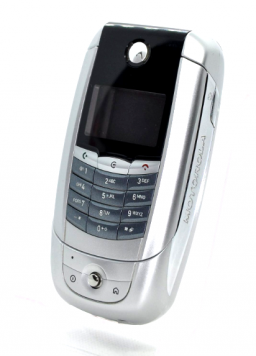
Motorola A780
Quick View💎 Rarity Index: A (Rare)
⭐ WOW Factor: The first Motorola with Linux Operating System
👁 Evaluation in my collection: Great – 9/10
⏱ Life timer: N/A | 📦 Boxed: NO
📅 Release Year: 2003 | 💰 Release Price: ~250 €
📊 Units Sold: ~500k
📰 Why this phone matters: The Motorola A780 is a cellular PDA running the Linux operating system.
It was introduced in 2003 and sold in eur;ope and Asia.Some models include GPS and navigation software. The phone is supplied with a number of applications including a POP and IMAP email client, Opera web browser, calendar and a viewer for PDF and Microsoft Office files. Calendar and address book can be synchronized with a Microsoft Exchange or SyncML server. The phone has a 1.3 megapixel camera recording still and video images. RealPlayer is included to play sound audio files and streamed audio and video. The phone has 48 megabytes of internal flash memory for storing user data and a slot for a microSD card. Both Bluetooth and USB are provided for communication with another computer. Character entry is via an on-screen QWERTY keyboard and hand writing recognition. Models including a GPS receiver are supplied with ALK Technologies’ CoPilot Live navigation software with street level maps of eur;ope.📝 Reviews when released: OS News 🔗