Showing all 12 results
-
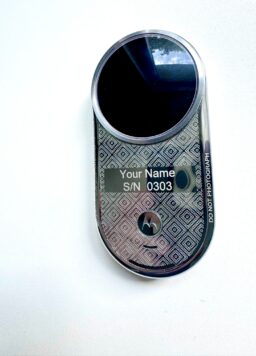
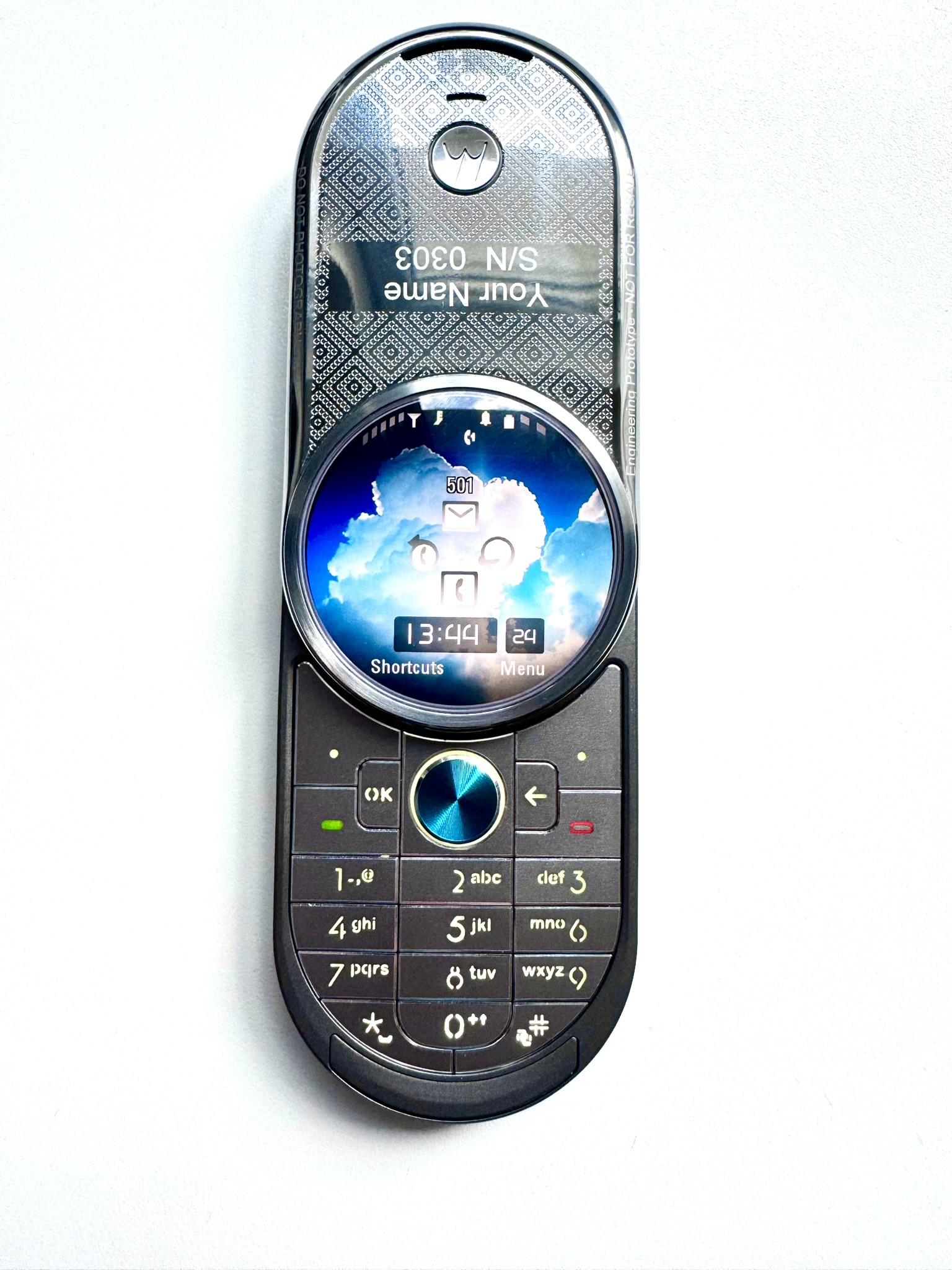
Motorola Aura R1 Unreleased Prototype : Engineering Design S/N 0303
Quick ViewA masterpiece from Motorola’s most ambitious luxury project, this is an extremely early pre-production Aura prototype, created before the final 2008 model and never meant to leave the design labs. It carries full engineering markings – “Prototype – Not For Resale”, “Do Not Photograph”, and a personalized engineer-assigned S/N (0303) – making it a true artifact of Motorola’s internal design history.
Unlike the retail Aura, this prototype features a unique diamond-etched metal housing, a larger mechanical gear window, unreleased keypad styling, and early internal board architecture. It represents the original mechanical vision for the Aura’s iconic rotating display mechanism – built more like a Swiss watch movement than a phone.
Surviving prototypes of the Aura are almost mythical. One with unreleased design, internal engraving, and full confidentiality markings is beyond rare – a museum-level piece and a highlight for any high-end mobile collection.
-
Nokia 3128 Prototype F5.0 : Codename Kirin| Unreleased Colour (Orange)
Quick ViewA remarkably rare piece of Nokia’s China-market CDMA history, the Nokia 3128 (Type RH-72) stands apart from the brand’s mainstream lineup. Developed during Nokia’s short-lived collaboration with BenQ/Qisda for ODM CDMA devices, the 3128 blends Nokia’s software customisation with a hardware platform originating from BenQ’s Kirin F5.0 design family – a handset architecture that BenQ itself never released commercially.
This prototype unit, finished in an unreleased Orange colourway, represents a pre-production stage never intended for the public market. The colour scheme follows BenQ’s design language rather than Nokia’s, making it instantly identifiable among collectors familiar with early-2000s ODM manufacturing. Hardware elements – including the casing geometry, battery interface and Qualcomm-based CDMA internals – further underline its BenQ lineage while still carrying official Nokia branding, labels and firmware.
The device offered compact CDMA 1X connectivity, a lightweight clamshell form factor and the simplified user interface typical of Nokia’s China-exclusive CDMA portfolio of the era.
This example is preserved brand new, never used in the collection – a highly desirable state for a model whose production numbers were already extremely small.
A rare convergence of two major manufacturers’ design philosophies, the Nokia 3128 prototype in Orange stands as one of the most distinctive and least-known ODM Nokia variants ever created.
-
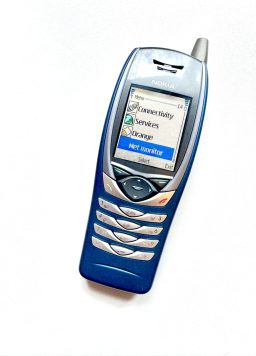
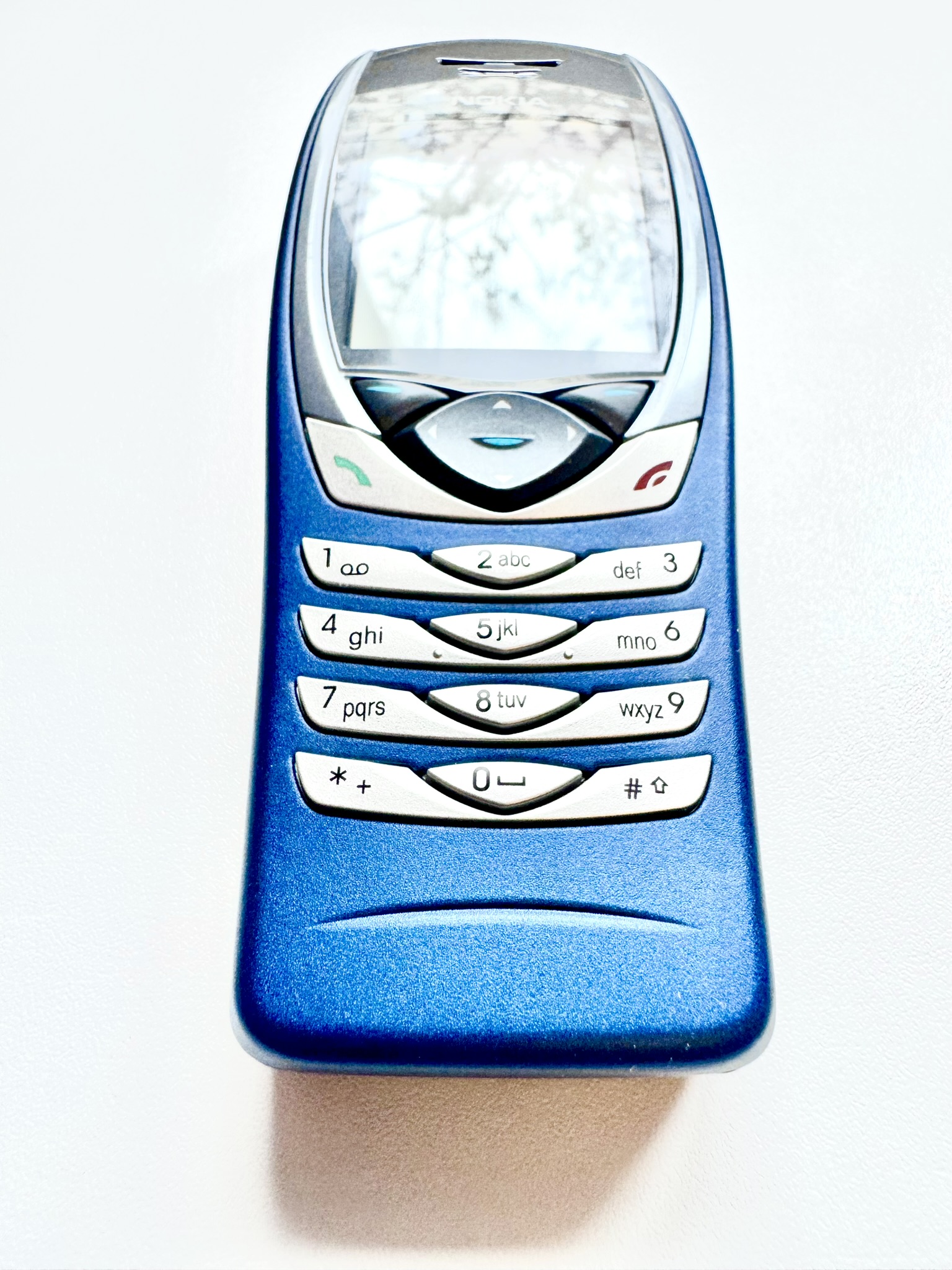
Nokia 6650 Prototype B1 6.2 : The lost first Nokia’s 3G Phone | Unreleased Black and Blue Colour
Quick ViewThe Nokia 6650 Prototype B1 6.2 represents one of the most important and fragile transition moments in Nokia history. This device is not just an early unit, but a full internal engineering prototype that captures the very first attempt to bring 3G technology into a classic Nokia candybar form factor.
An engineering device, not a consumer phone
The rear label clearly identifies this unit as Nokia internal property, explicitly marked PROTO and Made in Finland. The device uses a placeholder model designation XXXX, a standard practice for Nokia engineering hardware that was never approved for commercial sale. Hardware identifiers such as B1.6.2 and HWID 4122 place this unit deep inside Nokia internal testing cycles, well before mass production validation.
These labels were never meant to survive outside Nokia labs. Their presence confirms this phone was used strictly for internal testing, radio validation, and early software integration rather than marketing or carrier trials.
The unreleased early design language
This prototype showcases design elements that never reached the market. The blue front cover was never commercially released, while the black rear housing with its distinctive camera ornament remains completely unique to early prototype builds. When the Nokia 6650 eventually launched, it appeared only in a dark green colorway for both front and back, making this blue and black combination a lost design direction.
The body shape, materials, and external antenna confirm this device as the final Nokia candybar with an external antenna, closing an entire design era.
Early software and version identity
The software screen reveals version Vp1.301 dated 30-09-02, running on platform NHM-1 with PRI P1.1. This places the firmware only days after the official unveiling of the Nokia 6650 on 26 September 2002. The Vp prefix identifies a prototype firmware branch, used internally before public release software was finalized.
This version is not a commercial build and was never distributed outside Nokia engineering teams. It represents an unstable development snapshot used for functional validation rather than end user experience.
The startup warning and the two minute limitation
On boot, the phone displays a rare internal warning message stating that this is a Nokia prototype intended only for testing use, and that the software must be updated by the end of November 2002. This message is exceptionally rare and confirms the temporary nature of the firmware installed on the device.
Additionally, this prototype is restricted to a two minute operational window, a known internal safeguard used by Nokia to prevent prolonged use of unfinished hardware outside controlled environments. This limitation reinforces the fact that this unit was never meant to operate as a normal phone.
Why it truly matters
This prototype is the missing link between Nokias 2G legacy and its first step into the 3G world. It captures an unreleased design, unfinished software, and internal safeguards that almost never survive. More than a phone, it is a frozen engineering moment, documenting how Nokia experimented, tested, and iterated before rewriting its own future.
-


Nokia 7500 Prism Prototype B3.0: Engineering Sample | Unreleased Gray Colour
Quick ViewNokia 7500b Prism – RM-250 PROTOTYPE (Codename: SCORPION) – a genuine engineering sample from Nokia’s internal development program. Features prototype IMEI (004401?), HWID exposure, pre-final RF labeling, and early R&D markings. This unit also includes a rare, unreleased graphite/metallic grey prototype housing used only on SCORPION pre-production builds before final Prism colours were approved. A highly valuable and historically significant prototype from the Prism design era
-


Nokia 7500 Prism Swarovski : Never Sold
Quick ViewNokia 7500 Prism (RM-249, codename SCORPION) – a rare China event-edition custom unit created for Nokia’s Our Internet Life 2008 exhibitions. Built on a genuine Made-in-Finland 7500 Prism mainboard (product code 0544425), this piece features the unique crystal-studded front and back housings used in Nokia’s fashion and design showcases in Beijing and Shanghai. The diamond-grid pattern was hand-decorated specifically for promotional display and was never released as a commercial product. With its authentic hardware, precise crystal layout, and event-only aesthetic, this is one of the rarest and most visually distinctive variations of the SCORPION Prism family.
-
Nokia 7710 Prototype F4.0: Future ahead of its Time | Unreleased Black Keypad
Quick ViewA rare and impeccably preserved Nokia 7710 RM-12 F4.0 prototype, belonging to the final stage of Nokia’s pre-production cycle for the iconic Series 90 touchscreen smartphone. This F4.0 unit – clearly marked PROTO and Property of Nokia – originates from Nokia’s internal validation program, used during the last wave of field testing, UI refinement and RF certification before the public release in 2005.
Unlike retail units, this prototype features an unreleased keypad colour variant, with silver-toned navigation and side-control keys replacing the standard glossy black retail trim. This experimental colourway never reached commercial production, making this device a standout among surviving prototypes. The front bezel also shows the slightly grainier, matte finish characteristic of late hardware trials inside Nokia’s labs.
As with all authentic high-grade prototypes, the label carries the signature “Model: XXXX” placeholder, missing consumer certifications, serial markings and final manufacturing codes. These elements confirm it as a genuine internal unit, built in Finland during the last engineering revision of the platform.
The Nokia 7710 was Nokia’s most ambitious early touchscreen smartphone – a widescreen 640×320 device running the innovative Series 90 interface on Symbian OS. The prototype here predates the public release, offering collectors a rare glimpse into Nokia’s transition from experimental UI concepts to finalized commercial design.
This F4.0 RM-12 prototype is an exceptional find: a fully authentic late-stage engineering device with a unique, unreleased keypad trim, placing it among the rarest surviving 7710 variants and a valuable centrepiece for any advanced vintage Nokia collection.
-
Nokia E61 Prototype B3.0 : The “Smailer” | Unreleased Rare Black and Silver colour
Quick ViewThis unit is a remarkable historic artefact: a prototype Smailer RM-89 hardware build of the Nokia E61, finished in an unreleased two-tone silver and black housing that never reached consumer production. The color layout is unlike any retail E61, combining a silver frame with a black upper section and a unique keypad palette that does not exist on final units. The keypad itself uses a mixed color scheme reminiscent of the later E62 look, but with a configuration that was never approved for market release.
Inside the casing you find the clearest testimony to its origin: model field XXXX, prototype build B3, product code 0523307, internal R&D IMEI beginning with 004400, and full Property Of Nokia, Not For Sale, Made In Finland labeling. This confirms the phone as an authentic preproduction engineering unit created during early development cycles before cosmetic design and final materials were locked down.
Externally the device presents the full QWERTY keyboard layout, 5-way joystick and wide landscape display that defined the E61 family. Yet this prototype stands apart because of its unreleased finish: a rare two-tone silver and black shell matched with a hybrid keypad coloring that blurs the line between E61 and E62 aesthetics. The magnesium-alloy structure and rugged business-class construction already appear in place, but the cosmetics clearly represent a transitional stage in Nokia’s decision process.
Although this prototype may never have carried final firmware or passed network certification, its hardware is essentially complete. It captures a frozen moment when Nokia was experimenting with materials, colors and layouts for what would become one of the defining smartphones of the business-centric Eseries. For collectors and historians, this unit is far more than a phone: it is a one-off window into Nokia’s internal design evolution, a rare glimpse of what the E61 might have looked like had this striking silver-and-black, E62-influenced combination reached the market.
-
Nokia N71 Prototype F5.0 | Unreleased white and purple colour
Quick ViewThe Nokia N71 is a smartphone announced by Nokia on November 2, 2005 and released in June 2006. It was Nokia’s joint-first clamshell smartphone, like the N92 announced on the same day. The N71 runs on Symbian OS v9.1 (S60 3rd Edition).
-
Nokia N91 8GB Prototype B4.0: Made in USA | Unreleased white white Camera Cover and silver keypad
Quick ViewNokia N91 8GB – RM-43 – Prototype B4.0 – Made in USA – Unique White Camera Cover
This is a highly significant Nokia N91 8GB engineering prototype, built during Nokia’s internal development cycle and never intended for commercial release. The label identifies it as PROTO B4.0, a late-stage pre-production unit, but the hardware reveals something even more remarkable: a white camera cover, a part that was never used in production N91 or N91 8GB units.
All retail models featured a dark grey/black camera bezel, but this prototype houses a white pre-final CMF component – a rare internal test part used before Nokia approved the final color and material selection. Early tooling marks, alternate finishing, and non-standard coloration make this one of the only known N91 prototypes with this configuration.
Unlike mass-produced units manufactured in Finland or Germany, this device also carries the exceptionally rare “Made in USA” marking, confirming its role as a high-level engineering sample assembled for internal testing and hardware validation. The model field reads “XXXX”, and multiple internal codes differ from final production, reinforcing its early-preproduction status.
As the world’s first smartphone with an integrated 8GB micro-hard-drive, the N91 was born from bold experimentation – and this prototype embodies exactly that phase of innovation. With its unique white camera cover, U.S.-assembled chassis, RM-43 pre-production hardware, and B4.0 revision status, this unit stands as a near-one-of-a-kind artifact from Nokia’s golden age.
-
Nokia N92 Prototype B4.0 | Unreleased 101 RM
Quick ViewNokia N92 RM-101 B4.0 Prototype – The Missing Camera Mystery
This RM-101 Nokia N92 prototype is a remarkable survivor from Nokia’s golden era of experimental engineering – a time when the company was pushing the boundaries of what a mobile device could be. Built in Finland as a B4.0 engineering sample, it predates the commercial N92 and represents a fascinating pre-production hardware configuration that differs from the familiar retail device.
Marked with “Prototype – Property of Nokia” and carrying the internal “Model: XXXX” placeholder, this unit preserves evidence of a development phase in which Nokia was refining the revolutionary technologies that would eventually define the N92, including DVB-H mobile television, its distinctive dual-axis swivel display and an ambitious multimedia platform.
One of the most intriguing differences is the complete absence of the front-facing camera, a feature present on the commercial Nokia N92. Rather than simply being a cosmetic variation, this represents a significant hardware distinction between the RM-101 prototype and the final production design. Interestingly, other documented RM-101 specimens also appear to lack the front-facing camera, suggesting that this may have been a characteristic of this particular development branch rather than an isolated feature of this unit.
The RM-101 designation itself adds another layer of significance. Unlike the commercially released N92 configurations, this prototype belongs to an earlier hardware development path, offering a rare opportunity to observe how Nokia experimented with different component arrangements and hardware capabilities before settling on the final product.
There is something particularly fascinating about the combination of its unfinished model identification, original engineering labels, Made-in-Finland construction and missing front-facing camera. Together, these details make the device much more than a conventional pre-production handset. They preserve visible traces of Nokia’s engineering decisions and the evolutionary steps behind one of its most technically ambitious mobile phones.
For serious Nokia collectors, prototypes displaying fundamental hardware differences are especially compelling. They provide physical evidence of alternative development configurations, features that were added or modified, and engineering decisions that rarely become visible outside the manufacturer’s laboratories.
Before the N92 became a mobile television with a fully developed multimedia identity, there was the RM-101. A rare surviving glimpse into the engineering process behind one of Nokia’s most extraordinary creations.
-
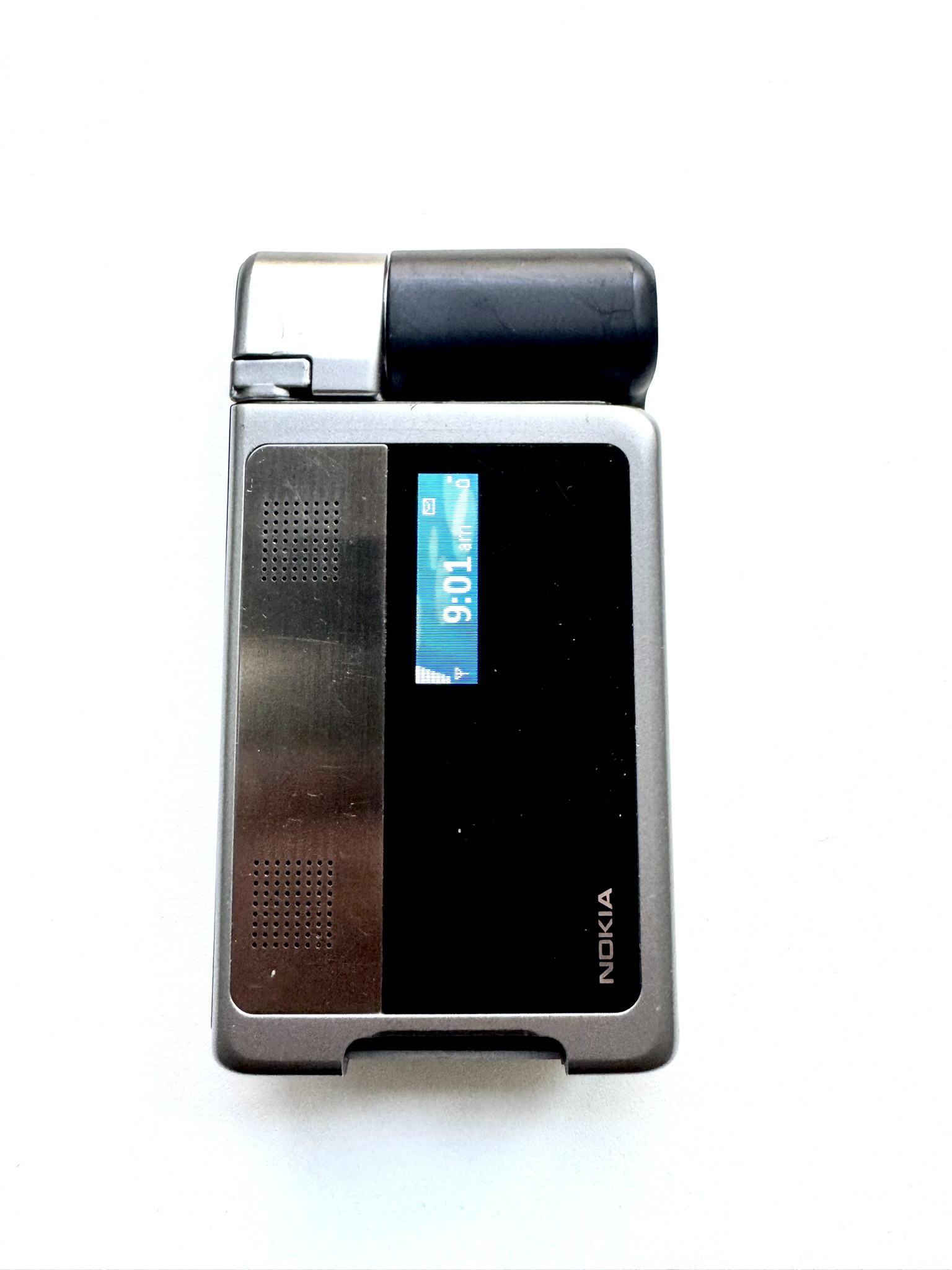
Nokia N92 Prototype S3.4 | An Unreleased Black & Grey Design
Quick ViewNokia N92 S3.4 Prototype – The Elusive Black & Grey Variant
In 2005, Nokia was pursuing an ambitious vision: transforming the mobile phone into a portable television. The Nokia N92 became one of the most unconventional devices of the Nseries era, introducing integrated DVB-H television reception, a remarkable dual-hinge rotating display and a multimedia experience designed years before mobile video streaming became part of everyday life.
This particular unit is an exceptionally interesting S3.4 pre-production prototype, distinguished by its striking black and grey colour combination. Unlike the familiar commercial N92, this prototype presents an alternative visual identity, offering a fascinating glimpse into Nokia’s experimental design and development process.
But the differences go far beyond its unusual colour scheme. One of the most intriguing details is the noticeably larger memory card cover, a physical design variation that distinguishes this early unit from the final production model. Even more interesting is the clamshell closing mechanism, which differs from the commercial N92 when the device is folded shut. These subtle but significant differences reveal that Nokia was experimenting not only with colours and finishes, but also with the mechanical construction and physical design of the device.
The S3.4 development designation adds another layer of intrigue. This is not simply a standard N92 dressed in an unusual housing, but a pre-production specimen displaying tangible differences from the retail hardware. The combination of its distinctive finish, modified memory card cover and alternative clamshell closing arrangement makes it a particularly compelling example of Nokia’s engineering evolution.
What makes the N92 especially fascinating is the extraordinary ambition behind its design. Its rotating display could transform the device from a conventional mobile phone into a miniature widescreen television, while DVB-H technology represented Nokia’s vision of a future where television could be enjoyed almost anywhere.
For serious Nokia collectors, surviving prototypes with visible structural differences are particularly significant. They preserve evidence of design decisions, mechanical experiments and engineering refinements that may have disappeared entirely before commercial production. This black and grey S3.4 prototype offers precisely that: a rare opportunity to examine an alternative stage in the development of one of Nokia’s most unconventional devices.
More than an unusual colour variation, this is a different interpretation of the Nokia N92 itself – a remarkable survivor from a time when Nokia was still experimenting with how the future of mobile technology should look, feel and function.
-
Nokia N96 Prototype B3.0 | Unreleased N00 label
Quick ViewNokia N96 is a high-end smartphone, announced by Nokia on February 11, 2008 at the Mobile World Congress in Barcelona, part of the Nseries line.The N96 runs on the updated Symbian OS v9.3 (S60 3rd Edition, FP2). It is compatible with the N-Gage 2.0 gaming platform and also has a DVB-H television tuner. Compared to the popular Nokia N95 8GB, the N96 has a doubled flash storage capacity (16 gigabytes), dual LED flash in the camera, and has a slimmer design. However critics had negative views on the N96’s battery life and user-unfriendlyness and its downgraded CPU clock speed raised questions.It was one of 2008’s most anticipated mobile phones, but its launch was delayed and was only widely available from October 2008.It is thus considered to have been a commercial failure.Critics felt that the Nokia N85 provided more new additions compared to the N96 for much cheaper.