

">

Showing all 11 results
-


B&O 9500
Quick View💎 Rarity Index: S (Ultra Rare)
👁 Evaluation in my collection: Very Good – 9/10
⏱ Life timer: N/A | 📦 Boxed: NO
📅 Release Year: 1994 | 💰 Release Price: N/A
📊 Units Sold: ~20k
📰 Why this phone matters: One of B&O’s first mobile telephones was created in partnership with Ericsson. The basic design was Ericsson’s while B&O contributed its expertise within sound reproduction. Technically identical to Ericsson’s own model, the B&O version had its own special design feature in the shape of its inclining buttons.” Always there for you but never a burden – BeoCom 9500. Because of its extremely small size and low weight, you could easily forget that you were carrying around an extremely powerful communication tool in your pocket. The pressure chamber loudspeaker gave an extremely clean sound when you received calls.”
Designed for GSM systems the BeoCom 9500 had a pressure chamber loudspeaker; display, including status indication, a high number of numbers in memory dependant on the SIM card, redial function, volume control, microphone mute, adjustable tone ringer, keypad lock, phone lock, intelligent security lock, battery low warning, SMS, call hold/wait function, CLI (Caller Line Identification), call forwarding and DTMF tones.
Batteries: Standard battery giving 100 minutes talk time or 20 hours stand-by. Plus battery giving 180 minutes talk time or 30 hours stand-by. Light battery giving 80minutes talk time or 15 hours stand-by. Charging time: 1 – 2 hours depending on battery types
📝 Reviews when released: BeoWorld 🔗
-


B&O 9600
Quick View💎 Rarity Index: S (Ultra Rare)
👁 Evaluation in my collection: Very Good – 9/10
⏱ Life timer: N/A | 📦 Boxed: NO
📅 Release Year: 1996 | 💰 Release Price: N/A
📊 Units Sold: ~15k
📰 Why this phone matters: Telephones are for speaking into and for listening to, but why stop at that? When Bang & Olufsen developed their own, they were built on the accumulated knowledge of natural sound, the durability of materials and of logical operation and function.BeoCom 9600 was a GSM mobile phone in a class of its own as far as materials, manufacture and function were concerned. In spite of its unassuming appearance, it gave the user a loud and clear connection, even in noisy environments and with a card for fax and PC, it gave total mobility.
📝 Reviews when released: BeoWorld 🔗
-


B&O 9800
Quick View💎 Rarity Index: S (Ultra Rare)
👁 Evaluation in my collection: Good – 8/10
⏱ Life timer: N/A | 📦 Boxed: NO
📅 Release Year: 1999 | 💰 Release Price: N/A
📊 Units Sold: ~10k
📰 Why this phone matters: Battery chargers for mobile phones are not the most exciting objects in the world, but Bang & Olufsen have a continual habit of making a virtue out of what others see as ordinary. By combining the battery charger with a specially designed holder, BeoCom 9800 suddenly became a mobile phone that users really wanted others to see!Weighing less than 100 grams and able to fit snugly in a pocket, the BeoCom 9800 mobile phone was one of the world’s smallest cellular phones when it was introduced, with an equally impressive list of features. Tell it the name of the person you wish to telephone and BeoCom 9800 dialled it. The inclusive BeoCharger combined holder and battery charger in an attractive package.
Features:
Caller ID; Call Forward; SMS; Voice Dial; Call Duration; Call Hold; redial function for last 10 numbers; 90 minutes’ battery talk time with 100 hours standby; graphic display; keypad lock; clock; data/fax connection; 100g with standard batteryAccessories:
BeoCharger; extra battery; hands-free car kit📝 Reviews when released: BeoWorld 🔗
-
Ericsson Futaba | Unreleased Prototype
Quick View💎 Rarity Index: X (Mystical Prototype)
👁 Evaluation in my collection: BNIB – 10/10
⏱ Life timer: 0m | 📦 Boxed: NO
📅 Release Year: 2000 | 💰 Release Price: N/A
📊 Units Sold: 0
📰 Why this phone matters: Ericsson A2618 offers WAP and SMS technology, it becomes the fourth Ericsson mobile phone with WAP function (the other belongs to MC218, R320 and R380).Based on a new platform ‘Michelle’, it features a sensuous “S-curve” design and contains the latest developments in software and functionality.
The address book could store up to 100 telephone numbers and associated names in the phone’s memory with voice activated dialling and short cut keypad dialling for the first 9 entries. The call lists recorded the last 20 dialled, answered or missed calls.
The A2618s included time and date functions, an alarm clock, a stop watch, call timers and basic function calculator. It could also send and receive SMS text messages and allowed levels of personalisation by selecting from a range of pre-loaded ring tone melodies, by composing your own ring tone and by changing the external covers.
Three games were also provided on the phone, Tetris, Erix and E-Maze. Finally, limited Internet access was provided to mobile services using the Wireless Application Protocol (WAP) over an SMS bearer.
📝 Reviews when released: Ericssoners 🔗
-
Ericsson Futaba | Unreleased Prototype
Quick View📦 Collector-to-Collector Transaction
This item is from a private collection and sold as-is for collectors only. All devices have been verified for authenticity and condition as described, but no warranty or guarantee is provided. This is a private sale between individuals and not a commercial business transaction.
💎 Rarity Index: X (Mystical Prototype)
👁 Evaluation: BNIB – 10/10
⏱ Life timer: 0m 📦 Boxed: NO
📰 About this collectible: Ericsson A2618 offers WAP and SMS technology, it becomes the fourth Ericsson mobile phone with WAP function (the other belongs to MC218, R320 and R380).Based on a new platform ‘Michelle’, it features a sensuous “S-curve” design and contains the latest developments in software and functionality.
The address book could store up to 100 telephone numbers and associated names in the phone’s memory with voice activated dialling and short cut keypad dialling for the first 9 entries. The call lists recorded the last 20 dialled, answered or missed calls.
The A2618s included time and date functions, an alarm clock, a stop watch, call timers and basic function calculator. It could also send and receive SMS text messages and allowed levels of personalisation by selecting from a range of pre-loaded ring tone melodies, by composing your own ring tone and by changing the external covers.
Three games were also provided on the phone, Tetris, Erix and E-Maze. Finally, limited Internet access was provided to mobile services using the Wireless Application Protocol (WAP) over an SMS bearer.
✓ Verification Checklist
Authenticity & Condition:
– Originality verification (exterior, labels)
– Matching IMEI (box, label, motherboard)
– Physical condition assessment (scratches, cracks, screws)Functional Testing:
– Powers on
– Display functionality
– Camera (when applicable)
– Vibration mechanism (when applicable)
– Security code
– Charging
– Network connectivity
– Call functionality including speaker (non-BNIB units on European networks)Additional specific tests available upon request.
-
Ericsson Futaba | Unreleased Prototype
Quick View📦 Collector-to-Collector Transaction
This item is from a private collection and sold as-is for collectors only. All devices have been verified for authenticity and condition as described, but no warranty or guarantee is provided. This is a private sale between individuals and not a commercial business transaction.
💎 Rarity Index: X (Mystical Prototype)
👁 Evaluation: BNIB – 10/10
⏱ Life timer: 0m 📦 Boxed: NO
📰 About this collectible: Ericsson A2618 offers WAP and SMS technology, it becomes the fourth Ericsson mobile phone with WAP function (the other belongs to MC218, R320 and R380).Based on a new platform ‘Michelle’, it features a sensuous “S-curve” design and contains the latest developments in software and functionality.
The address book could store up to 100 telephone numbers and associated names in the phone’s memory with voice activated dialling and short cut keypad dialling for the first 9 entries. The call lists recorded the last 20 dialled, answered or missed calls.
The A2618s included time and date functions, an alarm clock, a stop watch, call timers and basic function calculator. It could also send and receive SMS text messages and allowed levels of personalisation by selecting from a range of pre-loaded ring tone melodies, by composing your own ring tone and by changing the external covers.
Three games were also provided on the phone, Tetris, Erix and E-Maze. Finally, limited Internet access was provided to mobile services using the Wireless Application Protocol (WAP) over an SMS bearer.
✓ Verification Checklist
Authenticity & Condition:
– Originality verification (exterior, labels)
– Matching IMEI (box, label, motherboard)
– Physical condition assessment (scratches, cracks, screws)Functional Testing:
– Powers on
– Display functionality
– Camera (when applicable)
– Vibration mechanism (when applicable)
– Security code
– Charging
– Network connectivity
– Call functionality including speaker (non-BNIB units on European networks)Additional specific tests available upon request.
-


Ericsson GH 174
Quick View💎 Rarity Index: A (Rare)
👁 Evaluation in my collection: Very Good – 8.5/10
🕵 Ericsson Codename: Curt
⏱ Life timer: N/A | 📦 Boxed: YES
📅 Release Year: 1992 | 💰 Release Price: ~300 €
📊 Units Sold: ~500k
📰 Why this phone matters: Ericsson’s new GSM digital pocket telephone, the GH172, has now received the ITA (Interim Type Approval) certificate from German authorities. The GH172 has passed all segments of the required testing, and was approved for the digital telephone standard in eur;ope, GSM. Deliveries of the product will begin in Germany in November, 1992. Ericsson’s first GSM phone was a re-engineered version of the similar looking, NH72. N refers to NMT, the old Nordic analogue network, G to GSM and H stands for hand portable/handset. The NH72 was developed from a larger brown and orange creation, Ericsson’s first hand portable, the HotLine Pocket. Nils Rylands, Head of Research at the Ericsson Mobile Telephone Laboratory and his team took a police radio and turned it into a mobile phone. The codename for this project was ‘Curt’. ‘Curt’ broke a long running Ericsson tradition.Up until then, all Ericsson mobile phone research projects had been given female names. The female naming returned for the GH172/NH72, which was called ‘Olivia’. The successor, a slightly updated version GH174, made in white buttons.
📝 Reviews when released: Ericssoners 🔗
-


Ericsson R250s PRO
Quick View💎 Rarity Index: A (Rare)
👁 Evaluation in my collection: Great – 9/10
⏱ Life timer: N/A | 📦 Boxed: NO
📅 Release Year: 2000 | 💰 Release Price: ~300 €
📊 Units Sold: ~400k
📰 Why this phone matters: The R250 PRO dual band phone is also the first mobile phone to support both GSM phase 2+ technology and the GSM Pro system, which will give the users a unique opportunity to combine the advantages of GSM phones with Private Mobile Radio (PMR) functionality. The support of GSM Pro will give the user a unique opportunity to subscribe to features that, so far, have been the privilege of Private Mobile Radio (PMR) users. With the special GSM Pro SIM card, it is possible to use just one number to initiate group calls with up to 16 members.📝 Reviews when released: Ericssoners 🔗
-


Ericsson S868: Swedish Bronze Edition
Quick View💎 Rarity Index: A (Rare)
⭐ WOW Factor: One of the first dual-band GSM 900/1800 phones – built for roaming and network resilience.
👁 Evaluation in my collection: As New – 9.8/10
⏱ Life timer: N/A | 📦 Boxed: YES
📅 Release Year: 1998 | 💰 Release Price: ~600 $
📊 Units Sold: ~150k
📰 Why this phone matters: The Ericsson S868 is a legendary late-1990s dual-band GSM phone that pushed mobile communication into a new era of reliability and quality. Introduced by Ericsson in 1998 as a premium dual-band (GSM 900/1800) handset, the S868 delivered enhanced roaming capabilities, robust build quality, and the kind of dependable performance that made it a top choice for business users and world travelers.This unit is fully functional, comes with its full original box, and remains in as-new condition – a rare find for a model built in 1999. Its rare bronze-metallic finish and pristine Swedish-made shell underline the exclusivity of this phone.
Built in week 20 of 1999 in Sweden, this S868 is part of one of the final production runs before Ericsson transitioned to their next-generation series. The original label confirms its eur;opean configuration, dual-band network support, and certification compliance – affirming it as a genuine factory piece rather than a later reproduction or modded unit.
What makes the S868 truly special is its dual-band capability (GSM 900 & GSM 1800), implemented at a time when network congestion was growing rapidly. Ericsson designed the S868 to automatically switch between bands for uninterrupted calls and roaming – a cutting-edge feature in 1998 that many rivals lacked.
The phone also supported the then-high-end Enhanced Full Rate (EFR) speech coding, delivering voice clarity comparable to fixed-line phones.
In a world before smartphones, the S868 offered elegant simplicity and robust functionality: reliable calls across multiple GSM bands, solid build, crisp keypad, clean external antenna, and minimalist design. As a Swedish-made executive-class handset from the twilight of the 1990s GSM era, this S868 stands as a collectible relic of where mobile telephony once stood – before internet browsing, cameras, and data plans.
Whether kept as a pristine collector’s piece or admired for its engineering purity, the S868 remains a symbol of “classic mobile phone” craftsmanship. Its rarity, condition, and historical significance make it more than just a phone – it’s a time capsule of mobile communication’s golden age.
📝 Reviews when released: Ericssoners 🔗
-

Nokia 7250i James Brown Edition BNIB
Quick View💎 Rarity Index: A (Rare)
👁 Evaluation in my collection: BNIB – 10/10
🕵 Nokia Codename: James
⏱ Life timer: 0m | 📦 Boxed: YES
📅 Release Year: 2003 | 💰 Release Price: ~450 $
📊 Units Sold: ~12M
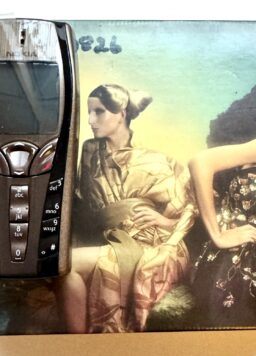
📰 Why this phone matters: Nokia 7250i Brown Edition NHL-4JX, codename James, is one of those devices that shows exactly why early 2000s Nokia was untouchable in phone design.The 7250i itself was launched in 2003 as an upgraded version of the 7250, keeping the wild, sculpted candybar body but hiding a better camera and a more advanced XHTML browser inside. It was part of Nokia’s fashion line, a hero product that mixed technology and style at a time when an integrated camera was still a futuristic feature.
This unit takes that story further. Finished in the ultra rare brown metallic shell, it looks completely different from the usual blue and plum variants. The front mixes a warm brown body with dark framing and a dramatic three piece keypad layout that flows up into the navigation cluster. It is unmistakably a fashion phone, and in this color it is almost never seen, especially BNIB.
Behind the design sits the NHL-4JX platform: a tri band GSM engine with Series 40 1st Edition software, CSTN 4096 color display and a CIF camera tuned for the 128 x 128 screen. The camera supports night mode and digital zoom, letting early adopters capture and send MMS pictures long before camera phones became standard. GPRS and HSCSD handle data, while the stereo FM radio, Java games and Nokia’s Pop-Port ecosystem turn the phone into a compact entertainment device.
The label confirms everything a collector wants to see: Model 7250i, Type NHL-4JX, product code 0511226, IMEI in the correct 351460 range, FCC ID PYANHL-4J, IC 661V-NHL4J, CE168 and Made in Hungary, one of Nokia’s most respected factories. In other words, a fully authentic, correctly configured eur;opean market 7250i in one of the rarest official colors.
This unit is BNIB in the collection, which is extremely unusual for a 2003 fashion device that was meant to be used hard and shown off. Most surviving 7250i phones are worn, repainted or rebuilt; finding an original brown example that has effectively never entered daily service is a serious trophy for any Nokia or fashion phone collector.
📝 Reviews when released: N/A 💔
-


Nokia 8210
Quick View💎 Rarity Index: C (Common)
⭐ WOW Factor: The smallest and lightest Nokia phone at that time
👁 Evaluation in my collection: Great – 9/10
⏱ Life timer: N/A | 📦 Boxed: YES
📅 Release Year: 1999 | 💰 Release Price: 200 £
📊 Units Sold: ~10M
📰 Why this phone matters: At the time, it was the smallest, lightest Nokia mobile phone on the market,thus its selling point was based on its design and customization, with removable Xpress-on covers📝 Reviews when released: N/A 💔