

">

Showing 13–23 of 23 results
-


Kyocera DS-320
Quick View💎 Rarity Index: A (Rare)
⭐ WOW Factor: The first ever phone that could have a camera attached to it, back in 1997
👁 Evaluation in my collection: Good – 8.5/10
⏱ Life timer: N/A | 📦 Boxed: YES
📅 Release Year: 1997 | 💰 Release Price: N/A
📊 Units Sold: ~100k
📰 Why this phone matters: The concept of mobile phones equipped with camera functions is not uncommon today. However, in the 90s of the last era, it is still a very incredible thing. At that time, the pager boom in China had just passed, and mobile phones were still in the ascendant. Fresh stuff, who would have thought of stuffing a small lens into such a small and exquisite body?
Japan’s Kyocera first thought of this. In 1997, Kyocera launched a brand-new Datascope series, including DS-110 and DS-320 mobile phones. Monochrome LCD screens seem unremarkable, but, Also launched with them is a very eye-catching accessory-VS-110.This accessory is driven by 2 AA batteries, can rotate 210 degrees, and can be movedIt can also be used as a standalone digital camera for video calls on the Internet. It is the world’s first mobile phone equipped with a camera and supports video calls.
Although the practicality is very low, it is the first step taken by mobile phone manufacturers. From 1997 to 1999, Kyocera conducted two years of research and development on the basis of this mobile phone. In May 1999 The VP-210 is officially launched, which integrates the camera on the top of the phone, is equipped with a 110,000-pixel front lens and a 2-inch TFT color screen. It can not only make video calls, but also take 20 photos and share them via email. The first camera phone in the true sense.📝 Reviews when released: W 01 🔗
-


Nokia 3100b
Quick View💎 Rarity Index: C (Common)
👁 Evaluation in my collection: Good – 9/10
🕵 Nokia Codename: Maxine
⏱ Life timer: 79h | 📦 Boxed: NO
📅 Release Year: 2003 | 💰 Release Price: 50 $
📊 Units Sold: ~1.5M
📰 Why this phone matters: This version intended to be used in American GSM networks. It works in GSM 850/1800/1900.Differences from the basic 3100:
The Grid (originally the Line), an additional main menu interface in the settings menu
TTY/TTD option in Menu > Settings > Enhancement settings that appears only if the phone has been connected to a headset, TTD, or similar device
Voice recording during an active call, up to 1 minute
World clock that displays the time for various time zones. The Nokia 3100 is a triband-GSM mobile phone announced on 17 June 2003 as an entry-level phone from Nokia and released in September 2003, designed primarily for the newer generation of marketing audience.
The Nokia 3100 was developed from the Nokia 6100 as a successor to the Nokia 3510. The phone was Nokia’s first in the youth-oriented 3000-series to be equipped with a 128×128 pixel passive colour display (4096 colors/12-bit), and included Java MIDP 1.0, XHTML and WAP browser, GPRS, Pop-Port connectivity and Lithium-ion battery. It is also capable of playing polyphonic MIDI files, which can be used as ringtones.
It is compact in size and lightweight, and also features special lighting effects.📝 Reviews when released: N/A 💔
-


Nokia 3315: The Improved 3310 Icon
Quick View💎 Rarity Index: C (Common)
👁 Evaluation in my collection: As New – 10/10
🕵 Nokia Codename: Leo
⏱ Life timer: 18 | 📦 Boxed: YES
📅 Release Year: 2000 | 💰 Release Price: N/A
📊 Units Sold: ~12M
📰 Why this phone matters: The Nokia 3315 is the refined evolution of the legendary Nokia 3310, offering improved features, enhanced usability, and the same level of durability that made the series world famous. Released primarily in Asia-Pacific markets, the 3315 kept the strong internal antenna design, excellent battery life, and rugged construction of the 3310, while adding new capabilities that made it a more advanced device for its time.This unit is BNIB and comes complete in its original box, an extremely rare condition for the 3315 due to its heavy use in the markets where it was sold. The phone features a bright yellow Xpress-On cover, one of the more eye-catching and desirable color variants of the model. BNIB 3315 units in any color are difficult to find, but a boxed yellow-cover example is especially collectible.
Among its improvements are picture messaging, editable operator logos, automatic keypad locking, animated menu effects, and a time screensaver. These upgrades made the 3315 feel more modern and expressive, long before multimedia messaging or mobile personalization became standard. It retained the Xpress-On cover system, allowing users to change both front and rear shells for complete customization.
Built on the same trusted platform as the 3310, the 3315 maintained outstanding reception, long-lasting performance, and the popular game lineup including Snake II, Space Impact, and Bantumi. Its internal antenna and compact monoblock shape made it one of the most practical and reliable feature phones of the early 2000s.
Because the Nokia 3315 was distributed mainly in Asia-Pacific regions, surviving units in clean condition are harder to find in eur;ope. BNIB units are exceptionally rare, as most were heavily used or discarded over time. This boxed yellow-cover example stands out as a valuable collector piece and a vibrant representation of Nokia’s enhanced version of the classic 3310 formula.
The Nokia 3315 remains a durable, expressive, and culturally significant successor to one of the most iconic mobile phones ever created, and a BNIB yellow-cover model is a standout addition to any serious Nokia collection.
📝 Reviews when released: N/A 💔
-
Nokia E61 Prototype B3.0 : The “Smailer” | Unreleased Rare Black and Silver colour
Quick View💎 Rarity Index: S (Ultra Rare)
👁 Evaluation in my collection: Great – 9.8/10
🕵 Nokia Codename: Smailer
⏱ Life timer: 0 | 📦 Boxed: NO
📅 Release Year: 2006 | 💰 Release Price: ~250 €
📊 Units Sold: ~1M (final units)
📰 Why this phone matters: This unit is a remarkable historic artefact: a prototype Smailer RM-89 hardware build of the Nokia E61, finished in an unreleased two-tone silver and black housing that never reached consumer production. The color layout is unlike any retail E61, combining a silver frame with a black upper section and a unique keypad palette that does not exist on final units. The keypad itself uses a mixed color scheme reminiscent of the later E62 look, but with a configuration that was never approved for market release.Inside the casing you find the clearest testimony to its origin: model field XXXX, prototype build B3, product code 0523307, internal R&D IMEI beginning with 004400, and full Property Of Nokia, Not For Sale, Made In Finland labeling. This confirms the phone as an authentic preproduction engineering unit created during early development cycles before cosmetic design and final materials were locked down.
Externally the device presents the full QWERTY keyboard layout, 5-way joystick and wide landscape display that defined the E61 family. Yet this prototype stands apart because of its unreleased finish: a rare two-tone silver and black shell matched with a hybrid keypad coloring that blurs the line between E61 and E62 aesthetics. The magnesium-alloy structure and rugged business-class construction already appear in place, but the cosmetics clearly represent a transitional stage in Nokia’s decision process.
Although this prototype may never have carried final firmware or passed network certification, its hardware is essentially complete. It captures a frozen moment when Nokia was experimenting with materials, colors and layouts for what would become one of the defining smartphones of the business-centric Eseries. For collectors and historians, this unit is far more than a phone: it is a one-off window into Nokia’s internal design evolution, a rare glimpse of what the E61 might have looked like had this striking silver-and-black, E62-influenced combination reached the market.
📝 Reviews when released: All About Symbian 🔗
-


Nokia IDO Digital (2110)
Quick View💎 Rarity Index: B (Uncommon)
⭐ WOW Factor: The first Nokia phone with famous Nokia ringtone
👁 Evaluation in my collection: Good – 9/10
⏱ Life timer: N/A | 📦 Boxed: YES
📅 Release Year: 1994 | 💰 Release Price: N/A
📊 Units Sold: ~20k
📰 Why this phone matters: Made for Japan Market, similar to 2110📝 Reviews when released: N/A 💔
-
Nokia J-NM02: Deep Blue Japan Exclusive
Quick View💎 Rarity Index: A (Rare)
⭐ WOW Factor: Built in Japan by Nokia Japan, not Finland
👁 Evaluation in my collection: Great – 9/10
⏱ Life timer: N/A | 📦 Boxed: NO
📅 Release Year: 2002 | 💰 Release Price: N/A
📊 Units Sold: ~50k
📰 Why this phone matters: The Nokia J-NM02 is one of the most distinctive and hard-to-find Japan-only Nokia flip phones, created for the J-Phone network in early 2002. Finished in a deep blue color scheme with a compact external display, SKY Mobile branding, and an elegant Japanese carrier design, this device stands out immediately from any eur;opean or American Nokia ever produced.This unit was manufactured in February 2002 and belongs to the NPY-6A hardware platform, a Nokia architecture used exclusively for Japanese regional devices. The NMAD01 marking inside identifies its specific J-Phone customization group, while codes such as A01-0923JP and JNMA1021492 tie it to a documented production run under Nokia Japan, not Nokia Finland. These production markers alone make the J-NM02 a very uncommon find in global collections.
What makes this example even more special is that it is fully functional. The phone powers on correctly, the external and internal displays work, and you can navigate the original Japanese menu system. Since the J-Phone PDC network no longer exists, very few surviving units still operate as intended, making working examples extremely rare.
The J-NM02 represents a unique moment in mobile history when Nokia adapted its engineering to the Japanese PDC ecosystem, resulting in features, menus, hardware layouts and design elements that never appeared in any global Nokia lineup. Today, it remains one of the most collectible Japanese-market Nokias for its exclusivity, design, and historical significance within the J-Phone era.
📝 Reviews when released: N/A 💔
-
Nokia NM156: NTT DoCoMo Japan Exclusive (1998, Pearl Olive)
Quick View💎 Rarity Index: A (Rare)
👁 Evaluation in my collection: Good – 8.5/10
⏱ Life timer: N/A | 📦 Boxed: NO
📅 Release Year: 1998 | 💰 Release Price: N/A
📊 Units Sold: ~60k
📰 Why this phone matters: The Nokia NM156 is one of the rarest Japan-exclusive Nokia models ever created. Designed for NTT DoCoMo’s PDC digital network in 1998 and manufactured in Finland, this model represents a very unusual chapter in Nokia’s history, when the company produced hardware specifically for Japan and not for the global GSM market.Beyond its Pearl Olive finish and Japanese kana keypad, what makes this phone truly special is its documented production history. The internal Nokia type code NSY-3LX confirms the exact hardware platform used only for the NM15x PDC family, while the factory codes place this device in batch 048 of 1998, assembled in the Salo plant in Finland. With only 94 units assembled before this one in that batch, surviving examples like this are exceptionally difficult to find outside Japan.
Even more impressive, this particular unit still powers on correctly and allows you to navigate through the original menu despite the fact that PDC networks have long been discontinued. Functioning NM156 units are very scarce and highly sought after.
📝 Reviews when released: N/A 💔
-
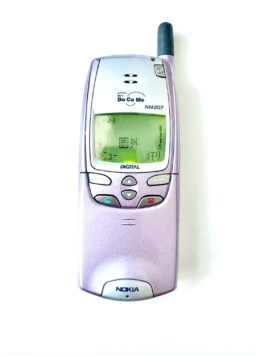
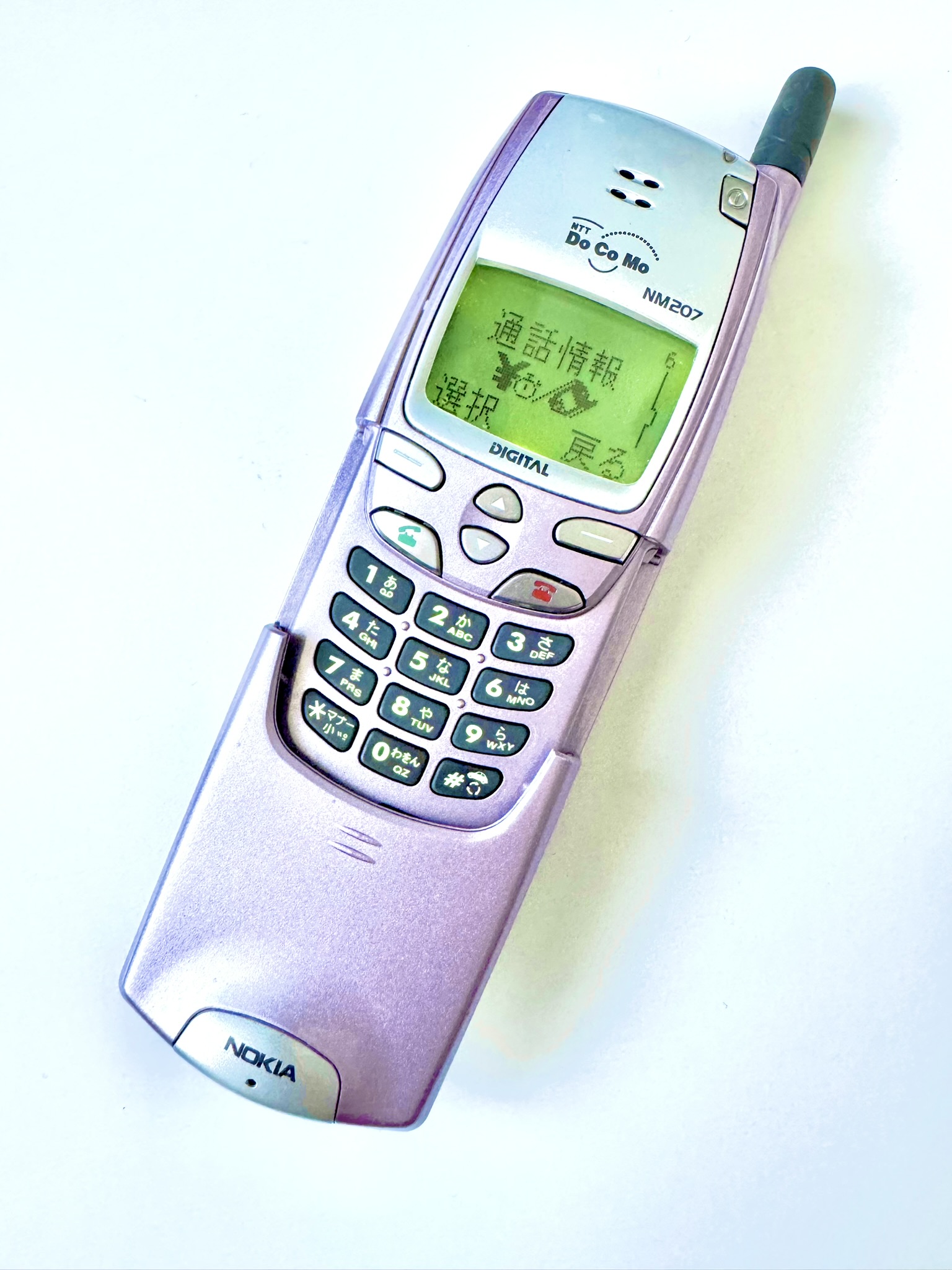
Nokia NM207 Docomo
Quick View💎 Rarity Index: A (Rare)
👁 Evaluation in my collection: As New – 9.9/10
⏱ Life timer: 0m | 📦 Boxed: YES
📅 Release Year: 2000 | 💰 Release Price: N/A
📊 Units Sold: ~80k
📰 Why this phone matters: Nokia NM207 – compact 90s Nokia with mini-SIM, long standby battery and iconic monochrome screen, now a rare find for mobile phone collectors.📝 Reviews when released: N/A 💔
-


Nokia NM502i Docomo
Quick View💎 Rarity Index: A (Rare)
👁 Evaluation in my collection: As New – 9.9/10
⏱ Life timer: 0m | 📦 Boxed: NO
📅 Release Year: 2000 | 💰 Release Price: N/A
📊 Units Sold: ~100k
📰 Why this phone matters: Nokia was not promoting?i-mode?widely in its portfolio. However, Japan market was important and Nokia introduced own models using?PDC?technology. This Nokia NM502i was developed for?NTT DoCoMo?and was introduced in premium category on March 28, 2002.📝 Reviews when released: Nokia Museum 🔗
-


NTT Docomo Mitsubishi Foma D800iDS
Quick View💎 Rarity Index: S (Ultra Rare)
👁 Evaluation in my collection: Great – 9.5/10
⏱ Life timer: N/A | 📦 Boxed: NO
📅 Release Year: 2007 | 💰 Release Price: N/A
📊 Units Sold: ~120k
📰 Why this phone matters: With the NTT DoCoMo FOMA D800iDS, Mitsubishi has succeeded in converting the folded mobile phone keypad into a touch panel. The 2.2-inch QVGA liquid crystal screen is divided above and below the fold in the phone frame, and the lower half features a touch panel with touch feedback function. This panel allows users to operate the phone using three, six, or ten keys, as well as to select 2-touch, 5-touch or handwritten text input. When the phone is folded closed, the time and newly received data are displayed in large format on a 144 LED screen. Lined on the back in rubber, the phone can be placed on any hard surface without risk of sliding. The phone also features a scan mode operated with external switches to enable those who do not have full use of their hands to operate the functions easily. In addition to games and paint applications operated via the touch panel, the FOMA D800iDS also features telephone, email, camera, TV-phone, Internet surfing, and JAVA application functions.📝 Reviews when released: G Mark 🔗
-
Sony Ericsson Radiden SO213iWR
Quick View💎 Rarity Index: S (Ultra Rare)
⭐ WOW Factor: It was notable for being the first Sony Ericsson radiophone to include reception for AM, FM, and TV bands (hence the “Radi-den” name
👁 Evaluation in my collection: Great – 9/10
⏱ Life timer: N/A | 📦 Boxed: NO
📅 Release Year: 2005 | 💰 Release Price: ~350$
📊 Units Sold: ~50k
📰 Why this phone matters: The Radiden is not a separate manufacturer but a product name created by Sony Ericsson exclusively for the Japanese market, and this particular device is the Sony Ericsson Radiden SO213iWR, released in late 2005 for NTT DoCoMo only, making it a true Japan domestic model that was never intended for export or international sales. The name Radiden comes from a contraction of the Japanese words for radio and telephone and was used by Sony Ericsson to highlight the phone primary purpose rather than its telephony features. This is not a normal mobile phone with a radio function added as an afterthought. It is a fully dedicated multi band radio receiver that happens to include mobile connectivity, featuring TV radio, FM radio, and AM radio through a standalone tuner module that can operate independently of the cellular network, meaning the radio works even with no SIM activity and minimal phone usage. At a time when most phones were simplifying hardware, this device went in the opposite direction by integrating a real broadcast receiver with physical preset buttons, a separate radio display, and ergonomics closer to a portable radio than a handset. Sony Ericsson leveraged its deep background in consumer electronics and broadcasting hardware for this model, something very few mobile manufacturers could do at the time. The Radiden line was aimed at commuters and emergency use cases in Japan where live broadcast access was considered essential, especially during natural disasters. Its strict DoCoMo only certification, Japanese language interface, and domestic regulatory markings confirm it as a Japan only experiment in hybrid hardware design, and today it stands as one of the most unusual crossover devices ever released under the Sony Ericsson name, combining mobile telephony and independent broadcast radio in a way that has never been repeated since.📝 Reviews when released: N/A 💔