

">

Showing all 8 results
-
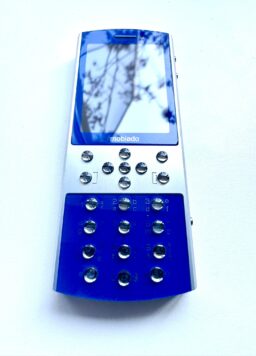
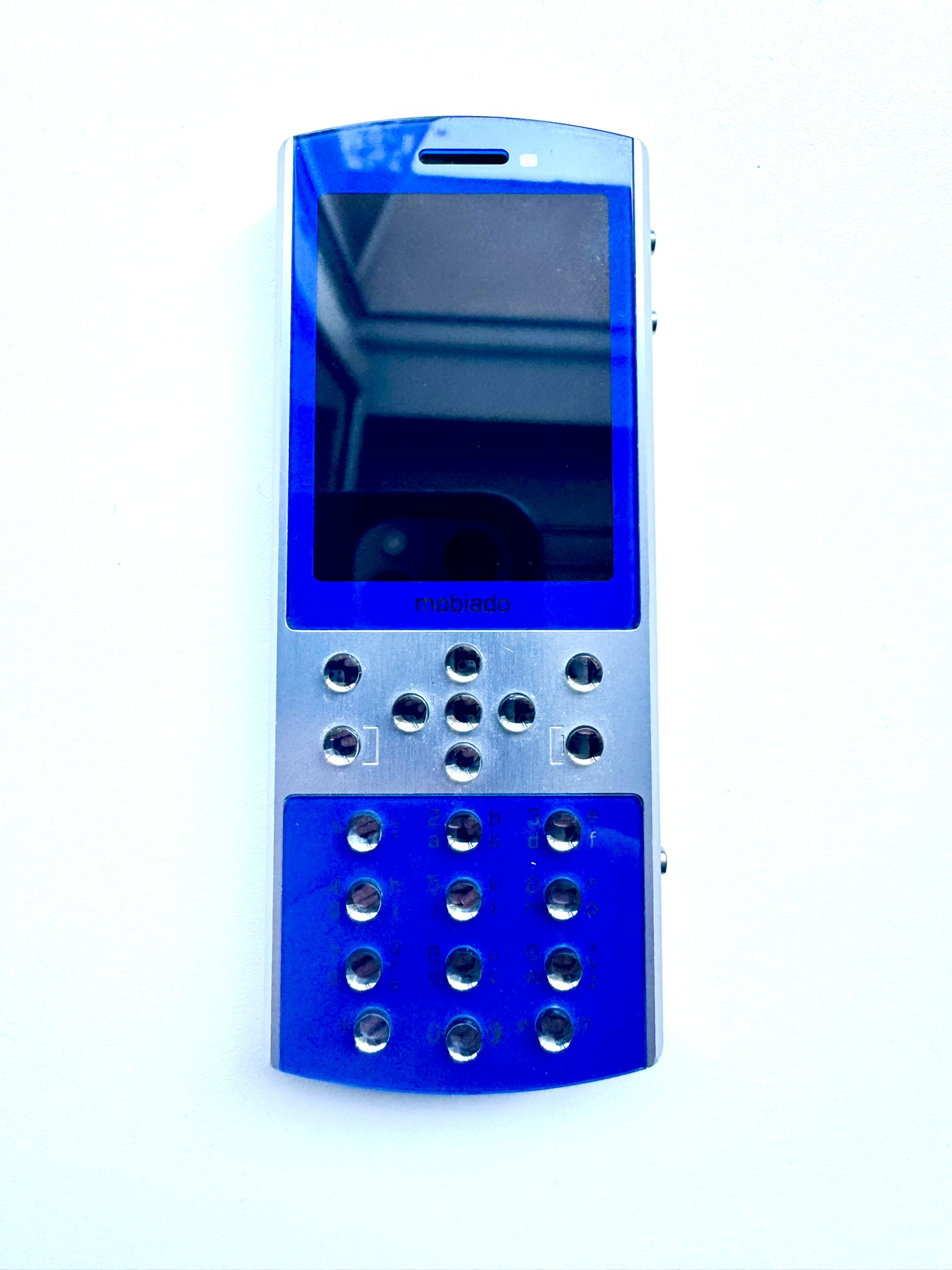
Mobiado 712 Dream Sapphire: The Last True Sapphire Bar
Quick View💎 Rarity Index: S (Ultra Rare)
⭐ WOW Factor: Real sapphire crystal on both the front and back, a fully CNC-machined aluminum chassis, individual sapphire keys, and hand assembly in Canada make the 712 Dream one of the last true mechanical luxury phones. It represents the final sapphire-bar generation before Mobiado shifted to newer production methods, which is why it remains one of the most sought-after models among collectors.
👁 Evaluation in my collection: As New – 9.9/10
⏱ Life timer: 5min | 📦 Boxed: NO
📅 Release Year: 2010 | 💰 Release Price: 3500$
📊 Units Sold: 750
📰 Why this phone matters: The Mobiado Classic 712 Dream is the embodiment of mechanical luxury in mobile design, created at a time when perfection, materials, and craftsmanship mattered more than specifications or software trends. Built entirely by hand in Canada, the 712 Dream belongs to the last generation of Mobiado phones produced using traditional artisanal methods, before luxury mobile design shifted toward modern smartphones and simplified manufacturing processes.At its core, the phone is based on the proven Nokia 6700 classic hardware platform, selected for its stability, longevity, and refined performance. Mobiado stripped the device down to its essential electronics and rebuilt it as a precision object. The entire exterior was replaced with a CNC-milled aluminum chassis, sapphire crystal panels on both the front and rear, and a keypad made of individual sapphire keys, each secured with exposed stainless steel screws. Ceramic side inserts and meticulously machined details reinforce the industrial, almost architectural character of the design.
Every surface, edge, and material was chosen to convey permanence. The sapphire panels offer a cold, dense feel and a unique light refraction, while the exposed mechanical elements celebrate construction rather than conceal it. The Dream variant elevated this philosophy further by introducing colored sapphire, heraldic engraving, and artistic finishing details produced in extremely small numbers, resulting in subtle variations between individual units.
More than a luxury phone, the Classic 712 Dream is a statement of intent. It represents a moment when mobile devices were designed as lasting objects, built to be admired, handled, and preserved. Often regarded as the last true sapphire-bar Mobiado, it stands today as a benchmark for mechanical perfection in the era of luxury feature phones.
📝 Reviews when released: N/A 💔
-


Nokia 3810: The Lost Asian Shadow of the 3110
Quick View💎 Rarity Index: S (Ultra Rare)
⭐ WOW Factor: A true APAC-market ghost model, the Nokia 3810 exists as a secret evolution of the 3110, built on a unique NHE-8A hardware branch, sold only through selected Asian operators, and so rare today that even many hardcore collectors have never seen a real one outside archival photos.
👁 Evaluation in my collection: Good – 8.5/10
⏱ Life timer: NA | 📦 Boxed: NO
📅 Release Year: 1998 | 💰 Release Price: ~11000 PHP
📊 Units Sold: ~1M
📰 Why this phone matters: Nokia 3810 is one of the most obscure and region-locked handsets Nokia ever released, a model that at first sight looks like a Nokia 3110 from the late 90s, but in reality is a completely different device built specifically for the Southeast Asian market. Created around late 1998 to early 1999 for operators like Globe Telecom in the Philippines and Singtel in Singapore, it was never part of Nokia’s global roadmap and never appeared in eur;opean or American catalogs.Internally, the 3810 belongs to the extended NHE-8A platform, a rare fork of the 3110 architecture that Nokia used only for operator-specific customizations. Unlike typical localized firmware builds, this model has a modified PCB layout, different RF filters, region-specific power amplifiers, and firmware adjusted for hot and congested GSM-900 networks in Asia. The firmware also contains unique operator menus, a different startup behavior, and a SIM Toolkit implementation that the original 3110 did not have.
Visually, the 3810 shares the silhouette of the 3110, but key differences immediately confirm it as its own device. It has a redesigned navigation cluster, different soft keys, a unique lower mask, and a housing made from a thicker, more rubberized plastic type. These material changes were intentional, allowing the phone to survive the high humidity and heat typical of Southeast Asia. The keypad layout is also subtly different, confirming that this is not a housing replacement but a dedicated mold used only for this variant.
The 3810 was priced below the 5110 and slightly below the original 3110 in the APAC region, typically selling around PHP 7000 to 9000, often bundled with prepaid or SIM activation packages. Because Nokia kept production extremely limited and distributed the model only through operator channels, most units were used heavily and eventually scrapped. Almost none were exported, and very few examples have survived in clean or working condition. Today it stands as one of the rarest late 90s Nokias, more elusive than many prototypes, and almost never seen in Western collections.
The unit presented here is a remarkable surviving example, displaying Globe firmware on boot and all the unique hardware traits of the genuine 3810 platform. More than just a variant, it represents a hidden branch of Nokia history, a fully official model that Nokia itself barely acknowledged and one that existed only because regional operators demanded a slightly more modern, network-optimized alternative to the aging 3110. Devices like this highlight how complex Nokia’s APAC strategy truly was and why some of the rarest Nokias were never sold outside their home markets.
📝 Reviews when released: Mobile Review 🔗
-


Nokia 7700 Prototype F5.0 Black | Unreleased
Quick View💎 Rarity Index: X (Mystical Prototype)
⭐ WOW Factor: The first Nokia unreleased phone with touch screen and Symbian S90
👁 Evaluation in my collection: Great – 9.5/10
🕵 Nokia Codename: MX
⏱ Life timer: N/A | 📦 Boxed: NO
📅 Release Year: 2003 | 💰 Release Price: N/A
📊 Units Produced: ~1k
📰 Why this phone matters: A true piece of Nokia history – the Nokia 7700 F5.0 Prototype, Type RAL-2, made in Finland and never released commercially. This is one of the most ambitious devices Nokia ever built: a full-touch “media communicator” years before the 7710 and long before modern smartphones adopted the concept.This listing includes two fully working prototypes, one in black and one in white, both belonging to the late engineering stage (F5.0) and carrying the internal Model: M designation. These units were intended for final validation and software testing, featuring the hardware configuration closest to what a retail 7700 would have been – had it reached the market.
The 7700 became legendary precisely because it never launched, making functional prototypes extremely rare. To find two, in different colours, in working condition, is virtually unheard of and places this set among the top-tier collector items of early smartphone history.
Whether displayed as design icons or preserved as engineering artifacts, these devices stand as one of Nokia’s boldest steps toward the touchscreen era.
📝 Reviews when released: Mobile Gazette 🔗
-


Nokia 7700 Prototype F5.0 White | Unreleased
Quick View💎 Rarity Index: X (Mystical Prototype)
⭐ WOW Factor: The first Nokia unreleased phone with touch screen and Symbian S90
👁 Evaluation in my collection: Great – 9.5/10
🕵 Nokia Codename: MX
⏱ Life timer: N/A | 📦 Boxed: NO
📅 Release Year: 2003 | 💰 Release Price: N/A
📊 Units Produced: ~1k
📰 Why this phone matters: The Nokia 7700 (Model – M Type RAL-2) is a smartphone produced by Nokia, announced in October 2003 but never released. It was produced as a prototype unit between 2003-2004 It was expected to be the first smartphone running the Series 90 GUI on Symbian OS and Nokia’s first pen-based device, intending to compete against handsets like Sony Ericsson P800. At announcement Nokia dubbed it a “media device.” Compatible with GSM/HSCSD/GPRS/EDGE 900/1800/1900 MHz networks, the 7700 featured a wide, 3.5-inch touch-screen colour LCD with a resolution of 640 x 320 pixels which is the first smartphone with 2:1 aspect ratio and supporting 65,000 colours. It had 64 MB of internal memory and a MultiMedia Card (MMC) slot. It also included an integrated VGA camera with a maximum resolution of 640 x 480 pixels, an integrated FM radio, Bluetooth, USB and Nokia’s proprietary Pop-Port interface for connectivity purposes.The 7700 was to include a comprehensive application suite (such as a complete PIM suite, ‘full’ web browser, email client and an office suite comprising Word Processor, Spread-Sheet and a PowerPoint viewer) and supported Java MIDP 2.0 applications. It was also to be the first phone to support Visual Radio, and the first Nokia phone to support DVB-H mobile television with the addition of the Nokia Streamer SU-6 accessory. The Nokia 7700 was cancelled in mid-2004. Several theories for the cancellation were put forward at the time: Nokia was refocusing on ‘normal’ phones due to decreasing market share; the phone would be too late to market; and the phone was unattractive and bulky. It also featured ‘sidetalking’ like the N-Gage, a feature that had attracted a great deal of negative publicity. The Nokia 7710 followed shortly later with increased memory, a different design, no ‘sidetalking’ and other improvements. However, the 7700 was nevertheless used for further trials of DVB-H. As stated above, the Nokia 7700 was never released to the public. It was only released to Nokia’s R&D (Research and Development) groups. A few models, estimated 20, were distributed prior to Nokia’s decision to discontinue the model before full-on production. However as they were preparing to make the move into stores, the final product prototypes were available in every Nokia Dealer store for display and show-off, so an estimate on how many pieces there actually were is impossible to make, or how many remained in factories and services that were testing them. Pricing is thus very difficult to assess due to lack of official sales. Nevertheless, a few models were sold on eBay since Nokia’s announcement of discontinuation. The lack of independent data to verify the sale records on eBay has caused some to overestimate the actual cost of the model. The phone is nevertheless considered by a number of Nokia collectors to be a rare piece.
📝 Reviews when released: Mobile Gazette 🔗
-
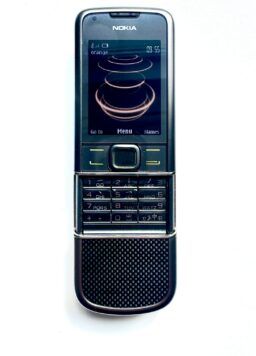
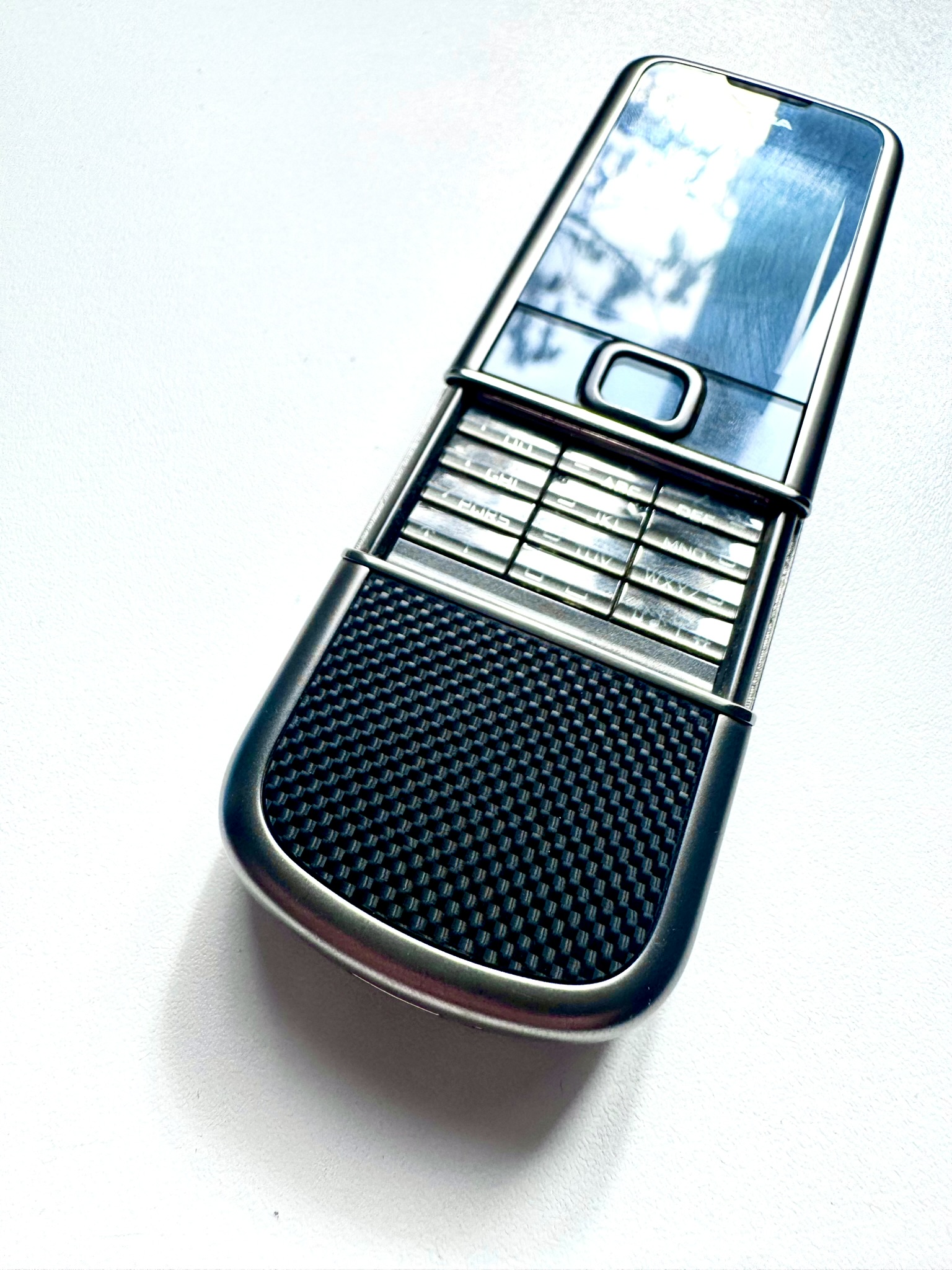
Nokia 8800 Arte Carbon
Quick View💎 Rarity Index: A (Rare)
⭐ WOW Factor: The slider plate is real carbon fiber, not printed texture.
👁 Evaluation in my collection: Great – 9/10
🕵 Nokia Codename: Skira
⏱ Life timer: 83h | 📦 Boxed: NO
📅 Release Year: 2008 | 💰 Release Price: ~1500 €
📊 Units Sold: ~300k
📰 Why this phone matters: Nokia 8800 Carbon Arte (RM-233) – released in 2008 as one of Nokia’s most prestigious luxury devices. Built with real carbon fiber, a titanium-tinted stainless steel frame, scratch-resistant glass and a precision slider mechanism. Equipped with a 4GB internal storage, OLED display and tap-to-time gesture, the Carbon Arte stands at the top of Nokia’s Arte luxury line. A rare and highly collectible model📝 Reviews when released: Mobile Review 🔗
-


Nokia 8800 Special Edition
Quick View💎 Rarity Index: S (Ultra Rare)
⭐ WOW Factor: The Nokia 8800 introduced a precision ball-bearing sliding system inspired by luxury watchmaking.
👁 Evaluation in my collection: Great – 9.5/10
🕵 Nokia Codename: Q
⏱ Life timer: 326h | 📦 Boxed: YES
📅 Release Year: 2006 | 💰 Release Price: ~850 €
📊 Units Sold: ~800k
📰 Why this phone matters: Nokia 8800 Special Edition (RM-13) – a premium stainless-steel slider phone handmade in Nokia’s Salo (Finland) factory and featuring a precision ball-bearing sliding mechanism, mineral glass display and exclusive sound design by Ryuichi Sakamoto. This rare Special Edition variant includes a brushed steel backplate with engraved branding and was produced in limited numbers. A true luxury icon of the mid-2000s, combining exceptional materials with Nokia’s Series 40 premium interface📝 Reviews when released: N/A 💔
-
Nokia 8850 Gold
Quick View💎 Rarity Index: A (Rare)
👁 Evaluation in my collection: Great – 9/10
⏱ Life timer: N/A | 📦 Boxed: NO
📅 Release Year: 1999 | 💰 Release Price: N/A
📊 Units Sold: ~1.5M
📰 Why this phone matters: The Nokia 8850 is a mobile phone handset manufactured by Nokia. It was a light alloy-bodied enhanced version of Nokia 8210 model with slider protection of the keypad and white lighting of the keypad and screen. The 8850 is considered to be an un-repairable phone, thus resulting in very few active handsets in the market.It was introduced as a successor of an earlier model, the chrome phone Nokia 8810.
It was succeeded by the Nokia 8910, which was released in 2002.📝 Reviews when released: N/A 💔
-
Nokia N77
Quick View📦 Collector-to-Collector Transaction
This item is from a private collection and sold as-is for collectors only. All devices have been verified for authenticity and condition as described, but no warranty or guarantee is provided. This is a private sale between individuals and not a commercial business transaction.
💎 Rarity Index: S (Ultra Rare)
👁 Evaluation: BNIB – 10/10
⏱ Life timer: 0m 📦 Boxed: YES
📰 About this collectible: The?Nokia N77?is a?3G?smartphone?from?Nokia, introduced on 12 February 2007 and released in June 2007.?It runs on?Symbian?9.1 (S60?3rd Edition). The N77’s specs were somewhat basic compared with most?Nseries?devices at the time, but it included a?DVB-H?television tuner. As stated in Nokia’s press release, the N77 was designed as a low-cost mobile TV to accelerate DVB-H adoption.?Sporting a candybar design similar to the?N73, it was the company’s second DVB-H device after the?N92, though it did have a smaller screen.?The N77 was thus only available in limited DVB-H markets and are now hard to come by.✓ Verification Checklist
Authenticity & Condition:
– Originality verification (exterior, labels)
– Matching IMEI (box, label, motherboard)
– Physical condition assessment (scratches, cracks, screws)Functional Testing:
– Powers on
– Display functionality
– Camera (when applicable)
– Vibration mechanism (when applicable)
– Security code
– Charging
– Network connectivity
– Call functionality including speaker (non-BNIB units on European networks)Additional specific tests available upon request.