

">

Showing all 7 results
-
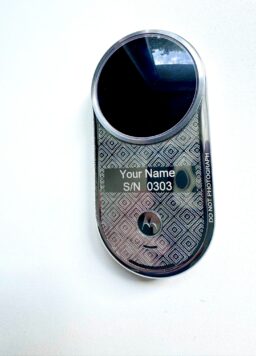
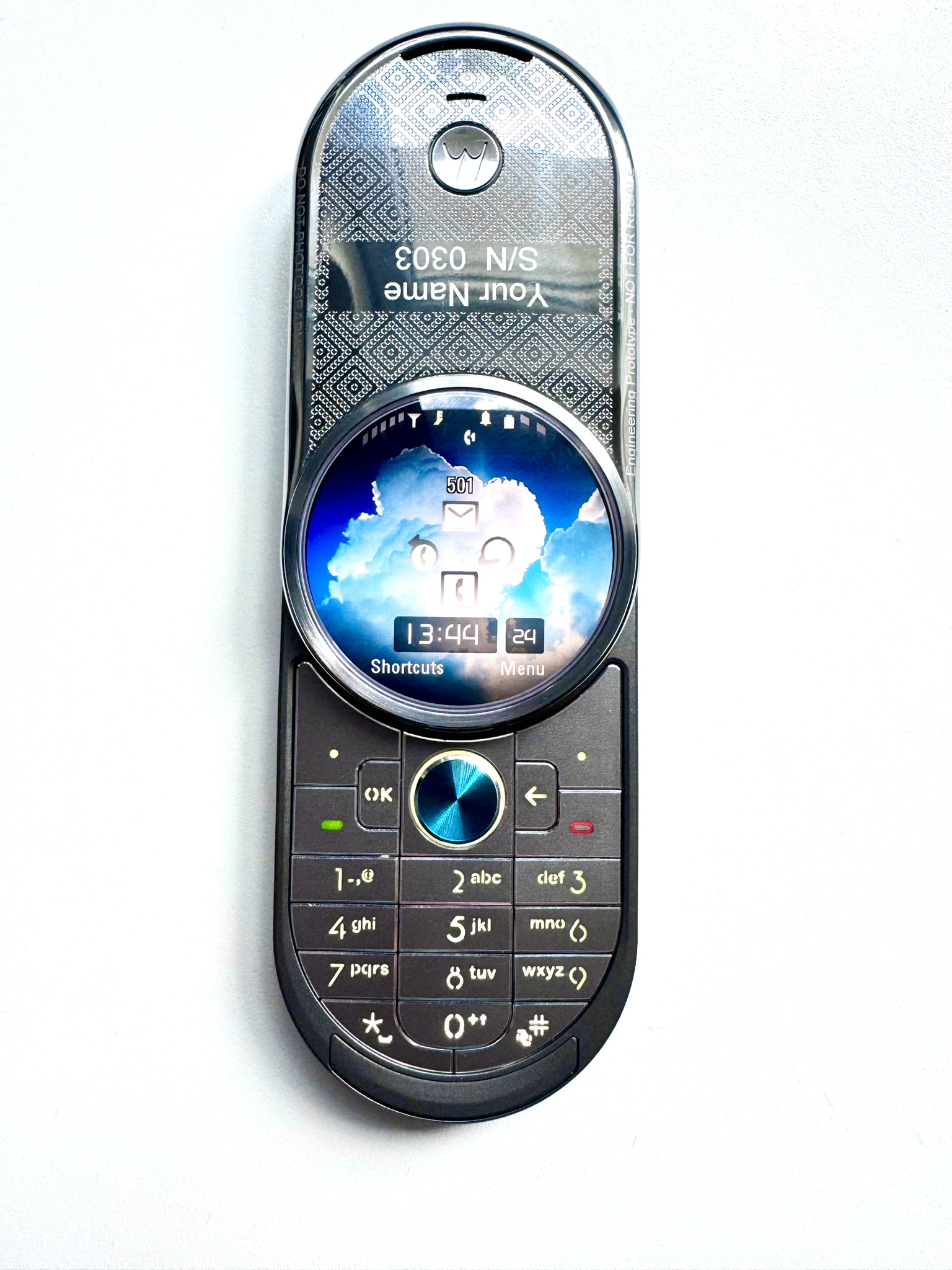
Motorola Aura R1 Unreleased Prototype : Engineering Design S/N 0303
Quick View💎 Rarity Index: X (Mystical Prototype)
⭐ WOW Factor: Saphire glass, stainless steel, swivel like opening mechanism, Swis Made gears for the mechanism.
👁 Evaluation in my collection: Great – 9.5/10
⏱ Life timer: N/A | 📦 Boxed: NO
📅 Release Year: 2008 | 💰 Release Price: ~2000$
📊 Units Sold: 0
📰 Why this phone matters: A masterpiece from Motorola’s most ambitious luxury project, this is an extremely early pre-production Aura prototype, created before the final 2008 model and never meant to leave the design labs. It carries full engineering markings – “Prototype – Not For Resale”, “Do Not Photograph”, and a personalized engineer-assigned S/N (0303) – making it a true artifact of Motorola’s internal design history.Unlike the retail Aura, this prototype features a unique diamond-etched metal housing, a larger mechanical gear window, unreleased keypad styling, and early internal board architecture. It represents the original mechanical vision for the Aura’s iconic rotating display mechanism – built more like a Swiss watch movement than a phone.
Surviving prototypes of the Aura are almost mythical.
One with unreleased design, internal engraving, and full confidentiality markings is beyond rare – a museum-level piece and a highlight for any high-end mobile collection.📝 Reviews when released: Cnet.Com 🔗
-


Motorola Aura R1: The Motorola Crownpiece
Quick View💎 Rarity Index: A (Rare)
⭐ WOW Factor: Saphire glass, stainless steel, swivel like opening mechanism, Swis Made gears for the mechanism.
👁 Evaluation in my collection: Great – 9.5/10
⏱ Life timer: N/A | 📦 Boxed: NO
📅 Release Year: 2008 | 💰 Release Price: ~2000$
📊 Units Sold: ~20k
📰 Why this phone matters: This unit is a Motorola Aura R1, one of the most mechanically advanced and visually distinctive luxury phones ever produced. Released in late 2008 as part of Motorola’s ultra-premium 4LTR line, the Aura was created not to compete with emerging smartphones, but to demonstrate the highest possible level of industrial craftsmanship, materials engineering, and mechanical design. The Aura is widely recognized as the final true mechanical masterpiece from Motorola before the touchscreen era ended the age of such devices.This particular unit is from the Australian market and is labeled simply as R1 rather than carrying the full Aura branding on the regulatory sticker. This detail is a documented regional distinction: Australian-market units were typically marked R1 only, while eur;opean units often carried the full “Aura” designation. For collectors, this is an important variant because it shows how Motorola adapted the labeling conventions for certain regions while retaining the exact same premium hardware. The unit is in as-new condition, showing minimal or no signs of use, making it highly desirable for collectors given the mechanical nature of the device and the low survival rate of pristine examples.
The Aura’s defining features remain extraordinary even today. Its iconic circular display offers 300 dpi resolution, protected by a 62-carat sapphire crystal lens cut and polished with extremely low-yield manufacturing processes. The sapphire window is among the most premium and expensive components ever mass-produced for a mobile device. The circular screen required Motorola to heavily modify its MotoMagx Linux platform, creating a custom UI layer and a unique rotational visual experience matched to the mechanical opening motion.
The rotating front mechanism is a mechanical achievement unmatched by any other production phone. Built with more than 200 precision-machined components, 130 micro ball bearings, and Swiss-made hardened steel gears, the hinge delivers a controlled, watch-like motion engineered to remain consistent over thousands of rotations. The metal surfaces use coatings derived from high-performance racing engines, and tolerances within the rotational assembly reach watchmaking precision levels. These characteristics place the Aura closer to horology than consumer electronics.
Constructed from surgical-grade stainless steel, the Aura R1 features hand-machined finishing, a weighty and solid feel, and a premium tactile character that cannot be replicated with modern materials. Despite its luxurious build, it retains practical functions: quad-band GSM, Bluetooth, a 2 MP camera, microSD support, custom audio themes, and a refined circular UI layout. At launch, the Aura sold for approximately 2000 $, reflecting both its engineering cost and its intended role as a luxury lifestyle object rather than a mass-market handset.
Because production was extremely limited and the device was released during the iPhone-driven smartphone revolution, few Aura units were manufactured, and even fewer survive in excellent mechanical condition. Many suffered rotational mechanism wear, sapphire damage, or cosmetic deterioration. As-new units, even without the original box, are very rare and increasingly valued as the Aura’s reputation continues to grow among collectors.
This unit represents one of the most iconic expressions of Motorola’s industrial design heritage. With its as-new presentation, Australian-market R1 label variant, circular sapphire display, watch-grade rotating mechanism, and stainless-steel construction, it stands as a top-tier collectible luxury phone. It captures a unique moment when mechanical artistry, materials science, and mobile technology converged to produce a device unlike anything before or since. The Aura R1 remains one of the most extraordinary and desirable non-smartphone luxury handsets ever made.
📝 Reviews when released: Cnet.Com 🔗
-
Nokia 2650 Quiksilver: Sealed Boost Mobile Brown Edition
Quick View💎 Rarity Index: S (Ultra Rare)
⭐ WOW Factor: Quiksilver Nokia 2650 by Boost Mobile is a co-branded surf lifestyle edition
👁 Evaluation in my collection: Great – 9.5/10
🕵 Nokia Codename: Pinoccchio
⏱ Life timer: 15h | 📦 Boxed: YES
📅 Release Year: 2004 | 💰 Release Price: ~125 $
📊 Units Sold: ~50k
📰 Why this phone matters: This unit is a sealed time capsule from the mid 2000s surf and pre paid boom: the Quiksilver Nokia 2650 by Boost Mobile, built on the Brown variant of Nokia’s classic clamshell and wrapped in a massive co branded retail pack. The front of the box is pure surf culture, with bold Quiksilver graphics, a surfer crashing through the waves and a custom Nokia 2650 shown with Quiksilver logos and stripes on the flip. Boost Mobile and yes Optus badges underline that this was the Australian youth offer of its time, complete with a free Boost mini lanyard and 10 dollars of pre paid credit right out of the box.The Quiksilver edition is more than a simple color variant. This bundle includes unique Quiksilver artwork on the phone’s shell, a dedicated Boost Mobile mini lanyard accessory, special surf themed packaging, and prepaid credit built into the offer. The entire package was created as a lifestyle product, tying Nokia’s entry level clamshell design to the surf and skate identity that Boost Mobile used to dominate the prepaid market in Australia. The huge graphic box and branded phone shell make this edition visually stand out far beyond the standard 2650 Brown.
Technically, the phone inside is a standard Nokia 2650: a compact clamshell Series 40 device with a 128×128 color CSTN display, LED alerts for calls and SMS, GPRS data, Java games and BL-4C battery. What makes this sealed Quiksilver edition extraordinary is not a change in hardware, but the way Nokia and Boost wrapped it into a lifestyle bundle. For a collector, this is more than just a phone box; it is a complete, untouched artifact of early 2000s mobile branding, merging Nokia engineering, Quiksilver surf identity and Boost Mobile’s prepaid culture into one rare, perfectly preserved package.
📝 Reviews when released: Mobile Review 🔗
-
Nokia 6108: The First Handwriting Classic
Quick View💎 Rarity Index: A (Rare)
⭐ WOW Factor: Handwriting Recognition
👁 Evaluation in my collection: As New – 9.9/10
🕵 Nokia Codename: Libai
⏱ Life timer: 0 | 📦 Boxed: YES
📅 Release Year: 2003 | 💰 Release Price: 200 €
📊 Units Sold: ~300k
📰 Why this phone matters: The Nokia 6108 is one of the most unusual and innovative mass-released Nokia phones, designed specifically for the Chinese market and built around a unique flip-down handwriting input system. Released in the early 2000s, it combined a traditional candybar keypad with a dedicated handwriting pad hidden beneath the keys. The included stylus, neatly stored on the back of the device, enabled users to write Chinese or English characters directly onto the phone, making the 6108 a remarkably advanced hybrid device for its era.This full box example is extremely rare. Most 6108 units were heavily used in China and Southeast Asia, where handwriting input was a daily necessity. As a result, surviving phones usually show significant wear and often lack the stylus, manuals, or original packaging. A complete, intact full box with all accessories is very hard to find today and greatly increases the collectible value of this model.
With GPRS, MMS, email, Java applications, SyncML support, a two-way English/Chinese dictionary and speakerphone, the 6108 offered a feature set far beyond standard Series 40 devices of its time. Its IR port enabled early PC synchronization long before modern wireless standards became common.
Internally known as LiBai, the 6108 reflects Nokias experimental phase, merging conventional keypad use with stylus-driven handwriting input long before capacitive touchscreens became mainstream. Its distribution was limited to Asia-Pacific markets, and because it was heavily used for educational, business and translation purposes, complete boxed units like this one are exceptionally hard to source.
With its flip-down handwriting pad, integrated stylus, region-specific firmware and fully intact accessory set, this Nokia 6108 stands as a distinctive and rare piece of Nokia innovation, showcasing the company’s creative engineering during the early 2000s.
📝 Reviews when released: N/A 💔
-
Nokia 7710 Full Box: Future Ahead of Its Time
Quick View💎 Rarity Index: A (Rare)
⭐ WOW Factor: The first Nokia released phone with touch screen
👁 Evaluation in my collection: Great – 9.5/10
🕵 Nokia Codename: Remix
⏱ Life timer: N/A | 📦 Boxed: YES
📅 Release Year: 2005 | 💰 Release Price: N/A
📊 Units Sold: ~500k
📰 Why this phone matters: The Nokia 7710 is a smartphone announced on 2 November 2004.It was the first Nokia device with a touchscreen, and first device with 2:1 aspect ratio display.The 7710 is based on the Nokia 7700 which was never released. It is Nokia’s only smartphone to run the Series 90 interface atop Symbian OS v7.0s.📝 Reviews when released: Mobile Review 🔗
-
Nokia 7710 Prototype F4.0: Future ahead of its Time | Unreleased Black Keypad
Quick View💎 Rarity Index: X (Mystical Prototype)
⭐ WOW Factor: The first Nokia released phone with touch screen
👁 Evaluation in my collection: Great – 9.5/10
🕵 Nokia Codename: Remix
⏱ Life timer: N/A | 📦 Boxed: NO
📅 Release Year: 2005 | 💰 Release Price: N/A
📊 Units Sold: ~500k (final units)
📰 Why this phone matters: A rare and impeccably preserved Nokia 7710 RM-12 F4.0 prototype, belonging to the final stage of Nokia’s pre-production cycle for the iconic Series 90 touchscreen smartphone.
This F4.0 unit – clearly marked PROTO and Property of Nokia – originates from Nokia’s internal validation program, used during the last wave of field testing, UI refinement and RF certification before the public release in 2005.Unlike retail units, this prototype features an unreleased keypad colour variant, with silver-toned navigation and side-control keys replacing the standard glossy black retail trim. This experimental colourway never reached commercial production, making this device a standout among surviving prototypes. The front bezel also shows the slightly grainier, matte finish characteristic of late hardware trials inside Nokia’s labs.
As with all authentic high-grade prototypes, the label carries the signature “Model: XXXX” placeholder, missing consumer certifications, serial markings and final manufacturing codes. These elements confirm it as a genuine internal unit, built in Finland during the last engineering revision of the platform.
The Nokia 7710 was Nokia’s most ambitious early touchscreen smartphone – a widescreen 640×320 device running the innovative Series 90 interface on Symbian OS. The prototype here predates the public release, offering collectors a rare glimpse into Nokia’s transition from experimental UI concepts to finalized commercial design.
This F4.0 RM-12 prototype is an exceptional find: a fully authentic late-stage engineering device with a unique, unreleased keypad trim, placing it among the rarest surviving 7710 variants and a valuable centrepiece for any advanced vintage Nokia collection.
📝 Reviews when released: Mobile Review 🔗
-
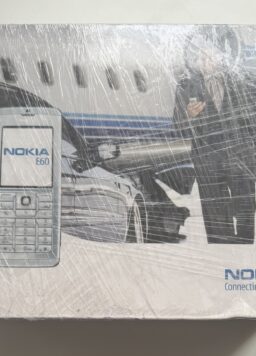
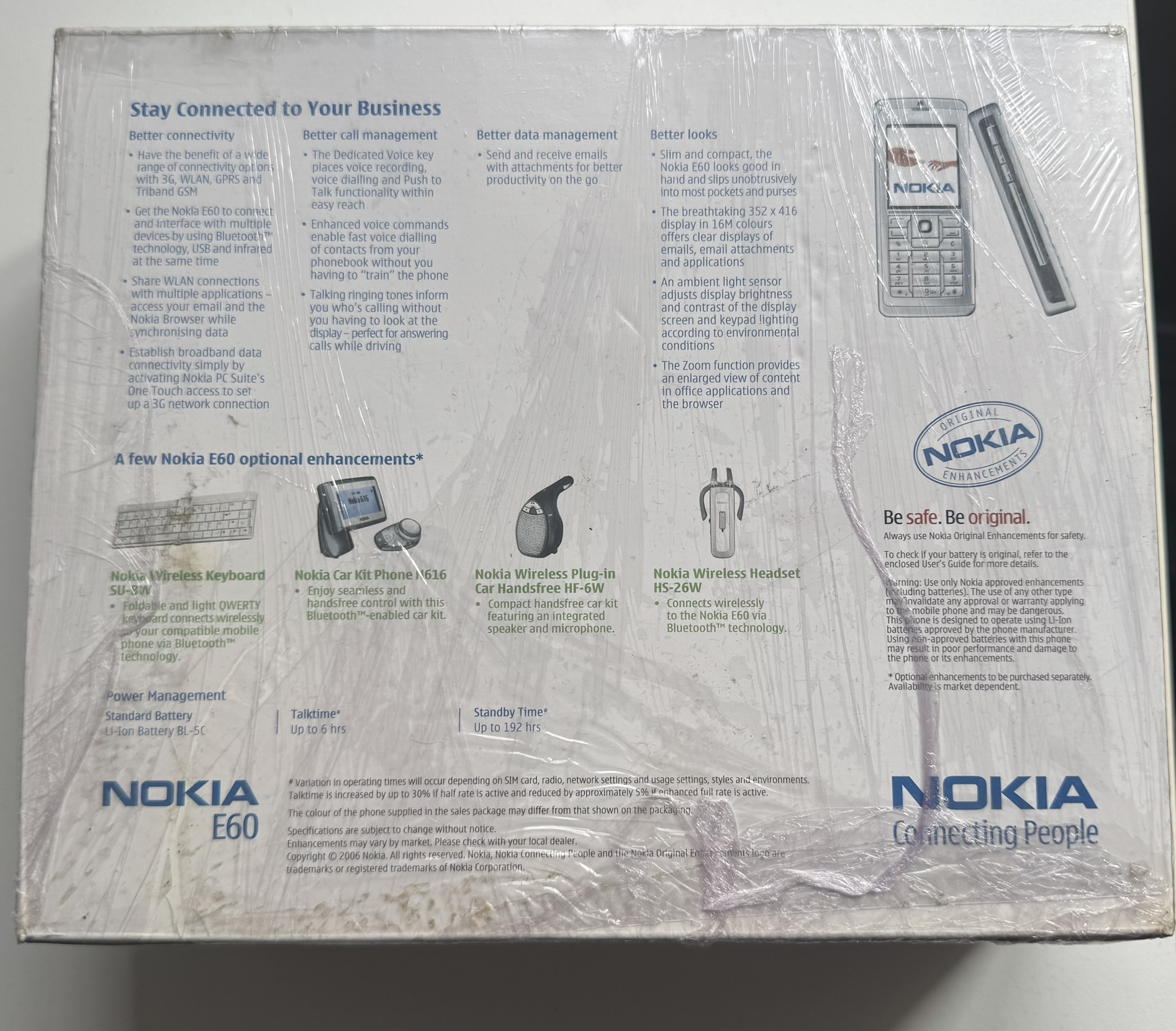
Nokia E60: Sealed Australia Variant BNIB
Quick View💎 Rarity Index: S (Ultra Rare)
👁 Evaluation in my collection: Great – 9.5/10
🕵 Nokia Codename: Mars
⏱ Life timer: 0m | 📦 Boxed: NO
📅 Release Year: 2006 | 💰 Release Price: N/A
📊 Units Sold: ~500k
📰 Why this phone matters: This unit is an exceptionally rare sealed Nokia E60 from the Australia market, preserved in untouched BNIB condition. The E60 was Nokia’s pure business flagship, a Symbian S60 3rd Edition device built without a camera for use in secure enterprise environments, from financial institutions to restricted industrial sites. The large 352×416 display, metal construction and corporate-grade hardware defined the early Eseries approach to mobile productivity.As an Australia variant, this unit carries the region’s specific labeling and certification marks, reflecting Nokia’s APAC distribution of enterprise devices. Nearly all E60 phones were deployed in heavy-use corporate environments, making sealed retail examples virtually impossible to find today. This unopened box protects a complete and unhandled device exactly as it left Nokia’s distribution pipeline, complete with its regional accessories and packaging.
For collectors, the sealed condition elevates this E60 into a true time capsule: a high-spec business smartphone from an era when Nokia dominated enterprise mobility. Its camera-free design, powerful connectivity suite and advanced VoIP capabilities made it a unique hardware configuration even when new, and today it stands as one of the most elusive Eseries devices to acquire in untouched form.
📝 Reviews when released: Mobile Review 🔗