

">

Showing 1–12 of 29 results
-
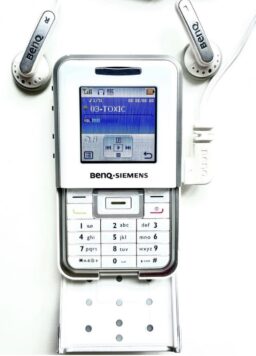

Benq Siemens EF51
Quick View💎 Rarity Index: B (Uncommon)
👁 Evaluation in my collection: Great – 9.5/10
⏱ Life timer: N/A | 📦 Boxed: YES
📅 Release Year: 2006 | 💰 Release Price: ~100 $
📊 Units Sold: ~700k
📰 Why this phone matters: As odd as it may be for me to say, it’s a really cute phone, even a little girly perhaps. It has a certain je-ne-sais-quoi feel when it comes to its looks. A warped egg maybe? You decide. The EF51 has a small TFT display with a resolution of 128 x 128 pixels and 256k colors. The keypad is right behind the music player panel in front. So all you have to do is flip it open. The keys on the pad may seem small, but they’re easy to use.On one side you’ll find a dedicated voice recorder key followed by the volume keys and the dedicated camera key. There’s also the proprietary charging port. On the other side is the proprietary earphone / USB socket, but thankfully BenQ-Siemens has provided a converter to 3.5mm. Underneath this socket is the miniSD card slot. The EF51 weighs in at 95g which also makes it a light mobile phone aside from being small.
📝 Reviews when released: First Post 🔗
-


Benq Siemens EF81 Special Star Wars Edition
Quick View💎 Rarity Index: B (Uncommon)
👁 Evaluation in my collection: BNIB – 10/10
⏱ Life timer: 0 | 📦 Boxed: YES
📅 Release Year: 2006 | 💰 Release Price: N/A
📊 Units Sold: ~1.8M
📰 Why this phone matters: The BenQ-Siemens EF81 is undoubtedly similar specs-wise and even in looks to the Motorola Razr V3x. The most impressive design feature of this phone is how thin it is, considering it has the same features as the Motorola V3x — which is much bigger. The EF81 measures 51 by 94 by 16mm thin whereas the V3x is 55 by 99 by 20mm, making the EF81 4mm less wide, 5mm shorter and 4mm thinner.📝 Reviews when released: Cnet.com 🔗
-


HP Ipaq – HW6915
Quick View💎 Rarity Index: C (Common)
👁 Evaluation in my collection: As New – 9.9/10
⏱ Life timer: N/A | 📦 Boxed: NO
📅 Release Year: 2006 | 💰 Release Price: N/A
📊 Units Sold: ~1.2M
📰 Why this phone matters: The iPAQ is a Pocket PC and personal digital assistant, first unveiled by Compaq in April 2000; the name was borrowed from Compaq’s earlier iPAQ Desktop Personal Computers. Since Hewlett-Packard’s acquisition of Compaq, the product has been marketed by HP. The devices use a Windows Mobile interface. In addition to this, there are several Linux distributions that will also operate on some of these devices. Earlier units were modular. “Sleeve” accessories, technically called jackets, which slide around the unit and add functionality such as a card reader, wireless networking, GPS, and even extra batteries were used. Later versions of iPAQs have most of these features integrated into the base device itself, some including GPRS mobile-telephony (sim-card slot and radio).📝 Reviews when released: N/A 💔
-
LG KG920
Quick View💎 Rarity Index: B (Uncommon)
⭐ WOW Factor: It delivered a 5-megapixel Schneider-Kreuznach camera in 2006 – beating most competitors by years.
👁 Evaluation in my collection: As New – 9.7/10
⏱ Life timer: N/A | 📦 Boxed: YES
📅 Release Year: 2006 | 💰 Release Price: 450 €
📊 Units Sold: ~500k
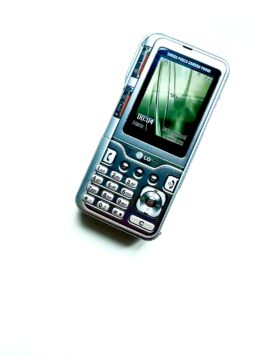
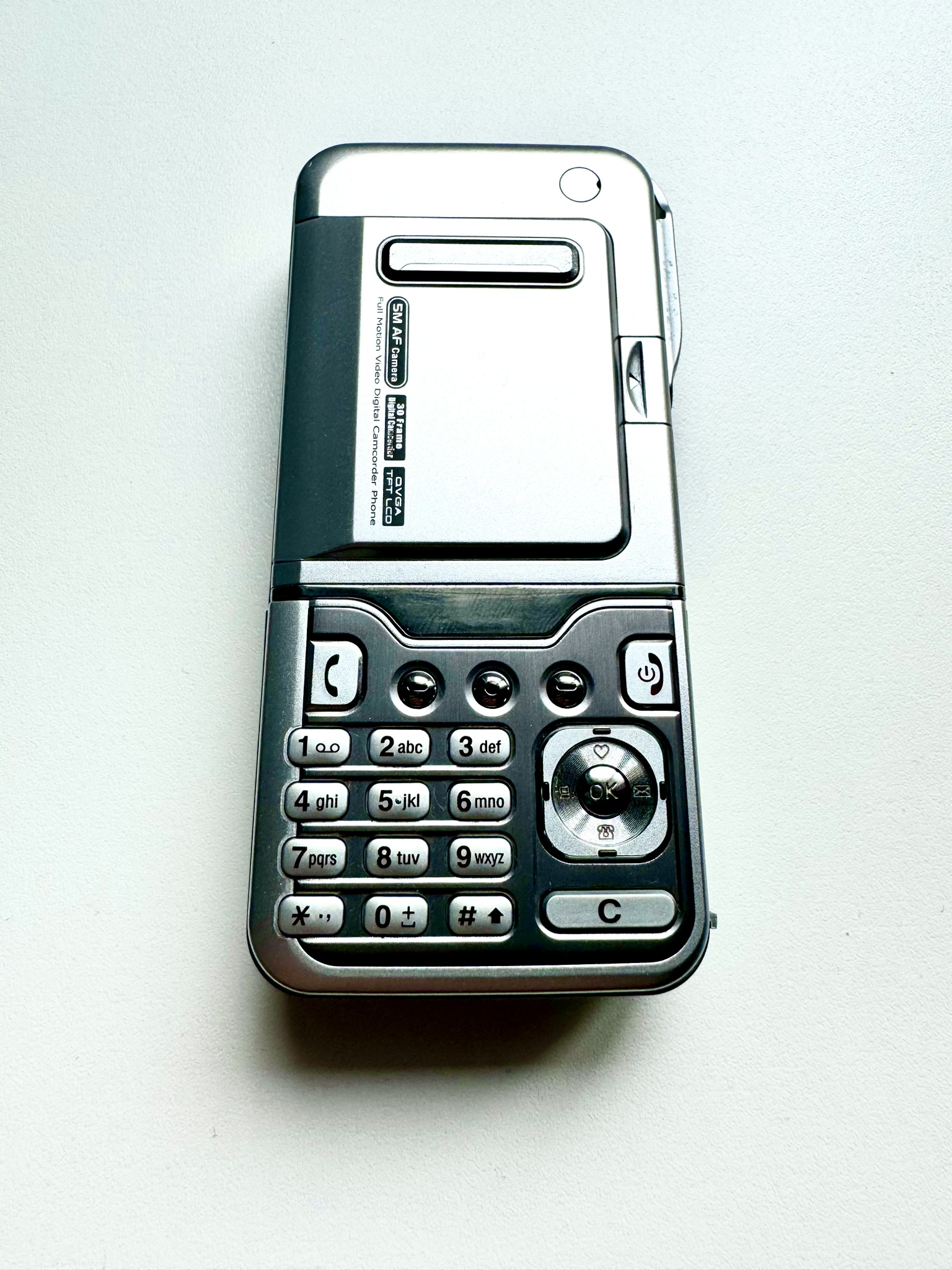
📰 Why this phone matters: The LG KG920 is one of the most daring and visionary camera phones ever released – a 2006 flagship that pushed boundaries years ahead of its time. With its 5-megapixel Schneider-Kreuznach camera, true xenon flash, and twist-rotating body, it belonged to a tiny elite family of experimental devices like the Nokia 3250 and Nokia 5700, yet it went even further by transforming into a full horizontal digital camera in one smooth motion.This was not just a phone with a camera – it was a camera that happened to be a phone.
The twist mechanism instantly reconfigured the device into a proper photography grip, something no mainstream device dared to replicate again. Combined with its premium build and Korea-exclusive engineering, the KG920 stood at the intersection of digital imaging and mobile design in a way that feels almost unbelievable today.
Launched in 2006 at a premium price of roughly &eur;o;450-&eur;o;500, it was heavily reviewed and praised for producing some of the cleanest, sharpest images of its generation. Today it remains vastly underrated, overshadowed by later icons, yet historically more important – it reached the 5 MP milestone before many of the industry’s giants and showcased a design concept that has never been revisited.
Your unit captures this legacy perfectly: a rare, twist-based camera phone from the golden era, preserved from a time when manufacturers dared to innovate radically.
A hybrid of digital camera ambition and bold mechanical engineering – the LG KG920 is a striking, unforgettable piece of mobile history.
📝 Reviews when released: Trusted Review 🔗
-


LG T Phone LD 1200
Quick View💎 Rarity Index: A (Rare)
👁 Evaluation in my collection: As New – 9.7/10
⏱ Life timer: N/A | 📦 Boxed: YES
📅 Release Year: 2006 | 💰 Release Price: N/A
📊 Units Sold: ~250k
📰 Why this phone matters: LG Electronics has just launched in Korea its new DMB-compatible mobile phone, the LG-LD1200, which has a 2.2 ” rotating screen with QVGA resolution, 256MB of internal memory, TransFlash slot, all in 103x50x23.5mm.📝 Reviews when released: Phone Dog 🔗
-


Motorola F3
Quick View💎 Rarity Index: C (Common)
⭐ WOW Factor: The first mobile phone to use electronic paper in its screen
👁 Evaluation in my collection: BNIB – 10/10
⏱ Life timer: 0m | 📦 Boxed: YES
📅 Release Year: 2006 | 💰 Release Price: ~20 €
📊 Units Sold: ~6M
📰 Why this phone matters: The F3 (frequently known as the Motofone) was a GSM phone available in two band variants, and was released on 28 November 2006.
The Motofone F3 was designed to appeal to the low-end market and developing countries, and was thus less functional, but also less expensive than most phones. Motorola made it appealing to developing markets and people with reading and visual difficulties by using only simple symbols and using speech synthesis to identify tasks in the menu.
The F3 was the first mobile phone to use electronic paper in its screen. Motorola used the term ClearVision to describe the new display, which was manufactured using E Ink’s electrophoretic imaging film. The electronic paper main display allowed for the phone’s thinness (no glass), longer battery life, and outdoor viewability (paper-like reflectivity). It had a backlight for the keypad and a slit that projects the backlight onto the screen so the display can be seen in darkness.The characteristics of the display were fairly restrictive. The text display contained only two lines of six characters each, making the use of text messaging (SMS) and data services less practical than on standard LCD displays. The display used a fixed ‘digital clock’ style font, with no functionality for changing between upper case and lower case text. All SMSs sent by the F3 were received entirely in lower case, and each character of any SMS received by the F3 is displayed in whichever case made the most sense using the font. Also, the non-alphabetic characters were severely limited due to this display, as the phone could only provide support for the following characters:
Comma (,) (periods . in incoming text messages are displayed as commas)
Hyphen (-)
Question mark (?)
At-sign (@)
Asterisk (*)
(+), to write this character, hold down the 0 key
No other non-alphanumeric characters could be entered, and on receiving an SMS any non-alphabetic character not listed above was displayed as a hyphen.Although the display could be restrictive when it came to text applications, the display was very energy efficient and conducive to extremely long battery life.
📝 Reviews when released: Trusted Reviews 🔗
-
Nokia 2626
Quick View💎 Rarity Index: C (Common)
👁 Evaluation in my collection: New – 10/10
⏱ Life timer: 00m | 📦 Boxed: YES – SWAP
📅 Release Year: 2006 | 💰 Release Price: N/A
📊 Units Sold: ~15M
📰 Why this phone matters: Entry Level from Nokia – There are many pluses to this phone. It is about 91gms in weight and has a phonebookwhich can hold 300 entries. It has a four way navigation key which makes the phone easy to use. It also has a FM radio which can be played on speaker while listeningthrough headphones. I really like the voice recording facility as well which can be used on and off calls.📝 Reviews when released: N/A 💔
-
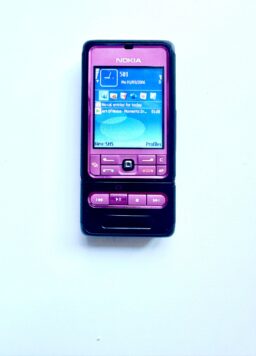
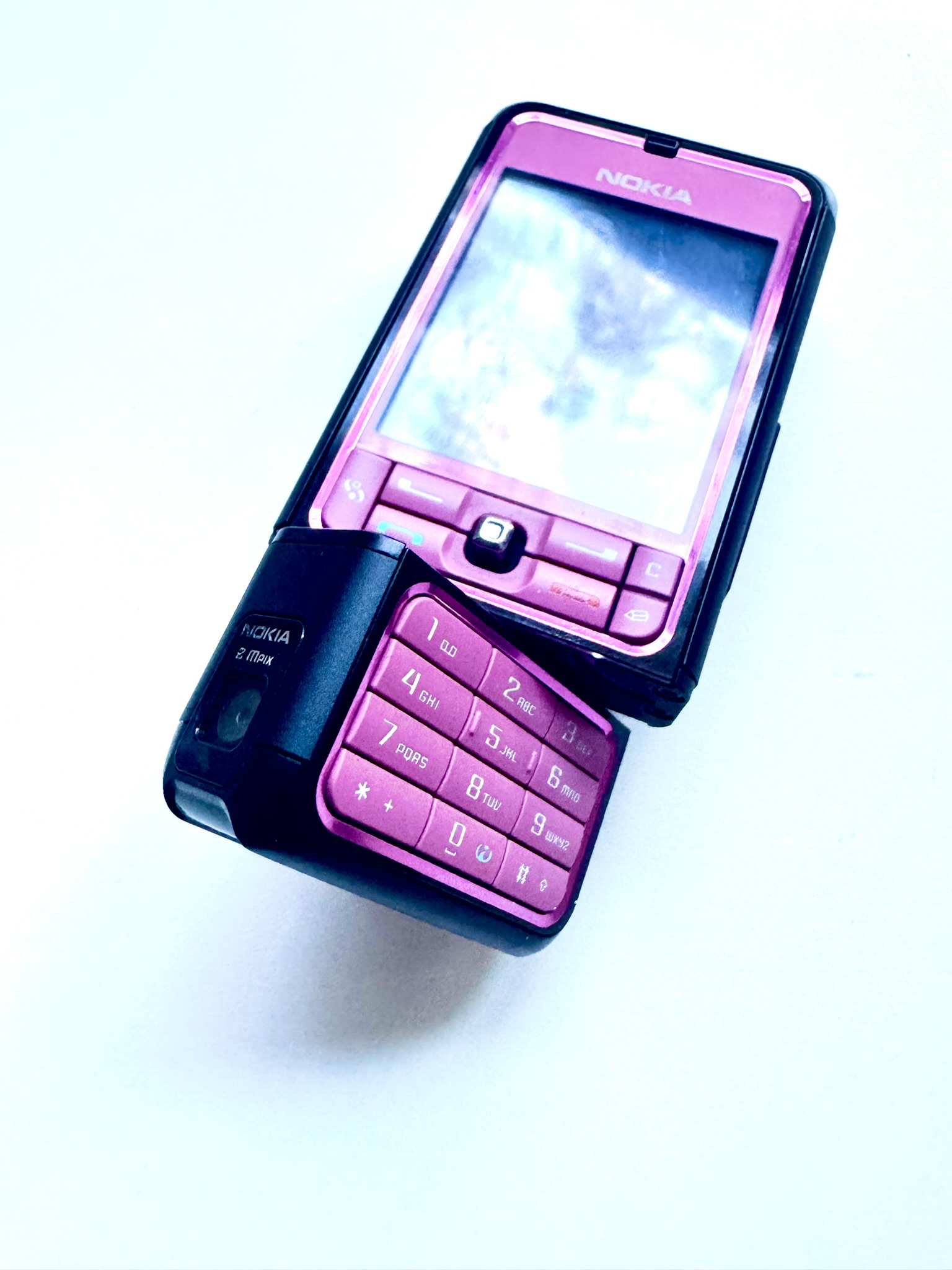
Nokia 3250 Prototype F5.0: Black & Pink
Quick View💎 Rarity Index: S (Ultra Rare)
👁 Evaluation in my collection: Great – 9.8/10
🕵 Nokia Codename: Thunder
⏱ Life timer: 0 | 📦 Boxed: NO
📅 Release Year: 2006 | 💰 Release Price: ~300 €
📊 Units Sold: ~1.5M (final units)
📰 Why this phone matters: Rare Nokia 3250 RM-38 engineering prototype featuring Nokia’s F5/NCT/BDA validation markings. Labeled Prototype – Not for Sale – Property of Nokia and built with pre-production hardware, prototype IMEI, and internal test circuitry. Although the Black & Pink shell reached retail, this device is a true R&D unit used for field testing (F5), Nokia Compatibility Testing (NCT – accessory, firmware, Bluetooth, and sync compatibility validation), and Board Design Assessment (BDA – PCB layout, electrical stability, and radio integrity evaluation). A prototype with NCT + BDA validation tags is exceptionally rare, as these were normally destroyed after evaluation, making this one of the few surviving engineering-stage 3250 units-a remarkable piece of Nokia’s swivel-phone development history.📝 Reviews when released: cNET 🔗
-
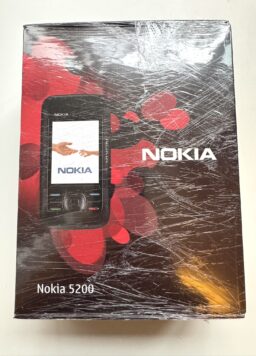
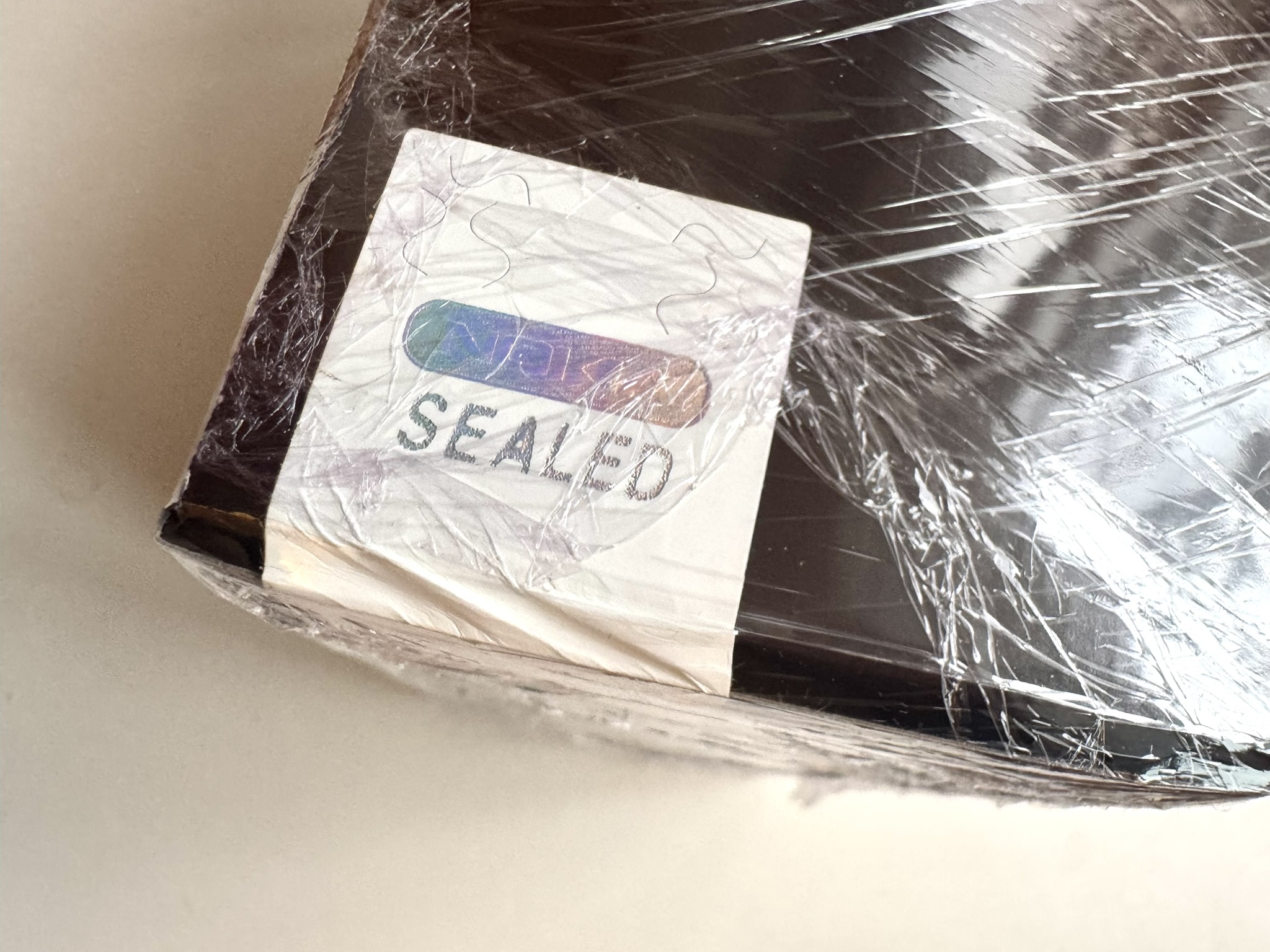
Nokia 5200 Red BNIB Seal:The Untouched XpressMusic-Era Time Capsule
Quick View💎 Rarity Index: A (Rare)
⭐ WOW Factor: A fully factory-sealed Nokia 5200 in the rare red variant, preserved exactly as it left the Hungarian assembly line
👁 Evaluation in my collection: BNIB SEALED – 10/10
⏱ Life timer: 0 | 📦 Boxed: YES
📅 Release Year: 2006 | 💰 Release Price: ~180 €
📊 Units Sold: ~5M
📰 Why this phone matters: The Nokia 5200 (RM-174), released in 2006, defined an entire generation of youthful slider phones built around durability, simplicity and music-centric design. Positioned as the more affordable sibling of the 5300 XpressMusic, the 5200 shared the same playful DNA, rubberized edges, and iconic red-and-white aesthetic that became a symbol of the mid-2000s Nokia lifestyle lineup.This sealed specimen is a rarity on its own. The box wrap is original factory tight-shrink, with no tears, rewraps or aftermarket sealing. The IMEI labels confirm a clean manufacturing batch from Nokia’s Hungarian plant, one of the most respected production facilities in Nokia’s history for quality control and eur;opean-market releases.
Inside this untouched package sits a brand-new 5200 with its original slide mechanism, factory screens, pristine keypad, untouched charger, battery, manuals and accessories exactly as Nokia packed them nearly two decades ago. The red variant, shown on the box, is especially sought after because it was the flagship colorway marketed across eur;ope and often associated with the sporty, music-driven personality of the device.
The Nokia 5200 delivered Bluetooth, Series 40 3rd Edition OS, a bright 128×160 display, VGA camera, microSD expansion, Nokia’s legendary battery life, and a rugged build designed for daily use. It became a bestseller in 2006 and 2007, praised in contemporary reviews for being fun, solid and strikingly designed for its price bracket.
Finding one sealed today is almost impossible. Finding a sealed red one even harder. This unit represents the exact retail experience a user would have enjoyed in 2006, preserved untouched and unaltered, a true collector-grade relic from Nokia’s golden era.
📝 Reviews when released: cNet 🔗
-


Nokia 5500 Sport
Quick View💎 Rarity Index: B (Uncommon)
⭐ WOW Factor: The first Nokia phone to feature text to speech and motion sensor features.
👁 Evaluation in my collection: Great – 9.8/10
⏱ Life timer: 189h | 📦 Boxed: NO
📅 Release Year: 2006 | 💰 Release Price: ~250 €
📊 Units Sold: ~1M
📰 Why this phone matters: Nokia 5500 Sport is a smartphone running Symbian v9.1 operating system and the S60 3rd Edition user interface, announced on May 10, 2006. This was the first Nokia handset ever to feature text to speech and motion sensor features.📝 Reviews when released: Mobile Review 🔗
-
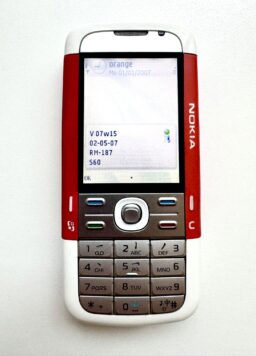
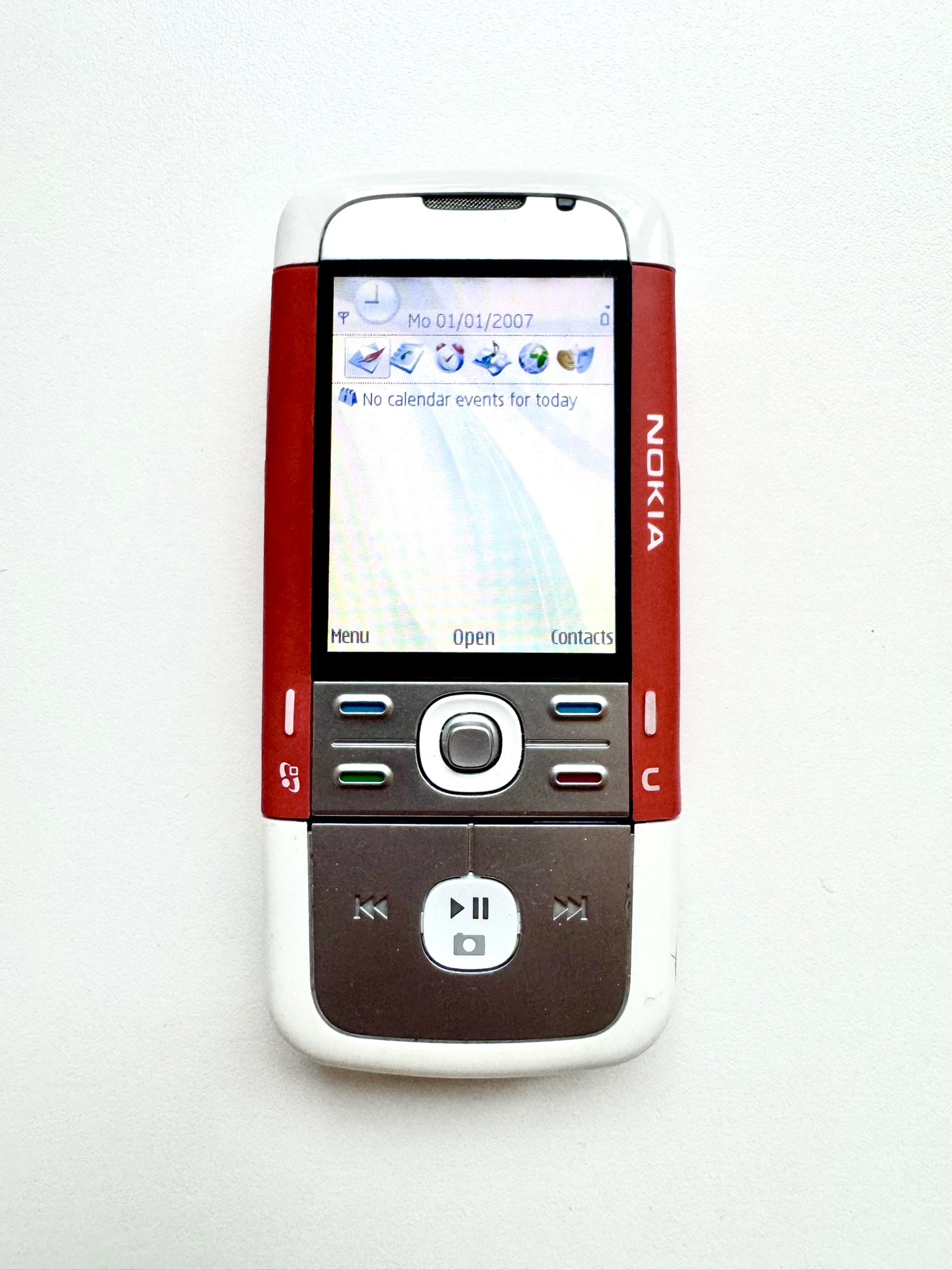
Nokia 5710 Unreleased Prototype B3.0: RM-187
Quick View💎 Rarity Index: X (Mystical Prototype)
⭐ WOW Factor: The only Nokia design where a single twist instantly switched the device’s personality: messaging, music, or camera.
👁 Evaluation in my collection: Great – 9/10
⏱ Life timer: 0m | 📦 Boxed: NO
📅 Release Year: 2006 | 💰 Release Price: N/A
📊 Units Sold: 0 unreleased
📰 Why this phone matters: The Nokia 5710 (RM-187) prototype represents one of the rarest and most technically fascinating chapters in Nokia’s experimental design era. Built in Finland as a late-stage engineering sample, this unreleased device was intended to become the successor to the Nokia 5700 XpressMusic – and the final evolution of Nokia’s iconic twist-mechanism platform.Carrying the markings “Prototype ? Property of Nokia ? Not for Sale”, this RM-187 unit showcases hardware that never reached production: a redesigned rotating lower module, a reinforced hinge, and an upgraded rotary connector meant to eliminate the flex-cable failures seen on earlier twist models. Every piece of internal labeling, from its pre-production QR matrix to the B-series hardware stamps, confirms its status as an authentic high-level engineering device.
Unlike the retail 5700, the 5710 was slimmer, structurally stronger, and technically more advanced – an ambitious internal attempt to create the third-generation twist phone, following the 3250 and 5700. Development was ultimately halted, making RM-187 the final Nokia twist platform ever constructed.
The result is a prototype that combines unfinished industrial design, experimental hardware, and a form factor that was already disappearing from Nokia’s roadmap. With no retail release and only a handful of RM-187 boards ever confirmed, this piece stands as a true collector’s artifact – a preserved snapshot of a daring design direction that Nokia never shipped.
📝 Reviews when released: N/A 💔
-


Nokia 6101
Quick View💎 Rarity Index: C (Common)
👁 Evaluation in my collection: As New – 9.9/10
🕵 Nokia Codename: Ediphix
⏱ Life timer: 1m | 📦 Boxed: NO
📅 Release Year: 2006 | 💰 Release Price: ~280 $
📊 Units Sold: ~10M
📰 Why this phone matters: The Nokia 6101, 6102, and 6102i are a line of popular Nokia mid-level clamshell cellphones that operate on GSM-850/1800/1900 MHz (some markets are GSM-900/1800/1900 MHz) frequencies released between middle 2005 and early 2006. The line was given the nickname Ediphix by Nokia employees.The differences between the 6101 and 6102 are very small and the only visible differences are the style of the keypads and front bezel plate. The 6102i is an updated version of the 6102 featuring Bluetooth capabilities and increased memory space. Another updated version of the 6101/6102 is the Nokia 6103.
Announced in 2005, the Nokia 6101 was also one of the last Nokia phones that still had an external antenna.
Its direct successor is the Nokia 6131, which includes microSD card slot and native USB connectivity.
📝 Reviews when released: Mobile Review 🔗